

P2407 on 2013-2021 Land Rover Range Rover: EVAP Pump Circuit Fault Causes and Fixes
This code points to an electrical fault with the EVAP Leak Detection Pump's sensor, not a physical leak. The most common causes are corroded wiring/connectors to the pump located in the driver's side rear wheel well, or a failed pump due to water and dust ingress. Land Rover issued a service bulletin for this exact issue. The fix involves replacing the pump (Part No. LR174757) and adding a protective cover (Part No. LR155089).
- P2407 is an electrical fault, not a leak. Do not start with a smoke test.
- The problem is almost always located at the Leak Detection (DMTL) Pump or its wiring in the driver's side rear wheel well.
- First, inspect the pump's electrical connector for corrosion or damage before buying any parts.
- If you replace the pump (Part No. LR174757), be sure to also install the updated dust filter cover (Part No. LR155089) to prevent the problem from recurring, as recommended by Land Rover.
What's Unique About the 2013-2021 Land Rover Range Rover
On the 2013-2021 Range Rover (L405 generation), this code is often linked to a specific design vulnerability. Land Rover acknowledged in Special Service Message (SSM) 75424 that the leak detection pump, which they call the Diagnostic Module Tank Leakage (DMTL) pump, is susceptible to contamination from dust and water. This ingress through the pump's filter can cause the internal electronics to fail, leading to the erratic sensor signal that triggers P2407 and related codes. As a result, the official service action involves replacing the pump and adding an updated protective dust filter cover to prevent recurrence.
Symptoms You May Notice
- Check Engine Light is on
- Possible faint fuel odor near the rear of the vehicle
- Vehicle will fail an emissions inspection
- In some cases, difficulty filling the fuel tank may be noted.
- Replacing the gas cap. While a loose gas cap can cause other EVAP codes (like P0455/P0456), it is not a typical cause for the P2407 electrical circuit code. However, in one forum-documented case on an LR2, reseating the cap did resolve the code, suggesting a marginal pump may be pushed to throw a circuit fault during the system's pressure test cycle.
- Performing a smoke test to find a leak. P2407 indicates an electrical problem with the pump's sensor circuit, not a physical leak in the system. A smoke test will not identify the root cause of this specific code.
Most Likely Causes
- Failed EVAP Leak Detection (DMTL) Pump 🔴 High Probability → Shop Vapor Canister Land Rover issued Special Service Message 75424 explicitly stating the pump is prone to failure from contaminant ingress (dust/water) through its filter. This is the most common and manufacturer-acknowledged cause.
How to confirm: If the wiring and connector are confirmed to be in good condition, the pump itself is the likely culprit. A diagnostic scanner can be used to monitor the pump's sense circuit voltage in real-time; erratic readings or dropouts confirm the failure. Given the known issue, this is the default diagnosis after a wiring check.
Typical fix: Replace the DMTL pump. The current part number is LR174757, which supersedes WTR500030. It is highly recommended to also install the updated DMTL pump dust filter cover (Part No. LR155089) as per Land Rover's service action to prevent future contamination.
Est. part cost: $95-$200 - Damaged or Corroded Wiring/Connector 🟡 Medium Probability The DMTL pump and its connector are located in the rear driver's side wheel well, exposing them to road salt, moisture, and debris which can lead to corrosion or physical damage to the harness. This is a common failure point for many wheel-well-mounted components.
How to confirm: Visually inspect the wiring harness and electrical connector going to the DMTL pump. Look for green/white corrosion on the pins, chafed or broken wires, and ensure the connector is securely plugged in. Wiggle the harness while monitoring live data on a scan tool to see if the signal drops out.
Typical fix: Clean the connector pins with an electrical contact cleaner. If the wiring is damaged, it must be repaired by soldering and heat-shrinking. A severely damaged connector may need to be replaced.
Est. part cost: $5-$50 - Blown Fuse ⚪ Low Probability
How to confirm: Check the fuse for the EVAP system. A video for a 2016 model suggests checking fuse F23 (10 amp) in the engine bay fuse box. Always consult your owner's manual for the correct fuse location and rating for your specific model year.
Typical fix: Replace the blown fuse. If the new fuse blows immediately, it indicates a short circuit in the wiring that needs to be diagnosed and repaired.
Est. part cost: $1-$5
Rare But Worth Checking
- Powertrain Control Module (PCM) Issue: → Shop Engine Control Module (ECM) This is very rare. Before suspecting the PCM, all other possibilities, especially wiring and the pump itself, must be exhaustively ruled out. In some cases, a software update may be available to correct erroneous fault logic, though this is more common for other TSBs.
Diagnosis Steps
- Read the code with an OBD-II scanner to confirm P2407 is present, along with any other related EVAP codes.
- Safely raise and support the rear of the vehicle and remove the driver's side rear wheel.
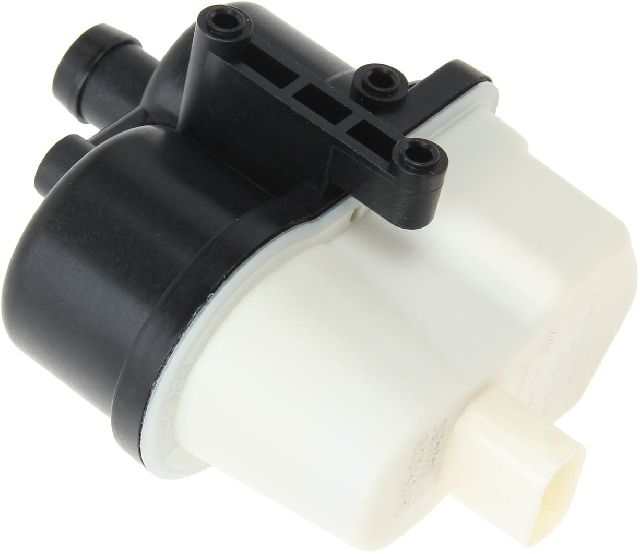
- Remove the plastic wheel well liner to access the EVAP system components. The DMTL pump is a small, black plastic module with hoses and an electrical connector.
- Thoroughly inspect the electrical connector and wiring harness leading to the DMTL pump. Look for any signs of corrosion, chafing, or breaks. Disconnect and check pins for integrity.
- If the wiring looks good, check the fuse for the EVAP system (check owner's manual for location, possibly F23 in the engine bay).
- If the fuse, wiring, and connector are all in good condition, the DMTL pump is the most likely cause of the fault, as documented by Land Rover.
- For advanced diagnosis, use a scan tool to monitor the live voltage from the pump's sense circuit while wiggling the harness to identify intermittent connections.
- Replace the DMTL pump if it is determined to be faulty. The recommended procedure is to also install the updated dust filter cover (LR155089) at the same time to prevent a repeat failure.
Parts You'll Likely Need
- Evaporative Emissions System Leak Detection Pump
(OEM #LR174757 (supersedes WTR500030))— This pump, also known as the DMTL pump, is the primary failure point identified in Land Rover Service Message SSM 75424 for causing code P2407 due to contamination. The part number in the bulletin, WTR500030, has been superseded by LR174757.
Trusted brands: Land Rover (Genuine), Bosch (OEM)
OEM price range: $190-$225
Aftermarket price range: $95-$150 - DMTL Pump Dust Filter Cover
(OEM #LR155089)— This is a revised part required by Land Rover TSB SSM 75424 to prevent the dust and water contamination that leads to pump failure. It should be installed any time the pump is replaced to prevent a recurrence of the issue.
Trusted brands: Land Rover (Genuine)
OEM price range: $15-$30
Aftermarket price range: N/A
Related Codes That Often Appear With This One
- P2402, P2404, P2405, P2406 — These are all related codes for the leak detection pump circuits. Land Rover's own service bulletin (SSM 75424) groups P2407 with P2402 (control circuit), P2404 (sense circuit range/performance), P2405 (sense circuit low), and P2406 (sense circuit high). Their presence together strongly points to the common pump failure outlined in the bulletin.
Technical Service Bulletins (TSBs) & Recalls
- SSM 75424 (supersedes LTB01281NAS1 and others): Addresses MIL illumination with DTCs including P2407 on 2013+ models due to DMTL pump contamination and mandates installing a new protective cap (LR155089) during pump replacement.
Platform-Specific Known Issues
- A Land Rover Special Service Message (SSM 75424) was issued for 2013-2020 Range Rover, Range Rover Sport, and Discovery models for DTCs P2407, P2402, P2404, P2405, and P2406. The cause is officially identified as 'Contaminant ingress through the dust filter'. The recommended action is to replace the DMTL pump (Part No. WTR500030, now superseded by LR174757) and install a newly designed dust filter cover (Part No. LR155089).
Mechanic-Grade Diagnostic Values
- DMTL Pump Sense Circuit Voltage (Live Data) — expected: A stable voltage, typically in the 4.5-5.0V range when the pump is operating correctly.. Failure: Rapid spikes, intermittent drops to 0V, or consistently out-of-range readings.
- Reference Voltage at DMTL Pump Connector — expected: Approximately 5V reference signal from the PCM with the key on, engine off.. Failure: Missing or significantly lower voltage, indicating a wiring issue or a problem with the PCM's 5V reference circuit.
Scan Tool Commands That Help
- Land Rover SDD/Pathfinder or equivalent bidirectional scanner: EVAP System Leak Test / DMTL Pump Actuation — This command manually activates the DMTL pump. It is essential for confirming if the pump motor is functional and for checking power and ground at the connector while the circuit is commanded 'on'. It allows a technician to isolate the fault between the pump, wiring, and PCM without waiting for the system's automatic self-test.
Wiring & Ground Locations
- DMTL Pump Connector — In the rear driver's side (left) wheel well, connected to the DMTL pump which is attached to the charcoal canister.. This is the primary point of failure due to corrosion from road debris and moisture. Inspecting the pins inside this connector is a critical first step.
- DMTL Pump Circuit Wires — Within the harness leading to the DMTL pump connector.. For a 2016 model, specific wires identified are Pin 3 (Purple/Orange) and Pin 4 (Green/Orange). Checking continuity and for shorts on these specific wires can pinpoint a harness issue.
- Fuse F23 (Engine Bay) — In the engine compartment fuse box.. On 2016 models, this 10-amp fuse supplies power to the tank leakage diagnostic module. A blown fuse will cause a complete loss of function and can trigger circuit codes.
Real Owner Repair Stories
- landroverforums.com user (2014 Land Rover LR2) — Check Engine Light with code P2407.
❌ Tried (didn't work) Initially preparing for a more complex diagnosis of the pump or wiring.
✅ What actually fixed it The owner reseated the gas cap and cleared the code. The Check Engine Light did not return for over 1,000 km of driving, suggesting a marginal seal may have caused the pump's sense circuit to report an erratic signal during a test cycle.
"I Checked Everything" — The Actual Cause
- Because P2407 is an electrical circuit code, a smoke test is not the correct initial diagnostic step and will typically show no faults. The common 'miss' is performing a cursory visual inspection of the wiring harness and seeing no obvious damage. The actual fault is often hidden corrosion (green crust) inside the sealed connector for the DMTL pump, or an internal wire break within the insulation that is not visible externally. Wiggling the harness while monitoring live data is crucial to expose these hidden intermittent connections.
OEM Part Supersession History
WTR500030→LR174757— Standard part number update and revision by Land Rover. The new part number is specified for use with the updated protective dust cover (LR155089) per SSM 75424.
Heads up: No known incompatibilities; LR174757 is the correct replacement for WTR500030 on all specified models.Land Rover WTR500030 / LR174757→Bosch 0261222019— Bosch is the Original Equipment Manufacturer (OEM) for this part. The Bosch-branded part is identical to the genuine Land Rover part but is often available at a lower cost.
Heads up: This is a direct cross-reference. Ensure the supplier confirms fitment for your specific Land Rover model, as this Bosch part is also used on other brands like Volvo.
Diagnostic Flowchart
Other Known Issues on This Vehicle
Issues unrelated to this code that are worth knowing about as an owner of this generation:
- Air Suspension Failure 🔴 High — Very common, especially over 80,000 km. Leaking front air struts are the most frequent cause, leading to a corner sagging overnight. This often causes secondary failure of the air compressor from overwork.
- Timing Chain Guide Wear (5.0L V8) 🔴 High — A notorious issue, particularly on earlier 2013-2014 models but possible on all 5.0L V8s. Worn plastic guides cause a distinct engine rattle on cold starts, which can lead to chain slack, jumped timing, and catastrophic engine damage. (Ref: LTB00474NAS3 (for earlier models, but issue is well-known))
- Crankshaft Failure (3.0L TDV6/SDV6 Diesel) 🔴 High — A known catastrophic failure mode for the 3.0L diesel engines where the crankshaft bearings spin or the crank itself snaps, often with little to no warning, requiring complete engine replacement.
- InControl Touch Pro Infotainment Problems 🟠 Medium — Widespread complaints of the system being slow, freezing, buggy, and failing over-the-air updates. Connectivity issues with Apple CarPlay/Android Auto are also common. (Ref: Multiple software update TSBs exist.)
- Front Lower Control Arm Bushing Wear 🟠 Medium — Common wear item. Failure results in a distinct 'clunk' or 'knock' from the front suspension, most noticeable when applying the brakes at low speeds.
Used vs. New Parts: Buying Guide for This Vehicle
When a used part is the smart pick: Buying a used DMTL pump is generally not recommended for this vehicle. The primary cause of failure is contamination from its exposed location in the wheel well, as noted in a Land Rover service bulletin. A used part from a donor vehicle has likely suffered similar exposure and may have a very limited remaining lifespan.
Donor-vehicle mileage cap: roughly under 40000 miles for the part to have meaningful remaining life.
What to inspect on the donor part:
- Ask for photos of the electrical connector pins to check for any hint of corrosion.
- Source from a vehicle in a dry, salt-free climate if possible.
- Ensure the part comes from a low-mileage, collision-damaged vehicle rather than one scrapped for high-mileage or age-related issues.
OEM-only on this vehicle (don't cheap out):
- DMTL Pump Dust Filter Cover (LR155089) - This is a revised, manufacturer-specific part designed to fix the original design flaw and should always be purchased new and genuine.
Aftermarket brands forum-validated for this vehicle:
- Bosch (This is the OEM supplier, offering the same quality as the genuine part, often at a lower price).
Brands owners have reported issues with on this vehicle:
- Unbranded, 'white-box' parts from online marketplaces. Given the sensitivity of the EVAP system and the known issues with this component, using a part without a proven quality record is likely to lead to repeat failures.
Real Owner Stories
Aggregated from forums and TSBs cited above. Mileages and costs reflect what owners reported in those sources.
2014 Land Rover LR2
Symptoms: Engine fault code P2407 appeared.
What fixed it: The owner reported the code disappeared for over 1000km after simply reseating the gas cap.
Source hint: landroverforums.com (https://landroverforums.com/forum/lr2-35/engine-fault-code-p2407-evap-leak-detection-pump-sense-circuit-96357/)
Related OBD-II Codes
Frequently Asked Questions
Is there a recall for the P2407 code on my 2013-2021 Range Rover?
My mechanic says the DMTL pump has failed. Is this the most likely cause for P2407?
When replacing the DMTL pump, is there any other part I should install to prevent this from happening again?
Where is the DMTL pump located on my Range Rover?
Could a loose gas cap cause the P2407 code?
I have a Range Rover Sport with code P2407. Does this article apply?
We Have This Part in Stock


The information in this article is provided for general reference and educational purposes only. Vehicle specifications, procedures, and part compatibility can vary by production date, trim level, and region. Always consult your vehicle's factory service manual and verify part numbers before purchasing or performing repairs. Safety-critical components such as airbags, seat belts, and braking systems should be installed by a qualified professional.
- Land Rover Range Rover:
- 🧭 Diagnostic Flowchart
- 🛍️ Shop This Part
- What's Unique About the 2013-2021 Land Rover Range Rover
- Symptoms You May Notice
- Most Likely Causes
- Rare But Worth Checking
- Diagnosis Steps
- Parts You'll Likely Need
- Related Codes That Often Appear With This One
- Technical Service Bulletins (TSBs) & Recalls
- Platform-Specific Known Issues
- Mechanic-Grade Diagnostic Values
- Scan Tool Commands That Help
- Wiring & Ground Locations
- Real Owner Repair Stories
- "I Checked Everything" — The Actual Cause
- OEM Part Supersession History
- Other Known Issues on This Vehicle
- Used vs. New Parts: Buying Guide for This Vehicle
- Real Owner Stories
- 2014 Land Rover LR2
- Related OBD-II Codes
- Frequently Asked Questions
- 🎟️ Get 5% Off