

OBD-II Code P2415: O2 Sensor Exhaust Sample Error (Bank 2, Sensor 1)
The Ultimate Guide to Meaning, Diagnosis, and Repair for P2415
- Diagnose exhaust leaks before replacing parts; a $30 cracked gasket is the most common cause of P2415, not the sensor itself.
- Perform a smoke test on the intake and exhaust systems to definitively rule out unmetered air leaks before spending $150+ on a new oxygen sensor.
- Expect a 10% to 20% drop in fuel economy and an automatic emissions test failure while P2415 remains active.
- Fix P2415 within 1 to 3 months to prevent the resulting rich fuel mixture from melting your catalytic converter, which turns a $200 repair into a $1,500+ replacement.
What Does P2415 Mean?
P2415 means your car's main computer, the Powertrain Control Module (PCM), is receiving impossible or erratic signals from the oxygen sensor in "Bank 2, Sensor 1". This sensor sniffs the exhaust right as it leaves the engine to help control the air-fuel mixture. The "Exhaust Sample Error" means the computer determines the sensor's reading is invalid, usually due to an exhaust leak, a faulty sensor, or unmetered air entering the system.
Technical definition: O2 Sensor Exhaust Sample Error (Bank 2, Sensor 1). The Powertrain Control Module (PCM) detects that the upstream oxygen sensor on Bank 2 is providing abnormal, unstable, or implausible readings regarding exhaust oxygen content. The PCM flags the signal as irrational, abandons closed-loop fuel control, and forces the system into a less efficient open-loop default fueling strategy.
Can I Drive With P2415?
Yes, But With Caution. You can drive for a few days, but extended driving is not recommended. Ignoring the code causes a 10-20% drop in fuel economy, rough idling, and forces the engine to run rich. This excess fuel eventually melts the catalytic converter, turning a minor issue into a $1,000 to $3,000 repair.
Common Causes
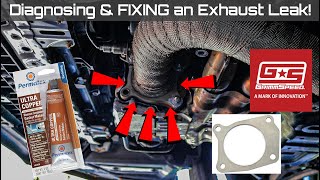
- Exhaust leak before or near the sensor (Very Common) — A crack in the exhaust manifold, a blown gasket, or a loose sensor allows outside air to suck into the exhaust pipe. This extra oxygen fools the sensor into reading lean, causing signals the PCM flags as implausible.
- Failed Bank 2, Sensor 1 oxygen sensor (Common) — The sensor fails from age, heat cycling, or internal heater circuit breakage. It sends incorrect, slow, or dead voltage signals to the computer.
- Unmetered Air Leaks (Vacuum Leaks) (Common) — A leak in the air intake system after the Mass Airflow (MAF) sensor allows unmetered air into the engine. This creates a lean condition the PCM misinterprets as an O2 sensor sampling error.
- Damaged wiring or connectors (Less Common) — Wires leading to the O2 sensor melt from exhaust heat or chafe against the chassis, breaking the signal circuit.
- Fuel System Problems (Less Common) — A weak fuel pump, clogged filter, or faulty pressure regulator causes an extreme lean or rich condition, pushing the air-fuel ratio outside the sensor's readable range.
- Sensor Contamination (Rare) — Internal engine leaks coat the oxygen sensor's tip with oil, coolant, or silicone sealant, ruining its ability to detect oxygen.
- Faulty Powertrain Control Module (PCM) (Very Rare) — The engine computer suffers a software glitch or internal hardware failure, misinterpreting a perfectly good sensor signal.
Symptoms
- Check Engine Light is on — Often the first and only noticeable symptom.
- Rough or unstable idle — The engine runs rough or RPMs surge while stopped at a light.
- Failed emissions test — The vehicle automatically fails smog checks due to incorrect air-fuel ratios and high hydrocarbon emissions.
- Hesitation or engine stumbling — The car hesitates or feels sluggish during acceleration.
- Unusual exhaust odor — A strong 'gassy' or sulfur-like smell emits from the tailpipe.
- Worse gas mileage (also visible on scanner) — Fuel economy drops by 10-20% because the engine defaults to a richer, less efficient fuel mixture.
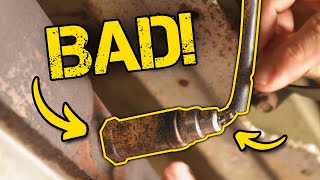
- Black carbon deposits on sensor (scan-tool only — no driver-felt sign) — When removed, the sensor tip is coated in thick black soot from running rich.
Diagnostic Flowchart
Tap your situation to follow the diagnostic path that matches what you're seeing on this code.
Common Fixes & Costs
- Repairing an exhaust leak (e.g., new gasket)
— Parts: $20-$60, Labor: $150-$450, ~1.5 hr book time
(Intermediate)
Subaru Forester (2005-2014): OEM - Replacing the Bank 2, Sensor 1 Oxygen Sensor
— Parts: $60-$250, Labor: $100-$300, ~0.8 hr book time
(DIY)
Subaru Forester (2006-2010, 2.5L NA): OEM
Toyota Tundra (2007-2015, 5.7L): OEM
BMW M3 E90/E92 (2008-2013): OEM - Replacing a cracked exhaust manifold
— Parts: $300-$800, Labor: $300-$600, ~3.5 hr book time
(Professional)
Toyota Tundra (2007-2021, 5.7L): OEM - Repairing damaged sensor wiring or connector — Parts: $20-$50, Labor: $120-$250, ~1.5 hr book time (Intermediate)
- Replacing a faulty fuel pump or pressure regulator — Parts: $200-$700, Labor: $150-$400, ~2.5 hr book time (Professional)
- PCM Reprogramming or Replacement — Parts: $800-$1500, Labor: $150-$300, ~1.2 hr book time (Professional)
Used vs. New Parts: Buying Guide
When a used part is worth it: For exhaust manifolds or catalytic converters, a used OEM part from a low-mileage donor vehicle is a cost-effective alternative. NEVER buy a used oxygen sensor.
Donor-vehicle mileage cap: roughly under 80000 miles for the part to have meaningful remaining life.
Donor quality checklist:
- Verify the donor vehicle's VIN to ensure it wasn't scrapped for engine problems.
- Avoid exhaust donors from rust-belt states to minimize corrosion.
- Inspect catalytic converters for rattling (broken substrate) or melting.
Decision logic:
- If Part is an oxygen sensor → Buy new from an OEM or reputable OE-equivalent brand (Denso, NTK, Bosch). Used sensors guarantee premature failure.
- If Part is an exhaust manifold and the vehicle is >100K miles → A used manifold from a low-mileage donor is a reasonable choice if the new OEM part is prohibitively expensive.
- If Part is a catalytic converter and budget is the primary concern → A used OEM converter is superior in longevity to a cheap aftermarket universal converter.
Warranty tradeoff: Used parts offer a 30-90 day warranty. New aftermarket parts offer a 1-year to limited lifetime warranty. New OEM parts offer a 1-year warranty.
Worst-case if a used part fails: 600-1200
What Happens If You Wait — Timeline
- 0-2 weeks: Check Engine Light illuminates. PCM stores P2415 and defaults to a fixed, richer fuel map for Bank 2. No other symptoms are noticeable. (MPG impact: 0-5%% · Added cost: $0-20 in wasted fuel)
- 2 weeks - 3 months: Driver notices a consistent drop in fuel economy. A rough or unstable idle appears. The car fails emissions tests. (MPG impact: 5-15%% · Added cost: $50-150 in wasted fuel)
- 3 - 8 months: The prolonged rich fuel mixture overheats the catalytic converter. The internal ceramic substrate cracks or melts, reducing efficiency and causing a rattling noise. (MPG impact: 10-20%% · Added cost: $300-800 (Catalytic converter damage is now likely))
- 8+ months: Catastrophic failure of the catalytic converter. It becomes completely clogged, causing severe lack of power. A P0430 code sets. (MPG impact: 15-25%+% · Added cost: $1500-3000 (Full catalytic converter replacement required))
Cost of Not Fixing It
- 0-1 Month: Noticeable drop in fuel economy, failed emissions test, and fouled spark plugs. (Added cost: 25-75)
- 1-6 Months: The rich fuel mixture overheats and damages the catalytic converter substrate. Hesitation and rough idle worsen. (Added cost: 100-300)
- 6+ Months: Catastrophic failure of the catalytic converter requires a very expensive replacement. (Added cost: 1500-3500)
Diagnosis Steps
- Check for Other Codes and Freeze Frame Data
Use an OBD-II scanner to read all stored codes. Codes like P0174 (System Too Lean Bank 2) or P2197 (O2 Sensor Stuck Lean) appearing with P2415 strongly point to an exhaust or vacuum leak. Record the freeze frame data to see engine conditions when the code set.
Tools: OBD-II Scanner (Beginner) - Visually Inspect the Exhaust System
Look and listen for leaks in the exhaust system from the engine block to the catalytic converter on Bank 2. Check for black soot marks around gaskets or visible cracks in the exhaust manifold. Have a helper briefly block the tailpipe with a rag while the engine runs to make leaks easier to hear.
Tools: Flashlight, gloves (Beginner) - Analyze Live O2 Sensor Data
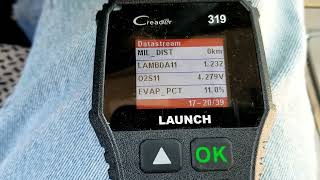
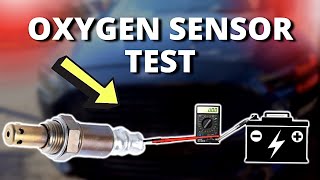
Using a scan tool with live data, watch the voltage for Bank 2, Sensor 1. A healthy upstream sensor's voltage switches rapidly between 0.1V (lean) and 0.9V (rich) once warm. If the voltage is stuck flat (e.g., 0.45V) or very slow to respond compared to Bank 1, it points to a bad sensor or a significant leak.
Tools: Advanced OBD-II Scanner with Live Data (Intermediate) - Perform an Intake and Exhaust Smoke Test
This is the definitive way to find small, hard-to-see vacuum or exhaust leaks. A smoke machine forces non-toxic smoke into the intake or exhaust system; you simply look for where the smoke escapes.
Tools: Automotive Smoke Machine (Intermediate) - Inspect Sensor Wiring and Connector
Visually inspect the wiring harness going to the Bank 2, Sensor 1 O2 sensor. Look for melting, chafing, or corrosion on the connector pins. A damaged wire breaks the signal circuit.
Tools: Flashlight, Multimeter (Beginner) - Test the Sensor's Heater Circuit
The O2 sensor has an internal heater that must work for accurate readings. Using a multimeter, check for 12-volt power and ground at the sensor's connector. Measure the resistance of the heater itself by probing the heater pins on the sensor side; it is typically between 2 and 20 ohms when cold. Infinite resistance means the sensor is dead.
Tools: Multimeter (Advanced) - Check Fuel Trims
Observe the Short Term and Long Term Fuel Trim values on your scan tool for Bank 2. If Long Term Fuel Trim (LTFT) consistently exceeds +10%, the PCM is adding excessive fuel to compensate for a perceived lean condition, confirming a vacuum or exhaust leak.
Tools: Advanced OBD-II Scanner with Live Data (Intermediate) - Induce a Rich/Lean Condition
While watching live O2 sensor data, manually force a rich or lean condition to test the sensor's response. Introduce a small amount of propane into the intake (voltage should spike to >0.8V) or create a controlled vacuum leak (voltage should drop to <0.2V). A sensor that doesn't respond is faulty.
Tools: Advanced OBD-II Scanner, Propane Torch (unlit) (Advanced) - Test Fuel Pressure
Connect a fuel pressure gauge to the fuel rail's service port. Pressure should be within 30-50 PSI at idle. With Key On, Engine Off (KOEO), pressure should hold steady. A rapid drop indicates a leaking injector or bad check valve, causing fueling issues the PCM misinterprets as a sensor error.
Tools: Fuel Pressure Gauge (Advanced)
When This Code Triggers (Freeze-Frame Conditions)
- Engine Coolant Temp: 170-220°F (Engine fully warmed up, operating in closed-loop.)
- RPM: 1200-2500 RPM (Steady cruise or light, steady acceleration.)
- Engine Load: 20-50% (Part-throttle driving, not at idle or full throttle.)
- Vehicle Speed: 40-65 mph (Sustained highway or arterial road speed.)
Related Codes
- P0174 — Means "System Too Lean (Bank 2)". If you have both P2415 and P0174, it strongly suggests a large vacuum or exhaust leak confusing the sensor and causing the lean condition.
- P2197 — Means "O2 Sensor Signal Biased/Stuck Lean (Bank 2, Sensor 1)". P2197 specifically means the voltage is stuck low, while P2415 is a broader 'sample error'. A live data scan showing a flat line near 0.1V confirms P2197.
- P2414 — The identical error code for the opposite engine bank. If you see both P2414 and P2415, look for a cause common to both banks, such as a large intake manifold leak.
- P0151 — Indicates "O2 Sensor Circuit Low Voltage (Bank 2, Sensor 1)". This is an electrical code pointing to a short to ground. P2415 is a performance code caused by the electrical fault of P0151 or an exhaust leak.
- P0430 — Means "Catalyst System Efficiency Below Threshold (Bank 2)". If P2415 is ignored, the incorrect air-fuel mixture overheats and destroys the catalytic converter, leading to this code.
Climate & Environmental Factors
- Cold Climates / Rust Belt: Road salt accelerates corrosion, causing exhaust pipes and manifold flanges to rust and leak, a primary trigger for P2415.
- High Humidity and Short Trips: In humid climates, short trips prevent the exhaust from evaporating condensation. Trapped moisture accelerates sensor degradation.
- High Altitude: Changes in altitude alter air density. An aging O2 sensor struggles to provide plausible readings across significant altitude changes, triggering the code.
How to Talk to a Mechanic About This Code
Say this: "I have a P2415 code and I'd like to schedule a diagnostic. I'd like to focus on checking for exhaust or vacuum leaks before we consider replacing the O2 sensor."
This signals to the shop that you understand the common causes. It steers the technician toward a proper diagnosis (checking for leaks) rather than just replacing the sensor.
Avoid saying:
- 'My check engine light is on, can you just fix it?'
- 'I think I need a new oxygen sensor.'
- 'Just do whatever you think is best.'
Questions to ask before authorizing the repair:
- Did you perform a smoke test to check for exhaust and intake leaks?
- Can you show me the live data from the O2 sensor?
- If the sensor needs to be replaced, are you using an OEM or equivalent brand like Denso/NTK?
- What is your warranty on this repair, for both parts and labor?
Where to Take It: Dealer vs Independent vs Chain
- Dealer:
Take it to a dealer if the vehicle is under warranty or has a known TSB. Otherwise, an independent shop is more cost-effective.
Best for: Vehicles still under a powertrain or emissions warranty., Complex electrical issues or manufacturer-specific problems., When a specific Technical Service Bulletin (TSB) or recall is involved.
Downsides: Higher labor rates compared to independent shops., May recommend replacing an entire assembly when only a smaller component failed. (Typical cost: +50% vs. baseline) - Independent Shop:
Best fit for most situations. A reputable independent shop easily diagnoses and repairs the common causes of P2415.
Best for: Out-of-warranty vehicles where cost is a primary concern., Common diagnostic trouble codes like P2415 that have well-understood causes., Building a long-term relationship with a trusted mechanic.
Downsides: Quality and expertise vary widely; find a shop with ASE-certified technicians., May lack manufacturer-specific diagnostic tools for very new vehicles. (Typical cost: +0% vs. baseline) - Chain Shop:
Acceptable for a straightforward oxygen sensor replacement if you are certain that is the problem. AVOID for any complex diagnosis like finding an exhaust leak.
Best for: Simple, routine maintenance like oil changes, tires, and brake pad replacements.
Downsides: Technicians are less experienced with complex diagnostics., High pressure to upsell unnecessary services. (Typical cost: -10% vs. baseline)
When to Walk Away From the Repair
If the estimated repair cost exceeds 50% of the car's private-party value, seriously consider selling the car as-is or trading it in.
- Car worth $4000, fix is $2200: Walk away. The repair cost is over 50% of the vehicle's value.
- Car worth $12000, fix is $800: Fix it. The repair cost is well below the 50% threshold and maintains the car's value.
- Car worth $2500, fix is $1500: Walk away. The repair cost is 60% of the car's value.
What Scan Tool You Need for This Code
Minimum: A scanner that reads and clears codes, displays live sensor data, and accesses Mode $06 test results.
A basic $20 code reader only tells you the P2415 code exists. It won't let you watch the O2 sensor's voltage in real-time to see if it's lazy or stuck, which is essential for differentiating a bad sensor from a leak.
Budget: BlueDriver Pro (~$100) — Pairs with your smartphone to provide live O2 sensor graphing, freeze-frame data, and repair reports based on verified fixes.
Mid-range: Innova 5610 or Foxwell NT510 Elite (~$350) — Offers bidirectional controls to test components, access to manufacturer-specific codes, and detailed live data streams. Ideal for the serious DIYer.
Professional: Autel MaxiCOM MK808 (~$500) — Provides full, professional-level diagnostic capabilities. Allows for deep system analysis, viewing live data in graphs, and performing O2 sensor tests.
Rent vs buy: For a one-time diagnosis, AutoZone offers a Loan-A-Tool program to rent a scanner for free. If you do your own repairs, buying a budget-friendly scanner like the BlueDriver Pro is a worthwhile investment.
How to Clear the Code After You Fix It
- Use an OBD-II scan tool to clear the P2415 code.
- Perform a complete drive cycle to run the internal readiness monitors.
- Do not simply disconnect the battery, as this clears learned memory and resets all monitors to 'Not Ready'.
Drive cycle (~30 minutes): Cold start after vehicle sits for 8+ hours. Idle for 3 minutes with A/C on. Drive for 15 minutes at a steady 55-60 mph. Drive for 15 minutes in stop-and-go city traffic. Let the vehicle cool down.
Readiness monitors affected: Oxygen Sensor (O2), Heated Oxygen Sensor (HO2S), Catalyst (CAT)
Before emissions retest: drive at least 100 miles to fully set monitors.
Watch out for:
- Taking the vehicle for an emissions test immediately after clearing the code results in an automatic failure due to 'Not Ready' monitors.
- The code returns because the underlying exhaust leak was not fixed, only the sensor was replaced.
Will This Fail Emissions / State Inspection?
Yes — this code typically fails an OBD-II emissions inspection.
- California: Automatic failure. An active Check Engine Light for P2415 results in an immediate smog check failure.
- New York: Automatic failure. The NYVIP3 inspection includes an OBD-II scan. Any active diagnostic trouble code causes the vehicle to fail.
- Texas: Automatic failure in applicable counties. Resetting the code without completing the drive cycle results in a failure due to 'Not Ready' monitors.
Most Commonly Affected Vehicles
- Subaru Forester, Outback, Legacy, Impreza (2005-2014) — Notorious for developing exhaust leaks at the flange gaskets located just before the oxygen sensor, directly causing a P2415 code.
- Toyota Tundra, Sequoia (2007-2015) — The 5.7L V8 develops cracks in the exhaust manifolds. This well-documented issue leads to a persistent P2415 code not fixed by replacing the sensor.
- BMW M3 (E90/E92), Z4 M (S54/S65 engines) (2006-2013) — Commonly caused by a failed pre-cat O2 sensor. The corresponding BMW-specific code is 273D.
- Porsche 911 (997) (2009-2012) — Triggered by exhaust leaks, especially after installing aftermarket headers that do not seal perfectly.
- Ford F-150, Explorer, Mustang (2004-2010) — The 3-valve V8 engines are prone to exhaust manifold gasket leaks and broken manifold studs.
- Chevrolet / GMC Silverado, Sierra, Tahoe, Yukon (2007-2014) — Triggered by exhaust leaks from cracked manifolds or failed gaskets, often referred to as the 'Chevy tick'.
- Honda Pilot, Odyssey, Ridgeline (2009-2015) — The Bank 2 sensor fails or suffers wiring damage. Using a Denso or NTK brand sensor is highly recommended.
- Hyundai / Kia Sonata, Optima, Sorento (2010-2018) — Points to a failed O2 sensor or a wiring issue near the exhaust manifold. Check for Technical Service Bulletins (TSBs) related to PCM updates.
Manufacturer-Specific Notes
- Subaru: Subaru engines are known for leaks at the exhaust flange gaskets. Checking these gaskets (e.g., part 44022AA020) is the mandatory first step before considering sensor replacement.
- Toyota/Honda/Nissan: These engine computers are highly sensitive to aftermarket oxygen sensors. Use OEM or Denso/NTK brand sensors to prevent the code from returning.
- Toyota: The 5.7L V8 in Tundras and Sequoias is widely known for cracked exhaust manifolds. This is a common root cause of P2415, prompting many owners to upgrade to aftermarket stainless steel manifolds.
- BMW: The generic P2415 code is stored alongside a manufacturer-specific code, such as '273D' (O2 Sensor, Plausibility, Before Cat, Bank 2). This confirms the fault using advanced scan tools.
- Ford: PCM software updates address communication glitches or overly sensitive diagnostic parameters. Check if a PCM reflash is available from the dealer for persistent codes.
Real Owner Stories
BMW Z4 M at 66K miles with P2415 & P2197
Check Engine Light appeared suddenly. Scanner showed P2415 and P2197 (O2 Sensor Signal Stuck Lean Bank 2 Sensor 1). Live data showed drastically different voltage readings between Bank 1 and Bank 2 sensors.
What they tried:
- Replaced both pre-cat O2 sensors due to vehicle mileage.
Outcome: Replacing both upstream O2 sensors resolved the issue. The old Bank 2 sensor was coated with heavy black carbon.
Lesson: When live data shows a significant difference in readings between Bank 1 and Bank 2 sensors, it strongly points to a failed sensor on the problematic bank.
2009 Hyundai Elantra at 175K miles
O2 sensor failed, causing a check engine light and a drastic drop in fuel economy from 30 MPG to 15 MPG.
What they tried:
- Replaced the front O2 sensor, which only partially restored fuel economy to 24 MPG.
- Replaced the PCV valve with no change.
- Attempted to inspect the VVT solenoid but broke it during removal.
Outcome: After replacing the broken VVT solenoid, the car entered limp mode. The initial O2 sensor replacement did not fully resolve the underlying fuel economy issue.
Lesson: A partial recovery of fuel economy after replacing an O2 sensor proves other underlying issues exist. Firing the 'parts cannon' without proper diagnosis introduces new, more severe problems.
Subaru with persistent P2415
Owner experienced a recurring P2415 code, even after replacing the oxygen sensor.
What they tried:
- Replaced the Bank 2, Sensor 1 oxygen sensor, but the code returned.
- A mechanic performed a smoke test on the exhaust system.
Outcome: The smoke test revealed a significant leak at an exhaust flange gasket located just before the O2 sensor. Replacing the $30 gasket resolved the code.
Lesson: Always suspect and test for exhaust leaks before replacing the O2 sensor, especially on makes like Subaru known for gasket failures.
How to Prevent This Code From Triggering
- Use Top-Tier certified gasoline (Every fill-up) — Top-Tier gas contains detergents that prevent carbon buildup on fuel injectors. This ensures complete combustion, reducing the risk of a rich fuel mixture that fouls the O2 sensor.
- Replace upstream O2 sensors proactively (Every 80,000 - 100,000 miles) — O2 sensors are wear items. As they age, their response time slows, hurting fuel economy by 10-15% long before a code sets. Proactive replacement protects the catalytic converter.
- Perform regular air filter changes (Every 12,000-15,000 miles) — A clogged air filter restricts airflow, causing the engine to run rich. Excess fuel creates soot that coats the O2 sensor's tip, impairing its accuracy.
- Fix oil and coolant leaks immediately (As needed) — Engine oil or coolant leaking into the combustion chamber permanently poisons the O2 sensor and the catalytic converter.
- Avoid extended idling and very short trips (Daily habit) — The exhaust system must reach high temperatures to burn off condensation. Frequent short trips allow moisture to build up, accelerating sensor corrosion.
Frequently Asked Questions
What does 'Bank 2' mean?
'Bank 2' refers to the side of the engine that does NOT contain the #1 cylinder. 'Sensor 1' is the oxygen sensor located before the catalytic converter (upstream).
What are the most common mistakes when diagnosing P2415?
The single most common mistake is immediately replacing the oxygen sensor without performing a complete diagnosis. Always thoroughly inspect for exhaust leaks, intake vacuum leaks, and wiring problems first. Replacing the sensor without finding the root cause guarantees the code returns.
My car has P2415 and P0174. Which problem do I fix first?
Address the cause of P2415 first. The P0174 (System Too Lean) code is a direct result of the same issue, like a large exhaust or vacuum leak. Fixing the leak causing the sample error resolves both codes.
Why did the code come back after I replaced the oxygen sensor?
This proves the oxygen sensor was not the root cause. The most likely reason is an undetected exhaust or vacuum leak that is still present. Another possibility is using a cheap aftermarket sensor the vehicle's computer rejects.
Can I clean the oxygen sensor instead of replacing it?
No, cleaning an oxygen sensor is not an effective repair. The sensing element is delicate and internal failures cannot be fixed by cleaning the outside.
Will a bad O2 sensor from a P2415 code damage my engine?
Driving for an extended time with a bad air-fuel mixture leads to carbon buildup, fouled spark plugs, and eventually, a melted catalytic converter.
How much does it cost to diagnose this code?
Most repair shops charge a diagnostic fee ranging from $100 to $180. This fee covers reading the codes and performing an initial inspection.
Can a loose gas cap cause P2415?
No. A loose gas cap triggers EVAP codes (like P0455). P2415 is strictly related to the oxygen sensor's sampling of exhaust gases.
Do I need to reset the PCM after the repair?
Yes. Clear the diagnostic trouble codes using an OBD-II scanner to allow the PCM to 'relearn' the fuel trims with the new sensor data.
Key Takeaways
- Diagnose exhaust leaks before replacing parts; a $30 cracked gasket is the most common cause of P2415, not the sensor itself.
- Perform a smoke test on the intake and exhaust systems to definitively rule out unmetered air leaks before spending $150+ on a new oxygen sensor.
- Expect a 10% to 20% drop in fuel economy and an automatic emissions test failure while P2415 remains active.
- Fix P2415 within 1 to 3 months to prevent the resulting rich fuel mixture from melting your catalytic converter, which turns a $200 repair into a $1,500+ replacement.
Helpful Videos

Shop the Parts Behind P2415
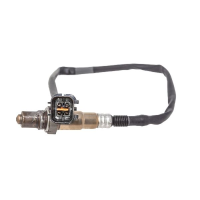
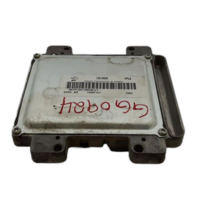
Below are the parts most often responsible for code P2415, ranked by how frequently each one is the actual culprit (per the diagnosis above). Tap any to see what we have for your vehicle.



The information in this article is provided for general reference and educational purposes only. Vehicle specifications, procedures, and part compatibility can vary by production date, trim level, and region. Always consult your vehicle's factory service manual and verify part numbers before purchasing or performing repairs. Safety-critical components such as airbags, seat belts, and braking systems should be installed by a qualified professional.
- 🧭 Diagnostic Flowchart
- 🎬 Helpful Videos
- 🛍️ Shop This Part
- What Does P2415 Mean?
- Can I Drive With P2415?
- Common Causes
- Symptoms
- Common Fixes & Costs
- Used vs. New Parts: Buying Guide
- What Happens If You Wait — Timeline
- Cost of Not Fixing It
- Diagnosis Steps
- When This Code Triggers (Freeze-Frame Conditions)
- Related Codes
- Climate & Environmental Factors
- How to Talk to a Mechanic About This Code
- Where to Take It: Dealer vs Independent vs Chain
- When to Walk Away From the Repair
- What Scan Tool You Need for This Code
- How to Clear the Code After You Fix It
- Will This Fail Emissions / State Inspection?
- Most Commonly Affected Vehicles
- Manufacturer-Specific Notes
- Real Owner Stories
- BMW Z4 M at 66K miles with P2415 & P2197
- 2009 Hyundai Elantra at 175K miles
- Subaru with persistent P2415
- How to Prevent This Code From Triggering
- Frequently Asked Questions
- What does 'Bank 2' mean?
- What are the most common mistakes when diagnosing P2415?
- My car has P2415 and P0174. Which problem do I fix first?
- Why did the code come back after I replaced the oxygen sensor?
- Can I clean the oxygen sensor instead of replacing it?
- Will a bad O2 sensor from a P2415 code damage my engine?
- How much does it cost to diagnose this code?
- Can a loose gas cap cause P2415?
- Do I need to reset the PCM after the repair?
- Key Takeaways
- 🎟️ Get 5% Off