

P2420 on 2010-2015 Lexus RX350: EVAP Switching Valve Causes and Fixes
On a 2010-2015 Lexus RX350, code P2420 is almost always caused by a failed vent valve that is integrated into the charcoal canister assembly. The fix requires replacing the entire canister unit, which can cost between $400 and $600 for the part. Before replacing the canister, always check the gas cap and inspect the wiring harness for damage.
- First, check your gas cap. Make sure it's tight and the seal is not cracked before spending any money.
- Code P2420 points to the vent valve at the rear of the car, NOT the purge valve in the engine bay.
- The most probable fix for P2420 on a 2010-2015 RX350 is replacing the entire charcoal canister assembly.
- This is not an urgent repair; you can continue to drive the vehicle without risking mechanical damage, but you will not pass an emissions test.
What's Unique About the 2010-2015 Lexus RX350
For this generation of Lexus and Toyota vehicles, the 'switching valve' (or vent valve) mentioned in the code's definition is not an inexpensive, standalone part. It is integrated into a larger, non-serviceable unit called the charcoal canister pump module, located at the rear of the vehicle near the fuel tank. This design means that a failure of this specific valve requires the replacement of the entire assembly, making the repair more costly than on vehicles with a separate, serviceable vent valve. This is a common design across many Toyota/Lexus models.
Symptoms You May Notice
- Check Engine Light is on
- Possible faint fuel smell, though this is uncommon. A strong fuel smell is more likely if the canister is saturated from overfilling the tank.
- Difficulty starting the engine immediately after refueling (less common with this specific code, but possible with EVAP system faults).
- Replacing the EVAP Purge Valve/Solenoid (VSV) in the engine bay. This part is not related to the P2420 code, which specifically refers to the vent/switching valve located at the rear of the vehicle with the charcoal canister. The purge valve typically sets codes like P0441.
Most Likely Causes
- Failed Charcoal Canister Assembly (Internal Vent Valve Failure) 🔴 High Probability → Shop Vapor Canister The vent valve is integrated into the canister assembly and is a known failure point on this platform. The valve's internal solenoid or mechanical parts can fail over time, leading to the 'Circuit High' condition detected by the ECM.
How to confirm: After ruling out the gas cap and wiring, this is the most likely cause. A technician can use a high-end scan tool like Toyota's Techstream to command the valve open and closed. If the voltage on the control wire does not drop as expected when commanded ON, it confirms an internal failure of the component.
Typical fix: Replace the entire charcoal canister assembly.
Est. part cost: $400-$600 - Loose or Faulty Gas Cap 🟡 Medium Probability A loose or worn-out gas cap seal will cause the EVAP system to fail its pressure test. While this usually throws codes like P0455 (gross leak) or P0456 (small leak), it's a common user error and the first, cheapest thing to check.
How to confirm: Inspect the gas cap for cracks in the seal. Ensure it is tightened past one 'click'. If the cap is old or looks worn, replacement is a cheap and simple diagnostic step.
Typical fix: Tighten or replace the gas cap.
Est. part cost: $20-$40 - Damaged Wiring or Connector ⚪ Low Probability The charcoal canister is located under the rear of the vehicle, exposing its wiring harness to road debris, moisture, and corrosion. Rodent damage to the harness in this area is also a known issue on Toyota/Lexus platforms.
How to confirm: Visually inspect the wiring harness and connector going to the charcoal canister assembly. Check for chewed wires, corrosion in the connector pins, or breaks in the insulation. Test for proper voltage and ground at the connector with a multimeter. A 'circuit high' code specifically suggests a short to power or a lost ground connection.
Typical fix: Repair the damaged section of the wiring harness or clean/replace the connector.
Est. part cost: $10-$50
Rare But Worth Checking
- Faulty Engine Control Module (ECM): → Shop Engine Control Module (ECM) This is extremely rare. The ECM should only be considered after all other possibilities, including the canister assembly and wiring, have been exhaustively tested and ruled out. A faulty driver circuit within the ECM can theoretically cause a 'circuit high' condition.
Diagnosis Steps
- Check the Gas Cap: Ensure the gas cap is tight (at least one click). Inspect the rubber O-ring for cracks or wear. If it's old, consider replacing it with an OEM cap as a cheap first step.
- Scan for Other Codes: Use an OBD-II scanner to check for any other pending or active codes. The presence of P2401, P2402, or P043E strongly points to the canister assembly.
- Inspect Wiring: Raise the rear of the vehicle and locate the charcoal canister assembly, which is situated near the rear muffler and spare tire. Carefully inspect the electrical connector and wiring harness leading to it. Look for any signs of rodent damage, chafing, corrosion, or loose connections.
- Test the Circuit (Advanced): If you have a multimeter, you can disconnect the harness and check for proper voltage and ground at the connector according to the factory service manual specifications. A 'circuit high' code suggests a potential short to power or an open ground.
- Professional Diagnosis: If the gas cap and wiring are good, the most likely culprit is the canister assembly itself. A professional shop can use a bidirectional scan tool (like Toyota's Techstream) to command the vent valve and confirm its failure before recommending replacement.
- Replace Charcoal Canister Assembly: If the valve is confirmed to be faulty, the entire canister assembly must be replaced. A DIY replacement is possible for those with moderate mechanical skill and takes about an hour.
Parts You'll Likely Need
- Charcoal Canister Assembly
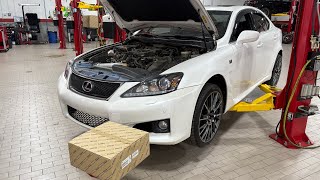
(OEM #77740-0E020)— This assembly contains the non-serviceable vent valve that is the primary cause of code P2420 on this vehicle. The part number 77740-0E020 🎬 Watch this step-by-step charcoal canister replacement video appears to be for the 2007-2009 RX350, which has a similar design. The specific part for 2010-2015 may differ but serves the same function.
Trusted brands: Lexus (Genuine), Denso
OEM price range: $450-$600
Aftermarket price range: $300-$450 - Fuel Cap / Gas Cap
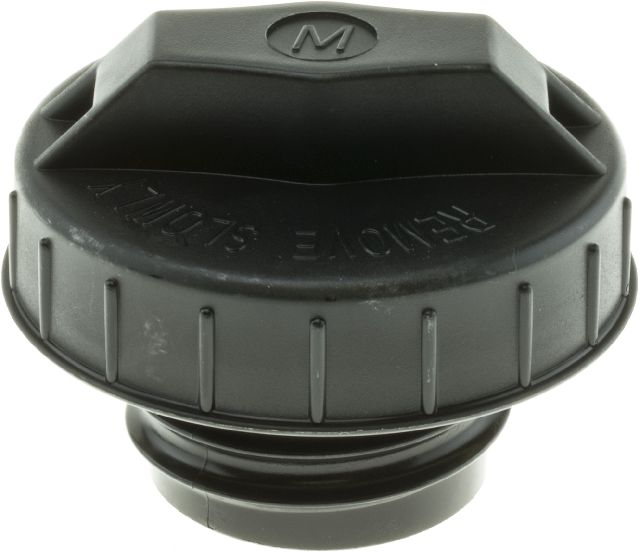
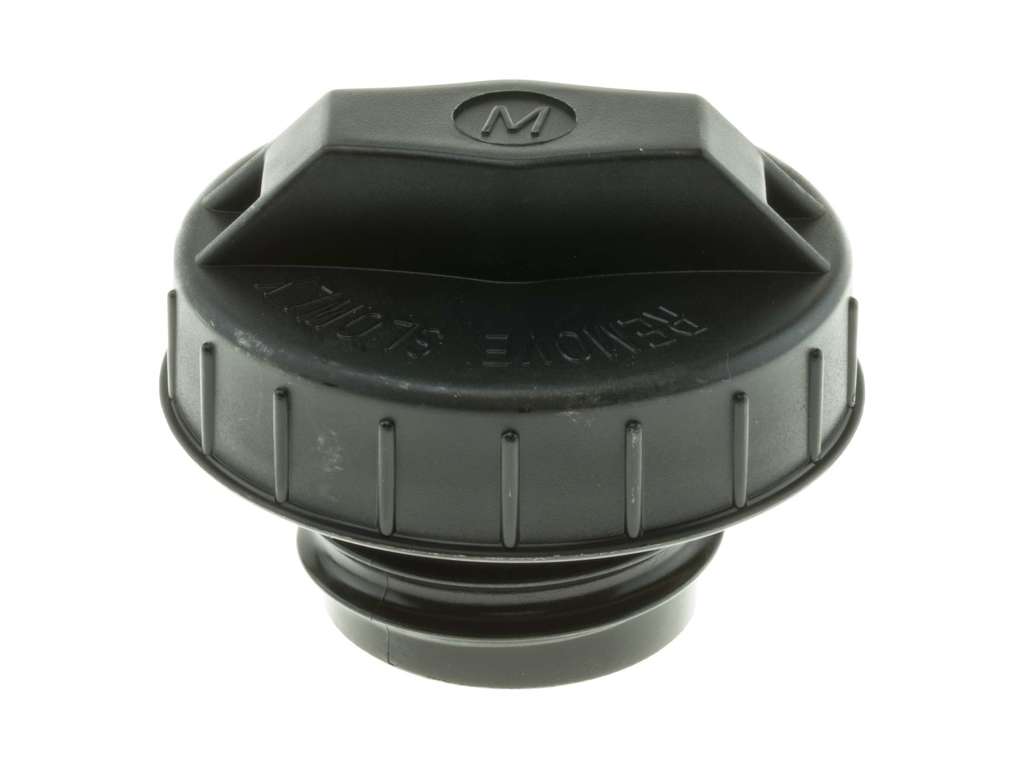
(OEM #77300-52040)— A faulty gas cap is a common cause for various EVAP codes and should be the first part checked or replaced due to its low cost and ease of installation.
Trusted brands: Lexus (Genuine), Stant
OEM price range: $25-$40
Aftermarket price range: $15-$25
Related Codes That Often Appear With This One
- P043E — This code for 'EVAP System Leak Detection Pump Sense Circuit' can appear alongside P2420 because both components are part of the same canister pump module assembly. A failure within the module can trigger multiple related codes, strengthening the diagnosis of a faulty canister unit.
- P2401 — This code indicates 'EVAP Leak Detection Pump Control Circuit Low'. Like P2420 (Circuit High), it points to an electrical issue within the canister pump module, and seeing them together reinforces the diagnosis of a faulty assembly.
- P2402 — This code is for 'EVAP Leak Detection Pump Control Circuit High'. It is very common to see this with P2420 as they both point to a 'circuit high' condition in components housed within the same canister assembly. Seeing these codes together almost guarantees the canister assembly has failed internally.
Technical Service Bulletins (TSBs) & Recalls
- T-SB-0024-15: While for a 2014-2018 Toyota Corolla, this TSB shows a known pattern for Toyota/Lexus vehicles where DTC P2420 is resolved by replacing the charcoal canister assembly due to an internal valve failure.
- T-SB-0028-11: This TSB for the 2009-2010 Toyota Highlander Hybrid (a platform mate) also addresses P2420 by replacing the charcoal canister assembly (P/N 77740-48140), confirming the repair strategy across similar vehicles.
Platform-Specific Known Issues
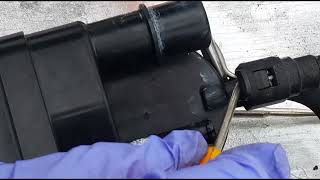
- DIY Canister Replacement Experience: A user on ClubLexus documented the replacement of a charcoal canister on a similar Lexus IS350. The process involved removing a skid plate, disconnecting several hoses 🎬 Watch how to safely unplug the vapor hose connections (with squeeze-tabs) and one electrical connector, and unbolting the canister assembly. The user noted it was a 'stupid easy job' that took about an hour. 🎬 See how to remove and replace the canister
Mechanic-Grade Diagnostic Values
- Charcoal Canister Vent Valve Solenoid Resistance — expected: 26 to 30 Ω at 20°C (68°F). Failure: A reading significantly outside this range, an open circuit (infinite resistance), or a short circuit (near 0 Ω) indicates a failed solenoid coil.
- Voltage at Canister Connector (Vent Valve Power) — expected: 9V to 14V (Battery Voltage) with ignition ON. Failure: No voltage indicates a break in the power supply wire or a blown fuse.
- Voltage at Canister Connector (Vent Valve Control/Ground) — expected: Should drop to <1V when the valve is commanded ON (closed) by a scan tool.. Failure: If voltage remains high (e.g., battery voltage) when the valve is commanded ON, it indicates an open in the control wire back to the ECM or a faulty ECM driver.
- ECM Failure Threshold (EVAP Pressure Change) — expected: Pressure change should be greater than 0.3 kPa during the self-test.. Failure: If the pressure change is less than 0.3 kPa after the vent valve is commanded closed, the ECM interprets this as the valve being stuck open and logs the P2420 fault.
Scan Tool Commands That Help
- Toyota Techstream: Active Test: 'Activate the VSV for Evap Control' — This is the bidirectional command used during diagnosis to manually open and close the vent valve (and purge valve). A technician can monitor circuit voltage while using this command to confirm if the valve's solenoid is responding and if the wiring is intact.
- Toyota Techstream: Utility: 'Evaporative System Check' — This utility runs an automated, multi-step test of the entire EVAP system, taking up to 40 minutes. It is used after a repair (like replacing the canister) to confirm the fix without having to wait for the vehicle's natural key-off monitor to run, which can take over 5 hours.
Wiring & Ground Locations
- Charcoal Canister Assembly — Located at the rear of the vehicle, underneath a heat shield, typically above or near the rear muffler.. This is the primary component that fails and sets code P2420. Knowing its location is critical for inspection and replacement.
- Canister Pump Module Connector — The main electrical connector on the charcoal canister assembly.. This is the connector where voltage and resistance tests are performed to diagnose the vent valve circuit. Pin 8 (VGND) and Pin 9 (VLVB) are specifically called out in diagnostic procedures for voltage checks on some Toyota models.
- Chassis Ground — While a specific ground point ID (e.g., 'ED') is not definitively linked to this circuit without a factory diagram, the ground points for the rear of the vehicle are located on the frame and body in the vicinity of the canister.. A 'Circuit High' code can be caused by a poor or missing ground connection. Ensuring the ground path from the canister harness to the chassis is clean and secure is a key diagnostic step.
Real Owner Repair Stories
- YouTube user (2007-2009 Lexus RX350 (similar design)) — EVAP leak codes (large leak changing to small leak after repair attempt).
❌ Tried (didn't work) Initial diagnosis was not shown, but the user was in the process of replacing the charcoal canister.
✅ What actually fixed it The user replaced the failed original charcoal canister with a used unit from a 2013 Toyota Highlander (4-cylinder), which they noted shared the same part number. This implies cross-compatibility of these parts between certain Toyota and Lexus models. - ClubLexus Forum User (2007 IS350 with 98.5k miles) — Check Engine Light on cold starts with codes P043E, P043F, P2401, P2402, and P2419.
❌ Tried (didn't work) Clearing the codes; the CEL would return on the next cold start.
✅ What actually fixed it The thread concluded with the understanding that this cluster of contradictory EVAP codes (clogged, high flow, circuit low, circuit high) strongly points to a comprehensive failure within the charcoal canister assembly, which contains multiple sensors and valves. The final fix is implied to be the replacement of the canister assembly.
OEM Part Supersession History
77740-48160→77740-0E030— Part update/revision by the manufacturer. Updated parts often address known failure modes.
Heads up: 77740-0E030 is the correct and current part for the entire 2010-2015 Lexus RX350 range.77740-0E020→N/A— This part is for a different vehicle (Toyota Highlander) and was incorrectly associated with the RX350 in the Pass 2 data.
Heads up: While some Toyota/Lexus EVAP parts are interchangeable, 77740-0E020 is not the correct primary part number for the 2010-2015 RX350.
Model Year Variations Within This Range
- 2010-2012 vs 2013-2015: The Lexus RX350 received a mid-cycle refresh for the 2013 model year, which included cosmetic updates and changes to the interior/infotainment. However, the core powertrain, including the 3.5L 2GR-FE engine and its associated emissions system, remained fundamentally the same. The cause and fix for P2420 are consistent across the entire 2010-2015 generation.
Diagnostic Flowchart
Other Known Issues on This Vehicle
Issues unrelated to this code that are worth knowing about as an owner of this generation:
- VVT-i Oil Line Rupture 🔴 High — Common on early 2GR-FE engines (pre-2010). A rubber section of the VVT-i oil line can degrade and burst, causing rapid and catastrophic oil loss, potentially seizing the engine. (Ref: Lexus LSC 9LH (Limited Service Campaign))
- Melting / Sticky Dashboard 🟡 Low — Very common on Lexus models of this era, especially in warmer climates. The dashboard material degrades under heat and humidity, becoming sticky, shiny, and prone to cracking. (Ref: Lexus Warranty Enhancement Program (ZE6), now expired)
- Power Steering Rack Leak 🟠 Medium — A notable number of owners report leaks from the power steering rack, often with fluid collecting inside the bellows/boots without dripping on the ground initially.
- Timing Cover Oil Leak 🟠 Medium — Leaks can develop from the timing chain cover gasket over time, requiring a significant labor-intensive repair.
- Water Pump Failure 🟠 Medium — The water pump is a common failure item. Symptoms include a sweet coolant smell, pink crusty buildup near the pump, or a grinding noise from the drive belt area.
Used vs. New Parts: Buying Guide for This Vehicle
When a used part is the smart pick: A used charcoal canister assembly from a reputable auto recycler can be a smart choice for this repair, potentially saving hundreds of dollars. Since the failure is electronic/mechanical within the valve and not simple charcoal saturation, a part from a lower-mileage, accident-damaged vehicle is a viable option.
Donor-vehicle mileage cap: roughly under 100000 miles for the part to have meaningful remaining life.
What to inspect on the donor part:
- Check for a vehicle from a dry, non-salt-belt region to minimize corrosion on the housing and electrical pins.
- Visually inspect the plastic housing for cracks or damage.
- Ensure all hose nipples and the electrical connector are intact and not broken.
- If possible, test the resistance across the vent valve solenoid pins; it should be between 26-30 ohms.
OEM-only on this vehicle (don't cheap out):
- Charcoal Canister Assembly: While a used OEM part is a good option, it is strongly recommended to avoid new aftermarket canister assemblies. Forum and professional mechanic experience suggests a high failure rate for non-OEM units in this application, often leading to repeat repairs.
Aftermarket brands forum-validated for this vehicle:
- Denso: Denso is the original equipment manufacturer for many Toyota/Lexus electronic and emissions components. If a new Denso-branded canister is available, it is considered equivalent to the genuine Lexus part.
Brands owners have reported issues with on this vehicle:
- Unbranded or 'white-box' canister assemblies from online marketplaces should be avoided due to high reported failure rates for this specific type of component.
Real Owner Stories
Aggregated from forums and TSBs cited above. Mileages and costs reflect what owners reported in those sources.
2014 Lexus IS350 3.5L V6
Symptoms: The owner encountered an EVAP system fault code. Upon inspection, the job required removing a skid plate and disconnecting several hoses with squeeze-tabs and one electrical connector.
What fixed it: Replaced the charcoal canister assembly. The owner described it as a 'stupid easy job' that took about an hour.
Source hint: ClubLexus - 'Charcoal Canister replacement' (Dec 2024)
Related OBD-II Codes
Frequently Asked Questions
Does TSB-0028-11 apply to my 2010 Lexus RX350?
Where is the charcoal canister located on the 2010-2015 RX350?
Can I just replace the vent valve instead of the whole $400-$600 canister assembly?
Is there a specific TSB for P2420 that mentions the charcoal canister failure?
Could my P2420 code be caused by rodents?
I have a 2010 RX350; should I be worried about the VVT-i oil line mentioned in the known issues?
Helpful Videos

Used OEM Parts in Stock
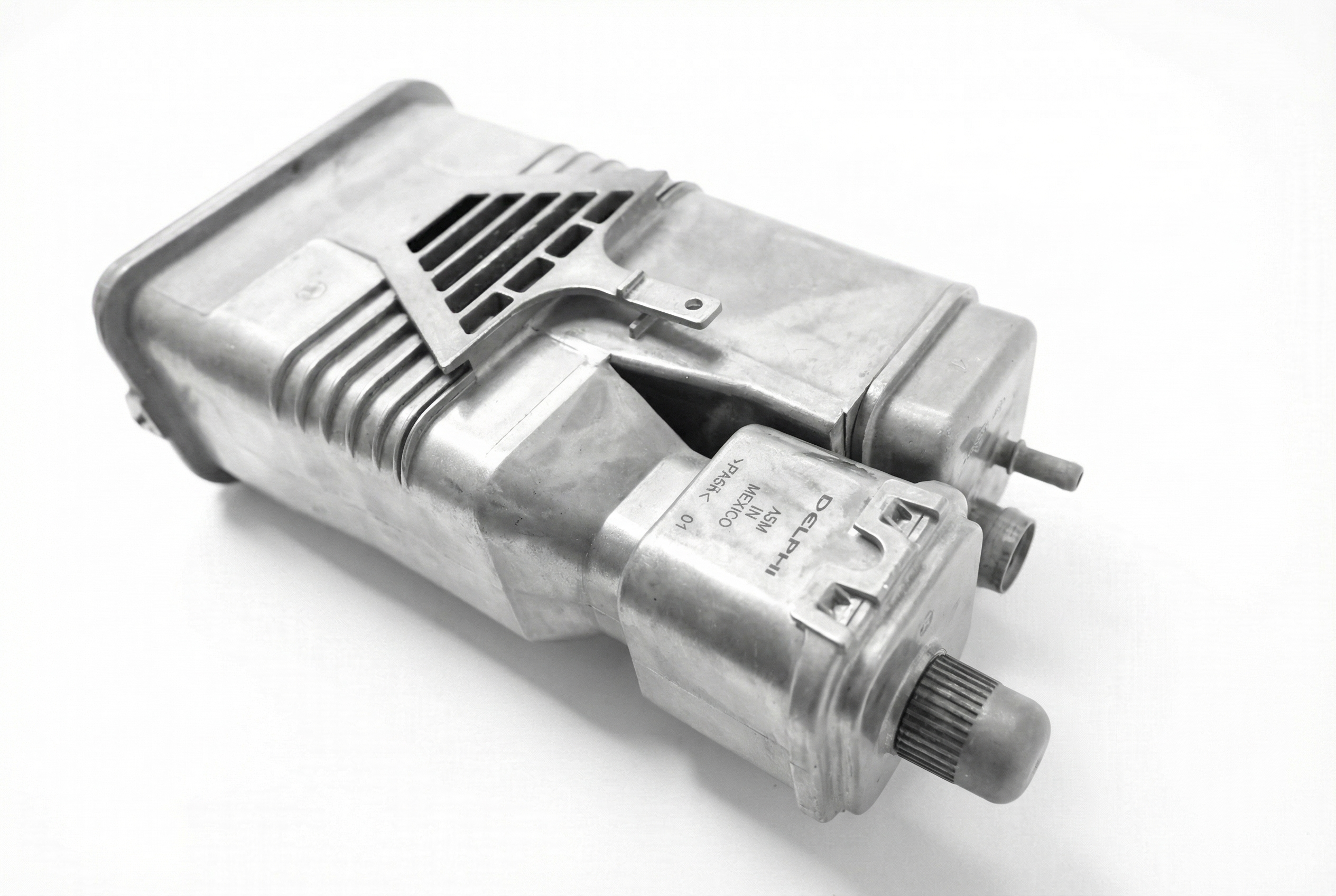
New Aftermarket Parts Available


The information in this article is provided for general reference and educational purposes only. Vehicle specifications, procedures, and part compatibility can vary by production date, trim level, and region. Always consult your vehicle's factory service manual and verify part numbers before purchasing or performing repairs. Safety-critical components such as airbags, seat belts, and braking systems should be installed by a qualified professional.
- Lexus RX350:
- 🧭 Diagnostic Flowchart
- 🎬 Helpful Videos
- 🛍️ Shop This Part
- What's Unique About the 2010-2015 Lexus RX350
- Symptoms You May Notice
- Most Likely Causes
- Rare But Worth Checking
- Diagnosis Steps
- Parts You'll Likely Need
- Related Codes That Often Appear With This One
- Technical Service Bulletins (TSBs) & Recalls
- Platform-Specific Known Issues
- Mechanic-Grade Diagnostic Values
- Scan Tool Commands That Help
- Wiring & Ground Locations
- Real Owner Repair Stories
- OEM Part Supersession History
- Model Year Variations Within This Range
- Other Known Issues on This Vehicle
- Used vs. New Parts: Buying Guide for This Vehicle
- Real Owner Stories
- 2014 Lexus IS350 3.5L V6
- Related OBD-II Codes
- Frequently Asked Questions
- 🎟️ Get 5% Off