

P2420 on 2008-2013 Toyota Highlander: EVAP Switching Valve Circuit High Causes and Fixes
On a 2008-2013 Highlander, code P2420 almost always means the entire charcoal canister assembly has failed and needs to be replaced. The faulty valve is integrated into this assembly. Expect to pay $400-$700 for the OEM part.
- P2420 on your Highlander is an electrical fault code, not a leak code. Do not replace the gas cap.
- The problem is almost always a failed valve inside the charcoal canister assembly, located at the rear of the vehicle.
- The correct repair is to replace the entire charcoal canister assembly. The faulty valve is not available as a separate part.
- Before buying parts, it's wise to check the wiring and connector near the canister for damage, though this is a less common cause.
- The vehicle is safe to drive with this code, but it will not pass an emissions test until it is repaired.
What's Unique About the 2008-2013 Toyota Highlander
On this generation of Highlander, the component causing the P2420 code—the EVAP vent/switching valve—is not sold as a separate part. It is permanently integrated into the charcoal canister assembly located at the rear of the vehicle. While other EVAP codes can be caused by simple issues like a loose gas cap, P2420 on this platform is very specific to an electrical failure that almost always requires replacing the entire canister unit. Toyota even issued a Technical Service Bulletin (T-SB-0028-11) for the 2009-2010 Hybrid models for this exact problem, highlighting that a faulty canister is the known cause. Although the TSB is specific to Japan-built Hybrid models within certain VIN ranges, the failure pattern is identical for non-hybrid 2GR-FE models of the same generation. This logic-driven fault is common across the manufacturer's lineup; for instance, TSB Bulletin #T-SB-0024-15 notes that other models with the 2ZR-FE engine may exhibit a MIL "ON" condition specifically for P2420, defined as the Evaporative Emission Pressure Switching Valve being stuck OFF.
Symptoms You May Notice
- Check Engine Light is on
- Inability to pass an emissions inspection
- Replacing the gas cap. A faulty gas cap typically causes leak-related codes like P0455 or P0456, not an electrical circuit code like P2420.
- Replacing the EVAP purge valve/solenoid. The purge valve is a different component located in the engine bay. P2420 specifically points to the vent/switching valve located at the rear of the vehicle with the charcoal canister.
Most Likely Causes
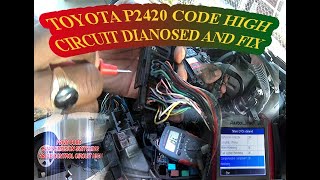
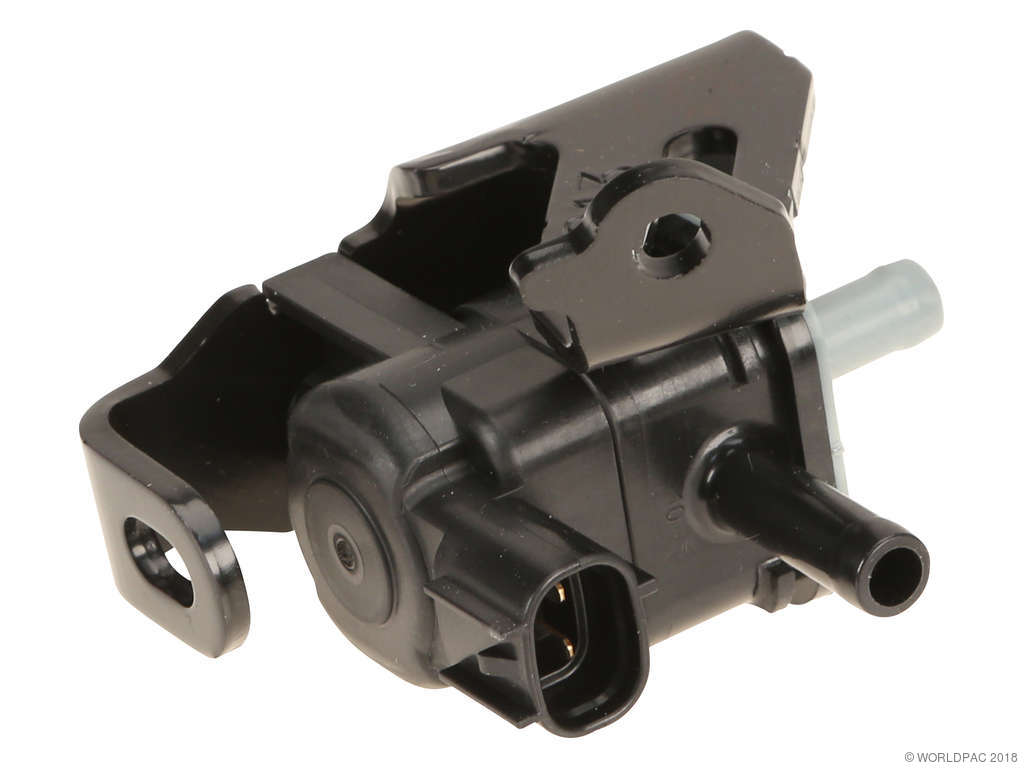
- Failed Charcoal Canister Assembly 🔴 High Probability → Shop Vapor Canister The vent/switching valve is integrated into the canister and is a known failure point, as documented in TSB T-SB-0028-11 for some models. The internal solenoid coil can fail 🎬 Watch: Diagnosing and fixing a Toyota P2420 code, creating the 'circuit high' condition.
How to confirm: After confirming with a scan tool that P2420 is the active code, a technician would access the canister connector at the rear of the vehicle. They would test for proper power and ground signals from the ECM. Per TSB-0028-11, with the ignition ON, there should be battery voltage (9-14V) at Pin 9. If voltage is also present at Pin 8 (the ECM ground control line), the canister assembly is confirmed to be faulty.
Typical fix: Replace the entire charcoal canister assembly. The faulty valve is not serviced separately.
Est. part cost: $400-$700 - Damaged Wiring or Connector ⚪ Low Probability The wiring harness leading to the charcoal canister is located under the vehicle and is exposed to road debris, moisture, and corrosion, which can cause a short or open circuit.
How to confirm: Visually inspect the wiring harness running to the charcoal canister for any signs of damage, chafing, or corrosion. Test for continuity and voltage at the connector pins corresponding to the switching valve circuit. Check for a short to power on the ground control wire (Pin 8).
Typical fix: Repair the damaged section of the wiring harness or replace the connector.
Est. part cost: $10-$50
Rare But Worth Checking
- Faulty Engine Control Module (ECM): → Shop Engine Control Module (ECM) This is extremely rare. Before suspecting the ECM, all other possibilities, especially the canister assembly and its wiring, must be exhaustively ruled out. An ECM failure can cause the driver circuit to malfunction internally.
Diagnosis Steps
- Verify the code with an OBD-II scanner. Confirm that P2420 is the primary code stored.
- Visually inspect the charcoal canister and its wiring harness at the rear of the vehicle, above the rear subframe on the driver's side. Look for any obvious signs of physical damage, corrosion, or loose connections.
- Using a wiring diagram, identify the power and ground wires for the switching valve at the canister connector. For this model, Pin 9 (VLVB) is typically the power supply, and Pin 8 (VGND) is the control circuit grounded by the ECM.
- With the key on, engine off, back-probe the connector. Check for battery voltage (9-14V) between Pin 9 and chassis ground.
- Check the voltage between Pin 8 and chassis ground. A 'Circuit High' fault means you will likely see battery voltage here when you should not. This indicates an internal open/short in the canister assembly.
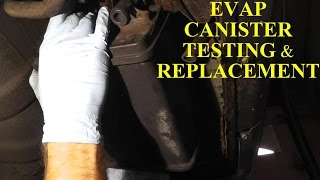
- If using a bidirectional scan tool 🎬 Watch: How to test and replace an EVAP canister, command the vent valve (VSV) to activate. The voltage on Pin 8 should drop to near 1V. If it remains high, the canister is faulty.
- If power and ground signals are present at the connector when commanded, but the valve does not operate or the code returns immediately, the charcoal canister assembly has failed internally and must be replaced.
- If either power (Pin 9) or the ground signal from the ECM (Pin 8, when commanded) is missing, trace the corresponding wire back to its source (fuse box or ECM) to find the break or short.
- Only consider the ECM as the cause if all wiring and the canister itself have been proven to be good.
Parts You'll Likely Need
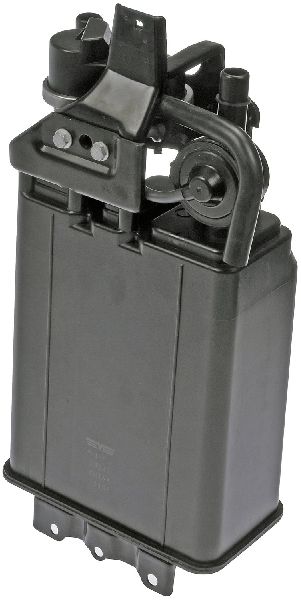
- Charcoal Canister Assembly
(OEM #77740-48140)— This is the most common cause of P2420, as the internal switching valve fails and is not sold separately. TSB T-SB-0028-11 specifically calls for its replacement on some models.
Trusted brands: Toyota (OEM), Denso, Dorman (911-643)
OEM price range: $650-$750
Aftermarket price range: $250-$450
Technical Service Bulletins (TSBs) & Recalls
- T-SB-0028-11: Addresses MIL ON with DTC P2420 for some 2009-2010 Highlander Hybrids (and other Toyota models), indicating a faulty charcoal canister assembly and providing specific diagnostic voltage checks.
- TSB Bulletin #T-SB-0024-15: While issued for other models like the Corolla, this bulletin confirms that P2420 is a manufacturer-recognized condition where the Evaporative Emission Pressure Switching Valve is stuck OFF.
- TSB Bulletin #T-SB-0024-15_Rev: An updated manufacturer service bulletin further detailing the repair procedure for the P2420 "Stuck Off" condition in vehicles equipped with similar EVAP system logic.
Platform-Specific Known Issues
- A Technical Service Bulletin (T-SB-0028-11) was issued for 2009-2010 Toyota Highlander Hybrid models built in Japan for this specific code, identifying the charcoal canister assembly as the root cause.
- The TSB applies to 2WD models with VINs starting JTEEW4#A#92037432 and 4WD models starting JTE#W3EH#A2039130.
- Owner Experience: A user on the Toyota Nation forums with a 2011 Highlander V6 reported getting the P2420 code. After verifying power at the connector, they replaced the charcoal canister (Part No. 77740-48140) themselves. The repair took about 1.5 hours, involving lowering the spare tire for access, and successfully cleared the code.
Mechanic-Grade Diagnostic Values
- EVAP Purge VSV Coil Resistance — expected: 10.5 to 14.0 Ω at 20°C (68°F). Failure: Resistance outside of this range indicates a faulty VSV coil. While this is for the purge valve, it provides a general reference for Toyota EVAP solenoids of this era, as specific vent valve resistance is not published.
- Vent Valve Control Circuit Voltage (Commanded ON) — expected: < 1.0 V. Failure: Voltage remaining high (near battery voltage) when the valve is commanded ON by a scan tool indicates a failure in the canister assembly or an open in the control circuit.
Scan Tool Commands That Help
- Toyota Techstream: Active Test: 'Activate the VSV for Vent Valve' — This bidirectional command is used to manually close the vent valve. While monitoring the voltage on the control wire (Pin 8), a technician can use this command to see if the ECM is attempting to ground the circuit and if the valve responds. If the command is sent and voltage does not drop, it confirms a fault.
- Toyota Techstream: Utility: 'Evaporative System Check' — After replacing the charcoal canister, this automated test sequence runs the EVAP monitor to confirm the repair is successful and that no pending codes are set. It can take up to 23 minutes to complete.
Wiring & Ground Locations
- Ground Point O2 — Located behind the left side of the rear bumper, near the rear of the vehicle.. This is a primary chassis ground point in the vicinity of the charcoal canister. While a 'Circuit High' code is less likely to be a bad ground, corrosion at this point could cause various erratic electrical issues in the rear of the vehicle.
- Charcoal Canister Connector — On the charcoal canister assembly itself, located above the rear subframe, typically on the driver's side.. This is the main connector for the integrated vent valve. Pin 9 is the 12V+ power feed (VLVB) and Pin 8 is the control line that the ECM grounds to activate the valve (VGND). All electrical diagnosis for the valve happens at this connector.
OEM Part Supersession History
77740-48121→77740-0E020— Standard part revision by the manufacturer.
Heads up: This supersession is for the non-hybrid Highlander charcoal canister. The Highlander Hybrid uses a different part number (e.g., 77740-48140). This highlights the critical need to always verify the correct part number with the vehicle's VIN before ordering.
Diagnostic Flowchart
Other Known Issues on This Vehicle
Issues unrelated to this code that are worth knowing about as an owner of this generation:
- VVT-i Oil Line Rupture 🔴 High — Common on pre-2010 models with the original rubber/metal hybrid line. Can occur without warning, typically after 60,000 miles. (Ref: Limited Service Campaign (LSC) to replace the rubber line with an all-metal line (P/N 15772-31030). Failure to perform this can lead to catastrophic oil loss and engine seizure.)
- Melting / Sticky Dashboard 🟡 Low — Very common in vehicles exposed to high heat and humidity. The dashboard surface becomes shiny, sticky, and can crack. (Ref: Warranty Enhancement Program (ZE6) extended coverage for dashboard replacement for 10 years from the vehicle's first use date.)
- Intermediate Steering Shaft Clunk 🟠 Medium — Common issue causing a clunk or pop noise when turning the steering wheel at low speeds. (Ref: TSB T-SB-0034-13 was issued for an improved intermediate shaft (P/N 45220-48170) to fix the noise.)
- Engine Oil Cooler Line Leak 🔴 High — Similar to the VVT-i line, the rubber sections of the oil cooler lines can degrade and burst, causing rapid oil loss. This is particularly noted on models around 2011. (Ref: TSB T-SB-02011-11 and Warranty Enhancement Program ZE2 addressed this by replacing rubber hoses with an all-metal pipe (P/N 15767-31020).)
- Water Pump Failure 🟠 Medium — The water pump seals are a known failure point, leading to coolant leaks on the passenger side of the engine.
Used vs. New Parts: Buying Guide for This Vehicle
When a used part is the smart pick: A used charcoal canister is a significant gamble and generally not recommended for this repair. The failure is electronic and internal to the sealed unit, making visual inspection of a used part ineffective. Furthermore, the canister's charcoal medium can be contaminated with liquid fuel from a donor car that was habitually over-filled, which would cause different EVAP problems.
Donor-vehicle mileage cap: roughly under 50000 miles for the part to have meaningful remaining life.
What to inspect on the donor part:
- Verify the part number exactly matches the one being replaced.
- Inspect the plastic housing for any cracks, especially around mounting tabs and hose ports.
- Check the electrical connector pins for any signs of corrosion or damage.
- If possible, ask the seller if the donor vehicle had any EVAP-related trouble codes.
- Avoid parts from vehicles in regions with heavy road salt usage, as corrosion is more likely.
OEM-only on this vehicle (don't cheap out):
- Charcoal Canister Assembly: Given that Toyota issued a TSB and updated the part to fix the P2420 issue, using a new OEM (or OEM-supplier like Denso) part is the most reliable solution to ensure a long-term fix.
Aftermarket brands forum-validated for this vehicle:
- Denso (Often the OEM supplier)
- Toyota (Genuine OEM)
Brands owners have reported issues with on this vehicle:
- Unbranded/white-box parts from online marketplaces. While Dorman is a known brand, forum discussions often favor OEM or Denso for critical emissions components like this to avoid repeat failures or incompatibility.
Real Owner Stories
Aggregated from forums and TSBs cited above. Mileages and costs reflect what owners reported in those sources.
2011 Toyota Highlander V6
Symptoms: Check engine light with code P2420. Verified power was reaching the connector at the rear of the vehicle.
What fixed it: Replaced the charcoal canister assembly (Part No. 77740-48140). The repair took approximately 1.5 hours and required lowering the spare tire for access.
Source hint: Toyota Nation Forum thread titled 'P2420 on 2011 Highlander V6'
Documented NHTSA Reports
Manufacturer Service Data
Report: NHTSA ODI #10573840 references manufacturer data indicating a MIL "ON" condition with DTC P2420 stored for various models within this manufacturer's lineup, highlighting the prevalence of this specific EVAP logic fault.
Related OBD-II Codes
Frequently Asked Questions
Does TSB T-SB-0028-11 apply to my 2009 Highlander Hybrid?
Can I just replace the switching valve on my 2011 Highlander's canister?
I have a P2420 on my 2012 Highlander; could it just be a loose gas cap?
Where is the charcoal canister located on the 2008-2013 Highlander?
What voltage should I see at the canister connector to confirm it's bad?
Is there a risk of oil loss on this generation of Highlander besides EVAP issues?
Helpful Videos

Used OEM Parts in Stock

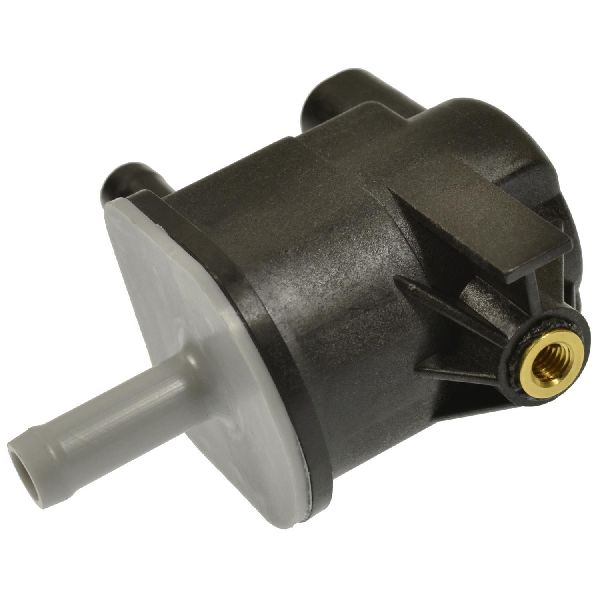
New Aftermarket Parts Available


The information in this article is provided for general reference and educational purposes only. Vehicle specifications, procedures, and part compatibility can vary by production date, trim level, and region. Always consult your vehicle's factory service manual and verify part numbers before purchasing or performing repairs. Safety-critical components such as airbags, seat belts, and braking systems should be installed by a qualified professional.
- Toyota Highlander:
- 🧭 Diagnostic Flowchart
- 🎬 Helpful Videos
- 🛍️ Shop This Part
- What's Unique About the 2008-2013 Toyota Highlander
- Symptoms You May Notice
- Most Likely Causes
- Rare But Worth Checking
- Diagnosis Steps
- Parts You'll Likely Need
- Technical Service Bulletins (TSBs) & Recalls
- Platform-Specific Known Issues
- Mechanic-Grade Diagnostic Values
- Scan Tool Commands That Help
- Wiring & Ground Locations
- OEM Part Supersession History
- Other Known Issues on This Vehicle
- Used vs. New Parts: Buying Guide for This Vehicle
- Real Owner Stories
- 2011 Toyota Highlander V6
- Documented NHTSA Reports
- Manufacturer Service Data
- Related OBD-II Codes
- Frequently Asked Questions
- 🎟️ Get 5% Off