

P2420 on 2006-2012 Toyota RAV4: EVAP Switching Valve Circuit High Causes and Fixes
This code almost always means the entire charcoal canister assembly needs to be replaced because the internal vent valve has failed. Expect to pay $400-$600 for an OEM part. Before replacing, thoroughly check the wiring harness and connector near the canister for corrosion or damage, as this is a known secondary failure point, especially in salt-belt regions.
- P2420 on a 2006-2012 RAV4 points to an electrical issue with the EVAP vent valve.
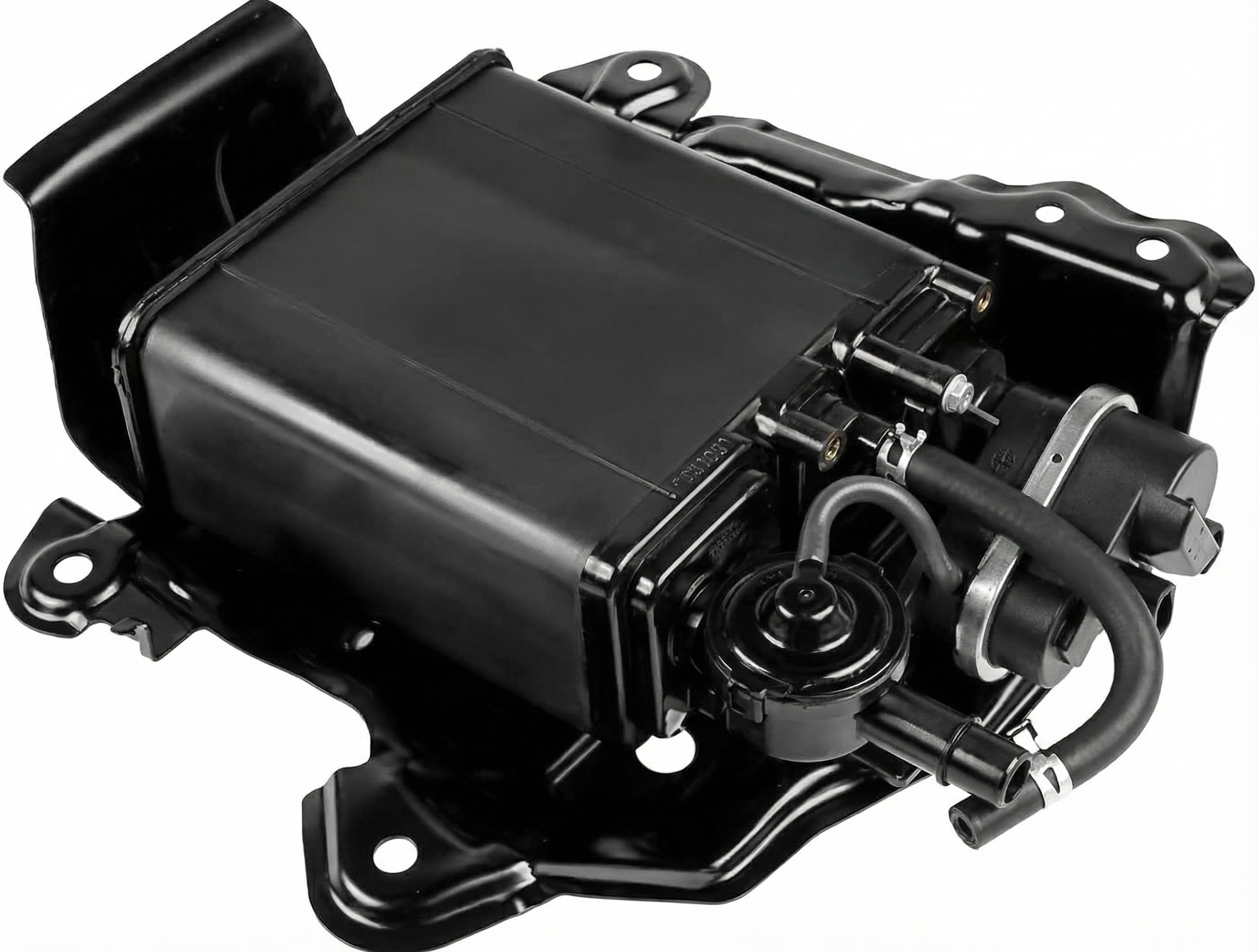
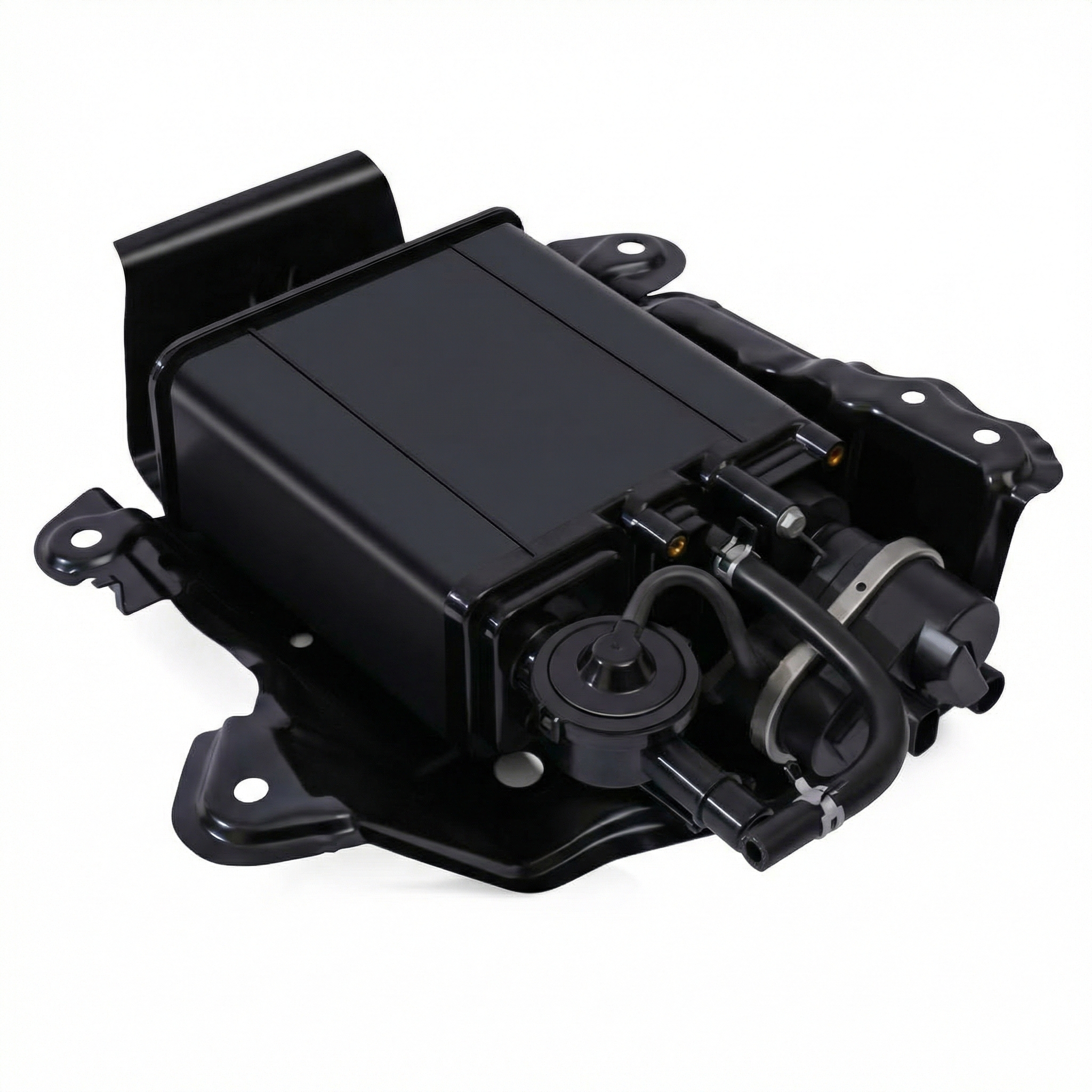
- The most common cause is the failure of the entire charcoal canister assembly (P/N 77740-0R010), as the valve is built into it.
- Before spending hundreds on a new canister, thoroughly inspect the wiring and connector (P/N 90980-10916) for corrosion or damage, as this is a frequent secondary cause.
- This repair can be done by a DIYer with moderate skills, but the OEM part is expensive.
- The vehicle is safe to drive with this code, but it will not pass an emissions test.
What's Unique About the 2006-2012 Toyota RAV4
On the 3rd generation RAV4, the entire charcoal canister assembly, which includes the problematic vent valve, is mounted under the rear of the vehicle, just ahead of the rear suspension on the driver's side. This location makes it and its electrical connector highly susceptible to moisture, road salt, and corrosion, which is a common cause of failure. Unlike some vehicles where the valve is a separate, inexpensive part, on the RAV4 you must replace the entire canister assembly, making the repair significantly more costly. Some owners report charcoal pellets from a deteriorating canister clogging EVAP lines, making canister replacement the only long-term solution.
Symptoms You May Notice
- Check Engine Light is on
- Inability to pass an emissions test
- 4WD and Slip Indicator lights may also illuminate along with the Check Engine Light
- A faint fuel smell is possible, but not common.
- Replacing only the gas cap. While a faulty gas cap can cause other EVAP codes (like P0455 or P0441), it is not a direct cause for the P2420 'Circuit High' fault.
Most Likely Causes
- Failed Charcoal Canister Assembly 🔴 High Probability → Shop Vapor Canister The vent valve that triggers this code is not sold separately and is integrated into the canister assembly. These assemblies are known to fail over time, either from internal component failure (stuck valve) or from water/debris intrusion due to their location under the vehicle. In some cases, the charcoal media inside the canister breaks down and clogs the internal valves.
How to confirm: After confirming the wiring is intact, use a bi-directional scan tool (like Toyota's Techstream) to command the vent valve to close. If you hear no click and the circuit voltage doesn't change, the valve inside the canister has failed. The official diagnostic procedure involves running the 'Evaporative System Check' utility in Techstream. 🎬 Watch: How to use a scan tool for EVAP testing. A resistance check across the solenoid pins can also be performed; a reading of around 27 ohms is expected on similar Toyota systems.
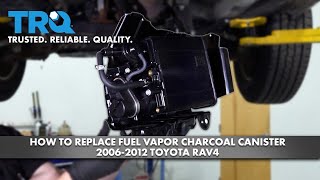
Typical fix: Replace the entire charcoal canister assembly. This is an unbolt/rebolt procedure but requires safely working under the vehicle. 🎬 See this step-by-step walkthrough for replacing the charcoal canister.
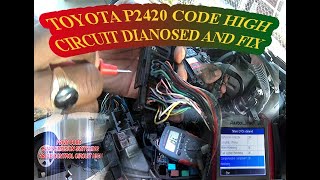
Est. part cost: $400-$850 - Damaged Wiring or Connector 🟡 Medium Probability The canister and its wiring are exposed to road debris, water, and salt, which can lead to corrosion in the connector pins or breaks in the wires over time. A YouTube video by 'YARDMAN MOTOR WORKS' details diagnosing a wire break as the cause for a P2420 on a 2007 RAV4. 🎬 Watch: A real-world diagnosis of a broken wire on a RAV4.
How to confirm: Visually inspect the wiring harness leading to the canister pump module for any signs of cracking, fraying, or green corrosion. Unplug the connector and check for bent or corroded pins. Use a multimeter to check for continuity on the control wire between the canister and the ECM. The vent valve wires are typically a plain white wire and a black wire.
Typical fix: Repair the damaged section of wire or replace the connector pigtail. The connector housing part number is often Toyota P/N 90980-10916.
Est. part cost: $10-$50
Rare But Worth Checking
- Faulty Engine Control Module (ECM): → Shop Engine Control Module (ECM) This is very uncommon. The internal driver circuit in the ECM that controls the vent valve can fail. This should only be considered after definitively ruling out the canister assembly and all wiring.
Diagnosis Steps
- Read the code with an OBD-II scanner to confirm P2420 is present.
- Visually inspect the charcoal canister assembly, located under the rear of the vehicle on the driver's side, for any obvious physical damage or cracks.
- Carefully inspect the electrical connector and wiring harness going to the canister. Look for signs of corrosion, moisture, or damaged wires. Pay close attention to the harness where it may rub against the frame or suspension components.
- If you have a bi-directional scan tool, command the 'Vent Valve' or 'Switching Valve' to activate. Listen for an audible click from the canister. The official Toyota procedure uses the 'Evaporative System Check' utility in Techstream.
- If no click is heard, use a multimeter to check for battery voltage and a ground signal at the connector when the valve is commanded on. With the ignition ON, there should be 9-14V between Pin 9 (VLVB) and chassis ground. The vent valve control wires are typically a plain white wire and a black wire.
- Check the resistance of the vent valve solenoid at the canister connector. While not officially specified for the RAV4, similar Toyota systems show an expected resistance of around 23-27 ohms. An open circuit (infinite resistance) or a short (near zero resistance) indicates a failed solenoid coil, requiring canister replacement.
- If power and a ground command are present but the valve does not operate, the charcoal canister assembly is faulty and must be replaced.
- If the ground signal is missing when commanded by the scan tool, check the continuity of the ground wire (typically white) back to the ECM connector. On a 2007 RAV4, this wire runs to pin #42 of the 'A' connector at the ECM. If the wire is good, the ECM may be faulty (this is rare).
Parts You'll Likely Need
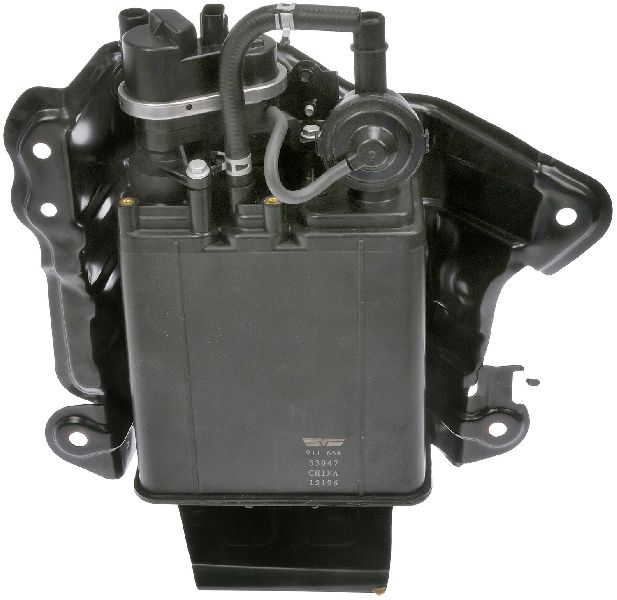
- Charcoal Canister Assembly
(OEM #77740-0R010)— This is the most common failure. The vent valve that causes code P2420 is integrated into this assembly and cannot be replaced separately.
Trusted brands: Toyota (OEM), Denso, Dorman
OEM price range: $550-$850
Aftermarket price range: $250-$450 - Canister Connector Housing
(OEM #90980-10916)— Needed if the original connector is damaged by corrosion or physical impact, which is a common secondary cause of P2420.
Trusted brands: Toyota (OEM)
OEM price range: $10-$15
Related Codes That Often Appear With This One
- P043E — Relates to the EVAP system leak detection reference orifice, which is part of the same canister assembly.
- P2401 — Indicates a low circuit signal for the leak detection pump, which is also housed within the same canister assembly.
- P2402 — Indicates a high circuit signal for the leak detection pump, pointing to a fault within the shared canister assembly or its wiring.
- P2419 — Relates to the EVAP system switching valve control circuit being stuck off, another fault pointing to the integrated vent valve in the canister assembly.
Technical Service Bulletins (TSBs) & Recalls
- T-SB-0028-11 (April 7, 2011): While not for the RAV4 specifically, this TSB addresses P2420 on other 2009-2010 Toyota models (4Runner, Camry, Highlander, etc.) by replacing an updated charcoal canister. It provides detailed diagnostic steps, including specific connector pin voltages to check (Pin 9 for power, Pin 8 for ground command), which are analogous to the RAV4 system.
- T-SB-0024-15 (May 12, 2015): Addresses P2420 on 2014-2018 Corollas. While for a different vehicle, it confirms the official repair is replacing the entire charcoal canister assembly for this code.
- TSB Bulletin #T-SB-0024-15_Rev (February 6, 2018): This revised bulletin notes that certain vehicles may exhibit a MIL "ON" condition with DTC P2420 (Evaporative Emission Pressure Switching Valve Stuck Off) and directs technicians to follow specific repair procedures to address the condition.
Platform-Specific Known Issues
- The placement of the canister assembly under the vehicle makes it a common victim of corrosion, especially in regions that use road salt during winter.
- A Reddit user on r/MechanicAdvice shared an experience where a mechanic suggested replacing the fuel tank along with the canister for $2400, which was determined to be unnecessary upselling. The canister is a separate, bolt-on part.
- Over-filling the fuel tank after the pump clicks off can sometimes lead to liquid fuel saturating the charcoal canister, which can cause premature failure and other EVAP codes.
Mechanic-Grade Diagnostic Values
- Vent Valve Solenoid Coil Resistance — expected: 23-27 ohms at 68°F (20°C). Failure: An open circuit (infinite resistance) or a direct short (near 0 ohms) indicates a failed solenoid.
- Vent Valve Control Wire Voltage (at canister connector) — expected: Near battery voltage (12V) when valve is commanded OFF (circuit open). Near 0V when valve is commanded ON (circuit grounded by ECM).. Failure: Voltage that remains high when the valve is commanded ON points to an open in the control wire or a faulty ECM driver. Voltage that is always low could indicate a short to ground.
Scan Tool Commands That Help
- Toyota Techstream: Evaporative System Check (Automatic Mode) — This is the official, automated procedure to test the entire EVAP system, including the vent valve. The tool commands the valves and pump in sequence to check for proper operation and leaks. It should be used to confirm a canister failure or to verify a repair has been successful.
- Toyota Techstream: Active Test: Activate the VSV for Evap Control — This is a manual bidirectional test to directly command the vent valve (also known as a Vacuum Switching Valve or VSV) ON and OFF. It is used to listen for the solenoid's 'click' and to check for voltage changes at the connector, which quickly isolates whether the fault is in the wiring or the canister itself.
Wiring & Ground Locations
- ECM Connector A, Pin 42 — The ECM is located in the engine bay. The white control wire for the vent valve runs from the canister assembly to pin #42 of the 'A' connector at the ECM.. If the vent valve does not receive the ground signal from the ECM when commanded, testing for continuity on this specific wire between the canister connector and this ECM pin will determine if the wire is broken or if the ECM's internal driver is faulty.
- Canister Pump Module Connector — Under the vehicle on the driver's side, attached to the charcoal canister assembly.. This is the primary point for electrical testing. The vent valve control wires are a plain white wire and a black wire. This connector is highly exposed to road salt and moisture, making it a common point of failure due to corrosion.
Real Owner Repair Stories
- YouTube channel 'YARDMAN MOTOR WORKS' (2007 Toyota RAV4) — Check Engine Light with code P2420.
❌ Tried (didn't work) The technician first inspected the charcoal canister assembly (leak detection pump) and determined its internal components were functioning correctly.
✅ What actually fixed it A continuity test revealed an open circuit in the white control wire between the canister and the ECM. The technician ran a new wire from the canister connector, through the vehicle's interior, to pin #42 at the ECM connector in the engine bay, which resolved the code.
OEM Part Supersession History
77740-42090→77740-0R010— The part was updated by Toyota. While the exact reason isn't officially stated, supersessions for emissions components often involve improvements to durability or resistance to environmental factors like moisture.
Diagnostic Flowchart
Used vs. New Parts: Buying Guide for This Vehicle
When a used part is the smart pick: Buying a used charcoal canister is generally not recommended for this vehicle. The part is a known common failure item, and its location under the car exposes it to significant wear, moisture, and salt corrosion. A used part from a junkyard carries a high risk of having the same internal valve failure or a limited remaining lifespan.
Donor-vehicle mileage cap: roughly under 50000 miles for the part to have meaningful remaining life.
What to inspect on the donor part:
- Source the part from a vehicle in a dry, non-salt-belt region to minimize corrosion risk.
- Visually inspect the plastic housing for any cracks or signs of physical damage.
- Check the electrical connector pins for any green or white corrosion or bent pins.
- If possible, ask for the VIN of the donor car to check its history for related EVAP codes.
OEM-only on this vehicle (don't cheap out):
- Charcoal Canister Assembly: While aftermarket options exist, OEM (or the OEM supplier, Denso) is the safest bet for longevity and compatibility. Some owners have had success with Dorman, but OEM is preferred to avoid repeat labor.
Aftermarket brands forum-validated for this vehicle:
- Dorman: Some mechanics and owners report successfully using Dorman canisters (like p/n 911-641, though this may be for an older generation) as a cost-effective alternative, with some noting a small failure rate.
Brands owners have reported issues with on this vehicle:
- No-name or unbranded parts from online marketplaces should be avoided due to a high likelihood of premature failure or incorrect functionality, leading to the code returning.
Real Owner Stories
Aggregated from forums and TSBs cited above. Mileages and costs reflect what owners reported in those sources.
2007 RAV4
Symptoms: Check Engine Light was on with code P2420, defined by the scan tool as 'evap system control circuit high'.
What fixed it: After replacing the canister didn't solve the problem, the owner found the wire providing the signal from the ECM was broken somewhere in the harness. Running a new wire from the canister connector to the ECM fixed the code.
Source hint: YouTube - 'TOYOTA RAV4 P2420 EVAP EMISSION HIGH CIRCUIT DIAGNOSED AND FIX' by YARDMAN MOTOR WORKS
2010 RAV4
Symptoms: Check Engine Light came on due to a failed charcoal canister.
What fixed it: The owner was quoted $2400 for a new canister and fuel tank. After consulting with an online community, it was determined that the fuel tank replacement was unnecessary upselling and only the canister needed to be replaced.
Cost: $400-$850 (estimated part cost for canister only)
Source hint: Reddit r/MechanicAdvice - Thread: 'CEL on 2010 Rav4 due to failed charcoal canister.'
2009-2015 Toyota Venza
Symptoms: Owner experienced a cluster of EVAP codes, including P2420 and P043E.
What fixed it: The issue was resolved by replacing the entire charcoal canister assembly, which is a common failure pattern on this shared vehicle platform.
Source hint: Owner forums for the Toyota Venza, a platform mate.
Documented NHTSA Reports
NHTSA ODI #10573840 describes a MIL "ON" condition with Diagnostic Trouble Code (DTC) P2420 stored on similar Toyota models, highlighting the prevalence of this fault across the manufacturer's lineup. Additionally, manufacturer service bulletin T-SB-0024-15 notes that certain vehicles may exhibit a MIL "ON" condition with DTC P2420 (Evaporative Emission Pressure Switching Valve Stuck OFF), confirming that the switching valve integrated into the canister is the primary point of failure.
Related OBD-II Codes
Frequently Asked Questions
My mechanic quoted me $2400 to fix code P2420, saying I need a new fuel tank and charcoal canister. Is this necessary on my 2010 RAV4?
Where is the charcoal canister located on a 2006-2012 Toyota RAV4?
Can I just replace the vent valve for code P2420 instead of the whole canister assembly?
My 4WD and Slip Indicator lights came on at the same time as the Check Engine Light for P2420. Is this related?
Are there any Toyota Service Bulletins (TSBs) for P2420 on the RAV4?
I want to test the wiring for P2420 myself. What should I look for?
Can over-filling my gas tank cause the P2420 code?
Helpful Videos


Used OEM Parts in Stock
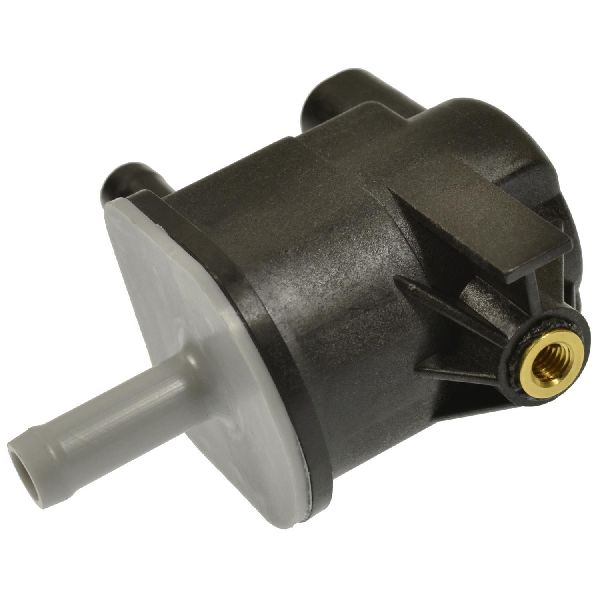
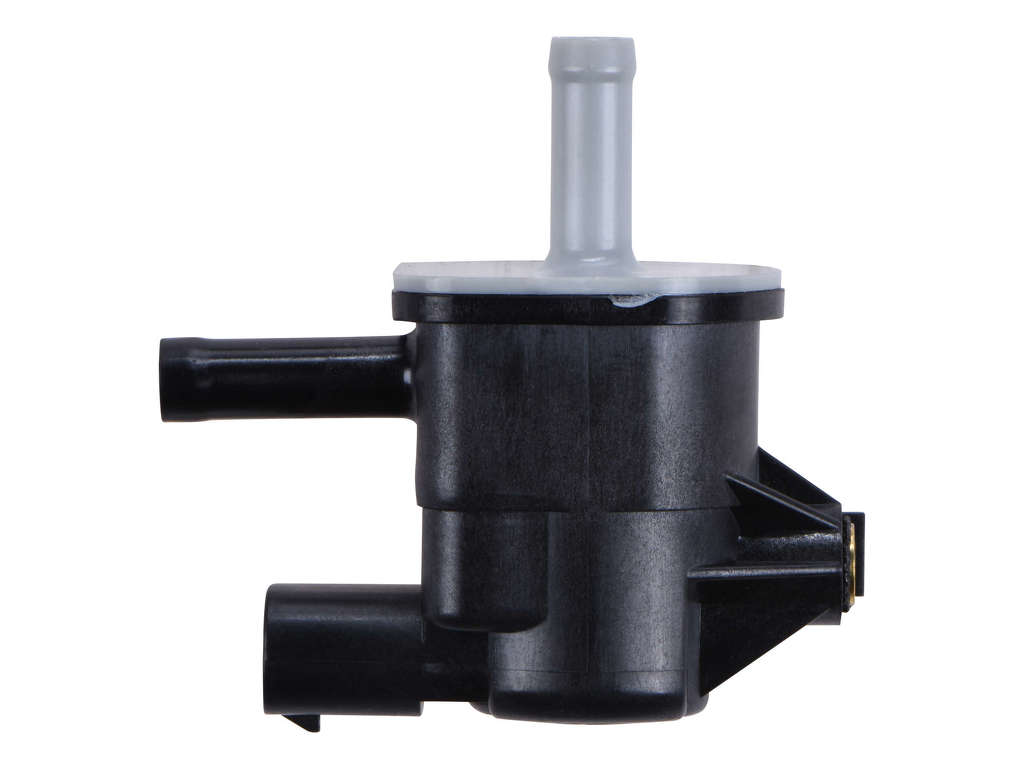
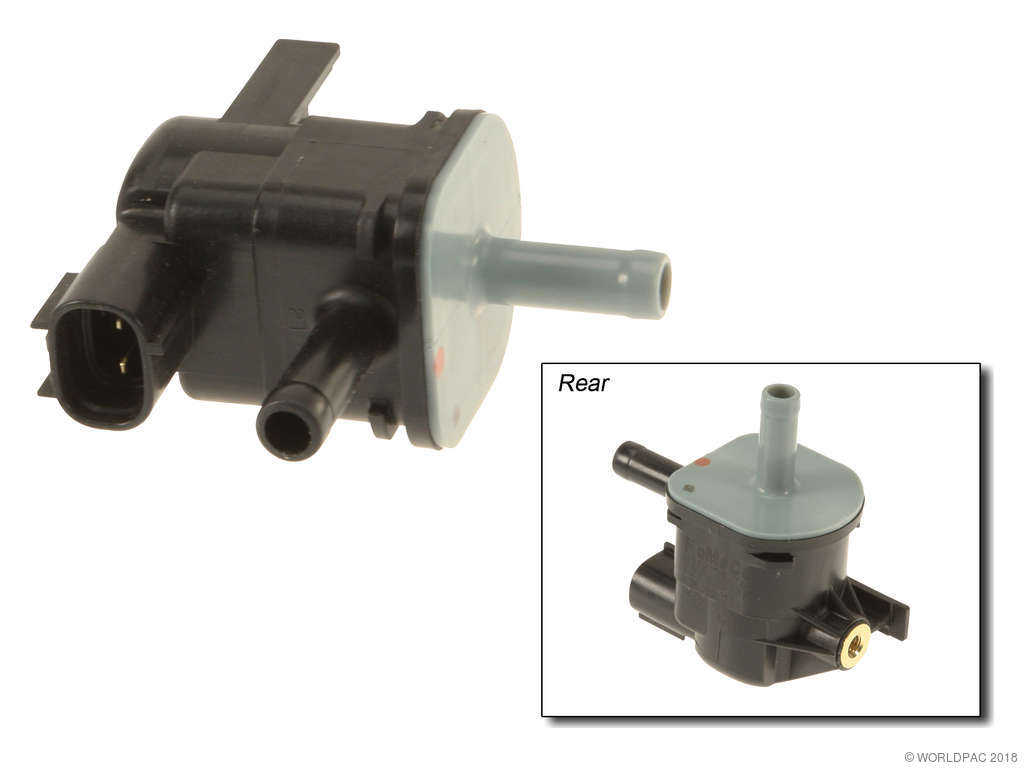
New Aftermarket Parts Available


The information in this article is provided for general reference and educational purposes only. Vehicle specifications, procedures, and part compatibility can vary by production date, trim level, and region. Always consult your vehicle's factory service manual and verify part numbers before purchasing or performing repairs. Safety-critical components such as airbags, seat belts, and braking systems should be installed by a qualified professional.
- Toyota RAV4:
- 🧭 Diagnostic Flowchart
- 🎬 Helpful Videos
- 🛍️ Shop This Part
- What's Unique About the 2006-2012 Toyota RAV4
- Symptoms You May Notice
- Most Likely Causes
- Rare But Worth Checking
- Diagnosis Steps
- Parts You'll Likely Need
- Related Codes That Often Appear With This One
- Technical Service Bulletins (TSBs) & Recalls
- Platform-Specific Known Issues
- Mechanic-Grade Diagnostic Values
- Scan Tool Commands That Help
- Wiring & Ground Locations
- Real Owner Repair Stories
- OEM Part Supersession History
- Used vs. New Parts: Buying Guide for This Vehicle
- Real Owner Stories
- 2007 RAV4
- 2010 RAV4
- 2009-2015 Toyota Venza
- Documented NHTSA Reports
- Related OBD-II Codes
- Frequently Asked Questions
- 🎟️ Get 5% Off