

P2420 on 2000-2006 Toyota Tundra 4.7L V8: EVAP Switching Valve Circuit High Fixes
This code points to an electrical problem with the EVAP system's vent valve. On this Tundra, the valve is part of the charcoal canister assembly located above the rear axle. The most common fix is replacing the entire canister assembly, but damaged wiring is also a frequent cause. A 'Circuit High' code specifically suggests an open circuit or a short to power.
- P2420 on a 2000-2006 Tundra is an electrical fault code, not a leak code.
- The problem is almost always the charcoal canister assembly or the wiring leading to it.
- The charcoal canister is located above the rear axle and contains the non-serviceable vent valve.
- Before buying an expensive canister, always inspect the connector and wiring for damage, as a simple wiring repair could fix the issue.
- This is a DIY-friendly repair for those comfortable working under the truck, but the OEM part can be costly.
- The Toyota Se
What's Unique About the 2000-2006 Toyota Tundra
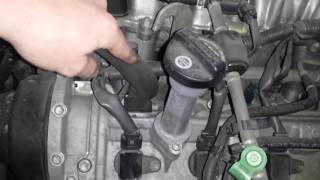
On the first-generation Tundra, the component at fault—the EVAP vent valve—is not sold as a separate part. Instead, it is integrated into a larger unit called the charcoal canister or 'canister pump module'. This entire assembly is mounted above the rear axle, in front of the spare tire, 🎬 Watch: Locate the EVAP canister and other emission components leaving it exposed to road debris, moisture, and corrosion, which can damage the unit itself or its electrical connector and wiring. Rodents are also known to chew on the wiring in this area.
Symptoms You May Notice
- Check Engine Light is on
- Failure to pass an emissions/smog test
- In rare cases, a fuel odor may be noticeable, though this is more common with leak codes.
- Replacing the gas cap. A loose or faulty gas cap typically causes large leak-related codes (like P0455 or P0456), not an electrical circuit code like P2420.
- Replacing the purge valve/solenoid. The purge valve is located in the engine bay and has its own set of diagnostic codes (like P0441). P2420 specifically refers to the vent valve circuit at the rear of the vehicle.
Most Likely Causes
- Failed Charcoal Canister Assembly 🔴 High Probability → Shop Vapor Canister The vent valve (switching valve) is integrated into the canister assembly and is not available as a separate part. The assembly's location above the rear axle makes it vulnerable to physical damage from road debris, moisture, and corrosion. The internal pump or valve circuitry fails, creating the 'Circuit High' condition.
How to confirm: After confirming wiring is intact, a professional scan tool (like Toyota Techstream) can attempt to activate the vent valve. If the valve doesn't respond or click, the internal circuitry or the valve itself has failed, necessitating replacement of the assembly. A multimeter can also be used to check for an open circuit (infinite resistance) across the valve's pins at the connector.
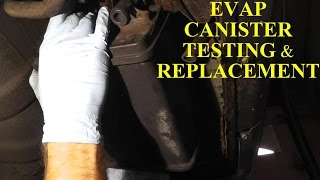
Typical fix: Replace the entire charcoal canister assembly. 🎬 See this walkthrough on how to test and replace the canister Using an OEM part is highly recommended, as some aftermarket units have been reported to fail prematurely or not communicate correctly with the ECM.
Est. part cost: $300-$500 - Damaged Wiring or Connector 🟡 Medium Probability The wiring harness leading to the canister is routed underneath the truck and is susceptible to damage from road debris, moisture, or rodents chewing the wires. A 'Circuit High' code specifically points to an electrical fault like a broken wire (open circuit) or corroded pin, which is a common outcome of this exposure.
How to confirm: Visually inspect the wiring harness and the connector at the charcoal canister for any signs of damage, corrosion, or loose pins. Use a multimeter to check for 12V power and a proper ground signal at the connector according to the factory service manual's wiring diagram. Trace the harness as far back as possible, looking for breaks.
Typical fix: Repair the broken or corroded section of the wire. If the connector is damaged, it may need to be replaced with a pigtail connector.
Est. part cost: $10-$50
Rare But Worth Checking
- Faulty Engine Control Module (ECM): → Shop Engine Control Module (ECM) This is very uncommon, but if the canister assembly and wiring have been verified as good, the driver circuit within the ECM could be the source of the problem. This should be the last item to check after all other possibilities are exhausted.
Diagnosis Steps
- Read the code with an OBD-II scanner and confirm P2420 is present. Note any other accompanying EVAP codes.
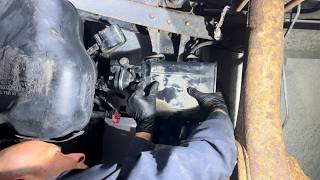
- Locate the charcoal canister assembly above the rear axle, just in front of the spare tire. It may be necessary to lower the spare tire for better access.
- Perform a thorough visual inspection of the canister, its connector, and the visible sections of the wiring harness. Look for cracks in the canister body, green or white corrosion in the connector pins, or any frayed, broken, or chewed wires.
- If the connector is accessible, disconnect it and check for 12-volt power and ground on the appropriate pins using a multimeter (refer to a service manual for the correct pinout). A lack of power or ground points to a wiring issue upstream.
- If power and ground are present, the fault most likely lies within the canister assembly itself. The internal vent valve solenoid or its circuit has failed.
- For advanced diagnosis, use a bidirectional scan tool to command the vent valve (switching valve) ON and OFF. Listen for an audible click from the canister. If the valve does not click or change state, and the wiring is confirmed to be good, the canister assembly is faulty.
- As a final check, measure the resistance between the terminals on the canister assembly for the switching valve. An open circuit (infinite resistance) confirms an internal failure.
Parts You'll Likely Need
- Charcoal Canister Assembly
(OEM #77740-0C011 (for 2001-2004), 77740-0C030 (for 2005-2006). Part numbers vary by year and configuration, always confirm with a VIN.)— This is the most common fix because the faulty vent valve is integrated into this assembly and not sold separately. Part numbers vary by year, so confirm with a VIN at a Toyota dealership. Part numbers like 77740-0C011 apply to 2001-2004 models, while later years may use a different part.
Trusted brands: Toyota (Genuine OEM), Standard Motor Products, Dorman
OEM price range: $350-$550
Aftermarket price range: $250-$400
Related Codes That Often Appear With This One
- P0441 — Incorrect Purge Flow. If the vent valve is stuck or the canister is faulty, it can affect the system's ability to draw vapors correctly, sometimes triggering this code alongside P2420.
- P0455 — Gross Leak Detected. If the vent valve fails in the open position due to the electrical fault, the system cannot seal to perform a leak test, resulting in a large leak code.
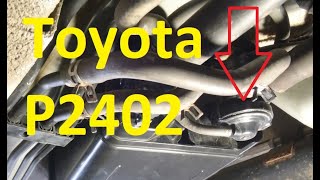
- P2401, P2402, P2419 — These are other EVAP system electrical codes related to the pump and pressure sensor circuits, which are housed in the same canister module. A failure in the module or its wiring can cause multiple codes to appear at once, strongly pointing to a bad canister assembly 🎬 Watch: Understanding related leak detection pump circuit high codes or its connector.
Technical Service Bulletins (TSBs) & Recalls
- While no TSBs are specific to P2420 on the 2000-2006 Tundra, Toyota has issued TSBs for P2420 on other vehicles like the Corolla (T-SB-0024-15), which also points to replacing the charcoal canister assembly to resolve the issue.
- Manufacturer Bulletin #T-SB-0024-15_Rev notes that vehicles may exhibit a MIL "ON" condition with DTC P2420, specifically identifying the cause as the Evaporative Emission Pressure Switching Valve being stuck off.
- NHTSA ODI #10573840 documents a similar MIL "ON" condition involving DTC P2420, noting that this code may sometimes be stored alongside other sensor-related codes like P2195, P0138, or P0031.
Mechanic-Grade Diagnostic Values
- EVAP Purge VSV (Vacuum Switching Valve) Resistance — expected: 23 to 26 Ohms at 68°F (20°C). Failure: A reading of infinite resistance (open circuit) or zero resistance (short circuit) indicates a failed valve solenoid.
- EVAP Canister Vent Valve / Solenoid Voltage at Connector — expected: Approximately 12V (battery voltage) on one pin with the key in the ON position.. Failure: No voltage at the connector points to an upstream wiring issue, such as a broken wire or blown fuse, rather than a faulty canister assembly.
Hidden / Shadow Codes Worth Checking
- Mode $06: Mode $06 is not a specific trouble code but a diagnostic function that displays the results of the ECM's self-tests. For P2420, a technician can view the test results for the 'EVAP System Leak Detection Pump' and 'Vent Valve' monitors. This can show if the component is failing the test marginally or catastrophically, which can aid in diagnosis before a hard fault code is permanently set. (see via Accessible via advanced scan tools or Toyota's Techstream software. It allows a view into non-continuous monitor results.)
Scan Tool Commands That Help
- Toyota Techstream: Utility -> Evaporative System Check (Automatic Mode) — This is the primary diagnostic function for the EVAP system. It commands the ECM to run a full, automated, multi-step test of the entire system, including actuating the vent valve (switching valve), purge valve, and pump. A failure during this test can pinpoint the faulty component. For P2420, if the system fails to seal or respond when the vent valve is commanded closed, it strongly implicates the canister assembly or its wiring.
- Toyota Techstream: Active Test -> Activate the VSV for Evap Control — This is a direct, manual bidirectional command to cycle the purge or vent VSV (Vacuum Switching Valve) ON and OFF. While listening near the canister, a technician can use this command to check for the audible 'click' of the vent valve solenoid. A lack of a click, when wiring is known to be good, confirms a failed solenoid within the canister assembly.
Wiring & Ground Locations
- Engine Ground — On the driver's side of the engine block, near the upstream O2 sensor.. While not the direct ground for the EVAP canister, a poor main engine-to-chassis ground can cause a variety of unpredictable electrical issues and floating voltages across multiple sensor circuits. Verifying the main grounds are clean and tight is a crucial step in diagnosing any complex electrical DTC like P2420.
- EVAP Canister Connector — On the charcoal canister assembly, located above the rear axle, in front of the spare tire. It is a 2-pin connector.. This is the direct electrical connection to the switching valve inside the canister. A 'Circuit High' code is often caused by an open circuit (broken wire) or corrosion within this specific connector or the pigtail leading to it. All voltage and resistance tests for the valve are performed here.
Real Owner Repair Stories
- Tundras.com Forum User (2006 Toyota Tundra 4.7L V8) — Check Engine Light with codes P2420 and P0441.
❌ Tried (didn't work) Replaced charcoal canister assembly, Replaced PCV Valve, Replaced Purge Valve, Replaced fuel filler neck vent
✅ What actually fixed it The user reported that even after replacing all common components, the codes persisted. The resolution was not posted in the thread, highlighting that the issue was likely a more complex wiring problem or a faulty ECM, which are the remaining possibilities after all major parts have been swapped. This story serves as a caution against simply replacing parts without a thorough electrical diagnosis.
OEM Part Supersession History
77740-0C010→77740-0C011— Standard part revision and update by the manufacturer.
Heads up: Part number 77740-0C011 is specified for 2001-2004 Tundra and Sequoia models.Unknown→77740-0C030— Design change for the updated EVAP system in later first-generation models.
Heads up: Part number 77740-0C030 is specified for 2005-2006 Tundra and 2004-2007 Sequoia models. These parts are not interchangeable with the earlier 77740-0C011 due to differences in the EVAP system design.
Model Year Variations Within This Range
- 2000-2004 vs. 2005-2006: The EVAP system, and specifically the charcoal canister assembly, underwent a design change around the 2004-2005 model years. Early models (approx. 2000-2004) use part number 77740-0C011. Later models (approx. 2005-2006) use a more complex canister assembly, part number 77740-0C030, which includes an integrated pump. The parts are not interchangeable, and it is critical to verify the vehicle's production date or visually inspect the existing part before ordering a replacement.
Diagnostic Flowchart
Other Known Issues on This Vehicle
Issues unrelated to this code that are worth knowing about as an owner of this generation:
- Frame Rust/Corrosion 🔴 High — Very common, especially in 'salt belt' states. Led to a major recall and frame replacement program for 2000-2003 models. The rear cross-member holding the spare tire is a primary failure point. (Ref: NHTSA Campaign ID, various recalls and Limited Service Campaigns (LSCs) were issued.)
- Front Lower Ball Joint Failure 🔴 High — Common enough to prompt recalls. Failure can be catastrophic, causing the wheel to separate from the knuckle. Many owners perform preventative replacement every 100,000 miles. (Ref: Recalls issued for 2002-2006 models (e.g., NHTSA Campaign ID 07V013000), but earlier models with the same parts were also affected.)
- Cracked Exhaust Manifolds 🟠 Medium — A very common issue on the 2UZ-FE engine, presenting as a ticking noise when the engine is cold that may disappear as it warms up. It is often mistaken for lifter tick.
- Secondary Air Injection Pump Failure 🟠 Medium — Affects later models in this generation (typically 2005-2006) and is a more prominent issue in the 2nd generation. The system is prone to moisture intrusion, causing pumps and valves to fail. (Ref: Warranty extensions were offered for this issue on later model Tundras.)
Used vs. New Parts: Buying Guide for This Vehicle
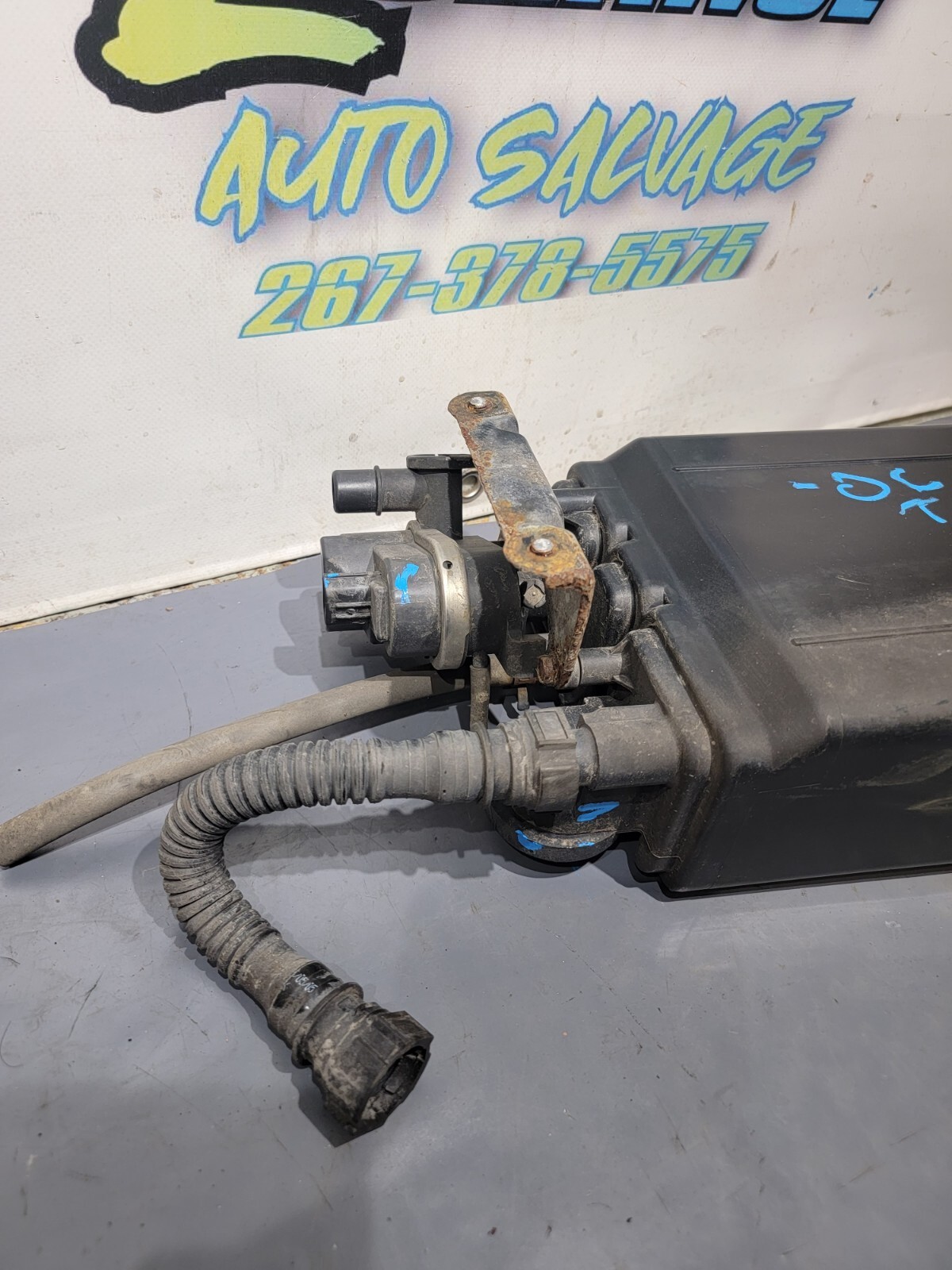
When a used part is the smart pick: A used OEM charcoal canister from a junkyard can be a cost-effective option, but it carries significant risk. It only makes sense if the donor vehicle is from a dry, salt-free climate and has low mileage. Given that the failure is often electronic and the part is exposed to harsh conditions under the truck, a used part is generally not recommended unless the budget is extremely tight.
Donor-vehicle mileage cap: roughly under 60000 miles for the part to have meaningful remaining life.
What to inspect on the donor part:
- Check for a donor vehicle from a southern or western state to avoid corrosion.
- Inspect the plastic housing of the canister for any cracks, especially around the mounting tabs and hose ports.
- Examine the electrical connector pins for any signs of green or white corrosion or physical damage.
- If possible, ask for the VIN to confirm the donor vehicle's year to ensure part compatibility (pre-2005 vs. post-2005).
OEM-only on this vehicle (don't cheap out):
- Charcoal Canister Assembly
Aftermarket brands forum-validated for this vehicle:
- Standard Motor Products (SMP) is generally considered a reputable OE-quality alternative if a genuine Toyota part is unavailable or too expensive.
Brands owners have reported issues with on this vehicle:
- Dorman: While Dorman offers a replacement, owner and mechanic forums frequently report a high rate of premature failure or out-of-the-box issues with Dorman electronic components and EVAP parts. Many technicians prefer installing a used OEM part over a new Dorman part due to quality control concerns.
Real Owner Stories
Aggregated from forums and TSBs cited above. Mileages and costs reflect what owners reported in those sources.
2006 Tundra 4.7L V8
Symptoms: Check engine light with codes P2420 and P0441; however, the truck was running great with a smooth idle and no lack of power.
What fixed it: The owner replaced the canister, PCV valve, purge valve, and fuel filler neck vent, but the codes continued to return, suggesting a deeper electrical or wiring issue.
Source hint: Tundras.com thread title: P2420/P0441
2006 Toyota Tundra SR5 double cab 4.7L V8 — 107000 miles
Symptoms: The PCM repeatedly stored codes P0441 (incorrect purge flow) and P2420 (evap switching valve control circuit high), in that order. Pressure tests showed no leaks.
What fixed it: The vapor canister module and purge solenoid were replaced with OEM parts, though the source noted the codes initially returned, requiring further diagnostic work.
Source hint: MOTOR Magazine
Related OBD-II Codes
Frequently Asked Questions
Where is the charcoal canister located on my 2000-2006 Tundra?
Can I just replace the vent valve (switching valve) to fix P2420?
Does Toyota TSB T-SB-0024-15 apply to my Tundra?
Why is my Tundra prone to P2420 and other EVAP electrical codes?
Is the ticking noise from my 4.7L V8 engine related to the P2420 code?
Should I use an aftermarket charcoal canister to save money?
Helpful Videos
Used OEM Parts in Stock
New Aftermarket Parts Available


The information in this article is provided for general reference and educational purposes only. Vehicle specifications, procedures, and part compatibility can vary by production date, trim level, and region. Always consult your vehicle's factory service manual and verify part numbers before purchasing or performing repairs. Safety-critical components such as airbags, seat belts, and braking systems should be installed by a qualified professional.
- Toyota Tundra:
- 🧭 Diagnostic Flowchart
- 🎬 Helpful Videos
- 🛍️ Shop This Part
- What's Unique About the 2000-2006 Toyota Tundra
- Symptoms You May Notice
- Most Likely Causes
- Rare But Worth Checking
- Diagnosis Steps
- Parts You'll Likely Need
- Related Codes That Often Appear With This One
- Technical Service Bulletins (TSBs) & Recalls
- Mechanic-Grade Diagnostic Values
- Hidden / Shadow Codes Worth Checking
- Scan Tool Commands That Help
- Wiring & Ground Locations
- Real Owner Repair Stories
- OEM Part Supersession History
- Model Year Variations Within This Range
- Other Known Issues on This Vehicle
- Used vs. New Parts: Buying Guide for This Vehicle
- Real Owner Stories
- 2006 Tundra 4.7L V8
- 2006 Toyota Tundra SR5 double cab 4.7L V8 — 107000 miles
- Related OBD-II Codes
- Frequently Asked Questions
- 🎟️ Get 5% Off