

P2421 on 2017-2024 Chrysler Pacifica 3.6L: EVAP Vent Valve Stuck Open Causes and Fixes
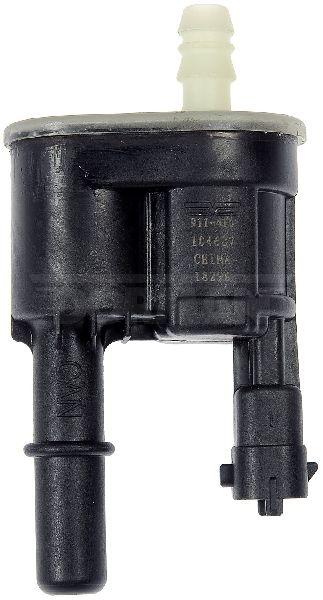
On a 2017-2024 Chrysler Pacifica, code P2421 almost always means the EVAP System Integrity Module (ESIM) has failed. This part acts as the vent valve and is located on the charcoal canister near the rear passenger wheel. It is a well-known failure item across many Chrysler, Dodge, and Jeep vehicles. Expect to pay $40-$80 for the part, with a DIY difficulty of 2/5.
- P2421 on a Pacifica points directly to a problem with the EVAP System Integrity Module (ESIM), not the purge valve on the engine.
- The ESIM is located on the charcoal canister, accessible by removing the rear passenger-side wheel and fender liner.
- The most likely fix is replacing the ESIM, which is a manageable DIY task for many owners and costs under $100.
- You can continue to drive the vehicle with this code, but you will not pass an emissions inspection until it is repaired.
- Before replacing the ESIM, it's wise to perform a visual inspection of the wiring and connector for damage.
What's Unique About the 2017-2024 Chrysler Pacifica
Unlike many vehicles that use a separate, solenoid-activated vent valve, modern Chrysler products like the Pacifica integrate this function into a passive EVAP System Integrity Module (ESIM). This module uses a combination of a weighted diaphragm and atmospheric pressure changes to detect leaks, rather than an active pump or bidirectional solenoid. This ESIM itself is the most common point of failure for code P2421. The passive nature of the valve means a technician cannot command it closed with a scan tool; diagnosis involves monitoring the ESIM's switch status while the system self-tests.
Symptoms You May Notice
- Check Engine Light is illuminated.
- Vehicle will automatically fail an emissions test.
- A faint fuel odor may be noticeable near the rear of the vehicle.
- Difficulty refueling (gas pump nozzle clicks off prematurely) may occur in some cases. 🎬 Watch: Symptoms and diagnosis of a bad evap vent valve
- Replacing the EVAP Purge Valve/Solenoid. The purge valve is located on the engine and is a common fix for other EVAP codes (like P0441 or P0456), but it is not the cause of P2421. This code specifically refers to the vent side of the system, which is the ESIM near the fuel tank.
Most Likely Causes
- Failed EVAP System Integrity Module (ESIM) 🔴 High Probability → Shop Vapor Canister The ESIM is a known high-failure-rate item on many Chrysler, Dodge, and Jeep products. Its internal mechanical components, which use weights and diaphragms instead of springs, can stick, break, or become contaminated over time, causing the valve to remain open or the internal switch to fail.
How to confirm: After visually inspecting the wiring, this is the most likely component to fail. A smoke test is definitive: if smoke is introduced into the EVAP system and it exits from the ESIM's filter, the valve is confirmed to be stuck open. A more nuanced failure is when the valve seals but the internal switch fails; a bench test can confirm this. Apply ground to one pin of the ESIM connector; the other pin should show ground continuity only when a slight pressure or vacuum is applied to the ports. If it shows no continuity or is always closed, the switch is bad.
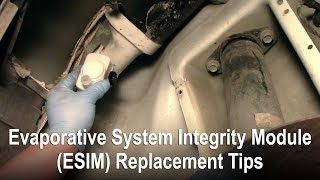
Typical fix: Replace the ESIM on the charcoal canister. This involves removing the rear passenger wheel and fender liner for access, disconnecting one electrical connector and one hose, and twisting the old module a quarter-turn to remove it. It is critical to remove the old O-ring from the canister before installing the new ESIM and its new O-ring, and to ensure the new module is installed in the correct rotational orientation. 🎬 Watch: ESIM replacement tips and correct orientation walkthrough
Est. part cost: $40-$80 - Damaged Wiring or Connector at ESIM ⚪ Low Probability The ESIM is located in the rear wheel well area, exposing its wiring and 2-pin connector to moisture, road salt, and debris, which can lead to corrosion, chafing, or physical damage.
How to confirm: Visually inspect the connector and harness for any signs of corrosion, chafing, or broken wires. Use a multimeter to check for battery voltage (~12V) at the power pin with the key on. The other pin is a signal wire that should show ground when the internal ESIM switch closes.
Typical fix: Repair the damaged section of the wiring harness or clean/replace the connector.
Est. part cost: $5-$50
Rare But Worth Checking
- Cracked EVAP Hose or Charcoal Canister: → Shop Vapor Canister A physical crack or leak in the EVAP system hoses or the canister itself can mimic the signature of a stuck-open vent valve, as the system will be unable to seal. This should be ruled out with a smoke test before replacing more expensive components.
- Powertrain Control Module (PCM) Software Error: → Shop Engine Control Module (ECM) In some cases, particularly on other vehicle makes, a P2421 code has been traced to overly sensitive software logic in the PCM, requiring a dealer-installed update. While no specific TSB is widely reported for the Pacifica for this exact code, it remains a remote possibility if all hardware has been tested and confirmed to be working.
Diagnosis Steps
- Read the trouble codes with an OBD-II scanner to confirm P2421 is the primary code.
- Safely lift the vehicle and remove the rear passenger-side wheel and inner fender liner to access the charcoal canister and ESIM.
- Visually inspect the ESIM's 2-pin electrical connector and wiring for any signs of corrosion, damage, or loose connections.
- NOTE: Unlike older systems, the ESIM is a passive, weighted valve and cannot be commanded closed with a scan tool. Diagnosis involves checking the component itself.
- For professional diagnosis, perform an EVAP smoke test. Introduce smoke into the system's service port. If smoke exits from the ESIM's fresh air filter/hose, the valve is mechanically stuck open and has failed.
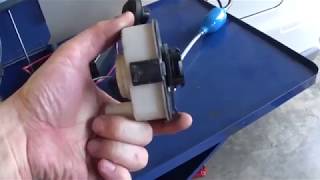
- If the smoke test passes (no smoke exits the ESIM), the internal switch may have failed. Perform a bench test on the removed ESIM. Connect a multimeter to its two pins to check for continuity. There should be no continuity at rest. Apply light pressure (a few inches of water) to the port and check that the switch closes (continuity is established). If the switch state does not change, it has failed. 🎬 See how to diagnose and repair Chrysler EVAP ESIM systems
- If the ESIM is confirmed to be working, use a multimeter to test for proper voltage and ground/signal paths at the harness connector to rule out a wiring issue.
- After repair, clear the codes and perform a complete EVAP drive cycle to ensure the fix was successful.
Parts You'll Likely Need
- EVAP System Integrity Module (ESIM)
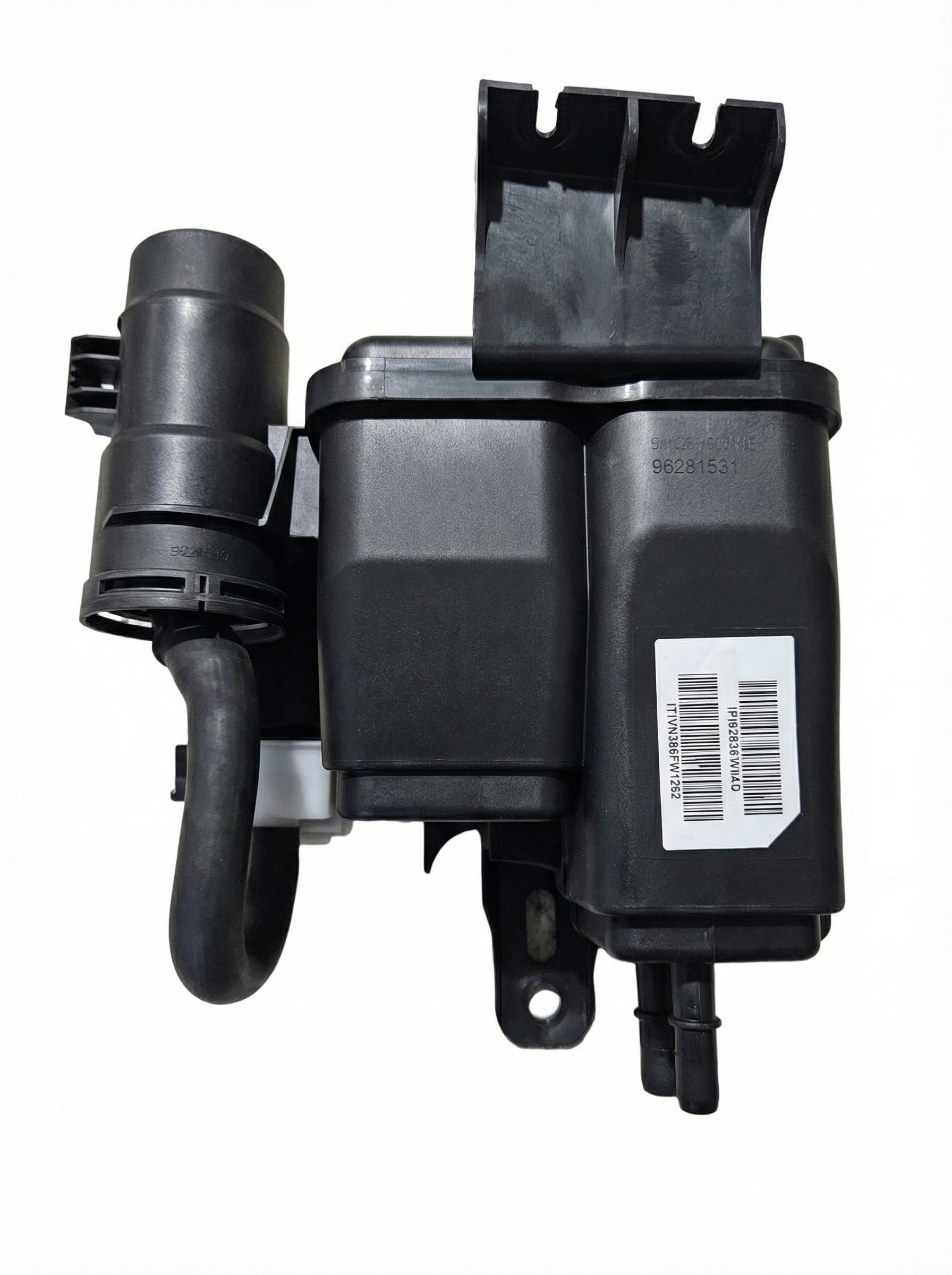
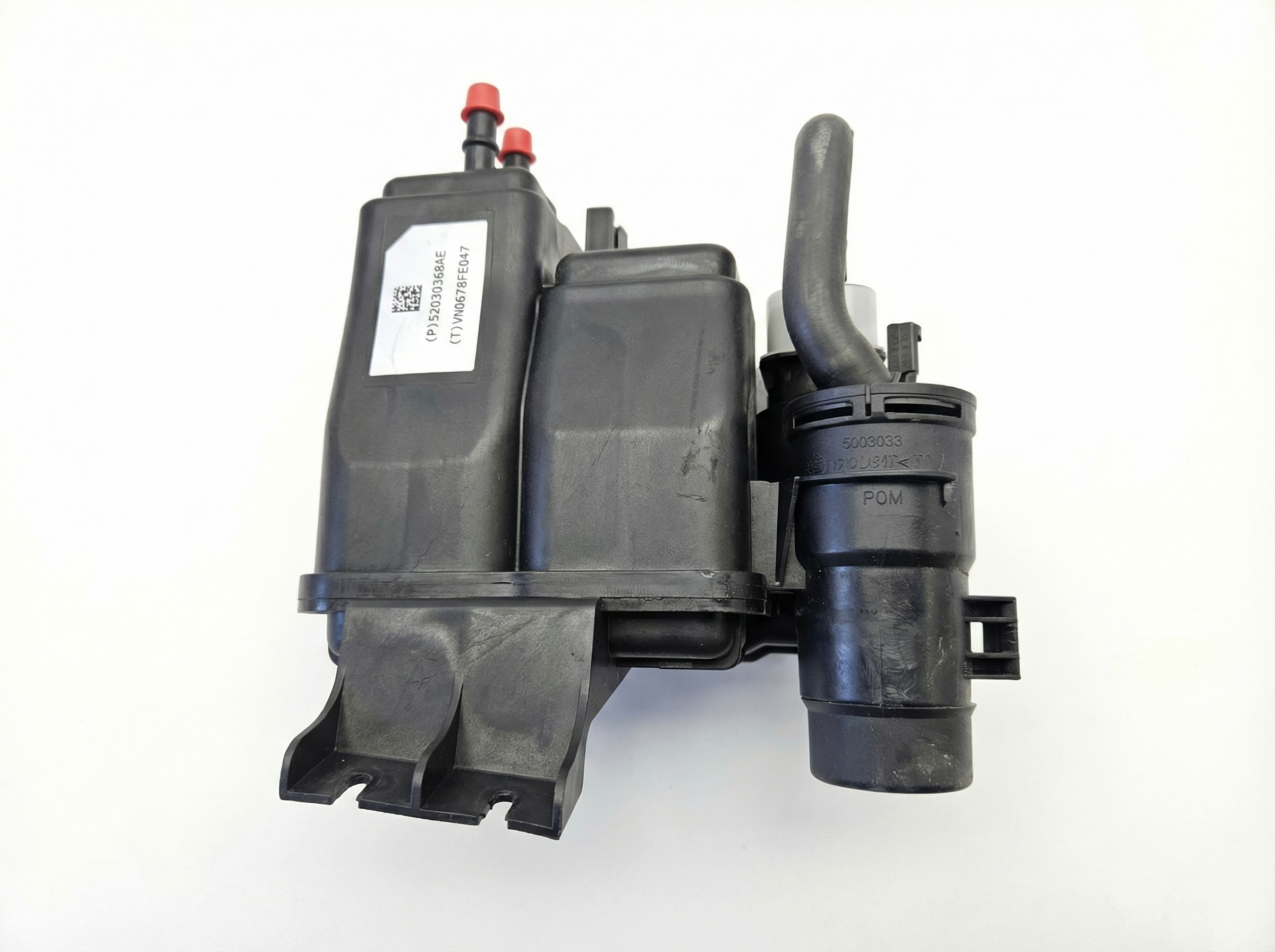
(OEM #Verify with VIN; common Mopar numbers are 4861962AD (supersedes 4861962AA, AB, AC) or 4861966AD.)— This module contains the vent valve function and is the most common component to fail and cause a P2421 code on this vehicle.
Trusted brands: Mopar, Dorman, Standard Motor Products (SMP)
OEM price range: $60-$90
Aftermarket price range: $40-$70
Related Codes That Often Appear With This One
- P0455 — A vent valve that is stuck wide open is considered a 'gross leak' by the EVAP system's self-test, which can cause a P0455 (EVAP System Gross Leak Detected) code to appear alongside P2421.
- P0449 — This code points to a fault in the vent valve's electrical circuit. It may appear with P2421 if the root cause is electrical (bad wiring, corroded connector) rather than a purely mechanical failure of the valve.
Mechanic-Grade Diagnostic Values
- ESIM Connector Power Pin Voltage (Key On, Engine Off) — expected: Battery Voltage (~12V). Failure: 0V or significantly low voltage points to a problem in the power supply circuit (fuse, wiring, or PCM).
- ESIM Internal Switch Continuity (Bench Test) — expected: No continuity (open circuit) at rest. Continuity (closed circuit) when slight pressure or vacuum is applied to the port.. Failure: Continuity at rest, or no change in continuity when pressure/vacuum is applied, indicates a failed internal switch.
- ESIM Internal Switch Closing Point — expected: The switch is designed to close at approximately 1 inch of water column vacuum.. Failure: Failure to close at this vacuum level indicates a faulty module.
Hidden / Shadow Codes Worth Checking
- Mode $06, Test ID for EVAP System: This is not a specific code but a diagnostic mode. For P2421, the PCM monitors the state of the ESIM's internal switch. During a test cycle (often after engine shutdown as the tank cools), the PCM expects to see the switch close as a natural vacuum forms. If the switch state does not change to 'closed' when expected, it logs a failure which can lead to setting code P2421. (see via Advanced OBD-II scan tool with Mode $06 capability.)
Scan Tool Commands That Help
- wiTECH 2.0 or equivalent bidirectional scanner: N/A - No direct command exists — A critical detail for this system is that the ESIM is a passive, mechanical device and does NOT have a bidirectional command to open or close it. Technicians should not look for a 'Vent Valve' command. Instead, they use the scan tool to monitor the 'ESIM Switch Status' PID (Open/Closed) while performing other tests, like commanding the purge valve, to see if the system seals and if the switch reports the change correctly.
Wiring & Ground Locations
- ESIM Electrical Connector — On the ESIM module itself, mounted to the charcoal canister located in the rear passenger-side wheel well, behind the fender liner.. This 2-pin connector provides power and the signal path from the ESIM's internal switch back to the PCM. Corrosion or damage here is a primary point of electrical failure for this code.
Real Owner Repair Stories
- AutoZone.com Reviewer (2017 Chrysler Pacifica) — Check Engine Light (code not specified, but part is for EVAP)
✅ What actually fixed it Replacing the ESIM with a Dorman aftermarket part. The user reported 'Fit and function were perfect.' - Go-Parts analysis of a YouTube repair video (Jeep Grand Cherokee (platform mate with same 3.6L engine and ESIM system)) — Persistent EVAP code after multiple shop visits.
❌ Tried (didn't work) Smoke tests that found no leaks.
✅ What actually fixed it A technician diagnosed a faulty ESIM by bench-testing it with a Power Probe and vacuum pump. The old module's internal switch did not function, while the new one did. Replacing the ESIM resolved the code.
"I Checked Everything" — The Actual Cause
- A very common scenario for Chrysler EVAP codes is for a smoke test to show no leaks, yet a code like P0456 (small leak) or P2421 persists. This often happens because the ESIM's internal weighted valve is sealing correctly (so no smoke escapes), but the separate internal electrical switch has failed and is not sending the 'closed' signal to the PCM. The PCM interprets the lack of a signal as a system fault, even though the system is physically sealed.
OEM Part Supersession History
4861962AA, 4861962AB, 4861962AC→4861962AD— Progressive design updates to improve reliability.4891685AA, 4891685AB→4861962AD— Part number consolidation.
Diagnostic Flowchart
Other Known Issues on This Vehicle
Issues unrelated to this code that are worth knowing about as an owner of this generation:
- Engine Stop-Start (ESS) System Failure 🟠 Medium — Very common. The small, secondary auxiliary battery often fails every 2-4 years, disabling the ESS system and causing a 'Service Stop/Start System' warning. This can also lead to parasitic draws that drain the main battery. (Ref: TSB 18-002-19 REV A includes software updates to improve battery logic, but does not prevent eventual battery failure.)
- ZF 9-Speed Transmission Harsh Shifting / Lurching 🟠 Medium — Common, especially on 2017-2020 models. Owners report harsh shifts, clunking, and hesitation. Multiple software updates have been released to improve shift logic. (Ref: Multiple TSBs exist for software updates, such as TSB 18-054-17. A recall (23V-010) was issued for Pacifica Hybrids for a different transmission issue.)
- Power Sliding Door Malfunctions 🟠 Medium — A frequent complaint. Doors may fail to open/close, reverse direction unexpectedly, or make grinding noises. Causes range from dirty tracks and contact pins to software glitches or failing motors. (Ref: Some owners report that a software reflash by the dealer has resolved certain issues.)
- 3.6L Pentastar 'Tick' / Rocker Arm Failure 🔴 High — A known issue across the entire Pentastar engine family, typically occurring at higher mileage (70k-150k miles). A ticking noise from the top of the engine is a precursor to a failed rocker arm bearing, which can lead to camshaft damage and misfires. (Ref: TSB 09-010-21 was issued for some 2021 models to replace exhaust rocker arms.)
- Cracked Oil Filter Housing / Cooler Assembly 🔴 High — Extremely common across all 3.6L Pentastar applications. The plastic housing is prone to cracking from heat cycles, causing significant oil leaks into the engine valley, often misdiagnosed as a rear main seal leak.
Used vs. New Parts: Buying Guide for This Vehicle
When a used part is the smart pick: For the ESIM, a used part is NOT recommended. The part has a high failure rate due to internal wear of a diaphragm and switch contacts, and the cost of a new, warrantied aftermarket part is low.
What to inspect on the donor part:
- Not applicable as used part is not recommended.
OEM-only on this vehicle (don't cheap out):
- No parts for this specific repair are considered OEM-only. The ESIM is a component where aftermarket versions are widely used and accepted.
Aftermarket brands forum-validated for this vehicle:
- Dorman
- Standard Motor Products (SMP)
Brands owners have reported issues with on this vehicle:
- No specific brands are consistently reported as problematic, but it is wise to avoid no-name, unbranded parts from online marketplaces.
Real Owner Stories
Aggregated from forums and TSBs cited above. Mileages and costs reflect what owners reported in those sources.
2017 Chrysler Pacifica 3.6L V6
Symptoms: The owner experienced hard shifting and transmission issues with the 9-speed automatic.
What fixed it: The dealer reprogrammed the Transmission Control Module (TCM).
Source hint: BobIsTheOilGuy - 2017 Chrysler Pacifica 9 speed
Related OBD-II Codes
Frequently Asked Questions
Is there a TSB for the transmission shifting issues on my 2017 Chrysler Pacifica?
My Pacifica is showing a 'Service Stop/Start System' warning; is this related to the P2421 code?
Can I use a used ESIM from a salvage yard to fix the P2421 code?
Is the ticking noise in my Pentastar V6 engine related to the EVAP system?
Why does the gas pump nozzle click off prematurely when I try to fill up my Pacifica?
Is there a recall for the transmission issues on the Pacifica?
Helpful Videos

Used OEM Parts in Stock
New Aftermarket Parts Available


The information in this article is provided for general reference and educational purposes only. Vehicle specifications, procedures, and part compatibility can vary by production date, trim level, and region. Always consult your vehicle's factory service manual and verify part numbers before purchasing or performing repairs. Safety-critical components such as airbags, seat belts, and braking systems should be installed by a qualified professional.
- Chrysler Pacifica:
- 🧭 Diagnostic Flowchart
- 🎬 Helpful Videos
- 🛍️ Shop This Part
- What's Unique About the 2017-2024 Chrysler Pacifica
- Symptoms You May Notice
- Most Likely Causes
- Rare But Worth Checking
- Diagnosis Steps
- Parts You'll Likely Need
- Related Codes That Often Appear With This One
- Mechanic-Grade Diagnostic Values
- Hidden / Shadow Codes Worth Checking
- Scan Tool Commands That Help
- Wiring & Ground Locations
- Real Owner Repair Stories
- "I Checked Everything" — The Actual Cause
- OEM Part Supersession History
- Other Known Issues on This Vehicle
- Used vs. New Parts: Buying Guide for This Vehicle
- Real Owner Stories
- 2017 Chrysler Pacifica 3.6L V6
- Related OBD-II Codes
- Frequently Asked Questions
- 🎟️ Get 5% Off