

P2421 on 2009-2014 Ford F-150: EVAP Vent Valve Stuck Open Causes and Fixes
This code almost always means the EVAP canister vent valve, located near the fuel tank, is stuck open. The most common fix is replacing the vent valve solenoid itself, which costs about $75-$120 for the part. It's a common DIY job. Road debris, dirt, and corrosion are the primary culprits.
- P2421 points to the EVAP vent valve near the fuel tank, not the purge valve in the engine bay.
- The most likely fix is replacing the vent valve solenoid (Part # 9U5Z-9F945-C).
- The issue is caused by the valve's exposed location, leading to debris contamination or corrosion.
- Driving with the code is safe, but the truck will fail an emissions test.
- While diagnosing, be aware of other major platform issues like the Fuse 27 relocation (TSB 15-0137) and the transmission lead frame recall (19S07).
What's Unique About the 2009-2014 Ford F-150
On the 12th generation F-150, the P2421 code is a straightforward emissions issue, but its diagnosis is frequently confused. Owners and even some technicians mistakenly replace the EVAP purge valve/solenoid in the engine bay, when the actual problem is the vent valve (also a solenoid) located near the charcoal canister by the fuel tank. The vent valve's location under the truck exposes it to road debris, dust, and moisture (especially in regions with road salt), which can lead to the valve getting physically stuck with dirt or its electrical connector corroding.
Symptoms You May Notice
- Check Engine Light is on
- A faint fuel smell, especially near the rear of the truck
- The vehicle will fail an emissions inspection
- In rare cases, a message on the instrument cluster like 'EVAP System Leak Detected' may appear.
- Replacing the EVAP Purge Valve/Solenoid. This is the most common mistake. The purge valve is located in the engine bay and has different failure codes (like P1450). The P2421 code refers to the vent valve, which is located near the fuel tank.
Most Likely Causes
- Faulty EVAP Canister Vent Valve/Solenoid 🔴 High Probability → Shop Vapor Canister The valve is located under the truck on the driver's side frame rail, mounted to the charcoal canister. Its exposure to road grime, water, and road salt in northern climates can cause it to get clogged with dirt or fail mechanically or electrically.
How to confirm: With a capable scan tool, command the vent valve to close. If you can still blow air through it or a smoke test shows smoke exiting the valve, it is stuck open. You can also remove the valve and apply 12V power; it should click closed. If it doesn't, or if it's open at rest, it's faulty.
Typical fix: Replace the canister vent valve solenoid. 🎬 See this walkthrough for replacing the vent valve solenoid. This part is typically mounted directly on the charcoal canister.
Est. part cost: $75-$120 - Debris in Vent Valve or Hose 🟡 Medium Probability Dust and dirt, especially from off-road use, can be drawn into the vent hose and physically jam the valve's internal pintle, preventing it from sealing completely.
How to confirm: Remove the valve and inspect the inlet and outlet ports for dirt, carbon particles, or other blockages. Check the attached rubber hoses for clogs.
Typical fix: Clean the debris from the valve and hoses. If the valve is damaged or cannot be fully cleaned, it should be replaced.
Est. part cost: $0-$120 - Damaged Wiring or Corroded Connector ⚪ Low Probability The wiring harness to the vent solenoid runs along the frame and is susceptible to chafing, breaking, or corrosion at the connector due to its exposed location under the truck.
How to confirm: Visually inspect the wiring harness leading to the vent solenoid for any signs of damage. Unplug the connector and check for green or white corrosion or bent pins. With the key on, check for battery voltage at the connector's power wire (typically a Yellow/Red wire on these models).
Typical fix: Repair the damaged section of the wiring harness or clean/replace the electrical connector.
Est. part cost: $5-$50
Rare But Worth Checking
- Faulty Fuel Tank Pressure (FTP) Sensor: → Shop Fuel Tank A faulty FTP sensor could incorrectly report that the system is not sealed, leading to a false P2421 code. This is uncommon and should be investigated after the vent valve and wiring are confirmed to be good.
- Cracked or Damaged Charcoal Canister: → Shop Vapor Canister If the canister body itself is cracked, it creates a large leak that the system might interpret as a stuck-open vent valve. This usually happens from physical impact from road debris.
- Powertrain Control Module (PCM) Software Issue: → Shop Engine Control Module (ECM) While more common on other platforms and for different EVAP codes, a PCM software glitch can theoretically cause a false P2421. This is extremely rare for this code on this specific generation and should be considered a last resort after all hardware has been ruled out.
Diagnosis Steps
- Verify Code: Use an OBD-II scanner to confirm P2421 is the active code. Note any other codes present, especially P0455 or P0446.
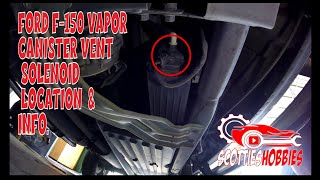
- Locate the Vent Valve: Find the 🎬 Watch: See exactly where the vent solenoid is located. charcoal canister along the driver's side frame rail, near the fuel tank. The vent valve is the solenoid attached to it.
- Visual Inspection: Inspect the vent valve, its connector, and the wiring harness for any obvious damage, corrosion, or loose connections. Check the attached hoses for cracks or disconnection.
- Command Valve with Scan Tool: If you have a bi-directional scanner, command the vent valve to close. Listen for an audible click from the solenoid.
- Perform Smoke Test: With the vent valve commanded closed, introduce smoke into the EVAP system (usually via the purge valve line). If smoke pours out of the vent valve assembly, the valve is stuck open and has failed.
- Test Electrical Circuit: If the valve doesn't operate, disconnect the connector. With the ignition on, check for battery voltage at the power feed wire (Yellow/Red). If voltage is low or absent, check the relevant fuse (F26 in the battery junction box) and trace the wiring for a break.
- Bench Test the Valve: If the wiring is good, remove the valve. Apply 12V and ground to its pins. It should click closed. If it doesn't, or if you can blow through it when it's not powered, it needs to be replaced.
Parts You'll Likely Need
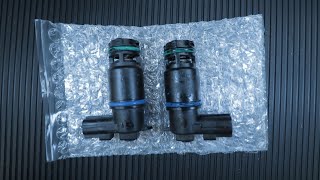
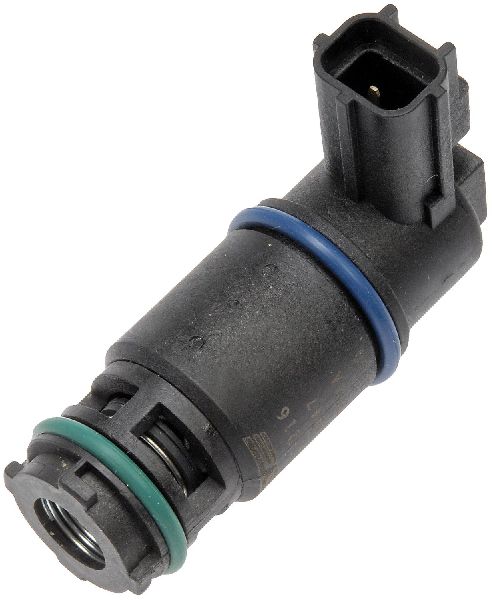
- Vapor Canister Vent Valve Solenoid
(OEM #9U5Z-9F945-C)— This is the component that fails most often, either by getting stuck internally or failing electrically, directly causing the P2421 code. This part number supersedes older versions like 7U5Z-9F945-E and 7U5Z-9F945-D.
Trusted brands: Motorcraft, Dorman, Standard Motor Products (SMP)
OEM price range: $90-$120
Aftermarket price range: $75-$100
Related Codes That Often Appear With This One
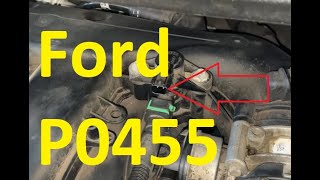
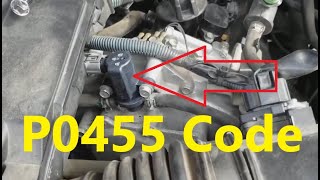
- P0455 — A 'Gross EVAP Leak' code. A vent valve that is stuck wide open is considered a very large leak by the system, so these two codes often appear together. 🎬 Watch: How to diagnose and fix a P0455 gross leak.
- P0446 — This code indicates a 'Vent Control Circuit Malfunction'. While P2421 means the valve is mechanically stuck, P0446 points to an electrical problem in the same circuit. You might see this if there's a wiring issue causing the P2421.
Technical Service Bulletins (TSBs) & Recalls
- TSB 15-0137: While not directly for P2421, this bulletin is critical for 2009-2014 F-150 owners. It addresses a design flaw where the fuel pump relay fuse (F27) overheats and melts, causing stalling or no-start conditions. This TSB is relevant as it points to a known weakness in the vehicle's main fuse box that can cause unexpected electrical problems. An owner experiencing P2421 should be aware of this separate, more critical potential failure.
Platform-Specific Known Issues
- Owner Experience: A user on a Good Sam Community forum described how an intermittent electrical issue, related to the known TSB 15-0137 for the fuel pump fuse (Fuse 27), caused their truck to stall. While not directly P2421, it highlights the platform's susceptibility to electrical issues from under-engineered fuse box components, which could theoretically affect other circuits like the EVAP system.
Mechanic-Grade Diagnostic Values
- EVAP Canister Vent Solenoid resistance — expected: 48 to 65 ohms. Failure: A reading outside this range indicates a faulty coil in the solenoid.
- Fuel Tank Pressure (FTP) Sensor Voltage (Key-On-Engine-Off, atmospheric pressure) — expected: ~2.6 Volts. Failure: A significantly different voltage with the system open to the atmosphere can indicate a faulty sensor.
- Canister Vent Solenoid Connector Power Wire Voltage — expected: Full battery voltage (~12V). Failure: Low or no voltage on the Yellow/Red wire indicates a wiring or fuse issue upstream of the solenoid.
Scan Tool Commands That Help
- Ford IDS (Integrated Diagnostic System): EVAP System Test (in Toolbox -> Datalogger -> Powertrain) — This is the factory-level automated test to check the entire EVAP system for leaks. It commands the vent and purge valves and monitors the FTP sensor to verify system integrity.
- Ford IDS or capable Bi-Directional Scanner: Manual Control of EVAP Canister Vent Valve (CVV) and Vapor Management Valve (VMV/Purge Valve) — This allows a technician to manually command the vent valve closed and the purge valve open/closed to isolate failures. For P2421, you would command the vent valve closed and perform a smoke test or watch FTP sensor data to confirm it is not sealing.
Wiring & Ground Locations
- Canister Vent Solenoid Connector — On the EVAP canister vent solenoid, located on the driver's side frame rail near the fuel tank.. This is the primary electrical connection to test. The Yellow/Red (YE-RD) wire should have battery voltage with the key on. The other wire (typically Green/Blue) is the control wire from the PCM.
- Fuse F26 — In the under-hood Battery Junction Box (main fuse box).. This fuse supplies power to the canister vent solenoid circuit. If there is no voltage at the solenoid's YE-RD wire, this fuse should be checked.
- Connector C1581 — An inline connector located in the left rear of the engine compartment.. The power feed wire (YE-RD) for the vent solenoid passes through this connector. It is a potential point of failure (corrosion, loose pin) if power is not reaching the solenoid but the fuse is good.
Real Owner Repair Stories
- YouTube - F150 2009 to 2014, Evap Fuel Valve or purge valve, hard to start after fueling up (2012 F-150 XLT 3.7L) — Struggles to start after refueling, taking two or three tries. Check engine light was on.
❌ Tried (didn't work) The user immediately identified the likely cause from online research.
✅ What actually fixed it The user replaced the EVAP purge valve (vapor management valve) located on the engine. Although the video title mentions the purge valve, the symptoms described (hard start after fueling) are classic for a stuck-open purge valve, not the vent valve that causes P2421. This story is included as a critical example of symptom/code confusion. The user's problem was NOT P2421.
OEM Part Supersession History
7U5Z-9F945-D, 7U5Z-9F945-E→9U5Z-9F945-C— Standard part revision and improvement by the manufacturer.
Diagnostic Flowchart
Other Known Issues on This Vehicle
Issues unrelated to this code that are worth knowing about as an owner of this generation:
- Ford 5.4L 3V Cam Phaser Rattle/Failure 🔴 High — Very common on 2009-2010 models with the 5.4L engine, often starting after 70,000 miles. Caused by worn phasers, low oil pressure, or failed VCT solenoids.
- Ford 3.5L EcoBoost (Gen 1) Timing Chain Stretch 🔴 High — Common on 2011-2014 models, especially those with longer oil change intervals. Symptoms include a distinct rattle on cold starts lasting 2-5 seconds. (Ref: TSB 18-2305 (supersedes 16-0027))
- 6R80 Transmission Unintended Downshift to 1st Gear 🔴 High — Affects 2011-2013 models. An intermittent signal loss from the transmission's output shaft speed (OSS) sensor on the lead frame can cause a sudden, dangerous downshift. (Ref: Safety Recall 19S07, 19S19)
- Fuse 27 (Fuel Pump) Relocation 🟠 Medium — Affects all 2009-2014 models. The fuse terminal in the battery junction box can overheat, melting the fuse and causing a crank/no-start or stalling condition without warning. (Ref: TSB 15-0137)
- Ford 5.0L Coyote (Gen 1) Engine Knock/Cylinder Distortion 🟠 Medium — A subset of 2011-2012 models experienced an engine knock due to an out-of-round condition in the cylinders, sometimes requiring short block replacement.
- Integrated Wheel End (IWE) Actuator Grinding 🟡 Low — Common on 4x4 models. A loss of vacuum to the front hubs causes the 4WD to partially engage, creating a grinding noise. Often caused by a faulty solenoid or leaking vacuum lines.
- Exhaust Manifold Leak (Ticking Noise) 🟡 Low — Common on 4.6L and 5.4L V8 engines. A leak from a cracked manifold or broken stud causes an audible ticking sound that increases with engine RPM.
Used vs. New Parts: Buying Guide for This Vehicle
When a used part is the smart pick: A used EVAP canister vent solenoid is a reasonable choice if sourced from a low-mileage, rust-free donor vehicle. Since the failure is often due to environmental exposure (dirt, rust), a part from a dry climate is preferable. The entire charcoal canister assembly can also be bought used, which often includes the solenoid.
Donor-vehicle mileage cap: roughly under 80000 miles for the part to have meaningful remaining life.
What to inspect on the donor part:
- Check the electrical connector pins for any signs of green or white corrosion.
- Inspect the valve's ports for excessive dirt, mud, or carbon buildup.
- If possible, bench test the used valve by applying 12V power to ensure the solenoid clicks.
- Avoid parts from vehicles in the 'rust belt' or areas with heavy road salt usage.
Aftermarket brands forum-validated for this vehicle:
- Motorcraft (OEM)
- Standard Motor Products (SMP)
- Dorman
Brands owners have reported issues with on this vehicle:
- No-name, unbranded parts from online marketplaces have a higher reported failure rate according to forum discussions.
Real Owner Stories
Aggregated from forums and TSBs cited above. Mileages and costs reflect what owners reported in those sources.
2009-2014 Ford F-150
Symptoms: The truck would stall due to an intermittent electrical issue.
What fixed it: The issue was related to the known TSB 15-0137, which involves relocating the fuel pump fuse (Fuse 27) from its original position in the fuse box to prevent overheating.
Source hint: Good Sam Community forum user experience cited in vehicle_specific_issues
Related OBD-II Codes
Frequently Asked Questions
Where is the EVAP canister vent valve located on my 2009-2014 F-150?
Is the P2421 code related to the well-known Fuse 27 issue on these trucks?
What's the difference between the vent valve and the purge valve on my F-150?
What is the part number for the replacement canister vent valve solenoid?
How can I test the vent valve myself without a professional smoke machine?
What color wire should have power at the vent valve connector?
Besides this EVAP issue, are there other major electrical problems I should know about for my 2011-2014 F-150?
Helpful Videos
Used OEM Parts in Stock
New Aftermarket Parts Available


The information in this article is provided for general reference and educational purposes only. Vehicle specifications, procedures, and part compatibility can vary by production date, trim level, and region. Always consult your vehicle's factory service manual and verify part numbers before purchasing or performing repairs. Safety-critical components such as airbags, seat belts, and braking systems should be installed by a qualified professional.
- Ford F-150:
- 🧭 Diagnostic Flowchart
- 🎬 Helpful Videos
- 🛍️ Shop This Part
- What's Unique About the 2009-2014 Ford F-150
- Symptoms You May Notice
- Most Likely Causes
- Rare But Worth Checking
- Diagnosis Steps
- Parts You'll Likely Need
- Related Codes That Often Appear With This One
- Technical Service Bulletins (TSBs) & Recalls
- Platform-Specific Known Issues
- Mechanic-Grade Diagnostic Values
- Scan Tool Commands That Help
- Wiring & Ground Locations
- Real Owner Repair Stories
- OEM Part Supersession History
- Other Known Issues on This Vehicle
- Used vs. New Parts: Buying Guide for This Vehicle
- Real Owner Stories
- 2009-2014 Ford F-150
- Related OBD-II Codes
- Frequently Asked Questions
- 🎟️ Get 5% Off