

P2421 on 2012-2018 Ford Focus: EVAP Vent Valve Stuck Open Causes and Fixes
On a 2012-2018 Ford Focus, code P2421 almost always means the EVAP canister vent solenoid has failed. This part is located at the rear of the car on the charcoal canister and typically costs $30-$80 for the part itself. It is a common failure, but is often confused with the purge valve located in the engine bay, which is subject to a well-known recall.
- P2421 on a Ford Focus points to the EVAP vent valve at the rear of the car, NOT the purge valve in the engine bay.
- The most likely cause is a failed vent solenoid, which is integrated into the vapor canister assembly (Part # BV6Z-9D653-D) and requires replacing the entire unit.
- Driving with this code is safe, but it will cause an automatic failure on an emissions test.
- Do not confuse this issue with the symptoms (stalling after fueling) or fix (recall 18S32) for the purge valve.
- DIY replacement is possible but can be challenging due to the part's location above the rear suspension.
What's Unique About the 2012-2018 Ford Focus
The 2012-2018 Ford Focus is subject to a well-known safety recall (18S32 / NHTSA 18V735) for a faulty *purge valve* in the engine bay, which can cause stalling and fuel tank deformation. However, P2421 is for the *vent valve*, a completely different part located at the rear of the car. Owners and even some technicians frequently confuse these two components, leading to misdiagnosis. It is critical to understand that replacing the purge valve will not fix a P2421 code.
Symptoms You May Notice
- Check Engine Light is illuminated.
- A faint fuel odor may be noticeable near the rear of the vehicle.
- Inability to pass a state emissions inspection.
- Dashboard messages such as 'EVAP System Leak Detected' may appear.
- Replacing the engine bay-mounted EVAP Purge Valve (also called a Vapor Management Valve). This part is addressed by Ford recall 18S32 for stalling and hard-start-after-fueling issues, which are not symptoms of P2421. 🎬 See how to replace the purge valve for recall-related issues.
Most Likely Causes
- Failed EVAP Canister Vent Valve/Solenoid 🔴 High Probability → Shop Vapor Canister The vent valve is a common failure item across many Ford models. It is a mechanical solenoid exposed to the elements under the car, and can get stuck internally from age, corrosion, or debris.
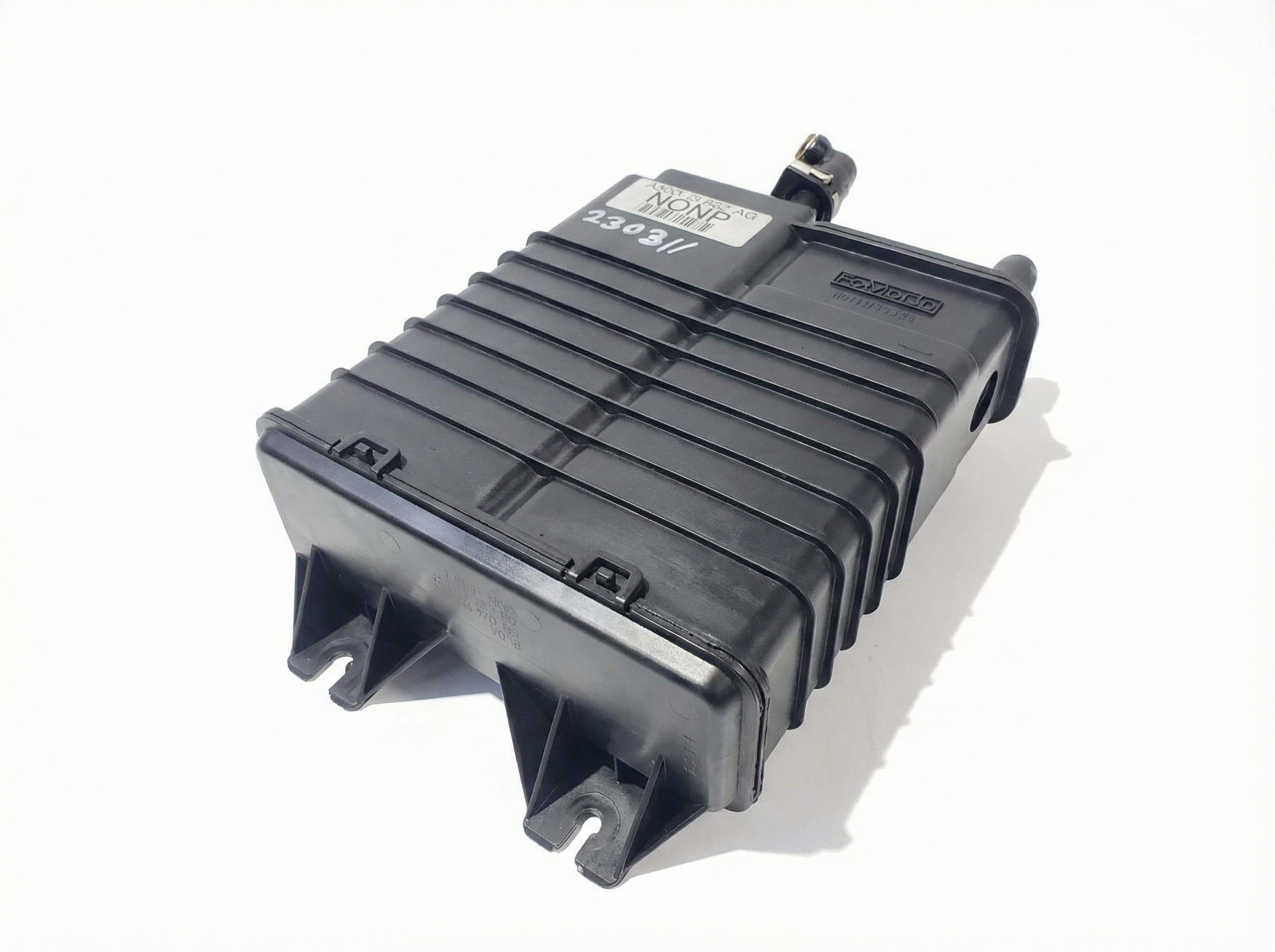
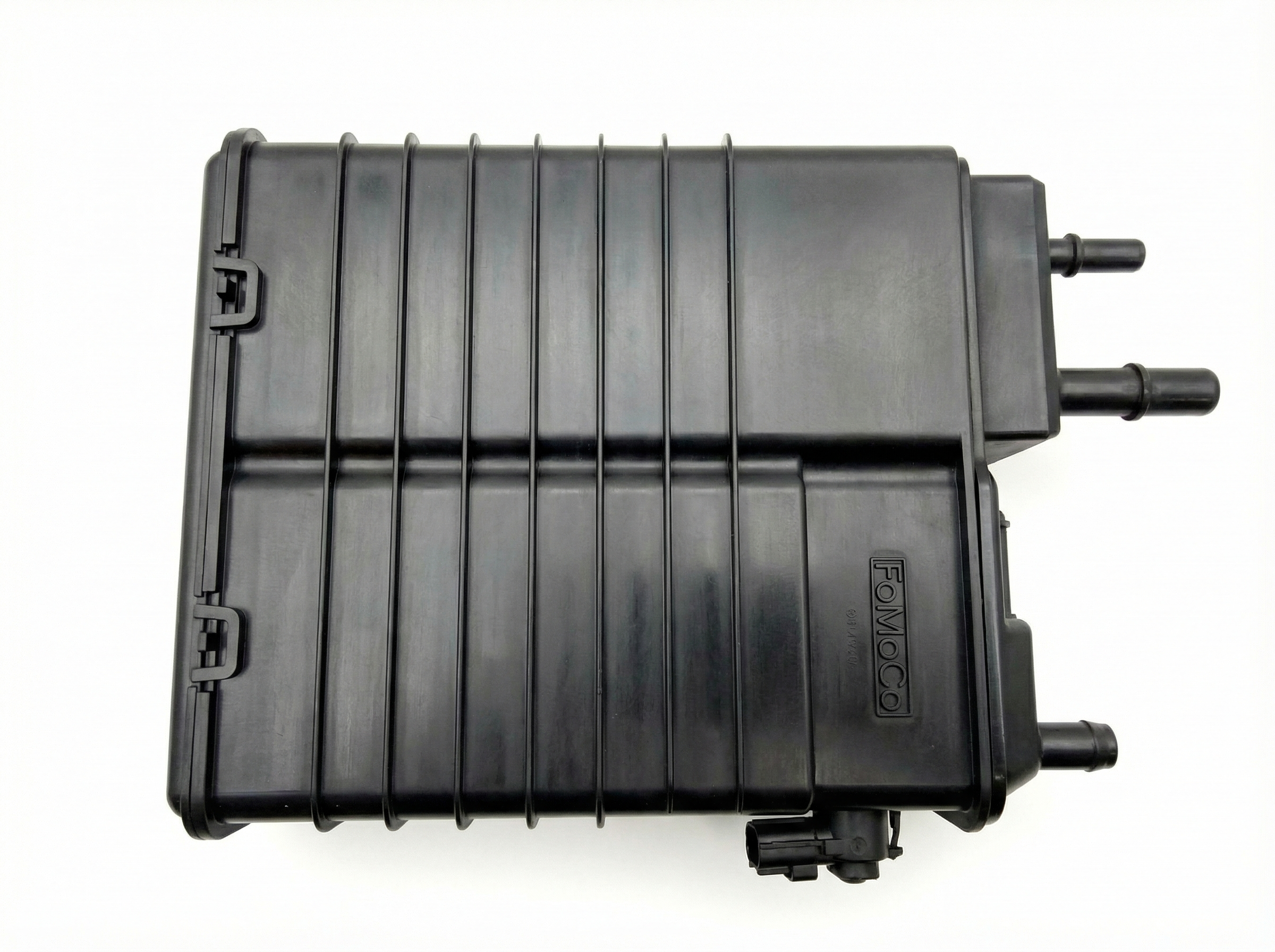
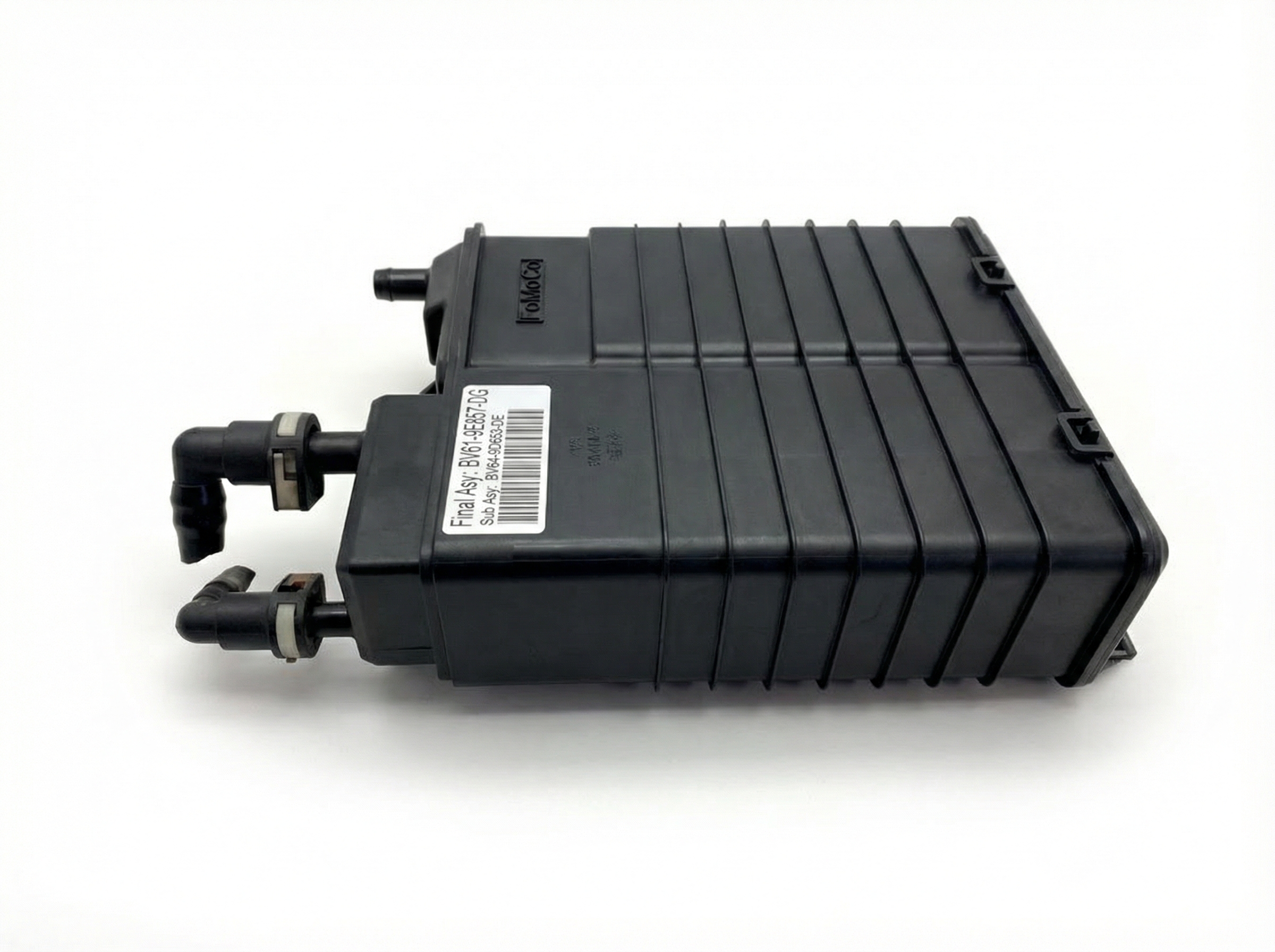
How to confirm: Using a capable OBD-II scanner, command the vent valve closed. If you do not hear a 'click' from the valve (located on the charcoal canister near the gas tank), and electrical tests confirm it is receiving a signal, the valve itself has failed. The valve is integrated into the charcoal canister assembly.
Typical fix: Replace the entire vapor canister assembly, as the vent valve is typically not sold separately for this platform. The canister is located near the rear of the vehicle.
Est. part cost: $100-$180 - Damaged Wiring or Electrical Connector 🟡 Medium Probability The vent valve and its wiring are located under the vehicle near the rear suspension, making them susceptible to moisture, road salt, and physical damage from debris.
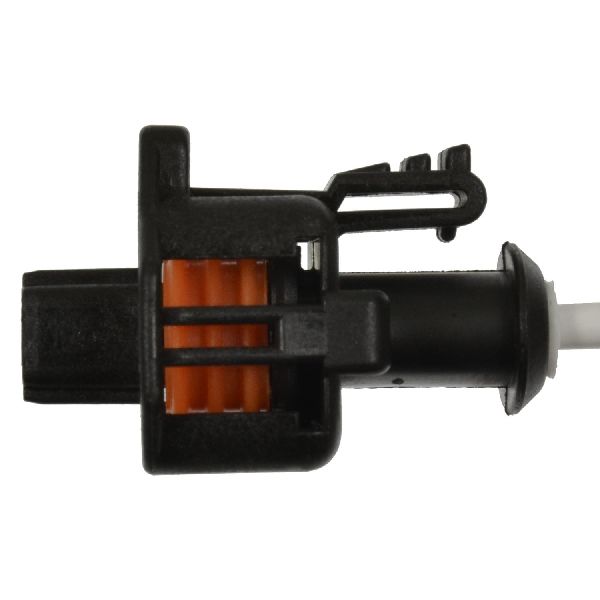
How to confirm: Visually inspect the wiring harness and connector leading to the vent solenoid for any breaks, corrosion, or loose pins. Use a multimeter to check for power and ground at the connector when the valve is commanded by the scan tool.
Typical fix: Repair the damaged section of the wiring harness or replace the connector pigtail.
Est. part cost: $10-$50 - Clogged Vent Valve or Charcoal Canister ⚪ Low Probability → Shop Vapor Canister Dirt, dust, or even insects can enter the EVAP system's fresh air intake hose and travel to the vent valve, physically jamming it open.
How to confirm: Remove the vent valve from the canister. If it is visibly clogged with debris, this is the likely cause. Inspect the canister port for further contamination.
Typical fix: Replace the vent valve and clean out any debris from the canister port and associated hoses. In severe cases, the entire charcoal canister may need replacement.
Est. part cost: $30-$80 for the valve, $100-$600 for a canister assembly.
Rare But Worth Checking
- Powertrain Control Module (PCM) Fault: → Shop Engine Control Module (ECM) This is extremely rare. Before condemning the PCM, all other possibilities, including the valve, wiring, and canister, must be exhaustively ruled out. A PCM fault would likely be accompanied by other unrelated error codes.
Diagnosis Steps
- Confirm the code P2421 is present using an OBD-II scanner.
- Visually inspect the EVAP charcoal canister, vent valve, and all attached hoses at the rear of the vehicle, near the fuel tank. Look for obvious damage, corrosion, or disconnected hoses.
- Using a bidirectional scan tool, command the 'EVAP Vent Solenoid' to close. Listen for an audible click from the valve.
- If no click is heard, access the electrical connector at the vent valve. Check for battery voltage (approx. 12V) and a proper ground signal when the valve is commanded by the scanner.
- If voltage and ground are present but the valve does not operate, the vent valve/canister assembly is faulty and must be replaced.
- If voltage or ground is missing, the wiring harness between the PCM and the valve is damaged and needs to be repaired.
- If the valve clicks but the code returns, remove the valve/canister and check it for physical obstructions like dirt or debris. A smoke test can also be performed; if smoke escapes the vent valve outlet when commanded closed, the valve is mechanically stuck open.
- After repairs, clear the code and perform a complete drive cycle to allow the EVAP monitor to run and confirm the fix.
Parts You'll Likely Need
- Vapor Canister Assembly
(OEM #BV6Z-9D653-D)— The vent valve solenoid that causes P2421 is integrated into the charcoal canister on this platform. Therefore, the entire canister assembly must be replaced. The part number BV6Z-9D653-D supersedes previous versions like -A, -B, and -C.
Trusted brands: Motorcraft (Ford OEM), Dorman, Bosch
OEM price range: $110-$175
Aftermarket price range: $80-$150
Related Codes That Often Appear With This One
- P0455 — P0455 indicates a 'Gross EVAP Leak'. A vent valve that is stuck wide open is a very large, intentional leak path, so these two codes frequently appear together.
- P0456 — TSB 15-0034, issued for some 2012-2014 Focus models, notes that code P0456 (Small EVAP Leak) can appear alongside other EVAP codes due to issues with the fuel system, which could be related to the vent valve malfunction.
Technical Service Bulletins (TSBs) & Recalls
- Recall 18S32 / NHTSA 18V735: While not for code P2421, this important safety recall addresses a faulty *purge valve* and PCM software on 2012-2018 Focus models. Owners should not confuse this recall with the fix for P2421.
- TSB 15-0034: For some 2012-2014 Focus models, this TSB addresses inaccurate fuel gauge indications and several EVAP codes, including P0456. While not directly for P2421, it highlights the sensitivity of the EVAP system on this platform.
Platform-Specific Known Issues
- The vent solenoid is located on the charcoal canister above the rear subframe, making access difficult without lowering the canister or using long extensions and swivels.
- Unlike many other vehicles where the vent solenoid is a separate, twist-in part, on the Mk3 Focus it is integrated into the vapor canister assembly (Part No. BV6Z-9D653-D), requiring the replacement of the entire unit. 🎬 Watch: Step-by-step guide to replacing the vapor canister assembly.
Mechanic-Grade Diagnostic Values
- EVAP Canister Vent Valve Connector Voltage — expected: Approximately 12V (Battery Voltage) at the power pin with Key On, Engine Off.. Failure: No voltage indicates a wiring or fuse issue upstream. Constant 12V when commanded closed by a scan tool points to a PCM driver or wiring fault.
- EVAP Canister Vent Valve Solenoid Resistance — expected: While a specific value for the Focus is not published in general repair data, a typical range for similar solenoids is 20-40 Ohms.. Failure: A reading of infinity (open circuit) or near-zero (short circuit) indicates a failed solenoid coil.
Scan Tool Commands That Help
- Ford IDS (Integrated Diagnostic System): Powertrain > EVAP System Leak Test — This is the factory-guided procedure that automatically commands the vent and purge valves to seal the system and monitors the Fuel Tank Pressure (FTP) sensor. It's the most definitive way to test the vent valve's sealing function as part of the whole system.
- High-End Bidirectional Scanner (Autel, Snap-on, etc.): EVAP Vent Solenoid (or similar name) — This command allows a technician to manually cycle the vent valve open and closed to listen for an audible 'click', confirming the solenoid is actuating. This is a quick functional check before performing electrical tests.
Wiring & Ground Locations
- G302 — Under the front of the passenger's door sill plate.. This is a major body ground point. While not exclusive to the EVAP system, poor contact at this ground can cause a variety of difficult-to-diagnose electrical issues with components located toward the rear of the vehicle.
- Vent Valve Connector — On the vapor canister assembly, located above the rear subframe, near the fuel tank.. This is the direct electrical connection to the component that fails. Testing for voltage and ground at this connector is the primary electrical diagnostic step for P2421.
Real Owner Repair Stories
- Reddit r/FordFocus user comment (Ford Focus (year not specified, but within 2012-2018 range)) — Recurring Check Engine Light for EVAP system.
❌ Tried (didn't work) Replaced purge valve with a Ford OEM part (failed after 6 months)., Replaced purge valve with an Advance Auto Parts part (failed after 4 months).
✅ What actually fixed it The user notes that for their recurring EVAP issues (often starting with the purge valve), they eventually used a NAPA (Echlin brand) part which lasted over 2 years. While their story centers on the purge valve, they also lay out the correct diagnostic path for a persistent EVAP code: 1) Purge Valve, 2) EVAP Canister Vent Solenoid, 3) Charcoal Canister. This highlights the importance of part quality and following the full diagnostic tree if a code returns.
OEM Part Supersession History
BV6Z-9D653-A, BV6Z-9D653-B, BV6Z-9D653-C→BV6Z-9D653-D— Ford often updates parts to improve reliability or address design flaws. While the specific reason isn't publicly documented, moving from -A to -D indicates several revisions have been made to the canister assembly.
Heads up: All previous versions are replaced by BV6Z-9D653-D, which is the correct and current service part for the entire 2012-2018 2.0L GDI range.
Model Year Variations Within This Range
- 2012-2018: There is a distinction between canisters for PZEV (Partial Zero-Emission Vehicle) and standard Federal emissions vehicles. While BV6Z-9D653-D is listed for PZEV models with the 2.0L engine, it's critical to verify the correct part using the vehicle's VIN or checking the emissions label under the hood.
Diagnostic Flowchart
Other Known Issues on This Vehicle
Issues unrelated to this code that are worth knowing about as an owner of this generation:
- DPS6 PowerShift Automatic Transmission Failure 🔴 High — Extremely common on 2012-2018 models with automatic transmission. Symptoms include shuddering, hesitation, slipping, and complete failure to engage gears. Onset can be as early as 20,000 miles and often recurs after repairs. (Ref: Multiple lawsuits and customer satisfaction programs (e.g., 19N08), but no universal, permanent recall fix for all years.)
- Electric Power Steering (EPAS) Failure 🔴 High — Common failure where power steering assistance is lost intermittently or permanently, often accompanied by a 'Steering Assist Fault' message. Can occur at any mileage. (Ref: Multiple TSBs exist (e.g., SSM 46210, TSB 12-2-17) for diagnosing noises and wander, but a full replacement of the steering rack is often the only fix for complete failure.)
- Collapsing Passenger-Side Engine Mount 🟠 Medium — The hydraulic passenger-side engine mount frequently fails, causing excessive vibration and harshness to be felt in the cabin, especially at idle. Typically occurs after 60,000 miles. (Ref: A TSB (11-3-24) exists for older Focus models for a different mount, but the Mk3 issue is a well-known design flaw without a specific recall.)
- Faulty Canister Purge Valve (Recall 18S32) 🟠 Medium → Shop Vapor Canister — The purge valve in the engine bay can stick open, leading to stalling after refueling, a rough idle, and potential fuel tank deformation. Very common across all 2012-2018 models. (Ref: Ford Safety Recall 18S32 / NHTSA 18V735.)
- Inaccurate Fuel Gauge / DTE Reading 🟡 Low — Some vehicles may exhibit incorrect fuel level readings or inaccurate Distance-To-Empty calculations, sometimes accompanied by EVAP-related DTCs. (Ref: TSB 15-0034 and TSB 16-0062 were issued to address this with a PCM reflash or fuel tank sender replacement.)
Used vs. New Parts: Buying Guide for This Vehicle
When a used part is the smart pick: A used vapor canister assembly from a junkyard can be a cost-effective option, as it is a relatively simple component (plastic housing, charcoal, and a solenoid). This is a good choice if the budget is tight and the failure is confirmed to be the integrated vent solenoid.
Donor-vehicle mileage cap: roughly under 80000 miles for the part to have meaningful remaining life.
What to inspect on the donor part:
- Source the part from a vehicle in a dry, non-salt-belt region to minimize risk of corrosion on the solenoid.
- Visually inspect the plastic housing for any cracks or damage.
- Check the electrical connector pins for any signs of green or white corrosion.
- Ensure all hose connection points are intact and not broken or brittle.
- Confirm the donor vehicle is a 2012-2018 Focus with the same 2.0L engine.
OEM-only on this vehicle (don't cheap out):
- While not strictly 'OEM-only', emissions components like the vapor canister are often best replaced with the OEM Motorcraft part to ensure proper function and avoid recurring codes. Aftermarket versions can sometimes have slightly different flow or sealing characteristics that the sensitive Ford EVAP monitor may detect.
Aftermarket brands forum-validated for this vehicle:
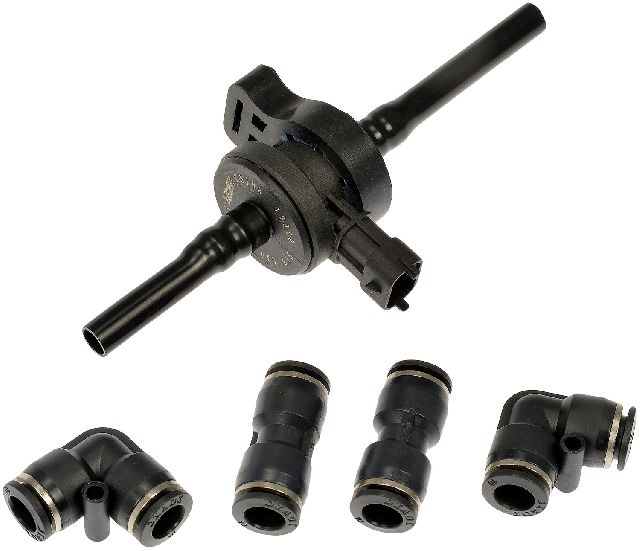
- Dorman (Part #911-780 is an alternative to the full canister)
- Standard Motor Products (SMP)
Brands owners have reported issues with on this vehicle:
- No-name, unbranded parts from online marketplaces should be avoided, as their quality control and material specifications are often unknown, leading to a high risk of premature failure and recurring codes.
Real Owner Stories
Aggregated from forums and TSBs cited above. Mileages and costs reflect what owners reported in those sources.
2012-2018 Ford Focus
Symptoms: Had a persistent Check Engine Light for an EVAP code. I checked the gas cap and even considered the purge valve first.
What fixed it: After further diagnosis, the problem was correctly identified as a faulty vent valve, which required replacing the entire canister assembly.
Source hint: focusfanatics.com
2012-2018 Ford Focus
Symptoms: Check Engine Light came on. I immediately thought it was related to the well-known purge valve recall (18S32) that everyone talks about.
What fixed it: The diagnosis showed the code was P2421, which is for the vent valve, not the purge valve. The issue was a failed vent valve/canister assembly at the back of the car, which is not part of the recall.
Source hint: r/FordFocus on Reddit
Related OBD-II Codes
Frequently Asked Questions
Where is the EVAP vent valve located on my 2016 Ford Focus, and is it difficult to replace?
Can I just buy the P2421 vent solenoid, or do I need the whole canister assembly for my Ford Focus?
I heard about a big EVAP system recall for the Focus. Does that fix the P2421 code?
What is the most common cause for code P2421 on this specific vehicle?
Could a clog cause the P2421 code on my Focus?
Does TSB 15-0034 apply to the P2421 code?
Helpful Videos
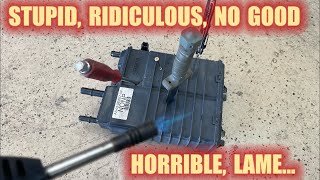

Used OEM Parts in Stock
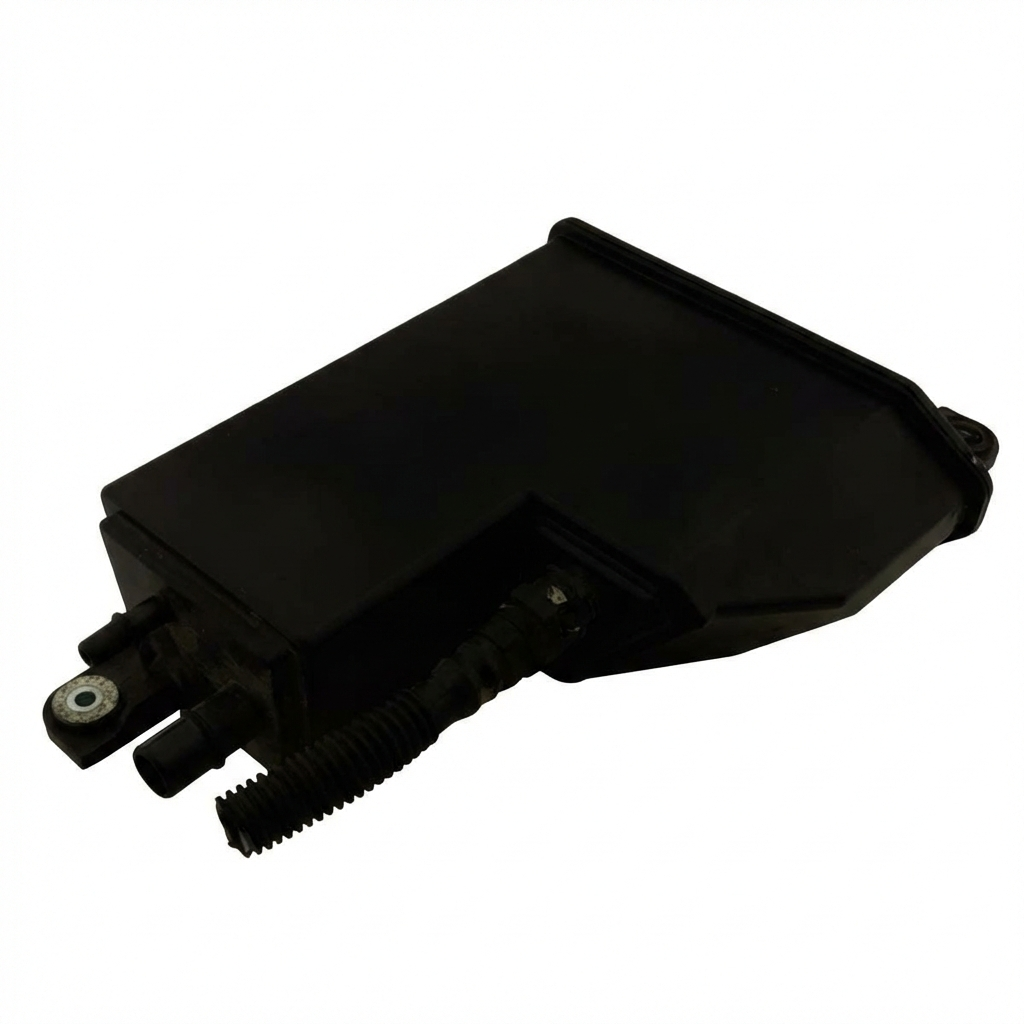
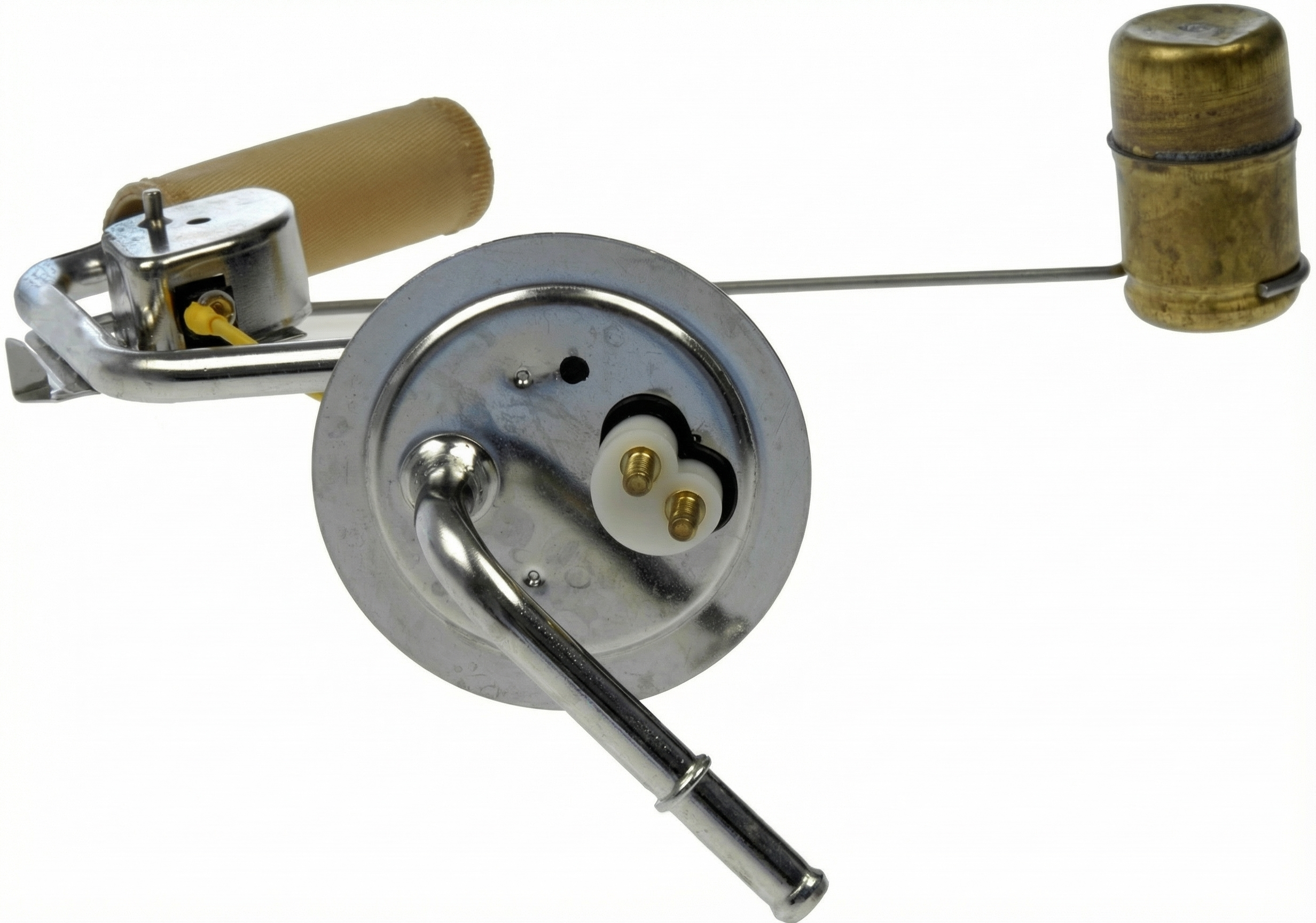
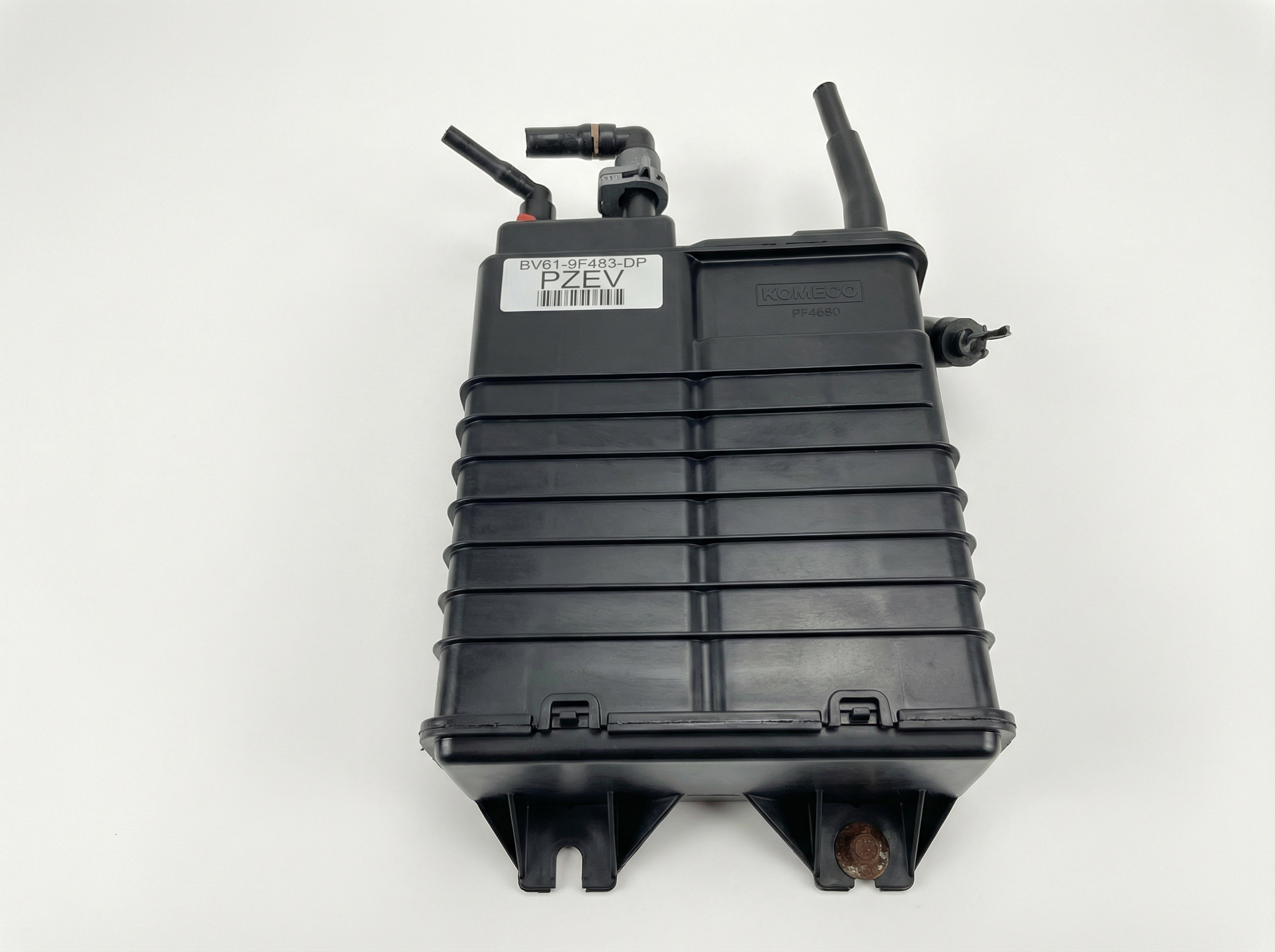
New Aftermarket Parts Available


The information in this article is provided for general reference and educational purposes only. Vehicle specifications, procedures, and part compatibility can vary by production date, trim level, and region. Always consult your vehicle's factory service manual and verify part numbers before purchasing or performing repairs. Safety-critical components such as airbags, seat belts, and braking systems should be installed by a qualified professional.
- Ford Focus:
- 🧭 Diagnostic Flowchart
- 🎬 Helpful Videos
- 🛍️ Shop This Part
- What's Unique About the 2012-2018 Ford Focus
- Symptoms You May Notice
- Most Likely Causes
- Rare But Worth Checking
- Diagnosis Steps
- Parts You'll Likely Need
- Related Codes That Often Appear With This One
- Technical Service Bulletins (TSBs) & Recalls
- Platform-Specific Known Issues
- Mechanic-Grade Diagnostic Values
- Scan Tool Commands That Help
- Wiring & Ground Locations
- Real Owner Repair Stories
- OEM Part Supersession History
- Model Year Variations Within This Range
- Other Known Issues on This Vehicle
- Used vs. New Parts: Buying Guide for This Vehicle
- Real Owner Stories
- 2012-2018 Ford Focus
- 2012-2018 Ford Focus
- Related OBD-II Codes
- Frequently Asked Questions
- 🎟️ Get 5% Off