

P2421 on 2016-2022 Honda Pilot: EVAP Vent Valve Stuck Open Causes and Fixes
On a 2016-2022 Honda Pilot, code P2421 almost always means the EVAP canister vent valve has failed. This is a straightforward DIY replacement located under the rear of the vehicle. Expect to pay $40-$70 for an aftermarket valve or around $100 for an OEM part.
- P2421 on a 2016-2022 Pilot is an emissions-related code that will not affect drivability but will cause an emissions test failure.
- The most likely cause by far is a failed EVAP Canister Vent Valve, located under the rear of the car on the passenger side.
- Before replacing the valve, inspect it and the connecting hose for dirt or debris, as this is a known issue on Pilots.
- This is a very DIY-friendly repair that can be done in under an hour with basic tools.
- Do not confuse the vent valve (under the car) with the purge valve (in the engine bay).
What's Unique About the 2016-2022 Honda Pilot
While P2421 is a common code across many brands, the third-generation Honda Pilot has a documented vulnerability to dirt and debris in the EVAP system. Honda issued a Technical Service Bulletin (TSB 20-056) for the related code P2422 (Vent Valve Stuck Closed) on all 2016-2022 Pilots, caused by dirt clogging the canister vent tube. This indicates the system is susceptible to contamination, which can also cause P2421 if debris gets lodged in the valve and prevents it from sealing shut.
Symptoms You May Notice
- Check Engine Light is on
- "Emissions System Problem" message on the dashboard
- Remote start may be disabled
- A faint fuel odor near the rear of the vehicle (less common).
- Difficulty refueling (gas pump clicks off repeatedly) is possible but not common with this specific failure mode
- Replacing the gas cap. A faulty gas cap typically triggers other EVAP codes like P0455 or P0457, not P2421.
- Replacing the EVAP Purge Valve. The purge valve is a different component located in the engine bay. P2421 specifically points to the vent valve located under the vehicle near the fuel tank.
Most Likely Causes
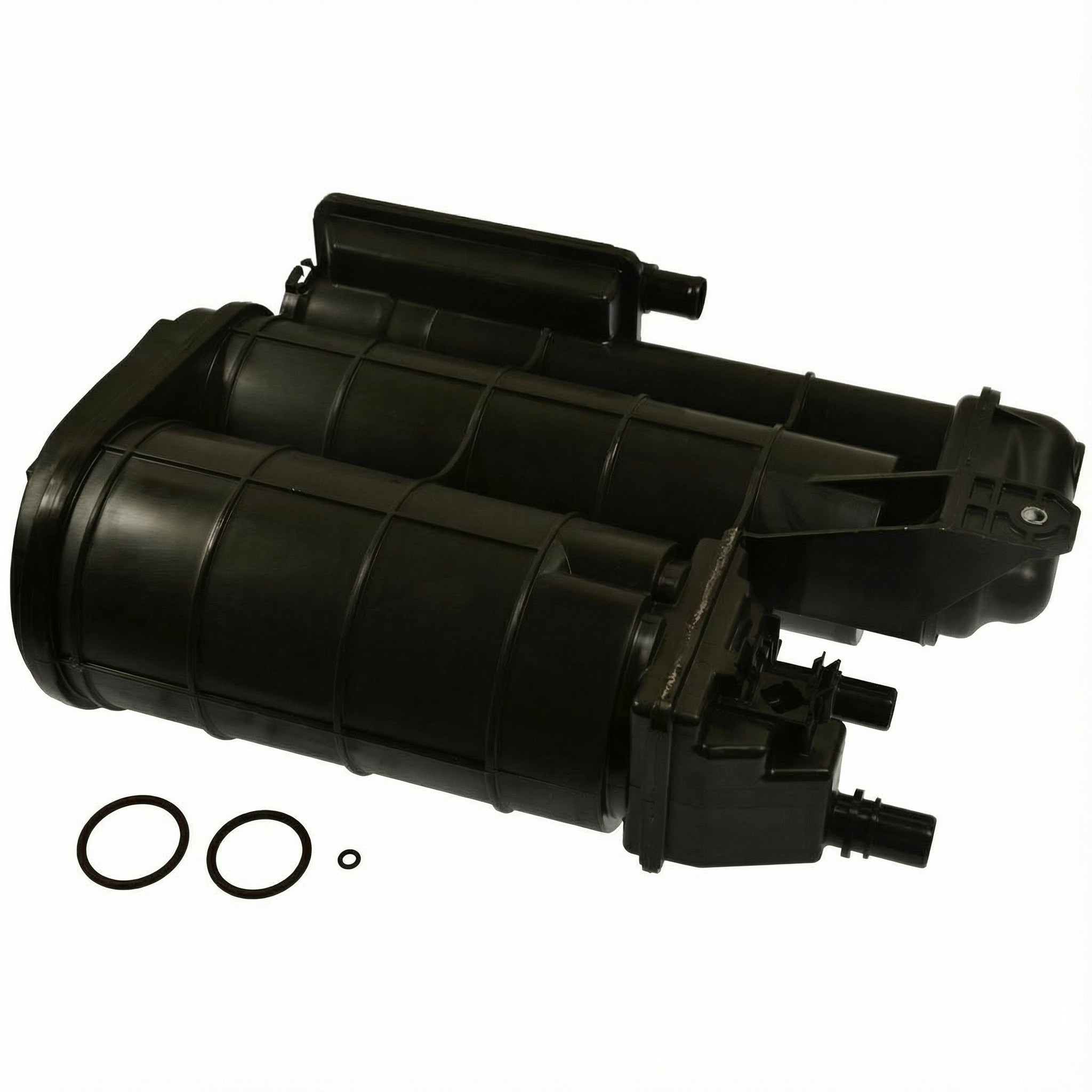
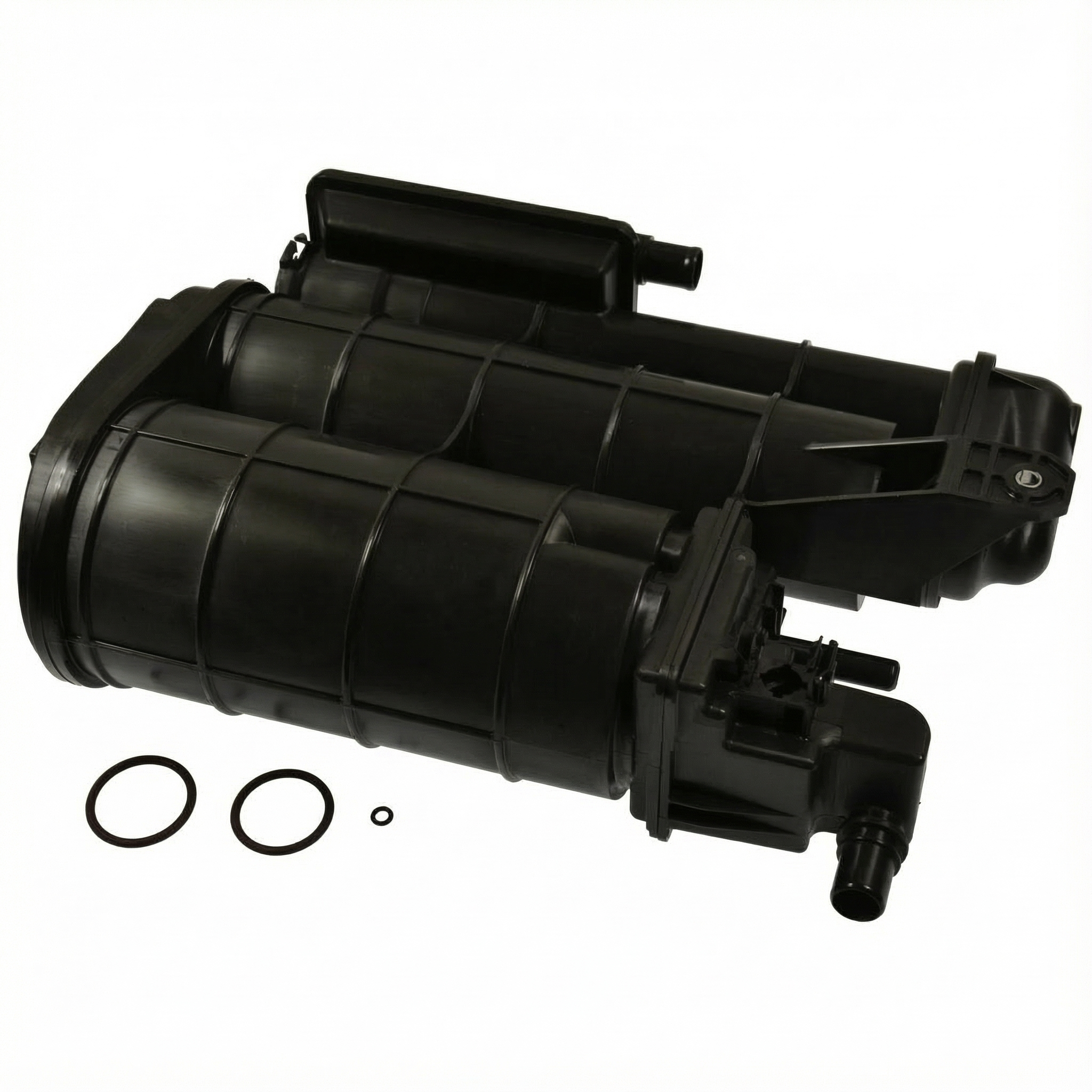
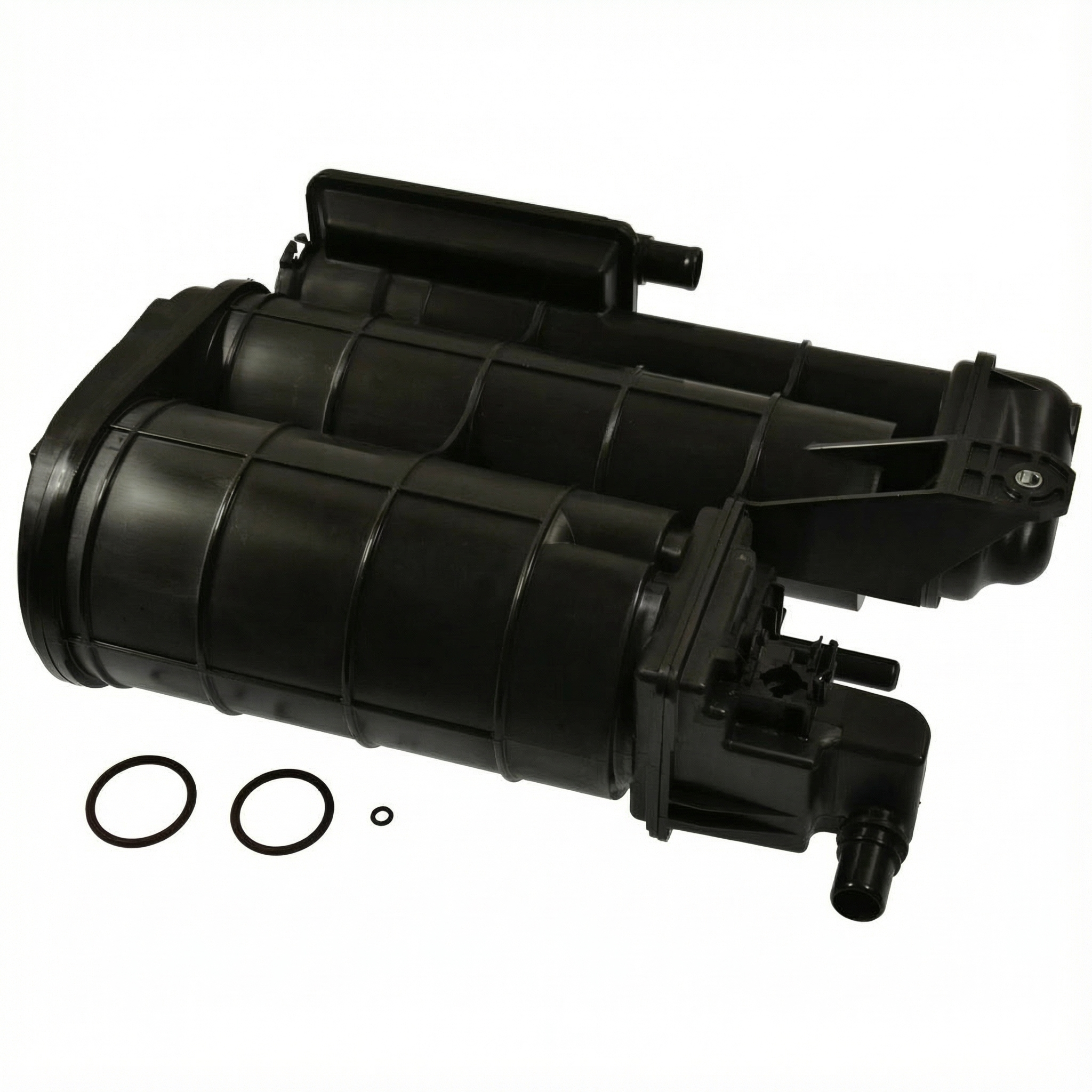
- Failed EVAP Canister Vent Valve 🔴 High Probability → Shop Vapor Canister This is a common failure item across many Honda models due to wear and tear of the internal solenoid. The valve is normally closed when unpowered; failure causes it to remain open.
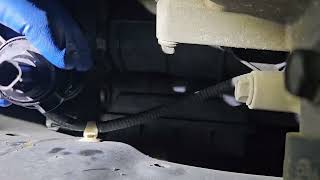
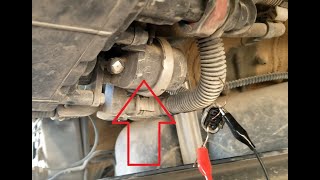
How to confirm: The valve is located on the EVAP canister under the rear of the vehicle, on the passenger side. With the valve removed, it should be closed (not allow air to pass through) when unpowered. If you can blow through it, it is stuck open and has failed.
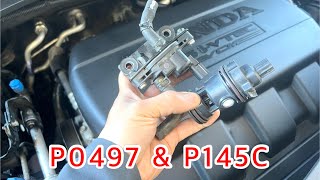
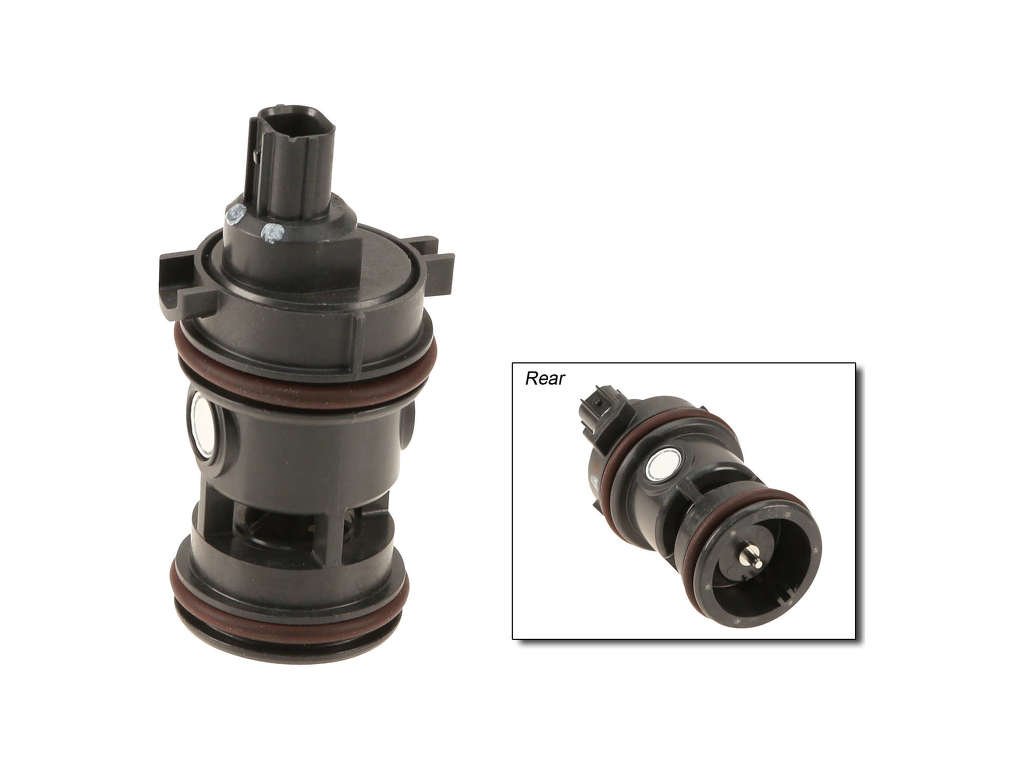
Typical fix: Replace the EVAP canister vent valve. This is a simple twist-off, twist-on part held by a single electrical connector.
Est. part cost: $40-$110 - Debris in Vent Valve or Hose 🟡 Medium Probability Honda TSB 20-056 for the related P2422 code confirms that the vent tube design on 2016-2022 Pilots is prone to ingesting dirt, which can hold the valve open. Spiders are also commonly found building webs in this area, causing a blockage.
How to confirm: Remove the vent valve and inspect the valve's seating surface and the attached vent hose for dirt, spider webs, or other blockages.
Typical fix: Clean out the debris from the valve and hose. If the valve is damaged by the debris, it will need to be replaced. For the opposite code P2422, Honda's official fix is to install a canister drain kit (P/N 06171-TG7-305) to prevent future contamination.
Est. part cost: $0-$110 - Damaged Wiring or Connector ⚪ Low Probability The component's location under the vehicle exposes the wiring to road debris and corrosion over time.
How to confirm: Visually inspect the electrical connector and wiring harness leading to the vent valve for any signs of chafing, breaks, or corrosion on the pins.
Typical fix: Repair the damaged section of wiring or clean/replace the connector.
Est. part cost: $5-$50
Rare But Worth Checking
- Faulty Powertrain Control Module (PCM): → Shop Engine Control Module (ECM) This is extremely rare. The PCM should only be considered after all other possibilities, including the valve, wiring, and blockages, have been definitively ruled out.
Diagnosis Steps
- Scan the vehicle with an OBD-II scanner to confirm P2421 is the active code.
- Safely raise and support the rear of the vehicle.
- Locate the EVAP canister assembly under the vehicle, on the rear passenger side, just forward of the rear tire.
- Identify the vent valve solenoid on the canister. It will have a two-pin electrical connector.
- Inspect the wiring and connector for any visible damage, corrosion, or loose connections.
- Disconnect the electrical connector and remove the valve (it typically twists about a quarter-turn counter-clockwise to release).
- Visually inspect the valve and its port on the canister for any dirt, spider webs, or other debris.
- Attempt to blow through the valve. If air passes through, the valve is stuck open and must be replaced.
- If the valve appears to be working and free of debris, the issue may be in the wiring. Check for 12V power at the connector with the key on (or during a scanner-commanded test).
- If the valve and wiring are good, the canister itself may be internally blocked, though this is less common for a 'stuck open' code.
Parts You'll Likely Need
- Vapor Canister Vent Valve
(OEM #17310-TBA-A01)— This solenoid is the component that mechanically fails or gets stuck, directly causing the P2421 code. This part number supersedes older numbers like 17310-SNA-A01 and 17310-TA0-A01.
Trusted brands: Honda (Genuine OEM), Dorman (911-422), Standard Motor Products (CVS78)
OEM price range: $100-$110
Aftermarket price range: $40-$70
Technical Service Bulletins (TSBs) & Recalls
- TSB 20-056: While this TSB is for DTC P2422 (EVAP Canister Vent Shut Valve Stuck Closed), it is relevant as it identifies a root cause of dirt clogging the EVAP canister vent tube on 2016-22 Pilots, which could also cause a P2421 fault. The official fix involves installing a new canister and a drain kit.
Platform-Specific Known Issues
- Honda TSB 20-056, while for the opposite code P2422 (stuck closed), documents a known issue where the EVAP canister vent tube gets clogged with dirt on 2016-2022 Pilots. This highlights a system vulnerability to debris, which can also be a cause for P2421 if the debris holds the valve open. The TSB was updated several times to include more model years and the Honda Passport.
Mechanic-Grade Diagnostic Values
- EVAP Canister Vent Valve Solenoid Coil Resistance — expected: 48 to 65 ohms. Failure: A reading outside this range indicates a damaged internal winding, requiring valve replacement.
- Voltage at Vent Valve Connector (Key On, Engine Off) — expected: One pin should have battery voltage (~12V). The other pin is the control (ground) from the PCM.. Failure: Absence of 12V power points to a wiring or fuse issue. If the PCM is commanding the valve closed and the control wire does not show ground, it could be a wiring break or faulty PCM driver.
- Fuel Tank Pressure (FTP) Sensor Voltage during HDS Function Test — expected: After commanding the vent valve closed (EVAP CVS OFF) and applying vacuum, the FTP voltage should not increase by more than 0.2 volts over one minute.. Failure: An increase of more than 0.2 volts indicates the valve is not sealing correctly and is stuck open.
Scan Tool Commands That Help
- Honda Diagnostic System (HDS): EVAP Test - Function Test — This is the primary function to run the vehicle's self-test on command to confirm if the P2421 fault is currently active or was intermittent.
- Honda Diagnostic System (HDS) or compatible bidirectional scanner: EVAP CVS ON / EVAP CVS OFF — This command directly actuates the canister vent valve (solenoid). 'EVAP CVS OFF' commands the valve to close, sealing the system. This allows a technician to manually test the valve's sealing ability while monitoring the Fuel Tank Pressure (FTP) sensor.
Wiring & Ground Locations
- EVAP Canister Vent Shut Valve 2-Pin Connector — On the vent valve itself, located on the EVAP canister under the rear of the vehicle on the passenger side.. This is the primary point for electrical testing. Pin 1 is typically BLK/YEL (power from under-dash fuse) and Pin 2 is the control wire from the PCM (color may vary, e.g., LT GRN/RED on some models). Verifying power and the control signal here is critical to rule out a wiring issue.
Real Owner Repair Stories
- YouTube Creator 'DIY Auto Repair' (2021 Honda Pilot) — Check Engine Light with OBD code P2421.
❌ Tried (didn't work) The video creator went straight to diagnosis and replacement, no other failed attempts were mentioned.
✅ What actually fixed it The EVAP canister vent valve was replaced with an aftermarket Dorman part (P/N 911-422). The old valve was confirmed to be stuck open. After replacement, the issue was resolved. - Reddit user on r/HondaOdyssey (Honda Odyssey (platform mate), ~45,000 miles) — Intermittent P2421 code that appears most often during city driving when the fuel tank level drops to around 1/4 full.
❌ Tried (didn't work) Clearing the code works temporarily, but it returns under specific conditions.
✅ What actually fixed it The user was still in the diagnostic phase, but the pattern suggests the EVAP self-test that triggers the code runs under these specific low-fuel, city driving conditions. The suggested fix was to locate the charcoal canister and test/clean the solenoid valve.
Model Year Variations Within This Range
- 2016-2019 vs. 2020-2022: The entire EVAP Canister Assembly has different part numbers. 2016-2019 models use P/N 17011-TZ5-A01, while 2020-2022 models use P/N 17011-TG7-A11. This is critical if you need to replace the whole canister and not just the valve.
Diagnostic Flowchart
Other Known Issues on This Vehicle
Issues unrelated to this code that are worth knowing about as an owner of this generation:
- Fuel Injector Failure 🔴 High — Widespread enough that Honda issued a warranty extension (10 years/150k miles) for many 2016-2019 Pilots. Can cause misfires (P030x), catalyst codes (P0420/P0430), and air-fuel ratio codes (P219A/P219B). (Ref: Warranty Extension / TSBs 20-100, 21-010.)
- ZF 9-Speed Transmission Problems 🟠 Medium — Common on Touring and Elite trims. Owners report harsh/jerky shifting, hesitation, and sometimes premature failure. Software updates were released (TSB 20-029) to improve behavior, but mechanical issues can still occur. (Ref: TSB 20-029, TSB 17-035 (Transmission Warmer).)
- Infotainment System Glitches (Popping/Cracking/Black Screen) 🟡 Low — Affects many 2019-2022 models. Symptoms include loud popping/crackling from speakers, followed by the center screen and gauge cluster going black. Caused by faulty MOST bus network connectors or wiring harness tension. (Ref: Recall for rearview camera (NHTSA 23V-431), TSB 23-047.)
- Engine Auto Idle Stop Won't Restart 🟠 Medium — Affects 2016-2022 models. The engine shuts off at a stop but fails to restart, requiring the driver to shift to Park and press the start button. Honda extended the warranty and the fix may involve a software update, starter replacement, and valve adjustment. (Ref: Warranty Extension mentioned in TSB 23-023.)
- Connecting Rod Bearing Wear 🔴 High — A manufacturing defect on some 2016, 2018, and 2019 models could lead to premature bearing wear and catastrophic engine failure. This was subject to a major recall (NHTSA 23V-751). (Ref: NHTSA Recall 23V-751.)
- Prematurely Worn Front Lower Control Arm Bushings 🟡 Low — Bushings can tear and separate as early as 30,000-40,000 miles, causing loose steering feel, knocking noises, and uneven tire wear.
Used vs. New Parts: Buying Guide for This Vehicle
When a used part is the smart pick: A used EVAP canister vent valve is generally not recommended. It is an electronic solenoid and a common failure item with a finite lifespan. The low cost of a new aftermarket part ($40-$70) makes it a much safer and more reliable choice than a used part with unknown history.
Donor-vehicle mileage cap: roughly under 40000 miles for the part to have meaningful remaining life.
What to inspect on the donor part:
- If buying used is the only option, source from a vehicle with the lowest possible mileage.
- Visually inspect the part for corrosion on the electrical pins.
- Check for cracks in the plastic housing.
- Test the part before installation: ensure you cannot blow through it when unpowered.
OEM-only on this vehicle (don't cheap out):
- While not required, if replacing the entire EVAP canister assembly, using a Genuine Honda part is strongly recommended to ensure compatibility and proper function, especially given the model-year variations.
Aftermarket brands forum-validated for this vehicle:
- Dorman (specifically P/N 911-422) is cited in a successful repair video.
- Standard Motor Products (SMP) is a generally reputable brand for emissions components.
Brands owners have reported issues with on this vehicle:
- No specific brands are consistently reported as problematic for this part, but ultra-low-cost, unbranded parts from online marketplaces carry a higher risk of premature failure.
Real Owner Stories
Aggregated from forums and TSBs cited above. Mileages and costs reflect what owners reported in those sources.
2021 Honda Pilot
Symptoms: Check engine light with OBD code P2421.
What fixed it: Replaced the evap vent valve using Dorman part number 911-422.
Source hint: YouTube: 2021 Honda Pilot Evap Vent Valve Replacement
2020 Honda Pilot Elite — 60000 miles
Symptoms: Emissions system problem light comes on when the gas tank is at half full and stays on until the tank is refilled.
What fixed it: Diagnosis showed codes P0441 and P2421.
Source hint: Reddit r/hondapilot
Related OBD-II Codes
Frequently Asked Questions
Does TSB 20-056 apply to my 2016-2022 Honda Pilot even if I have code P2421 instead of P2422?
Where is the EVAP canister vent valve located on a 2021 Honda Pilot?
Is there a specific part number recommended for preventing debris from causing EVAP codes on my Pilot?
Can I test the vent valve myself before buying a replacement?
Will a P2421 code affect my Pilot's remote start system?
Are there any other major engine issues I should watch for on my 2019 Pilot while fixing this emissions code?
Helpful Videos
Used OEM Parts in Stock
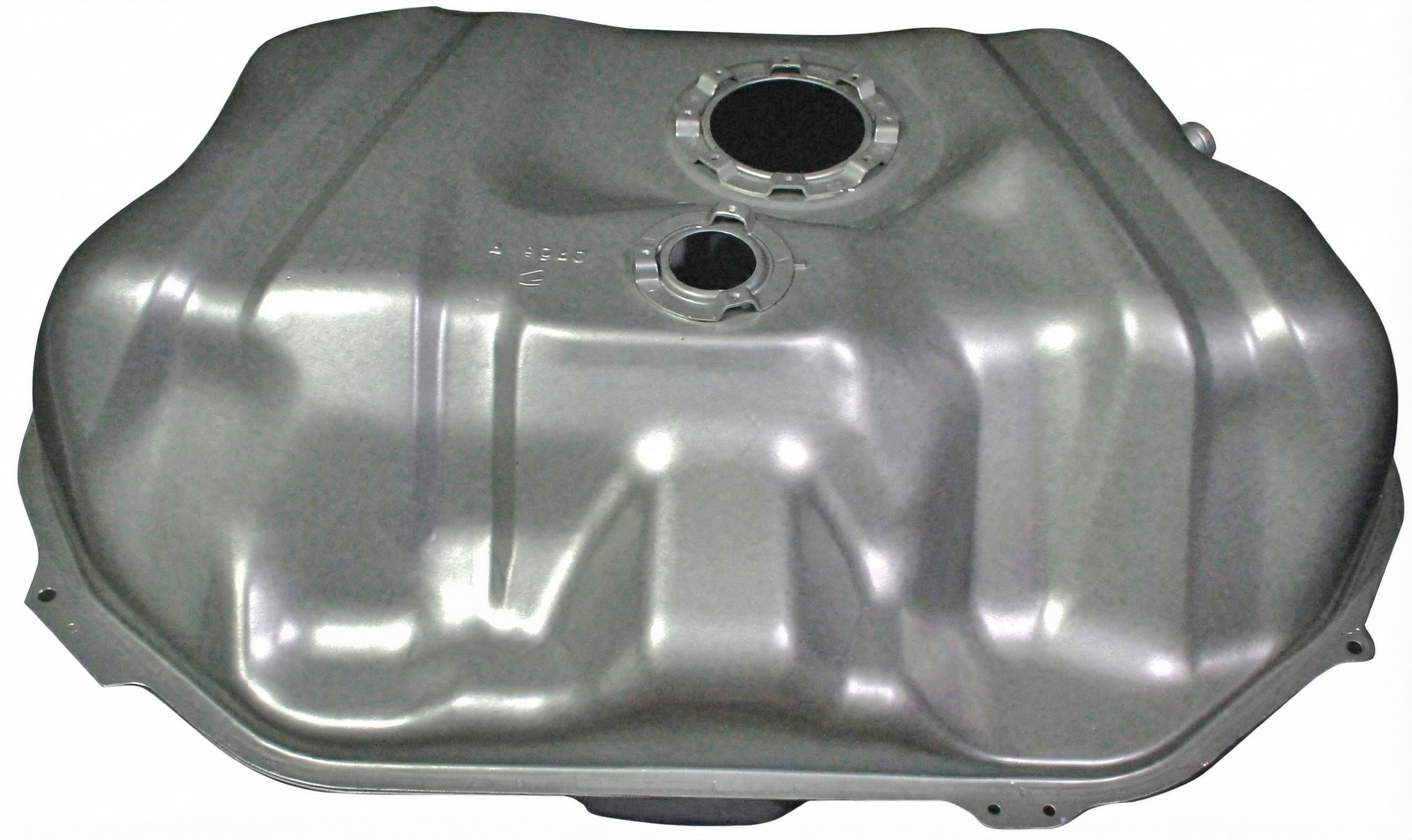
New Aftermarket Parts Available


The information in this article is provided for general reference and educational purposes only. Vehicle specifications, procedures, and part compatibility can vary by production date, trim level, and region. Always consult your vehicle's factory service manual and verify part numbers before purchasing or performing repairs. Safety-critical components such as airbags, seat belts, and braking systems should be installed by a qualified professional.
- Honda Pilot:
- 🧭 Diagnostic Flowchart
- 🎬 Helpful Videos
- 🛍️ Shop This Part
- What's Unique About the 2016-2022 Honda Pilot
- Symptoms You May Notice
- Most Likely Causes
- Rare But Worth Checking
- Diagnosis Steps
- Parts You'll Likely Need
- Technical Service Bulletins (TSBs) & Recalls
- Platform-Specific Known Issues
- Mechanic-Grade Diagnostic Values
- Scan Tool Commands That Help
- Wiring & Ground Locations
- Real Owner Repair Stories
- Model Year Variations Within This Range
- Other Known Issues on This Vehicle
- Used vs. New Parts: Buying Guide for This Vehicle
- Real Owner Stories
- 2021 Honda Pilot
- 2020 Honda Pilot Elite — 60000 miles
- Related OBD-II Codes
- Frequently Asked Questions
- 🎟️ Get 5% Off