

P2421 on 2011-2020 Kia Optima: EVAP Vent Valve Stuck Open Causes and Fixes
This code almost always means the Canister Close Valve (CCV), also known as the EVAP Vent Valve, is stuck open. It's located near the charcoal canister at the rear of the car, just forward of the rear axle. Replacing the valve is the most common fix, costing around $40-$90 for the part and is a straightforward DIY job for many owners.
- P2421 on a Kia Optima points directly to a problem with the Canister Close Valve (CCV) being stuck open.
- The most likely fix is replacing the Canister Close Valve, which is located at the rear of the car near the fuel tank.
- Do not confuse the Canister Close Valve (at the rear) with the Purge Valve (in the engine bay), as they are different parts with different symptoms.
- While checking the gas cap is easy, it is not a likely cause for this specific code.
- Inspect the valve's wiring and connector for corrosion or damage, as its location makes it vulnerable to the elements.
What's Unique About the 2011-2020 Kia Optima
For the Kia Optima, the official terminology is 'Canister Close Valve' (CCV) for the part more generically known as the EVAP vent valve. The 2011-2015 (TF) generation, particularly in salt-belt states, is subject to a service campaign (SC135) for corroding charcoal canister brackets, which can crack the canister and cause related EVAP leak codes like P0442 or P0455. While P2421 isn't specifically mentioned in the TSB, it highlights a known vulnerability in the EVAP system's hardware in that area for the earlier models in this range.
Generation note: The 2011-2020 range covers two Kia Optima generations: the 3rd Gen (TF, 2011-2015) and the 4th Gen (JF, 2016-2020). The primary cause, a failed Canister Close Valve, is common to both. However, the 2011-2015 models are noted in a service campaign (SC135) for potential charcoal canister bracket corrosion in certain climates, which can cause related EVAP system issues. The platform mate, the Hyundai Sonata, shares this same problem across corresponding generations.
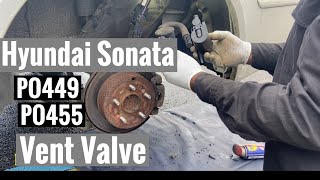
🎬 Watch: Step-by-step vent valve replacement on a SonataSymptoms You May Notice
- Check Engine Light is on.
- A faint smell of gasoline, especially near the rear of the vehicle.
- Vehicle will not pass an emissions inspection.
- In some related EVAP fault scenarios, the fuel pump nozzle may click off repeatedly when trying to refuel, indicating a venting problem.
- Replacing the gas cap. A bad gas cap typically causes a large leak code (P0455) or a specific fuel cap code (P0457), not P2421.
- Replacing the Purge Control Solenoid Valve (PCSV). The PCSV is a different part located in the engine bay, usually on the intake manifold. A failing PCSV often causes different codes (like P0441) and symptoms like difficulty starting after refueling.
Most Likely Causes
- Failed Canister Close Valve (CCV) / Vent Valve 🔴 High Probability → Shop Vapor Canister The valve is a common failure point across many vehicles, including the Optima and its platform-mate, the Hyundai Sonata. It can get stuck mechanically from dirt, debris, or internal corrosion, or fail electrically.
How to confirm: Using a capable OBD-II scanner, command the CCV to close. If you can't hear a click from the valve (located near the charcoal canister by the rear axle), it may have failed. The definitive test is to perform a smoke test with the valve commanded closed; if smoke escapes from the valve, it has failed and must be replaced. You can also remove the valve and apply 12V power to its terminals to listen for actuation.
Typical fix: Replace the Canister Close Valve. The valve is typically mounted on or next to the charcoal canister assembly, which is located in front of the rear axle, often behind the driver's side rear wheel.
Est. part cost: $40-$90 - Wiring or Connector Issue 🟡 Medium Probability The valve's location under the vehicle exposes its wiring and connector to moisture, road salt, and debris, which can lead to corrosion or physical damage over time. Forum users often report checking the wiring as a key diagnostic step.
How to confirm: Visually inspect the wiring harness and connector leading to the Canister Close Valve for any signs of corrosion, frayed wires, or loose pins. Use a multimeter to check for proper voltage and ground at the connector when the valve is commanded on/off by a scan tool. On many Kia models, the relevant fuse is labeled 'Sensor 2' in the engine bay fuse box.
Typical fix: Repair the damaged section of the wiring harness or clean/replace the electrical connector.
Est. part cost: $5-$50 - Clogged or Damaged EVAP Hoses ⚪ Low Probability
How to confirm: Inspect the rubber and plastic hoses connected to the Canister Close Valve and the charcoal canister. Look for cracks, blockages from dirt/insects (spiders are a known culprit), or disconnections. A smoke test is the most effective way to find cracks or leaks in the hose network.
Typical fix: Replace the damaged or clogged hose section.
Est. part cost: $10-$40
Rare But Worth Checking
- Cracked Charcoal Canister: → Shop Vapor Canister While this usually triggers a leak code like P0455 or P0442, a crack near the vent valve assembly could potentially affect its operation. This is a known issue on 2011-2014 models in salt-belt states per TSB SC135, which addresses corroding mounting brackets that stress and crack the canister housing.
- Faulty Powertrain Control Module (PCM): → Shop Engine Control Module (ECM) This is extremely rare. The PCM should only be considered after all other possibilities, including the valve, wiring, and hoses, have been thoroughly tested and ruled out. In some cases, a PCM software update or re-flash may resolve calibration issues without needing to replace the module.
Diagnosis Steps
- Scan the vehicle for any other stored trouble codes. Note the freeze-frame data for P2421.
- Visually inspect the gas cap to ensure it is tight and the seal is intact, though it is an unlikely cause.
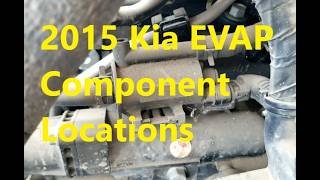
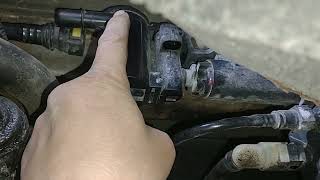
- Locate the Canister Close Valve (CCV) and charcoal canister. On the Optima, this is typically found under the car, just forward of the rear axle and often behind the driver's side rear wheel well liner.
- Inspect the CCV, its electrical connector, and all attached hoses for visible damage, corrosion, or disconnection.
- If you have a bidirectional scanner, command the CCV to close. Listen for an audible click from the valve. No click suggests an electrical or internal mechanical failure.
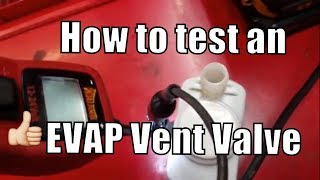
- With the valve commanded closed, perform an EVAP system smoke test. If smoke exits from the CCV, the valve is mechanically stuck open and must be replaced. This is the most definitive test. 🎬 See how to perform a professional vent valve test
- If the valve does not activate, disconnect the electrical connector. Check for 12V power and ground at the connector pins using a multimeter while an assistant commands the valve on/off with the scanner. This will determine if the fault is in the wiring or the valve itself.
- If the valve and wiring are confirmed to be good, check for blockages in the vent hose leading from the valve to fresh air. Spiders or dirt can build nests inside.
- In very rare cases where all other components test good, the PCM driver circuit could be at fault.
Parts You'll Likely Need
- Canister Close Valve (EVAP Vent Valve)
(OEM #31453-3Q500 (fits 2011-2015 models), 31453-3K600 (fits many 2011-2020 models, including Hybrid))— This valve is the most common failure point for code P2421, either by getting mechanically stuck or failing electrically.
Trusted brands: Kia (Genuine), Hyundai (Genuine), Dorman, Standard Motor Products
OEM price range: $60-$90
Aftermarket price range: $40-$70
Related Codes That Often Appear With This One
- P0455 — EVAP System Gross Leak Detected. A vent valve that is stuck wide open is a very large leak, so these two codes can appear together.
- P0449 — EVAP Vent Valve/Solenoid Circuit Malfunction. This code points specifically to an electrical problem (open, short, high resistance) in the vent valve circuit, while P2421 indicates the valve is physically stuck open, which could be for mechanical or electrical reasons.
Technical Service Bulletins (TSBs) & Recalls
- SC135: Evaporative Canister Inspection and/or Replacement for corroding brackets on 2011-2014 Optima (TF) and Optima Hybrid (TF HEV) models in salt-belt states.
Platform-Specific Known Issues
- TSB SC135: Affects 2011-2014 Optima models in salt-belt states. The charcoal canister mounting bracket can corrode and break, leading to stress cracks in the canister itself. This typically causes EVAP leak codes P0442 or P0455 but highlights a known weakness in the system's mounting hardware in the same physical area as the CCV.
- Voluntary Emissions Service Campaign (SC135): For certain 2011-2016 Optima Hybrid models, Kia issued a campaign to install an auxiliary canister kit to meet emissions standards.
Mechanic-Grade Diagnostic Values
- Canister Close Valve (CCV) control voltage — expected: Should toggle between ~0V (commanded closed) and ~12V/battery voltage (commanded open) during a drive cycle or bidirectional test.. Failure: A constant 12V signal indicates the PCM is stuck in an 'open' command, while no voltage when commanded open points to a wiring or PCM driver issue.
- Canister Close Valve (CCV) coil resistance — expected: Typical values for this type of solenoid are in the 20-40 Ω range, but this can vary. Comparing to a new part is the best practice.. Failure: A reading of infinite resistance (OL) indicates an open coil, while a reading near 0 Ω indicates a shorted coil.
Scan Tool Commands That Help
- Kia GDS or equivalent professional bidirectional scanner: EVAP Vent Solenoid / EVAP Vent Valve Actuation Test — This command is used to manually open and close the Canister Close Valve. It allows a technician to listen for the valve's 'click' to confirm electrical activation and to seal the system for a smoke test.
Wiring & Ground Locations
- Sensor 2 Fuse — Located in the main fuse box in the engine compartment.. This 10A fuse often provides power to the EVAP Canister Close Valve circuit on Kia Optima models. A blown fuse will prevent the valve from actuating and can lead to various EVAP codes.
- CCV Wiring Harness Connector — Directly on the Canister Close Valve, located near the charcoal canister, forward of the rear axle.. This connector is exposed to road debris and moisture, making it a common point for corrosion or damage that can cause an open or short in the CCV circuit, triggering P2421 or P0449.
OEM Part Supersession History
31453-3K600→31453-3K600FFF— Standard part number update by the manufacturer. The 'FFF' suffix often denotes a factory-finished or revised part.
Heads up: The parts are interchangeable. 31453-3K600FFF is the current replacement for 31453-3K600.
Model Year Variations Within This Range
- 2011-2015 (TF Generation): These earlier models use Canister Close Valve P/N 31453-3Q500. They are also more susceptible to charcoal canister bracket corrosion as noted in TSB SC135, an issue less prevalent on the later JF generation.
- 2016-2020 (JF Generation): These later models typically use Canister Close Valve P/N 31453-3K600 (or its successor 31453-3K600FFF). The design of the rear subframe and underbody components was updated, potentially altering the exact mounting and exposure of the EVAP components compared to the TF generation.
Diagnostic Flowchart
Other Known Issues on This Vehicle
Issues unrelated to this code that are worth knowing about as an owner of this generation:
- Theta II Engine Failure 🔴 High — Widespread on 2011-2019 models with 2.0L and 2.4L GDI engines. Can occur under 100,000 miles. Symptoms include engine knocking, excessive oil consumption, stalling, and catastrophic failure. (Ref: Subject of multiple recalls (e.g., SC147), a major class-action lawsuit settlement providing lifetime warranties and a Knock Sensor Detection System (KSDS) software update (SC200).)
- Worn Steering Coupler 🟠 Medium — Common on 2011-2014 models. Causes a distinct clicking or 'notchy' feeling in the steering wheel when turning. (Ref: Kia addressed this with a warranty extension (TSB CHA060) and a customer satisfaction program (CS1604) to replace the flexible coupler (P/N 56315-2K000-FFF).)
- Failing Purge Control Solenoid Valve (PCSV) 🟡 Low → Shop Vapor Canister — Common across many model years. Symptoms include a check engine light (often P0441), rough idle, and difficulty starting immediately after refueling.
- Engine Bay Fire Risk 🔴 High — Affects certain 2013-2014 models due to potential fuel leaks from a cracked low-pressure fuel hose. (Ref: Kia issued a recall to inspect the hose and either replace it or reinforce it with heat-protective tape.)
- Excessive Oil Consumption 🟠 Medium — A common complaint, particularly for the Theta II engines, often preceding more serious engine problems. (Ref: Addressed as part of the larger engine class-action lawsuits and recalls.)
Used vs. New Parts: Buying Guide for This Vehicle
When a used part is the smart pick: A used OEM Canister Close Valve from a low-mileage, non-salt-belt donor car can be a cost-effective option. The part is a simple solenoid and not a high-wear item, making a used part a reasonable choice if its history is known.
Donor-vehicle mileage cap: roughly under 75000 miles for the part to have meaningful remaining life.
What to inspect on the donor part:
- Check for zero rust or corrosion on the electrical pins and valve body.
- Ensure the plastic housing is free of cracks.
- Verify the donor vehicle is from a dry, southern climate to avoid salt corrosion issues.
- If possible, test the valve by applying 12V to its pins to hear it click before purchasing.
Aftermarket brands forum-validated for this vehicle:
- Standard Motor Products (SMP) is generally well-regarded in forum discussions for electrical components and sensors.
Brands owners have reported issues with on this vehicle:
- Dorman has a mixed reputation; while some of their 'OE FIX' parts are improvements, their standard replacement parts, especially electrical components and rubber hoses, are sometimes reported to have a shorter service life than OEM.
Real Owner Stories
Aggregated from forums and TSBs cited above. Mileages and costs reflect what owners reported in those sources.
2011-2014 Kia Optima
Symptoms: Check Engine Light with EVAP leak codes (P0442 or P0455) due to a corroded and broken charcoal canister mounting bracket causing stress cracks in the canister.
What fixed it: Inspection and/or replacement of the evaporative canister assembly as per the TSB.
Source hint: TSB SC135
2008 Hyundai Sonata v6
Symptoms: Check Engine Light with a related code (P2422) and experiencing issues when trying to refuel the vehicle.
What fixed it: Diagnosis pointed to a faulty EVAP vent valve, which was tested by applying a 12V source directly to it.
Source hint: Reddit r/MechanicAdvice thread titled '2008 Hyundai Sonata v6 - P2422 - EVAP Vent Valve Stuck Close'
Kia Optima
Symptoms: EVAP codes P0455 and P0451 were present. Replacing the gas cap did not solve the issue.
What fixed it: Forum users recommended performing a smoke test and checking the wiring to the EVAP components as the next diagnostic steps.
Source hint: BobIsTheOilGuy Forums thread titled 'Kia Optima evap codes'
Related OBD-II Codes
Frequently Asked Questions
My 2012 Kia Optima is from a salt-belt state. Is there a specific TSB I should be aware of related to the EVAP system?
Where is the Canister Close Valve (CCV) located on my 2015 Kia Optima?
What is the most definitive way to confirm the Canister Close Valve has failed on my Optima?
I don't have a smoke machine. What are other ways to test the CCV?
My Optima is having trouble at the gas station; the pump handle keeps clicking off. Is this related to code P2421?
I suspect a wiring issue with the vent valve. Is there a specific fuse I should check on my Kia Optima?
Helpful Videos
Used OEM Parts in Stock

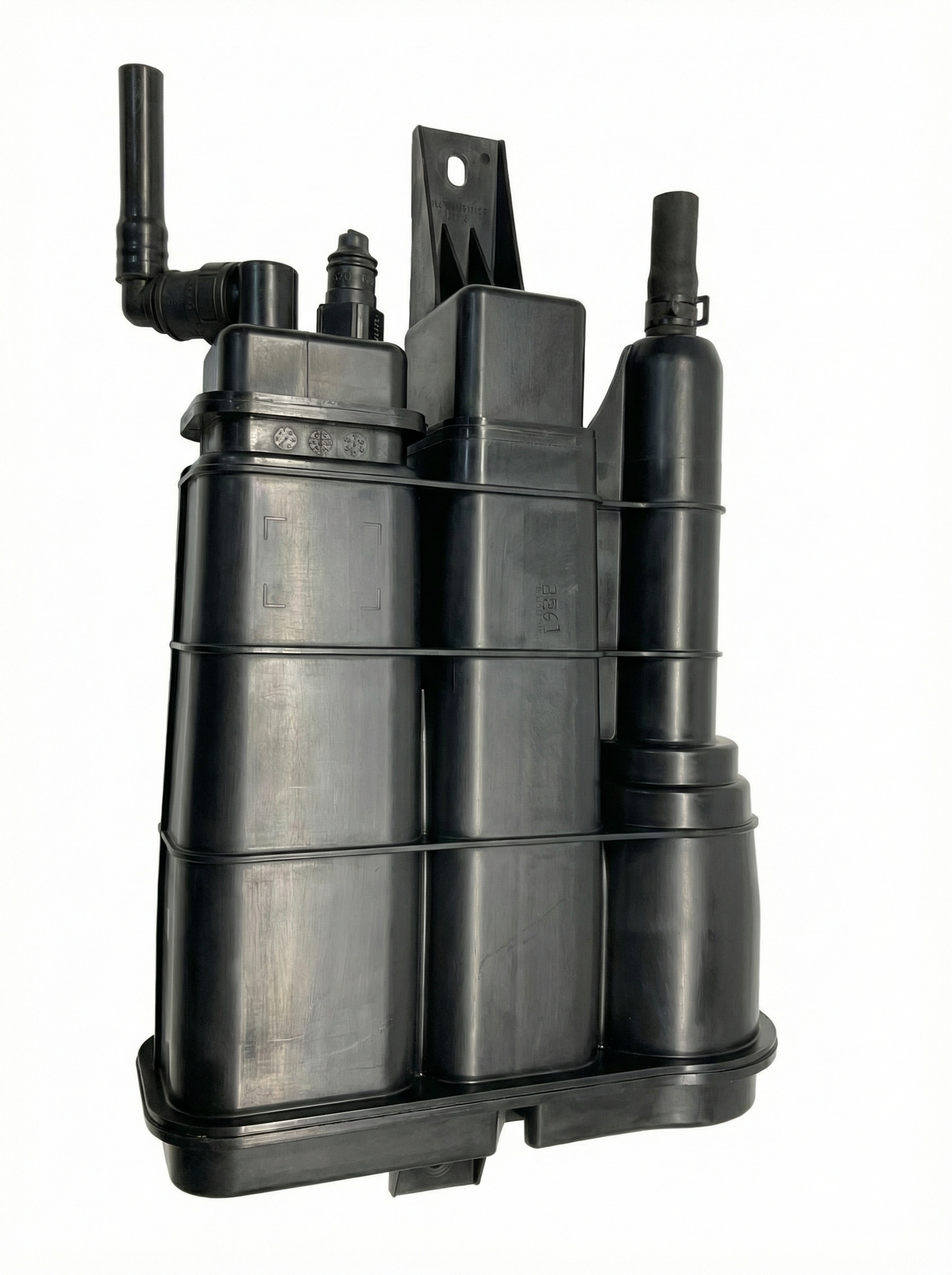
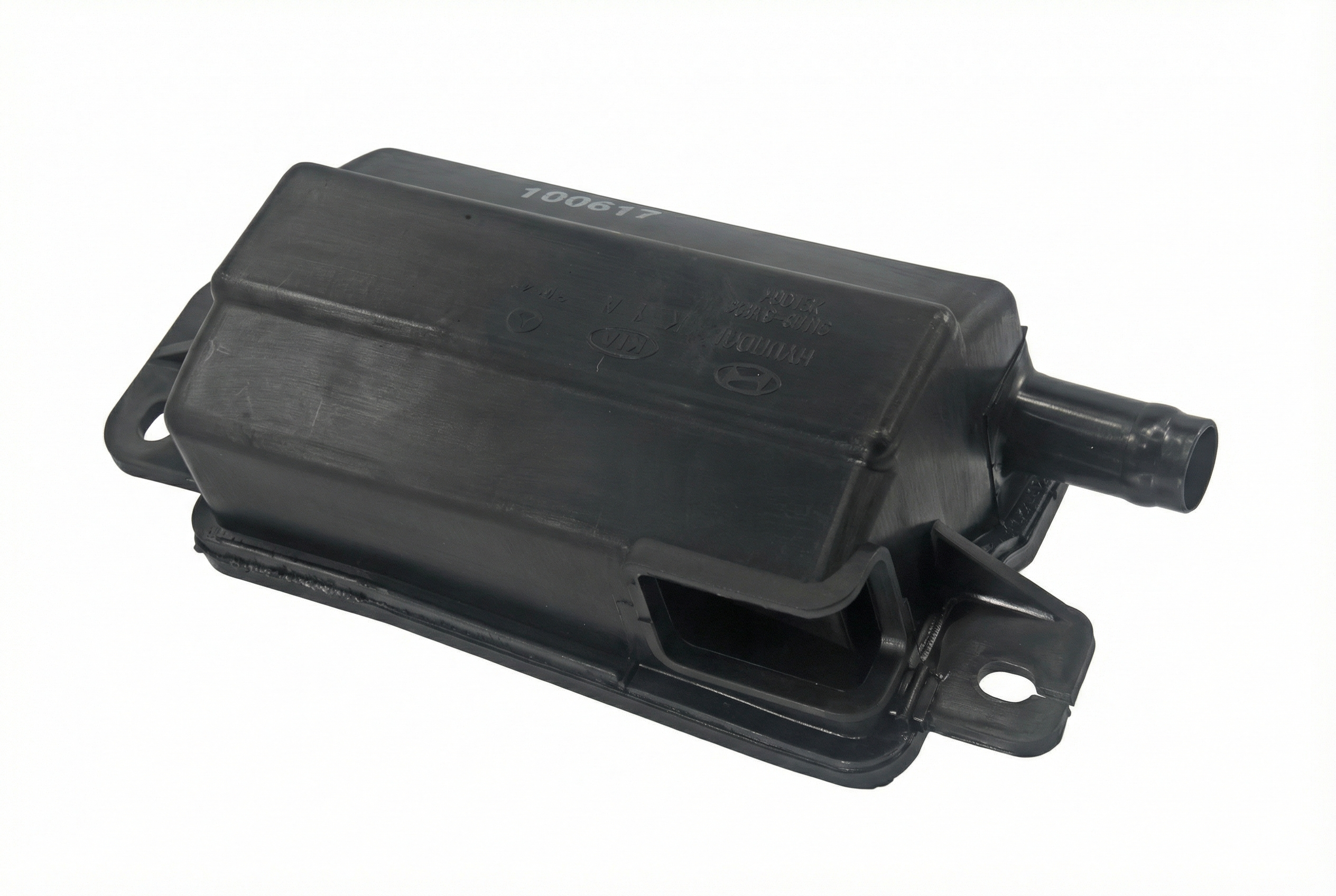
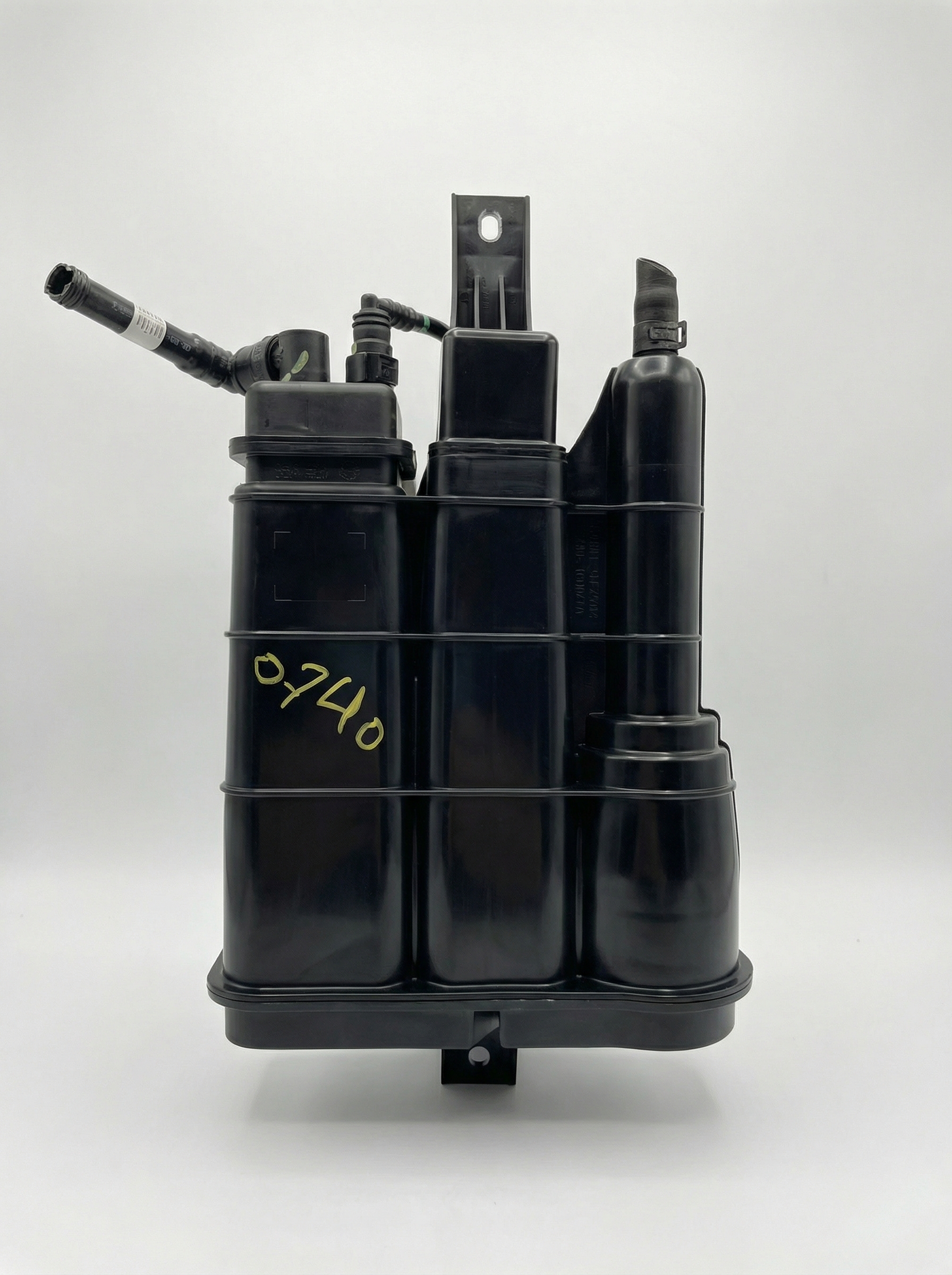
New Aftermarket Parts Available

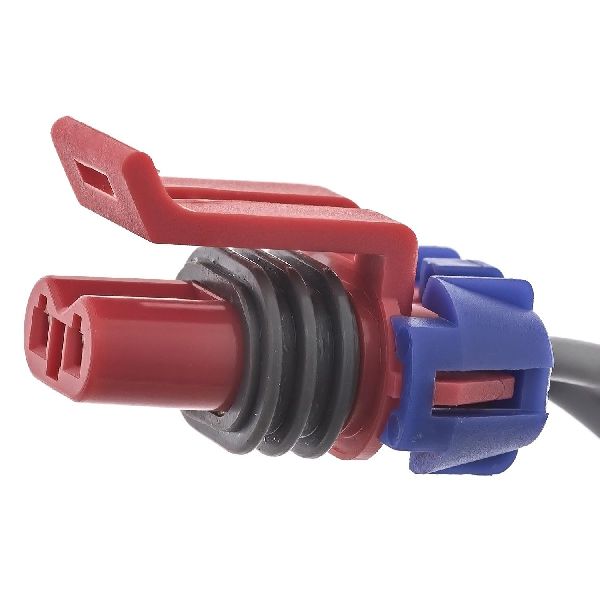

The information in this article is provided for general reference and educational purposes only. Vehicle specifications, procedures, and part compatibility can vary by production date, trim level, and region. Always consult your vehicle's factory service manual and verify part numbers before purchasing or performing repairs. Safety-critical components such as airbags, seat belts, and braking systems should be installed by a qualified professional.
- Kia Optima:
- 🧭 Diagnostic Flowchart
- 🎬 Helpful Videos
- 🛍️ Shop This Part
- What's Unique About the 2011-2020 Kia Optima
- Symptoms You May Notice
- Most Likely Causes
- Rare But Worth Checking
- Diagnosis Steps
- Parts You'll Likely Need
- Related Codes That Often Appear With This One
- Technical Service Bulletins (TSBs) & Recalls
- Platform-Specific Known Issues
- Mechanic-Grade Diagnostic Values
- Scan Tool Commands That Help
- Wiring & Ground Locations
- OEM Part Supersession History
- Model Year Variations Within This Range
- Other Known Issues on This Vehicle
- Used vs. New Parts: Buying Guide for This Vehicle
- Real Owner Stories
- 2011-2014 Kia Optima
- 2008 Hyundai Sonata v6
- Kia Optima
- Related OBD-II Codes
- Frequently Asked Questions
- 🎟️ Get 5% Off