

P2421 on 2016-2020 Kia Sorento 3.3L V6: EVAP Vent Valve Stuck Open Causes and Fixes
On a 2016-2020 Kia Sorento, code P2421 almost always means the EVAP Canister Close Valve (CCV) is stuck open. The most common fix is replacing the valve, located near the charcoal canister at the rear of the vehicle. Expect to pay $40-$90 for the part, with a DIY difficulty of 2/5.
- P2421 on your Sorento almost certainly points to a faulty Canister Close Valve (CCV) located at the rear of the car.
- This is a common and relatively easy DIY repair that can be done in about an hour with basic tools.
- Do not mistake this for a gas cap issue or a problem with the purge valve in the engine bay; those are different problems with different codes.
- The vehicle is safe to drive with this code, but it will not pass an emissions test until the issue is resolved.
What's Unique About the 2016-2020 Kia Sorento
For the third-generation (UM) Kia Sorento, this code points very specifically to the Canister Close Valve (CCV) or its circuit at the rear of the vehicle, not the purge valve in the engine bay. The valve's location underneath the car makes it highly susceptible to road debris, moisture, and corrosion, which is the primary reason for its high failure rate. While no TSBs are specific to the Sorento for this code, related Kia models have documented issues with spider webs clogging vent hoses, which is a known, albeit less common, cause for this code on the Sorento as well. A Reddit user with a 2013 Sorento experiencing similar EVAP codes (P0447, P0455) mistakenly 🎬 Watch: How to fix a Kia P0447 vent control circuit code replaced the purge valve before realizing the issue was the vent valve at the rear, highlighting this common point of confusion.
Symptoms You May Notice
- Check Engine Light is on
- Vehicle will not pass an emissions inspection
- A faint fuel odor may be noticeable near the rear of the vehicle
- In rare cases, difficulty starting or a long crank time immediately after refueling
- In some cases with related EVAP issues, owners report erratic MPG calculations on the trip computer, though manual calculation shows a decrease in fuel economy.
- Replacing the gas cap. A faulty gas cap will typically cause a P0455 (Gross Leak) or P0457 (Loose Cap) code, not P2421, which is specific to the vent valve circuit.
- Replacing the EVAP Purge Valve. The purge valve is located in the engine bay and is responsible for different codes (e.g., P0441, P0443). P2421 specifically relates to the Canister Close Valve at the rear of the vehicle.
Most Likely Causes
- Failed Canister Close Valve (CCV) 🔴 High Probability → Shop Vapor Canister The valve is located under the vehicle, exposing it to road salt, water, and debris, which leads to internal corrosion of the solenoid or mechanical sticking of the valve pintle.
How to confirm: With a bidirectional scan tool, command the valve to close; a lack of an audible 'click' suggests failure. The most definitive test is to perform an EVAP smoke test with the valve commanded closed; if smoke exits from the CCV vent port, the valve is stuck open and must be replaced. You can also 🎬 Watch: How to test an EVAP vent valve for leaks remove the valve and apply 12V directly to its pins to test for the 'click', or measure its internal resistance, which should be 23-26 Ω.
Typical fix: Replace the Canister Close Valve. This is a common DIY repair that involves removing the driver's side rear tire and wheel well liner for access.
Est. part cost: $40 - $90 - Damaged Wiring or Electrical Connector 🟡 Medium Probability The wiring harness leading to the CCV is also routed underneath the car and can be damaged by road debris, chafing against the chassis, or corrosion at the connector pins.
How to confirm: Visually inspect the wiring harness for breaks, chafing, or exposed wires. Disconnect the CCV and check the 2-pin connector for corrosion or damage. Use a multimeter to verify battery voltage and ground are present at the connector when the valve is commanded on. A key test is checking voltage with the key on, engine off, and the connector plugged in; you should see ~12V on BOTH pins. If you see 12V on the power feed but 0V on the control side, the valve's internal coil is open. On some Kia models, the fuse for this circuit is labeled 'Sensor 2' in the engine bay fuse box.
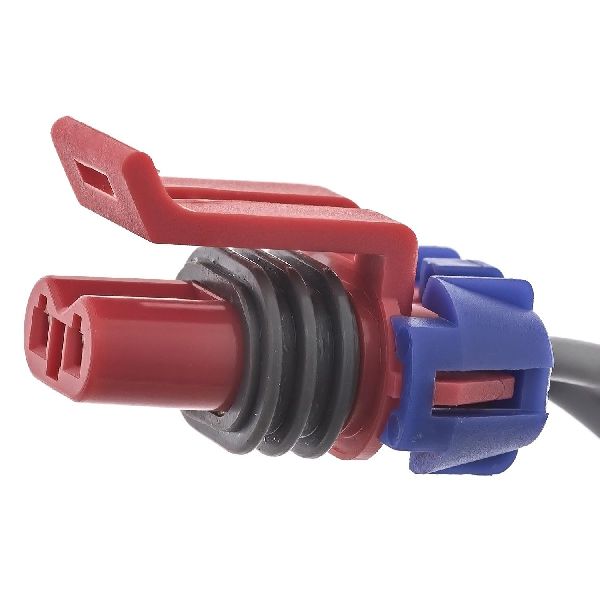
Typical fix: Repair the damaged section of wiring or replace the connector pigtail.
Est. part cost: $10 - $30 - Blocked EVAP Vent Hose ⚪ Low Probability The fresh air inlet for the EVAP system can be an attractive place for spiders and other insects to build nests, creating a blockage that can mimic a stuck valve.
How to confirm: Disconnect the vent hose from the CCV and inspect it for obstructions. Attempt to blow low-pressure air through it to check for blockages. A Kia TSB for a related model notes that compressed air may be ineffective and a pipe cleaner may be needed to clear nests.
Typical fix: Clear the obstruction from the vent hose.
Est. part cost: $0
Rare But Worth Checking
- Cracked or Clogged Charcoal Canister: → Shop Vapor Canister A TSB on the Kia Sportage (SC184) notes that loose charcoal from a deteriorating canister can break free, causing a rattle and potentially jamming the Canister Close Valve open. While rare, if you hear a rattling from the canister area, this could be the root cause.
- Powertrain Control Module (PCM) Fault: → Shop Engine Control Module (ECM) In very rare instances, the internal driver circuit within the PCM that controls the CCV can fail. This should only be considered after the valve, wiring, and connector have been thoroughly tested and confirmed to be good. Symptoms could include a correct command voltage never being sent from the PCM.
Diagnosis Steps
- Scan for codes to confirm P2421 and note any other codes present, such as P0455 or P0447.
- Raise the rear of the vehicle and securely support it on jack stands.
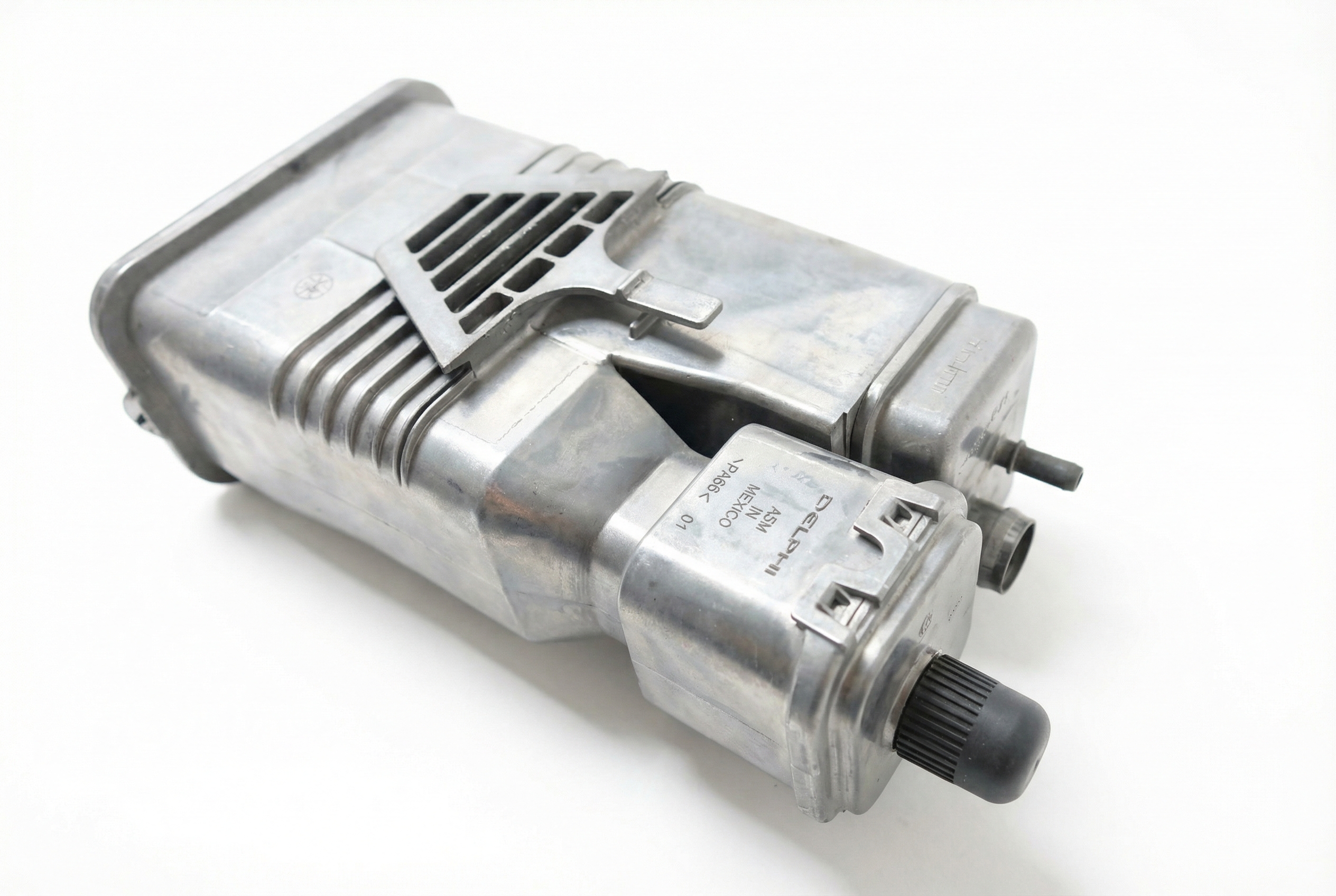
- Locate the charcoal canister and the attached Canister Close Valve (CCV). It is typically a black plastic box with hoses connected, located behind the driver's side rear wheel well liner.
- Visually inspect the CCV, its electrical connector, and the wiring harness for any obvious damage, corrosion, or loose connections.
- If you have a bidirectional scan tool, command the CCV to close while listening for an audible click from the valve.
- If the valve clicks, the issue may be mechanical. Perform an EVAP smoke test. With the valve commanded closed, inject smoke into the system. If smoke pours out of the CCV's vent, the valve is internally stuck open and needs replacement.
- If the valve does not click, test the valve's coil resistance with a multimeter. A reading of 23-26 Ω is expected. An open (OL) or shorted (near 0 Ω) reading indicates a failed valve.
- If the valve resistance is good, test the electrical circuit. Disconnect the connector and check for battery voltage on the power pin and for ground continuity on the control pin (this may require a helper or scan tool to command the valve on).
- If power or ground is missing, trace the wiring back to find the break or short. Check the 'Sensor 2' fuse in the engine bay fuse box as a potential point of failure.
- Inspect the rubber and plastic hoses connected to the canister and CCV for cracks, blockages, or disconnections.
Parts You'll Likely Need
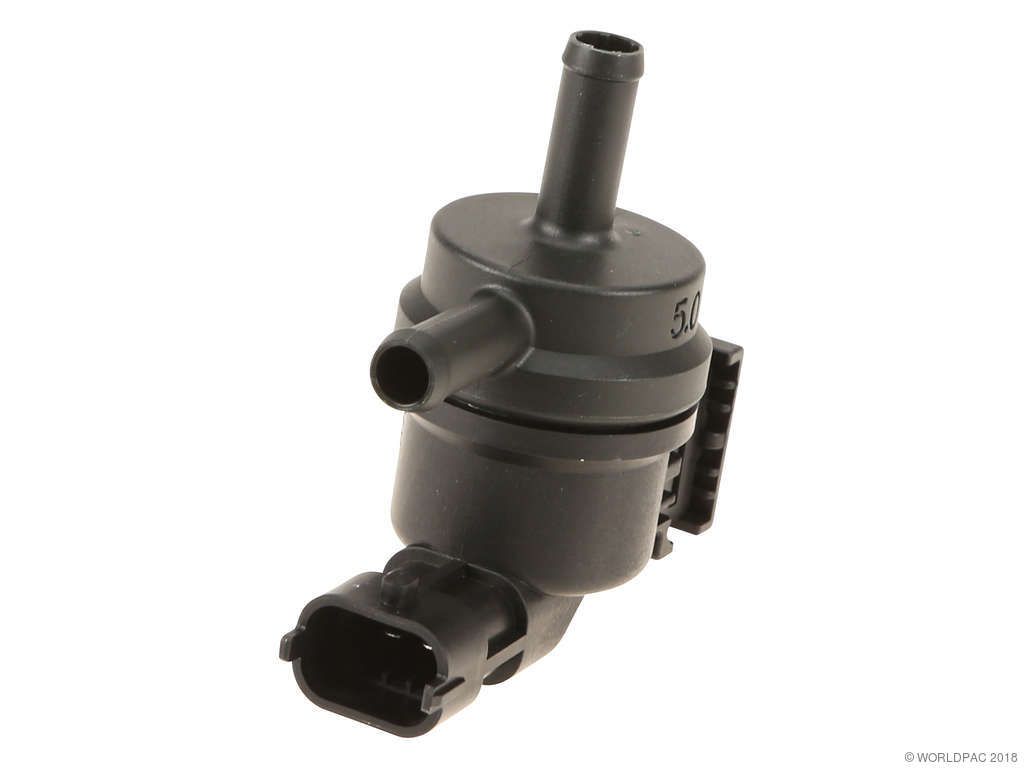
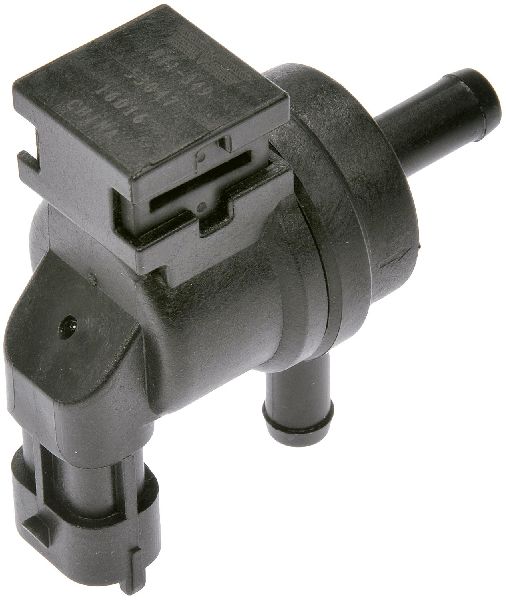
- Canister Close Valve (EVAP Vent Valve)
(OEM #31453-3Q500)— This valve is the most frequent point of failure, either sticking mechanically due to debris/corrosion or failing electrically.
Trusted brands: Kia (Genuine), Dorman (911-799), Standard Motor Products (SMP)
OEM price range: $60-$90
Aftermarket price range: $40-$70
Related Codes That Often Appear With This One
- P0455 — A 'Gross Leak Detected' code is often triggered alongside P2421 because a vent valve that is stuck wide open is considered a very large leak by the EVAP system's diagnostic monitor.
- P0447 — This code for 'EVAP System Vent Control Circuit Open' can appear with P2421 if the root cause is an electrical failure, like a broken wire or an open coil inside the valve, which prevents the PCM from controlling the valve.
- P0449 — Similar to P0447, this code indicates a 'Vent Valve/Solenoid Circuit Malfunction'. It points to an electrical fault in the circuit rather than a purely mechanical 'stuck open' condition, but the root cause and component are the same.
Platform-Specific Known Issues
- source — A user on the r/KiaSorento subreddit with a 2013 model detailed their experience replacing the gas cap, canister purge valve, and purge control solenoid in an attempt to fix P0455 and P0447 codes. Another user correctly pointed out that the codes were for the Vent Control Valve at the rear of the car, not the purge valve in the engine bay, which the owner had replaced. This is a very common point of confusion for this repair.
Mechanic-Grade Diagnostic Values
- Canister Close Valve (CCV) Coil Resistance — expected: 23 - 26 Ω (at 68°F / 20°C). Failure: An infinite (OL) reading indicates an open coil. A reading near zero indicates a shorted coil. Either requires valve replacement.
- CCV Connector Voltage (Key On, Engine Off, Connector Plugged In) — expected: ~12 Volts (Battery Voltage) on BOTH pins of the connector.. Failure: Reading ~12V on the power feed pin but 0V on the PCM-controlled ground pin indicates an open circuit inside the solenoid's coil. This is a definitive test for a bad valve when wiring is known-good.
Scan Tool Commands That Help
- Kia GDS (Global Diagnostic System) or equivalent bidirectional scanner: Actuation Test: EVAP Canister Close Valve (CCV) — Use this command to manually cycle the CCV solenoid. You should hear an audible 'click' from the valve at the rear of the vehicle. A lack of a click points to an electrical issue (bad valve coil or wiring problem). This is a primary step before performing physical voltage or resistance tests.
Wiring & Ground Locations
- Canister Close Valve (CCV) Connector — Under the vehicle, connected directly to the Canister Close Valve, which is mounted on or near the charcoal canister assembly behind the driver's side rear wheel.. This 2-pin connector is the primary test point for the P2421 circuit. All voltage and resistance tests are performed here. Its exposed location makes it highly susceptible to moisture, corrosion, and physical damage from road debris.
OEM Part Supersession History
31453-3Q500→N/A— This is the correct part number for 2016-2018 Sorento models with the 3.3L engine.
Heads up: Do not confuse with part number 31430-0W000, which is for the previous generation (2011-2015) Sorento. Always verify by VIN, as 2019-2020 models may use a different part after the facelift.
Model Year Variations Within This Range
- 2016-2018: The Canister Close Valve is confirmed by parts catalogs to be OEM part number 31453-3Q500 for these years.
- 2019-2020: These years received a mid-cycle refresh. While the failure mode and location are the same, the specific part number for the Canister Close Valve may have changed. It is critical to verify the part number with the vehicle's VIN for these years.
Diagnostic Flowchart
Other Known Issues on This Vehicle
Issues unrelated to this code that are worth knowing about as an owner of this generation:
- Connecting Rod Bearing Failure / Engine Seizure 🔴 High — More prevalent in 2016-2017 models but reported across the generation. Can occur without warning at mileages from 50,000 to 140,000. (Ref: NHTSA Investigation PE23-019 opened for 2016-2017 models due to head bolt/gasket failure leading to engine power loss. Kia also has TSB SC200 to install a Knock Sensor Detection System (KSDS) to provide early warning (DTC P1326).)
- Excessive Oil Consumption 🟠 Medium — Commonly reported by owners, sometimes as high as 1 quart per 1,000 miles. Often becomes noticeable after 60,000 miles and can lead to other engine issues if the oil level is not maintained. (Ref: Kia TSB ENG222 provides a procedure for dealers to diagnose excessive oil consumption.)
- Intake Valve Carbon Buildup 🟡 Low — A characteristic of all Gasoline Direct Injection (GDI) engines, including this one. Typically becomes a noticeable issue causing rough idle or misfires after 80,000-100,000 miles.
- Faulty Airbag Control Unit / OCS Mat 🔴 High — Widespread issue causing the airbag warning light to illuminate. Affects the entire generation. (Ref: Multiple recalls and warranty extensions have been issued for various Kia models for related airbag components.)
- Crankshaft Failure (2017 models) 🔴 High — Specific to some 2017 models with the 3.3L V6 where the crankshaft was not properly heat-treated, making it prone to fracture. (Ref: A recall was issued for affected 2017 models.)
Used vs. New Parts: Buying Guide for This Vehicle
When a used part is the smart pick: A used Canister Close Valve can be a viable, low-cost option for this repair, as it is a simple electro-mechanical part. It is most sensible if the donor vehicle is from a dry, non-salt-belt region to minimize the risk of pre-existing corrosion.
Donor-vehicle mileage cap: roughly under 80000 miles for the part to have meaningful remaining life.
What to inspect on the donor part:
- Inspect the electrical pins inside the connector port; they should be clean and free of green or white corrosion.
- Check the valve's vent port for excessive dirt, mud, or blockages.
- If possible, test the resistance with a multimeter before purchase; it should be within the 23-26 Ω range.
- Ask for the VIN of the donor car to ensure it's from a compatible year range and region.
OEM-only on this vehicle (don't cheap out):
- For this P2421 repair, no parts are strictly OEM-only. The primary component has reliable aftermarket alternatives.
Aftermarket brands forum-validated for this vehicle:
- Dorman (specifically part 911-799)
- Standard Motor Products (SMP)
Real Owner Stories
Aggregated from forums and TSBs cited above. Mileages and costs reflect what owners reported in those sources.
2013 Kia Sorento
Symptoms: The owner observed EVAP system codes and attempted to fix the issue by replacing the gas cap, canister purge valve, and purge control solenoid, but the codes persisted.
What fixed it: The issue required identifying the correct part as the Vent Control Valve (Canister Close Valve) at the rear of the car rather than the purge components in the engine bay.
Source hint: Reddit: 2013 Kia Sorento EVAP System (P0455, P0447)
Related OBD-II Codes
Frequently Asked Questions
Where is the Canister Close Valve located on my 2016-2020 Sorento?
Is there a specific fuse I should check for P2421 on this Kia?
Can I just replace the purge valve in the engine bay to fix this?
What is the correct resistance for a new CCV on the 3.3L Sorento?
Why is my Sorento prone to this specific EVAP failure?
Does my Sorento have a TSB for engine issues that might be related to the Check Engine Light?
Helpful Videos
Used OEM Parts in Stock
New Aftermarket Parts Available


The information in this article is provided for general reference and educational purposes only. Vehicle specifications, procedures, and part compatibility can vary by production date, trim level, and region. Always consult your vehicle's factory service manual and verify part numbers before purchasing or performing repairs. Safety-critical components such as airbags, seat belts, and braking systems should be installed by a qualified professional.
- Kia Sorento:
- 🧭 Diagnostic Flowchart
- 🎬 Helpful Videos
- 🛍️ Shop This Part
- What's Unique About the 2016-2020 Kia Sorento
- Symptoms You May Notice
- Most Likely Causes
- Rare But Worth Checking
- Diagnosis Steps
- Parts You'll Likely Need
- Related Codes That Often Appear With This One
- Platform-Specific Known Issues
- Mechanic-Grade Diagnostic Values
- Scan Tool Commands That Help
- Wiring & Ground Locations
- OEM Part Supersession History
- Model Year Variations Within This Range
- Other Known Issues on This Vehicle
- Used vs. New Parts: Buying Guide for This Vehicle
- Real Owner Stories
- 2013 Kia Sorento
- Related OBD-II Codes
- Frequently Asked Questions
- 🎟️ Get 5% Off