

P2421 on 2010-2014 Subaru Legacy 2.5L: EVAP Vent Valve Stuck Open Causes and Fixes
On a 2010-2014 Subaru Legacy, code P2421 almost always points to a failed EVAP vent valve (also called a drain valve) located at the rear of the car near the charcoal canister. It often fails due to rust or debris. Expect to pay $70-$150 for the part, with a DIY difficulty of 3/5.
- P2421 points specifically to the EVAP vent valve (or drain valve) at the rear of the car, not the purge valve in the engine bay.
- The most common cause of failure on a Subaru is rust and corrosion due to the part's exposed location under the vehicle.
- Diagnosis can be aided by using the green 'test mode' connectors under the dashboard to listen for the valve's operation.
- Driving with this code is safe, but it will cause an automatic failure on an emissions test.
- Before buying parts, visually inspect the valve for heavy rust or damage, as this is a strong indicator of failure.
What's Unique About the 2010-2014 Subaru Legacy
On this generation of Subaru Legacy and its platform-mate, the Outback, the EVAP vent valve is located at the rear of the vehicle, mounted near the charcoal canister. This location makes it highly susceptible to rust and corrosion from road salt and moisture, which is a primary cause of failure. The valve's metal body can rust, or the mounting hardware can seize, complicating replacement. A unique diagnostic feature on Subarus is a set of green test connectors under the dashboard. On the Legacy/Outback, these are on the passenger side footwell area. Connecting them puts the vehicle in a test mode that cycles all solenoids, allowing a technician to listen for the vent valve's operation. A critical distinction for this platform is the existence of both Federal (LEV2) and Partial Zero Emissions Vehicle (PZEV) emissions systems, which use different, non-interchangeable EVAP components; you must verify which system your car has via the under-hood sticker before ordering parts.
Symptoms You May Notice
- Check Engine Light is on
- Inability to pass an emissions inspection
- A faint fuel smell, especially near the rear of the car
- Difficulty filling the gas tank (fuel nozzle clicks off repeatedly), which can be related to a clogged vent system or saturated charcoal canister
- Replacing the Canister Purge Solenoid Valve. This valve is located in the engine bay and controls the flow of vapors from the canister to the engine. P2421 specifically refers to the vent/drain valve at the rear of the car, which is a different part.
Most Likely Causes
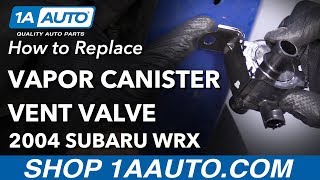
- Failed EVAP Vent Valve (Drain Valve) 🔴 High Probability → Shop Vapor Canister Vent Valve The valve is located under the rear of the car, where it is exposed to road salt, water, and debris. This leads to corrosion that can cause the solenoid to fail or the valve mechanism to physically stick open.
How to confirm: Listen for a 'click' from the valve at the rear of the car when it is commanded closed with a scan tool or by using the green Subaru test connectors. If it doesn't click, or if it clicks but the system still won't hold a vacuum during a smoke test, the valve has failed.
Typical fix: Replace the EVAP vent valve assembly. Due to severe rust, the single 10mm or 12mm mounting bolt will very likely break off. Owners frequently report needing to drill out the old bolt or simply securing the new valve to its bracket with heavy-duty zip ties as a practical alternative.
Est. part cost: $70 - $150 - Damaged Wiring or Connector 🟡 Medium Probability The wiring to the vent valve follows a similar path under the car and is subject to the same corrosion and physical damage as the valve itself. The pins inside the connector can also corrode, leading to a poor connection.
How to confirm: Visually inspect the harness for breaks, chafing, or green/white corrosion at the connector. With the key on, check for battery voltage at the connector using a multimeter when the valve is commanded on.
Typical fix: Repair the damaged section of wire or replace the connector pigtail.
Est. part cost: $5 - $30 - Clogged Vent Valve or Hoses ⚪ Low Probability Overfilling the fuel tank can force liquid gasoline into the charcoal canister, which can then break down and send charcoal pellets into the EVAP lines, jamming the vent valve open. Spiders are also known to build nests in EVAP vent hoses, causing blockages.
How to confirm: Remove the valve and hoses and inspect them for charcoal granules, dirt, or other blockages. Attempt to blow through the valve; if air passes freely when it should be closed, it's stuck.
Typical fix: Replace the vent valve and clean out or replace the affected hoses. If charcoal pellets are present, the charcoal canister also needs to be replaced, which significantly increases repair cost.
Est. part cost: $70 - $300+
Rare But Worth Checking
- Faulty Engine Control Module (ECM): → Shop Engine Control Module (ECM) This is very rare. The ECM should only be considered after all other possibilities, including wiring, have been exhaustively tested and ruled out.
Diagnosis Steps
- Check for other codes. If codes like P0449 or P0455 are present, it reinforces the focus on the vent valve circuit.
- Perform a visual inspection. Safely raise the vehicle and inspect the EVAP vent valve and charcoal canister area at the rear of the car. Look for obvious signs of rust, damage to the valve, disconnected hoses, or chewed/chafed wiring.
- Use Subaru's Test Mode. Locate the green test connectors under the passenger's side dashboard, often tucked behind the carpet in the footwell. Connect them, turn the ignition to 'ON' (engine off). You should hear various relays and solenoids under the hood and at the rear of the car clicking every second. Go to the rear of the vehicle and listen/feel for the vent valve to click. If it clicks, the wiring and solenoid are likely functional, and the valve may be mechanically stuck. If it does not click, there is likely an electrical issue. Disconnect the test connectors when finished. 🎬 Watch: How to use Subaru's green test connectors
- Test for Power. If the valve does not click, disconnect its electrical connector. With the ignition on, use a multimeter to check for battery voltage (approx. 12V) at the supply pin on the harness side.
- Test the Valve. If power is present, you can test the valve directly by applying a 12V power source and ground to its pins to see if it actuates. You can also check the resistance across the valve's pins, which should be within manufacturer specifications (typically 20-30 ohms).
- Perform a Smoke Test. If the valve appears to be working electrically, the next step is a smoke test. With the vent valve commanded closed (either with a scan tool or by applying 12v power), a smoke machine can pressurize the system. If smoke billows out of the vent valve, it is confirmed to be stuck open and must be replaced.
Parts You'll Likely Need
- Vapor Canister Vent Valve (Drain Valve)
(OEM #42084AJ000)— This is the component identified by the code. It fails by sticking open due to internal corrosion, mechanical failure, or being jammed by debris.
Trusted brands: Subaru (Genuine), Denso, Dorman, Standard Motor Products (SMP)
OEM price range: $70-$150
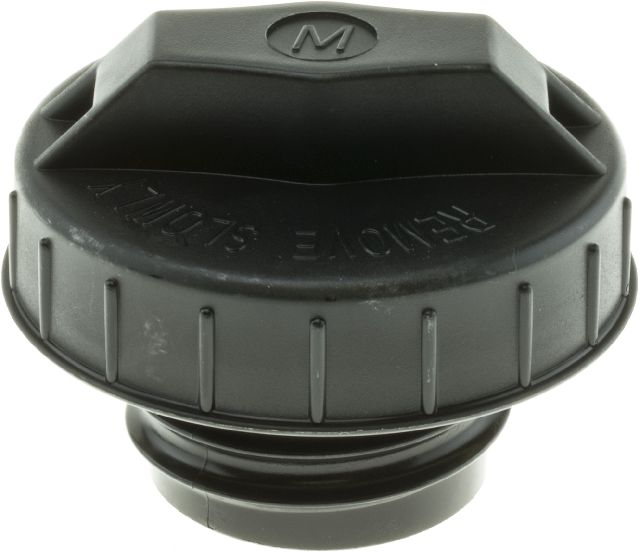
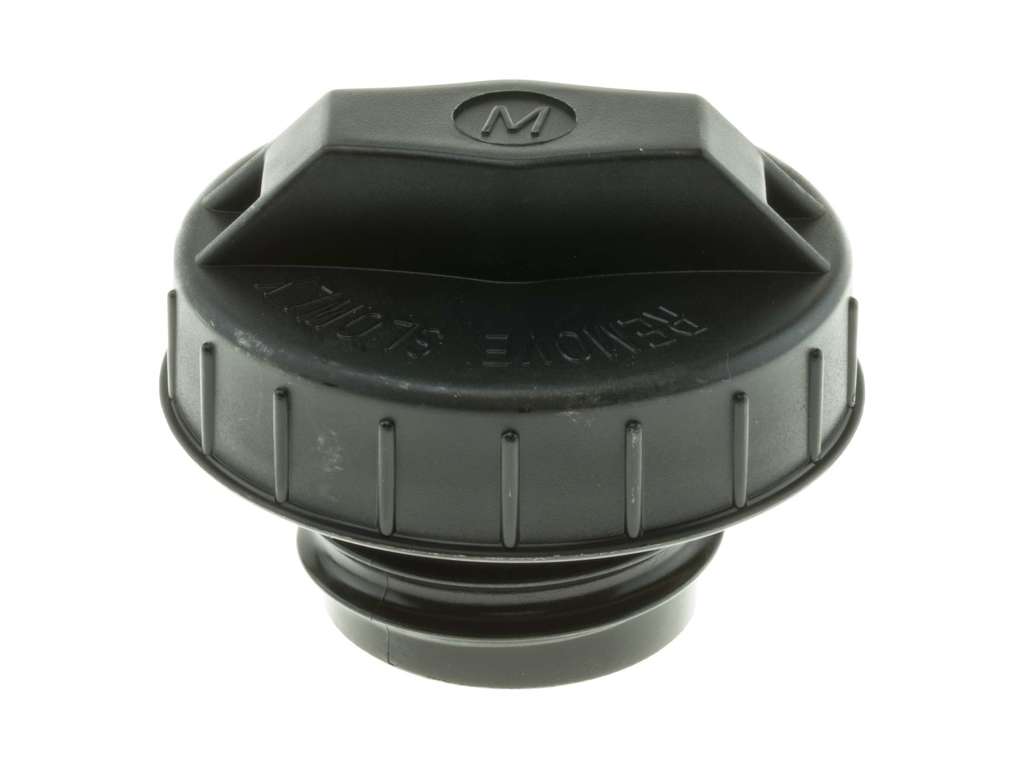
Aftermarket price range: $40-$90 - Gas Cap — While not a direct cause of P2421, a faulty gas cap can cause other EVAP issues and is an inexpensive and easy item to replace as preventative maintenance. Always use an OEM cap for best results.
Trusted brands: Subaru (Genuine)
OEM price range: $25-$40
Aftermarket price range: $15-$30
Related Codes That Often Appear With This One
- P0455 — P0455 indicates a 'Gross EVAP Leak'. A vent valve that is stuck wide open is a very large leak, so these two codes often appear together.
- P0449 — P0449 indicates a malfunction in the vent valve's electrical circuit. If the solenoid coil in the valve is burned out or there's a break in the wiring, you may see P0449 along with P2421.
Technical Service Bulletins (TSBs) & Recalls
- TSB 11-133-13R: While not for P2421 specifically, this TSB addresses reprogramming the ECM for other EVAP codes on different models, showing that Subaru sometimes resolves EVAP logic issues with software updates.
Platform-Specific Known Issues
- Owner on legacygt.com forum describes P2421 along with difficulty fueling. The consensus pointed towards a faulty vent valve, with one user confirming replacement fixed both issues.
- Multiple threads on subaruoutback.org detail the process of replacing the vent valve for P2421. A common theme is the mounting bolt being so rusted that it snaps, forcing owners to use zip ties to secure the new valve to the bracket, which is reported to work effectively.
Mechanic-Grade Diagnostic Values
- EVAP Vent Valve Solenoid Coil Resistance — expected: 20 - 30 Ohms. Failure: A reading of 0 Ohms (short circuit) or infinite/OL (open circuit). Readings significantly outside the expected range, even if not completely open or shorted, can indicate a failing coil.
- Voltage at Vent Valve Connector (Key On, Engine Off) — expected: Approximately 12V (Battery Voltage) on the power pin.. Failure: No voltage indicates a problem in the power supply circuit (fuse, relay, or wiring).
- Live Data - Fuel Tank Pressure (FTP) Sensor — expected: Pressure/vacuum reading should change when the vent valve is commanded closed by a scan tool.. Failure: If the pressure reading does not change, it confirms the system is not sealing, which is consistent with a stuck-open vent valve.
- Mode $06 EVAP System Vacuum Value — expected: Less than -0.26 PSI. Failure: A value greater than -0.26 PSI after a forced leak test indicates a failure in the system's ability to hold a vacuum.
Hidden / Shadow Codes Worth Checking
- Mode $06: Mode $06 provides access to the results of on-board diagnostic monitoring tests for non-continuously monitored systems, like the EVAP system. It can show test results that are failing but have not yet met the threshold to set a Check Engine Light. For Subaru, specific Monitor IDs (MID) and Test IDs (TID) are used, such as MID: $3C, TID: $C4 for vacuum test results. (see via A professional scan tool or an advanced OBD-II app that supports Mode $06 data display.)
Scan Tool Commands That Help
- Subaru Select Monitor (SSM): Evaporative System Leak Test — This is a forced self-test of the entire EVAP system. It should be used as a primary diagnostic step, especially on later models with an Electronic Leak Check Module (ELCM), even before a smoke test. It provides detailed results, including specific vacuum values viewable in Mode $06.
- Bidirectional Scan Tool: EVAP Vent Solenoid ON/OFF Command — Used to manually command the vent valve to close. This allows a technician to listen for the valve's 'click' to confirm electrical operation and to seal the system for a smoke test.
Wiring & Ground Locations
- Vent Valve Connector Pinout — The 2-pin electrical connector on the EVAP vent valve itself, at the rear of the vehicle near the charcoal canister.. Knowing the pinout is essential for testing power and ground. On a tested example, with the connector's locking tab at the 6-o'clock position, the left pin was the 12V power source and the right pin was the ground. This can be verified with a multimeter.
- ECM (Engine Control Module) — Located on the right side of the dashboard, typically accessible from the passenger footwell area.. The ECM provides the command signal to the vent valve. In rare cases of a persistent electrical fault with good wiring and a good valve, the ECM driver circuit could be at fault.
- Ground Point Example: Gb-6 — An example of a Subaru ground point designator is Gb-6, located in the left kick panel area.. A corroded or loose ground point for the EVAP system can cause intermittent or permanent electrical faults for the vent valve. While Gb-6 is not confirmed as the specific ground for this circuit, it shows the naming convention and typical location for interior grounds. The specific ground for the vent valve should be located on a wiring diagram.
Real Owner Repair Stories
- Reddit user VehementlyApathetic (2005 Subaru Outback XT (similar platform, demonstrates a key diagnostic trap)) — Check Engine Light with code P0457 (Large EVAP Leak).
❌ Tried (didn't work) Replacing the vapor canister and vent (drain) valve assembly., Replacing the Engine Control Module (ECM).
✅ What actually fixed it The actual cause was a rusted-off vapor line port on the top of the fuel tank, creating a very large leak. The initial focus on the non-actuating valve was a red herring; on this model, the valve did not actuate during the green-connector test mode anyway.
"I Checked Everything" — The Actual Cause
- In one documented case related to a large EVAP leak code (P0457), diagnosis focused on the vent valve not actuating during a test. After replacing the valve and even the ECM with no success, the actual cause was found to be a large, physical hole from a rusted-off nipple on the fuel tank itself, which was missed during initial diagnosis.
When the Usual Fixes Don't Work
- While P2421 almost always points to the vent valve, it's critical to confirm it's not a red herring. In one case of a similar EVAP code, a technician chased a non-responsive vent valve, replacing it and the ECM, only to find the true cause was a massive leak from a rusted port on the fuel tank itself. The valve wasn't responding because the system could never seal enough for the test to proceed properly. This highlights the need to confirm the entire system's physical integrity if component replacement doesn't solve the issue.
OEM Part Supersession History
Varies→Varies— Subaru often revises parts to improve durability or address design flaws. While a specific supersession for 42084AJ000 was not found, it is common practice for Subaru EVAP components. For example, part 42084FL231 replaced 42084FL230.
Heads up: Always verify the part number with a VIN at a dealership. Using a superseded part is generally safe, but using a part from a different emissions system (PZEV vs. Federal) will not work.
Model Year Variations Within This Range
- 2010-2014: Vehicles were built with either Federal (LEV2) or Partial Zero Emissions Vehicle (PZEV) emissions packages. These systems use different vapor canisters and related EVAP components that are not interchangeable. The vehicle's emissions type must be confirmed via the under-hood sticker before ordering any EVAP parts.
- Later models in this range (approx. 2012+): Later model Subarus may be equipped with a more sensitive Electronic Leak Check Module (ELCM) instead of a traditional pressure sensor. The diagnostic procedure is different; a scan tool self-test must be performed *before* a smoke test to avoid contaminating and damaging the ELCM.
Diagnostic Flowchart
Other Known Issues on This Vehicle
Issues unrelated to this code that are worth knowing about as an owner of this generation:
- Excessive Oil Consumption 🔴 High — Common on 2013-2014 models with the updated FB25 engine, but also reported on the EJ253. May require adding oil between changes. (Ref: A class-action lawsuit was settled regarding this issue for some models.)
- Lineartronic CVT Transmission Problems 🔴 High — Common across 2010-2014 models. Symptoms include shuddering, hesitation, and potential failure. Onset can be as early as 60,000 miles. (Ref: Subaru issued a warranty extension for the CVT to 10 years/100,000 miles for many affected vehicles due to customer complaints.)
- Premature Headlight Burnout 🟡 Low — Extremely common on 2010-2012 models. Owners report replacing low beam bulbs every 6-12 months. Accessing the bulbs is also difficult.
- Head Gasket Failure 🟠 Medium — While the multi-layer steel gaskets on the EJ253 are an improvement over prior EJ engines, external oil and coolant leaks can still develop at higher mileage (typically over 100k miles).
- Heat Shield Rattles 🟡 Low — Very common. The thin metal heat shields on the exhaust system rust and break their mounting tabs, causing a metallic rattle at certain RPMs. Often fixed by removing the shield or using a large hose clamp.
Used vs. New Parts: Buying Guide for This Vehicle
When a used part is the smart pick: A used EVAP vent valve assembly can be a smart choice if sourced from a vehicle in a dry, salt-free climate (e.g., Southwestern US). Since the primary failure mode on this vehicle is rust and corrosion, a part from a rust-free donor car can offer significant savings with good reliability.
Donor-vehicle mileage cap: roughly under 120000 miles for the part to have meaningful remaining life.
What to inspect on the donor part:
- Zero visible rust on the metal valve body or mounting bracket.
- Electrical connector pins are bright and free of any green or white corrosion.
- Plastic housing is free of cracks or heat stress marks.
- Hoses attached are still pliable and not brittle or cracked.
OEM-only on this vehicle (don't cheap out):
- Gas Cap - Aftermarket gas caps are notoriously unreliable and can cause persistent, hard-to-diagnose EVAP codes. Always use a genuine Subaru cap.
Aftermarket brands forum-validated for this vehicle:
- Denso (often the OEM supplier)
- Standard Motor Products (SMP)
- Dorman (widely available, generally acceptable quality for this part)
Brands owners have reported issues with on this vehicle:
- No-name, ultra-low-cost parts from online marketplaces should be avoided, as their internal solenoid quality and plastic molding can be inconsistent, leading to premature failure.
Real Owner Stories
Aggregated from forums and TSBs cited above. Mileages and costs reflect what owners reported in those sources.
2010-2014 Subaru Legacy 2.5L
Symptoms: Check engine light P2421 and significant difficulty fueling the car, with the gas pump nozzle constantly clicking off.
What fixed it: Replacement of the EVAP vent valve assembly.
Source hint: legacygt.com forum thread regarding P2421 and fueling difficulty
2010-2014 Subaru Outback 2.5L
Symptoms: P2421 code triggered by a rusted vent valve; the mounting bolt snapped off immediately during the attempted removal.
What fixed it: Installed a new vent valve and secured it to the existing bracket using zip ties because the original bolt hole was unusable due to rust.
Source hint: subaruoutback.org threads detailing vent valve replacement for P2421
Related OBD-II Codes
Frequently Asked Questions
Does TSB 11-133-13R apply to my P2421 code on my 2010-2014 Subaru Legacy?
Why is it so difficult to fill my gas tank when the P2421 code is present?
The mounting bolt for my vent valve snapped off during repair. What should I do?
Can I use a used vent valve from another Subaru model to fix my Legacy?
I hear a thumping sound on turns; could this be related to my EVAP system?
How can I test the vent valve without a professional scan tool?
Helpful Videos
Used OEM Parts in Stock
New Aftermarket Parts Available


The information in this article is provided for general reference and educational purposes only. Vehicle specifications, procedures, and part compatibility can vary by production date, trim level, and region. Always consult your vehicle's factory service manual and verify part numbers before purchasing or performing repairs. Safety-critical components such as airbags, seat belts, and braking systems should be installed by a qualified professional.
- Subaru Legacy:
- 🧭 Diagnostic Flowchart
- 🎬 Helpful Videos
- 🛍️ Shop This Part
- What's Unique About the 2010-2014 Subaru Legacy
- Symptoms You May Notice
- Most Likely Causes
- Rare But Worth Checking
- Diagnosis Steps
- Parts You'll Likely Need
- Related Codes That Often Appear With This One
- Technical Service Bulletins (TSBs) & Recalls
- Platform-Specific Known Issues
- Mechanic-Grade Diagnostic Values
- Hidden / Shadow Codes Worth Checking
- Scan Tool Commands That Help
- Wiring & Ground Locations
- Real Owner Repair Stories
- "I Checked Everything" — The Actual Cause
- When the Usual Fixes Don't Work
- OEM Part Supersession History
- Model Year Variations Within This Range
- Other Known Issues on This Vehicle
- Used vs. New Parts: Buying Guide for This Vehicle
- Real Owner Stories
- 2010-2014 Subaru Legacy 2.5L
- 2010-2014 Subaru Outback 2.5L
- Related OBD-II Codes
- Frequently Asked Questions
- 🎟️ Get 5% Off