

P2422 on 2008-2012 Honda Accord: EVAP Vent Valve Stuck Closed Causes and Fixes
On a 2008-2012 Honda Accord, code P2422 is almost always caused by spider webs or other debris clogging the EVAP canister vent hose or drain box. The fix is to clean the blockage and install a spring (Honda P/N 17745-TA0-A01) to prevent recurrence, a very low-cost and DIY-friendly repair.
- For a 2008-2012 Accord, P2422 is most likely caused by a simple blockage from spider webs or debris in the EVAP vent hose/box near the driver's side rear wheel.
- The first and most important diagnostic step is to physically inspect and clean these components before considering replacing any parts.
- Honda provides a cheap and effective part, a small spring (P/N 17745-TA0-A01), to prevent the issue from happening again.
- This is a very DIY-friendly repair that requires basic tools and about 30-60 minutes.
What's Unique About the 2008-2012 Honda Accord
The 8th generation Honda Accord (2008-2012) is particularly susceptible to this code due to the design of its EVAP canister vent components. Honda issued a specific Technical Service Bulletin (TSB 08-087) acknowledging that spider webs are a common cause of blockages in the vent hose and drain box for these exact model years. This makes the diagnosis more straightforward than on other vehicles, as the problem is very often an external blockage rather than a failed electronic component. The issue is so common that Honda created a specific part—a small spring—to install in the drain box to prevent spiders from nesting.
Symptoms You May Notice
- Check Engine Light is on.
- Difficulty refueling the vehicle (gas pump nozzle clicks off repeatedly).
- A whooshing sound of pressure releasing when opening the gas cap.
- Vehicle will fail an emissions inspection.
- No noticeable difference in driving performance.
- Replacing the gas cap. A faulty gas cap will cause a leak code (like P0455 or P0442), not a vent blockage code like P2422.
- Replacing the purge valve. The purge valve is located in the engine bay and has a different function and different trouble codes (like P0443). P2422 specifically refers to the vent valve located near the fuel tank.
Most Likely Causes
- Spider Webs or Debris Clogging EVAP Vent Hose/Drain Box 🔴 High Probability Honda TSB 08-087 specifically identifies spider webs clogging the EVAP canister vent hose or drain box as the 'PROBABLE CAUSE' for the 2008-2009 Accord, and this is widely known to apply to the entire 2008-2012 generation. The design of the drain box, meant to allow air in, inadvertently creates an attractive nesting spot for certain types of spiders.
How to confirm: Locate the EVAP drain box above the driver's side rear subframe. It's a small black plastic box held by a 10mm bolt. Remove it and the attached vent hose. Visually inspect for and clean out any webs, nests, or other debris. Tapping the components on a clean surface can dislodge hidden debris.
Typical fix: Clean the webs/debris from the hose and drain box using compressed air or a small brush. Install a 'Fuel Drain Spring' (Honda P/N 17745-TA0-A01) into the drain box to deter spiders from nesting there again.
Est. part cost: $5-$15 - Failed EVAP Canister Vent Valve/Solenoid 🟡 Medium Probability → Shop Vapor Canister
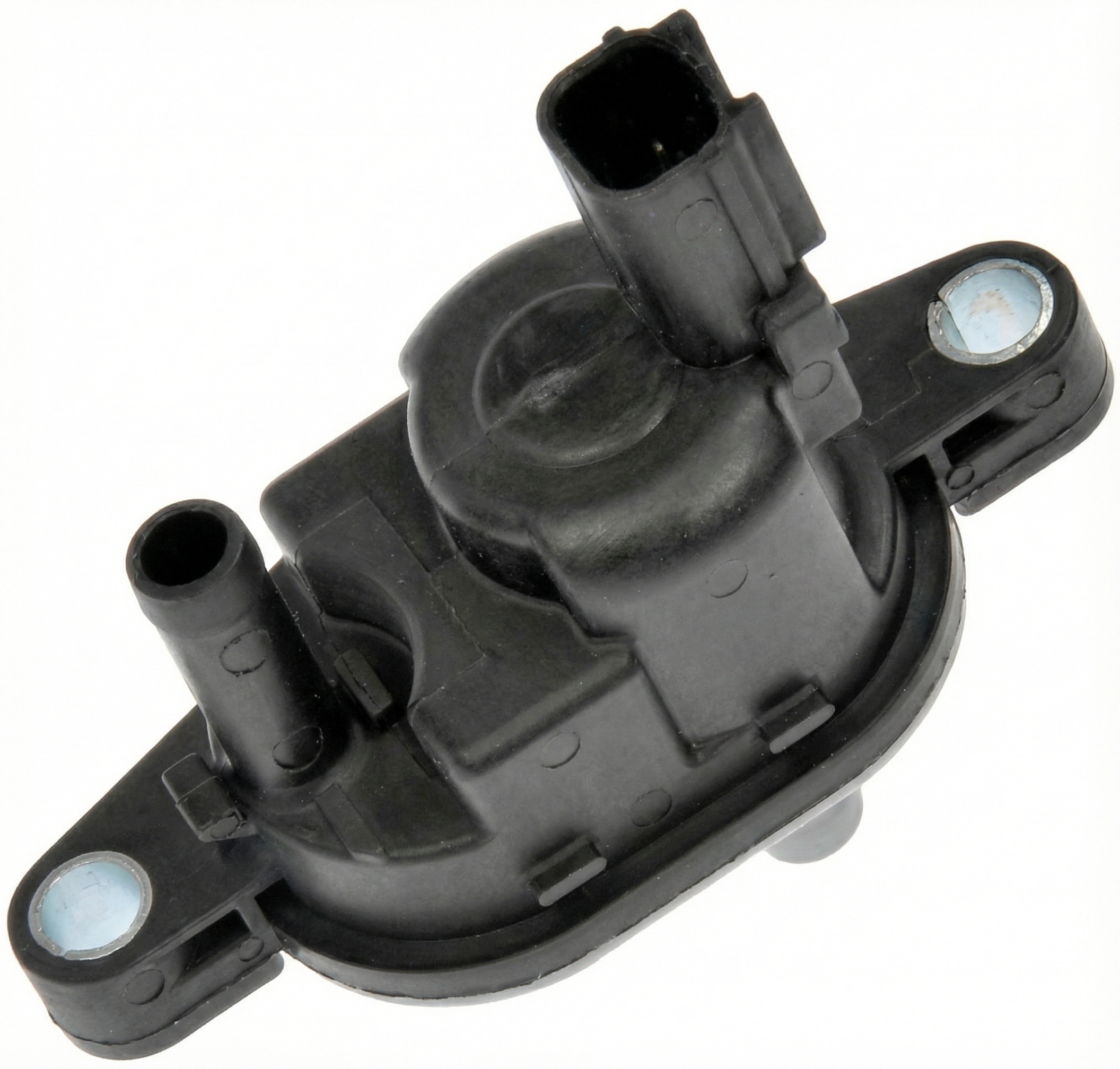
How to confirm: If no blockage is found, the valve itself may be faulty. Use a scan tool to command the valve to open and close; listen for a click. Alternatively, apply 12V directly to the valve's terminals to check for operation. If it doesn't click, it has failed. Sometimes the valve can be cleaned with mass air flow sensor cleaner and restored to operation.
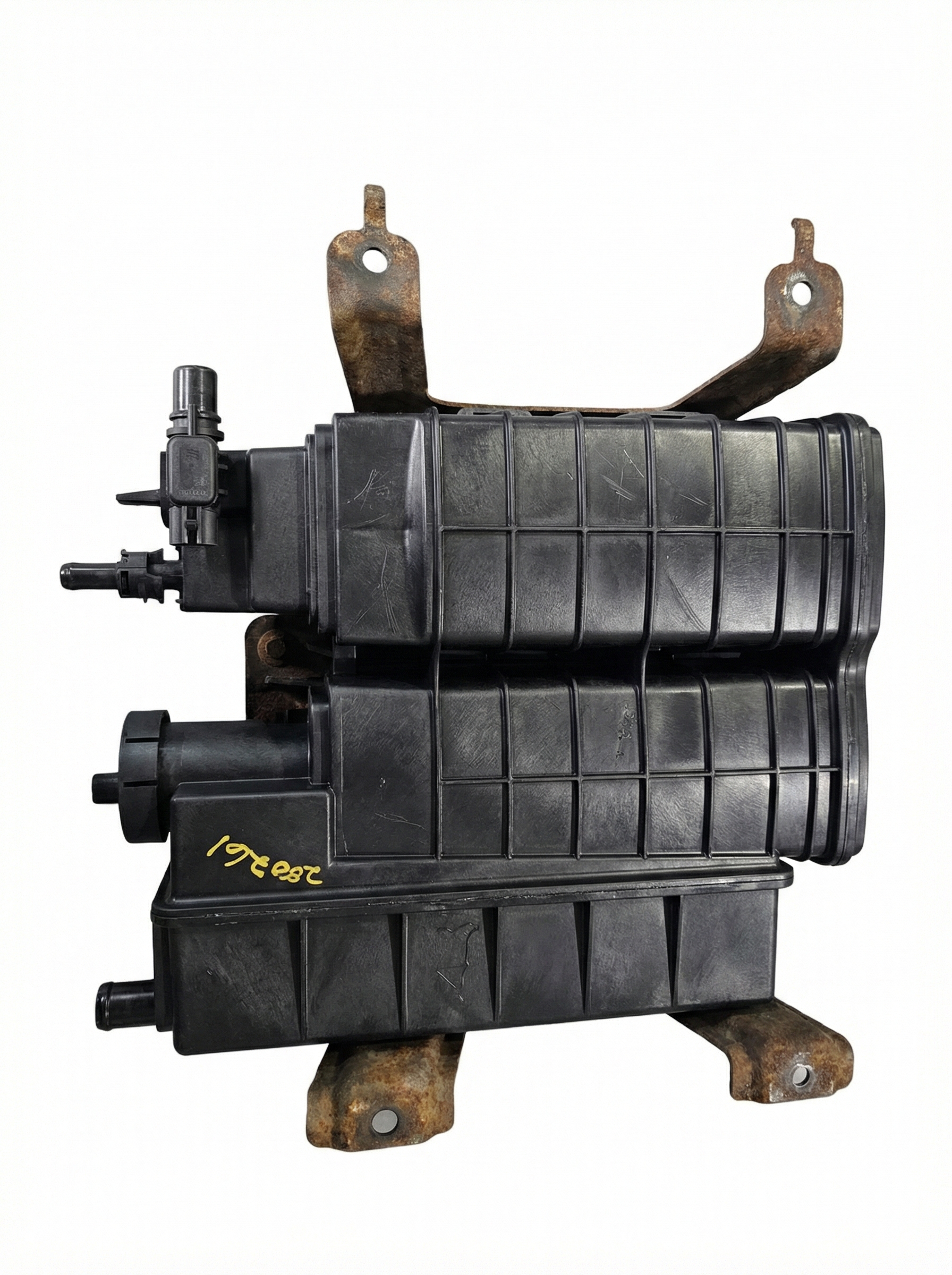
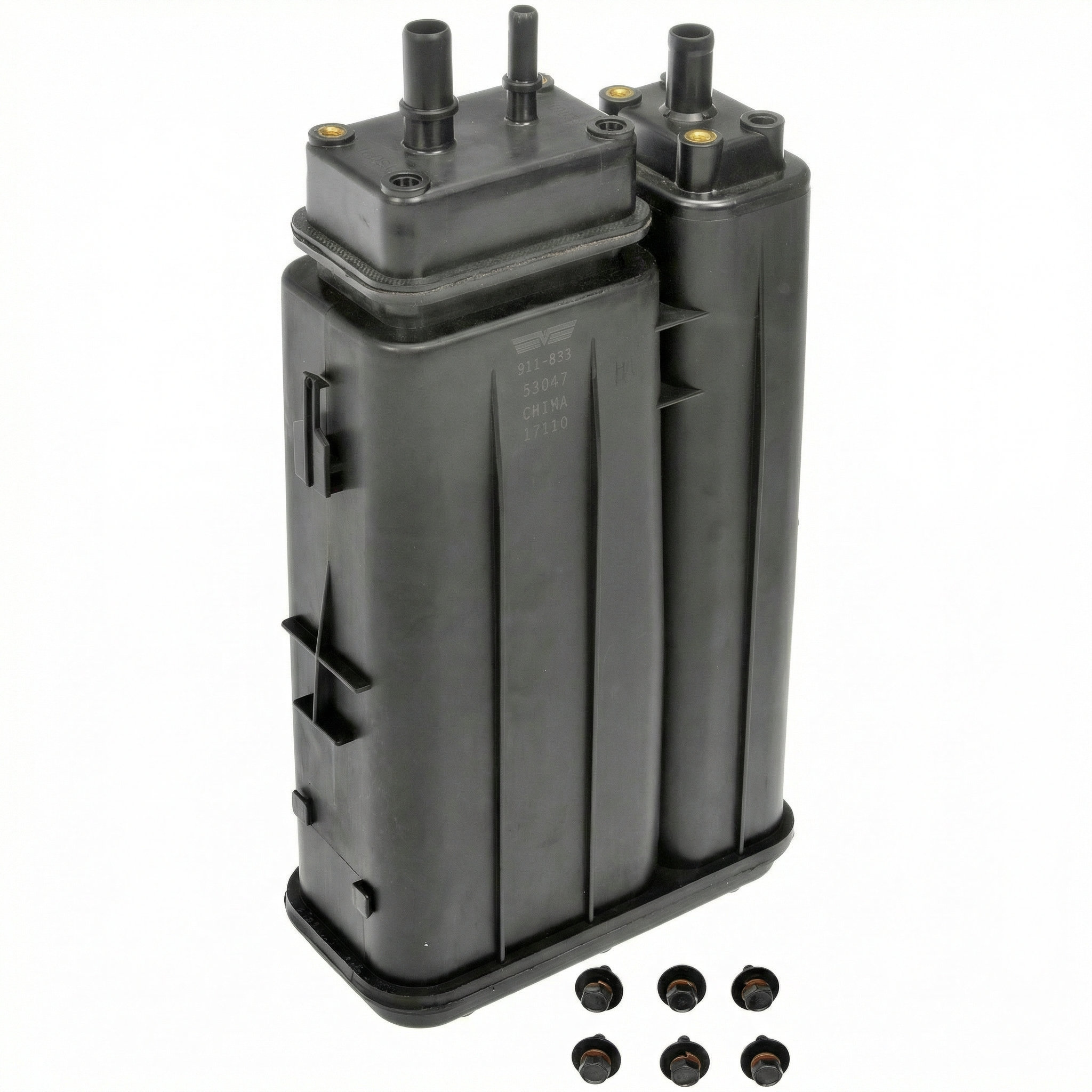
Typical fix: Replace the EVAP canister vent valve. On the 8th gen Accord, this valve is integrated into the charcoal canister assembly and is replaced as a single unit.
Est. part cost: $40-$110 - Damaged Wiring or Blown Fuse ⚪ Low Probability
How to confirm: Inspect the wiring harness and two-pin connector leading to the vent valve for any signs of damage, corrosion, or looseness. Use a multimeter to check for power and ground at the connector when the valve should be active.
Typical fix: Repair the damaged section of the wiring harness or replace the faulty connector. Check for and replace any related blown fuses.
Est. part cost: $5-$50
Rare But Worth Checking
- Clogged or Saturated EVAP Charcoal Canister: → Shop Vapor Canister This can happen if the car is habitually over-filled with fuel ('topping off') or if the internal charcoal media breaks down over time. It can mimic a vent valve issue by preventing airflow. If the vent valve and hoses are clear but the problem persists, the canister may be the culprit.
Diagnosis Steps
- Confirm the presence of code P2422 with an OBD-II scanner.
- Heed the safety warning in TSB 08-087: Wear gloves as some spiders are poisonous.
- Raise and safely support the rear of the vehicle. Locate the EVAP canister and drain box assembly above the driver's side rear subframe.
- Remove the single 10mm bolt holding the drain box. Pull the box down.
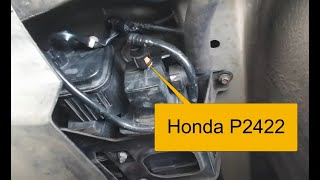
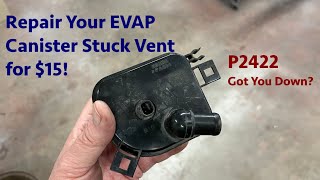
- Disconnect the EVAP vent hose from the canister and the drain box. Pry open the drain box cover with a small screwdriver. 🎬 See this walkthrough on cleaning the vent valve and hose
- Thoroughly inspect the drain box and vent hose for spider webs, dirt, or any other blockages. Clean with compressed air or a small brush.
- If a blockage was found, install the updated 'Fuel Drain Spring' (P/N 17745-TA0-A01) into the drain box to prevent future nests. Reassemble, clear the code, and test.
- If no blockage was found, inspect the wiring and connector for the vent valve for damage or corrosion.
- If wiring is good, test the vent valve. Use a capable scan tool to command it open and closed, or remove it and apply 12V power to see if it actuates.
- If the valve does not operate, it needs to be replaced. This valve is part of the charcoal canister assembly on this model.
- Reassemble all components, clear the code with the scanner, and perform a drive cycle to see if the code returns.
Parts You'll Likely Need
- Fuel Drain Spring
(OEM #17745-TA0-A01)— This is the official Honda countermeasure to prevent spiders from building webs in the drain box, which is the most common cause of P2422 on this vehicle. It is a very inexpensive part.
Trusted brands: Honda (Genuine)
OEM price range: $3-$10
Aftermarket price range: N/A - EVAP Canister Vent Valve / Solenoid
(OEM #17310-TA0-A01)— If the cause is not a physical blockage, the valve itself is the next most likely component to have failed electrically or mechanically. On this model, it is typically sold as part of the entire charcoal canister assembly.
Trusted brands: Honda (Genuine), Dorman, Standard Motor Products
OEM price range: $90-$110
Aftermarket price range: $40-$70
Technical Service Bulletins (TSBs) & Recalls
- 08-087 (Supersedes 08-087, dated November 14, 2008): 'MIL Comes On With DTC P2422... PROBABLE CAUSE: Spider webs are clogging the EVAP canister vent hose or the drain box.'
- Bulletin #A15-010: This bulletin notes that the MIL may be on with DTC P2422 because dirt may be clogging the EVAP canister vent tube.
- Bulletin #ATS160701: A manufacturer service bulletin notes that when driving regularly on dirt roads in very dry and dusty conditions, there can be repeated occurrences of the MIL coming on with DTC P2422 due to the vent shut valve being stuck closed.
- Bulletin #A15010: This record confirms that DTC P2422 may appear when dirt clogs the EVAP canister vent tube.
Platform-Specific Known Issues
- Honda Technical Service Bulletin 08-087 was released specifically for the 2008-2009 Accord to address P2422, identifying the probable cause as spider webs clogging the EVAP canister vent hose or drain box. This issue is known to affect the entire 2008-2012 generation.
- Owner Experience: A user on Honda-Tech.com with a 2008 Accord followed the TSB procedure, found spider webbing blocking the valve, cleaned it out, and the code was resolved.
Mechanic-Grade Diagnostic Values
- EVAP Canister Vent Valve Solenoid Resistance — expected: 0.4 to 2.0 Ohms. Failure: A reading outside this range, or an open circuit (infinite resistance), indicates a failed solenoid coil.
- Voltage at EVAP Vent Valve Connector (Key On, Engine Off) — expected: One pin should have battery voltage (~12V).. Failure: No voltage suggests a wiring issue or blown fuse between the power source and the valve.
Scan Tool Commands That Help
- Honda HDS (Honda Diagnostic System): EVAP System Function Test — After cleaning a blockage or replacing a component, this function test commands the various EVAP solenoids and monitors the fuel tank pressure sensor to confirm the entire system is operating correctly and the repair was successful.
- Advanced OBD-II Scanners (e.g., XTOOL, Autel): Vent Valve On/Off Command (Bidirectional Control) — This is used during diagnosis to manually command the vent valve to close and open. The technician can listen for an audible click from the valve or watch live data from the fuel tank pressure sensor to confirm the valve is physically responding to the command.
Wiring & Ground Locations
- EVAP Canister Vent Valve Connector — On the EVAP canister assembly, located above the driver's side rear subframe. It is a 2-pin connector.. This is the direct electrical connection to the vent valve. Damage, corrosion, or looseness at this connector will prevent the valve from being commanded by the PCM, causing a circuit or performance code. A wiring diagram for a similar model shows a Black/Yellow wire for power and a control wire from the PCM.
- G101 (Main Engine Harness Ground) — On the driver's side of the intake manifold, often under a bolt for a vacuum fitting.. While not the direct ground for the vent valve, G101 is a primary ground point for the engine control unit (ECU/PCM) and its sensor network. A poor connection here can cause a wide range of seemingly unrelated sensor and actuator codes, including EVAP system faults, due to floating grounds and incorrect sensor readings.
Real Owner Repair Stories
- YouTube user 'The Offroading Mechanic' (2007 Honda Ridgeline (similar EVAP system and failure mode)) — Check Engine Light with code P2422.
❌ Tried (didn't work) Initial bench test showed the valve was not actuating (no click) when 12V was applied.
✅ What actually fixed it The valve itself was stuck, but not failed electrically. The technician filled the valve assembly with MAF sensor cleaner, let it soak, and manually actuated it. After cleaning, the valve began to click when 12V was applied. The valve was reinstalled, the code was cleared, and it did not return after a drive cycle, resolving the issue for ~$15 instead of replacing the assembly. - NHTSA ODI #10875055 — An owner reported that a yellow sac spider built a nest in the EVAP system, blocking the venting of the fuel tank and triggering DTC code P2422.
Diagnostic Flowchart
Other Known Issues on This Vehicle
Issues unrelated to this code that are worth knowing about as an owner of this generation:
- Excessive Oil Consumption (V6 and L4 engines) 🔴 High — Widespread issue, particularly on 2008-2010 models, leading to a class-action lawsuit. Can occur at any mileage. (Ref: Subject of class-action lawsuit settlement which extended powertrain warranties for some vehicles.)
- VTC Actuator Rattle at Cold Start (L4 engine) 🟠 Medium — Very common on the 2.4L 4-cylinder engine. A loud, grinding rattle for ~2 seconds immediately after a cold start. (Ref: Honda TSB 09-010 addresses this issue with a replacement procedure for the faulty VTC actuator.)
- Premature Rear Brake Wear 🟠 Medium — Common complaint, especially on 2008-2009 models, with rear brake pads wearing out in as little as 15,000-20,000 miles. Also led to a class-action lawsuit.
- Failing Starter Motor 🟡 Low — A common failure item as the vehicles age, typically over 100,000 miles, resulting in a no-start condition.
Used vs. New Parts: Buying Guide for This Vehicle
When a used part is the smart pick: For this repair, sourcing a used EVAP canister assembly from a junkyard is a viable but risky option. It only makes sense if the cost is significantly lower than a new aftermarket unit. The plastic drain box and vent hose are perfectly acceptable to source used, provided they are thoroughly cleaned of any debris before installation.
Donor-vehicle mileage cap: roughly under 80000 miles for the part to have meaningful remaining life.
What to inspect on the donor part:
- Check the donor vehicle for signs of being in a flood or having significant rear-end damage, which could have compromised the canister.
- If possible, inspect the ports on the used canister for any black charcoal pellets, which indicates the internal media has broken apart, and the canister is bad.
- Avoid canisters from vehicles that have sat for a very long time in damp conditions, as internal corrosion of the solenoid is more likely.
OEM-only on this vehicle (don't cheap out):
- Fuel Drain Spring (P/N 17745-TA0-A01): This part is extremely cheap from the dealer, so there is no reason to source it used or look for an aftermarket alternative.
Aftermarket brands forum-validated for this vehicle:
- Standard Motor Products (SMP)
- NGK/WVE (WVE is reportedly an NGK brand)
Brands owners have reported issues with on this vehicle:
- Dorman: While Dorman makes many useful parts, their emissions components, particularly EVAP-related items, have a mixed reputation among DIY and professional communities for premature failure or poor fitment. It may work, but is generally considered a higher risk than OEM or other top-tier aftermarket brands.
Real Owner Stories
Aggregated from forums and TSBs cited above. Mileages and costs reflect what owners reported in those sources.
2008 Honda Accord
Symptoms: The Check Engine Light came on with code P2422.
What fixed it: Following TSB 08-087, the owner cleaned spider webs out of the EVAP canister vent hose and drain box, then installed the preventative spring (P/N 17745-TA0-A01).
Source hint: Honda-Tech.com thread titled 'DTC P2422 (EVAP canister vent shut valve close malfunction)'
2009 Acura TSX
Symptoms: The vehicle set a P2422 code.
What fixed it: After initially misdiagnosing the problem and replacing a different valve, the owner found the EVAP vent cap was packed with spider webs. Cleaning the webs out in 10 minutes fixed the issue.
Source hint: Acurazine.com thread titled 'P2422 Code - Easiest Fix Ever'
Related OBD-II Codes
Frequently Asked Questions
Does Honda TSB 08-087 apply to my 2011 Accord, or just the 2008-2009 models?
What is the part number for the spring that Honda recommends to prevent spiders?
Where exactly is the EVAP drain box located on my 2010 Accord?
If the vent valve itself has failed, do I have to replace the entire charcoal canister?
Are there any safety precautions I should take when cleaning the drain box?
I'm having trouble filling my gas tank; the pump keeps clicking off. Is this related to P2422?
My 2009 Acura TSX has code P2422. Is the cause the same as the Accord?
Helpful Videos


Used OEM Parts in Stock
New Aftermarket Parts Available


The information in this article is provided for general reference and educational purposes only. Vehicle specifications, procedures, and part compatibility can vary by production date, trim level, and region. Always consult your vehicle's factory service manual and verify part numbers before purchasing or performing repairs. Safety-critical components such as airbags, seat belts, and braking systems should be installed by a qualified professional.
- Honda Accord:
- 🧭 Diagnostic Flowchart
- 🎬 Helpful Videos
- 🛍️ Shop This Part
- What's Unique About the 2008-2012 Honda Accord
- Symptoms You May Notice
- Most Likely Causes
- Rare But Worth Checking
- Diagnosis Steps
- Parts You'll Likely Need
- Technical Service Bulletins (TSBs) & Recalls
- Platform-Specific Known Issues
- Mechanic-Grade Diagnostic Values
- Scan Tool Commands That Help
- Wiring & Ground Locations
- Real Owner Repair Stories
- Other Known Issues on This Vehicle
- Used vs. New Parts: Buying Guide for This Vehicle
- Real Owner Stories
- 2008 Honda Accord
- 2009 Acura TSX
- Related OBD-II Codes
- Frequently Asked Questions
- 🎟️ Get 5% Off