

OBD-II Code P2438: Secondary Air Injection System Air Flow/Pressure Sensor Circuit High (Bank 2)
The Ultimate Guide to Understanding, Diagnosing, and Fixing P2438
- Code P2438 triggers when the Bank 2 Secondary Air Injection pressure sensor reads a voltage stuck near 5.0V instead of the normal 0.5V-1.0V range.
- A stuck-open one-way check valve is the primary root cause, allowing hot exhaust and moisture to flow backward and destroy the pressure sensor.
- Toyota and Lexus V8 models (2007-2013) frequently enter a 30-45 mph 'limp mode' when this code sets, often requiring a $1,500+ switching valve replacement.
- Never replace the air pump without first checking for code P2442 (Switching Valve Stuck Open); ignoring a stuck valve guarantees the new pump will fail within months.
What Does P2438 Mean?
Your car's main computer, the Powertrain Control Module (PCM), detected a problem in the Secondary Air Injection (SAI) system for engine bank 2. Specifically, the voltage reading from the air flow or pressure sensor is higher than the manufacturer's specified range. This system reduces harmful emissions by pumping fresh air into the exhaust manifold for 30-90 seconds when the engine is cold, helping the catalytic converter warm up faster.
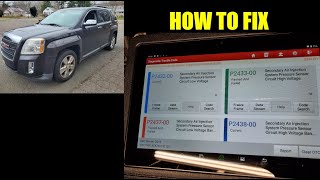
Technical definition: The SAE/OBD-II definition is "Secondary Air Injection System Air Flow/Pressure Sensor Circuit High Bank 2". The PCM registered a voltage from the Bank 2 SAI pressure sensor stuck near the 5-volt reference signal. 🎬 Watch this diagnostic walkthrough for P2433 and P2438 sensor circuit codes. A healthy sensor reads between 0.5V and 1.0V with the engine off.
Can I Drive With P2438?
Yes, But With Caution. Driving is possible, but extended trips risk severe damage. Your vehicle will likely enter a reduced power 'limp mode' and stall when cold. Ignoring this code allows hot exhaust gases to flow backward, melting the air pump and wiring. This secondary damage adds $800-$2,500 to the repair bill. Diagnose the issue immediately to prevent destroying the catalytic converter.
Common Causes
- Faulty or Stuck One-Way Check Valve (Very Common) — A check valve stuck open allows hot exhaust gases and moisture to flow backward into the air injection pump and pressure sensor. In cold weather, this moisture freezes, seizing the pump and destroying the sensor, triggering the high voltage reading.
- Failed Air Switching Valve Assembly (Very Common) — This valve directs airflow from the pump. If it sticks open, it destroys the integrated pressure sensor. On Toyota/Lexus models, engine vibration also breaks the plastic vacuum nipple on this valve, creating a vacuum leak that prevents operation.
- Defective Secondary Air Injection Pressure Sensor (Common) — The sensor fails from internal diaphragm damage, moisture corrosion, or carbon clogging. A failed sensor shorts internally to the 5V reference line, sending a continuous high voltage signal to the computer.
- Melted or Corroded Wiring (Common) — Wiring for the sensor or pump burns, corrodes, or shorts to power. Because these components sit near the hot exhaust system, melted insulation and brittle connectors frequently allow moisture intrusion and short circuits.
- Clogged SAI Passages (Common) — On European makes like VW, Audi, and BMW, carbon builds up inside the cylinder head ports where secondary air injects. This blockage restricts airflow, spiking system pressure and causing the sensor to report abnormally high readings. 🎬 See how carbon buildup blocks air passages on Audi and VW engines.
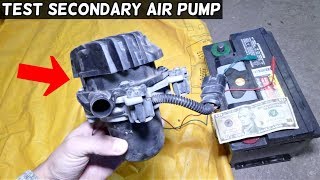
- Seized Secondary Air Injection Pump (Less Common) — The pump seizes from moisture intrusion or electrical failure. A seized motor blows the main 40-50A fuse or damages the control relay, leading to circuit issues that trigger the code.
- PCM or Software Calibration Mismatch (Rare) — After a PCM software update, the calibrated voltage range for the sensor sometimes changes. If the module expects a different range, a healthy sensor triggers P2438 until the PCM is reprogrammed. Actual hardware failure of the PCM is extremely rare.
Symptoms
- Check Engine Light is on — An illuminated Check Engine Light on your dashboard is the primary and most immediate symptom.
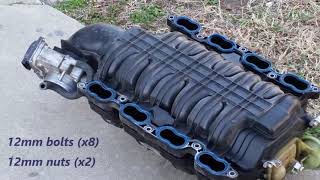
- Reduced engine performance (Limp Mode) — The computer limits engine power to prevent damage, restricting speeds to 30-45 mph. This is a guaranteed symptom on Toyota and Lexus V8 models. 🎬 Watch: How to fix stuck secondary air injection valves on Toyotas.
- Stalling, rough idle, or hesitation — The engine stalls, stumbles, or idles roughly for the first minute after a cold start due to a related vacuum leak causing a lean fuel mixture.
- Loud whining or vacuum noise — A loud whining or vacuum cleaner sound from the engine bay on cold starts indicates failing bearings inside the secondary air injection pump.
- High short-term fuel trim (scan-tool only — no driver-felt sign) — Scan tools show abnormally high short-term fuel trim (STFT > +20%) during a cold start as the PCM compensates for unmetered air from a vacuum leak.
Diagnostic Flowchart
Tap your situation to follow the diagnostic path that matches what you're seeing on this code.
Common Fixes & Costs
- Replace the One-Way Check Valve — Parts: $30-$80, Labor: $50-$100, ~0.8 hr book time (DIY)
- Replace Air Switching Valve Assembly — Parts: $400-$1200, Labor: $300-$1200, ~5.5 hr book time (Advanced)
- Replace the Secondary Air Injection Pressure Sensor — Parts: $50-$150, Labor: $100-$200, ~1.2 hr book time (Intermediate)
- Replace the Secondary Air Injection Pump — Parts: $200-$500, Labor: $150-$300, ~1.5 hr book time (Intermediate)
- Repair Damaged Wiring — Parts: $10-$50, Labor: $100-$250, ~1.5 hr book time (Intermediate)
Used vs. New Parts: Buying Guide
When a used part is worth it: For expensive assemblies like air switching valves on older vehicles where the budget is tight. A used part from a low-mileage, rear-ended vehicle is a cost-effective option.
Donor-vehicle mileage cap: roughly under 80000 miles for the part to have meaningful remaining life.
Donor quality checklist:
- Verify the donor vehicle was not scrapped for an emissions failure.
- Inspect electrical connectors for green corrosion and plastic housings for heat melting.
- Match part numbers exactly; variations exist even within the same model year.
Decision logic:
- If The part is a standalone sensor under $150. → Buy new. The risk of a used electronic sensor failing immediately is not worth the $50 savings.
- If The repair is over $1,500 with new parts on a car worth $4,000. → Buy a tested, used switching valve assembly from a reputable salvage yard.
- If The part is the air pump. → Buy new. Used pumps often have hidden internal rust from moisture ingestion.
Warranty tradeoff: Used parts carry a 30-90 day warranty. New aftermarket parts offer 1-year to lifetime warranties. New OEM parts carry a 1-year warranty.
Worst-case if a used part fails: $500-$1500 if a used switching valve fails, requiring you to pay labor costs twice.
What Happens If You Wait — Timeline
- 0-1 month: Code P2438 appears. Toyota models enter limp mode immediately. Cold start emissions increase slightly, but drivability is otherwise normal on most makes. (MPG impact: 0-1%% · Added cost: $0)
- 1-4 months: Moisture and exhaust soot permanently contaminate the Bank 2 pressure sensor. The air pump begins to rust internally and whine loudly on startup. (MPG impact: 1-3%% · Added cost: $150-$300 (The pressure sensor is destroyed; the pump is failing).)
- 4-12 months: The air pump motor seizes completely, blowing the main 50A fuse. Hot exhaust melts the wiring connectors and the plastic housing of the switching valve. (MPG impact: 1-3%% · Added cost: $500-$1,200 (A new air pump and wiring pigtails are now required).)
- 12+ months: The catalytic converter is repeatedly subjected to overly rich conditions during cold starts without extra oxygen. The catalyst substrate melts or clogs. (MPG impact: 5-15% (due to clogged converter)% · Added cost: $1,500-$3,500+ (The catalytic converter has failed, doubling the repair bill).)
Cost of Not Fixing It
- 0-1 month: Failed emissions test and limp mode on Toyota models. (Added cost: Negligible)
- 1-6 months: Moisture and exhaust destroy the air pump and melt the wiring harness. (Added cost: $400-$800)
- 6+ months: Prolonged rich cold starts cause the catalytic converter to melt or clog. (Added cost: $1200-$2800)
Diagnosis Steps
- Read Codes and Freeze Frame Data
Use an OBD-II scanner to confirm P2438. Check for related codes (especially P2442 - Valve Stuck Open) and record freeze frame data to see the exact engine temperature and load when the code set.
Tools: OBD-II Scanner (Beginner) - Inspect the One-Way Check Valve
Locate the check valve in the air inlet hose leading to the exhaust manifold. Remove it and blow through it from both directions. Air must only flow towards the exhaust. If it flows both ways, it is destroyed and must be replaced immediately.
Tools: Basic hand tools (Intermediate) - Test Sensor Voltage with a Multimeter
Access the Bank 2 pressure sensor connector. With the Key On, Engine Off (KOEO), back-probe the signal wire. Voltage must be 0.5V to 1.0V. A reading stuck near 5.0V confirms a shorted sensor or a short-to-power in the wiring harness.
Tools: Digital Multimeter, Vehicle-specific wiring diagram (Intermediate) - Visually Inspect Wiring and Hoses
Inspect all hoses, wiring, and connectors for the SAI system on engine bank 2. Look for cracked vacuum lines, melted wire insulation near the exhaust, and green corrosion inside electrical connectors.
Tools: Flashlight, Inspection Mirror (Beginner) - Check System Fuses and Relays
Inspect the 40-50A fuse and relay for the SAI system. A blown fuse guarantees a seized air pump. A clicking or buzzing relay indicates welded internal contacts causing the pump to run continuously.
Tools: Owner's Manual, Fuse Puller (Beginner) - Command System On with a Scan Tool
Use a bidirectional scan tool to command the air pump and switching valve on. Monitor the live data PID for the Bank 2 pressure sensor. The pressure/voltage must rise significantly. If the pump runs but pressure doesn't change, you have a blockage or stuck valve.
Tools: Professional Bi-Directional Scan Tool (Advanced) - Sensor Voltage Correlation Test
On a V-engine, use a scan tool to compare live data from Bank 1 and Bank 2 SAI pressure sensors. At KOEO, voltages must be identical. If Bank 2 reads 5.0V while Bank 1 reads 1.0V, the Bank 2 sensor or its dedicated circuit is faulty.
Tools: Bi-Directional Scan Tool (Advanced) - Check Air Pump Pressure Output
Disconnect the air hose from the pump outlet and attach a low-pressure gauge. Command the pump on. Pressure must reach 1.5 - 2.0 PSI (10-14 kPa). Low pressure means a weak pump; good pressure means the blockage is downstream.
Tools: Low-Pressure Gauge, Scan Tool (Advanced) - Test Solenoid/Valve Resistance
Disconnect the air control solenoid electrical connector and measure resistance across its terminals. Compare to factory specs (typically 25-35 Ohms for VW/Audi). Infinite resistance means an open circuit; zero resistance means a short.
Tools: Digital Multimeter, Vehicle-specific repair manual (Advanced) - Oscilloscope Waveform Analysis
Connect an oscilloscope to the sensor's signal wire. A healthy sensor shows a stable baseline at KOEO, a sharp rise when the pump activates, and a quick drop when deactivated. A flat 5V line confirms an internal sensor short.
Tools: Automotive Oscilloscope (Lab Scope) (Expert)
When This Code Triggers (Freeze-Frame Conditions)
- Engine Coolant Temp: 45-85°F (7-29°C) (During a cold start. The SAI system only runs for 30-90 seconds to heat the catalytic converter.)
- RPM: 700-1500 (Engine idle or slightly above idle immediately after a cold start.)
- Time Since Start: 0-90 seconds (The fault is detected the moment the PCM commands the SAI system on.)
Related Codes
- P2442 — Indicates 'Switching Valve Stuck Open Bank 2'. This mechanical failure is the root cause of P2438. The stuck valve allows exhaust to destroy the pressure sensor. Fix P2442 first.
- P2433 — The identical 'Circuit High' fault, but for Bank 1. If you swap the Bank 1 and Bank 2 sensors and the code changes from P2438 to P2433, the sensor is confirmed defective.
- P2437 — Indicates 'Circuit Low' on Bank 2. While P2438 (High) means a short to power, P2437 (Low) means an open circuit, a severed wire, or a bad sensor ground.
- P106B — A Toyota/Lexus code for 'Pressure Sensor Correlation'. It means the SAI pressure sensor reading drastically conflicts with the EVAP pressure sensor, confirming the SAI sensor is dead.
- P0410 — A generic code for 'Secondary Air Injection System Malfunction'. Ignore this and focus entirely on diagnosing the highly specific P2438 circuit code.
Climate & Environmental Factors
- Cold Weather: Moisture from exhaust gas flows backward through a failed check valve and freezes inside the air pump or switching valves. This seizes the components, blowing fuses and triggering P2438.
- High Humidity: Humid environments accelerate corrosion inside electrical connectors and increase the volume of water ingested by the pump if the intake housing is cracked.
- Altitude: Altitude affects baseline atmospheric pressure readings, but the system auto-calibrates for this. A P2438 code at high altitude still indicates a hard component failure, not an environmental quirk.
How to Talk to a Mechanic About This Code
Say this: "I have an active P2438 code for the Bank 2 secondary air injection system. Can you please test the pressure sensor voltage with the key on/engine off, and physically inspect the one-way check valve for backflow before quoting any major parts?"
This proves you understand the common, cheaper failure points. It prevents a shop from immediately quoting a $1,500 air pump assembly without performing a root cause analysis.
Avoid saying:
- 'My check engine light is on, can you look at it?' (Invites a broad, expensive diagnostic fee).
- 'Just fix whatever's wrong.' (Gives the shop a blank check).
- 'I think I need a new air pump.' (Never suggest a specific repair; ask for a diagnosis).
Questions to ask before authorizing the repair:
- What was the sensor's voltage reading with the key on, engine off? Was it stuck at 5 volts?
- Did you physically inspect the one-way check valve for moisture or exhaust soot?
- If you recommend a new air pump, what evidence proves the old one failed, and what caused it to fail?
- Is this repair covered under any Toyota/Lexus warranty enhancement program?
Where to Take It: Dealer vs Independent vs Chain
- Dealer:
Only recommended if your vehicle is covered by a warranty extension. Otherwise, dealer costs for this specific repair are exorbitant.
Best for: Toyota/Lexus vehicles potentially covered under the ZHA/ZLH warranty enhancement programs., Vehicles still under the original factory emissions warranty., VW/Audi models requiring specialized tools to clean carbon buildup from cylinder head ports.
Downsides: Labor rates are 50-100% higher than independent shops., Dealers strictly replace entire expensive assemblies rather than repairing wiring or swapping sub-components. (Typical cost: +50% vs. baseline) - Independent Shop:
The best fit for most P2438 situations. A good independent tech will test the sensor voltage and check valves before firing the parts cannon.
Best for: Out-of-warranty vehicles, especially GM, Subaru, and older Toyotas., Cost-conscious owners needing accurate root-cause diagnosis (e.g., finding a $40 bad check valve instead of replacing a $500 pump).
Downsides: Expertise varies; you must find a shop with ASE-certified technicians experienced in electrical diagnostics. (Typical cost: +0% vs. baseline) - Chain Shop:
AVOID. The risk of misdiagnosis and repeat failures is too high for complex emissions systems.
Best for: Simple, pre-diagnosed part replacements like swapping an easily accessible standalone pressure sensor.
Downsides: Technicians rarely perform the in-depth electrical diagnosis required for a 'Circuit High' code., High risk of misdiagnosis and replacing the air pump without fixing the underlying check valve issue. (Typical cost: -10% vs. baseline)
When to Walk Away From the Repair
If the estimated repair cost exceeds 40-50% of your car's current private-party value, seriously consider selling the car as-is.
- Car worth $8000, fix is $2500: Fix it. The repair is 31% of the vehicle's value. This is a common scenario for a full SAI system replacement on a Toyota Tundra.
- Car worth $4000, fix is $2200: Walk away. The cost is 55% of the car's value. Consider an aftermarket bypass kit (for off-road use) or sell the vehicle.
- Car worth $2500, fix is $750: Fix it. A $750 repair for a new air pump and check valve is 30% of the car's value and makes economic sense.
What Scan Tool You Need for This Code
Minimum: A scanner that graphs live data, specifically the voltage from the SAI pressure sensor. A $20 code reader is useless for this diagnosis.
A basic reader only gives the P-code. It cannot show you the live voltage (e.g., stuck at 5.0V) required to confirm a shorted sensor or wiring fault.
Budget: BlueDriver Pro Scan Tool (~$100) — Connects to your smartphone via Bluetooth to view and graph live data for the SAI pressure sensor. Reads manufacturer-specific codes.
Mid-range: Innova 5610 (~$330) — Provides full bidirectional control. You can command the SAI pump and switching valves on/off manually while watching live pressure data to isolate the failure.
Professional: Autel MaxiCOM MK808 (~$450) — Offers full bidirectional control and runs the complete SAI system automated self-test, making diagnosis definitive and fast.
Rent vs buy: Buy. A basic auto parts store rental cannot view live data or perform bidirectional controls. Investing in the Innova 5610 pays for itself by avoiding one hour of professional diagnostic labor.
How to Clear the Code After You Fix It
- Use an OBD-II scan tool to clear the diagnostic trouble codes (DTCs).
- Ensure the fuel tank is between 15% and 85% full.
- Perform a complete cold-start drive cycle to allow the readiness monitors to run.
Drive cycle (~20 minutes): Start the engine completely cold (sit overnight) and idle for 3 minutes. Drive at a steady 45-55 mph for 10 minutes. Perform stop-and-go city driving for 5 minutes. Allow the vehicle to cool completely and repeat.
Readiness monitors affected: Secondary Air System Monitor, Catalyst Monitor, Oxygen Sensor Monitor
Before emissions retest: drive at least 50 miles to fully set monitors.
Watch out for:
- Disconnecting the battery clears the code but resets all readiness monitors to 'Not Ready', guaranteeing an emissions test failure.
- The code returns immediately on the next cold start if the mechanical fault was not repaired.
Will This Fail Emissions / State Inspection?
Yes — this code typically fails an OBD-II emissions inspection.
- California: An active P2438 code is an automatic smog check failure. You must complete a full drive cycle to set the readiness monitors before a retest.
- New York: An illuminated Check Engine Light for P2438 results in an automatic NYS inspection failure.
- Texas: Clearing the code in the parking lot will not work; the Secondary Air System monitor must read 'Ready' to pass.
Most Commonly Affected Vehicles
- Toyota Tundra (2007-2013) — Moisture destroys the switching valves, forcing the truck into limp mode. Covered by Toyota Warranty Enhancement Program CSP ZHA, which updates the pump inlet cover to prevent water ingestion.
- Toyota Sequoia (2008-2013) — Shares the V8 engine and flawed SAI system design with the Tundra. Prone to identical moisture failures and covered by the same warranty extension.
- Lexus GX 460, LX 570 (2010-2013) — Utilizes the same emissions system as the Tundra. Covered by Lexus Warranty Enhancement Program ZLH for 10 years with unlimited mileage.
- Chevrolet / GMC Equinox, Terrain (2010-2017) — The 2.4L and 3.6L engines frequently suffer from standalone air injection pressure sensor failures, causing high voltage codes.
- Volkswagen / Audi Various Models with TSI/TFSI Engines (2008-2016) — Prone to severe carbon buildup in the secondary air ports inside the cylinder head. This physical blockage restricts airflow and triggers pressure faults.
- Subaru Forester, Impreza, Legacy (2006-2011) — Switching valves stick due to corrosion. The barometric pressure sensor is integrated into one of the valve assemblies, requiring a full assembly replacement.
- BMW Various Models with N52/N54 Engines (2006-2013) — Known for carbon buildup in passages and failing secondary air pump relays that cause the pump to run continuously until it burns out.
- Mercedes-Benz Various Models (C-Class, E-Class, ML-Class) (2005-2015) — A loud whining noise on startup that doesn't go away is the hallmark symptom of a failing pump or stuck relay on these models.
Manufacturer-Specific Notes
- Toyota/Lexus: Moisture intrusion destroys the air switching valves, triggering limp mode. Toyota issued TSB T-SB-0160-11 and Warranty Enhancement Programs (ZHA/ZLH) extending coverage to 10 years/150,000 miles. The fix requires redesigned valves, pumps, and a modified air inlet.
- General Motors (GM): The pressure sensor is often integrated directly into the air control solenoid. You must replace the entire $150+ solenoid assembly even if only the $20 sensor component failed.
- Subaru: Air switching valves stick from corrosion and are sold as a complete, expensive assembly for both banks. Accessing them requires removing the intake manifold. One valve contains the integrated barometric pressure sensor.
- Volkswagen/Audi: The root cause is rarely the sensor. It is almost always physical carbon buildup blocking the air passages in the cylinder head. Fixing this requires a time-consuming physical cleaning of the ports with solvents and specialized brushes.
Real Owner Stories
2008 Toyota Tundra with P2440, then P2438 after repair attempt
Check Engine Light came on with code P2440 (Switching Valve Stuck Open Bank 1). Owner replaced the air control/switch valve for that bank.
What they tried:
- Replaced the Bank 1 air switching valve, clearing the P2440 code.
- Immediately after, a new code, P2438 (Circuit High Bank 2), appeared.
- Swapped air pumps from side to side, but P2438 remained on Bank 2.
Outcome: The owner suspected the replacement valve assembly had a faulty integrated pressure sensor right out of the box. The next step was to warranty exchange the new part.
Lesson: When a part is replaced and a new, related code appears immediately, the new part is likely defective. This is common with aftermarket switching valves containing integrated sensors.
2010 Toyota Tundra 4.6L with multiple SAI codes and limp mode
After driving through water, the truck entered limp mode, unable to accelerate past 65 MPH. This became persistent after rain.
What they tried:
- An AutoZone scan revealed codes P2440 (Valve Stuck Open), P106B (Pressure Sensor Correlation), and P0456.
- The mechanic diagnosed water intrusion into the Air Diverter Valve.
Outcome: The owner replaced the Bank 1 Air Diverter Valve. The combination of a valve-stuck code and a pressure correlation code confirmed a mechanical failure in the assembly.
Lesson: On Toyota Tundras, driving through water triggers SAI failure and limp mode. A 'valve stuck' code combined with a 'pressure correlation' code guarantees a failed switching valve assembly.
2010 Chevy Equinox with P2433 and P2438
Check Engine Light on with high voltage codes for both Bank 1 (P2433) and Bank 2 (P2438).
What they tried:
- Using a scan tool, the owner observed the live voltage from one pressure sensor was stuck at 4.8V, while the other was 2.8V.
- He unplugged the bad sensor and plugged in a new one; voltage immediately dropped to normal.
- This confirmed the sensor was internally shorted, ruling out a wiring harness issue.
Outcome: Replacing the faulty air injection pressure sensor resolved the code. The owner noted that replacing both sensors is best practice when one fails.
Lesson: Live scan tool data is invaluable. If a sensor reads near 5.0V and drops to 0V when unplugged, the sensor is internally shorted and must be replaced.
2007 Toyota Tundra 4.7L with 138k miles and multiple lights
Check Engine, VSC, 4LO, and traction control lights illuminated; truck in limp mode.
What they tried:
- Initial code was P2442 (Switching Valve Stuck Open Bank 2).
- Owner replaced the passenger side check valve, but lights remained.
- Owner replaced the passenger side air pump, but lights remained.
- New codes appeared: P2437, P0419, and P0415.
Outcome: The parts cannon approach failed and introduced new codes. The dealership quoted $2,600 for a full system replacement. The owner considered an aftermarket bypass kit.
Lesson: Replacing a pump or check valve will not fix a P2442 'Stuck Open' code. You must replace the switching valve assembly. Misdiagnosis leads to thousands in wasted parts.
How to Prevent This Code From Triggering
- Proactively replace the one-way check valves (Every 60,000-80,000 miles) — This $40 part prevents $2,000 in damage. When it fails, it allows hot exhaust and water to flow backward, destroying the expensive air pump and switching valves.
- Clean SAI passages on susceptible vehicles (VW/Audi) (Every 50,000 miles) — Carbon clogs the cylinder head ports on German vehicles, restricting airflow and causing pressure codes. Cleaning them with solvent prevents a major engine teardown.
- Ensure the air filter housing is properly sealed (Every time the air filter is changed) — The SAI pump draws air from the clean side of the engine air box. A cracked housing allows unfiltered, moist air directly into the pump, destroying its bearings.
Frequently Asked Questions
What are the most common misdiagnosis mistakes for P2438?
The biggest mistake is replacing the air pump without replacing a failed check valve. A stuck-open valve allows moisture and exhaust to destroy the new pump immediately. Always diagnose the entire system, checking for a 'Stuck Open' code (P2442) first.
Why did my P2438 code return after replacing the air pump?
The root cause was likely a failed one-way check valve or a stuck-open switching valve. These mechanical failures allow moisture and hot exhaust to flow backward, destroying the new pump. You must fix the valve issue to protect the pump.
What if the air pump runs continuously, even with the car off?
This indicates a stuck secondary air pump relay with welded internal contacts. It will drain your battery and quickly burn out the air pump motor. Disconnect the battery or pull the pump fuse immediately, then replace the relay.
Can I just clear the P2438 code?
You can clear it, but it will return during the next cold start. The PCM runs a self-test every time the engine cools down. Clearing the code does not fix the underlying electrical or mechanical fault.
What does 'Bank 2' mean?
Bank 2 is the side of a V-shaped engine (V6 or V8) that does not contain the #1 cylinder. On an inline engine, there is only one bank, so code P2438 does not apply. It isolates the fault to one specific side of the exhaust system.
Is this an expensive repair?
It ranges from a $150 wiring fix to over $2,500 for a full system replacement. On Toyota V8s, replacing the switching valves often requires removing the intake manifold, driving labor costs up. Always check for manufacturer warranty extensions before paying out of pocket.
Will a P2438 code cause me to fail an emissions test?
Yes. The secondary air injection system is a critical emissions control component. An active P2438 code and illuminated Check Engine Light trigger an automatic failure in all states with OBD-II emissions testing.
What is a secondary air injection bypass kit?
These aftermarket electronic kits trick the computer into thinking the SAI system is working, avoiding a $2,000+ mechanical repair. However, they are strictly for off-road use. Installing one on a street-driven vehicle is illegal in areas with emissions regulations.
My car has two air pumps. Does P2438 tell me which one is bad?
No, P2438 refers to the pressure sensor circuit on Bank 2, not the pump itself. Many vehicles use a single pump feeding both banks via separate switching valves. The code points to a fault in the Bank 2 sensor, valve, or wiring.
Can a bad battery cause a P2438 code?
A weak battery causes low system voltage, making it an unlikely trigger for a 'Circuit High' code like P2438. This code specifically points to a sensor shorted to power or a 5V reference. However, a healthy battery is required for accurate electrical diagnostics.
Key Takeaways
- Code P2438 triggers when the Bank 2 Secondary Air Injection pressure sensor reads a voltage stuck near 5.0V instead of the normal 0.5V-1.0V range.
- A stuck-open one-way check valve is the primary root cause, allowing hot exhaust and moisture to flow backward and destroy the pressure sensor.
- Toyota and Lexus V8 models (2007-2013) frequently enter a 30-45 mph 'limp mode' when this code sets, often requiring a $1,500+ switching valve replacement.
- Never replace the air pump without first checking for code P2442 (Switching Valve Stuck Open); ignoring a stuck valve guarantees the new pump will fail within months.
Helpful Videos
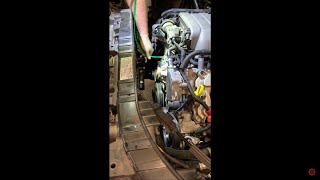
Shop the Parts Behind P2438
Below are the parts most often responsible for code P2438, ranked by how frequently each one is the actual culprit (per the diagnosis above). Tap any to see what we have for your vehicle.


The information in this article is provided for general reference and educational purposes only. Vehicle specifications, procedures, and part compatibility can vary by production date, trim level, and region. Always consult your vehicle's factory service manual and verify part numbers before purchasing or performing repairs. Safety-critical components such as airbags, seat belts, and braking systems should be installed by a qualified professional.
- 🧭 Diagnostic Flowchart
- 🎬 Helpful Videos
- 🛍️ Shop This Part
- What Does P2438 Mean?
- Can I Drive With P2438?
- Common Causes
- Symptoms
- Common Fixes & Costs
- Used vs. New Parts: Buying Guide
- What Happens If You Wait — Timeline
- Cost of Not Fixing It
- Diagnosis Steps
- When This Code Triggers (Freeze-Frame Conditions)
- Related Codes
- Climate & Environmental Factors
- How to Talk to a Mechanic About This Code
- Where to Take It: Dealer vs Independent vs Chain
- When to Walk Away From the Repair
- What Scan Tool You Need for This Code
- How to Clear the Code After You Fix It
- Will This Fail Emissions / State Inspection?
- Most Commonly Affected Vehicles
- Manufacturer-Specific Notes
- Real Owner Stories
- 2008 Toyota Tundra with P2440, then P2438 after repair attempt
- 2010 Toyota Tundra 4.6L with multiple SAI codes and limp mode
- 2010 Chevy Equinox with P2433 and P2438
- 2007 Toyota Tundra 4.7L with 138k miles and multiple lights
- How to Prevent This Code From Triggering
- Frequently Asked Questions
- What are the most common misdiagnosis mistakes for P2438?
- Why did my P2438 code return after replacing the air pump?
- What if the air pump runs continuously, even with the car off?
- Can I just clear the P2438 code?
- What does 'Bank 2' mean?
- Is this an expensive repair?
- Will a P2438 code cause me to fail an emissions test?
- What is a secondary air injection bypass kit?
- My car has two air pumps. Does P2438 tell me which one is bad?
- Can a bad battery cause a P2438 code?
- Key Takeaways
- 🎟️ Get 5% Off