

P2441 on 2005-2007 Toyota Sequoia: Air Injection Valve Stuck Closed Causes and Fixes
P2441 on a 2005-2007 Sequoia almost always means the Secondary Air Injection Switching Valve for Bank 1 is seized due to moisture. This is a very common and difficult repair, as the valve is under the intake manifold. Expect a high repair cost, often over $1,500 at a shop, due to labor. Many owners opt for an aftermarket electronic bypass kit as a permanent, cheaper alternative.
- P2441 on your Sequoia is caused by a stuck Secondary Air Injection valve, a very common failure for this engine.
- The root cause is moisture from the air pump, so a complete, long-term repair requires replacing the pump and both switching valves (Bank 1 and Bank 2).
- This is a very labor-intensive and expensive repair ($1500+) because the components are buried under the engine's intake manifold.
- Due to the high difficulty, this repair is not recommended for novice DIY mechanics.
- If you live in an area without emissions testing, an aftermarket bypass kit is a much cheaper, though not legally compliant, alternative to the full mechanical repair.
What's Unique About the 2005-2007 Toyota SEQUOIA
This is a notoriously common and frustrating problem on Toyota's 4.7L (2UZ-FE) V8 engine from this era, affecting not just the Sequoia but also the Tundra, 4Runner, Land Cruiser, and Lexus GX470/LX470. A design flaw allows the air pump's foam filter to degrade and ingest moisture, which can be exacerbated by changes in weather and condensation. This water is then forced through the system, corroding the metal air switching valves located under the intake manifold and causing them to seize. Toyota acknowledged this widespread issue with Technical Service Bulletin T-SB-0230-12 Rev1, but the associated warranty extensions have long since expired for these model years.
Diagnostic Flowchart
Tap your situation to follow the diagnostic path that matches what you're seeing on this vehicle.
Symptoms You May Notice
- Check Engine Light is on
- VSC and TRAC lights are on
- Vehicle may enter 'limp mode' (reduced power)
- Noise from the air injection pump at startup (can sound like a vacuum cleaner or be a grinding/sloshing noise)
- Vehicle will fail emissions testing
- Replacing only the Bank 1 valve when the Bank 2 valve and air pump are also compromised. The failure is systemic, and replacing only the one failed part often leads to the other failing shortly after.
- Replacing an oxygen sensor. While the SAIS is an emissions system, this specific code points directly to the air injection valve's mechanical function, not the O2 sensor readings.
Most Likely Causes
- Seized/Stuck Air Switching Valve (Bank 1) 🔴 High Probability Moisture ingested by the air pump corrodes the internal metal components of the valve, causing it to seize. This is a well-documented design flaw on the 2UZ-FE engine, sometimes triggered by condensation during weather changes.
How to confirm: A mechanic can use a bi-directional scan tool (like Toyota Techstream) to command the valve to open. If the system's pressure sensor does not detect an exhaust pulse, the valve is confirmed stuck. Physical confirmation requires removing the intake manifold to access the valve and test its mechanical movement with a vacuum pump.
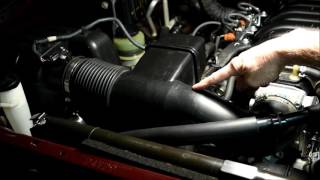
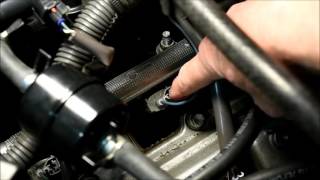
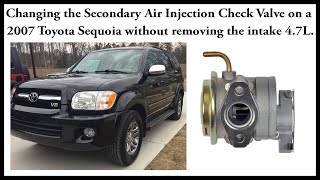
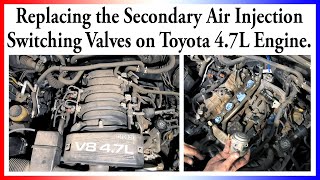
Typical fix: Replace the Air Switching Valve for Bank 1. 🎬 See how to replace the air injection valves on the 4.7L. It is highly recommended to replace the Bank 2 valve, the air pump, and all associated gaskets at the same time to prevent a repeat failure, as the entire system is contaminated.
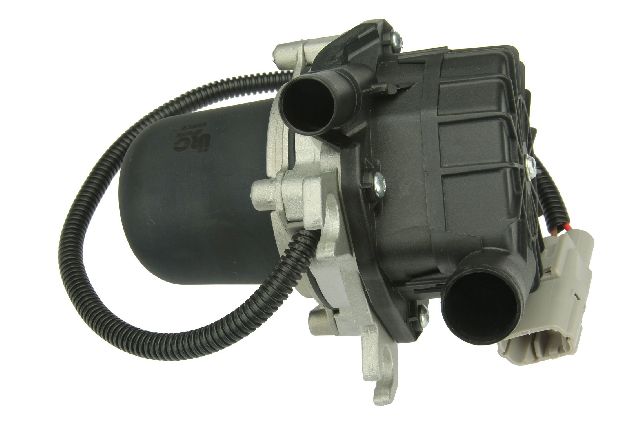
Est. part cost: $250-$450 for one valve (OEM) - Failed Air Injection Pump 🟡 Medium Probability → Shop Secondary Air Injection Pump The pump's foam filter can degrade or the unit can suck in water from the fender well, sending debris and moisture downstream to the switching valves, causing them to fail. The pump motor itself can also fail from this moisture, causing code P2445.
How to confirm: During a system self-test (commanded by a scan tool or at cold start), the pump should be audible for 30-90 seconds. If it doesn't run, or makes a loud grinding/watery sound, it has likely failed. Check for power and ground at the pump's connector.
Typical fix: Replace the Secondary Air Injection Pump assembly. This is almost always done in conjunction with replacing the switching valves to address the root cause of the failure.
Est. part cost: $450-$650 (OEM) - Failed Air Injection Control Solenoid (VSV) ⚪ Low Probability These small, accessible solenoids control the vacuum that actuates the main switching valves. While less common than the valves themselves failing, they can still malfunction electrically or become clogged.
How to confirm: Using a scan tool, command the solenoid on and off. You should hear a click. Verify that vacuum is passing through the solenoid when it is energized.
Typical fix: Replace the small vacuum switching valve (solenoid) for Bank 1. These are much easier to access and cheaper than the main valves.
Est. part cost: $50-$100
Rare But Worth Checking
- Clogged or Leaking Vacuum Lines: The rubber hoses that supply vacuum to the switching valves can crack or become disconnected, preventing the valves from opening even if they are mechanically sound.
- Wiring or Connector Issues: Damage to the wiring for the control solenoids or the air pump can prevent the system from operating correctly. Pins on connectors can also corrode from moisture.
- Failed Air Pressure Sensor: The sensor itself can fail, leading the ECU to believe the valve is stuck closed when it is actually working. This is less common than a mechanical valve failure.
Diagnosis Steps
- Connect an OBD-II scanner and confirm P2441 and any other related codes (P2440, P2442, P2445, etc.) are present.
- On a cold start, listen for the air pump (located in the front passenger fender area) to turn on. It should run for 30-90 seconds. No sound, or a loud grinding/watery sound, indicates a pump failure.
- If the pump runs, the issue is likely with the valves. Use a bi-directional scan tool (like Toyota Techstream) to perform an 'Active Test' of the air injection system.
- Command the Bank 1 switching valve to open. The ECU monitors an air pressure sensor; if no change in exhaust pulsation is detected, it confirms the valve did not open.
- To definitively confirm the main valve is at fault, the intake manifold must be removed for access.
- Once accessed, visually inspect the valves and air passages for moisture, corrosion, or carbon buildup.
- Apply vacuum directly to the Bank 1 switching valve's diaphragm port. If it does not open or fails to hold vacuum, it is faulty and must be replaced.
- While the system is disassembled, inspect the air pump and Bank 2 switching valve for signs of moisture or debris. It is best practice to replace the pump and both valves as a set.
Parts You'll Likely Need
- Air Switching Valve Assembly (Bank 1)
(OEM #25710-50022)— This is the valve that gets stuck closed, directly causing the P2441 code. It is the primary point of failure. This part number supersedes 25710-50020 and 25710-50021.
Trusted brands: Toyota (Genuine)
OEM price range: $250-$450
Aftermarket price range: $150-$300 - Air Switching Valve Assembly (Bank 2)
(OEM #25720-50020)— Since the root cause is systemic (moisture from the pump), the Bank 2 valve is highly likely to fail soon after Bank 1. It is strongly recommended to replace both at the same time.
Trusted brands: Toyota (Genuine)
OEM price range: $350-$500
Aftermarket price range: $150-$300 - Secondary Air Injection Pump
(OEM #17610-0C010)— This pump is the source of the moisture and debris that destroys the valves. Not replacing it makes a repeat failure highly likely.
Trusted brands: Toyota (Genuine), Dorman
OEM price range: $450-$650
Aftermarket price range: $200-$400 - Intake Manifold Gasket Set
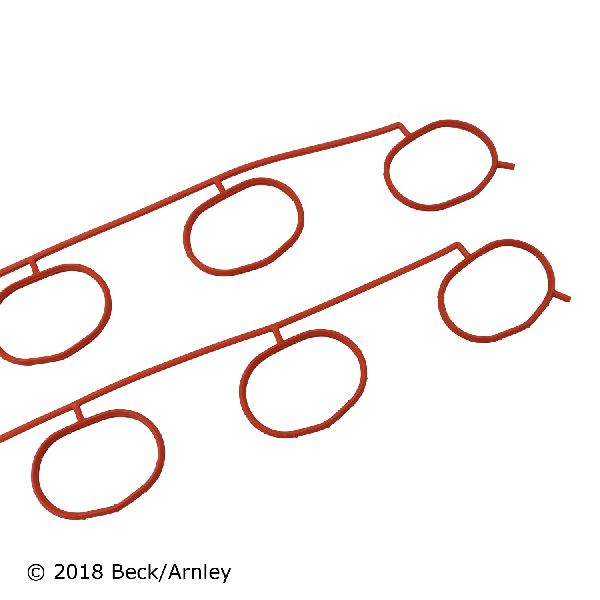
(OEM #17171-50030)— The intake manifold must be removed to access the SAI components. The gaskets are single-use and must be replaced.
Trusted brands: Fel-Pro, Toyota (Genuine)
OEM price range: $50-$80
Aftermarket price range: $30-$50 - SAIS Bypass Kit
(OEM #Hewitt-Tech Gen 1 (V36H) or Gen 2 (3-Valve))— A popular, cost-effective alternative to a full mechanical repair. It electronically simulates the SAIS for the ECU, clearing codes and preventing limp mode. Requires installing block-off plates. Intended for off-road use only. 🎬 Watch: How to install the Hewitt Technologies SAIS bypass kit.
Trusted brands: Hewitt Technologies
OEM price range: N/A
Aftermarket price range: $350-$450
Related Codes That Often Appear With This One
- P2440 — Indicates the Bank 1 valve is stuck OPEN. A valve can fail by sticking in either position. A stuck open valve is more severe as it can allow hot exhaust to flow backward and destroy the air pump.
- P2442 — Indicates the Bank 2 (passenger side) valve is stuck CLOSED. It's very common for both valves to fail around the same time due to the same root cause (moisture).
- P2443 — Indicates the Bank 2 valve is stuck OPEN. Often seen with P2440 when both valves fail in the open position.
- P2445 — Indicates the air pump is stuck OFF. This often happens when the pump motor fails due to water intrusion or an electrical fault.
- P0418 — Points to a circuit fault in the air pump relay or driver module, which can prevent the pump from running.
- C1201 — This is an Engine Control System Malfunction code that often accompanies the system going into 'limp mode', disabling Vehicle Stability Control (VSC) and Traction Control (TRAC).
Technical Service Bulletins (TSBs) & Recalls
- T-SB-0230-12 Rev1: Acknowledges the MIL 'ON' condition for P2441 and a host of related SAIS codes on 2005-2007 Sequoias and other 2UZ-FE powered vehicles. It attributes the cause to debris from the air pump contaminating the system and provides diagnostic procedures.
Platform-Specific Known Issues
- Toyota issued Technical Service Bulletin T-SB-0230-12 Rev1 which details the diagnosis and repair for this exact issue across several vehicles with the 2UZ-FE engine, including the 2005-2007 Sequoia. It confirms the cause is debris/moisture from the pump.
- A warranty enhancement program (ZLC) was offered by Toyota to cover this repair, but it has expired for vehicles in this year range based on time and mileage.
- Due to the high cost of repair (dealers quoting up to $3,500), aftermarket bypass kits (e.g., from Hewitt-Tech) are a very popular alternative for owners, especially in areas without stringent visual emissions testing. These kits electronically trick the ECU into thinking the system is working correctly while blocking off the valves.
Mechanic-Grade Diagnostic Values
- Air Switching Valve (ASV) resistance — expected: 4.5 to 5.5 Ω at 20°C (68°F) (value from 2TR-FE engine, but provides a valid reference). Failure: Resistance outside this range indicates a faulty valve coil.
- Vacuum Switching Valve (VSV) resistance — expected: 23 to 26 Ω at 20°C (68°F) (value from 2GR-FE engine purge VSV, provides a valid reference). Failure: Resistance outside this range, or continuity to the valve body, indicates a faulty VSV.
- Air Pump Assembly resistance — expected: 0.4 to 1.0 Ω at 20°C (68°F) (value from 2TR-FE engine, but provides a valid reference). Failure: Resistance outside this range indicates a faulty pump motor.
Hidden / Shadow Codes Worth Checking
- Pending DTC / Mode 6 Data: After a repair, before the main DTC is cleared, a 'Pending DTC' may be set. Technicians can also check 'All Readiness' or 'Mode 6' data to confirm the AIR monitor has run successfully and passed its self-test, confirming the fix without waiting for multiple drive cycles. (see via Toyota Techstream or advanced OBD-II scanner with Mode 6 capabilities.)
Scan Tool Commands That Help
- Toyota Techstream: Utility -> Air Injection Check -> Manual Mode — This function allows a technician to individually command the air pump and each switching valve (ASV1, ASV2) on and off while monitoring the system's pressure sensor. This is the definitive way to test if the valve is physically stuck without first removing the intake manifold. If the valve is commanded open and no exhaust pulsation is detected by the pressure sensor, the valve is confirmed to be stuck closed.
- Toyota Techstream: Utility -> Air Injection Check -> Automatic Mode — Used to run a complete system self-test after a repair to check for pending codes and confirm the system is functioning normally before clearing permanent DTCs.
Wiring & Ground Locations
- Air Injection Control Driver — On the right (passenger side) fender near the firewall.. This module, not a simple relay, controls the air pumps and valves. Failures in this driver or its wiring can mimic a failed pump or valve, causing codes like P0418 and preventing the system from activating.
- Main Engine Bay Fuse/Relay Box — In the engine bay, on the right (passenger) side near the battery.. Contains the primary fuses and relays that provide power to the SAIS components, including the Air Injection Control Driver. A blown fuse here will disable the entire system.
- Various Ground Points — Key electrical grounds for the engine management system are located at the right kick panel and on the left side of the engine compartment.. A poor ground connection for the ECU or SAIS components can cause erratic behavior and false codes.
Real Owner Repair Stories
- Tundra forum user (2011 Tundra 5.7L) — P2441 code persisted after replacing both air pumps and the Bank 1 switching valve. The pumps would not turn on during a cold start.
❌ Tried (didn't work) Replacing Bank 1 switching valve, Replacing both air injection pumps
✅ What actually fixed it The user discovered one of their new, aftermarket air pumps was wired backward from the factory, causing it to suck air instead of blow. After replacing the faulty aftermarket pump with an OEM Toyota pump, the system functioned correctly. - Tacoma World forum user (2008 Tacoma) — P2441 code
❌ Tried (didn't work) Initial diagnosis pointed towards complex valve replacement.
✅ What actually fixed it The user found that a single bolt on the air pump assembly had come loose. Tightening the bolt resolved the code. - IH8MUD.com forum user (Toyota Land Cruiser with 265k miles) — Check engine light, VSC lights, and limp mode on every cold start with a 'Secondary Air Injection Switching valve stuck on' code.
❌ Tried (didn't work) Clearing the code would only provide a temporary fix until the next cold start.
✅ What actually fixed it Due to the high mileage and high cost of OEM parts ($600+ for valve, $600 for pump), the owner opted to install a Hewitt-Tech Gen 2 bypass kit, which permanently resolved the codes and limp mode.
OEM Part Supersession History
25710-50020, 25710-50021→25710-50022— Part revision and improvement by the manufacturer.89580-34010, 89580-34011→89580-34012— Part revision for the Air Injection Control Driver, as noted in TSB-0230-12 Rev1.
Helpful Videos
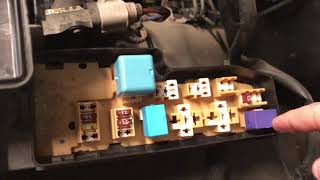
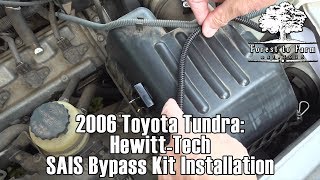
We Have This Part in Stock
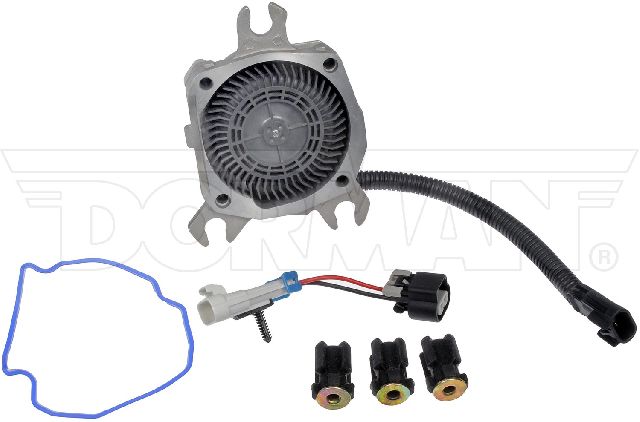

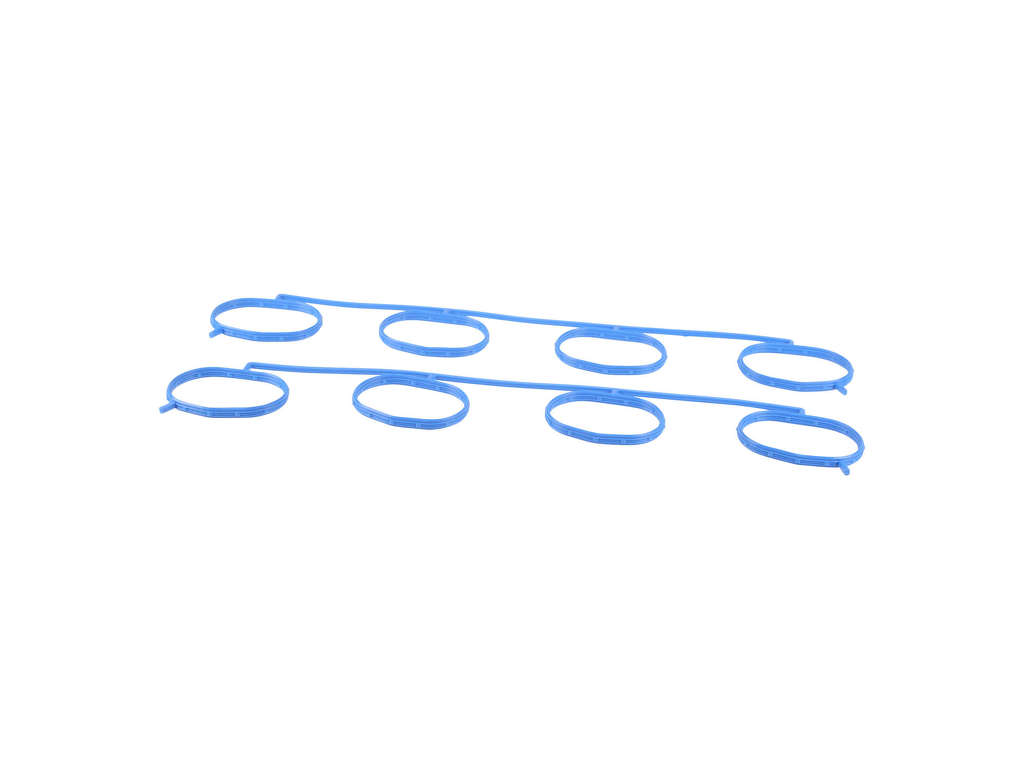

The information in this article is provided for general reference and educational purposes only. Vehicle specifications, procedures, and part compatibility can vary by production date, trim level, and region. Always consult your vehicle's factory service manual and verify part numbers before purchasing or performing repairs. Safety-critical components such as airbags, seat belts, and braking systems should be installed by a qualified professional.
- Toyota SEQUOIA:
- 🧭 Diagnostic Flowchart
- 🎬 Helpful Videos
- 🛍️ Shop This Part
- What's Unique About the 2005-2007 Toyota SEQUOIA
- Symptoms You May Notice
- Most Likely Causes
- Rare But Worth Checking
- Diagnosis Steps
- Parts You'll Likely Need
- Related Codes That Often Appear With This One
- Technical Service Bulletins (TSBs) & Recalls
- Platform-Specific Known Issues
- Mechanic-Grade Diagnostic Values
- Hidden / Shadow Codes Worth Checking
- Scan Tool Commands That Help
- Wiring & Ground Locations
- Real Owner Repair Stories
- OEM Part Supersession History
- 🎟️ Get 5% Off