

OBD-II Code P2443: Secondary Air Injection System Switching Valve Stuck Closed (Bank 2)
The Ultimate Guide for P2443: What It Means, Why It Happens, and How to Fix It for Good
- Code P2443 indicates the Bank 2 secondary air injection switching valve is stuck closed, preventing fresh air from reaching the exhaust on cold starts.
- Moisture intrusion and internal corrosion cause 80% of P2443 failures, permanently seizing the switching valve shut.
- Expect repair bills between $1,500 and $3,000 on 2007-2014 Toyota V8s and 2007-2015 turbocharged Subarus due to labor-intensive valve locations.
- Driving with P2443 triggers an automatic emissions failure and forces certain Toyota and Lexus models into a severe power-reducing limp mode.
- Always test the 50A AIR fuse and pump relay before replacing a $300 valve, as a blown $5 fuse perfectly mimics a seized valve.
What Does P2443 Mean?
The Powertrain Control Module (PCM) detected a fault in the Secondary Air Injection (SAI) system. This system pumps fresh air into the exhaust manifold for 30-90 seconds on cold starts to heat the catalytic converter faster. Code P2443 means the Bank 2 switching valve is stuck closed and refuses to open when commanded.
Technical definition: The PCM commanded the Bank 2 SAI switching valve to open, but the integrated pressure sensor failed to detect the expected exhaust pressure pulsation. The PCM cross-verifies this by monitoring downstream oxygen sensors for a lean condition; if absent, it flags the valve as non-responsive and stores P2443.
Can I Drive With P2443?
Yes, But With Caution. You can drive with a P2443 code, as it primarily affects cold-start emissions. However, the failure delays catalytic converter warm-up, risking premature converter failure that costs $800 to $3,000 to fix. On certain Toyota, Lexus, and Subaru models, this code triggers a 'limp mode' that severely restricts engine power and acceleration.
Common Causes
- Failed or seized air switching valve (Very Common) — Moisture from the air intake or exhaust gas reversion corrodes the valve's internal components, permanently seizing it shut.
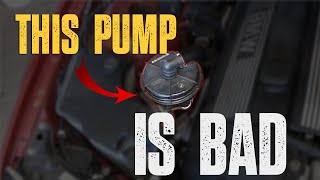
- Faulty Secondary Air Injection Pump (Common) — Moisture ingress destroys the pump motor or bearings. If the pump fails, no air pressure reaches the valve, triggering the code.
- Corroded wiring or bad electrical connection (Common) — Heat, moisture, and vibration corrode connectors or break wires, blocking the electrical signal to the valve.
- Faulty Air Pressure Sensor (Common) — If the integrated pressure sensor fails, the PCM incorrectly assumes the valve is stuck closed because it cannot read the airflow.
- Blown fuse or faulty relay (Less Common) — A blown main fuse (often 40A/50A) or failed relay disables the entire system. A seized pump motor often blows this fuse.
- Clogged or disconnected vacuum hoses (Less Common) — On older vacuum-actuated systems, cracked or clogged lines prevent the valve from opening.
- Clogged Secondary Air Passages (Less Common) — Carbon buildup completely blocks cylinder head air passages, a common issue on higher-mileage BMWs.
- Faulty Powertrain Control Module (PCM) (Rare) — Rarely, the PCM's internal valve driver circuit fails. Test all other components first.
Symptoms
- Check Engine Light is on — The Malfunction Indicator Lamp (MIL) illuminates steadily.
- Failed emissions test — The vehicle automatically fails OBD-II smog checks.
- Engine Hesitation or Reduced Power ('Limp Mode') — Toyota and Lexus models enter 'limp mode,' drastically reducing acceleration to protect the engine.
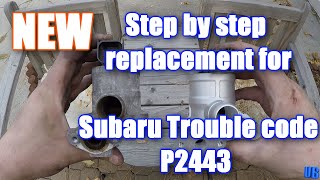
- Flashing Cruise Control Light — Subaru models disable cruise control and flash the cruise indicator light. 🎬 Watch: Diagnosing P2443 on a Subaru
- Slightly Rough Idle on Cold Starts — The engine idles roughly for the first 60 seconds after a cold start.
- Loud noise from air pump — A loud vacuum-cleaner noise occurs on cold starts if the pump forces air against the stuck valve.
Diagnostic Flowchart
Tap your situation to follow the diagnostic path that matches what you're seeing on this code.
Common Fixes & Costs
- Replace Secondary Air Injection Switching Valve — Parts: $150-$500, Labor: $200-$800, ~2.5 hr book time (Intermediate)
- Replace Secondary Air Injection Pump(s) — Parts: $200-$800, Labor: $150-$400, ~1.5 hr book time (Intermediate)
- Replace SAI Pump and Both Switching Valves — Parts: $500-$1500, Labor: $400-$1000, ~4 hr book time (Advanced)
- Repair Wiring or Connectors — Parts: $20-$60, Labor: $100-$250, ~1.5 hr book time (Intermediate)
- Install Aftermarket SAI Bypass/Delete Kit — Parts: $150-$450, Labor: $100-$300, ~1 hr book time (DIY)
DIY vs Professional
- Replace Secondary Air Injection Switching Valve — Beginner: Maybe. Depends heavily on the vehicle.
Tools: Basic socket set, ratchets, extensions, pliers, flashlight. - Replace Secondary Air Injection Pump — Beginner: Yes, in most cases.
Tools: Basic socket set, pliers. - Install Aftermarket SAI Bypass/Delete Kit — Beginner: Yes.
Tools: Basic hand tools, zip ties.
Used vs. New Parts: Buying Guide
When a used part is worth it: Used OEM air pumps from low-mileage donors (<60k miles) are viable budget alternatives. Never buy used switching valves due to the high risk of internal corrosion.
Donor-vehicle mileage cap: roughly under 60000 miles for the part to have meaningful remaining life.
Donor quality checklist:
- Verify the part number matches exactly.
- Avoid parts from vehicles in the rust belt or high-humidity areas.
- Inspect for external corrosion or damage to connectors.
Decision logic:
- If The part is the air switching valve. → Buy new OEM or quality aftermarket (Dorman). Used valves carry a massive risk of internal corrosion.
- If The part is the air pump and the vehicle is high-mileage. → A used OEM pump from a low-mileage donor is a viable, budget-friendly option.
- If The vehicle is a Toyota/Lexus known for this issue. → Buy the updated OEM parts kit. Original designs are flawed; a used part will have the same flaw.
Warranty tradeoff: Used parts typically come with a 30-90 day warranty covering the part only. A used part failure means paying for labor twice.
Worst-case if a used part fails: 400-800. This represents the cost of repeat labor to remove the failed used part.
What Happens If You Wait — Timeline
- 0-1 month: CEL illuminates. Subaru cruise control disables. Vehicle fails emissions testing. (MPG impact: 0-2%% · Added cost: $0)
- 1-6 months: Toyota/Lexus models enter limp mode. Cold starts idle roughly. Catalytic converter experiences thermal stress. (MPG impact: 2-5%% · Added cost: $0-$50 in wasted fuel)
- 6-18 months: Repeated thermal stress causes micro-fractures in the catalytic converter substrate, risking a P0420 code. (MPG impact: 3-8%% · Added cost: $300-900 (Risk of premature catalytic converter wear))
- 18+ months: High probability of complete catalytic converter failure. Repair costs escalate from $500 to over $2,500. (MPG impact: 5-15%% · Added cost: $1200-3500+)
Cost of Not Fixing It
- Immediate: Automatic failure of any OBD-II based emissions or smog inspection. (Added cost: 0)
- 1-12 months: Toyota, Lexus, and Subaru models enter 'limp mode,' severely reducing engine power. (Added cost: 0)
- 6+ months: Delayed catalytic converter warm-up leads to premature failure due to thermal shock. (Added cost: 1200-3500)
Diagnosis Steps
- Scan for Codes & Review Freeze Frame Data
Use an OBD-II scanner to confirm P2443. Check for related codes (P2441, P0418). Review freeze frame data to see engine parameters at the exact moment the fault triggered.
Tools: OBD-II Scanner (Beginner) - Check Fuses and Relays
Inspect the main AIR system fuse (usually 40A or 50A). Swap the AIR pump relay with a non-essential relay (like the horn) to instantly rule out a relay failure.
Tools: Owner's Manual, Fuse Puller (Beginner) - Visual Inspection of the SAI System
Inspect Bank 2 SAI hoses for cracks or kinks. Check valve and pump electrical connectors for green corrosion or melted pins.
Tools: Flashlight (Beginner) - Listen for Air Pump and Valve Actuation
Start a cold engine. The air pump should sound like a small vacuum for 30-90 seconds. Use a bidirectional scanner to command the Bank 2 valve on and off; listen for a distinct 'click'.
Tools: Bidirectional Scan Tool (Intermediate) - PRO TIP: Test the Valve Circuit
Unplug the Bank 2 valve. Use a multimeter to verify 12V on the power wire and continuity to ground on the control wire when commanded ON via scanner. If voltage exists but the valve doesn't click, the valve is dead.
Tools: Multimeter, Bidirectional Scan Tool (Advanced) - PRO TIP: Test Valve Coil Resistance
Measure resistance across the unplugged valve's pins. A healthy coil reads 10-40 Ohms. 'OL' means an open circuit; near zero means a short. Both require replacement.
Tools: Multimeter (Advanced) - ADVANCED: Test Pump Current Draw
Clamp an ammeter around the pump's power wire and activate it. A healthy pump draws 20-30 amps. A draw over 40A indicates a seized motor; 0A indicates an open circuit or bad relay.
Tools: Inductive Amp Clamp, Bidirectional Scan Tool (Advanced) - Check for System Blockages
Disconnect hoses between the pump, valve, and manifold. Start the engine to confirm strong pump airflow. Inspect valve ports for heavy carbon obstruction.
Tools: Basic Hand Tools (Advanced) - PRO TIP: Test the Pressure Sensor Signal
Monitor live pressure sensor voltage on a scanner. It should sit near 1.0V and spike when the system activates. Static voltage indicates a dead sensor.
Tools: Bidirectional Scan Tool (Pro Only)
When This Code Triggers (Freeze-Frame Conditions)
- Engine Coolant Temp: 40-80°F (Cold start (engine off for 7+ hours))
- Time Since Engine Start: 5-90 seconds (During initial warm-up phase)
- Engine RPM: 1000-2000 RPM (High idle during warm-up)
- SAI System Status: Active/On (PCM is commanding the system to operate)
Related Codes
- P2441 — Switching Valve Stuck Closed for Bank 1. Seeing P2441 and P2443 together strongly suggests a systemic issue like a failed air pump or blown fuse.
- P2442 — Switching Valve Stuck Open for Bank 2. A stuck-open valve causes exhaust backfiring and damages the air pump.
- P0418 — Electrical fault in the air pump's control circuit. If present with P2443, the primary problem is the pump relay, wiring, or motor.
- P0492 — Generic code for Insufficient Flow in Bank 2. P2443 is a specific cause for P0492.
Climate & Environmental Factors
- Cold Temperatures: Moisture within the switching valve freezes, causing it to stick shut temporarily or permanently.
- High Humidity: Humid air introduces moisture into the SAI system, causing internal corrosion of the switching valves and pump motor.
How to Talk to a Mechanic About This Code
Say this: "I have code P2443. Please test the AIR pump fuse and relay first. Then use a bidirectional scanner to command the valve and pump to verify operation before replacing parts."
This directs the technician to perform a logical, step-by-step diagnosis instead of immediately replacing the most expensive part.
Avoid saying:
- 'My check engine light is on, can you look at it?'
- 'My car says P2443, just replace the part.'
- 'Just fix whatever you think is wrong.'
Questions to ask before authorizing the repair:
- Did you confirm the air pump runs when commanded by the scan tool?
- Did the switching valve fail to 'click' when you activated it with the scan tool?
- If the valve didn't activate, did you confirm it's receiving voltage and ground at its electrical connector?
- What is the warranty on the recommended parts and the labor for this repair?
Where to Take It: Dealer vs Independent vs Chain
- Dealer:
Recommended only if the vehicle is under warranty or has a known, complex manufacturer-specific failure pattern.
Best for: Vehicles still under a factory or extended emissions warranty., Complex, manufacturer-specific issues like carbon cleaning on BMWs or known TSBs on Toyotas.
Downsides: Highest labor rates and parts costs., May recommend replacing the entire system when only one component has failed. (Typical cost: +50% vs. baseline) - Independent Shop:
Best fit for most out-of-warranty P2443 repairs. An experienced independent technician can accurately diagnose the electrical and mechanical components effectively.
Best for: Out-of-warranty vehicles where cost is a major factor., Vehicles with common, well-documented P2443 issues., Finding a shop specializing in your car's brand.
Downsides: Quality and diagnostic capabilities vary widely., May have less experience with very new models. (Typical cost: +0% vs. baseline) - Chain Shop:
AVOID for P2443 diagnosis and repair. The risk of misdiagnosis is very high.
Best for: Simple, routine maintenance like oil changes and brake jobs.
Downsides: Technician skill varies dramatically., Often lack the advanced diagnostic tools for complex emissions system repairs., Business model pressures technicians to upsell unnecessary services. (Typical cost: -10% vs. baseline)
When to Walk Away From the Repair
If the estimated repair cost exceeds 40-50% of the car's private-party value, consider selling or trading in the vehicle instead of repairing it.
- Car worth $7000, fix is $2200: Fix it. The repair cost is ~31% of the vehicle's value, which is below the typical threshold.
- Car worth $4000, fix is $2100: Walk away. The repair cost is over 50% of the car's value.
What Scan Tool You Need for This Code
Minimum: A scanner with bidirectional control (Active Test) is highly recommended. This allows you to command the air pump and switching valves on and off directly.
A basic $20 code reader only shows the P2443 code. It cannot perform active tests, leaving you guessing whether the part is bad or just not getting the signal.
Budget: TOPDON TopScan Pro / KINGBOLEN Ediag Elite (~$99) — Bluetooth dongle with bidirectional control to test the SAI pump and valves.
Mid-range: Foxwell NT510 Elite / XTool A30M (~$150-250) — Handheld unit with robust active tests for the SAI system.
Professional: Autel MaxiCOM MK808S / MK808BT Pro (~$400-550) — OE-level bidirectional control and fast processing.
Rent vs buy: Auto parts stores offer free loaner tools, but these are basic code readers lacking bidirectional control. Buying an affordable bidirectional scanner is a worthwhile investment.
How to Clear the Code After You Fix It
- Use an OBD-II scan tool to clear the diagnostic trouble codes. Disconnecting the battery is not preferred.
- Perform a complete drive cycle to allow the vehicle's readiness monitors to run.
Drive cycle (~20 minutes): Cold start (engine off 8+ hours). Idle 3 minutes. Drive mixed city/highway for 20 minutes. Cool down completely.
Readiness monitors affected: Secondary Air System, Catalyst, O2 Sensor
Before emissions retest: drive at least 100 miles to fully set monitors.
Watch out for:
- Clearing the code without performing a drive cycle results in a 'Not Ready' status, causing an automatic emissions failure.
- The code returns immediately on the next cold start if the fault is not repaired.
- EVAP monitors require specific fuel levels (1/4 to 3/4 tank) to run.
Will This Fail Emissions / State Inspection?
Yes — this code typically fails an OBD-II emissions inspection.
- California: Automatic failure. All readiness monitors must be 'Ready' (one allowed for pre-2001).
- New York: Immediate failure. 2001+ vehicles allowed one incomplete monitor after clearing.
- Texas: Automatic failure in testing counties. 2001+ vehicles pass with one 'Not Ready' monitor.
Most Commonly Affected Vehicles
- Toyota Tundra (2007-2014) — Flawed air pump intake ingests water, destroying pumps and valves. The fix requires replacing both pumps and both valves.
- Toyota Sequoia (2007-2014) — Shares the Tundra's flawed V8 SAI system. Repair costs exceed $2,000 at a dealership.
- Lexus GX 460 / LX 570 (2008-2015) — Luxury counterparts suffer the exact same water intrusion failures, frequently triggering limp mode.
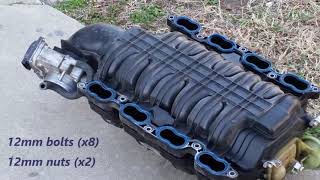
- Subaru Impreza WRX/STI, Forester XT, Legacy GT (2007-2015) — Valves seize from condensation. Located under the intake manifold, driving labor costs over $1,000.
- Toyota 4Runner (2010-2022) — Valves frequently freeze shut in cold, humid weather.
- Chevrolet / GMC Silverado 1500 / Sierra 1500 (2009-2019) — Engine harness chafing causes electrical shorts triggering this code (TSB 21-NA-149).
- BMW Various (335i, 535i, X5) (2007-2015) — Carbon buildup clogs the secondary air ports in the cylinder head, requiring walnut shell blasting to clean.
- Audi / Volkswagen Various (A4, GTI, Jetta) (2008-2016) — High failure rates of the SAI pump and combi-valves. A loud pump noise on startup is common.
Manufacturer-Specific Notes
- Toyota: A poorly designed air pump intake in the fender well ingests water. This moisture corrodes the air pumps and switching valves. Toyota issued Warranty Enhancement Program ZE6, but it has expired for most vehicles.
- Subaru: Switching valves seize from internal condensation. Due to their location under the intake manifold, replacement is expensive. Aftermarket block-off plates and ECU tunes are popular solutions.
- BMW: Direct injection engines bake oil vapor onto the intake ports, blocking the small secondary air injection ports. The official fix is 'walnut blasting' to abrasively clean the ports.
- General Motors (Chevrolet/GMC): On 2019+ trucks, the engine wiring harness chafes against the ECM bracket or shock tower. This causes shorts leading to various DTCs, including SAI faults.
Real Owner Stories
2013 Toyota Tacoma with P2441, P2443, and P2445
Check engine light came on at 101,000 miles. Dealer quoted $150 for a vague diagnostic.
What they tried:
- The dealer initially replaced the air injection switching valve, but the code returned.
- Upon a second visit, the shop discovered the actual problem was a loose fuse pin.
Outcome: After the loose fuse pin was corrected, the codes cleared. The initial part replacement was unnecessary.
Lesson: Always check fuses and relays first. A loose fuse pin perfectly mimics a $500 valve failure.
2011 Subaru WRX STI with multiple SAI codes
Started with a P2440 code. After replacing both valves, a new P0411 code appeared. After replacing the air pump, codes P2441 and P2443 appeared.
What they tried:
- Replaced both driver and passenger side switching valves.
- Tested and replaced the secondary air pump.
Outcome: The owner was left with new codes even after replacing all major components, suggesting a deeper electrical issue.
Lesson: Systematic diagnosis is key. When replacing parts creates new codes, suspect a shared power/ground circuit or main relay.
2008 Toyota Tundra 5.7L with recurring P2443
The check engine light and limp mode activated at 154,000 miles. The dealer quoted $2,100 for the repair.
What they tried:
- The owner replaced the pump and valves.
- Despite all major components being replaced, the P2443 code returned.
Outcome: Frustrated with recurring failures, the owner installed an aftermarket SAI bypass kit to clear the code and disable limp mode.
Lesson: For high-mileage vehicles outside warranty, a $450 bypass kit permanently resolves the limp mode and code, though it is not emissions-legal.
2016 Toyota 4Runner with P2443 in winter
The Check Engine Light appeared on a 5°F morning in New York.
What they tried:
- The owner cleared the code to see if it would return.
- Other owners reported the same issue in cold, humid weather.
Outcome: The issue was intermittent. Moisture inside the valve froze, causing it to stick temporarily.
Lesson: An isolated P2443 during a freeze may not require repair. Clear the code. If it returns in warm weather, the valve requires replacement.
How to Prevent This Code From Triggering
- Ensure Air Pump Intake is Clear and Dry (Every 15,000 miles or annually) — Keep the fender-well air intake clear of debris to prevent water ingestion, the #1 cause of pump and valve failure.
- Periodically Actuate the System with a Scan Tool (Annually) — Manually command the valves on/off during annual service to prevent them from seizing due to carbon or moisture.
- Inspect and Clean SAI System Hoses and Connections (Every 30,000 miles) — Check for brittle hoses and green corrosion on electrical pins to catch electrical faults early.
- Address Engine Misfires or Rich/Lean Conditions Immediately (As needed) — A lean condition causes the exhaust to run hotter than normal, potentially melting and seizing the valve.
Frequently Asked Questions
What is the most common misdiagnosis for P2443?
The most common mistake is immediately replacing the Bank 2 switching valve without testing the system. A faulty pressure sensor, a dead air pump, or a blown fuse triggers the exact same code. Always command the system on with a scanner to isolate the true failure point.
Can I just clean the valve instead of replacing it?
Cleaning a stuck valve rarely provides a permanent fix because the root cause is internal corrosion from moisture. Given the heavy labor required to access these valves on most engines, replacement is the only cost-effective long-term solution.
Are there bypass kits available for this system?
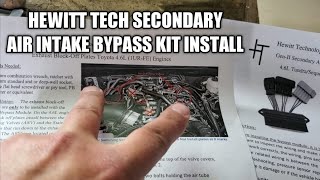
Yes, aftermarket companies sell electronic bypass kits that trick the PCM into reading a functional SAI system. While these clear the code and restore engine power, they are for off-road use only. Installing a bypass kit causes an automatic failure during visual emissions inspections.
How much does it really cost to fix P2443?
Repair costs range from $200 for a simple wiring fix to over $2,500 for valve replacements on Subarus and Toyotas. Dealerships often recommend replacing both pumps and valves simultaneously on V8 models to prevent comeback failures. Independent shops can sometimes isolate and replace just the single failed component.
What is 'Bank 2' and where is it?
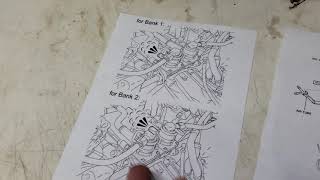
On V-configuration engines, 'Bank 1' contains cylinder #1, making 'Bank 2' the opposite side. For most Toyota, Lexus, and GM V8s, Bank 2 is the passenger side. On Subaru boxer engines, Bank 2 is the driver's side.
Will a P2443 code go away on its own?
A P2443 code rarely clears itself because it indicates a hard mechanical or electrical failure. While a frozen valve might temporarily thaw and work in warmer weather, the internal moisture guarantees it will fail again soon. Permanent resolution requires diagnosing and replacing the faulty component.
I live in a state with no emissions testing. Can I just ignore this code?
Ignoring the code masks new, potentially severe engine problems because the check engine light remains illuminated. Furthermore, Toyota and Lexus models often enter a restrictive limp mode that limits acceleration. Long-term, the lack of secondary air delays catalytic converter warm-up, risking a $2,000 converter failure.
Key Takeaways
- Code P2443 indicates the Bank 2 secondary air injection switching valve is stuck closed, preventing fresh air from reaching the exhaust on cold starts.
- Moisture intrusion and internal corrosion cause 80% of P2443 failures, permanently seizing the switching valve shut.
- Expect repair bills between $1,500 and $3,000 on 2007-2014 Toyota V8s and 2007-2015 turbocharged Subarus due to labor-intensive valve locations.
- Driving with P2443 triggers an automatic emissions failure and forces certain Toyota and Lexus models into a severe power-reducing limp mode.
- Always test the 50A AIR fuse and pump relay before replacing a $300 valve, as a blown $5 fuse perfectly mimics a seized valve.
Helpful Videos
Shop the Parts Behind P2443
Below are the parts most often responsible for code P2443, ranked by how frequently each one is the actual culprit (per the diagnosis above). Tap any to see what we have for your vehicle.



The information in this article is provided for general reference and educational purposes only. Vehicle specifications, procedures, and part compatibility can vary by production date, trim level, and region. Always consult your vehicle's factory service manual and verify part numbers before purchasing or performing repairs. Safety-critical components such as airbags, seat belts, and braking systems should be installed by a qualified professional.
- 🧭 Diagnostic Flowchart
- 🎬 Helpful Videos
- 🛍️ Shop This Part
- What Does P2443 Mean?
- Can I Drive With P2443?
- Common Causes
- Symptoms
- Common Fixes & Costs
- DIY vs Professional
- Used vs. New Parts: Buying Guide
- What Happens If You Wait — Timeline
- Cost of Not Fixing It
- Diagnosis Steps
- When This Code Triggers (Freeze-Frame Conditions)
- Related Codes
- Climate & Environmental Factors
- How to Talk to a Mechanic About This Code
- Where to Take It: Dealer vs Independent vs Chain
- When to Walk Away From the Repair
- What Scan Tool You Need for This Code
- How to Clear the Code After You Fix It
- Will This Fail Emissions / State Inspection?
- Most Commonly Affected Vehicles
- Manufacturer-Specific Notes
- Real Owner Stories
- 2013 Toyota Tacoma with P2441, P2443, and P2445
- 2011 Subaru WRX STI with multiple SAI codes
- 2008 Toyota Tundra 5.7L with recurring P2443
- 2016 Toyota 4Runner with P2443 in winter
- How to Prevent This Code From Triggering
- Frequently Asked Questions
- What is the most common misdiagnosis for P2443?
- Can I just clean the valve instead of replacing it?
- Are there bypass kits available for this system?
- How much does it really cost to fix P2443?
- What is 'Bank 2' and where is it?
- Will a P2443 code go away on its own?
- I live in a state with no emissions testing. Can I just ignore this code?
- Key Takeaways
- 🎟️ Get 5% Off