

OBD-II Code P2445: Secondary Air Injection System Pump Stuck Off (Bank 1)
What P2445 means, why it triggers, and how to fix it
- A failed secondary air injection (SAI) pump causes code P2445, most frequently triggered when the pump's internal foam filter disintegrates and seizes the motor.
- Always inspect the 50A or 70A SAI system fuse and swap the relay before buying a new pump, as a seized motor instantly blows the fuse.
- Repair costs range from $20 for a simple fuse replacement to over $2,500 for Toyota V8 engines that require removing the intake manifold to access the pump.
- Installing a $150-$400 aftermarket electronic bypass kit is a proven, cost-effective alternative to mechanical repairs for out-of-warranty Toyota and Lexus vehicles.
What Does P2445 Mean?
The Powertrain Control Module (PCM) commanded the Secondary Air Injection (SAI) pump for Bank 1 to turn on, but detected no airflow. This system pumps fresh air into the exhaust during a cold start to burn off unburned fuel and heat the catalytic converter, reducing emissions.
Technical definition: The SAE/ISO definition for P2445 is "Secondary Air Injection System Pump Stuck Off Bank 1." The PCM commands the secondary air injection pump to operate and monitors an air pressure sensor for feedback. If the pressure remains below the programmed threshold during the commanded ON window, the PCM sets code P2445.
Can I Drive With P2445?
Yes, But With Caution. You can drive, but your vehicle unexpectedly enters a 'limp mode' with severely reduced power, creating a safety hazard in traffic. Continuing to drive with this fault destroys the catalytic converters due to an overly rich exhaust mixture during cold starts, adding $800-$2,500 to the final repair bill.
Common Causes
- Failed Secondary Air Injection (SAI) Pump (Very Common) — This is the most frequent cause. The pump motor seizes when its internal foam filter disintegrates and jams the impeller, or when a faulty check valve allows hot, moist exhaust gas to flow backward and rust the internals.
- Blown Fuse or Faulty Relay (Common) — The SAI pump is a high-amperage electric motor requiring a dedicated fuse and relay. A seized pump instantly blows the fuse, or the relay contacts burn out, cutting power to the pump.
- Faulty Air Switching Valve(s) (Common) — These valves control airflow from the pump to the exhaust. They stick closed due to carbon buildup or debris from a deteriorating air pump filter, blocking airflow and mimicking a dead pump. 🎬 Watch: Common tricks and traps when troubleshooting air pump valves.
- Damaged Wiring or Connectors (Less Common) — Wires leading to the air pump, relay, or pressure sensor corrode, break, or disconnect, preventing the pump from receiving power or the PCM from receiving pressure feedback.
- Faulty Air Pressure Sensor (Less Common) — The PCM relies on a pressure sensor to verify pump operation. A faulty sensor fails to read the pressure change correctly, falsely triggering a P2445 code even when the pump functions perfectly.
- Clogged or Disconnected Hoses (Less Common) — The vacuum lines controlling the switching valves or the main air hoses crack, clog with debris, or disconnect, preventing the system from moving air into the exhaust.
- Faulty Air Injection Control Driver (Rare) — On specific Toyota models, a dedicated control driver module operates the pump and valves. This driver fails internally, requiring replacement if P2445 appears alongside code P0418. 🎬 Watch: Diagnosing limp mode and air driver issues on Lexus models.
- Faulty Powertrain Control Module (PCM) (Rare) — The vehicle's main computer fails or experiences a software glitch preventing it from commanding the SAI system. Consider this only after exhausting all hardware diagnostics.
Symptoms
- Check Engine Light is On — This is the first symptom the driver notices. The light illuminates immediately after the computer detects the fault during a cold start.
- Vehicle Enters 'Limp Mode' (VSC/TRAC Lights On) — Many vehicles, especially Toyota and Lexus models, drastically reduce engine power to prevent damage and simultaneously illuminate the VSC and TRAC warning lights. This feels like the vehicle has zero acceleration.
- Loud Vacuum Cleaner Noise on Cold Start (Then Disappears) — Before the pump fails completely, you hear a loud whirring or vacuum-like noise from the engine bay for 30-90 seconds after a cold start. Once the pump dies, this noise vanishes.
- Failed Emissions Test — The vehicle automatically fails an emissions inspection because the secondary air injection system is a mandatory emissions control component.
- Engine Hesitation or Stumbling — A malfunctioning SAI system causes the engine to stumble or hesitate during acceleration, particularly when the engine is cold.
Diagnostic Flowchart
Tap your situation to follow the diagnostic path that matches what you're seeing on this code.
Common Fixes & Costs
- Replace the Secondary Air Injection Pump
— Parts: $130-$700, Labor: $100-$2500, ~1.5 hr book time
(Intermediate)
: OEM
: OEM
: OEM - Replace the Air Switching Valve(s)
— Parts: $370-$420, Labor: $230-$534, ~2.5 hr book time
(Intermediate)
: OEM
: OEM
: OEM - Install Aftermarket Bypass Kit — Parts: $150-$400, Labor: $100-$300, ~1 hr book time (DIY)
- Replace Blown Fuse and/or Relay
— Parts: $15-$40, Labor: $0-$50, ~0.2 hr book time
(DIY)
: OEM - Repair Damaged Wiring or Hoses — Parts: $20-$130, Labor: $75-$210, ~1.5 hr book time (Intermediate)
Used vs. New Parts: Buying Guide
When a used part is worth it: A used OEM pump from a low-mileage wrecked vehicle is cost-effective for older cars where a new pump exceeds the vehicle's value, provided the pump is easily accessible.
Donor-vehicle mileage cap: roughly under 80000 miles for the part to have meaningful remaining life.
Donor quality checklist:
- Verify the donor vehicle was not scrapped due to engine or emissions failures.
- Inspect the used pump for water intrusion or corrosion before purchasing.
- Match the part number exactly to your original pump.
Decision logic:
- If The vehicle is under 10 years old and a new OEM or reputable aftermarket part is available. → Buy new to avoid premature failure and repeated labor costs.
- If The vehicle is older, budget is tight, and the pump is easily accessible (not under the intake manifold). → A used part is an acceptable risk.
- If The part has a high failure rate due to internal wear (like disintegrating foam filters). → Buy new. A used part likely contains the exact same defect.
Warranty tradeoff: Salvage yard parts include a 30-90 day warranty. New aftermarket parts offer 1-year to lifetime warranties. New OEM parts carry a 1-year warranty.
Worst-case if a used part fails: $300-$2500+ if a used pump fails, requiring a second round of massive labor costs on V8 engines.
What Happens If You Wait — Timeline
- 0-1 month: Check Engine Light illuminates, and the vehicle intermittently enters 'limp mode'. The code clears with a scanner but returns on the next cold start. (MPG impact: 0-2%% · Added cost: $0)
- 1-4 months: Limp mode becomes persistent, making driving unsafe. The vehicle automatically fails emissions inspections. The lack of oxygen during cold starts strains the catalytic converters. (MPG impact: 2-5%% · Added cost: $50-$150 in wasted fuel and failed emissions test fees.)
- 4-12 months: Sustained rich exhaust mixtures degrade the precious metals in the catalytic converter. Efficiency drops, and you notice a rotten egg smell from the exhaust. (MPG impact: 5-10%% · Added cost: $200-$500 as catalytic converter damage accelerates.)
- 12+ months: The catalytic converter clogs or fails completely. Engine power drops significantly, fuel economy plummets, and codes P0420/P0430 appear. Full replacement is required. (MPG impact: 10-25%% · Added cost: $900-$2500+ for catalytic converter replacement.)
Cost of Not Fixing It
- Immediate: Failed emissions test and vehicle enters a dangerous 'limp mode' with severely reduced power. (Added cost: $50-$200 for failed emissions tests and re-test fees.)
- 1-6 months: An overly rich exhaust mixture during cold starts damages the catalytic converters, reducing their efficiency. (Added cost: Negligible unless converter damage begins.)
- 6+ months: Continued exposure to rich exhaust destroys the catalytic converters, requiring full replacement. (Added cost: $800-$2500+ for catalytic converter replacement.)
Diagnosis Steps
- Check for Other Codes
Use an OBD-II scanner to check for related trouble codes. Codes like P0418 (pump circuit), P2440, or P2442 (switching valves) pinpoint the exact problem area. Review freeze-frame data to see engine conditions when the code set.
Tools: OBD-II Scanner (Beginner) - Listen for the Pump on a Cold Start
Have a helper start the engine when it is completely cold. Stand near the front of the vehicle and listen for a small vacuum cleaner sound running for 30-90 seconds. Hearing nothing confirms the pump lacks power or has failed.
Tools: None (Beginner) - Inspect the Fuse and Relay
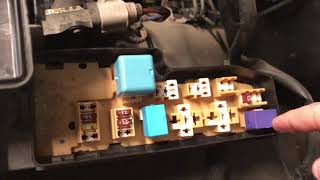
Locate the Secondary Air Injection fuse and relay in the fuse box. Visually inspect the fuse for a blown filament. Swap the relay with an identical one from a non-essential system (like the horn) to test if the pump activates.
Tools: Owner's Manual, Fuse Puller (Beginner) - Command the Pump On with a Scan Tool
Use a bi-directional scan tool to command the SAI pump ON manually. This tests the pump and circuit without waiting for a cold start. If the pump runs, the issue lies with the pressure sensor or PCM trigger conditions.
Tools: Bi-directional Scan Tool (Advanced) - Test for Power at the Pump
Check for battery voltage (12V ± 0.5V) at the air pump's electrical connector during a cold start or when commanded ON by a scan tool. Voltage present with no pump operation confirms a dead pump motor. No voltage indicates a wiring, relay, or PCM fault.
Tools: Multimeter (Intermediate) - Test Pump Ground Circuit
With the pump commanded ON, measure the voltage between the pump's positive terminal and the battery's positive terminal. A reading near 0V indicates a good ground. Alternatively, check resistance between the pump's ground connector and chassis ground; it must be under 0.1 ohm.
Tools: Multimeter (Advanced) - Verify Pressure Sensor Operation
With the key ON and engine OFF, read live data from the SAI pressure sensor. Command the pump ON and watch for a distinct pressure increase. If pressure remains static while the pump runs, the sensor or its wiring is faulty.
Tools: Bi-directional Scan Tool, Multimeter (Advanced) - Visually Inspect Hoses and Wiring
Inspect all plastic and rubber hoses connected to the air pump and switching valves for cracks, disconnections, or blockages. Check the wiring harness for corrosion, melting, or breaks.
Tools: Flashlight (Intermediate) - Test Relay Circuit Resistance
Remove the SAI relay and check the coil resistance. A typical reading is below 1.0 Ω. A higher reading indicates an open circuit within the relay, requiring replacement.
Tools: Multimeter, Owner's Manual (Advanced)
When This Code Triggers (Freeze-Frame Conditions)
- Engine State: Cold Start (The SAI system runs exclusively for a short period after a cold start to heat the catalytic converter.)
- Engine Coolant Temp: Below 140°F (60°C) (The system activates only when the engine is below operating temperature.)
- Time Since Start: 5-120 seconds (The ECU commands the pump ON shortly after startup and expects a pressure change within this window.)
- Ambient Air Temperature: Any, but failures peak in freezing weather (Moisture in the pump freezes, causing seizure. ECM glitches also falsely trigger the code in near-freezing temperatures.)
Related Codes
- P0418 — Indicates a problem in the electrical circuit for the air pump. P2445 means the pump isn't working; P0418 explains it is an electrical fault (bad relay, open wire, or seized motor). They frequently appear together.
- P2440 — Indicates the air switching valve for Bank 1 is stuck open. A pump failure (P2445) sends debris into the valve, causing it to stick open and trigger P2440 as a secondary code.
- P2441 — Indicates the air switching valve for Bank 1 is stuck closed. A closed valve blocks air from a perfectly good pump, leading the pressure sensor to detect no change and falsely trigger P2445.
- C1201 — A generic engine control system malfunction code. On Toyota/Lexus vehicles, it triggers as a direct result of P2445 putting the vehicle into 'limp mode' and disables the VSC/TRAC systems.
Climate & Environmental Factors
- Cold Weather / Freezing Temperatures: Moisture entering the air pump via a faulty check valve freezes, causing the pump motor to seize. Additionally, Toyota/Lexus V8s have an ECM glitch that falsely triggers P2445 in freezing temperatures.
- High Humidity: Humid environments introduce moisture into the system, accelerating the degradation of the pump's internal foam filter and increasing corrosion risk.
How to Talk to a Mechanic About This Code
Say this: "I have an OBD-II code P2445, indicating the secondary air injection pump is stuck off. Please start by checking the fuse, relay, and power to the pump before condemning the pump itself."
This directs the technician to perform basic, low-cost electrical checks first, preventing them from immediately quoting a $2,000 pump replacement.
Avoid saying:
- 'My check engine light is on, can you fix it?'
- 'The car is in limp mode, I don't know why.'
- 'Just do whatever it takes to get the light off.'
Questions to ask before authorizing the repair:
- Did you test for power and ground at the pump's connector while commanding it on?
- Was the fuse for the SAI system blown? If so, what caused it to blow?
- If the pump needs replacement, did you inspect the air switching valves for debris?
- What is the warranty on the parts and labor for this repair?
Where to Take It: Dealer vs Independent vs Chain
- Dealer:
Best for: Vehicles covered by an emissions warranty or manufacturer recall., Complex cases involving the Toyota/Lexus ECM 'cold weather glitch' requiring a software re-flash.
Downsides: Highest labor rates, often double an independent shop., Dealers mandate replacing the entire system (pump and valves) as a policy, maximizing costs. (Typical cost: +75% vs. baseline) - Independent Shop:
Best fit for most scenarios. An experienced independent mechanic diagnoses and repairs P2445 far more affordably than a dealer.
Best for: Out-of-warranty vehicles requiring pump replacement., Straightforward relay or wiring repairs.
Downsides: Diagnostic capabilities vary. Ensure the shop has experience with emissions systems., Mechanics lack access to proprietary manufacturer software updates. (Typical cost: +0% vs. baseline) - Chain Shop:
Avoid for full diagnosis. Acceptable only for a simple fuse swap.
Best for: Simple fuse or relay replacements if you already diagnosed the problem.
Downsides: Technicians lack the advanced bi-directional tools to properly test the system., High pressure to upsell leads to unnecessary parts replacement. (Typical cost: -10% vs. baseline)
When to Walk Away From the Repair
If the estimated repair cost exceeds 50% of your car's private-party value, seriously consider replacing the vehicle or installing a bypass kit.
- Car worth $8000, fix is $3500: Borderline. On a Toyota V8, this cost is realistic. Get a second opinion and install an aftermarket bypass kit as a cheaper alternative.
- Car worth $15000, fix is $1200: Fix it. This cost is typical for a pump replacement on a vehicle with easier access.
- Car worth $4000, fix is $2500: Walk away. The repair cost is over 60% of the vehicle's value. It is not an economically sound repair.
What Scan Tool You Need for This Code
Minimum: A scan tool with bi-directional control to command the Secondary Air Injection (SAI) pump and valves ON and OFF.
A basic $20 code reader only displays P2445. It cannot actively test the pump, relay, or valves. Without bi-directional control, you guess which part failed, leading to unnecessary expenses.
Budget: KINGBOLEN Ediag Elite (~$80) — Provides bi-directional control via a smartphone app to command the SAI pump ON, confirming if the motor works or if the fault lies in the electrical circuit.
Mid-range: Foxwell NT809 / NT510 Elite (~$330) — Offers robust bi-directional control to activate the pump and switching valves independently, distinguishing between a failed pump and a stuck valve.
Professional: Autel MaxiCOM MK808 / XTOOL D7 (~$450-600) — Provides full OE-level bidirectional control to command the pump and view live data from the air pressure sensor simultaneously, confirming the entire system functions correctly.
Rent vs buy: Auto parts stores do not loan bi-directional scanners. Purchasing a budget-friendly bi-directional model is mandatory for a DIYer diagnosing P2445.
How to Clear the Code After You Fix It
- Use an OBD-II scan tool to clear all diagnostic trouble codes.
- Disconnect the negative battery terminal for 5 minutes to clear the code if a scanner is unavailable.
- Perform a complete drive cycle to allow the ECU to run its readiness monitors.
Drive cycle (~20 minutes): From a cold start (sat for 8+ hours), idle for 3 minutes. Drive in stop-and-go traffic for 5 minutes. Drive at a steady 55 mph for 10 minutes. Allow the vehicle to cool down completely.
Readiness monitors affected: Catalyst monitor, Evaporative System (EVAP) monitor, Oxygen (O2) Sensor monitor
Before emissions retest: drive at least 50 miles to fully set monitors.
Watch out for:
- Clearing the code without performing a repair guarantees the code returns on the next cold start.
- Failing to complete a full drive cycle leaves readiness monitors 'incomplete', resulting in an automatic emissions test failure.
- On Toyota/Lexus models with the 'cold weather glitch', the code returns during the first freezing drive after being cleared.
Will This Fail Emissions / State Inspection?
Yes — this code typically fails an OBD-II emissions inspection.
- California: A vehicle automatically fails the Smog Check if the Check Engine Light is on for P2445. A full drive cycle must set the readiness monitors before passing a re-test.
- New York: The NYVIP3 inspection includes an OBD-II scan. An active P2445 code causes immediate failure. All readiness monitors must be 'complete' to pass.
- Texas: In emissions-testing counties, an illuminated Check Engine Light for P2445 results in an automatic inspection failure.
Most Commonly Affected Vehicles
- Toyota Tundra (2005-2013) — Extremely common on 4.7L and 5.7L V8s. TSB T-SB-0230-12 addresses system contamination from pump debris. 2005-2006 models suffer from a cold weather ECM glitch.
- Toyota Sequoia (2005-2013) — Shares the problematic V8 engines and air injection system design with the Tundra. The pump sits under the intake manifold, making replacement highly labor-intensive.
- Toyota 4Runner (2005-2009) — Primarily affects 4.7L V8 models. The pump and valves are located under the intake manifold, leading to expensive repairs. Also susceptible to the cold weather ECM glitch.
- Lexus GX470 / GX460 (2005-2013) — A systemic failure caused by a disintegrating foam filter that allows moisture and debris to destroy the pump and valves. Lexus issued TSB L-SB-0028-14 Rev2 for this issue.
- Lexus LX570 (2008-2013) — Prone to SAI system failures identical to the Tundra and Sequoia. Lexus issued a warranty enhancement for this issue, though it has expired for most vehicles.
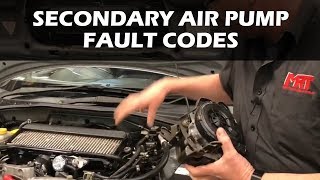
- Subaru Impreza WRX, Forester XT, Legacy GT (2006-2014) — Commonly affects turbocharged models. A faulty relay causes the pump to run continuously, creating a fire risk, which led to recall WTM-73 (NHTSA ID: 16V-738).
- BMW 3-Series (E46), 5-Series (E39), X3/X5 (1999-2006) — The secondary air pump is a frequent failure item. A loud vacuum-cleaner noise on startup indicates impending failure, stopping completely once the pump seizes.
- Honda S2000 (2000-2005) — Owners report frequent air pump failures, often accompanied by a stuck relay that causes the pump to run continuously and burn out.
Manufacturer-Specific Notes
- Toyota/Lexus: A known ECM glitch falsely triggers P2445 in freezing temperatures on 4.7L V8s (2005-2006) when driven above 50 MPH after a cold start. Toyota issued a TSB to re-flash the computer, but the program is expired.
- Toyota/Lexus: Due to high failure rates from filter debris, Lexus and Toyota issued Warranty Enhancement Programs (ZEH and ZLH) extending coverage to 10 years or 150,000 miles. Check with a dealer for eligibility.
- Toyota: TSB T-SB-0230-12 acknowledges that debris from a disintegrating air pump filter contaminates and destroys the air switching valves, requiring replacement of both the pump and valves.
- Subaru: Recall WTM-73 addresses 2007-2014 turbocharged models where the secondary air pump relay fails, causing the pump to run continuously, overheat, and create a fire risk. The fix replaces the relay.
Real Owner Stories
2012 Lexus GX460 at 78,000 miles
Check Engine Light, VSC, and TRAC lights illuminated, and the vehicle entered limp mode with code P2445.
What they tried:
- The owner researched the issue and discovered the foam filter destroys the pump and valves.
- He purchased OEM parts for $1,704 and performed the labor-intensive intake manifold removal himself.
- Disassembly confirmed the foam filter jammed the driver-side valve and water ruined the pump motor.
Outcome: After replacing the parts, the codes cleared. The owner contacted Lexus corporate with invoices and photos, securing full reimbursement ($1,704) due to the known defect.
Lesson: For known systemic issues, contact the manufacturer's corporate office even if out of warranty. Polite requests with documentation often lead to reimbursement.
2006 Lexus GX470 with recurring P2445
One month after a mechanic replaced the pump and valves with aftermarket parts, the check engine light and limp mode returned.
What they tried:
- The owner returned to the mechanic, who suspected a brittle electrical connector but lacked certainty.
- The owner considered a dealership for a definitive diagnosis.
Outcome: The root cause was a faulty aftermarket part. Non-OEM SAI components have a high failure rate, mimicking wiring issues.
Lesson: When a code returns shortly after repair, suspect a faulty new part. Using high-quality OEM parts reduces the risk of premature failure.
2005 Toyota Tundra 4.7L with 260k miles
The truck entered limp mode with codes P2445 and P0418. The owner replaced the pump, control valve, and check valves.
What they tried:
- The truck ran well for 100 miles before the codes and limp mode returned.
- He replaced the air driver module and fuse, fixing it for another 100 miles before P2445 returned.
- The owner realized the code only appeared in freezing weather, pointing to an expired TSB for a cold-weather ECM glitch.
Outcome: The owner installed an aftermarket bypass kit to permanently resolve the software glitch without paying for an ECU re-flash.
Lesson: Be aware of manufacturer TSBs for software glitches. A P2445 code appearing only in freezing temperatures on specific Toyotas indicates an ECM glitch, and replacing hardware will not solve it.
How to Prevent This Code From Triggering
- Inspect the Air Pump Inlet and Filter (Every 30,000 miles) — Debris from the internal foam filter destroys the pump. Ensure the external air inlet is clear and check the internal foam for degradation.
- Test the One-Way Check Valve (Every 60,000 miles) — The check valve blocks hot exhaust gas. A failing valve allows condensation into the pump, causing corrosion and seizure. A simple vacuum test verifies its function.
- Clean Secondary Air Injection Ports (During related engine work (e.g., intake manifold removal)) — Carbon builds up in the cylinder head air passages. Cleaning these ports with carburetor cleaner ensures efficient airflow and prevents blockage codes.
- Ensure the System Relay is High-Quality (At first sign of trouble or after 100,000 miles) — Faulty relays stick 'ON', causing the pump to run continuously, overheat, and create a fire risk (especially on Subarus). OEM relays prevent this.
Frequently Asked Questions
What is the most common mistake when diagnosing a P2445 code?
The most common mistake is immediately replacing the expensive secondary air pump without performing basic electrical checks. A seized pump motor blows the dedicated fuse or damages the relay. Always check the fuse and swap the relay before ordering a new pump.
Can I just ignore the P2445 code?
No. The vehicle fails emissions tests and enters a dangerous 'limp mode' with severely reduced power. Ignoring it also leads to premature failure of the expensive catalytic converters.
Why is the repair so expensive on my Toyota Tundra/Sequoia?
On Toyota V8 engines, the secondary air injection pump and valves sit underneath the engine's intake manifold. This requires extensive labor to access, pushing the total repair cost between $2,000 and $4,000 at a dealership.
What is a secondary air injection bypass kit?
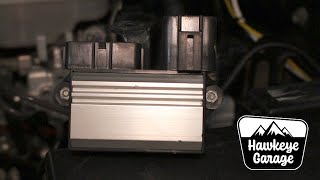
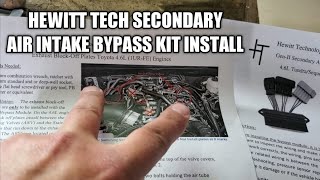
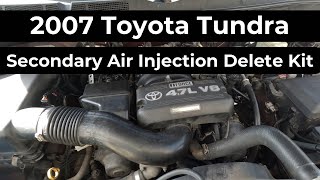
Aftermarket companies sell electronic kits that bypass the system for out-of-warranty Toyotas. These kits trick the computer into thinking the system works, turning off the check engine light and preventing limp mode. Note that these kits violate federal emissions laws for on-road use.
What is the 'cold weather glitch' associated with P2445?
On 2005-2007 Toyota/Lexus V8 models, a software issue falsely triggers P2445 and limp mode if the vehicle starts in freezing temperatures and exceeds 50 mph. This happens even with a perfectly functioning SAI system. The official fix was an ECU re-flash that is no longer offered.
Will replacing just the pump fix the P2445 code for good?
Replacing just the pump often fails because the root cause—a disintegrating internal filter—sends debris downstream, damaging the air switching valves. This debris triggers secondary codes (like P2440) or destroys the new pump. Always replace the pump and valves as a complete set.
What lights usually come on with a P2445 code?
The Check Engine Light illuminates immediately. On Toyota and Lexus vehicles, this code also triggers the VSC and TRAC lights, and a flashing '4LO' light on 4WD models, indicating the vehicle is in limp mode.
Is Bank 1 on the driver's side or passenger's side?
Bank 1 is the side of the engine containing cylinder #1. On most V-shaped engines, this bank sits slightly further forward. Consult your service manual, as this varies; for example, on Toyota V8s, Bank 1 is on the passenger side.
Key Takeaways
- A failed secondary air injection (SAI) pump causes code P2445, most frequently triggered when the pump's internal foam filter disintegrates and seizes the motor.
- Always inspect the 50A or 70A SAI system fuse and swap the relay before buying a new pump, as a seized motor instantly blows the fuse.
- Repair costs range from $20 for a simple fuse replacement to over $2,500 for Toyota V8 engines that require removing the intake manifold to access the pump.
- Installing a $150-$400 aftermarket electronic bypass kit is a proven, cost-effective alternative to mechanical repairs for out-of-warranty Toyota and Lexus vehicles.
Helpful Videos

Shop the Parts Behind P2445
Below are the parts most often responsible for code P2445, ranked by how frequently each one is the actual culprit (per the diagnosis above). Tap any to see what we have for your vehicle.



The information in this article is provided for general reference and educational purposes only. Vehicle specifications, procedures, and part compatibility can vary by production date, trim level, and region. Always consult your vehicle's factory service manual and verify part numbers before purchasing or performing repairs. Safety-critical components such as airbags, seat belts, and braking systems should be installed by a qualified professional.
- 🧭 Diagnostic Flowchart
- 🎬 Helpful Videos
- 🛍️ Shop This Part
- What Does P2445 Mean?
- Can I Drive With P2445?
- Common Causes
- Symptoms
- Common Fixes & Costs
- Used vs. New Parts: Buying Guide
- What Happens If You Wait — Timeline
- Cost of Not Fixing It
- Diagnosis Steps
- When This Code Triggers (Freeze-Frame Conditions)
- Related Codes
- Climate & Environmental Factors
- How to Talk to a Mechanic About This Code
- Where to Take It: Dealer vs Independent vs Chain
- When to Walk Away From the Repair
- What Scan Tool You Need for This Code
- How to Clear the Code After You Fix It
- Will This Fail Emissions / State Inspection?
- Most Commonly Affected Vehicles
- Manufacturer-Specific Notes
- Real Owner Stories
- 2012 Lexus GX460 at 78,000 miles
- 2006 Lexus GX470 with recurring P2445
- 2005 Toyota Tundra 4.7L with 260k miles
- How to Prevent This Code From Triggering
- Frequently Asked Questions
- What is the most common mistake when diagnosing a P2445 code?
- Can I just ignore the P2445 code?
- Why is the repair so expensive on my Toyota Tundra/Sequoia?
- What is a secondary air injection bypass kit?
- What is the 'cold weather glitch' associated with P2445?
- Will replacing just the pump fix the P2445 code for good?
- What lights usually come on with a P2445 code?
- Is Bank 1 on the driver's side or passenger's side?
- Key Takeaways
- 🎟️ Get 5% Off