

P2445 on 2005-2012 Toyota Tundra: Air Injection Pump Stuck Off Fixes
On a 2005-2012 Toyota Tundra, code P2445 means the secondary air injection pump for Bank 1 is stuck off. This is almost always caused by moisture or debris from the exhaust damaging the pump or related valves. The fix often involves replacing the air pump and switching valves, which can be expensive ($2000+). Many owners opt for a more affordable aftermarket bypass kit. For some model years, an ECM reflash or a specific cold-weather glitch may be the cause.
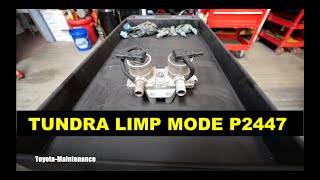
- P2445 on a Tundra is a serious code that will likely put the truck into a low-power 'limp mode'.
- The root cause is almost always moisture or debris getting into the Secondary Air Injection System, damaging the pump and/or valves.
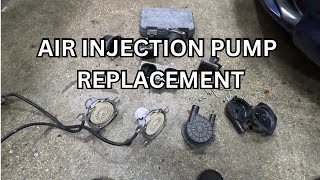
- The most common fix is replacing the air injection pump, located in the passenger fender well. For a permanent fix, the switching valves under the intake manifold should also be considered.
- Repair costs at a dealership can be very high ($2000+). A skilled DIYer can replace the pump, but replacing the valves is a major job. Electronic bypass kits are a popular, cheaper alternative but may not be emissions-legal everywhere.
- Check for applicable TSBs, as some 2012+ models may only need a free software update from the dealer.
What's Unique About the 2005-2012 Toyota TUNDRA

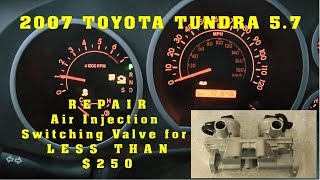
The Secondary Air Injection System (SAIS) on this generation of Tundra is notoriously prone to failure. The primary issue is a design flaw where the system's check valves fail, allowing hot, moist exhaust gas and condensation to travel backward and collect in the air pumps and switching valves. This water intrusion leads to corrosion, and in cold climates, freezing, which causes the eventual seizure of the electric pumps and valves. 🎬 Watch: Learn the symptoms and costs of a failing pump. This is a problem well-documented by owners and confirmed by Toyota's own service bulletins which cite 'debris' and 'water intrusion' as the root cause. [ODI #10652604]
Diagnostic Flowchart

Tap your situation to follow the diagnostic path that matches what you're seeing on this vehicle.
Generation note: This issue affects both the end of the first-generation Tundra (2005-2006 with the 4.7L 2UZ-FE engine) and the second-generation Tundra (2007-2012 with the 5.7L 3UR-FE engine). The fundamental cause (moisture/debris) is the same, but specific TSBs and part numbers vary. For example, TSB T-SB-0024-13 addresses an ECM logic issue in 2012-2013 models, while TSB T-SB-0230-12 Rev focuses on debris contamination in 2005-2006 models. There is also a known ECM glitch in some 2005-2006 4.7L models that triggers P2445 in freezing temperatures.
Symptoms You May Notice

- Check Engine Light is on
- Vehicle enters 'limp mode' (drastically reduced power and speed).
- Flashing 'TRAC OFF' and 4LO lights (on some models).
- Loud whining or vacuum cleaner-like noise from the engine bay on a cold start, which may last for 30-60 seconds. The absence of this sound is a key indicator the pump has failed.
- Slower than normal acceleration.
- Replacing only the air pump without checking for moisture or replacing the valves. If the valves are stuck or leaking, the new pump will likely fail again quickly.
- Replacing oxygen sensors. While this is an emissions system, O2 sensors are not the cause of a P2445 code.
- Ignoring a blown fuse. Simply replacing the fuse without addressing the seized pump that caused it to blow will result in an immediate repeat failure.
Most Likely Causes

- Failed Secondary Air Injection Pump 🔴 High Probability → Shop Secondary Air Injection Pump The pump is highly susceptible to damage from moisture and debris that gets into the system from the exhaust, causing the internal motor to seize or burn out. The pump is located in the passenger-side front fender well, where it is exposed to the elements.
How to confirm: Use a scan tool to command the pump on. If it doesn't run, check for power and ground at the pump's connector. If power is present but the pump is silent, it has failed. A seized pump motor will often blow the SAIS fuse.
Typical fix: Replace the air injection pump assembly. It is often recommended to replace the switching valves at the same time to prevent a repeat failure.
Est. part cost: $150-$600 - Moisture/Water Intrusion 🔴 High Probability This is the root cause of most SAIS failures. Condensation from the exhaust flows back into the system when check valves fail, corroding the pump and valves. An owner complaint specifically cited "WATER INTRUSION" as the cause for a P2445 code. [ODI #10652604] Toyota redesigned the air pump inlet pipe to mitigate this.
How to confirm: Visually inspect the inside of the air pump and hoses for signs of water, rust, or white/pink residue. The pump's foam filter is often found disintegrated or soaked.
Typical fix: Replace all contaminated components, including the pump, valves, and any damaged hoses, to prevent a repeat failure. Some owners attempt to dry out the components, but this is rarely a long-term solution.
Est. part cost: $0 (part of a larger repair) - Stuck or Failed Air Switching Valves 🟡 Medium Probability Like the pump, these valves are damaged by the same moisture and debris that kills the pump. They are located under the intake manifold (5.7L) or on the side of the engine (4.6L), making them labor-intensive to access and replace.
How to confirm: This is difficult to confirm without significant disassembly. They are often replaced preventatively when the pump is replaced, as their failure will quickly destroy a new pump.
Typical fix: Replace the air switching valve assemblies. This is a labor-intensive job, often taking 5-6 hours.
Est. part cost: $250-$700 - Blown Fuse or Faulty Relay 🟡 Medium Probability A seized air pump motor can draw excessive current, blowing the main 50A fuse for the SAIS circuit. The 'relay' is often a solid-state 'Air Injection Control Driver' module located near the fuse box, not a typical relay inside it.
How to confirm: Locate and inspect the fuse and control driver for the air injection system in the under-hood fuse box area. A blown fuse will show a broken internal filament.
Typical fix: Replace the blown fuse or faulty driver. Note: This almost always indicates an underlying problem, like a failing pump, that must also be addressed to prevent the new fuse from blowing.
Est. part cost: $5-$30 - Outdated ECM Logic (2012-2013 models) ⚪ Low Probability Toyota TSB T-SB-0024-13 states that for 2012-2013 Tundra and Sequoia models with 3UR-FBE engines, the ECM logic was too sensitive and could incorrectly set P2445 and/or P0418.
How to confirm: A Toyota dealership can check your vehicle's calibration ID against their records to see if the software update applies.
Typical fix: The dealership will reflash the ECM with updated software. This was covered under a limited service campaign, but may now be a customer-pay service.
Est. part cost: $0-$200
Rare But Worth Checking
- Wiring Harness or Connector Damage: The wiring to the pump, located in the passenger-side fender well, can be damaged by road debris or corrosion. Check for corrosion or breaks in the wiring if the pump has power but doesn't run.
- ECM Cold Temperature Glitch (2005-2006 4.7L): Some early models with the 4.7L engine have a known ECM glitch that can trigger P2445 in freezing temperatures when the vehicle reaches about 50 mph, even if the SAIS components are functional. Toyota had a limited service campaign to reflash the ECM, but it is likely expired. A common owner workaround is to warm the truck up, shut it off for a minute, and restart it to complete a drive cycle before driving over 50 mph.
Diagnosis Steps
- Check for other related DTCs (P0418, P2440, P2441, P2442, etc.) to get a full picture of the system's health.
- On a cold start, listen for a loud vacuum/whirring sound from the front passenger side fender area for the first 30-60 seconds. Absence of this sound suggests the pump is not running.
- Check the main 50A fuse and the Air Injection Control Driver for the Secondary Air Injection system in the under-hood fuse box area. Replace if blown, but investigate the cause (likely a seized pump).
- If the fuse is good, use a scan tool with bidirectional controls (like Toyota Techstream) to command the air pump ON.
- If the pump does not activate, access the pump by removing the passenger fender liner. Check for battery voltage and a good ground at the electrical connector while it is being commanded on.
- If voltage and ground are good but the pump doesn't run, the pump has failed. Before replacing, inspect the old pump's inlet and hoses for water or white/pink residue, which indicates valve failure is the root cause.
- If the pump runs but the code persists, or if you find evidence of water, the air switching valves under the intake manifold are likely stuck and require replacement. This is a much more involved repair.
- For 2005-2006 4.7L models, if the code only appears in freezing weather after exceeding 50 mph, suspect the ECM glitch.
Parts You'll Likely Need
- Secondary Air Injection Pump
(OEM #17610-0S010)— This is the most common component to fail due to internal seizure from moisture or debris.
Trusted brands: Toyota (OEM), Dorman
OEM price range: $400-$600
Aftermarket price range: $150-$300 - Air Switching Valve Assembly
(OEM #25710-50022)— These valves, located under the intake manifold, also fail due to moisture and debris. They are often replaced with the pump to ensure a complete repair. Failure to replace them can cause the new pump to fail quickly.
Trusted brands: Toyota (OEM), Dorman
OEM price range: $500-$700
Aftermarket price range: $250-$450 - SAIS Bypass Kit — A popular and cost-effective alternative to replacing the entire SAIS system. These kits electronically 'trick' the ECU into thinking the system is working correctly, clearing the codes and limp mode. They are intended for off-road use and may not be legal for emissions-controlled vehicles in all states.
Related Codes That Often Appear With This One
- P0418 — This code relates to the air injection pump relay/circuit. It is frequently seen with P2445 because a seized pump (P2445) can cause an electrical fault in the control circuit (P0418). TSBs often list these codes together.
- P2440 — This code indicates the Bank 1 switching valve is stuck open. It's common to see valve and pump codes together as they are part of the same system and fail from the same root cause (moisture).
- P2441 — This code means the Bank 1 switching valve is stuck closed. TSB T-SB-0230-12 Rev mentions this code alongside P2445 as being caused by debris in the system.
- P2442 — This code is for the Bank 2 switching valve being stuck open. If moisture has contaminated the system, it often damages components on both banks.
Technical Service Bulletins (TSBs) & Recalls
- T-SB-0024-13: For 2012-2013 Tundra/Sequoia with 3UR-FBE engines, addresses an overly sensitive ECM logic that can set P0418 and/or P2445. Recommends a software reflash.
- T-SB-0230-12 Rev: For 2005-2006 Tundra and other models with the 2UZ-FE engine, notes that P2445 and other SAIS codes can be caused by debris contaminating system components.
- EG027-07: An older TSB that was superseded by and combined into T-SB-0230-12.
Platform-Specific Known Issues
- The Bypass Kit Solution: Due to the extremely high cost of replacing the pumps and valves (often quoted at $2,000-$4,000 at dealerships), a very common and popular fix in the Tundra community is to install an electronic bypass kit from companies like Hewitt-Tech or Rutech. These kits electronically simulate a functioning SAIS for the ECU, which takes the truck out of limp mode and turns off the check engine light without replacing the expensive mechanical parts. Installation is a DIY-friendly task for many.
- Owner Experience: Full Replacement vs. Bypass: In a forum thread, a user with a 2005 Tundra experienced recurring P0418 and P2445 codes even after replacing the pump and valves with OEM parts, demonstrating the complexity and frustration of the issue. In contrast, another user with an '08 Tundra had their pumps replaced under warranty, only for them to fail again out of warranty. They then installed a Hewitt-Tech bypass kit and had no further issues.
Mechanic-Grade Diagnostic Values
- Air Pressure (gauge) value in Techstream during Active Test — expected: 0 to 1 psi. Failure: The value does not increase from 0 when the pump is commanded on.
- Voltage at Pin 2 of the Air Pump Connector — expected: Battery Voltage (approx. 12V). Failure: No voltage is present when the pump is commanded on via Active Test, indicating a problem with the fuse or control driver.
Hidden / Shadow Codes Worth Checking
- P106B: Pressure Sensor Correlation / Evap. Pressure Sensor error. This code can appear after installing a bypass kit if one of the pressure sensors (two in the SAIS valves, one in the EVAP system) was previously damaged by moisture but was masked by other SAIS codes. (see via Standard OBD-II scanner, but it may only appear after primary SAIS fault codes like P2445 are resolved or bypassed.)
Scan Tool Commands That Help
- Toyota Techstream: Active Test: "Control the Air Injection System (AIP)" — This is the primary diagnostic command to manually turn the air pumps on and off to verify their operation. It allows a technician to listen for pump activation and check for voltage at the pump connector without waiting for a natural cold start.
Wiring & Ground Locations
- Air Injection Pumps — Located in the front of the passenger-side fender well, behind the plastic liner.. This is the physical location of the pump that has failed. Access requires removing the fender liner to test or replace the pump.
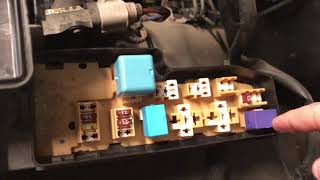
- Air Injection Control Driver — A small, solid-state controller located outside the main under-hood fuse box, near the top left when facing the vehicle.. This is the 'relay' for the system. Unlike a standard relay, it's a separate module. If the pump fuse is good but the pump receives no power during an active test, this driver may have failed.
- 50A AIR PUMP Fuse — Located in the under-hood fuse box, often as part of a larger fusible link assembly, not a standard plug-in fuse. The cover diagram may show empty slots for 'AIR PUMP RELAY' as the system uses an external driver instead.. This is the main fuse for the pump motor. A seized pump will blow this fuse, causing the P2445 code. Simply replacing it without fixing the pump will result in a repeat failure.
Real Owner Repair Stories
- TundraTalk.net forum user (2005 Toyota Tundra) — Check engine light and limp mode.
❌ Tried (didn't work) The mechanic quoted thousands for an OEM repair.
✅ What actually fixed it The owner installed a Hewitt-Tech plug-and-play bypass kit. The installation took about an hour and resolved the codes and limp mode, restoring normal truck operation. - Tundras.com forum user 'Jrad08tundra' (2008 Toyota Tundra 5.7L) — P2445 code, limp mode, no sound from the pump on cold start. The code would return a couple of days after being cleared.
❌ Tried (didn't work) Clearing the code was only a temporary fix.
✅ What actually fixed it Replaced the secondary air injection pump with an aftermarket unit from RockAuto. The owner reported no issues for 8 months following the DIY replacement. - YouTube video by 'Kevin Aparicio' (2010 Toyota Tundra) — Code P2445, vehicle has very slow acceleration and enters limp mode ('está huevona').
✅ What actually fixed it The video diagnoses the pump as non-functional using a direct power test and replaces it with a Dorman part (306-010), which resolved the issue.
OEM Part Supersession History
Unknown→17621-0S012— The original Air Pump Inlet pipe design was prone to allowing water intrusion into the pumps.
Heads up: The new design is recommended to be installed when replacing pumps or valves to prevent repeat failures from water damage.
Model Year Variations Within This Range
- 2005-2007 (4.7L): These models are susceptible to an ECM glitch in freezing temperatures that can trigger P2445 even if the system is mechanically sound.
- 2008+: Using a bypass kit designed for 2005-2007 models on a 2008 or newer vehicle can cause a P011B (Temperature Correlation Error) code. Newer generation bypass kits are designed to avoid this issue.
- 2012-2013 (3UR-FBE): A specific Technical Service Bulletin (T-SB-0024-13) addresses overly sensitive ECM logic that can falsely trigger P2445. The fix is a software update from the dealer.
Helpful Videos



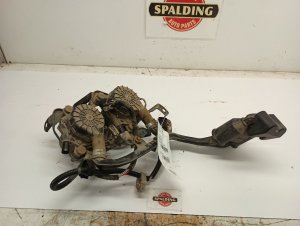
Used OEM Parts in Stock
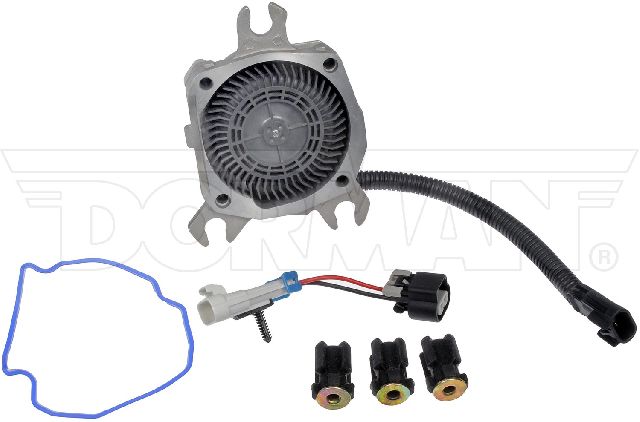
New Aftermarket Parts Available

The information in this article is provided for general reference and educational purposes only. Vehicle specifications, procedures, and part compatibility can vary by production date, trim level, and region. Always consult your vehicle's factory service manual and verify part numbers before purchasing or performing repairs. Safety-critical components such as airbags, seat belts, and braking systems should be installed by a qualified professional.
- Toyota TUNDRA:
- 🧭 Diagnostic Flowchart
- 🎬 Helpful Videos
- 🛍️ Shop This Part
- What's Unique About the 2005-2012 Toyota TUNDRA
- Symptoms You May Notice
- Most Likely Causes
- Rare But Worth Checking
- Diagnosis Steps
- Parts You'll Likely Need
- Related Codes That Often Appear With This One
- Technical Service Bulletins (TSBs) & Recalls
- Platform-Specific Known Issues
- Mechanic-Grade Diagnostic Values
- Hidden / Shadow Codes Worth Checking
- Scan Tool Commands That Help
- Wiring & Ground Locations
- Real Owner Repair Stories
- OEM Part Supersession History
- Model Year Variations Within This Range
- 🎟️ Get 5% Off