

P2458 on 2014-2015 Ram ProMaster: DPF Regeneration Duration Causes and Fixes
This code means the Diesel Particulate Filter (DPF) cleaning cycle is taking too long. It's often caused by a clogged DPF, faulty DPF pressure sensor, or bad exhaust gas temperature sensors. Do not replace the DPF until sensors, potential exhaust leaks, and ECM software are checked. Insufficient Diesel Exhaust Fluid (DEF) can also be a cause.
- P2458 indicates the DPF self-cleaning process is taking too long, not that the DPF has necessarily failed.
- Always diagnose the DPF pressure sensor and exhaust temperature (EGT) sensors before considering DPF replacement.
- Check for exhaust leaks upstream of the DPF, as this can provide false readings to the sensors.
- Ask a dealership service center if there are any available ECM software updates for your vehicle, as this is a known fix.
- Proper diagnosis with a professional scan tool is crucial to avoid replacing the very expensive DPF unnecessarily.
What's Unique About the 2014-2015 Ram PROMASTER
The 3.0L Iveco F1C diesel engine in the 2014-2015 ProMaster has a sensitive emissions system. This P2458 code is often a symptom of an underlying issue rather than a single component failure. Driving habits, such as frequent short trips that don't allow the exhaust to get hot enough for a full regeneration, can contribute to the problem. Furthermore, as indicated by manufacturer bulletins, the fault can sometimes be triggered by software logic errors in the ECM. FCA released several software updates to improve DPF system performance and correct the logic that triggers P2458 and other related codes. [Bulletin #18-018-15 REV B, Bulletin #18-038-15 REV. B]
Diagnostic Flowchart
Tap your situation to follow the diagnostic path that matches what you're seeing on this vehicle.
Symptoms You May Notice
- Check Engine Light is on.
- DPF or emissions system warning message on the instrument cluster.
- Reduced engine power or sluggish acceleration (limp mode).
- Decreased fuel economy.
- Engine may stumble or run rough.
- Strong fuel or exhaust odor.
- Visible black smoke from the exhaust during or after regeneration attempts.
- Replacing the Diesel Particulate Filter (DPF) without first diagnosing the sensors. A clogged DPF is often a symptom of another problem, such as a bad sensor that is preventing regeneration. Replacing the filter without fixing the root cause will result in the new DPF clogging as well.
- Overlooking cracked or clogged rubber hoses for the DPF differential pressure sensor. Sometimes the sensor itself is fine, but the lines providing the pressure reading are compromised.
Most Likely Causes
- Clogged Diesel Particulate Filter (DPF) 🔴 High Probability → Shop Diesel Particulate Filter (DPF) Can be caused by frequent short-trip driving cycles that prevent passive regeneration, or by other failed sensors preventing an active regeneration. Over time, ash accumulation that cannot be burned off also leads to clogging.
How to confirm: Use a scan tool to check the 'soot mass' or 'DPF load' percentage. A high value indicates a clogged filter.
Typical fix: Attempt a forced stationary regeneration using a capable scan tool. If that fails, the DPF may need to be removed for professional off-vehicle cleaning or, in severe cases, replacement.
Est. part cost: $300-$1000 for professional cleaning, $2500-$4700 for replacement. - Faulty DPF Differential Pressure Sensor 🟡 Medium Probability This sensor tells the ECM how full the DPF is by measuring pressure before and after the filter. If it provides incorrect readings, the ECM cannot properly initiate or terminate the regeneration cycle. The connecting hoses are also prone to clogging or cracking.
How to confirm: Monitor the sensor's pressure readings with a scan tool at idle and under load to see if they are logical. Inspect the sensor's connecting hoses for cracks, blockages, or leaks.
Typical fix: Replace the DPF differential pressure sensor and its hoses. The sensor often comes as a kit with new hoses and clamps.
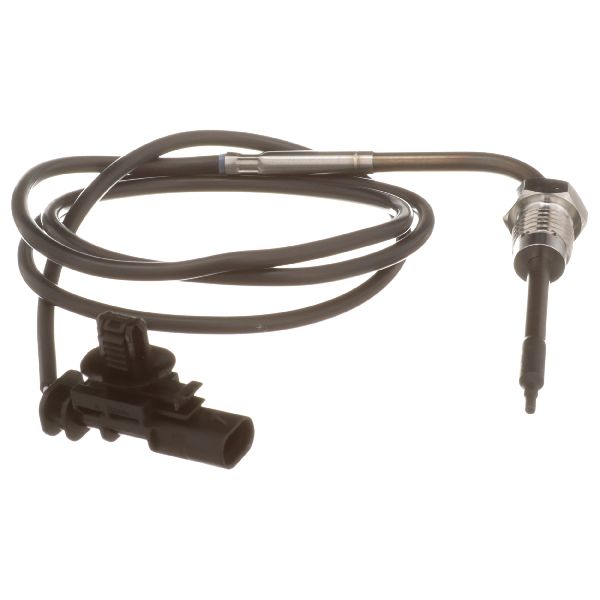
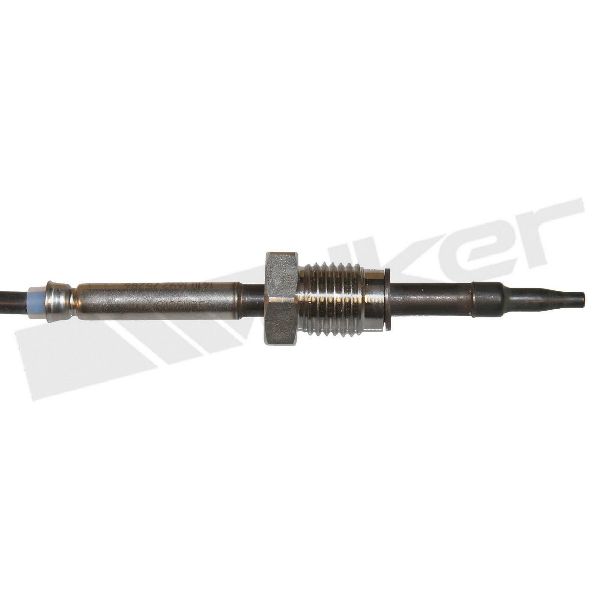
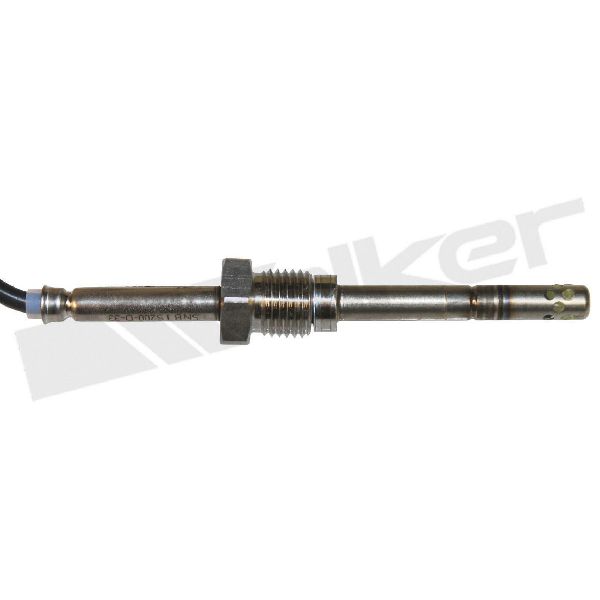
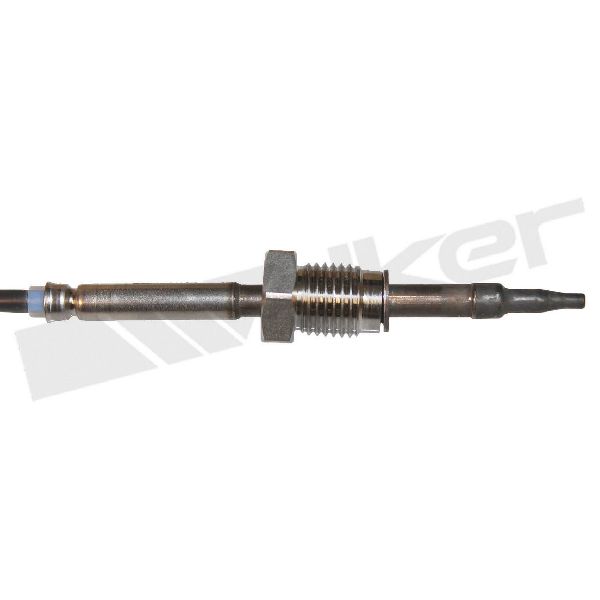
Est. part cost: $50-$180 - Faulty Exhaust Gas Temperature (EGT) Sensor(s) 🟡 Medium Probability → Shop Exhaust Gas Temperature (EGT) Sensor Regeneration requires precise exhaust temperatures. The ProMaster uses multiple EGT sensors, and if one fails or provides inaccurate readings, the ECM cannot maintain the temperature needed to burn off soot effectively.
How to confirm: Use a scan tool to monitor live data from all EGT sensors. Compare the readings to each other; a sensor that is significantly different from the others is likely faulty.
Typical fix: Replace the faulty EGT sensor. It's recommended to use anti-seize on the threads for easier future removal.
Est. part cost: $70-$200 - Exhaust System Leaks ⚪ Low Probability Leaks in the exhaust system upstream of the DPF can alter the pressure and temperature readings seen by the sensors, leading to incorrect data and failed regeneration attempts.
How to confirm: Perform a visual inspection of the exhaust system from the engine to the DPF. A smoke test is the most effective way to find small leaks.
Typical fix: Repair the leak by replacing the gasket or damaged exhaust component.
Est. part cost: $20-$200
Rare But Worth Checking
- ECM Software Update Needed: Multiple Technical Service Bulletins (TSBs) for the ProMaster indicate that updated software may be available to correct the logic that triggers P2458 and other DPF-related codes. TSB 18-018-15 REV B and 18-038-15 REV. B specifically address this code among others.
- Leaking or Malfunctioning Fuel Injectors: A faulty injector can disrupt the precise air/fuel mixture required for combustion and regeneration, leading to excessive soot or an inability to reach regeneration temperatures.
- Insufficient Diesel Exhaust Fluid (DEF): While not directly causing the long regeneration, an issue with the DEF system (low fluid, poor quality, or faulty injector) can prevent the SCR system from operating correctly, which can indirectly affect the DPF system and trigger related codes.
Diagnosis Steps
- Connect a professional OBD-II scanner (ideally wiTECH for FCA vehicles) and check for any other accompanying fault codes, paying close attention to codes for DPF pressure, EGT sensors, or EGR issues.
- View live data streams. Monitor the DPF differential pressure at idle and while increasing RPMs. Check the readings from all exhaust gas temperature sensors to ensure they are plausible and react to engine load.
- Check the DPF soot load value ('soot mass'). This will confirm if the filter is actually full.
- Visually inspect the hoses connected to the DPF differential pressure sensor for any cracks, kinks, carbon blockages, or heat damage.
- Perform a thorough visual inspection of the entire exhaust system for leaks, especially between the turbocharger and the DPF.
- Check the level and quality of the Diesel Exhaust Fluid (DEF).
- If all sensors and wiring appear to be functioning correctly and the soot load is high, attempt a forced (stationary) regeneration using the scan tool. This process can take up to an hour and generates extreme heat.
- If the forced regeneration fails or the P2458 code returns quickly, the DPF may be too clogged with unburnable ash and require professional off-vehicle cleaning or replacement.
- Check with a Ram dealer for any available ECM software updates, as specified in TSBs #18-018-15 REV B and #18-038-15 REV. B.
Parts You'll Likely Need
- Diesel Particulate Filter (DPF)
(OEM #52022454AC)— If regeneration fails repeatedly and sensors are confirmed to be working, the filter itself is likely clogged beyond its ability to self-clean and must be professionally cleaned or replaced.
Trusted brands: Mopar
OEM price range: $4400-$4700
Aftermarket price range: $1200-$2800 - DPF Differential Pressure Sensor
(OEM #68302134AA)— This sensor is critical for the ECM to know when to start and stop regeneration. It is a common failure point that prevents the system from working correctly.
Trusted brands: Bosch, Mopar
OEM price range: $120-$185
Aftermarket price range: $40-$80 - Exhaust Gas Temperature (EGT) Sensor
(OEM #68224043AB (replaces 68297576AA))— Accurate temperature readings are required for a successful regeneration. A failed EGT sensor will disrupt the process and cause this code. There are multiple EGT sensors on the vehicle.
Trusted brands: Mopar, Denso, NTK, Dorman (904-786)
OEM price range: $100-$150
Aftermarket price range: $50-$90
Related Codes That Often Appear With This One
- P2459 — This code for 'DPF Regeneration Frequency' is often set alongside P2458, as both relate to the efficiency and timing of the regeneration process. [Bulletin #0901316, 2]
- P2463 — This code for 'DPF Soot Accumulation' directly indicates the filter is clogged, which is the primary reason a regeneration cycle would take too long and trigger P2458. [Bulletin #18-018-15 REV B]
- P2002 — This code for 'DPF Efficiency Below Threshold' points to a general failure of the DPF to operate correctly, which can be a cause or result of the P2458 fault. [Bulletin #0901316]
Technical Service Bulletins (TSBs) & Recalls
- 18-018-15 REV B: Flash update for the ECM to improve diagnostic and system performance for multiple DTCs, including P2458.
- 18-038-15 REV. B: Flash update for the PCM with powertrain diagnostic and system enhancements, addressing P2458 among others.
- 0901316: Notes that P2458, P2459, and P2002 may be set after a cylinder head replacement.
Platform-Specific Known Issues
- TSB #0901316 notes that P2458 may be set following a cylinder head replacement, suggesting a potential issue with reassembly or related component disturbance during major engine work.
- TSB #18-018-15 REV B and #18-038-15 REV. B are critical software updates from FCA to address a range of DPF-related codes including P2458, indicating the original factory software logic was a common cause of this fault.
Mechanic-Grade Diagnostic Values
- DPF Differential Pressure Sensor Voltage (Key On, Engine Off) — expected: ~0.5V. Failure: Voltage is significantly different, stuck high (near 5V), or stuck at 0V.
- DPF Differential Pressure at Idle — expected: Near 0 PSI / 0 kPa. Failure: A sustained positive pressure reading (e.g., over 1 PSI) at idle indicates a blockage in the filter or sensor hoses.
- EGT Sensor Resistance (at room temperature) — expected: ~220 Ohms for PTC type sensors. Failure: An open circuit (infinite resistance) or a reading far outside the expected range indicates a failed sensor.
Scan Tool Commands That Help
- wiTECH or equivalent (Autel, AlfaOBD): Diesel Particulate Filter (DPF) Regeneration — To command a stationary, forced regeneration when the vehicle is unable to complete one on its own. This is used after confirming sensors are working but soot load is high.
- wiTECH or equivalent (Autel, AlfaOBD): Reset DPF Learned Values / DPF Replacement — This function MUST be performed after replacing the DPF or the DPF pressure sensor. It resets the learned soot/ash values in the ECM, preventing the new part from operating on old, incorrect data.
Wiring & Ground Locations
- DPF Differential Pressure Sensor Hoses — Two rubber/silicone hoses connecting the DPF housing (one upstream, one downstream) to the pressure sensor, which is typically mounted on the firewall or in the engine bay away from direct heat.. These hoses are a primary failure point. They are known to crack from heat, become brittle, or get clogged with soot. A leak or blockage gives the sensor false pressure readings, directly causing regeneration timing faults like P2458.
- DPF Differential Pressure Sensor Connector — The electrical connector on the body of the DPF pressure sensor.. Corrosion or damage to the connector or its wiring (5V reference, ground, signal) will cause erratic or out-of-range voltage signals, leading to codes P2455 (high voltage) or other related faults that prevent proper regeneration.
Real Owner Repair Stories
- promasterforum.com user (2014 Ram ProMaster 3.0L Diesel) — Check engine light with codes P2458, P2463 (Soot Accumulation), and P2002 (DPF Efficiency).
❌ Tried (didn't work) A forced regeneration was attempted but failed to complete.
✅ What actually fixed it The DPF was removed and found to be physically cracked internally. Replacing the DPF assembly resolved all the codes. - promasterforum.com user (2014 Ram ProMaster 3.0L Diesel) — Check engine light with P2458 and P2459 (Regeneration Frequency).
❌ Tried (didn't work) The user first suspected the DPF itself or the pressure sensor.
✅ What actually fixed it The problem was traced to the rubber hoses for the DPF pressure sensor. One hose was clogged with soot and the other was cracked. Replacing both hoses and cleaning the sensor ports fixed the issue.
"I Checked Everything" — The Actual Cause
- A common scenario for this platform is an exhaust system that passes a smoke test (no external leaks), yet P2458 persists. The hidden cause is often an internal crack in the Diesel Particulate Filter (DPF) substrate. This crack allows exhaust to bypass the filter media, preventing the expected pressure differential from building up. The ECM sees a pressure reading that doesn't correlate with its calculated soot load, leading it to believe the regeneration process is failing or taking too long. This cannot be found without removing the DPF for inspection.
OEM Part Supersession History
68297576AA→68224043AB— Part has been updated by the manufacturer for improved reliability or performance.
Model Year Variations Within This Range
- 2014, 2015: While the hardware is largely identical, the specific software updates to address P2458 and related codes are distinct. TSB #18-018-15 REV B is primarily for 2014 models, while TSB #18-038-15 REV. B applies to 2015 models. Ensuring the correct TSB and software flash is applied for the specific model year is critical.
Helpful Videos
![[EN] How to replace a DPF sensor | Masters of Motion](https://img.youtube.com/vi/rX9WGUP7p7c/mqdefault.jpg)
We Have This Part in Stock


The information in this article is provided for general reference and educational purposes only. Vehicle specifications, procedures, and part compatibility can vary by production date, trim level, and region. Always consult your vehicle's factory service manual and verify part numbers before purchasing or performing repairs. Safety-critical components such as airbags, seat belts, and braking systems should be installed by a qualified professional.
- Ram PROMASTER:
- 🧭 Diagnostic Flowchart
- 🎬 Helpful Videos
- 🛍️ Shop This Part
- What's Unique About the 2014-2015 Ram PROMASTER
- Symptoms You May Notice
- Most Likely Causes
- Rare But Worth Checking
- Diagnosis Steps
- Parts You'll Likely Need
- Related Codes That Often Appear With This One
- Technical Service Bulletins (TSBs) & Recalls
- Platform-Specific Known Issues
- Mechanic-Grade Diagnostic Values
- Scan Tool Commands That Help
- Wiring & Ground Locations
- Real Owner Repair Stories
- "I Checked Everything" — The Actual Cause
- OEM Part Supersession History
- Model Year Variations Within This Range
- 🎟️ Get 5% Off