

P2459 on 2017-2019 Chevrolet Silverado 3500: DPF Regeneration Frequency Causes and Fixes
On a 2017-2019 Silverado 3500 with the 6.6L Duramax L5P engine, code P2459 means the Diesel Particulate Filter (DPF) is self-cleaning (regenerating) too often. This is commonly caused by frequent short trips, a faulty DPF pressure or temperature sensor, or the use of a non-OEM air filter. Addressing it usually involves a long highway drive, sensor replacement, or installing a genuine GM air filter.
- P2459 means your truck's DPF is cleaning itself too often, pointing to an underlying problem causing it to clog with soot too quickly.
- Before suspecting expensive parts, check your driving habits. These trucks need regular highway driving to keep the DPF healthy.
- A primary suspect for the 2017-2019 Silverado 3500 is a non-OEM air filter, as highlighted in a GM Technical Service Bulletin.
- Faulty DPF pressure sensors or EGT sensors are common hardware failures that can trigger this code.
- Do not immediately replace the DPF. The filter is usually just clogged as a symptom; the root cause is almost always something else.
What's Unique About the 2017-2019 Chevrolet SILVERADO 3500
The 2017-2019 Silverado 3500 uses the L5P Duramax engine, which has a complex and sensitive emissions system. Unlike the prior LML engine, the L5P does not use a separate '9th injector' for regeneration, instead relying on the main fuel injectors. These trucks are designed for heavy-duty use, and frequent short trips or extended idling prevent the exhaust from getting hot enough for effective passive regeneration, leading to more frequent active regens and this code. A key issue for this platform is its sensitivity to airflow changes; a GM Technical Service Bulletin (TSB #24-NA-197) specifically links P2459 to the use of aftermarket air filters, which can alter fuel metering and create excess soot.
Diagnostic Flowchart
Tap your situation to follow the diagnostic path that matches what you're seeing on this vehicle.
Symptoms You May Notice
- Check Engine Light is on
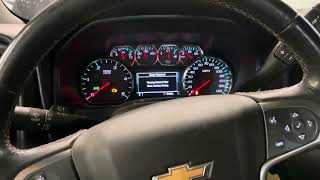
- Message on the Driver Information Center (DIC) like 'Exhaust Filter Full, Continue Driving'
- Noticeably more frequent DPF regeneration cycles
- Reduced engine power or the vehicle entering 'limp mode'
- Poor fuel economy due to the extra fuel used during regeneration cycles
- Excessive black smoke from the exhaust if the DPF becomes overwhelmed
- Over-full engine oil on dipstick, potentially caused by fuel dilution from incomplete regeneration cycles.
- Replacing the entire Diesel Particulate Filter (DPF) assembly. The P2459 code indicates a frequency problem, which is most often caused by a faulty sensor, driving habits, or an upstream issue, not a failed DPF itself. The DPF may be clogged as a symptom, but not be the root cause.
Most Likely Causes
- Driving Habits (Short Trips/Low Speeds) 🔴 High Probability These heavy-duty trucks require sustained highway speeds (e.g., 20-30 minutes) to get the exhaust hot enough for passive regeneration. City driving or frequent short trips prevent this, forcing more frequent active regenerations.
How to confirm: Review the vehicle's recent usage. If it has been primarily driven for short distances without towing or highway speeds, this is a likely cause.
Typical fix: Drive the vehicle at sustained highway speeds for 30-45 minutes to allow a complete regeneration cycle. If this is not possible, a forced regeneration may be required using a capable scan tool. 🎬 Watch: How to perform a forced regen using a scan tool.
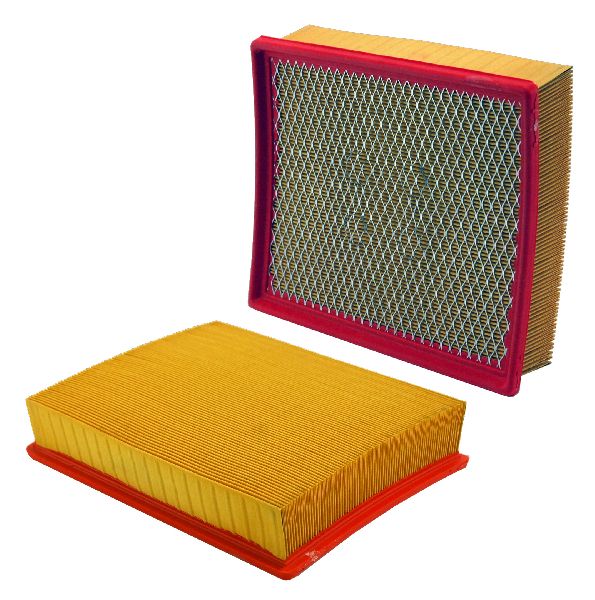
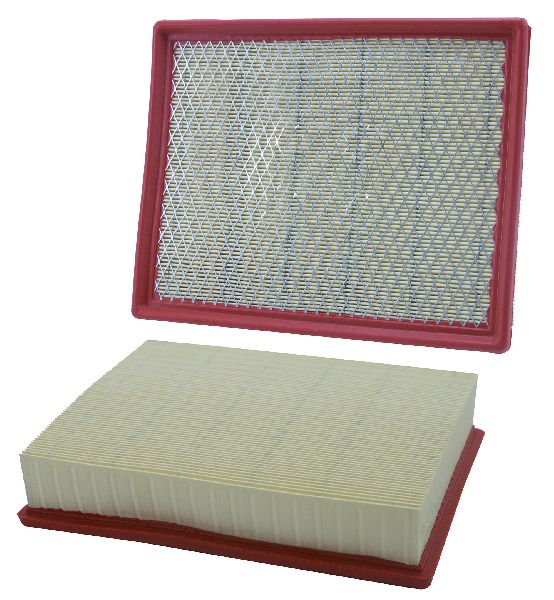
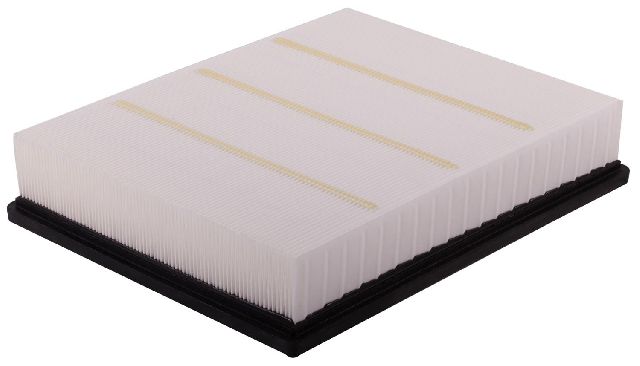
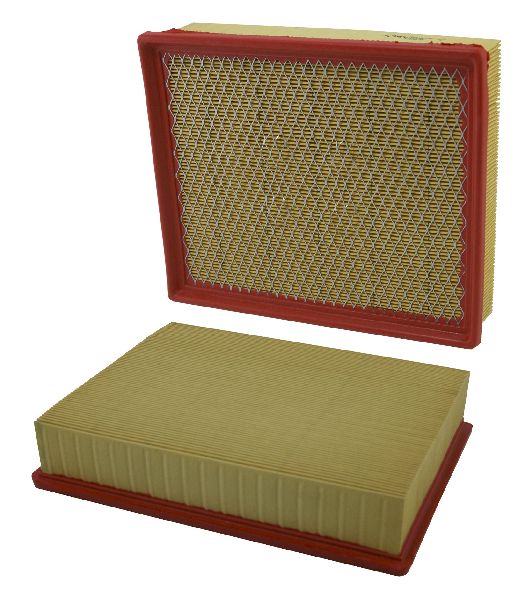
Est. part cost: $0 - Aftermarket (Non-GM) Air Filter 🔴 High Probability → Shop Air Cleaner Assembly GM issued TSB #24-NA-197 specifically because the different airflow characteristics of some non-GM air filters can affect fuel metering, leading to excessive soot production and triggering P2459 and P2463. This is a widely corroborated issue in owner forums and technician reports.
How to confirm: Visually inspect the air filter to see if it is an OEM ACDelco part or an aftermarket brand. A collapsed or extremely dirty filter can also be the cause.
Typical fix: Replace the aftermarket air filter with a genuine GM/ACDelco part (ACDelco A3231C / GM 84262965). 🎬 See how a dirty air filter impacts your L5P Duramax. A technician must also perform a 'Small Quantity Data reset' with a scan tool as per the TSB.
Est. part cost: $30-$70 - Faulty DPF Differential Pressure Sensor 🟡 Medium Probability This sensor measures soot load by comparing pressure before and after the DPF. If it provides inaccurate readings, the ECM may believe the filter is full and trigger regenerations unnecessarily. The sensor or its connecting hoses can get clogged with soot or fail electronically.
How to confirm: Use a scan tool to monitor the DPF pressure sensor voltage with the key on, engine off (KOEO), which should be near 0.5V. At idle, it should read near 0V. Readings that are erratic, stuck, or don't change with RPM suggest a faulty sensor or clogged hoses. Inspect hoses for cracks or blockages.
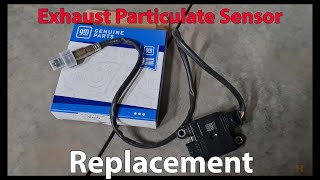
Typical fix: Replace the DPF differential pressure sensor and inspect/clean its hoses and pipes. The OEM sensor is ACDelco 12677718. 🎬 Watch this step-by-step guide to replacing the exhaust particulate sensor. After replacement, a reset or relearn procedure may be required with a scan tool.
Est. part cost: $25-$100 - Faulty Exhaust Gas Temperature (EGT) Sensor ⚪ Low Probability → Shop Exhaust Gas Temperature (EGT) Sensor The regeneration process is highly dependent on precise temperature control. A failing EGT sensor can report incorrect temperatures, causing the ECM to mismanage the regeneration cycle, leading to incomplete soot burn-off and more frequent attempts.
How to confirm: Use a scan tool to monitor all EGT sensor readings. When the engine is cold, they should all read close to the ambient air temperature. During operation, their readings should be logical and responsive. A sensor that is stuck or reads differently from the others is suspect.
Typical fix: Replace the faulty EGT sensor.
Est. part cost: $50-$150 per sensor - Upstream Engine or Fuel System Issues ⚪ Low Probability Problems like leaking fuel injectors, a malfunctioning EGR system, or turbocharger issues can cause incomplete combustion, which generates excessive soot and overloads the DPF faster than normal.
How to confirm: This requires more advanced diagnostics, including checking fuel injector balance rates, monitoring EGR valve position, and checking turbo boost pressure with a scan tool. A technician may also check for fuel dilution in the engine oil.
Typical fix: Repair the underlying engine issue, such as replacing a faulty injector or cleaning a clogged EGR valve.
Est. part cost: $200-$2000+
Rare But Worth Checking
- Exhaust Leaks: A leak in the exhaust system before or near the DPF can allow oxygen in, cooling the exhaust stream and preventing the DPF from reaching the high temperatures needed for regeneration.
- ECM Software Issue: The logic that determines regeneration frequency can sometimes be flawed. TSB #24-NA-197 points to a calibration-related issue that is sensitive to the air filter, suggesting software plays a key role. A dealer may have an updated calibration.
Diagnosis Steps
- Read all diagnostic trouble codes (DTCs) with a capable OBD-II scanner. Pay close attention to any accompanying codes like P2463 or sensor-related faults.
- Analyze driving habits. Determine if the truck has been used for frequent short trips without sufficient highway driving time.
- Inspect the air filter. Per TSB #24-NA-197, check if a non-GM aftermarket air filter is installed. If so, this is a primary suspect. Also check for a collapsed or excessively dirty filter.
- Monitor live data with a scan tool. Check the DPF soot level (grams or %), DPF pressure sensor readings (at idle and under load), and all EGT sensor readings.
- Inspect the DPF pressure sensor hoses and pipes. Look for any cracks, melting, kinks, or carbon blockages.
- Check engine oil level and condition. An oil level that is overfull on the dipstick is a strong indicator of fuel dilution caused by excessive, incomplete regeneration cycles.
- Attempt a manual DPF regeneration. If driving on the highway doesn't clear the code, a forced 'service regeneration' may be initiated with a professional scan tool like GM GDS2. Monitor temperatures and pressures during this process.
- If regeneration fails or the code returns quickly, investigate upstream causes. Check for exhaust leaks, test EGT sensors for accuracy, and diagnose potential fuel injector, EGR, or turbocharger problems.
Parts You'll Likely Need
- Air Filter (OEM)
(OEM #ACDelco A3231C / GM 84262965)— As per GM TSB #24-NA-197, aftermarket air filters can cause excessive soot production on the L5P Duramax, leading to this code.
Trusted brands: ACDelco
OEM price range: $30-$70 - DPF Differential Pressure Sensor
(OEM #ACDelco 12677718)— This sensor is a common failure point. It can provide false high-pressure readings to the ECM, triggering unnecessary regenerations.
Trusted brands: ACDelco
OEM price range: $25-$100 - DPF Differential Pressure Sensor Pipe
(OEM #GM Q887WF (for 2017-2018))— The small metal pipes leading to the differential pressure sensor can become clogged with soot, leading to inaccurate readings. Sometimes they need to be cleaned or replaced along with the sensor.
Trusted brands: ACDelco / GM Genuine Parts
OEM price range: $50-$90
Related Codes That Often Appear With This One
- P2463 — This code means 'DPF Soot Accumulation - Too High.' It frequently appears with P2459 because the underlying issue causing frequent regenerations (P2459) is the DPF becoming too full of soot (P2463).
- P22FB, P2297, P11FB, P11D3 — These are manufacturer-specific codes often related to NOx sensor performance, which are cited alongside P2459 in GM TSB #24-NA-197. An issue affecting the DPF can also impact the readings of downstream emissions sensors.
Technical Service Bulletins (TSBs) & Recalls
- TSB #24-NA-197: Addresses MIL illumination with DTCs P2459, P2463, P22FB, P11D3, and P2297. It identifies non-GM air filters as a potential cause due to altered airflow affecting fuel metering and causing elevated soot accumulation. The prescribed fix is to install an OEM filter and perform a 'Small Quantity Data reset'.
Platform-Specific Known Issues
- Real-World Case: Non-OEM Air Filter and Fuel Dilution: → Shop Air Cleaner Assembly A technician on the Diesel Training Group Forum shared an experience with a 2020 L5P that repeatedly set code P2459 after a DPF replacement. The root cause was traced back to the customer repeatedly using a dirty, non-OEM air filter. Even after replacing the DPF and switching to an OEM filter, the code returned. A notable symptom was the engine oil being over-full by nearly 3/4" on the dipstick, indicating fuel dilution from the frequent, incomplete regeneration attempts. This highlights the critical importance of using the OEM air filter and checking for secondary symptoms like fuel in the oil.
- Owner Experience: The 'Commuter Diesel' Problem: Many owners use their HD trucks for short trips, which is a primary trigger for P2459. The exhaust system doesn't get hot enough to passively regenerate, leading to the ECM forcing active regenerations more often. One owner on YouTube demonstrated how short trips on his 2022 L5P led to the 'Exhaust Filter Full' message. He used a professional scan tool to initiate a 'forced service regeneration' to clear the filter, a process that can take 20-40 minutes and generates extreme heat. This is a common solution for owners whose driving style is the main cause.
- Video Diagnosis: Collapsed Air Filter: → Shop Air Cleaner Assembly A YouTube video by a professional mechanic diagnosed a 2019 Duramax with P2463 and P2459. Upon inspection, the air filter inside the housing had completely collapsed, severely restricting airflow. This, combined with the truck's high-idle time as a logging vehicle, caused the DPF to clog rapidly. The fix involved replacing the collapsed air filter with a new OEM one before performing a service regeneration. This demonstrates that it's not just aftermarket filters, but the physical condition of the filter that is critical.
Mechanic-Grade Diagnostic Values
- DPF Differential Pressure Sensor Voltage (KOEO) — expected: ~0.5V. Failure: A reading significantly higher or lower, or a reading of 5V if the sensor is unplugged (indicating good reference voltage).
- DPF Differential Pressure Sensor Reading (at idle, after successful regen) — expected: 0 PSI / 0 kPa. Failure: Any reading above zero indicates a remaining restriction or a faulty sensor.
- DPF Differential Pressure Sensor Reading (during forced regeneration) — expected: Varies, but should not remain excessively high.. Failure: Sustained high readings (e.g., over 10-12 PSI) can indicate a severely clogged filter that is not clearing.
- DPF Pressure Sensor 5V Reference Circuit — expected: 4.8V - 5.2V. Failure: 0V indicates an open circuit or a short to ground. Test with the sensor connector unplugged, measuring between the high reference terminal and battery negative.
- Low-Pressure Fuel System (Lift Pump) Pressure — expected: 54 - 65 PSI. Failure: Pressure below 54 PSI indicates a weak lift pump or restriction, which can affect combustion and increase soot.
Hidden / Shadow Codes Worth Checking
- P22FB, P2297, P11FB, P11D3: These are manufacturer-specific codes related to NOx (Nitrogen Oxide) sensor performance. TSB #24-NA-197 explicitly states they may be set in conjunction with P2459 and P2463, indicating a broader emissions system fault often triggered by the same root cause (like an aftermarket air filter). (see via A professional-grade scan tool like the GM GDS2 is typically required to see these manufacturer-specific codes and their history.)
Scan Tool Commands That Help
- GM GDS2 (or equivalent professional scan tool): Service Regeneration — Used to command a forced, high-temperature cleaning of the DPF when passive regeneration is not occurring and soot levels are high (P2463). This is a primary diagnostic step when P2459 is present.
- GM GDS2: Small Quantity Data reset — This function must be performed after replacing a non-GM air filter with an OEM one, as per TSB #24-NA-197. It resets the fuel metering adaptations in the ECM that may have been skewed by the incorrect airflow.
- GM GDS2: DPF Pressure Sensor Reset/Relearn — After replacing the DPF differential pressure sensor, this function may be required to calibrate the new sensor's baseline reading to the ECM. Some sources note that programming or setup procedures are needed for this part.
Wiring & Ground Locations
- Cab-to-Engine Ground Strap — On the driver's side, connecting from the firewall/cab to a bolt on the rear of the driver's side cylinder head.. A poor ground connection here can cause a host of intermittent and difficult-to-diagnose electrical issues in various systems, including sensor data reported to the ECM. While not specific to one sensor, it's a fundamental check for any electrical fault.
- Fuel Rail Pressure Sensor Connector — Located behind the alternator/generator, making it difficult to access.. This specific connector is a known weak point on the L5P engine, with a GM bulletin recommending a pigtail update and the use of dielectric grease. While for the fuel pressure sensor, it highlights a pattern of connector issues in the engine harness that could potentially affect other nearby sensors, including those for the emissions system.
Real Owner Repair Stories
- Diesel Training Group Forum technician post (2020 Chevrolet Silverado (L5P engine, similar to 2017-2019)) — P2459 (Regen Frequency) code returned shortly after a DPF replacement. No other codes were present. The primary symptom found was an engine oil level that was overfull by 3/4" on the dipstick.
❌ Tried (didn't work) The DPF was replaced due to a previous P2002 code. MAF, MAP, and other sensors were cleaned. An OEM air filter was installed. Fuel trim and small quantity resets were performed. ECM was verified to have the latest calibration.
✅ What actually fixed it The thread documents the diagnosis of severe fuel dilution in the engine oil as the main consequence of the frequent regenerations. The final repair was not posted, but the key finding was that P2459 led to an overfull oil level, which is a critical mechanical symptom to check for. - Reddit user in r/Diesel (L5P Duramax) — Recurring P2463 (DPF Soot Accumulation) and limp mode, despite multiple dealer visits and ECM updates.
❌ Tried (didn't work) Multiple dealer visits where the code was cleared or the ECM was updated. A DPF and DEF tank were replaced by one dealer, but the problem returned.
✅ What actually fixed it The final resolution was not a single part. The consensus from experienced technicians in the thread pointed to overlooked basics: the use of non-OEM air filters, dirty MAF sensors, and boost/charge air leaks. It was also noted that the L5P software is very sensitive, and resetting all relevant adaptations after any parts replacement is critical, a step that is often missed.
OEM Part Supersession History
ACDelco 12677718 (DPF Differential Pressure Sensor)→No known supersession as of early 2026.— N/A
Heads up: While there is no known supersession, multiple sources indicate that this part may require programming, calibration, or a relearn procedure using a tool like GM GDS2 after installation to ensure proper function.
Model Year Variations Within This Range
- 2017-2019: The 2017-2019 models are highly consistent in their emissions control systems for the L5P engine, all using the 6-speed Allison transmission. Major changes to the platform, such as a new 10-speed transmission and different oil cooler design, were introduced in the 2020 model year, making the 2017-2019 a stable diagnostic group for this issue.
Helpful Videos

We Have This Part in Stock


The information in this article is provided for general reference and educational purposes only. Vehicle specifications, procedures, and part compatibility can vary by production date, trim level, and region. Always consult your vehicle's factory service manual and verify part numbers before purchasing or performing repairs. Safety-critical components such as airbags, seat belts, and braking systems should be installed by a qualified professional.
- Chevrolet SILVERADO 3500:
- 🧭 Diagnostic Flowchart
- 🎬 Helpful Videos
- 🛍️ Shop This Part
- What's Unique About the 2017-2019 Chevrolet SILVERADO 3500
- Symptoms You May Notice
- Most Likely Causes
- Rare But Worth Checking
- Diagnosis Steps
- Parts You'll Likely Need
- Related Codes That Often Appear With This One
- Technical Service Bulletins (TSBs) & Recalls
- Platform-Specific Known Issues
- Mechanic-Grade Diagnostic Values
- Hidden / Shadow Codes Worth Checking
- Scan Tool Commands That Help
- Wiring & Ground Locations
- Real Owner Repair Stories
- OEM Part Supersession History
- Model Year Variations Within This Range
- 🎟️ Get 5% Off