

P2459 on 2017-2021 GMC Sierra 2500: DPF Regeneration Frequency Causes and Fixes
On a 2017-2021 GMC Sierra 2500 with the L5P Duramax engine, code P2459 means the Diesel Particulate Filter (DPF) is regenerating too frequently. This is often caused by a faulty DPF differential pressure sensor, its connecting hoses, upstream air/fuel issues creating excess soot, or driving habits like frequent short trips that prevent complete DPF cleaning.
- P2459 means your truck's DPF is trying to clean itself too often.
- Before replacing any expensive parts, check your driving habits. A long highway drive may solve the problem.
- The most likely faulty parts are the DPF differential pressure sensor and its hoses. Inspect them carefully for damage.
- This code is often paired with P2463, indicating the filter is heavily loaded with soot.
- Do not ignore this code, as it can lead to limp mode and a very costly DPF replacement.
What's Unique About the 2017-2021 Gmc SIERRA 2500
The L5P Duramax engine in the 2017-2021 Sierra 2500 has a highly sensitive emissions control system. Code P2459 is common and is often a symptom of another problem rather than the root cause itself. 🎬 Watch: Understanding the P2459 code and what it means. Unlike some vehicles where this code points directly to a bad DPF, on the L5P, it frequently originates from faulty sensor inputs or upstream issues creating excess soot. GM has released several Technical Service Bulletins (TSBs) that group P2459 with other DPF and engine codes, acknowledging a pattern of issues that require specific diagnostic procedures. For example, TSB 24-NA-197 links frequent regens to aftermarket air filters, while TSB 21-NA-214 involves an ECM/TCM reprogram for a cluster of emissions and transmission-related codes.
Diagnostic Flowchart
Tap your situation to follow the diagnostic path that matches what you're seeing on this vehicle.
Symptoms You May Notice
- Check Engine Light is on
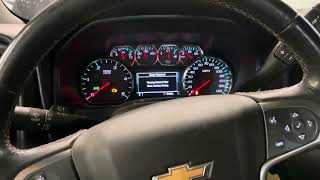
- Message on the driver information center (DIC) such as "Exhaust Filter Full, Keep Driving" or "Engine Power is Reduced".
- Reduced engine power or entering "limp mode"
- Noticeably poor fuel economy
- Engine running hotter than usual
- Excessive black smoke from the exhaust, especially under acceleration.
- Harsh or delayed transmission shifts (as noted in TSB #21-NA-214).
- Fuel smell in the engine oil, or an oil level that is rising, indicating fuel dilution from incomplete regenerations.
- Replacing the DPF assembly without diagnosing the root cause. Often, a faulty sensor, an air intake leak, or an upstream engine issue is causing the DPF to clog, and replacing the filter alone will only lead to the code returning.
Most Likely Causes
- Faulty DPF Differential Pressure Sensor or Hoses 🔴 High Probability The sensor and its rubber hoses are exposed to extreme heat and elements under the truck, leading to cracks, melting, clogs, or electronic failure. The hoses are particularly known to collapse or get clogged with soot, giving the ECM a false high-pressure reading, triggering unnecessary regens.
How to confirm: Using a capable scan tool, monitor the DPF pressure sensor readings at idle (should be near 0 PSI) and while driving. The voltage should be around 0.5V at idle and increase with engine load, typically not exceeding 4.5V. Visually and physically inspect the sensor's hoses for cracks, melting, kinks, or blockages. Remove the hoses and blow compressed air through them to check for restrictions.
Typical fix: Replace the DPF differential pressure sensor and its associated hoses. It is highly recommended to replace the hoses even if they look okay, as they can collapse internally.
Est. part cost: $50-$150 - Air Intake System Issues 🟡 Medium Probability The L5P engine's fuel metering is sensitive to airflow. TSB 24-NA-197 specifically calls out that non-GM (aftermarket) or excessively dirty/collapsed air filters can alter air flow characteristics, causing the engine to run rich and produce excess soot. Leaks in the charge air cooler (CAC) system or its ductwork are also common and will cause a rich condition.
How to confirm: Inspect the air filter. If it's an aftermarket brand, dirty, or collapsed, replace it with an OEM filter. Inspect all charge air cooler boots and connections for signs of leaks (oily residue, loose clamps) or damage. A smoke test of the intake and charge air system is the most effective way to find leaks.
Typical fix: Replace the air filter with a genuine OEM part and clear codes. Repair any leaks found in the charge air cooler system. Per TSB 24-NA-197, a Small Quantity Data reset may be needed via a scan tool after replacing a non-GM filter.
Est. part cost: $40-$200 - Driving Habits (Short Trips) 🟡 Medium Probability These heavy-duty trucks are designed for highway use. Frequent short trips, excessive idling, or low-speed city driving prevent the exhaust from getting hot enough to complete a passive or active regeneration cycle, causing soot to build up prematurely and trigger more frequent regen attempts.
How to confirm: Review the vehicle's typical usage pattern. If it consists mainly of city driving or long idle times (common in work trucks), this is a likely contributor.
Typical fix: Drive the vehicle at sustained highway speeds (over 50 mph) for at least 20-30 minutes to allow a full regeneration cycle to complete. If the DPF is heavily loaded, a dealer-commanded "service regeneration" may be necessary.
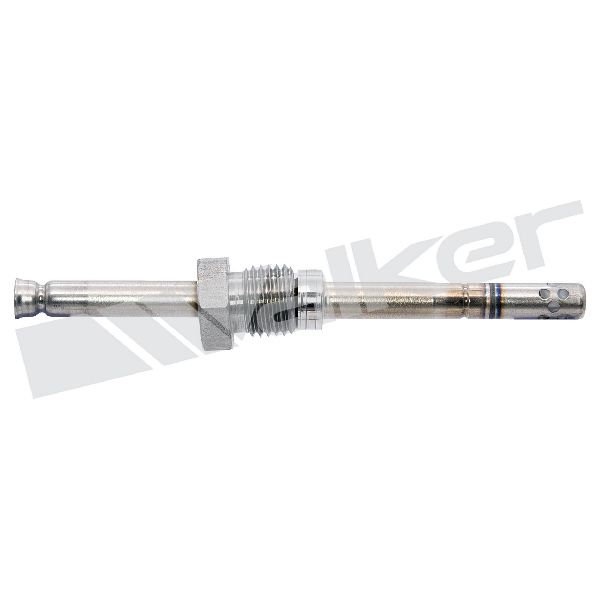
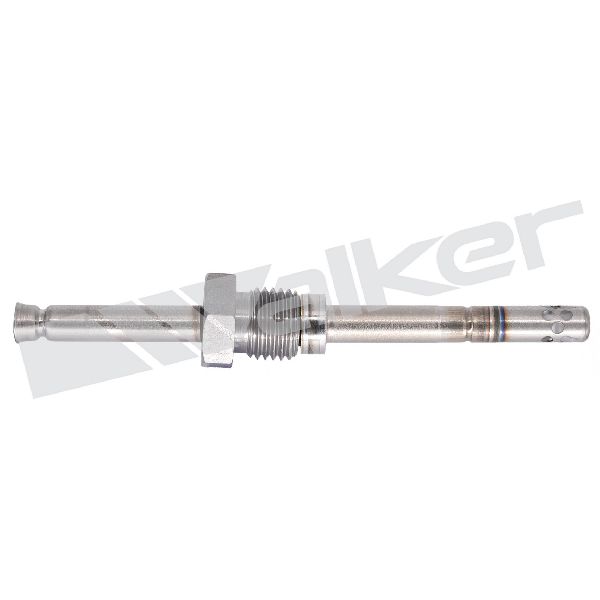
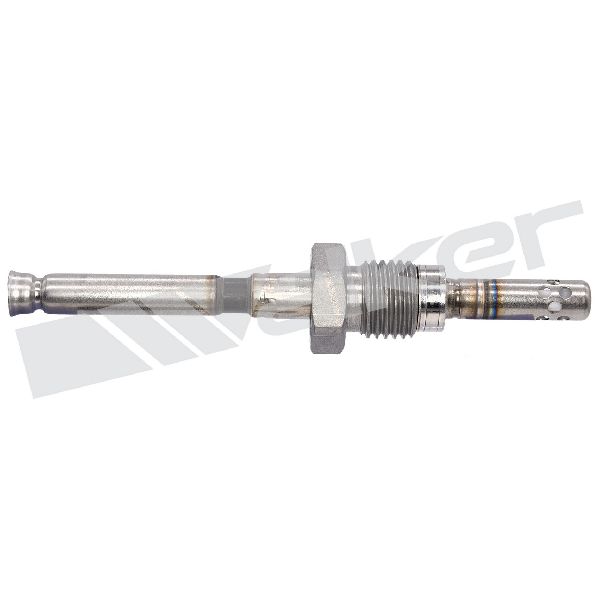
Est. part cost: $0 - Faulty Exhaust Gas Temperature (EGT) Sensors 🟡 Medium Probability → Shop Exhaust Gas Temperature (EGT) Sensor The DPF system relies on multiple EGT sensors (up to five on the L5P) to monitor temperatures for regeneration. Like any sensor exposed to extreme heat cycles, they can fail over time, providing incorrect data to the ECM and disrupting the regeneration process.
How to confirm: Use a scan tool to monitor live data from all EGT sensors with the engine cold (they should all read ambient temperature) and hot. The readings should be plausible and rise and fall with engine load. A sensor that is stuck on one reading or doesn't correlate with the others is faulty. A resistance test can also be performed; a good sensor should have a resistance of around 220 ohms.
Typical fix: Replace the faulty EGT sensor. There are multiple sensors in different positions, so it's critical to identify the correct one.
Est. part cost: $70-$200 per sensor - Upstream Engine Issues Causing Excessive Soot ⚪ Low Probability Problems like leaking fuel injectors, a malfunctioning EGR system, or turbocharger issues can lead to incomplete combustion, which creates more soot than the DPF is designed to handle.
How to confirm: This requires more in-depth diagnostics. Check injector balance rates with a scan tool (significant deviations point to a bad injector). Inspect the EGR system for carbon buildup. Monitor turbo boost pressure to ensure it's within spec. A fuel knock can also indicate injector issues.
Typical fix: Repair the underlying engine problem, which could involve replacing injectors, cleaning the EGR system, or servicing the turbocharger.
Est. part cost: $500-$3000+
Rare But Worth Checking
- Cracked or Clogged DPF: While a clogged DPF is often the result of another issue, the filter itself can fail internally or become so filled with non-burnable ash (especially on higher mileage trucks >150k miles) that it can no longer be cleaned by regeneration and must be professionally cleaned or replaced. This is usually a last resort after all other causes are ruled out.
- Exhaust Leaks: A leak in the exhaust system between the engine and the DPF can alter pressure and temperature readings, confusing the sensors and causing the ECM to trigger regeneration incorrectly.
- ECM/TCM Software Glitch: TSB 21-NA-214 addresses a wide range of DPF and transmission-related codes, including P2459, on 2020 models. The prescribed fix is to reprogram the Engine Control Module (ECM) and Transmission Control Module (TCM) with updated software, indicating a potential software logic issue.
Diagnosis Steps
- Retrieve all stored DTCs with an OBD-II scanner. Note P2459 and any other codes like P2463, P2002, or codes related to intake, fuel, or temperature sensors.
- Check for and review any applicable Technical Service Bulletins (TSBs), such as 24-NA-197 for air filter issues or 21-NA-214 for ECM/TCM programming updates.
- Using the scanner's live data, check the DPF soot level percentage (or grams). A high percentage confirms soot buildup. On 2017+ L5P engines, soot is displayed as a percentage; 100% is the trigger for a normal regen, while 140% will set a P2463 code.
- Inspect the air intake system. Check for a dirty, collapsed, or non-OEM air filter. Inspect all charge air cooler piping and connections for leaks.
- Visually inspect the DPF differential pressure sensor hoses for any signs of melting, cracks, kinks, or blockages. These are common failure points.
- Using the scan tool, monitor the live data from the DPF pressure sensor and all EGT sensors. Verify their readings are logical and change with engine RPM. Compare EGT sensors to each other when the engine is cold; they should read nearly identically.
- If sensor readings are suspect, test the sensor circuits for proper voltage (typically a 5V reference) and ground. Test the resistance of EGT sensors; they should read approximately 220 ohms.
Parts You'll Likely Need
- DPF Differential Pressure Sensor
(OEM #12677718)— This sensor is a primary input for DPF regeneration logic and is a very common failure point due to its location and the harsh environment. It often fails along with its hoses.
Trusted brands: ACDelco, Bosch
OEM price range: $80-$150
Aftermarket price range: $40-$90 - Exhaust Gas Temperature (EGT) Sensor
(OEM #12672665 (Position 1), 12672666 (Position 2), AP63615 (Aftermarket for Positions 3/4/5))— Accurate temperature readings are critical for the regeneration process. Failure of one or more of these sensors will prevent proper DPF cleaning. The L5P has multiple EGT sensors, and it's crucial to identify the correct one by position.
Trusted brands: ACDelco, Denso, Walker Products
OEM price range: $100-$200
Aftermarket price range: $50-$120 - Engine Air Filter — As per TSB 24-NA-197, a non-OEM, dirty, or collapsed air filter can cause excessive soot production, leading to frequent regenerations. Using a genuine GM/ACDelco filter is recommended.
Trusted brands: ACDelco
OEM price range: $40-$70
Aftermarket price range: $20-$50 - Diesel Particulate Filter (DPF) — This is the final step if the filter is clogged with ash beyond recovery or is internally damaged. This is an expensive part and should only be replaced after all other potential causes have been thoroughly ruled out.
Trusted brands: ACDelco, Dorman
OEM price range: $2000-$3000+
Aftermarket price range: $1200-$2000
Related Codes That Often Appear With This One
- P2463 — Stands for "Diesel Particulate Filter Restriction - Soot Accumulation." This code often appears with P2459 because the frequent regenerations (P2459) are a direct result of the filter being too full of soot (P2463). TSBs confirm they are commonly found together.
- P2002 — Stands for "Diesel Particulate Filter Efficiency Below Threshold." This indicates the DPF is not filtering soot effectively, which can be due to it being overly full, damaged, or clogged, tying into the regeneration frequency problem. It is also mentioned alongside P2459 in TSB 21-NA-214.
Technical Service Bulletins (TSBs) & Recalls
- Addresses frequent regens and codes P2459/P2463, identifying the cause as a non-GM or dirty/wet air filter affecting fuel metering and causing excessive soot. The fix involves installing an OEM filter and performing a Small Quantity Data reset.
- For 2020 models, this TSB covers a wide array of DTCs including P2459, P2002, and P2463, along with transmission shifting issues. The solution is to reprogram both the Engine Control Module (ECM) and the Transmission Control Module (TCM).
- Replaces PIP5468. Addresses multiple DTCs, including P2459, caused by leaks in the charge air cooler system (e.g., loose ductwork at the turbo or throttle body). Recommends a pressure test of the charge air system.
- An informational bulletin explaining how the DPF system works on L5P engines, how to read soot levels (as a percentage), and lists many factors that can contribute to high soot levels, including air filter restrictions, CAC leaks, and skewed sensors.
Platform-Specific Known Issues
- GM has issued multiple Technical Service Bulletins (TSBs) for the L5P Duramax engine that include code P2459. For example, TSB #24-NA-197 provides a specific procedure for when P2459 appears with P2463, P11FB, and P11D3. [Bulletin #24-NA-197]
- TSB #21-NA-214 links P2459 and other DPF codes to a wide range of symptoms, including harsh transmission shifts, noises, and vibrations, indicating the ECM may alter performance strategies when DPF issues are detected. [Bulletin #21-NA-214]
Mechanic-Grade Diagnostic Values
- EGT Sensor Resistance — expected: ~220 Ohms. Failure: A reading of OL (Open Load/Limit) indicates a failed, open-circuit sensor. A significantly lower reading indicates an internal short.
- EGT Sensor Circuit Voltage (at connector, key on, engine off) — expected: One pin should have ~5V reference from the ECM, the other should have a good ground.. Failure: Absence of 5V or a high resistance to ground points to a wiring issue between the sensor and the ECM, not a faulty sensor.
- DPF Differential Pressure Sensor Voltage (at idle) — expected: ~0.16V to 0.5V. Failure: Voltage that is stuck high or does not respond to changes in engine RPM suggests a clogged hose or a faulty sensor.
- DPF Soot Load Percentage (via Scan Tool) — expected: Should be below 100%.. Failure: The ECM triggers a normal regen at ~100%. A "continue driving" message appears at 115%. DTC P2463 sets at 140%, requiring a service regeneration.
Scan Tool Commands That Help
- GDS2 (or compatible high-end scanner like Edge CTS3): Service Regeneration (also called Forced Regeneration) — Used when the DPF soot level is critically high (e.g., over 140%) and the vehicle will not perform a regeneration on its own. This is a stationary procedure that raises exhaust temperatures to burn off soot.
- GDS2 (or compatible): Regeneration Enable — If the soot level is not critically high (e.g., below 70%), this function can be enabled before returning the vehicle to the customer to ensure a normal driving regen occurs. It is considered more effective than a forced service regen for moderate soot levels.
- GDS2 (or compatible): Small Quantity Data Reset / Fuel Trim Reset — This should be performed after addressing issues that affect the air/fuel mixture, such as replacing a non-OEM air filter or fixing intake leaks, as noted in TSB 24-NA-197. It resets the fuel trim adaptations.
Wiring & Ground Locations
- E41 ECM (Engine Control Module) — On the driver's side of the engine bay, below the upper coolant hose, mounted to a bracket.. The ECM controls the entire DPF regeneration process based on inputs from various sensors. All sensor wiring terminates here, making it a central point for electrical diagnosis.
- Main Engine Grounds — Key grounds include a strap from the negative battery cable to the passenger side cylinder head and another from the body to the driver's side cylinder head. An additional ground connects a wiring harness to the frame under the driver's side floorboard.. Poor ground connections can cause erratic sensor readings and unpredictable behavior from the ECM, potentially leading to incorrect regeneration commands or false codes.
Real Owner Repair Stories
- Stevens Truck Power YouTube Channel (2020 Duramax L5P) — "Service Emissions System" message on the dash with a countdown to speed derate, but no active trouble codes stored in the ECM.
❌ Tried (didn't work) Driving the vehicle for over 50 miles as suggested by the owner's manual.
✅ What actually fixed it The Manifold Absolute Pressure (MAP) sensor, located on top of the engine, was completely caked in soot. The sensor was removed, carefully cleaned with a pick and starting fluid until the blue sensor element was visible, and reinstalled. The message cleared after driving 5-10 miles. - Diesel Training Group Forum (2020 L5P Duramax with 128k+ miles) — Recurring P2459 code after DPF was replaced due to a P2002 code. Engine oil level was overfull, indicating significant fuel dilution.
❌ Tried (didn't work) Replacing the DPF assembly., Cleaning MAF and MAP sensors., Performing fuel trim and small quantity resets., Verifying latest ECM/TCM calibrations., Changing the oil and filter.
✅ What actually fixed it The recurring issue was strongly linked to the customer repeatedly using a dirty, non-OEM air filter, which was causing the engine to run rich and create excessive soot. The final resolution involved educating the customer to exclusively use OEM air filters to prevent the problem from returning.
"I Checked Everything" — The Actual Cause
- In one documented case, a 2020 L5P presented with a 'Service Emissions System' warning and impending power reduction but had no stored DTCs and no apparent intake leaks. The root cause was a MAP sensor so heavily coated in soot that it could not read correctly, leading to an improper air-fuel mixture and subsequent emissions system warnings. Cleaning the sensor resolved the issue without any part replacement.
OEM Part Supersession History
GM 55591380 (Particulate Matter Sensor)→GM 12685369— Standard part update/revision for 2017-2019 models.
Heads up: This part is for 2017-2019 models only.N/A→GM 12696927 (Particulate Matter Sensor)— New part number for the 2020 model year refresh.
Heads up: This part is for 2020-2022 models and is not compatible with 2017-2019 trucks.N/A→GM 12698454 (Particulate Matter Sensor)— New part number for 2021-2023 Cab & Chassis models.
Heads up: This part is specified for Cab & Chassis (C&C) models from 2021-2023.
Model Year Variations Within This Range
- 2017-2019 vs 2020-2021: While the long block of the L5P engine is largely the same, the 2020 refresh introduced some minor changes, such as a different coolant line to the turbo and a larger oil cooler. More significantly for emissions codes, the Exhaust Particulate Matter sensor uses a different part number for 2020 and newer models (12696927) compared to the 2017-2019 models (12685369), indicating they are not interchangeable.
Helpful Videos
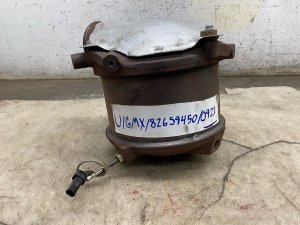
Used OEM Parts in Stock
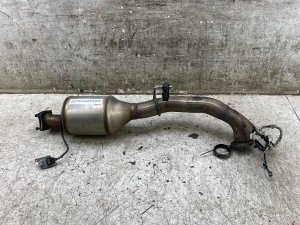
New Aftermarket Parts Available


The information in this article is provided for general reference and educational purposes only. Vehicle specifications, procedures, and part compatibility can vary by production date, trim level, and region. Always consult your vehicle's factory service manual and verify part numbers before purchasing or performing repairs. Safety-critical components such as airbags, seat belts, and braking systems should be installed by a qualified professional.
- Gmc SIERRA 2500:
- 🧭 Diagnostic Flowchart
- 🎬 Helpful Videos
- 🛍️ Shop This Part
- What's Unique About the 2017-2021 Gmc SIERRA 2500
- Symptoms You May Notice
- Most Likely Causes
- Rare But Worth Checking
- Diagnosis Steps
- Parts You'll Likely Need
- Related Codes That Often Appear With This One
- Technical Service Bulletins (TSBs) & Recalls
- Platform-Specific Known Issues
- Mechanic-Grade Diagnostic Values
- Scan Tool Commands That Help
- Wiring & Ground Locations
- Real Owner Repair Stories
- "I Checked Everything" — The Actual Cause
- OEM Part Supersession History
- Model Year Variations Within This Range
- 🎟️ Get 5% Off