

P2459 on 2014 Ram 1500 3.0L EcoDiesel: Regeneration Frequency Explained
This code means the Diesel Particulate Filter (DPF) is trying to clean itself (regenerate) too often. The most common causes are short-trip driving habits, faulty exhaust sensors (EGT, O2, or pressure sensors), or outdated engine software. A software update and ensuring regular highway driving often resolves the issue.
- P2459 on a 2014 Ram EcoDiesel means the DPF is cleaning itself too often.
- Before replacing any parts, ensure your truck's software is up to date by checking with a dealer, as multiple TSBs address this code with a PCM flash.
- Change your driving habits. The truck needs regular highway driving (30+ minutes) to keep the DPF healthy; short city trips are a primary cause of this code.
- If software and driving habits aren't the issue, the most likely culprits are the DPF pressure sensor, EGT sensors, or an O2 sensor.
- Do not immediately assume the expensive DPF is bad. It is almost always a less expensive sensor or software issue causing the problem.
What's Unique About the 2014-2014 Ram 1500
The early 3.0L EcoDiesel engines in the 2014 Ram 1500 and Jeep Grand Cherokee were known for having sensitive emissions systems. The regeneration strategy is highly dependent on a network of sensors and specific driving conditions. As evidenced by multiple Technical Service Bulletins (TSBs), Chrysler (FCA) released several PCM software updates to refine the logic for DPF regeneration. TSB 18-017-16 is particularly notable because it not only requires a software flash but also the mandatory replacement of the upstream O2 sensor and inspection of an EGT sensor, confirming that faulty sensor inputs were a primary cause of false P2459 codes. Therefore, a crucial first step for this specific vehicle is always to check if the latest software and associated sensor replacements have been performed.
Diagnostic Flowchart
Tap your situation to follow the diagnostic path that matches what you're seeing on this vehicle.
Symptoms You May Notice
- Check Engine Light is on
- Message on the dash indicating DPF is full or needs regeneration (e.g., "Exhaust Filter Full - Power Reduced See Dealer")
- Noticeably frequent regeneration cycles (you might hear the cooling fan run at high speed, a change in engine tone, and see a message in the EVIC)
- Reduced engine performance or acceleration
- Vehicle entering 'limp mode'
- Decreased fuel economy
- Replacing the entire Diesel Particulate Filter (DPF) assembly. The DPF itself is often not the problem; the issue is usually with the aultysensors that monitor it or the conditions that allow it to regenerate. A clogged DPF is a symptom, not the root cause of P2459.
Most Likely Causes
- Driving Habits (Short Trips) 🔴 High Probability The DPF needs sustained highway speeds to get hot enough for 'passive' regeneration. Frequent short trips or excessive idling prevent this, forcing more frequent 'active' regenerations and triggering the code. Owners who use the truck primarily for short commutes (e.g., 15-20 minutes) frequently report this code.
How to confirm: Review recent driving patterns. If the truck is used primarily for short, in-town trips with significant idle time, this is a likely cause.
Typical fix: Take the vehicle for a 30-45 minute drive at sustained highway speeds (above 50 mph) to allow a full regeneration cycle to complete. Some owners use fuel additives like Hot Shot's Secret to help keep the system clean.
Est. part cost: $0 - Outdated Powertrain Control Module (PCM) Software 🔴 High Probability → Shop Engine Control Module (ECM) As documented in TSB 18-017-16 (superseding 18-021-15), the original software logic was overly sensitive. FCA released updates to improve the system's accuracy. The TSB explicitly bundles the software flash with the replacement of the O2 sensor and inspection of the EGT sensor, suggesting the original software could not properly interpret data from aging sensors.
How to confirm: A dealership or a properly equipped independent shop can check the current software version against the latest available version from Stellantis. They can also check the vehicle's service history for TSB 18-017-16.
Typical fix: Reprogramming (flashing) the PCM with the latest software and replacing the upstream O2 sensor as per TSB 18-017-16.
Est. part cost: $0 (if part of a recall/TSB) or $100-$250 for shop labor - Faulty Exhaust Gas Temperature (EGT) or O2 Sensors 🟡 Medium Probability → Shop Oxygen Sensor TSB 18-017-16 specifically calls for O2 sensor replacement and EGT sensor inspection/cleaning alongside the software update. These sensors provide critical data for regeneration, and if they become slow or inaccurate, the PCM will miscalculate the soot load, triggering unnecessary regens.
How to confirm: Use a scan tool to monitor live data from the EGT and O2 sensors to check for erratic or out-of-spec readings. Resistance tests can also be performed on the sensors.
Typical fix: Replace the faulty sensor(s). 🎬 See this walkthrough on how to install a new EGT sensor. The upstream O2 sensor is Mopar Part # 68171190AC. The DPF inlet EGT sensor is Mopar Part # 5146662AD, and the outlet EGT sensor is # 5146663AD.
Est. part cost: $50-$250 per sensor - Faulty DPF Differential Pressure Sensor or Hoses 🟡 Medium Probability This sensor measures the pressure difference before and after the DPF to calculate soot load. If the sensor is bad or its connecting hoses are clogged, cracked, or melted from heat, it will report an incorrect soot level, often tricking the PCM into thinking the DPF is full when it's not.
How to confirm: Inspect the hoses for cracks, blockages, or loose connections. Test the sensor's voltage output with a scan tool to see if it corresponds to engine RPM changes.
Typical fix: Replace the DPF differential pressure sensor and/or its hoses. The sensor is often cited as Mopar Part # 05149229AA or 68229761AB. 🎬 Watch: Step-by-step guide to changing the DPF pressure sensor.
Est. part cost: $60-$150
Rare But Worth Checking
- Exhaust Leaks: An exhaust leak before the DPF can alter pressure and temperature readings, confusing the PCM and leading to incorrect regeneration calculations.
- Leaking Fuel Injectors: A faulty injector can cause incomplete combustion, leading to the production of excessive soot that overwhelms the DPF and causes it to request more frequent regenerations.
- Cracked/Leaking EGR Cooler: → Shop Exhaust Gas Recirculation (EGR) Valve A known issue on these engines (subject to Safety Recall VB1) is an internally cracking EGR cooler. This leaks coolant into the intake, which burns and creates excessive soot, clogging the DPF prematurely and triggering P2459. Owners report a faint coolant smell and mysterious coolant loss as symptoms.
- Incorrect Air Filter: → Shop Air Cleaner Assembly Multiple forum users have reported that using an incorrect aftermarket air filter, particularly those with glue strips across the pleats, can cause a P2459 code. The theory is that it restricts airflow just enough to alter the calculations used by the PCM for DPF soot loading.
Diagnosis Steps
- Verify the code with a reliable OBD-II scanner.
- Analyze driving habits. If the truck is only used for short trips, perform an extended highway drive (30+ minutes at >50mph) to initiate a full regeneration cycle and see if the code clears.
- Check for Technical Service Bulletins (TSBs). Contact a Ram dealer with your VIN to see if TSB 18-017-16 (or its predecessors) is open or has been completed for your vehicle. This is a critical step.
- Scan for other fault codes. Pay close attention to codes for O2 sensors (P0133), EGT sensors (P2084), or DPF restriction (P2463), as they are often the root cause.
- Using a scan tool with live data capability (like AlfaOBD), monitor the DPF differential pressure sensor, EGT sensors, and O2 sensors. Look for readings that are stuck, erratic, or out of specification.
- Inspect the hoses connected to the DPF differential pressure sensor for any cracks, melting, or blockages. These are a common point of failure.
- Inspect the air filter to ensure it is a correct OEM-style filter without restrictive glue bands.
- Inspect the exhaust system for any pre-DPF leaks and check for signs of coolant residue around the EGR cooler, which could indicate a leak.
- If sensors and software are confirmed to be good, a forced regeneration may be attempted with a professional scan tool or software like AlfaOBD. 🎬 Watch: How to perform a forced DPF regeneration yourself. Note that 2018+ models may require a security gateway bypass module for this.
Parts You'll Likely Need
- Oxygen (O2) Sensor (Upstream)
(OEM #68171190AC)— A slow-responding O2 sensor can upset the air-fuel mixture calculations needed for an effective regeneration. TSB 18-017-16 mandates its replacement along with a software flash.
Trusted brands: Mopar, Denso, Bosch, NGK
OEM price range: $150-$250
Aftermarket price range: $70-$150 - Exhaust Gas Temperature (EGT) Sensor
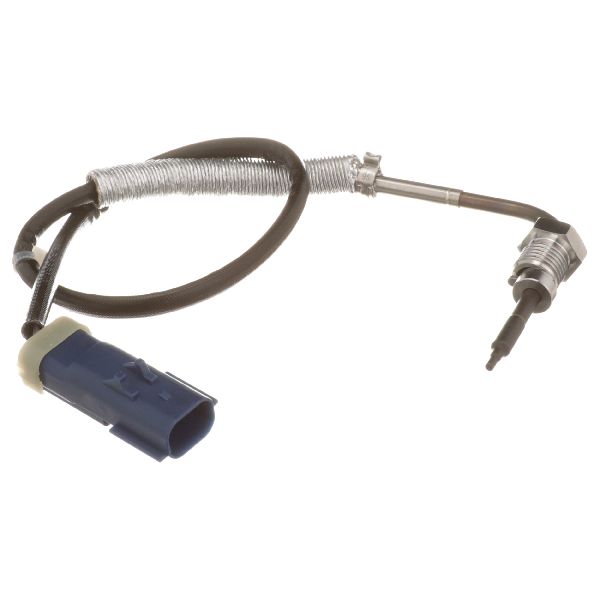
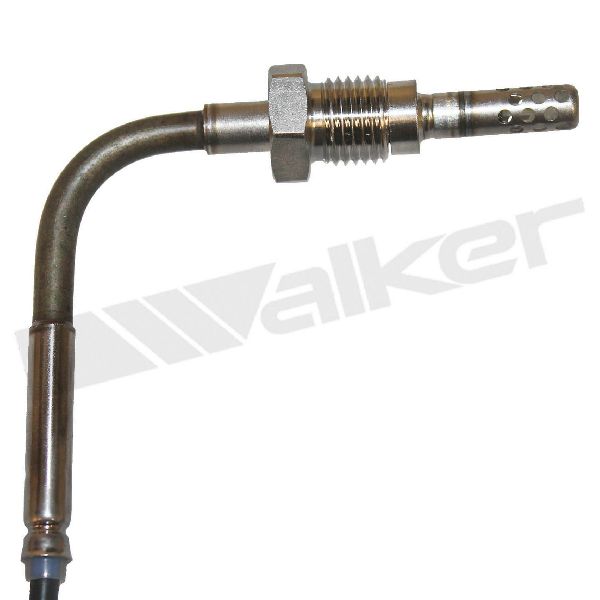
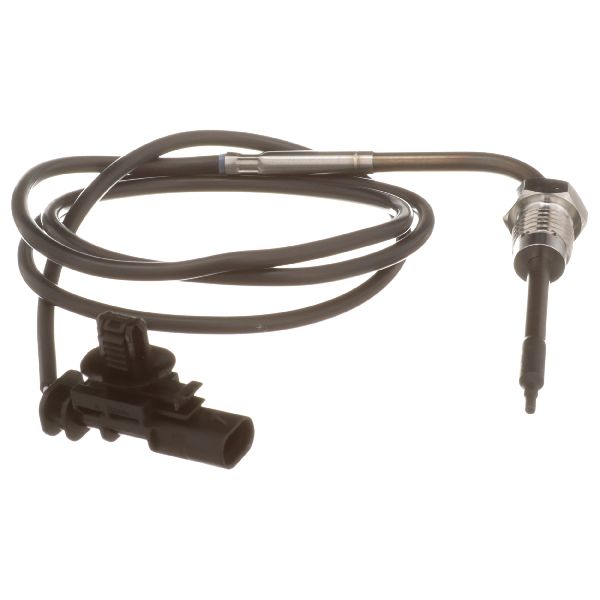
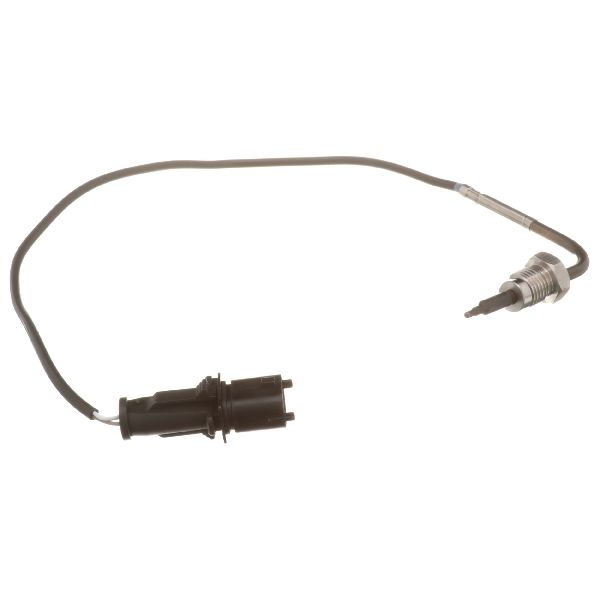
(OEM #5146662AD (DPF Inlet), 5146663AD (DPF Outlet))— A faulty EGT sensor provides incorrect temperature data, which is critical for DPF regeneration. This is a common failure point mentioned in TSBs.
Trusted brands: Mopar, Bosch, NTK
OEM price range: $120-$200
Aftermarket price range: $50-$120 - DPF Differential Pressure Sensor
(OEM #68229761AB)— This sensor directly measures soot load by reading backpressure. A faulty sensor or its hoses can send incorrect data, causing the PCM to request regens when they aren't needed. Note: This part number is for the 3.0L EcoDiesel and supersedes 68229761AA.
Trusted brands: Mopar, Bosch
OEM price range: $160-$245
Aftermarket price range: $50-$100
Related Codes That Often Appear With This One
- P0133 — O2 Sensor 1/1 Slow Response. This code is explicitly mentioned in TSB 18-017-16 alongside P2459, indicating a faulty O2 sensor is a direct contributor to the regeneration frequency issue.
- P2084 — Exhaust Gas Temperature Sensor Circuit Performance. Also mentioned in the TSBs, a bad EGT sensor provides incorrect temperature data, which is critical for the PCM to decide when and how to perform a regeneration.
- P2463 — Diesel Particulate Filter Restriction - Soot Accumulation Too High. This code indicates the DPF is actually clogged, which can be a consequence of the frequent but incomplete regenerations that trigger P2459, or from a separate issue like a leaking EGR cooler.
Technical Service Bulletins (TSBs) & Recalls
- 18-021-15 REV. E (and its successor 18-017-16): This is the most critical TSB. It addresses P2459 by reprogramming the PCM with improved logic, but also mandates replacing the O2 sensor (1-1/Upstream) and inspecting/cleaning the EGT Sensor 1/2. This indicates FCA identified faulty sensor data as a primary driver for the original software's miscalculations.
- 18-028-14 REV. D: An earlier software update that also bundled P2459 with other emissions-related DTCs, showing a history of software revisions to tackle this problem.
- Safety Recall VB1 / NHTSA 19V-757: While not directly for P2459, this recall for cracking EGR coolers is highly relevant. An internal coolant leak from a cracked EGR cooler can introduce vaporized coolant into the intake, leading to excessive soot, which in turn clogs the DPF faster and can trigger P2459.
Platform-Specific Known Issues
- Owner Experience: DPF Differential Pressure Sensor Replacement: On the Turbo Diesel Register forum, a user with a 2023 truck (experiencing the same code) reported that after the dealer performed diagnostics, the root cause was identified as a faulty aftertreatment DPF differential pressure sensor. Replacement of the sensor resolved the P2459 code. This highlights that even on newer models, this sensor remains a key failure point.
- Owner Experience: The Wrong Air Filter: → Shop Air Cleaner Assembly A Reddit user with a 2023 Ram 2500 detailed a long battle with a recurring P2459 code where the dealer replaced the differential pressure sensor and the DPF itself. The issue persisted until it was discovered that an incorrect aftermarket air filter was the cause. Using filters with glue straps or the wrong media can apparently restrict airflow enough to trigger emissions codes. The owner stated that using a Mopar or specific equivalent (like Wix or Microguard without glue straps) resolved the issue.
- Owner Experience: EGR Cooler Leak: → Shop Exhaust Gas Recirculation (EGR) Valve A user on EcoDieselRam.com described a story where a faint smell of coolant and gradual temperature increases were eventually traced to a leaking EGR cooler. They note that this issue can cause the truck to get stuck in a "never ending regen cycle," which is the direct trigger for P2459. This was outside the powertrain warranty and was quoted as a $2,200 repair.
Mechanic-Grade Diagnostic Values
- DPF Differential Pressure Sensor Signal Voltage (KOEO) — expected: ~0.5V. Failure: Voltage significantly different from 0.5V, or does not change when engine RPM is increased.
- DPF Differential Pressure Sensor Reference Voltage (KOEO) — expected: ~5.0V. Failure: Voltage is not stable at 5.0V.
- Upstream O2 Sensor (Narrowband) Voltage at Idle — expected: Rapidly fluctuating between ~0.1V (lean) and ~0.9V (rich).. Failure: Voltage is stuck at a specific value (e.g., 0.45V) or responds very slowly.
- EGT Sensor (PTC Type) Resistance at Room Temperature — expected: ~215-220 Ohms (Ω). Failure: Resistance is infinite (open circuit) or very low (short circuit). Resistance does not increase when the sensor is heated.
Scan Tool Commands That Help
- AlfaOBD: Stationary DeSoot / Forced DPF Regeneration — To manually initiate a DPF cleaning cycle when the truck is unable to complete one on its own due to short-trip driving or after replacing a related component. The DPF may need to be 'sufficiently full' to allow activation. The procedure requires selecting 'DPF Regeneration Enabling', turning the ignition off, cycling the door, and restarting the engine to begin.
Wiring & Ground Locations
- EGT Sensor #3 Connector — The sensor wiring runs across the top of the transmission to a main harness connector.. This sensor's data is critical for regeneration. The specific wires are a brown wire and a brown wire with a blue tracer, located at pins 15 and 16 of the connector, which can be tested for continuity back to the ECM.
- Particulate Matter Sensor Connector — The sensor harness runs to a module on the front of the vehicle.. A performance fault in this sensor can accompany a P2459 code. The connector has a pink wire (power) and a black wire (ground). The pink wire should have battery voltage with the key on, which is a key diagnostic check.
Real Owner Repair Stories
- YouTube user 'SoDakZak' (Ram 3500 with 6.7L Cummins (similar DPF logic)) — Check Engine Light with code P2459 appearing at ~400 mile intervals.
❌ Tried (didn't work) Clearing the code would only provide a temporary fix before it returned.
✅ What actually fixed it The owner concluded the issue was from excessive idling and short trips. The code stopped returning (for over 1,500 miles) after they consciously minimized engine idling time and consistently used a combination of Hot Shot's Secret 'Everyday Diesel Treatment' and 'Extreme Diesel Treatment' fuel additives.
"I Checked Everything" — The Actual Cause
- A dirty Mass Air Flow (MAF) sensor can cause a P2459 code. The ECU uses airflow data from the MAF sensor to calculate the expected soot load in the DPF. If the MAF sensor is dirty (often due to an over-oiled aftermarket air filter) and reports less air than is actually entering the engine, the ECU may incorrectly flag the regeneration frequency as abnormal, even if there are no leaks in the exhaust system.
OEM Part Supersession History
68229761AA→68229761AB— Standard part revision by the manufacturer for the DPF Differential Pressure Sensor on the 3.0L EcoDiesel.
Heads up: Part number 05149229AA is often confused but is for the 6.7L Cummins engine and will not work on the 3.0L EcoDiesel.
Helpful Videos
We Have This Part in Stock


The information in this article is provided for general reference and educational purposes only. Vehicle specifications, procedures, and part compatibility can vary by production date, trim level, and region. Always consult your vehicle's factory service manual and verify part numbers before purchasing or performing repairs. Safety-critical components such as airbags, seat belts, and braking systems should be installed by a qualified professional.
- Ram 1500:
- 🧭 Diagnostic Flowchart
- 🎬 Helpful Videos
- 🛍️ Shop This Part
- What's Unique About the 2014-2014 Ram 1500
- Symptoms You May Notice
- Most Likely Causes
- Rare But Worth Checking
- Diagnosis Steps
- Parts You'll Likely Need
- Related Codes That Often Appear With This One
- Technical Service Bulletins (TSBs) & Recalls
- Platform-Specific Known Issues
- Mechanic-Grade Diagnostic Values
- Scan Tool Commands That Help
- Wiring & Ground Locations
- Real Owner Repair Stories
- "I Checked Everything" — The Actual Cause
- OEM Part Supersession History
- 🎟️ Get 5% Off