

P2459 on 2014-2018 Ram ProMaster 3.0L EcoDiesel: DPF Regeneration Frequency Causes and Fixes
This code means the Diesel Particulate Filter (DPF) is cleaning itself too often. The most common cause is outdated engine software, which a dealer must update per a Technical Service Bulletin (TSB). Other likely causes are short-trip driving habits that prevent complete regeneration, or a faulty DPF differential pressure sensor and its hoses. Ignoring the code will lead to limp mode and expensive DPF failure.
- Before buying any parts, contact a Ram dealer with your VIN to check for open TSBs or recalls related to PCM software updates (like 18-018-15 or 18-038-15). This is the most common fix.
- Evaluate your driving habits. If you primarily drive short distances, take the van for a 30-45 minute drive at highway speeds to allow the DPF to clean itself.
- If a software update and highway driving don't fix the code, the next most likely culprit is the DPF differential pressure sensor or its hoses.
- Do not immediately assume the expensive DPF itself has failed. It is almost always a less expensive sensor, software, or driving style issue causing the P2459 code.
What's Unique About the 2014-2018 Ram ProMaster
The 3.0L I4 EcoDiesel (an Iveco F1C engine) in the ProMaster is known for having specific software logic issues that can falsely trigger a P2459 code. Ram released several Technical Service Bulletins (TSBs) to update the software, making a trip to the dealer for a reflash a primary diagnostic step. Unlike other diesels where this code might immediately point to a bad sensor, on the ProMaster, outdated software is a very high-probability cause that must be ruled out first to avoid unnecessary parts replacement. The vehicle is also a rebadged Fiat Ducato, sharing its emissions system architecture and related faults.
Symptoms You May Notice
- Check Engine Light (Malfunction Indicator Lamp) is on
- Vehicle enters a reduced power "limp mode"
- Poor acceleration and engine performance
- Message on the dashboard indicating an issue with the DPF or exhaust system
- Increased fuel consumption
- Engine running hotter than usual
- Excessive black smoke from the exhaust
- Replacing the entire Diesel Particulate Filter (DPF) assembly. This is an extremely expensive repair ($2,000+) and is often unnecessary. The DPF is usually the victim of another problem (software, sensors, driving habits), not the root cause of P2459.
Most Likely Causes
- Outdated Powertrain Control Module (PCM) Software 🔴 High Probability → Shop Engine Control Module (ECM) Ram released multiple TSBs to fix faulty logic in the original software that incorrectly triggers P2459 and other related codes. TSB 18-018-15 REV B for 2014 models and 18-038-15 REV-B for 2015 models specifically address this.
How to confirm: A Ram dealership or a well-equipped independent shop using a wiTECH scan tool can check your vehicle's software calibration ID against the latest one available from the manufacturer. Your VIN is required to check for applicability.
Typical fix: Reprogramming (flashing) the PCM with the latest software version. This must be done by a dealer or a shop with the proper equipment and a subscription to FCA's TechAuthority.
Est. part cost: $0 - Driving Habits (Frequent Short Trips) 🟡 Medium Probability As a commercial vehicle, ProMasters are often used for city deliveries with stop-and-go driving, which prevents the exhaust from getting hot enough for a complete, passive regeneration cycle. This leads to an accumulation of soot that the system must then try to burn off via more frequent active regenerations.
How to confirm: Review your typical driving patterns. If most trips are under 20-30 minutes and don't involve sustained highway speeds (over 50 mph), this is a likely contributor.
Typical fix: Drive the vehicle at highway speeds (55+ mph) for at least 30-45 minutes to allow a full regeneration cycle to complete. Some owners report needing to maintain RPMs over 2,000 for the process to be effective.
Est. part cost: $0-$25 - Faulty DPF Differential Pressure Sensor 🟡 Medium Probability This sensor and its connecting hoses are exposed to extreme heat and vibration. The sensor can fail internally, and the rubber hoses can crack, melt, or become clogged with soot, leading to inaccurate pressure readings that trick the PCM into thinking the DPF is full.
How to confirm: With the engine off and key on, use a scan tool to check the DPF pressure reading. It should be at or very near zero (0 PSI / 0 kPa). If it shows significant pressure, the sensor is likely faulty. 🎬 See this diagnostic walkthrough on how to test the DPF pressure sensor. Visually inspect the sensor's hoses for cracks, melting, or blockages.
Typical fix: Replace the DPF differential pressure sensor and/or its hoses. It is highly recommended to replace the hoses along with the sensor as they are a common failure point.
Est. part cost: $75-$200 - Faulty Exhaust Gas Temperature (EGT) Sensors ⚪ Low Probability → Shop Exhaust Gas Temperature (EGT) Sensor The DPF system uses multiple EGT sensors to manage the high temperatures needed for regeneration. If one fails or provides inaccurate readings, the process can be disrupted, causing it to fail and try again frequently. TSBs for related vehicles mention EGT sensor inspection as part of the diagnostic process for regeneration issues.
How to confirm: Use a scan tool to monitor live data from all EGT sensors as the engine warms up. All sensors should read ambient temperature when cold and rise steadily and plausibly. A sensor that is stuck, reads illogically, or doesn't change with temperature is faulty. A resistance test can also be performed; a common value is 200-240 ohms at room temperature.
Typical fix: Replace the faulty EGT sensor.
Est. part cost: $50-$150
Rare But Worth Checking
- Incorrect Cylinder Head Installed: TSB #09-013-16 specifically states that P2459 may be set if an incorrect cylinder head was installed during a previous major engine repair. This is a very specific and rare case to consider if the issue appeared after such work was performed.
- Clogged or Faulty EGR System: A sticking EGR valve or clogged EGR cooler can lead to excessive soot production, which overloads the DPF and causes it to regenerate too frequently. This is often accompanied by EGR-related codes like P0401 or P0402, which are also mentioned in software update TSBs.
- Incorrect Air Filter Installed: → Shop Air Cleaner Assembly A restrictive or improper engine air filter can choke the engine, leading to a rich air-fuel mixture and increased soot. This can overload the DPF and trigger P2459. Some owners on Cummins forums with the same code have traced the issue to non-OEM air filters.
Diagnosis Steps
- Check for Technical Service Bulletins (TSBs). This is the most critical first step. Contact a Ram dealer with your VIN to see if software updates from TSBs 18-018-15 REV B, 18-038-15 REV-B, or emissions recalls V97/ZC0 are open for your vehicle.
- Analyze Driving Habits. Be honest about whether the van is used for short, low-speed trips. If so, attempt a 'highway regeneration' by driving at sustained highway speeds (55+ mph) for 30-45 minutes.
- Scan and Check DPF Pressure Sensor Data. Use an OBD-II scanner with live data capability. With the Key On, Engine Off, check the DPF differential pressure sensor reading. It should be near 0 PSI / 0 kPa and the signal voltage should be approximately 0.5V. If it reads a positive pressure or incorrect voltage, the sensor is faulty.
- Inspect DPF Pressure Sensor Hoses. Visually and physically inspect the two rubber hoses connected to the DPF pressure sensor for any cracks, melting, blockages, or kinks. These are a very common failure point.
- Monitor EGT Sensors. Use a scan tool to view live data for all exhaust gas temperature sensors. Ensure they read ambient temperature when cold and rise steadily and logically as the engine warms up.
- Inspect Air Filter. Ensure the engine air filter is clean and is an OEM-specification part. A restrictive aftermarket filter can cause this code.
- Inspect for Upstream Faults. Check for codes related to the EGR system, turbocharger, or fuel injectors, as these systems can create excess soot and overload the DPF.
Parts You'll Likely Need
- PCM Software Update — This is the most common fix, addressing faulty logic in the engine's computer that causes the code to be set incorrectly. Addressed by TSBs 18-018-15 REV B and 18-038-15 REV. B.
Related Codes That Often Appear With This One
- P2463 — This code means 'DPF Restriction - Soot Accumulation'. It is the direct result of the DPF becoming clogged, which in turn causes the frequent regeneration attempts flagged by P2459. It is cited in the same TSBs.
- P2458 — This code for 'DPF Regeneration Duration' indicates the cleaning cycle is taking too long. It often appears with P2459 as both point to problems with the regeneration process.
- P2002 — This code for 'DPF Efficiency Below Threshold' suggests the filter is not working correctly, which can be a cause or a result of the frequent regeneration attempts.
- P0401 / P0402 — These EGR-related codes indicate flow issues. A malfunctioning EGR system can cause excessive soot, overloading the DPF and triggering P2459. TSB 18-038-15 REV. B groups these codes together as being fixable with a software update.
Technical Service Bulletins (TSBs) & Recalls
- 18-018-15 REV B: Recommends a PCM software update for 2014 models to address P2459 and other DTCs.
- 18-038-15 REV-B: Recommends a PCM software update for 2015 models for P2459 and other emissions-related codes.
- 0901316: Notes that P2459, P2458, and P2002 may be set as a result of a recent, incorrect cylinder head replacement.
Platform-Specific Known Issues
- Emissions Recall V97 and ZC0 were issued for 2014-2016 models to update ECM/TCM software and extend the warranty on numerous emissions components, including the DPF and related sensors.
Mechanic-Grade Diagnostic Values
- DPF Differential Pressure Sensor Signal Voltage (Key On, Engine Off) — expected: ~0.5V. Failure: A reading significantly different from 0.5V, or one that is stuck high (near 5V) or low (0V), suggests a sensor or circuit fault. Some Cummins documentation specifies a range of 0.61 - 0.77 VDC below 77°F.
- DPF Differential Pressure at Idle — expected: Near 0 PSI / 0 kPa. Failure: A sustained positive pressure reading (e.g., over 1-2 PSI) at idle indicates a blockage in the DPF or the sensor's hoses.
- Exhaust Gas Temperature (EGT) Sensor Resistance — expected: 200 - 240 ohms at room temperature (approx. 68-77°F / 20-25°C).. Failure: Resistance significantly outside this range, or an open/short circuit, indicates a faulty sensor.
- Temperature Manifold Absolute Pressure (TMAP) Sensor Reading vs. Ambient — expected: Should read ambient temperature when the engine is cold and has been sitting overnight.. Failure: A TMAP sensor reading a significantly higher temperature (e.g., 205°F when ambient is 60°F) when cold indicates a faulty sensor that can cause excessive regeneration.
Scan Tool Commands That Help
- wiTECH / AlfaOBD / Autel: Diesel Particulate Filter (DPF) Regeneration — To command a stationary (forced) regeneration when the vehicle is unable to complete one on its own due to driving conditions or high soot load. This helps clean the filter after a repair or as a diagnostic step.
- wiTECH / AlfaOBD / Autel: Reset DPF Learned Values / Particulate Filter Replacement — This function MUST be performed after the DPF has been physically replaced or professionally cleaned off-vehicle. It resets the PCM's learned values for soot and ash, ensuring the system operates correctly with the new/clean component.
- wiTECH / AlfaOBD / Autel: Replaced differential pressure sensor — This command MUST be run after replacing the DPF differential pressure sensor. It resets the sensor's learned adaptations and offsets in the PCM, preventing the system from using old, incorrect data from the failed sensor.
Wiring & Ground Locations
- DPF Differential Pressure Sensor Hoses — Two rubber/silicone hoses connecting the DPF housing (one on the inlet pipe, one on the outlet pipe) to the metal ports on the DPF differential pressure sensor.. These hoses are a primary failure point. They can become clogged with soot or crack/melt from heat, leading to incorrect pressure readings that falsely trigger P2459. Inspecting and cleaning/replacing them is a critical diagnostic step.
- DPF Differential Pressure Sensor Connector — The electrical connector on the DPF differential pressure sensor itself.. The wiring harness near the hot exhaust components can become damaged, melted, or corroded. A poor connection at the sensor will cause incorrect voltage readings, leading to P2459. The circuit includes a 5V reference, a ground, and a signal wire back to the PCM.
Real Owner Repair Stories
- promasterforum.com user (2014 Ram ProMaster 3.0L Diesel) — Check engine light with codes P2458 (Regeneration Duration) and P2459 (Regeneration Frequency).
❌ Tried (didn't work) Suspected a faulty DPF assembly or a bad pressure sensor initially.
✅ What actually fixed it The problem was traced to the DPF pressure sensor's rubber hoses. One hose was found to be completely clogged with soot, and the other was cracked. Replacing both hoses and cleaning the sensor's ports resolved the codes. - Turbo Diesel Register forum user 'gsbrockman' (Ram 4500 (similar Cummins emissions logic)) — Check Engine Light with only code P2459, excessive regeneration.
❌ Tried (didn't work) Cleaning a dirty EGR valve.
✅ What actually fixed it Diagnostics revealed the Temperature Manifold Absolute Pressure (TMAP) sensor was faulty. It was reading 205°F after sitting overnight in a 60°F shop. Replacing the TMAP sensor resolved the P2459 code and improved throttle response.
OEM Part Supersession History
Unknown→68211211AA (Mopar)— This is the current, commonly available part number for the MAP/TMAP sensor used on the 3.0L EcoDiesel engine family, which can be a cause for this code.
Heads up: While this part is listed for the 3.0L EcoDiesel, it's crucial to verify by VIN. This part number is primarily associated with the V6 EcoDiesel in the Ram 1500/Jeep, but is also cross-referenced for the I4 in the ProMaster. The DPF Pressure Sensor is a different part.
Model Year Variations Within This Range
- 2014: TSB 18-018-15 REV B specifically applies to 2014 models for a PCM software update to correct P2459 and other codes.
- 2015: TSB 18-038-15 REV-B applies to 2015 models for a PCM software update to correct P2459 and a list of other emissions-related codes.
Diagnostic Flowchart
Other Known Issues on This Vehicle
Issues unrelated to this code that are worth knowing about as an owner of this generation:
- M40MTA Automated Manual Transmission Failure 🔴 High — Becomes more common as vehicles age, especially those used in heavy stop-and-go traffic. Can manifest as getting stuck in neutral, popping out of gear, or no-move conditions.
- Oil Cooler / Oil Filter Housing Leaks 🟠 Medium — A very common issue where the factory oil cooler housing (often plastic) cracks, leading to significant oil leaks onto the engine and transmission. Can also cause mixing of oil and coolant, leading to engine damage if not addressed.
- EGR System Clogging 🔴 High — The EGR valve, cooler, and intake manifold are highly prone to severe carbon and soot buildup, leading to EGR flow codes (like P0401/P0402), rough running, and limp mode. This is a root cause of excess soot that can also trigger DPF codes like P2459. (Ref: TSB 18-038-15 REV. B addresses EGR codes via software update, but mechanical cleaning is often required.)
- Cracked Exhaust Flex Pipe 🟡 Low — The flexible exhaust coupler located between the turbo and the DPF system is known to crack, causing an exhaust leak. This can lead to diesel fumes entering the cabin.
Used vs. New Parts: Buying Guide for This Vehicle
When a used part is the smart pick: For this specific code, using used parts is generally not recommended. The primary fixes involve software (which can't be bought used) or sensors that are relatively inexpensive and have a finite lifespan. A used DPF assembly is a major gamble and should be avoided, as its remaining life and ash content are unknown.
Donor-vehicle mileage cap: roughly under 50000 miles for the part to have meaningful remaining life.
What to inspect on the donor part:
- If considering a used sensor, ensure the connector pins are clean, straight, and free of corrosion.
- For used hoses, they must be pliable, with no visible cracks, hardening, or swelling.
- Ask for the VIN of the donor vehicle to check for accident history; avoid parts from vehicles with heavy front or undercarriage damage.
OEM-only on this vehicle (don't cheap out):
- PCM Software Update: This can only be sourced and installed by a dealer or a specialized shop with a subscription to FCA's software.
- Diesel Particulate Filter (DPF): Due to the unknown history of ash accumulation and potential for internal cracking, a used DPF is extremely risky. A new or professionally remanufactured/cleaned DPF is the only reliable option if replacement is needed.
Aftermarket brands forum-validated for this vehicle:
- DPF Pressure Sensor: Bosch, Standard Motor Products (SMP), NTK.
- EGT Sensor: Bosch, Denso, Standard Motor Products (SMP).
- DPF Pressure Sensor Hoses: Dorman is a widely available aftermarket option.
Brands owners have reported issues with on this vehicle:
- Unbranded, no-name sensors from online marketplaces. These often have high failure rates, lack quality control, and may not meet the precise voltage/resistance specifications, causing the code to return.
Real Owner Stories
Aggregated from forums and TSBs cited above. Mileages and costs reflect what owners reported in those sources.
2014 Ram ProMaster 3.0L EcoDiesel
Symptoms: Owner was chasing sensor issues trying to fix a persistent P2459 code.
What fixed it: A trip to the dealership for a PCM software update (flash) finally resolved the code permanently. This was likely performed as part of an emissions recall campaign like V97/ZC0.
Source hint: Real-world example from article context for 'Outdated Powertrain Control Module (PCM) Software' cause.
2014-2018 Ram ProMaster 3.0L EcoDiesel
Symptoms: The P2459 check engine light would illuminate during weeks of short, in-town driving for work.
What fixed it: The code cleared on its own after a long trip that included at least an hour of sustained highway driving, allowing a full DPF regeneration to complete.
Source hint: Real-world example from article context for 'Driving Habits (Frequent Short Trips)' cause.
2014-2018 Ram ProMaster 3.0L EcoDiesel
Symptoms: Owner had a persistent P2459 code and took the vehicle to the dealer for diagnosis.
What fixed it: Dealer diagnostics identified a faulty DPF differential pressure sensor. The issue was resolved after the sensor was replaced.
Source hint: Turbo Diesel Register forum, as cited in the article context.
Related OBD-II Codes
Frequently Asked Questions
My 2014 ProMaster has a P2459 code. Is there a software update or recall for this?
I only use my ProMaster for short city deliveries. Could this be causing the P2459 code?
How can I check if the DPF differential pressure sensor is bad on my ProMaster without just replacing it?
The dashboard is telling me to service the DPF. How do I force a regeneration on my 3.0L EcoDiesel ProMaster?
Is the DPF system on my 2015 ProMaster covered by any extended warranty or recall?
I have a Fiat Ducato with the 3.0L engine, not a Ram ProMaster. Is the P2459 diagnosis the same?
Helpful Videos
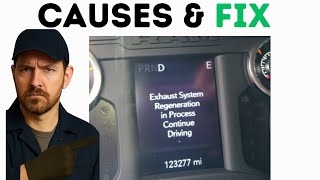
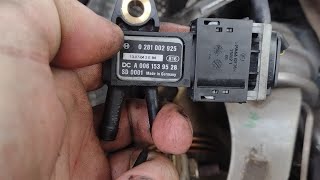
We Have This Part in Stock
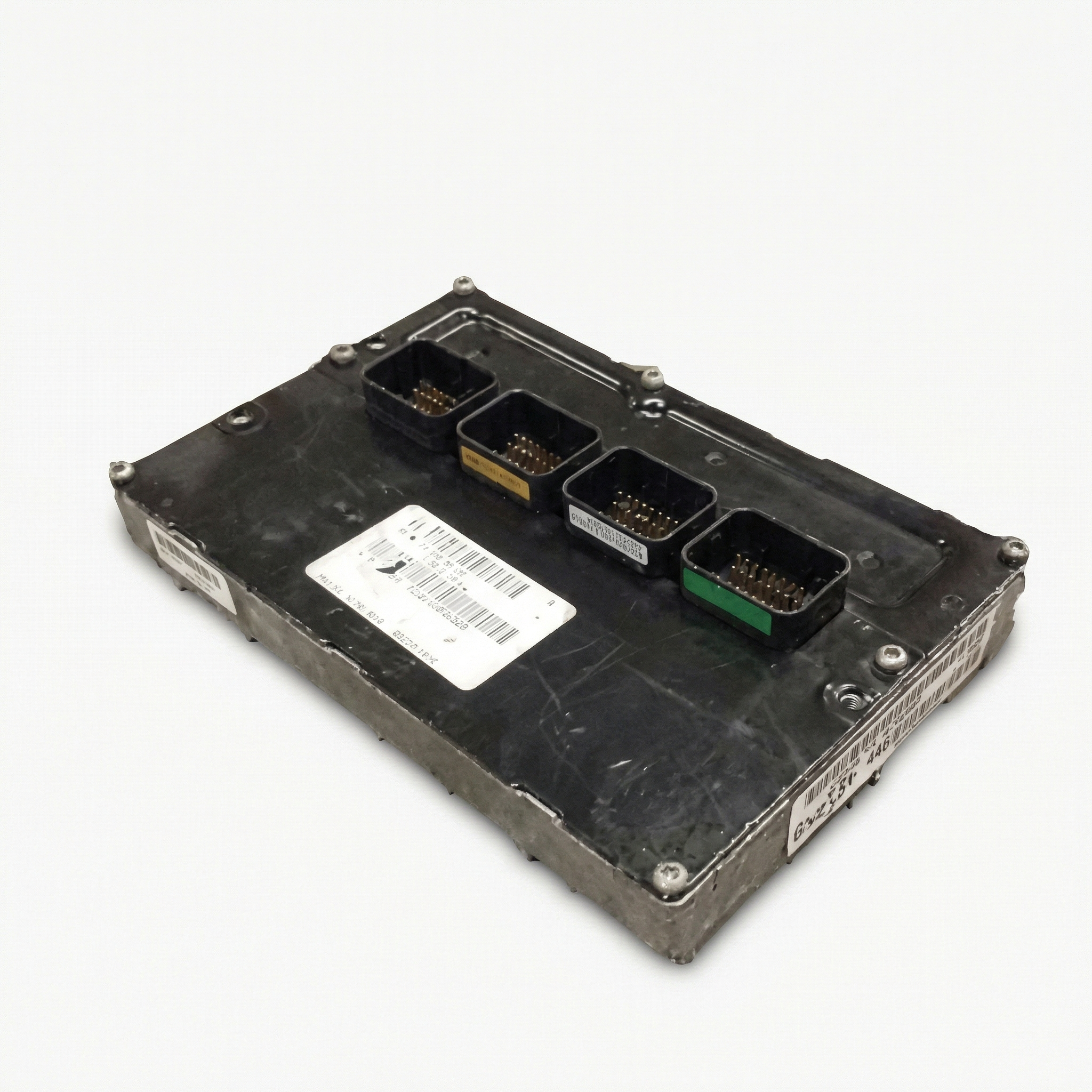

The information in this article is provided for general reference and educational purposes only. Vehicle specifications, procedures, and part compatibility can vary by production date, trim level, and region. Always consult your vehicle's factory service manual and verify part numbers before purchasing or performing repairs. Safety-critical components such as airbags, seat belts, and braking systems should be installed by a qualified professional.
- Ram ProMaster:
- 🧭 Diagnostic Flowchart
- 🎬 Helpful Videos
- 🛍️ Shop This Part
- What's Unique About the 2014-2018 Ram ProMaster
- Symptoms You May Notice
- Most Likely Causes
- Rare But Worth Checking
- Diagnosis Steps
- Parts You'll Likely Need
- Related Codes That Often Appear With This One
- Technical Service Bulletins (TSBs) & Recalls
- Platform-Specific Known Issues
- Mechanic-Grade Diagnostic Values
- Scan Tool Commands That Help
- Wiring & Ground Locations
- Real Owner Repair Stories
- OEM Part Supersession History
- Model Year Variations Within This Range
- Other Known Issues on This Vehicle
- Used vs. New Parts: Buying Guide for This Vehicle
- Real Owner Stories
- 2014 Ram ProMaster 3.0L EcoDiesel
- 2014-2018 Ram ProMaster 3.0L EcoDiesel
- 2014-2018 Ram ProMaster 3.0L EcoDiesel
- Related OBD-II Codes
- Frequently Asked Questions
- 🎟️ Get 5% Off