

P2463 on 2021-2024 Cadillac Escalade Diesel: DPF Soot Accumulation Causes and Fixes
This code means the Diesel Particulate Filter (DPF) is clogged with soot. The most common cause is frequent short-trip driving that prevents the filter's automatic cleaning cycle. The first step is to drive at highway speeds for 20-30 minutes to trigger a cleaning 'regeneration'. If that fails, the issue may be a faulty sensor, a software anomaly, or require a professional forced regeneration.
- P2463 means your diesel Escalade's exhaust filter (DPF) is clogged with soot.
- Before seeking professional help, try driving at a sustained highway speed for 20-30 minutes to trigger the vehicle's self-cleaning function.
- The most common cause is too many short trips; the DPF needs long, hot drives to stay clean.
- If driving doesn't fix it, the problem is likely a faulty DPF pressure sensor or a software issue, which requires professional diagnosis.
- Do not ignore this code, as it will keep the vehicle in a reduced power mode and can lead to more expensive damage over time.
What's Unique About the 2021-2024 Cadillac ESCALADE
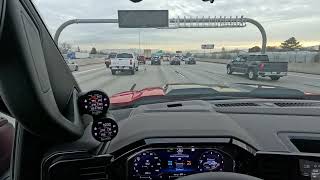
The 2021-2024 Escalade is the first generation to feature a diesel engine, the 3.0L Duramax (LM2, and LZ0 starting in 2025 SUV models). Like all modern diesels, its DPF system is sensitive to driving habits. 🎬 Watch: An in-depth look at how the regeneration process works. This platform is frequently used for city driving and short trips, which are the primary cause of the DPF not getting hot enough to perform its automatic cleaning cycle (regeneration). This leads to soot buildup and the P2463 code. GM has also identified software anomalies in some cases that can falsely trigger DPF-related codes on 2024 models.
Diagnostic Flowchart
Tap your situation to follow the diagnostic path that matches what you're seeing on this vehicle.
Symptoms You May Notice
- Check Engine Light illuminated
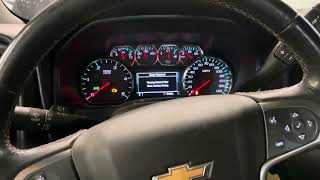
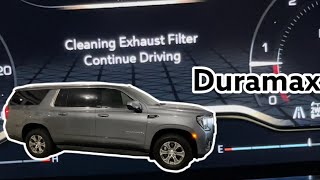
- Driver Information Center (DIC) message such as 'Clean Exhaust Filter See Owner Manual Now' or 'Cleaning Exhaust Filter Keep Driving Until Message is Cleared'. [TSB #10-06-05-002M, TSB #10-06-05-002L, 22]
- Noticeable loss of engine power or sluggish acceleration, often accompanied by an 'Engine Power is Reduced' message (limp mode).
- Slight increase in fuel consumption.
- In some cases, black smoke from the exhaust if the DPF is failing or being bypassed.
- Replacing the DPF without diagnosing the root cause. A clogged DPF is often a symptom, not the cause. If the reason for the clog (e.g., bad sensor, driving habits, intake leak) isn't addressed, the new DPF will also clog.
Most Likely Causes
- Insufficient DPF Regeneration Due to Driving Habits 🔴 High Probability Escalades are often used for short city trips, which prevents the exhaust from reaching the high temperatures needed for the DPF to automatically clean itself (regenerate). This is the most common trigger for P2463 across all vehicles with the 3.0L Duramax engine.
How to confirm: Review recent driving patterns. If the vehicle is primarily driven for short distances without sustained highway speeds, this is the likely cause. The DIC will often display warnings prior to the check engine light.
Typical fix: Drive the vehicle at sustained highway speeds (above 50 mph) for at least 20-30 minutes to allow a full regeneration cycle to complete. Consult the owner's manual for specific instructions. If this fails, a forced regeneration with a professional scan tool is the next step.
Est. part cost: $0 - Faulty DPF Pressure Sensor 🟡 Medium Probability The sensor and its connecting hoses are exposed to heat and soot, making them prone to failure, clogging, or damage. A faulty sensor can send incorrect pressure readings to the ECM, falsely indicating a clog.
How to confirm: A technician can use a scan tool to monitor the DPF pressure sensor readings. The sensor should show low pressure at idle (approx. 1-2 kPa) and increasing pressure with engine RPM. If the readings are erratic, stuck at zero, or excessively high at idle, the sensor or its hoses are likely faulty.
Typical fix: Replace the DPF pressure sensor and inspect/clean/replace its associated hoses/pipes. The sensor itself is relatively inexpensive and accessible.
Est. part cost: $50-$150 - Engine Control Module (ECM) Software Anomaly ⚪ Low Probability GM has identified software issues on some 2024 models with the LZ0 engine that can cause false DPF codes. While the Escalade in this range uses the LM2, software updates are a common fix for emissions system logic.
How to confirm: A GM dealership can check for open service bulletins or campaigns related to the ECM software by using the vehicle's VIN. Specifically, TSB 24-NA-094 addresses this for 2024 truck models.
Typical fix: Update the Engine Control Module (ECM) software at a dealership.
Est. part cost: $0 if covered under warranty or a service campaign.
Rare But Worth Checking
- Faulty Particulate Matter (Soot) Sensor: Separate from the pressure sensor, this sensor directly measures soot in the exhaust. A malfunction can provide incorrect data to the ECM, leading to improper regeneration timing or false P2463 codes. OEM part number for the LM2 sensor is often cited as 55514320.
- Faulty Exhaust Gas Temperature Sensor: → Shop Exhaust Gas Temperature (EGT) Sensor The DPF system relies on accurate temperature readings to initiate and control regeneration. A failed sensor can prevent this process, causing soot to build up.
- Wiring or Connector Issues: Corroded or damaged wiring to the DPF pressure, temperature, or particulate matter sensors can send incorrect signals to the ECM, preventing regeneration.
- Upstream Engine Issues (Intake/Fuel): Problems like a clogged engine air filter, leaking fuel injectors, or a faulty turbocharger can cause the engine to produce excessive soot, overwhelming the DPF faster than it can regenerate.
- Cracked or Internally Damaged DPF: Physical damage to the filter itself can cause blockages or efficiency issues. This is usually a last resort diagnosis after all other components have been checked.
Diagnosis Steps
- Check the Driver Information Center (DIC) for any messages related to the exhaust filter.
- As per the owner's manual, attempt a service regeneration by driving the vehicle at highway speeds for 20-30 minutes.
- If the light remains, use an OBD-II scanner to confirm P2463 and check for any other related codes. Note the soot load percentage if your scanner can read it; 🎬 See how to diagnose and clear clogged DPF codes. values over 140% are a strong indicator.
- Use a professional scan tool to monitor live data from the DPF pressure sensor and exhaust temperature sensors to ensure they are reading correctly.
- Inspect the hoses connected to the DPF pressure sensor for any cracks, blockages, or signs of melting.
- Inspect the wiring and connectors for the DPF sensors for any visible damage or corrosion.
- Inspect the engine air filter. A collapsed or severely clogged air filter can cause excessive soot production and should be checked.
- If sensors and wiring are good, a forced regeneration may be attempted with a professional scan tool.
- If a forced regeneration fails, the DPF may require professional off-vehicle cleaning or, in the worst case, replacement.
Parts You'll Likely Need
- Diesel Particulate Filter (DPF) Pressure Sensor
(OEM #12677836 (Note: This part number is widely cited for GM applications, verify with VIN))— This sensor is a common failure point. It tells the computer how full the DPF is, and a bad reading can prevent the necessary cleaning cycles.
Trusted brands: ACDelco, Bosch
OEM price range: $100-$180
Aftermarket price range: $50-$120 - DPF Pressure Sensor Pipe/Hose
(OEM #55513539 (Pipe))— The hoses or pipes connecting the DPF to the pressure sensor can clog with soot or be damaged by heat, leading to incorrect sensor readings.
Trusted brands: GM Genuine Parts
OEM price range: $30-$60
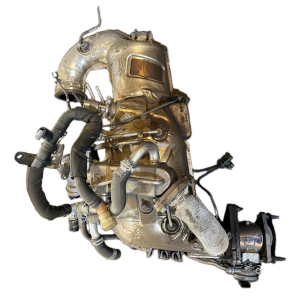
Aftermarket price range: $20-$40 - Diesel Particulate Filter (DPF) — If regeneration cycles fail and the filter cannot be cleaned (due to soot overload or internal ash buildup), it must be replaced. This is a last resort as it is extremely expensive and labor-intensive.
Trusted brands: ACDelco, Walker Exhaust
OEM price range: $2000-$2500
Aftermarket price range: $1000-$1800
Related Codes That Often Appear With This One
- P2002 — This code means 'DPF Efficiency Below Threshold'. It often appears with P2463 because a severely clogged filter is also an inefficient one.
- P2459 — This code means 'DPF Regeneration Frequency'. It can be set when the system is trying to regenerate too often due to a persistent clog.
- P0299 — This code for 'Turbocharger Underboost' can be a cause of P2463. An air leak in the intake system or a failing turbo leads to a rich fuel mixture, creating excess soot that clogs the DPF.
Technical Service Bulletins (TSBs) & Recalls
- 10-06-05-002M: Information on Clean Exhaust Filter messages displayed on DIC, DTC P2463 may be set.
- 10-06-05-002L: Information on Clean Exhaust Filter messages displayed on DIC, DTC P2463 may be set.
Platform-Specific Known Issues
- Per TSBs #10-06-05-002M and #10-06-05-002L, this code is directly associated with DIC messages instructing the driver to keep driving to clean the exhaust filter. [TSB #10-06-05-002M, TSB #10-06-05-002L, 22]
- For 2024 models with the LZ0 engine (trucks), TSB 24-NA-094 notes that a software anomaly can cause P2463 to be set erroneously, with the fix being an ECM software update.
Mechanic-Grade Diagnostic Values
- DPF Soot Accumulation (GDS2 Parameter) — expected: Regeneration is attempted at ~100%. 'Continue Driving' message appears at 115%.. Failure: DTC P2463 sets when the calculated soot accumulation reaches 140% or higher. Technicians have reported seeing values over 200% on severely clogged vehicles.
- DPF Differential Pressure Sensor (Scan Tool Live Data) — expected: Approximately 1-2 kPa (0.15-0.3 PSI) at idle with a clean filter. Voltage should be around 0.74-0.77 VDC with key-on, engine-off.. Failure: A reading that is stuck high (e.g., several PSI at idle) or does not change with engine RPM points to a clogged DPF, a faulty sensor, or blocked hoses.
- Exhaust Gas Temperature (EGT) Sensor Resistance — expected: Approximately 220 Ohms at room temperature.. Failure: Significant deviation from the expected resistance indicates a faulty sensor, which can prevent proper regeneration.
Scan Tool Commands That Help
- GDS2 (GM Dealer Tool): DPF Service Regeneration — This is the primary function used to clear a P2463 code when a normal driving regeneration is no longer possible. It forces the DPF to heat up and burn off soot in a controlled, stationary procedure.
- GDS2 (GM Dealer Tool): DPF/Catalyst Reset (or DPF Learning) — This is a mandatory step after replacing the DPF, performing an off-car cleaning, or replacing the DPF pressure sensor. It resets the ECM's learned values for soot and ash load to zero.
- GDS2 (GM Dealer Tool): Regeneration Enable — A less intense function that enables the system to perform a regeneration on the next drive cycle. GM recommends this if soot is above 70% but a service regeneration is not yet mandated.
- GDS2 (GM Dealer Tool): Reductant Fluid Quality Test (RFQT) — In some diagnostic procedures for P2463, GM service information suggests running this test to rule out issues with the Diesel Exhaust Fluid (DEF) system that could contribute to inefficient combustion and soot buildup.
Wiring & Ground Locations
- G134 — Near the NOx catalyst on the vehicle's frame.. GM TSB #22-NA-210 identifies that the stud for ground G134 can break due to vibration fatigue. A poor ground here can cause a wide array of seemingly unrelated electrical faults and DTCs, potentially affecting the emissions control system sensors and modules.
- Passenger Side Frame-to-Body Ground Strap — A wide metal strap connecting the body to the frame on the passenger side of the vehicle.. In salt-belt regions, this primary ground strap is known to corrode and fail, causing numerous electrical issues, including potential communication errors with emissions system modules.
- DPF Pressure Sensor Connector — The electrical connector on the DPF pressure sensor itself.. The connector has three pins: a 5V reference, a ground, and a signal wire. Damage or corrosion at this connector can cause incorrect pressure readings, directly leading to a false P2463 code. The pigtail connector is available as a separate part for repair.
Real Owner Repair Stories
- YouTube channel 'Rainman Ray's Repairs' (2019 Chevrolet Silverado 6.6L Duramax (Similar DPF system logic)) — P2463 code, 'Engine Power is Reduced' message, and no power on acceleration after a service regeneration was performed.
❌ Tried (didn't work) Performing a GDS2 Service Regeneration. The soot load dropped from 203% to 66%, but the truck entered limp mode with no power immediately after.
✅ What actually fixed it A simple battery disconnect for 15 minutes. The technician suspected that a computer glitch during the initial regeneration (his laptop had to be rebooted mid-process) prevented the ECM from performing necessary post-regen resets. The hard reset from the battery disconnect cleared the fault and restored full power. - Reddit user on r/Duramax (2007.5 LMM Duramax (Older model but illustrates a common failure pattern)) — P2463 code and 'Clean Exhaust Filter' message that would not clear even after 30+ miles of highway driving. Attempting a manual service regen with a code reader would immediately trigger limp mode.
❌ Tried (didn't work) Extended highway driving., Replacing the MAF sensor (for a separate P0101 code)., Initial attempts at a forced service regeneration.
✅ What actually fixed it After multiple failed attempts, a DPF Service Regen was finally able to run successfully, dropping soot levels from a calculated 81 grams down to near zero, clearing the codes. However, the 'Clean Exhaust Filter' message returned on the next short trip. The user's final plan was to replace the DPF Pressure Sensor a second time, suspecting an intermittent failure, and check all connections. This highlights that even after a successful regen, the root cause (often a sensor) must be addressed.
OEM Part Supersession History
12616646 (and others)→12677836— This part number is a multi-purpose pressure sensor used for various applications, including oil pressure and, in some contexts, DPF pressure. It has superseded multiple older part numbers over time.
Heads up: While listed for many GM vehicles, including Escalades, it's often cited for gasoline engine oil pressure. It is critical to verify the exact part number for the 3.0L Diesel DPF application via VIN, as using a sensor with a similar appearance but different pressure range can cause persistent incorrect readings.
Model Year Variations Within This Range
- 2020-Early 2022 vs. Late 2022-2024: Per GM bulletin PIP5838B, the wiring pinout for the Diesel Exhaust Fluid (DEF) tank connector changed mid-year 2022. If an early model vehicle receives a later-style replacement DEF tank, the wiring harness will be different. While this doesn't directly cause P2463, it can cause other DEF-related codes (like P20B9) and complicate diagnostics if a technician is trying to trace wiring based on the wrong schematic for the installed parts.
Helpful Videos
We Have This Part in Stock

The information in this article is provided for general reference and educational purposes only. Vehicle specifications, procedures, and part compatibility can vary by production date, trim level, and region. Always consult your vehicle's factory service manual and verify part numbers before purchasing or performing repairs. Safety-critical components such as airbags, seat belts, and braking systems should be installed by a qualified professional.
- Cadillac ESCALADE:
- 🧭 Diagnostic Flowchart
- 🎬 Helpful Videos
- 🛍️ Shop This Part
- What's Unique About the 2021-2024 Cadillac ESCALADE
- Symptoms You May Notice
- Most Likely Causes
- Rare But Worth Checking
- Diagnosis Steps
- Parts You'll Likely Need
- Related Codes That Often Appear With This One
- Technical Service Bulletins (TSBs) & Recalls
- Platform-Specific Known Issues
- Mechanic-Grade Diagnostic Values
- Scan Tool Commands That Help
- Wiring & Ground Locations
- Real Owner Repair Stories
- OEM Part Supersession History
- Model Year Variations Within This Range
- 🎟️ Get 5% Off