

P2463 on 2007-2014 Chevrolet Express 2500: DPF Soot Accumulation Causes & Fixes
P2463 means the Diesel Particulate Filter (DPF) is clogged with soot. This is often due to short-trip driving or extended idling that prevents the filter from self-cleaning (regeneration). The first step is to drive at highway speeds (over 30 mph) for 20-30 minutes. If that fails, the most likely cause is a faulty DPF pressure sensor or its hoses, costing around $50-$150 for parts. Ignoring the code will lead to 'limp mode' and can cause permanent, expensive DPF damage.
- P2463 means your van's DPF is clogged with soot, most likely because your driving style (short trips, city driving) prevents it from self-cleaning.
- Your first and cheapest fix is to drive on a highway at a steady speed (above 30 mph) for 20-30 minutes to trigger a self-cleaning cycle.
- If highway driving doesn't clear the code, the next most likely culprits are a faulty DPF pressure sensor or its hoses, which are relatively inexpensive to replace.
- Do not ignore this code. It will put your van into 'limp mode' and can cause permanent, expensive damage to the DPF if not addressed.
What's Unique About the 2007-2014 Chevrolet EXPRESS 2500
The Chevrolet Express van's typical use-case, often involving city driving, deliveries, or extended idling, makes it particularly susceptible to P2463. These driving habits prevent the exhaust system from reaching the high temperatures (around 1100°F / 600°C) needed for passive DPF regeneration (self-cleaning). A high number of engine hours relative to miles driven is a strong indicator of this usage pattern. When this happens repeatedly, the DPF becomes overloaded with soot, triggering the code and eventually requiring a manual or forced "service" regeneration at a dealership.
Diagnostic Flowchart
Tap your situation to follow the diagnostic path that matches what you're seeing on this vehicle.
Symptoms You May Notice
- Check Engine Light (Malfunction Indicator Lamp) is on.
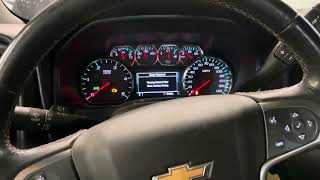
- "Clean Exhaust Filter" or "Diesel Particulate Filter is Full Continue Driving" message on the Driver Information Center (DIC).
- Engine power is reduced (limp mode), with messages like "Engine Power Is Reduced".
- Poor fuel economy.
- Increased black smoke from the exhaust.
- Abnormally high exhaust temperatures.
- Engine may be difficult to start or exhibit rough idling.
- Replacing the entire DPF assembly without first testing the pressure sensor and its hoses. The sensor system is a much more common and cheaper failure point than the filter itself.
- Assuming the DPF is bad when an underlying issue like a faulty 9th injector (LGH only), thermostat, or air leak is preventing regeneration from occurring.
Most Likely Causes
- Insufficient DPF Regeneration Due to Driving Habits 🔴 High Probability Express vans are often used for short trips or idling, which prevents the exhaust from getting hot enough (over 30 mph sustained) to complete a passive regeneration cycle. A high ratio of engine hours to mileage confirms this usage pattern.
How to confirm: Review driving habits. If the van is rarely driven at highway speeds (above 30 mph) for 20-30 minutes, this is a likely cause. A scan tool can show the 'Distance Since Last Successful Regeneration' PID, which may be excessively high (e.g., over 600 miles).
Typical fix: Attempt a passive regeneration by driving at a sustained highway speed (over 30-50 mph) for 20-30 minutes until the DIC message clears. If this fails, a forced 'service' regeneration using a professional scan tool is required. 🎬 Watch: How to perform a forced DPF regeneration.
Est. part cost: $0 - Faulty DPF Differential Pressure Sensor 🟡 Medium Probability The sensor is exposed to heat and exhaust byproducts, and can fail over time by providing inaccurate high-pressure readings to the ECM, even if the filter is clean.
How to confirm: Use a scan tool to monitor the DPF pressure sensor readings with the key on, engine off (KOEO). The reading should be at or very near zero PSI or 0 kPa. If it shows significant pressure with the engine off, or doesn't increase when revving the engine, the sensor is likely bad. Also inspect the sensor's wiring and connector for corrosion or damage.
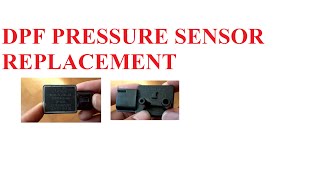
Typical fix: Replace the DPF pressure sensor. This often requires a specific reset procedure using a scan tool after replacement. 🎬 See this walkthrough on replacing the DPF pressure sensor.
Est. part cost: $50-$150 - Clogged or Damaged DPF Pressure Sensor Hoses 🟡 Medium Probability The rubber or metal hoses connecting the sensor to the DPF can become clogged with soot or crack/melt from exhaust heat, leading to incorrect pressure readings.
How to confirm: Visually inspect the hoses for cracks, melting, kinks, or loose connections. Remove the hoses from the sensor and check for blockages by carefully blowing low-pressure compressed air through them. If they are blocked and cannot be cleared, they must be replaced.
Typical fix: Clean or replace the DPF pressure sensor hoses.
Est. part cost: $20-$60
Rare But Worth Checking
- Faulty 9th Injector (Hydrocarbon Injector): The Duramax LGH engine (2011-2014) uses a dedicated '9th injector' to spray fuel into the exhaust stream to initiate regeneration. If this injector clogs, fails, or its fuel line is restricted, the DPF can't get hot enough to clean itself, leading to soot buildup. Diagnosis involves using a scan tool to command the injector on while monitoring exhaust temperatures. The earlier LMM engine (2007.5-2010) does not have this part and uses main injector post-injection instead. 🎬 Watch: How to replace a faulty 9th injector.
- Exhaust Leaks: An exhaust leak upstream of the DPF or in the charge air cooler (CAC) system can alter pressure and temperature readings, confusing the sensor and preventing proper regeneration. TSB PI0845 suggests checking for air leaks if P2463 is the only code present.
- Underlying Engine Issues: Problems causing excessive soot production, like a collapsed air filter, faulty fuel injectors, a malfunctioning EGR system, or a bad thermostat preventing the engine from reaching operating temperature, can overwhelm the DPF faster than it can regenerate.
- DPF Reaching End of Life (Ash Loading): Regeneration burns soot into ash, which remains in the filter. Over many miles (typically 100,000+), this ash accumulates to the point where the filter is permanently restricted and must be professionally cleaned or replaced. A scan tool may show a high soot percentage (e.g., over 60%) even after a successful forced regeneration, indicating high ash load.
Diagnosis Steps
- Read the trouble codes with an OBD-II scanner to confirm P2463 is active. Note any other codes, as they must be diagnosed first.
- Check the Driver Information Center (DIC) for messages like 'CLEAN EXHAUST FILTER SEE OWNERS MANUAL NOW'.
- If the vehicle is not in limp mode, attempt a passive regeneration by driving at a steady speed over 30 mph for at least 20-30 minutes until the message clears.
- If regeneration fails or is not possible, perform a visual inspection of the DPF pressure sensor hoses. Look for cracks, melting, kinks, or loose connections.
- Remove the hoses from the sensor and check for soot blockages by blowing low-pressure air through them.
- Using a capable scan tool, check the DPF pressure sensor's live data (PID). The reading should be close to 0 kPa/0 PSI with the key on and engine off (KOEO). If it shows significant pressure, the sensor is faulty.
- Check scan tool PIDs for 'Soot Mass' or 'DPF Soot Load %'. A very high value (e.g., >70g or >200%) confirms the filter is clogged.
- If the sensor and hoses are good, the DPF is genuinely clogged. A forced 'service' regeneration must be performed with a professional scan tool. This procedure can take 20-60 minutes.
- If a forced regeneration fails to start or the P2463 code returns quickly, investigate root causes like the 9th injector (2011+ LGH), exhaust leaks, or other engine faults preventing regeneration.
- If all systems are working but the filter remains clogged after a forced regen, the DPF may be permanently damaged or full of ash and require professional off-vehicle cleaning or replacement.
Parts You'll Likely Need
- DPF Differential Pressure Sensor
(OEM #ACDelco 12643959 (for LMM/LGH, verify by VIN))— This sensor is a common failure point and can send incorrect data, falsely indicating a clogged filter.
Trusted brands: ACDelco, Bosch, Dorman
OEM price range: $100-$180
Aftermarket price range: $50-$120 - DPF Pressure Sensor Hoses — These hoses can get clogged with soot or crack from heat, causing incorrect pressure readings.
Trusted brands: ACDelco, Dorman
OEM price range: $40-$80
Aftermarket price range: $20-$60 - Diesel Particulate Filter (DPF) — If regeneration fails repeatedly and the filter cannot be cleaned, or it is full of unburnable ash, it will require replacement.
Trusted brands: GM Genuine, AP Exhaust Technologies, MagnaFlow
OEM price range: $2000-$3000
Aftermarket price range: $800-$1800
Related Codes That Often Appear With This One
- P2452 — This code relates to a general fault in the DPF pressure sensor circuit, and can appear alongside P2463 if the sensor itself is the root cause.
- P244C — This code indicates that the exhaust temperature is too low for regeneration, which is a direct cause of the soot accumulation that triggers P2463. This could point to a bad 9th injector (LGH) or thermostat.
- P0299 — A Turbocharger Underboost code can sometimes appear after a forced regeneration if the DPF is still partially restricted with unburnable ash, causing backpressure issues that affect turbo performance.
Technical Service Bulletins (TSBs) & Recalls
- 10-06-05-002L: Information on Clean Exhaust Filter See Owners Manual Now or Cleaning Exhaust Filter Keep Driving Until Message is Cleared messages Displayed on DIC, DTC P2463 May Be Set.
- PI0845: Information for Diesel Particulate Filter (DPF) Service Regeneration Documentation, Service Regeneration Will Not Run, Reduced Engine Power Message Displayed, DTC P2463 Set.
Platform-Specific Known Issues
- A GM Technical Service Bulletin (TSB) #PI0845 notes that on some 2011-2013 models, a service regeneration may not run if the soot accumulation is over 120 grams, and provides a specific scan tool procedure to bypass this lockout.
- TSB #10-06-05-002L (and its successors) directly links the DIC message 'Clean Exhaust Filter' to DTC P2463, confirming the relationship between the driver warning and the fault code. It explicitly states that once P2463 is set, self-cleaning is no longer possible and dealer service is necessary.
- A video from a technician working on a 2010 Express 3500 with a Duramax demonstrates the exact forced regeneration procedure using an Autel scanner, a common tool for independent shops.
Mechanic-Grade Diagnostic Values
- DPF Differential Pressure Sensor Live Data (KOEO) — expected: ~0 kPa / ~0 PSI / ~0.5 Volts. Failure: A significant pressure or voltage reading with the engine off indicates a faulty sensor.
- DPF Differential Pressure Sensor Reference Voltage — expected: 4.8 - 5.2 Volts DC at the sensor connector with key on.. Failure: No voltage or low voltage indicates a wiring or ECM problem, not a sensor problem.
- DPF Soot Mass (Scan Tool PID) — expected: Varies, but regeneration is typically triggered before this limit.. Failure: P2463 sets when calculated soot mass reaches 70 grams or more.
- DPF Differential Pressure at Idle — expected: Approximately 6-10 hPa (0.08-0.14 PSI).. Failure: Pressure exceeding 100 hPa (1.45 PSI) at idle suggests a significant restriction.
Scan Tool Commands That Help
- GM Tech 2 / GDS2: DPF Service Regeneration — This is the primary function used to command a stationary, forced regeneration of the DPF when P2463 is set and driving regeneration is disabled or has failed.
- GM Tech 2: DPF/Catalyst 2 Reset — Used as part of a specific TSB procedure when a service regeneration will not start on a vehicle with very high soot accumulation (e.g., >120 grams). It's a reset performed before attempting a tricky forced regen.
- GM Tech 2 / GDS2: Reductant Fluid Quality Test (RFQT) -> DPF Service Regeneration — This is a specific procedure for 2012 models with over 120 grams of soot where the service regen won't start. The technician starts the RFQT, then immediately navigates to and starts the DPF Service Regeneration, which 'tricks' the system into running.
- Professional Scan Tool: DPF Pressure Sensor Reset / Recalibration — This should be performed after replacing the DPF differential pressure sensor to ensure the ECM uses the new sensor's baseline readings correctly.
Wiring & Ground Locations
- DPF Pressure Sensor Connector — On the DPF differential pressure sensor itself, typically mounted on a bracket near the transmission or on the firewall, connected by two hoses to the DPF.. This 3-pin connector provides the sensor with a 5V reference, a low reference (ground), and sends the signal voltage back to the ECM. Testing for 5V at this connector is a key first step in diagnosing a sensor circuit fault.
- ECM Connector(s) — The Engine Control Module (ECM) is typically located in the engine bay.. The wires from the DPF pressure sensor terminate here. If voltage is missing at the sensor, checking for voltage and continuity at the ECM pins can determine if the fault is in the wiring harness or the ECM itself.
Real Owner Repair Stories
- YouTube channel 'Customer States What' (Company truck (likely Silverado/Sierra) with 6.6L Duramax, 78,992 miles but 4840 engine hours, indicating excessive idling.) — P2463 code, 'reduced engine power' message. Scan tool showed 203% soot load.
❌ Tried (didn't work) A forced 'service' regeneration was performed. While it lowered the soot load to 66%, this was still considered high.
✅ What actually fixed it The truck had no power after the regen and set a P0299 (Turbo Underboost) code. The diagnosis concluded the DPF was likely full of unburnable ash (ash-loaded) from excessive idling and required replacement, as the forced regen couldn't clear the underlying restriction. - Reddit user in r/Duramax (2007.5 LMM Duramax) — Intermittent check engine light with code P2454 (DPF Differential Pressure Sensor Circuit Low Voltage), feeling of power loss.
❌ Tried (didn't work) Owner was given conflicting advice, including replacing all injectors or that the truck didn't have a DPF.
✅ What actually fixed it The community advice, which represents the most common starting point for this issue, was to first inspect the two rubber hoses going to the DPF pressure sensor. These hoses are known to crack, break, or get clogged, which is a much cheaper and simpler fix to investigate before replacing the sensor or other expensive components.
"I Checked Everything" — The Actual Cause
- In one documented case, a vehicle with a recurring DPF blockage code had the DPF cleaned multiple times, but the code always returned. A smoke test of the pressure sensor hoses showed no leaks. The actual cause was a failed DPF pressure sensor that was electrically sound (had 5V power) but was internally faulty and not reporting pressure changes. The technician confirmed this by applying pressure with a hand pump (MityVac) while watching live scan tool data. The old sensor's reading was stuck, while a new sensor responded correctly. This proved the sensor was the root cause, saving the owner from an unnecessary DPF replacement.
When the Usual Fixes Don't Work
- While a forced 'service' regeneration is the standard procedure for a P2463 code, it is not a guaranteed fix. In cases of high mileage or excessive idling, the DPF can be loaded with unburnable ash, not just soot. In one real-world example, a forced regeneration successfully burned off the soot (soot load dropped from 203% to 66%), but the underlying ash restriction remained. This caused a new P0299 (Turbo Underboost) code to appear immediately after, as the remaining backpressure impeded turbo performance. In such cases, the DPF itself must be professionally cleaned off-vehicle or replaced.
OEM Part Supersession History
GM 12661071→GM 19421482— Standard part update/revision.
Heads up: This is the '9th Injector' or Hydrocarbon Injector, which is only present on 2011-2014 LGH engines in this vehicle range, not the 2007.5-2010 LMM engines.
Model Year Variations Within This Range
- 2007.5-2010 (LMM Engine): Performs DPF regeneration by using the main engine fuel injectors to spray extra fuel on the exhaust stroke. This method can lead to fuel dilution of the engine oil, making regular oil changes critical.
- 2011-2014 (LGH Engine): Uses a dedicated 9th fuel injector, also called a hydrocarbon or dosing injector, mounted in the exhaust system to spray fuel directly upstream of the DPF for regeneration. This is a more precise method that prevents fuel from diluting the engine oil.
Helpful Videos
We Have This Part in Stock


The information in this article is provided for general reference and educational purposes only. Vehicle specifications, procedures, and part compatibility can vary by production date, trim level, and region. Always consult your vehicle's factory service manual and verify part numbers before purchasing or performing repairs. Safety-critical components such as airbags, seat belts, and braking systems should be installed by a qualified professional.
- Chevrolet EXPRESS 2500:
- 🧭 Diagnostic Flowchart
- 🎬 Helpful Videos
- 🛍️ Shop This Part
- What's Unique About the 2007-2014 Chevrolet EXPRESS 2500
- Symptoms You May Notice
- Most Likely Causes
- Rare But Worth Checking
- Diagnosis Steps
- Parts You'll Likely Need
- Related Codes That Often Appear With This One
- Technical Service Bulletins (TSBs) & Recalls
- Platform-Specific Known Issues
- Mechanic-Grade Diagnostic Values
- Scan Tool Commands That Help
- Wiring & Ground Locations
- Real Owner Repair Stories
- "I Checked Everything" — The Actual Cause
- When the Usual Fixes Don't Work
- OEM Part Supersession History
- Model Year Variations Within This Range
- 🎟️ Get 5% Off