

P2463 on 2011-2015 Chevrolet Silverado: DPF Soot Accumulation Causes and Fixes
P2463 means your Silverado's Diesel Particulate Filter (DPF) is severely clogged with soot. This is often due to frequent short trips preventing the filter's self-cleaning 'regeneration' process. Once the code is set, automatic regeneration is disabled. If highway driving doesn't clear it, a faulty DPF pressure sensor or its hoses are the next most likely cause. A forced 'Service Regeneration' with a scan tool is almost always required. A failed 9th injector is also a common culprit on these LML
- P2463 means the Diesel Particulate Filter (DPF) is critically full of soot, and your truck will be in reduced power mode.
- The most common cause is a driving style with too many short trips or idling, which prevents the DPF's automatic self-cleaning process.
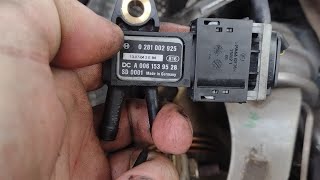
- Before assuming the expensive DPF is bad, always diagnose the DPF pressure sensor and its hoses, as they are common, inexpensive failure points.
- On the LML Duramax, the 9th injector is a specific component that can fail and prevent regeneration, leading to this code.
- Once P2463 is active, a highway drive will likely not fix it; a professional 'Service Regeneration' with a scan tool is usually required.
What's Unique About the 2011-2015 Chevrolet SILVERADO
For the 2011-2015 Silverado with the 6.6L LML Duramax engine, the P2463 code is frequently linked to driving habits, such as extensive idling or short trips, which prevent the DPF from getting hot enough to perform its automatic cleaning cycle (regeneration). This generation of Duramax uses a dedicated 9th injector (hydrocarbon injector) to spray fuel into the exhaust to initiate regeneration. A failure of this specific injector is a known cause for this code on these trucks, in addition to the more common DPF pressure sensor and hose failures. TSB PIP5085C directly links diagnostics for P2463 to this injector.
Diagnostic Flowchart
Tap your situation to follow the diagnostic path that matches what you're seeing on this vehicle.
Generation note: The 2011-2015 range covers two Silverado generations: the GMT900 (2011-2014 for HD models) and the K2XX (2015 for HD models). However, both generations in this timeframe primarily used the 6.6L LML Duramax engine, so the causes and fixes for code P2463 are largely consistent.
Symptoms You May Notice
- Check Engine Light illuminated
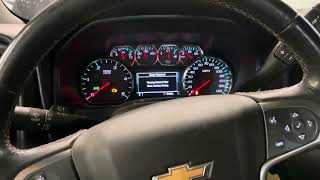
- "Reduced Engine Power" message on the Driver Information Center (DIC)
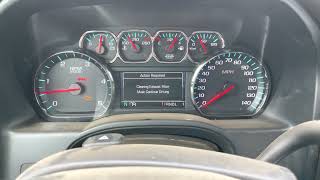
- "Clean Exhaust Filter" or similar DPF-related message on the DIC, often appearing before the Check Engine Light
- Noticeable loss of engine power and sluggish acceleration (limp mode)
- Poor fuel economy
- Vehicle may fail to perform automatic regeneration
- Excessive black smoke from the exhaust in severe cases
- Cooling fans running more often than usual due to heat from repeated failed regeneration attempts
- Replacing the Diesel Particulate Filter (DPF) without diagnosing the root cause. A faulty sensor, clogged hose, or failed 9th injector will cause the new DPF to clog again quickly.
- Assuming the DPF is bad when it's only a faulty DPF pressure sensor sending incorrect data. Always verify sensor readings before condemning the DPF.
Most Likely Causes
- Insufficient DPF Regeneration Due to Driving Habits 🔴 High Probability These trucks are often used for short trips, stop-and-go traffic, or extended idling, which prevents the exhaust from reaching the high temperatures needed for automatic regeneration. This is especially true for work trucks that see a lot of idle time.
How to confirm: Review driving patterns. Use a scan tool to check the 'Time Since Last DPF Regeneration' and 'Soot Mass' or 'Soot Load %' PIDs. If the time/distance is long and soot mass is high (e.g., over 70g or 140%), this is the likely trigger. Some scan tools show soot load percentages exceeding 200%.
Typical fix: Attempt a highway driving cycle at a steady speed (over 30 mph) for 20-30 minutes. If P2463 is already set, this will likely fail, and a mechanic must perform a 'Service Regeneration' with a scan tool.
Est. part cost: $0 - Faulty DPF Differential Pressure Sensor 🔴 High Probability The sensor is exposed to harsh conditions and can fail electronically or become contaminated, sending false high-pressure readings to the ECM, making it think the DPF is clogged when it isn't. Aftermarket sensors are reported to be unreliable for these trucks.
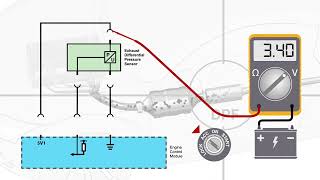
How to confirm: Use a scan tool to monitor the DPF pressure sensor reading with the Key On, Engine Off (KOEO). It should be 0 PSI or very close. At idle, it should still be near 0 PSI. If readings are stuck high (e.g., several PSI at idle) or don't change with engine RPM, the sensor is likely bad. One forum user noted a normal KOEO reading of 0.22V dropping to 0.16V.
Typical fix: Replace the DPF differential pressure sensor. It is recommended to use an OEM part.
Est. part cost: $50-$150 - Clogged, Cracked, or Melted DPF Pressure Sensor Hoses 🟡 Medium Probability The rubber or metal hoses connecting the DPF to the pressure sensor are exposed to intense heat and can become brittle, crack, melt, or get clogged with soot, leading to inaccurate pressure readings.
How to confirm: Visually inspect the hoses for any signs of damage, melting, or cracking. Remove the hoses and check for blockages by blowing compressed air through them. Ensure they are not kinked or collapsed.
Typical fix: Replace the damaged or clogged hoses.
Est. part cost: $40-$100 - Failed 9th Injector (Hydrocarbon Injector) 🟡 Medium Probability The LML engine uses this dedicated injector to introduce fuel into the exhaust for regeneration. It is a common failure point and can become clogged or fail electronically, preventing the exhaust from reaching the required temperature for regeneration. TSB PIP5085C specifically calls for diagnosing this part for P2463.
How to confirm: During a forced regeneration, monitor EGT sensors 1 and 2. EGT1 should rise above 600°F and EGT2 should rise above 1000°F. If they don't, the 9th injector is a likely suspect. A technician can also remove the injector, command it on with a scan tool (with the engine running), and visually check if fuel is spraying.
Typical fix: Replace the 9th injector and its associated fuel line.
Est. part cost: $200-$400 - Failed Exhaust Gas Temperature (EGT) Sensor ⚪ Low Probability → Shop Exhaust Gas Temperature (EGT) Sensor The regeneration process is highly dependent on temperature. If an EGT sensor provides an incorrect reading (e.g., stuck low), the ECM may not initiate or sustain a regeneration cycle, leading to soot buildup.
How to confirm: Use a scan tool to monitor live data from all EGT sensors with the engine running. The readings should be plausible and rise as the engine warms up. Compare readings from the different sensors; a sensor that is stuck or reads illogically compared to the others is faulty.
Typical fix: Replace the faulty EGT sensor.
Est. part cost: $80-$200
Rare But Worth Checking
- Air Leaks in the Intake System: A GM Preliminary Information bulletin (PI0845) specifically advises checking for air leaks in the charge air system (e.g., cracked CAC hoses) before other diagnostics for P2463, as this can affect the air-fuel ratio and cause excessive soot. Forum experts emphasize that LML engines are very sensitive to intake leaks, even small ones near the turbo or MAF sensor.
- DPF Clogged with Ash: Over many miles (typically 100,000+), the DPF will accumulate non-burnable ash from engine oil additives. Regeneration only burns soot, not ash. If a high-mileage truck repeatedly throws a P2463 code after successful regenerations (which only reduce soot load to a certain point, e.g., 66%), the DPF may be at the end of its service life and require professional cleaning or replacement.
- Collapsed or Severely Dirty Engine Air Filter: → Shop Air Cleaner Assembly A completely collapsed or extremely restricted engine air filter can starve the engine of air, creating a rich fuel mixture that generates excessive soot. In at least one documented case, a technician found a dirty air filter contributing to a P2463 code.
Diagnosis Steps
- Check for and diagnose any other DTCs first, especially those related to sensors, the 9th injector, or the EGR system, as instructed by TSB PI0845.
- Using a scan tool, check the live data for the DPF Differential Pressure Sensor. The reading should be 0 or near 0 PSI with the Key On, Engine Off, and remain very low at idle. If it's high, suspect a bad sensor or clogged hoses.
- Inspect the DPF pressure sensor hoses for cracks, melting, or blockages.
- If sensor and hoses are good, attempt a 'Service Regeneration' using a professional scan tool. Monitor EGT sensors during the process to ensure the system is reaching the required temperatures (over 1000°F).
- If regeneration fails to start or complete, or if temperatures do not rise sufficiently, diagnose the 9th injector (hydrocarbon injector) and its fuel supply.
- Per GM bulletin PI0845, check for air leaks in the intake/charge air cooler system, as these can cause excessive soot production.
Parts You'll Likely Need
- DPF Differential Pressure Sensor
- 9th Injector / Hydrocarbon Injector
- DPF Pressure Sensor Hoses
- Diesel Particulate Filter (DPF)
Related Codes That Often Appear With This One
- P24A0 — Stands for "Diesel Particulate Filter Regeneration Not Completed." This code often appears with P2463, indicating the system has tried and failed to perform a regeneration cycle. TSB PIP5085C lists this code alongside P2463.
- P0420 — Stands for "Catalyst System Efficiency Below Threshold." TSB PIP5085C notes this can appear with P2463. A malfunctioning 9th injector can cause raw fuel to affect the Diesel Oxidation Catalyst (DOC), which is upstream of the DPF, triggering P0420.
- P0299 — Stands for "Turbocharger Underboost." A severely restricted DPF can create enough backpressure to hinder the turbocharger's performance, leading to an underboost condition.
- P2459 — Stands for "Diesel Particulate Filter Regeneration Frequency." This indicates the truck is trying to regenerate too often, a precursor to the filter becoming completely clogged and setting P2463.
Technical Service Bulletins (TSBs) & Recalls
- Advises technicians on diagnosing vehicles with P0420, P24A0, and/or P2463. It directs them to follow standard diagnostics and, if they lead to the 9th injector (Q57 Indirect Exhaust Aftertreatment Fuel Injector), to document test results and vehicle usage patterns.
- Provides information for diagnosing P2463, noting it may set when soot accumulation reaches 70 grams or more. Crucially, it instructs technicians to first check for air leaks in the induction system (charge air cooler hoses, EGR valve, etc.) before performing a service regeneration.
- An informational bulletin explaining that 'Clean Exhaust Filter' messages and P2463 are often caused by driving habits (short trips, idling) that prevent automatic regeneration. It clarifies that a forced regeneration for this reason may not be a warrantable repair.
Platform-Specific Known Issues
- Technician Experience with High Soot Load: In a YouTube video, a technician diagnoses a truck with P2463 and finds a soot load of 231% on the scan tool. He notes that with such a high load, a service regeneration is the only option, and even then, replacement is likely. He also discovers a collapsed air filter, which contributed to the problem by creating a rich fuel mixture.
- Owner Experience with Recurring Code: A Reddit user with a 2024 GMC 3500 reported getting a P2463 code just 21,000 miles after having the entire emissions system replaced under warranty. Despite proper maintenance, the code returned after the truck was parked for a week, forcing another trip to the dealer for a forced regeneration. This illustrates the sensitivity and recurring nature of the problem.
Mechanic-Grade Diagnostic Values
- DPF Differential Pressure Sensor Reading (KOEO) — expected: ~0 PSI, ~0.22V. Failure: Any significant pressure reading or voltage above 0.5V indicates a biased sensor.
- DPF Differential Pressure Sensor Reading (Idle) — expected: 0-2 PSI. Failure: Pressure spikes or readings that don't rise steadily with RPM suggest a sensor or hose issue.
- Main Fuel Injector (Piezo) Resistance — expected: 150k - 210k Ohms (150,000-210,000 Ω). Failure: Readings outside this range, or lack of infinite resistance between terminals and the injector case, indicate a failed injector.
- Fuel Rail Pressure (Cranking) — expected: Greater than 10 MPa (~1450 PSI). Failure: Pressure less than the specified range indicates a high-pressure side fuel system issue, possibly a failed injector or CP4 pump.
- Return Fuel System Pressure (LML Specific) — expected: 58 to 160 PSI (0.4 to 1.1 MPa). Failure: Pressure outside this range indicates a problem with the return side constant pressure regulator, which is critical for the Piezo injectors on the LML.
- Air Leak Equivalence Ratio (During GDS2 Test) — expected: 0.80:1 to 1.20:1. Failure: A value outside this range indicates a significant air leak in the intake or charge air system, which must be fixed before addressing the DPF.
Scan Tool Commands That Help
- GDS2 (GM Dealer Tool) or equivalent professional scanner: DPF Service Regeneration — This is a forced, stationary regeneration required when DTC P2463 is set, as the ECM disables automatic regeneration. It's the first step after verifying no other faults exist.
- GDS2 or equivalent: Reductant Fluid Quality Test (RFQT) — GM Bulletin PI0845 outlines a specific procedure where you start the RFQT, then interrupt it to begin the DPF Service Regeneration. This sequence can help initiate a regen when it is otherwise being stubborn.
- GDS2 or equivalent: DPF/Catalyst 2 Reset — This function should be performed after a service regeneration to reset learned values in the ECM, as outlined in GM Bulletin PI0845.
- GDS2 or equivalent: Injector Test (9th Injector) — To functionally test the hydrocarbon (9th) injector. A technician can command it on to verify fuel is being delivered to the exhaust stream, which is necessary for active regeneration.
Wiring & Ground Locations
- Engine Block Grounds (Driver Side) — On the driver's side of the engine block, there are three grounds on a single stud: a large battery cable, a ground wire from a harness, and another smaller ground.. Poor grounds can cause erratic sensor readings and module communication errors. The ECM and all related sensors (DPF pressure, EGTs) rely on a stable ground reference for accurate measurements.
- Engine Block Grounds (Passenger Side) — On the passenger side of the engine block, there are three grounds on a stud: the main battery cable and two smaller grounds from the engine harness.. Ensuring these grounds are clean and tight is a fundamental step in diagnosing any electrical issue, including sensor faults that can lead to P2463.
- ECM Location — The Engine Control Module (ECM) is typically located on the driver's side, near the firewall or on the frame rail below the battery box.. Physical inspection of the ECM and its connectors for corrosion or damage is necessary if wiring issues are suspected. All sensor data for the DPF system is processed here.
- DPF Pressure Sensor Connector — The sensor is located on the vehicle's frame or heat shields, connected by hoses to the DPF. The electrical connector is a 3-wire oval plug.. This connector is a primary test point for checking the sensor's 5V reference, ground, and signal wire integrity back to the ECM.
Real Owner Repair Stories
- Reddit user /u/joshingram on r/Duramax (2015 Silverado 2500HD LML, 70k miles) — After a catastrophic CP4 injection pump failure and subsequent conversion to a CP3 pump, the truck began throwing P0420 (Catalyst Efficiency) and P24A0 (Regen Low Temp) codes.
❌ Tried (didn't work) The initial repair was the CP3 conversion and fuel system replacement after the CP4 failure.
✅ What actually fixed it Multiple other users confirmed that the 9th injector (indirect/hydrocarbon injector) was the cause of their similar issues. The original poster was advised that this should be the next part to replace, as it's a very common failure point that prevents proper regeneration temperatures, leading to these codes.
OEM Part Supersession History
GM 12661071→GM 19421482— Standard part revision and update by the manufacturer.
Heads up: The parts are interchangeable for the 2011-2016 LML/LGH engine range.
Model Year Variations Within This Range
- 2011-2016 (Entire LML range): Unlike previous Duramax engines, the LML uses high-voltage Piezo injectors which require the fuel return system to be pressurized between 58 and 160 PSI for proper operation. A failure in this return system can affect main injection and indirectly contribute to poor combustion and higher soot levels, a diagnostic consideration unique to this engine family.
Helpful Videos

We Have This Part in Stock


The information in this article is provided for general reference and educational purposes only. Vehicle specifications, procedures, and part compatibility can vary by production date, trim level, and region. Always consult your vehicle's factory service manual and verify part numbers before purchasing or performing repairs. Safety-critical components such as airbags, seat belts, and braking systems should be installed by a qualified professional.
- Chevrolet SILVERADO:
- 🧭 Diagnostic Flowchart
- 🎬 Helpful Videos
- 🛍️ Shop This Part
- What's Unique About the 2011-2015 Chevrolet SILVERADO
- Symptoms You May Notice
- Most Likely Causes
- Rare But Worth Checking
- Diagnosis Steps
- Parts You'll Likely Need
- Related Codes That Often Appear With This One
- Technical Service Bulletins (TSBs) & Recalls
- Platform-Specific Known Issues
- Mechanic-Grade Diagnostic Values
- Scan Tool Commands That Help
- Wiring & Ground Locations
- Real Owner Repair Stories
- OEM Part Supersession History
- Model Year Variations Within This Range
- 🎟️ Get 5% Off