

P2463 on 2016-2017 Chevrolet Silverado: DPF Soot Accumulation Causes and Fixes
P2463 means the Diesel Particulate Filter (DPF) is clogged with soot. This is most often caused by short-trip driving habits. The first step is to drive at highway speeds for 20-30 minutes to trigger a cleaning 'regeneration' cycle. If that fails, the DPF pressure sensor or its hoses are the next likely culprits, costing around $50-$150 for parts. On 2017 L5P models, an aftermarket air filter is a known cause.
- P2463 means your DPF is clogged with soot, usually because your driving style prevents the truck from cleaning itself.
- Your first and cheapest action is to drive at a sustained highway speed (50+ mph) for 20-30 minutes.
- If highway driving doesn't work, the problem is likely a faulty DPF pressure sensor or its hoses.
- Do not ignore this code. It will result in a significant loss of engine power and can lead to extremely expensive DPF or turbocharger damage if neglected.
- Be aware of your engine: a 2016 (LML) has a 9th injector that can fail, while a 2017 (L5P) does not.
What's Unique About the 2016-2017 Chevrolet SILVERADO
The 2016-2017 Silverado HD models span two different Duramax engines with different DPF regeneration systems. The 2016 model uses the LML engine, which has a dedicated 9th injector (hydrocarbon injector) to spray fuel into the exhaust stream to heat the DPF. The 2017 model introduced the L5P engine, which eliminated this extra injector and instead uses the main engine injectors on the exhaust stroke to achieve the same effect. This difference is critical for diagnosis, as a failed 9th injector is a possible cause on a 2016 truck but does not exist on a 2017. Additionally, the 2017 L5P engine is uniquely sensitive to aftermarket air filters, which can alter airflow characteristics, affect fuel metering, and cause this code, as documented in TSB 24-NA-197.
Diagnostic Flowchart
Tap your situation to follow the diagnostic path that matches what you're seeing on this vehicle.
Generation note: While the 2016-2017 Silverado Heavy Duty trucks are part of the same generation (K2XX), they feature two different 6.6L Duramax engines. The 2016 model has the LML engine, and the 2017 model has the updated L5P engine. The primary difference regarding this code is the DPF regeneration fuel system, as noted above. The issue is common across all Duramax engines with DPFs, including the LMM, LML, and L5P.
Symptoms You May Notice
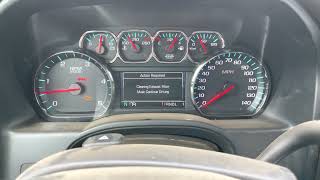
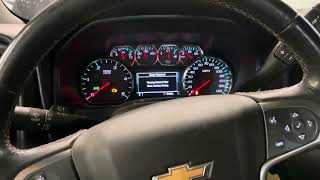
- "Clean Exhaust Filter See Owners Manual Now" or "Cleaning Exhaust Filter Keep Driving" message on the Driver Information Center (DIC). [3, Bulletin #100605002H]
- "Engine Power Is Reduced" message on the DIC, also known as limp mode.
- Illuminated Check Engine Light.
- Increased fuel consumption.
- Inability for the DPF to perform an automatic regeneration cycle.
- Overheated DPF housing, noticeable as excessive heat from under the truck.
- Replacing the entire DPF assembly. The P2463 code is most often caused by a driving habit issue or a faulty sensor, not a failed DPF. The DPF itself is extremely expensive, and replacing it without addressing the root cause will not solve the problem. Professional off-vehicle cleaning is a much more cost-effective option if the filter is truly clogged with ash or hardened soot.
Most Likely Causes
- Insufficient DPF Regeneration Due to Driving Habits 🔴 High Probability Trucks used for short trips, excessive idling, or low-speed city driving often don't allow the exhaust system to reach the high temperatures (over 1000°F) needed to automatically burn off soot. A technician noted a work truck with 4,840 engine hours at only 78,992 miles, a clear indicator of a usage pattern that leads to P2463.
How to confirm: Review the vehicle's typical usage. If it rarely sees sustained highway driving (e.g., 20-30 minutes above 50 mph), this is the most likely cause. A DIC warning message usually appears before the P2463 code is set. 🎬 Watch: Diagnosing and clearing a clogged DPF on your Duramax.
Typical fix: Drive the vehicle at a sustained highway speed for 20-30 minutes to initiate an automatic regeneration. If this fails, a forced 'Service Regeneration' using a professional scan tool is the next step.
Est. part cost: $0 - Faulty DPF Differential Pressure Sensor 🟡 Medium Probability This sensor is exposed to harsh conditions and can become clogged with soot or fail electronically, sending false data to the ECM that suggests the filter is clogged when it isn't. The wiring and connector pigtail to the sensor can also corrode or break.
How to confirm: With a scan tool, monitor the DPF pressure sensor reading with the key on, engine off. It should read 0 PSI. If it shows a pressure reading, or if the reading doesn't change appropriately with engine RPM, the sensor is likely faulty. Visually inspect the wiring for damage.
Typical fix: Replacement of the DPF differential pressure sensor. The ACDelco OE part for the 2017 L5P is #12677718. For the 2016 LML, a common replacement is ACDelco #12630257. Note that some replacement sensors require a reset or calibration procedure with a scan tool after installation.
Est. part cost: $50-$150 - Clogged or Damaged DPF Pressure Sensor Hoses 🟡 Medium Probability The rubber hoses and metal pipes connecting the DPF to the pressure sensor can become brittle, crack, melt from heat, or get clogged with soot, leading to inaccurate pressure readings.
How to confirm: Visually inspect the hoses for any signs of cracking, melting, or physical damage. Remove the hoses and check for blockages by blowing compressed air through them.
Typical fix: Replace the damaged or clogged hoses. An example OEM part is GM #84316440 for the LML engine.
Est. part cost: $30-$70 - Failed 9th Injector / Hydrocarbon Injector (2016 LML Engine Only) ⚪ Low Probability → Shop Fuel Injector On the LML engine, this injector is solely responsible for adding fuel to the exhaust for regeneration. If it fails, clogs, or its fuel line leaks, regeneration cannot occur, leading to soot buildup.
How to confirm: During a commanded regeneration with a scan tool, monitor exhaust gas temperatures (EGTs). If EGT 1 does not rise above 600°F and EGT 2 does not rise above 1000°F, the injector is a prime suspect. It can also be physically removed and tested by commanding it on with a scan tool to see if it sprays fuel. A leaking injector line will often cause visible white smoke during regen.
Typical fix: Replace the 9th injector (HCI) and its associated fuel line. The ACDelco part number for the injector is 12642510. 🎬 See this walkthrough on replacing the LML 9th injector.
Est. part cost: $150-$300
Rare But Worth Checking
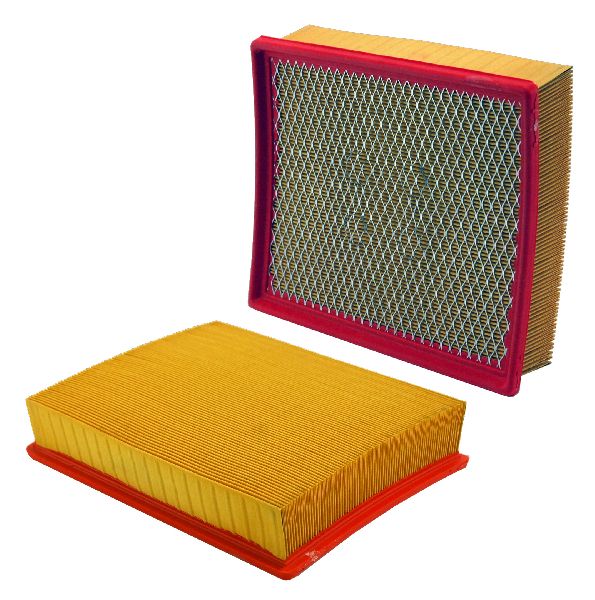
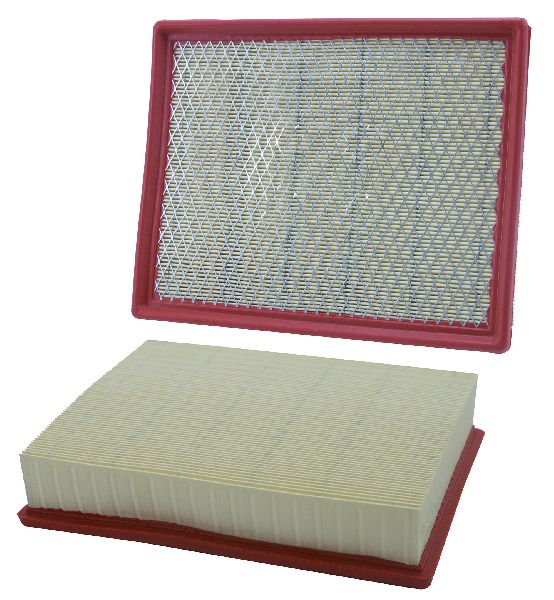
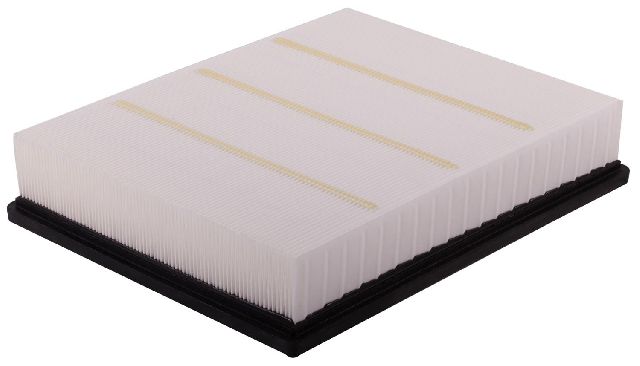
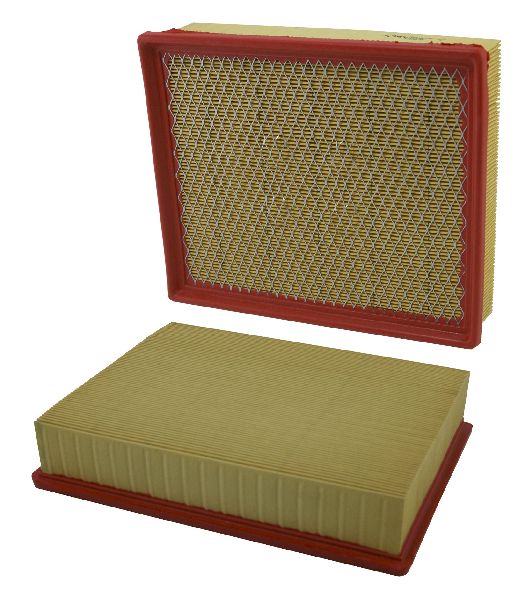
- Use of Aftermarket Air Filter (2017 L5P Engine Only): → Shop Air Cleaner Assembly GM issued Technical Service Bulletin (TSB 24-NA-197) specifically for 2017 and newer L5P engines, noting that some non-OEM air filters can disrupt airflow readings, causing incorrect fuel metering, excessive soot, and triggering P2463. The fix is to install an OEM filter and reset ECM data.
- Charge Air Cooler (CAC) System Leaks: → Shop Intercooler TSB PIP5468F points out that loose connections or leaks in the charge air cooler ductwork can cause a variety of codes, including P2463. A leak in the air intake system after the MAF sensor can lead to a rich fuel mixture and excessive soot. A visual inspection may not be enough; a smoke test of the CAC system is recommended.
- Faulty Exhaust Gas Temperature (EGT) Sensor: → Shop Exhaust Gas Temperature (EGT) Sensor The ECM requires accurate temperature data to initiate and control the regeneration process. A failed EGT sensor can prevent regeneration from starting, leading to soot accumulation.
- Exhaust System Leaks: An exhaust leak upstream of the DPF can alter pressure and temperature readings, confusing the ECM and preventing proper DPF management.
- Incorrect Engine Oil: Using engine oil that is not a low-ash formula (API CJ-4 or CK-4 certified) can cause the DPF to become permanently clogged with ash, which cannot be burned off during a normal regeneration cycle.
Diagnosis Steps
- Check for other DTCs. Resolve any other codes related to fuel, air induction (P0101), charge air cooler leaks (per TSB PIP5468F), or exhaust sensors first.
- Attempt an automatic regeneration by driving the vehicle at sustained highway speeds (above 50 mph) for at least 20-30 minutes until the DIC message clears.
- If automatic regeneration fails, perform a thorough visual inspection of the DPF pressure sensor hoses. Look for cracks, melting, kinks, or signs of soot leakage. Remove them and blow compressed air through to check for blockages.
- Using a scan tool, check the DPF pressure sensor reading with the key on and engine off. It should be zero. Start the engine and monitor the pressure as RPMs increase to ensure it responds logically.
- If sensors and hoses are good, use a capable scan tool to command a 'Service Regeneration'. Follow the on-screen prompts carefully. This process will run the engine at high RPM for an extended period (30-60 minutes).
Parts You'll Likely Need
- DPF Differential Pressure Sensor
(OEM #12677718 (for 2017 L5P), 12630257 (for 2016 LML))— This sensor is a common failure point that provides the primary data for calculating soot load. A false reading can trigger P2463 even if the filter is clean. - DPF Pressure Sensor Hoses/Pipes
(OEM #84316440 (Example for LML))— These hoses and pipes are prone to clogging with soot or cracking from heat and age, leading to incorrect pressure readings at the sensor. - Hydrocarbon Injector (9th Injector)
(OEM #12642510)— Specific to the 2016 LML engine, this injector is required for the DPF to regenerate. Its failure is a direct cause of soot buildup. - Engine Air Filter
(OEM #Varies by model)— For the 2017 L5P engine, using a non-OEM air filter is a documented cause of P2463 per TSB 24-NA-197.
Related Codes That Often Appear With This One
- P2459 — Stands for 'Diesel Particulate Filter Regeneration Frequency'. This code often appears alongside P2463 because the ECM detects it is trying to regenerate too often, which is a direct result of the filter being persistently clogged.
- P0299 — Stands for 'Turbocharger/Supercharger Underboost'. A severely clogged DPF creates high exhaust backpressure, which can prevent the turbo from spooling up correctly and lead to this code.
- P0420 — While typically a gasoline engine code, on a Duramax it can indicate 'Catalyst System Low Efficiency'. This can be triggered with P2463 if the component responsible for heating the exhaust (like the 9th injector on an LML) fails, preventing the Diesel Oxidation Catalyst (DOC) from reaching operating temperature.
Technical Service Bulletins (TSBs) & Recalls
- 100605002H: Information on 'Clean Exhaust Filter' messages displayed on the DIC, where DTC P2463 may be set.
- PIP5468F: Lists P2463 among many other potential DTCs related to a check engine light on 2017 models, indicating a complex diagnostic tree.
- PIP5468D: Similar to the above TSB, but for 2017 models and dated earlier.
- 100605002E: An earlier version of the TSB about the 'Clean Exhaust Filter' message and P2463.
Platform-Specific Known Issues
- The Aftermarket Air Filter Trap (2017 L5P): → Shop Air Cleaner Assembly A significant number of 2017 L5P owners have chased P2463, replacing sensors and performing forced regens, only to find the root cause was a non-OEM air filter. GM TSB 24-NA-197 confirms that the different airflow characteristics of some aftermarket filters can disrupt fuel metering, leading to excessive soot. The official fix is to install a genuine GM filter and perform a data reset with a scan tool.
- 9th Injector Failure Story (2016 LML): An LML owner on YouTube described a sudden plume of white smoke from the passenger side of the engine bay during a regen cycle. This was caused by the 9th injector's fuel line cracking and spraying diesel onto the hot exhaust. This failure prevents regeneration and quickly leads to a P2463 code. The repair involves replacing the injector and its dedicated fuel line.
Mechanic-Grade Diagnostic Values
- DPF Differential Pressure Sensor Reading (KOEO) — expected: ~0 kPa / 0 PSI. Failure: Any reading significantly above zero indicates a biased or faulty sensor.
- DPF Differential Pressure Sensor Reading at 2500 RPM — expected: Less than 20 kPa / 3 PSI. Failure: A pressure reading significantly higher than 3 PSI at 2500 RPM indicates a clogged DPF, assuming the sensor is functioning correctly.
- DPF Pressure Sensor Connector Voltage — expected: 5V on the supply wire, 0V on the ground wire (KOEO).. Failure: Lack of 5V supply or a bad ground points to a wiring issue upstream of the sensor.
- 9th Injector (HCI) Resistance (2016 LML Only) — expected: 150k - 210k Ohms. Failure: A reading outside this range indicates a failed injector coil.
- Scan Tool DPF Soot Load Percentage (L5P) — expected: Varies; regen starts ~100%, DIC message at 115%, P2463 code at 140%.. Failure: A value of 140% or higher confirms the condition for the code being set.
Scan Tool Commands That Help
- GDS2 (GM Dealer Tool): Service Regeneration — Used when the DPF soot level is too high for a normal driving regeneration, specifically when P2463 is set. This is a stationary test that runs the engine at high RPM to burn off soot.
- GDS2 (GM Dealer Tool): Regeneration Enable — This function enables the system to perform a regeneration during a subsequent drive cycle. According to GM, this is more effective at cleaning the DPF than a stationary Service Regeneration and should be used when soot levels are elevated but below the P2463 threshold.
- GDS2 / Pro-level Scan Tool: 9th Injector (HCI) Activation Test (LML Only) — To verify if the 9th injector is physically spraying fuel. The injector is removed from the exhaust, and this command is used to energize it while the truck is running to check for a spray pattern.
- GDS2 / Pro-level Scan Tool: DPF Pressure Sensor Reset / Fuel System Resets — After replacing a DPF pressure sensor or other related fuel/exhaust components, specific resets may be required to inform the ECM of the new part. Failure to do so can cause persistent issues even after the repair.
Wiring & Ground Locations
- DPF Pressure Sensor Connector — The sensor is typically mounted on a bracket on the transmission or frame rail, with two hoses running from it to the DPF housing in the exhaust.. This 3-pin connector provides the sensor with a 5V reference, ground, and returns a signal voltage to the ECM. Corrosion or damage to this connector or its wiring will cause incorrect readings and can trigger P2463.
- MAP Sensor Connector (L5P) — Located on top of the intake manifold on the passenger side of the engine bay.. While not a direct part of the DPF system, a faulty MAP sensor can affect air/fuel calculations, potentially leading to excessive soot creation that clogs the DPF and causes P2463.
- Fuel Rail Pressure Sensor Connector (L5P) — Located on the intake manifold, just to the right (towards the driver's side) of the MAP sensor.. Incorrect fuel pressure readings can lead to improper combustion and excessive soot. Problems with this sensor's pigtail connector are a known issue on L5P engines.
Real Owner Repair Stories
- Reddit user in r/Duramax (2015 Chevrolet Silverado 2500HD (LML)) — Codes P0420 (Catalyst System Low Efficiency) and P24A0 (Regen Low Temp) appeared after a major fuel system failure and repair.
❌ Tried (didn't work) The user was diagnosing the issue after a CP4 fuel pump failure was repaired with a CP3 conversion kit.
✅ What actually fixed it Multiple other owners confirmed that this combination of codes on an LML is almost always a failed 9th injector (hydrocarbon injector). One user with the same issue stated definitively: '9th injector was the issue.' - Reddit user in r/Diesel (2024 GMC 3500 (L5P Engine)) — Recurring P2463 code on a new truck with 71,000 miles.
❌ Tried (didn't work) Using correct DEF, correct engine oil, and timely fuel filter changes.
✅ What actually fixed it A responding technician pointed out that non-OEM air filters are a common cause of P2463 on L5P engines. They disrupt the Mass Airflow (MAF) sensor readings, leading to incorrect fueling and a clogged DPF. The fix is to install a genuine OEM air filter and clean the MAF sensor. - DadsGarage Diagnostic Specialist on YouTube (2019 Chevrolet Silverado (L5P)) — P2463, 'Engine Power Reduced' message, 'Cleaning Exhaust Filter' message.
❌ Tried (didn't work) A successful 'Service Regeneration' was performed which cleared the P2463 code and brought soot levels down from 203% to 66%. However, the truck remained in a no-power limp mode, now with no codes stored.
✅ What actually fixed it The scan tool had a computer problem mid-regen and failed to perform the necessary post-regen resets. The final fix was simply disconnecting the truck's battery for 15 minutes, which forced the modules to reset and restored full engine power.
"I Checked Everything" — The Actual Cause
- On L5P engines, a smoke test of the exhaust system may come back clean, but the root cause can be a leak in the air intake system, specifically the Charge Air Cooler (CAC) or its connecting tubes/boots. A leak after the MAF sensor introduces unmetered air, causing the ECM to command an incorrect (often rich) fuel mixture, which generates excess soot and clogs the DPF, leading to P2463.
OEM Part Supersession History
Bosch 0281006809→GM 12685369— This is the Particulate Matter Sensor for the 2017 L5P engine. The original Bosch part was superseded by a new GM part number.
Heads up: While both are for the L5P, it is always recommended to use the latest superseded part number available from the dealer to ensure compatibility with the latest software updates.
Model Year Variations Within This Range
- 2017+: Starting with the 2017 L5P engine, the GM GDS2 scan tool displays DPF soot accumulation as a percentage (%). On 2016 and older LML engines, this value was displayed in grams. A technician needs to know that the threshold for P2463 on an L5P is 140% soot load.
Helpful Videos
We Have This Part in Stock


The information in this article is provided for general reference and educational purposes only. Vehicle specifications, procedures, and part compatibility can vary by production date, trim level, and region. Always consult your vehicle's factory service manual and verify part numbers before purchasing or performing repairs. Safety-critical components such as airbags, seat belts, and braking systems should be installed by a qualified professional.
- Chevrolet SILVERADO:
- 🧭 Diagnostic Flowchart
- 🎬 Helpful Videos
- 🛍️ Shop This Part
- What's Unique About the 2016-2017 Chevrolet SILVERADO
- Symptoms You May Notice
- Most Likely Causes
- Rare But Worth Checking
- Diagnosis Steps
- Parts You'll Likely Need
- Related Codes That Often Appear With This One
- Technical Service Bulletins (TSBs) & Recalls
- Platform-Specific Known Issues
- Mechanic-Grade Diagnostic Values
- Scan Tool Commands That Help
- Wiring & Ground Locations
- Real Owner Repair Stories
- "I Checked Everything" — The Actual Cause
- OEM Part Supersession History
- Model Year Variations Within This Range
- 🎟️ Get 5% Off