

P2463 on 2021-2024 Chevrolet Tahoe 3.0L Diesel: DPF Restriction Causes & Fixes
This code means your Tahoe's Diesel Particulate Filter (DPF) is clogged with soot, usually due to too many short trips. The first step is to drive at highway speeds for 20-30 minutes to trigger a self-cleaning 'regeneration' cycle. If that doesn't work, a faulty sensor, wiring, or a dealer-forced regeneration may be required. Ignoring it leads to 'limp mode' and costly damage.
- P2463 means your Tahoe's diesel exhaust filter (DPF) is clogged with soot.
- The most common cause is a pattern of short trips or extended idling. The first and cheapest fix is to drive at highway speeds for 20-30 minutes to let the system clean itself.
- If driving doesn't clear the code, your vehicle will enter 'limp mode' with reduced power. Do not ignore this.
- The next most likely cause is a faulty DPF pressure sensor, which is a relatively inexpensive part to replace.
- Only in severe cases where a forced 'service regeneration' at a shop fails does the very expensive DPF assembly need to be replaced.
What's Unique About the 2021-2024 Chevrolet TAHOE
The 3.0L Duramax engine (LM2 and successor LZ0) in the Tahoe is a modern diesel that relies on high exhaust temperatures to keep its DPF clean. This platform is particularly sensitive to driving habits. If the vehicle is primarily used for short, low-speed trips or has extended idle times, the DPF may not get hot enough to perform its automatic cleaning cycle. 🎬 Watch: A deep dive into how the exhaust regeneration works. GM has acknowledged this by issuing technical service bulletin 10-06-05-002M, which guides owners to perform a specific driving procedure when a "Clean Exhaust Filter" message appears, linking this behavior directly to the P2463 code. The issue is common across all GM trucks and SUVs using this engine.
Diagnostic Flowchart
Tap your situation to follow the diagnostic path that matches what you're seeing on this vehicle.
Symptoms You May Notice
- Check Engine Light illuminated.
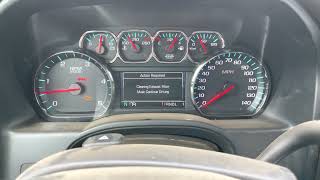
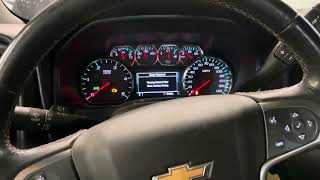
- "Clean Exhaust Filter See Owners Manual Now" or "Cleaning Exhaust Filter Keep Driving Until Message is Cleared" message on the Driver Information Center (DIC).
- "Engine Power Is Reduced" message displayed on the DIC.
- Noticeable loss of engine power (limp mode).
- Poor fuel economy.
- The auto start/stop system may be disabled.
- Engine cooling fans running at high speed continuously.
- A chime will sound when the MIL illuminates for this issue.
- Replacing the entire Diesel Particulate Filter (DPF) assembly. This is an extremely expensive part and is often not the root cause. A forced regeneration, sensor replacement, wiring repair, or fixing an upstream leak is usually the correct fix.
Most Likely Causes
- Driving Habits Preventing DPF Regeneration 🔴 High Probability The DPF system requires sustained highway speeds to generate enough heat to burn off trapped soot. Frequent short trips, stop-and-go traffic, and extended idling prevent this process, which is a common usage pattern for a family SUV like the Tahoe.
How to confirm: Review recent driving patterns. If they consist mainly of short-duration trips, this is the likely cause. A technician can also compare engine hours to mileage; a high hour-to-mile ratio indicates excessive idling.
Typical fix: Follow the DIC prompt and drive the vehicle at a sustained speed, typically above 30-50 mph, for 20-30 minutes to allow a regeneration cycle to complete.
Est. part cost: $0 - Failed DPF Differential Pressure Sensor 🟡 Medium Probability These sensors and their connecting hoses can get clogged with soot or moisture, or fail internally, leading to incorrect readings of how full the filter is. They send false high-pressure data to the ECM, tricking it into setting a P2463 code even if the filter is relatively clean.
How to confirm: Using an OBD-II scanner, monitor the live data from the DPF pressure sensor. If the readings are erratic, do not change with RPM, or are stuck at a high value even on a cold engine, the sensor is likely faulty.
Typical fix: Replace the DPF differential pressure sensor and inspect its hoses for blockages or damage. The OEM part is often labeled a 'Multi-Purpose Pressure Sensor'.
Est. part cost: $60-$150 - Severely Clogged DPF Requiring Forced Regeneration 🟡 Medium Probability If driver-initiated regeneration is ignored or fails, the soot level can become so high (e.g., over 135% on some models) that the ECM locks out automatic regeneration for safety. At this point, the filter is too clogged to be cleared by normal driving.
How to confirm: If a highway drive cycle does not clear the code and the 'Engine Power is Reduced' message is active, a forced regeneration is necessary. A scan tool will show a critically high soot load percentage, sometimes exceeding 200%.
Typical fix: A professional technician must use a dealership-level scan tool to command a 'service regeneration,' which runs the engine at high RPMs while stationary to burn out the soot. This should be performed after an oil change.
Est. part cost: $0 (Labor cost only) - Upstream Air or Exhaust Leaks ⚪ Low Probability A leak in the air intake system (e.g., charge air cooler hoses) or exhaust system before the DPF can alter sensor readings and affect the regeneration process. A GM investigation (PIE0883) for the newer LZ0 engine noted that an improperly clipped turbocharger outlet connection to the resonator could be a cause. A separate TSB (24-NA-198) also points to misalignment between the catalytic converter and turbocharger as a source of leaks.
How to confirm: Visually and audibly inspect the entire air intake path from the air filter to the engine and the exhaust system for leaks, cracks, or loose connections. A smoke test may be required to find small leaks.
Typical fix: Repair the leak by replacing the faulty gasket, hose, or clamp. For the issue in TSB 24-NA-198, the fix is to realign the flange and torque the clamp to 12 N.m (106 lb in).
Est. part cost: $20-$200
Rare But Worth Checking
- Faulty DPF Pressure Sensor Wiring Harness: A common failure point is the wiring pigtail for the DPF pressure sensor. The wire can break internally right at the connector, often with no visible damage. Gently pulling on each wire may reveal the break if the insulation stretches or snaps. The fix is to splice in a new pigtail connector.
- Incorrect Engine Oil: Using engine oil that is not low-ash certified (GM dexosD specification) can lead to the DPF becoming permanently clogged with ash, which cannot be burned off like soot.
- ECM Software Anomaly: For 2024 models with the newer LZ0 engine, GM has identified a software issue that can falsely trigger DPF-related codes, including P2463, under TSB 24-NA-094. The fix is a dealer-installed software update.
Diagnosis Steps
- Check the Driver Information Center (DIC) for messages. If a 'Keep Driving' message is displayed, immediately drive the vehicle at highway speeds (over 30 mph) for at least 20-30 minutes to initiate a regeneration cycle.
- If the code persists, use an OBD-II scanner to view live data. Check the 'DPF Soot Load' percentage and the readings from the 'DPF Differential Pressure Sensor'.
- Inspect the DPF pressure sensor's hoses for cracks, melting, or blockages.
- Carefully inspect the DPF pressure sensor's wiring connector. Gently pull on each wire at the back of the connector; if the insulation stretches or breaks, the wire has failed internally and the pigtail must be replaced.
- If sensor readings are illogical (e.g., high pressure when the engine is off), the sensor is likely faulty and should be replaced.
- If the soot load is confirmed to be critically high (TSBs suggest this occurs above 140%) and a driving cycle did not clear it, the vehicle requires a 'service regeneration' performed by a technician with a professional scan tool.
- While the vehicle is at a workshop, have the technician inspect the full air intake and exhaust system for any leaks upstream of the DPF, paying close attention to the charge air cooler hoses and turbo outlet connections.
- If a service regeneration fails to reduce the soot load significantly, the DPF may be permanently clogged with ash or damaged, requiring professional cleaning or replacement.
Parts You'll Likely Need
- DPF Differential Pressure Sensor
(OEM #12677836)— This sensor is a common failure point. It provides the primary data used to calculate soot load, and a false reading will trigger a P2463 code even if the filter is clean.
Trusted brands: ACDelco (GM Genuine), Bosch
OEM price range: $80-$150
Aftermarket price range: $50-$100 - DPF Pressure Sensor Connector Pigtail — The wiring at the sensor connector is prone to internal breaks from vibration and heat, causing intermittent or false sensor readings. This is a common, often-overlooked failure point.
Trusted brands: ACDelco
OEM price range: $40-$60
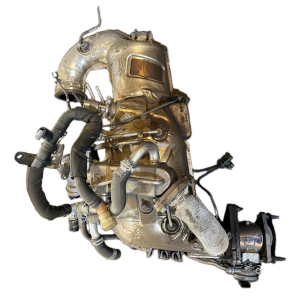
Aftermarket price range: $20-$40 - Diesel Particulate Filter (DPF) Assembly
(OEM #40009139 (supersedes 12696443, 12709334, and others))— This is a last-resort replacement, needed only if the filter is physically cracked or irreversibly clogged with ash from high mileage or use of incorrect oil.
Trusted brands: GM Genuine
OEM price range: $2500-$3500
Aftermarket price range: $1500-$2500
Related Codes That Often Appear With This One
- P2459 — This code for 'Diesel Particulate Filter Regeneration Frequency' often appears with P2463, indicating the system is trying to regenerate too often due to the high soot load or a sensor error.
- P2002 — This code for 'DPF Efficiency Below Threshold' can be set when the filter is so clogged that the pressure differential is out of range, or if the filter is damaged internally.
- P0299 — This 'Turbocharger Underboost' code can sometimes appear alongside P2463, as the ECM may limit boost pressure as part of the 'reduced engine power' strategy to protect the engine from excessive backpressure.
Technical Service Bulletins (TSBs) & Recalls
- 10-06-05-002M: Information on 'Clean Exhaust Filter' messages displayed on the DIC and the potential for DTC P2463 to be set. This is the primary bulletin covering this issue across many GM diesel models and years.
- 24-NA-094: Addresses a software anomaly on 2024 models with the LZ0 engine that can cause false P2463, P2002, and P2459 codes.
- PIE0883: An engineering investigation bulletin for the 2026 LZ0 engine that identified a loose turbocharger outlet connection as a potential cause for P2463, highlighting the importance of checking for intake leaks.
Platform-Specific Known Issues
- GM has issued Technical Service Bulletin #10-06-05-002M, which directly addresses the P2463 code and the associated DIC messages about cleaning the exhaust filter. It confirms the cause is often driving conditions that prevent self-cleaning and instructs owners to drive at sustained speeds to resolve it. It also states that once the 'Engine Power is Reduced' message appears, self-cleaning is no longer possible and dealer service is required.
- For 2024 models with the newer LZ0 engine, TSB 24-NA-094 notes that a software glitch can cause P2463 to set falsely. A dealer ECM update is the prescribed fix.
Mechanic-Grade Diagnostic Values
- DPF Soot Accumulation (GDS2 Scan Tool) — expected: Below 100% for normal operation.. Failure: Approx. 115% triggers a 'Continue Driving' message on the DIC. 140% or higher sets DTC P2463 and requires a service regeneration.
- DPF Differential Pressure Sensor Voltage (Key On, Engine Off) — expected: ~0.5V for a clean/new sensor.. Failure: Voltage rises toward 4.5V as the filter fills. A reading stuck high indicates a clogged filter or a faulty sensor.
- DPF Differential Pressure (Scan Tool, Warm Engine at Idle) — expected: Near 0 kPa or 0 PSI.. Failure: A reading that is stuck high (e.g., several PSI at idle) or does not change with engine RPM points to a clogged DPF or a faulty sensor/hoses.
- Air Leak Equivalence Ratio (GDS2, EGR commanded closed) — expected: 0.80:1 to 1.20:1. Failure: A value outside this range indicates an air leak in the induction or exhaust system, which can cause incorrect soot calculations.
Hidden / Shadow Codes Worth Checking
- P2002, P2459, etc. on 2024 models: On 2024 models with the LZ0 engine, GM TSB #24-NA-094 indicates that a software anomaly can cause P2463 to set falsely along with a host of other emissions-related codes. In this specific case, P2463 is a symptom of a software issue, not a clogged filter. (see via Standard OBD-II scanner. The key is recognizing that on a 2024 model, these codes appearing together point towards a required ECM software update rather than a hardware fault.)
Scan Tool Commands That Help
- GDS2 / Professional Scan Tool: DPF Service Regeneration — Used when the DPF soot level is too high (e.g., >140%) for a normal driving regeneration to occur and code P2463 is set. This stationary procedure runs the engine at high RPM to raise exhaust temperatures and burn off soot.
- GDS2 / Professional Scan Tool: DPF Replacement / DPF Reset / DPF Learning — This is a mandatory step after replacing the DPF, performing an off-car cleaning, or replacing the DPF pressure sensor. It resets the ECM's learned values for soot and ash load to zero, ensuring correct monitoring of the new/clean component.
- GDS2: Reductant Fluid Quality Test (RFQT) — A GM diagnostic procedure for P2463 involves running this test in conjunction with a DPF Service Regeneration to ensure the entire aftertreatment system is functioning correctly.
Real Owner Repair Stories
- YouTube video by a professional mechanic (Chevrolet Silverado with 6.6L Duramax (procedure is identical for 3.0L)) — Customer reported 'reduced engine power' and 'cleaning exhaust' messages on the DIC. Code P2463 was stored.
❌ Tried (didn't work) A normal driving cycle was not possible as the ECM had locked out regeneration due to the high soot load (scan tool showed 203%).
✅ What actually fixed it A forced 'Service Regeneration' was performed using a scan tool. This successfully lowered the soot load to 66% and cleared the P2463 code. After the service, the 'reduced engine power' message was gone and the truck's power was restored.
OEM Part Supersession History
12616646, 12614969, 12573107, and others→12677836— Part consolidation and design updates.
Heads up: Part 12677836 is listed for many GM applications, including as an oil pressure sensor on older V8s. It is critical to verify fitment for the 3.0L Duramax DPF application, though it is the correct OEM part number for this function.12671620→12711405— Design update for the Mass Air Flow (MAF) sensor, which is critical for correct air/fuel ratio and soot calculation.
Model Year Variations Within This Range
- 2021-2023 (LM2 Engine): These model years use the first-generation 3.0L Duramax, engine code LM2. The DPF and emissions system architecture are established for this platform.
- 2024 (LZ0 Engine): Starting in 2023 for trucks and 2024/2025 for SUVs, GM introduced the updated LZ0 engine. For the 2024 Tahoe, this may be the applicable engine. The LZ0 features redesigned injectors, steel pistons, and a relocated Diesel Oxidation Catalyst (DOC) for better efficiency. Importantly, a software anomaly covered by TSB 24-NA-094 can cause false P2463 codes on these models, requiring an ECM update as the primary fix.
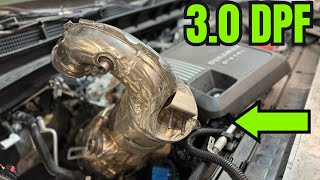
Helpful Videos
We Have This Part in Stock

The information in this article is provided for general reference and educational purposes only. Vehicle specifications, procedures, and part compatibility can vary by production date, trim level, and region. Always consult your vehicle's factory service manual and verify part numbers before purchasing or performing repairs. Safety-critical components such as airbags, seat belts, and braking systems should be installed by a qualified professional.
- Chevrolet TAHOE:
- 🧭 Diagnostic Flowchart
- 🎬 Helpful Videos
- 🛍️ Shop This Part
- What's Unique About the 2021-2024 Chevrolet TAHOE
- Symptoms You May Notice
- Most Likely Causes
- Rare But Worth Checking
- Diagnosis Steps
- Parts You'll Likely Need
- Related Codes That Often Appear With This One
- Technical Service Bulletins (TSBs) & Recalls
- Platform-Specific Known Issues
- Mechanic-Grade Diagnostic Values
- Hidden / Shadow Codes Worth Checking
- Scan Tool Commands That Help
- Real Owner Repair Stories
- OEM Part Supersession History
- Model Year Variations Within This Range
- 🎟️ Get 5% Off