

P2463 on 2007-2011 GMC Savana: DPF Restriction Causes and Fixes
P2463 on a GMC Savana with a Duramax diesel engine means the Diesel Particulate Filter (DPF) is clogged with soot. The most common cause is frequent short-trip driving that prevents the DPF from cleaning itself (regenerating). Often, a long highway drive can fix it, but if not, you may need a new DPF pressure sensor or a forced regeneration at a shop. Ignoring the warning messages will lead to reduced engine power.
- P2463 means your Savana's Diesel Particulate Filter (DPF) is clogged with soot.
- The most common cause is too many short trips; try driving on the highway for 30 minutes to let the system clean itself.
- If a highway drive doesn't work, the next most likely culprits are a bad DPF pressure sensor or its hoses.
- Do not immediately replace the expensive DPF. A proper diagnosis is required to find the true cause.
- Ignoring this code will put the van in limp mode and can lead to very expensive engine or turbocharger damage.
What's Unique About the 2007-2011 Gmc SAVANA
GMC Savana vans, especially those used for commercial purposes, often engage in short-trip, low-speed driving and extended idling. This driving style is a primary contributor to the P2463 code because the exhaust system doesn't get hot enough for a long enough period to complete a DPF regeneration cycle. A common diagnostic indicator for this is a high number of engine hours relative to the mileage. For example, a van with 80,000 miles but 4,800 engine hours has an average speed of less than 17 mph, confirming a history of excessive idling or stop-and-go driving. General Motors has issued multiple Technical Service Bulletins (TSBs) acknowledging that the "Clean Exhaust Filter" message will appear and that if ignored, DTC P2463 will set and engine power will be reduced.
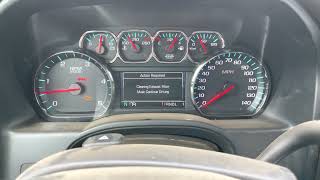
🎬 Watch: Understanding P2463 and how to fix filter restrictions.Diagnostic Flowchart
Tap your situation to follow the diagnostic path that matches what you're seeing on this vehicle.
Symptoms You May Notice
- Check Engine Light is on
- "Clean Exhaust Filter See Owner Manual Now" or similar message on the Driver Information Center (DIC).
- Reduced engine power or "limp mode" message, such as "Engine Power Is Reduced".
- Noticeable loss of acceleration
- Increased fuel consumption
- Black smoke from the exhaust
- Engine may run hotter than normal.
- Replacing the DPF immediately. The DPF is expensive and often not the root cause. The problem is frequently a failed sensor, clogged hose, or driving habits preventing regeneration. Always diagnose the system before condemning the filter.
Most Likely Causes
- Insufficient DPF Regeneration Due to Driving Habits 🔴 High Probability Savana vans are often used for city deliveries or as work vehicles, involving frequent short trips, stop-and-go traffic, and extended idling that prevent the DPF from reaching the high temperatures needed for passive or active regeneration.
How to confirm: Review driving history and engine hours vs. mileage. If the van is rarely driven at sustained highway speeds (over 30-50 mph), this is the likely cause. The owner's manual and TSBs describe the conditions needed for regeneration.
Typical fix: If only the 'Clean Exhaust Filter' message is on, drive the vehicle at highway speeds (typically over 50 mph) for 20-30 minutes to initiate a regeneration cycle. If the P2463 code is already set, a forced 'service regeneration' with a scan tool is usually necessary.
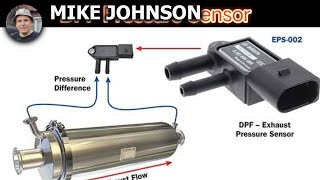
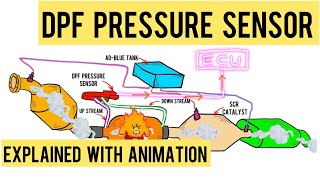
Est. part cost: $0 - Faulty DPF Pressure Sensor 🟡 Medium Probability The sensor is exposed to harsh exhaust conditions and can fail over time, sending incorrect high-pressure readings to the ECM even when the filter is clear. Moisture or soot can also contaminate the sensor internally.
How to confirm: Use a scan tool to monitor the DPF pressure sensor readings with the key on, engine off (should be 0 psi or atmospheric pressure) and at idle/revving. Compare readings to manufacturer specifications. Test the sensor's voltage output and wiring harness.
Typical fix: Replace the DPF pressure sensor.
Est. part cost: $50-$150 - Clogged or Damaged DPF Pressure Sensor Hoses 🟡 Medium Probability The rubber or silicone hoses connecting the sensor to the DPF can become clogged with soot, or crack/melt from heat and age, leading to inaccurate pressure readings that mimic a clogged filter.
How to confirm: Visually inspect the hoses for cracks, brittleness, melting, or kinks. Remove the hoses and check for blockages by blowing compressed air through them.
Typical fix: Clean or replace the DPF pressure sensor hoses. Aftermarket repair kits with silicone hoses and clamps are available.
Est. part cost: $20-$60 - Underlying Engine Issue Preventing Regeneration ⚪ Low Probability Other engine faults can prevent the DPF regeneration process from starting. This includes a faulty thermostat (engine not reaching operating temp), bad fuel injectors, a dirty/collapsed air filter, or air leaks in the intake/charge air cooler system.
How to confirm: Scan for other DTCs. If other codes are present, diagnose and fix them first. A key diagnostic step from GM involves checking the 'Air Leak Equivalence Ratio' with a scan tool to find induction system leaks. Also inspect the air filter for collapse or extreme dirt.
Typical fix: Repair the underlying engine issue (e.g., replace thermostat, fix charge air cooler hose leak, replace air filter, replace faulty injector).
Est. part cost: $50-$500+
Rare But Worth Checking
- Use of Incorrect Engine Oil: Using engine oil that is not rated for modern diesel engines with a DPF (e.g., non-CJ-4/CK-4 low-ash oil) can lead to premature clogging of the filter with ash, which does not burn off during regeneration and can permanently damage the DPF.
- Faulty Exhaust Gas Temperature Sensor: → Shop Exhaust Gas Temperature (EGT) Sensor The ECM relies on accurate temperature readings from multiple EGT sensors to initiate and control the regeneration process. A faulty sensor can prevent regeneration from occurring or cause it to fail.
Diagnosis Steps
- Check for other DTCs. If any other codes are present, diagnose and repair them first, as they are often the root cause.
- As per GM's TSBs, if only the DIC message is present (no hard code), attempt a DPF regeneration by driving the vehicle at sustained highway speeds (above 50 mph) for at least 20-30 minutes.
- If the P2463 code is set, a manual drive may not be sufficient. Inspect the DPF pressure sensor hoses for any cracks, melting, or blockages.
- Using a capable scan tool, monitor the live data from the DPF pressure sensor. The reading should be near zero with the engine off and increase with RPM. Compare these values to manufacturer specifications. Check soot load percentage.
- If sensor readings are implausible, test the sensor's circuit and voltage. If the circuit is good, the sensor is likely faulty.
- Inspect the entire air induction system for leaks, especially the charge air cooler hoses. Per GM bulletin PI0845, a scan tool can be used to check the 'Air Leak Equivalence Ratio' to help identify leaks.
- If the sensor, hoses, and air system are confirmed to be good, a technician must use a professional scan tool to command a "Service Regeneration" or "Forced Regeneration". This process can take 30-60 minutes.
- If a forced regeneration fails to complete or the code returns immediately, the DPF may be permanently clogged with ash or soot and require professional off-vehicle cleaning or complete replacement.
Parts You'll Likely Need
- Diesel Particulate Filter (DPF) Pressure Sensor
(OEM #ACDelco 213-3854 (GM 12643735, 12632459))— This sensor is a common failure point and provides the critical data the ECM uses to determine if the DPF is clogged. An incorrect reading can falsely trigger the P2463 code.
Trusted brands: ACDelco, Bosch, Standard Motor Products
OEM price range: $100-$180
Aftermarket price range: $50-$120 - Diesel Particulate Filter (DPF) — If all regeneration attempts fail and sensors are working correctly, the filter itself is likely clogged with non-burnable ash or has failed internally. This is the last resort replacement.
Trusted brands: ACDelco, Walker, Dorman
OEM price range: $1500-$2500
Aftermarket price range: $800-$1800 - DPF Pressure Sensor Hoses — These hoses are a cheap and easy replacement that can become brittle, cracked, or clogged, causing the same symptoms as a failed sensor.
Trusted brands: ACDelco, Gates
OEM price range: $40-$80
Aftermarket price range: $20-$60
Related Codes That Often Appear With This One
- P2459 — This code indicates 'Diesel Particulate Filter Regeneration Frequency'. It often appears with P2463 because the ECM has been trying and failing to regenerate the filter too often.
- P2002 — This code indicates 'DPF Efficiency Below Threshold'. It can be a precursor to P2463 or appear alongside it, indicating a general problem with the DPF's ability to filter soot.
- P0299 — This code for 'Turbocharger Underboost' can sometimes appear after a P2463 event. A severely clogged DPF can cause so much backpressure that it affects turbo performance, and even after a successful regen, underlying issues might remain.
Technical Service Bulletins (TSBs) & Recalls
- TSB #10-06-05-002M (August 2023): The most recent version, this informational bulletin covers the 'Clean Exhaust Filter' DIC messages and the potential for DTC P2463 to be set across a wide range of GM diesel vehicles, including the Savana. It advises that driving above 30 mph (50 km/h) is required to clear the message.
- TSB #PI0845 (October 2012): A preliminary information bulletin for when P2463 is set and a service regeneration won't run. It points to checking for air leaks in the intake and exhaust system as a key diagnostic step before attempting regeneration again.
- TSB #10-06-05-002L (March 2023): A previous version of the bulletin, also detailing the cause and effect of the DPF messages and code P2463.
- TSB #10-06-05-002E (September 2017): An older version of the same bulletin, showing the long history of this issue.
Platform-Specific Known Issues
- GM has issued multiple super-ceding Technical Service Bulletins for this issue, including #10-06-05-002M, #100605002E, and #10-06-05-002L. They all note that a 'Clean Exhaust Filter' message is a notification for the driver to alter their driving to allow a regen. They explicitly state that if the message is ignored, DTC P2463 will set and dealer service will be necessary.
- GM Preliminary Information bulletin PI0845 specifically addresses the scenario where P2463 is set and a service regeneration will not run. It guides technicians to check for air leaks in the induction system as a primary cause.
Mechanic-Grade Diagnostic Values
- DPF Pressure Sensor - Key On, Engine Off (KOEO) — expected: 0 PSI / 0 kPa. The sensor should read atmospheric pressure.. Failure: Any reading significantly different from zero indicates a biased or faulty sensor.
- DPF Pressure Sensor - 5-Volt Reference — expected: 4.5 to 5.0 Volts. Failure: Voltage below 4.5V or above 5.0V points to a wiring issue or a problem with the ECM's reference voltage supply.
- DPF Pressure Sensor - Signal Voltage (KOEO) — expected: ~0.5 Volts. Failure: A significantly higher or lower voltage suggests a sensor or wiring fault.
- DPF Soot Load (Grams) Triggering P2463 — expected: Below 70 grams. Failure: The ECM may set DTC P2463 when the calculated soot mass reaches 70 grams or more.
- Air Leak Equivalence Ratio (Scan Tool Parameter) — expected: 1.0:1 (Normal range 0.80:1 to 1.20:1) with EGR valve commanded closed.. Failure: A value outside the normal range indicates a leak in the air induction system, which can cause excessive soot and prevent proper regeneration.
Scan Tool Commands That Help
- GM Tech2 / GDS2 / Professional Aftermarket Scanners: DPF Service Regeneration — This is a dealer-level command used to initiate a forced regeneration when the P2463 code is set and the vehicle will no longer perform a regeneration on its own. It runs the engine at high RPM for an extended period to burn off soot.
- GM Tech2 / GDS2: EGR Valve Closed — Used during diagnosis of air leaks. Commanding the EGR valve closed allows for accurate measurement of the 'Air Leak Equivalence Ratio' to check for unmetered air entering the engine.
Wiring & Ground Locations
- G103 — On the 6.6L Duramax, this ground is located on the left front lower side of the engine block.. This is a primary engine ground. A poor connection at G103 can cause erratic behavior from various engine sensors and modules, including the ECM, potentially leading to incorrect calculations and false codes like P2463.
Real Owner Repair Stories
- YouTube channel 'Rainman Ray's Repairs' (GMC/Chevrolet truck with 6.6L Duramax (specific year not stated, but behavior is typical for LMM/LGH)) — Reduced Engine Power message, 'Cleaning Exhaust Filter' message, and DTC P2463 stored.
❌ Tried (didn't work) Normal driving could not clear the message because the soot load was too high, preventing a standard regeneration.
✅ What actually fixed it A forced 'Service Regeneration' was performed using a professional scan tool. This successfully burned off the excessive soot, cleared the P2463 code, and restored engine power. The technician noted the truck had high engine hours vs. mileage, indicating excessive idling was the root cause.
OEM Part Supersession History
GM 12632459→GM 12643735 (ACDelco 213-3854)— Part number update/revision by the manufacturer.
Model Year Variations Within This Range
- 2007.5-2010 (LMM Engine): The LMM engine achieves DPF regeneration by injecting extra fuel during the engine's exhaust stroke (post-combustion injection). This process can lead to some fuel dilution of the engine oil over time.
- 2010.5-2011 (LGH Engine): The LGH engine introduced a dedicated '9th injector' or hydrocarbon injector (HCI) that sprays fuel directly into the exhaust stream upstream of the DPF to generate the heat needed for regeneration. This design change reduces engine oil dilution compared to the LMM. A failure of this injector is a unique potential cause for P2463 on these specific models.
Helpful Videos
![[EN] How to replace a DPF sensor | Masters of Motion](https://img.youtube.com/vi/rX9WGUP7p7c/mqdefault.jpg)
We Have This Part in Stock


The information in this article is provided for general reference and educational purposes only. Vehicle specifications, procedures, and part compatibility can vary by production date, trim level, and region. Always consult your vehicle's factory service manual and verify part numbers before purchasing or performing repairs. Safety-critical components such as airbags, seat belts, and braking systems should be installed by a qualified professional.
- Gmc SAVANA:
- 🧭 Diagnostic Flowchart
- 🎬 Helpful Videos
- 🛍️ Shop This Part
- What's Unique About the 2007-2011 Gmc SAVANA
- Symptoms You May Notice
- Most Likely Causes
- Rare But Worth Checking
- Diagnosis Steps
- Parts You'll Likely Need
- Related Codes That Often Appear With This One
- Technical Service Bulletins (TSBs) & Recalls
- Platform-Specific Known Issues
- Mechanic-Grade Diagnostic Values
- Scan Tool Commands That Help
- Wiring & Ground Locations
- Real Owner Repair Stories
- OEM Part Supersession History
- Model Year Variations Within This Range
- 🎟️ Get 5% Off