

P2463 on 2012-2016 GMC Savana: DPF Soot Accumulation Causes & Fixes
This code means the Diesel Particulate Filter (DPF) is clogged with soot. It's often caused by frequent short trips or extended idling. The first step is to drive at a sustained highway speed for 20-30 minutes to trigger a cleaning cycle (regeneration). If that fails, the DPF pressure sensor may be faulty or the filter may require a forced, professional-level regeneration.
- P2463 means your DPF is clogged, most likely from too much city driving.
- Your first and cheapest fix is to drive on a highway for about 30 minutes to let the system clean itself.
- If driving doesn't fix it, the next most likely culprit is a faulty DPF pressure sensor or its hoses, which are relatively inexpensive to replace.
- Do not ignore this code. It will put your van into limp mode and can lead to very expensive DPF replacement if the root cause is not addressed.
What's Unique About the 2012-2016 Gmc SAVANA
The GMC Savana with the 6.6L Duramax engine is a work vehicle often subjected to extended idling and short, stop-and-go driving. This usage pattern is the primary reason P2463 is common, as the exhaust doesn't get hot enough for long enough to perform a passive DPF cleaning (regeneration). A high number of engine hours relative to miles driven is a strong indicator of this usage pattern. General Motors has issued multiple Technical Service Bulletins (TSBs) acknowledging this, where the primary instruction for early-stage warnings is to simply keep driving at highway speeds until the filter clears.
Diagnostic Flowchart
Tap your situation to follow the diagnostic path that matches what you're seeing on this vehicle.
Symptoms You May Notice
- Check Engine Light illuminated
- "Reduced Engine Power" message on the Driver Information Center (DIC)
- Vehicle enters "limp mode," limiting speed and acceleration
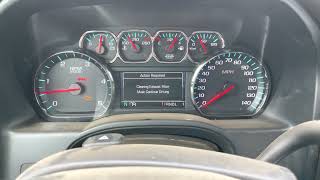
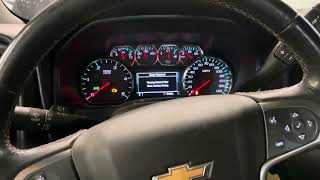
- DIC messages such as "Clean Exhaust Filter See Owners Manual Now" or "Cleaning Exhaust Filter Keep Driving Until Message is Cleared"
- A chime may sound along with the DIC message and MIL.
- Increased fuel consumption
- Visible black smoke from the exhaust in some cases, which may indicate a cracked or damaged DPF.
- High engine or exhaust temperatures.
- Replacing the DPF immediately. The DPF is the most expensive part of the system. The actual cause is often a much cheaper sensor, a clogged hose, or a simple matter of driving habits that can be corrected for free.
- Ignoring underlying causes. Performing a forced regeneration without fixing the root problem (like a bad injector or EGR issue) will likely result in the P2463 code returning.
Most Likely Causes
- Insufficient DPF Regeneration Due to Driving Habits 🔴 High Probability These vans are frequently used for local deliveries or as work vehicles with extended idling and stop-and-go driving, which prevents the DPF from reaching the temperature needed for self-cleaning. A technician video noted a work truck with only 79k miles but over 4800 engine hours, 🎬 See how high idle hours lead to a clogged DPF. indicating extreme idle time.
How to confirm: Review the vehicle's typical usage. If it rarely sees highway speeds for more than 20 minutes, this is the likely cause. The initial DIC messages are a direct indicator. A scan tool can reveal high engine hours vs. mileage.
Typical fix: Drive the vehicle at a sustained speed of over 30-50 MPH for 20-30 minutes to allow the DPF to perform a regeneration cycle and burn off the soot.
Est. part cost: $0 - Failed DPF Differential Pressure Sensor 🟡 Medium Probability This sensor constantly measures DPF restriction. It operates in a harsh environment and can fail by giving false high-pressure readings, tricking the PCM into thinking the filter is clogged when it isn't. Moisture and soot can also contaminate the sensor internally.
How to confirm: Use a capable OBD-II scanner to monitor the DPF pressure sensor's live data (PID). The voltage should be low at idle (around 0.5V) and increase smoothly with RPM. If it's stuck high, reads erratically, or doesn't change, the sensor is likely bad. Compare readings before and after a forced regeneration; a large drop is expected.
Typical fix: Replace the DPF differential pressure sensor. Ensure the new sensor is correctly calibrated or reset via a scan tool if required by the manufacturer.
Est. part cost: $50-$150 - Clogged or Cracked DPF Pressure Sensor Hoses 🟡 Medium Probability
How to confirm: Visually inspect the rubber hoses running from the DPF exhaust bungs to the pressure sensor. Look for cracks, melting, kinks, or swelling. Remove the hoses and attempt to blow compressed air through them to check for blockages from soot or debris.
Typical fix: Replace the damaged or clogged hoses. Ensure they are routed away from high-heat areas to prevent future damage.
Est. part cost: $20-$60 - Exhaust System Leaks ⚪ Low Probability
How to confirm: Visually and audibly inspect the exhaust system from the engine to the DPF for any signs of black soot trails or audible hissing/ticking sounds that indicate a leak. An air leak before or after the turbo can alter the pressure and temperature readings required for regeneration. TSB PI0845 suggests using a scan tool to monitor the 'Air Leak Equivalence Ratio' parameter as a diagnostic aid.
Typical fix: Repair the leak by replacing the gasket or damaged exhaust component.
Est. part cost: $20-$200
Rare But Worth Checking
- Failed Exhaust Gas Temperature (EGT) Sensor: → Shop Exhaust Gas Temperature (EGT) Sensor The PCM uses EGT sensors to monitor temperatures for regeneration. If a sensor fails and provides inaccurate readings, the PCM may not initiate or sustain a cleaning cycle, allowing soot to build up and trigger P2463.
- Internally Damaged or Fully Clogged DPF: If all sensor inputs are correct and a forced regeneration fails to clear the code or only clears it temporarily, the DPF itself may be melted, cracked, or so clogged with non-burnable ash that it cannot be cleaned and must be replaced. Ash is a byproduct of normal soot combustion and accumulates over the life of the filter.
- Faulty Hydrocarbon Injector (9th Injector): → Shop Fuel Injector The LGH/LML engines use a 9th injector, also called a hydrocarbon injector, to spray fuel into the exhaust stream to initiate regeneration. If this injector is clogged or fails, the DPF cannot get hot enough to burn off soot, leading to P2463.
Diagnosis Steps
- Check for any other DTCs. Address any sensor, fuel system, or EGR codes first, as they can cause excessive soot production.
- Review the vehicle's recent driving history. If it has been used for short trips or has high idle hours, attempt a DPF regeneration by driving at highway speeds (above 50 mph) for at least 20-30 minutes until any DIC messages clear.
- If regeneration doesn't work, connect a scan tool and monitor live data. Key PIDs are 'DPF Soot Load', 'DPF Pressure Sensor Voltage/Pressure', and Exhaust Gas Temperatures. Compare readings to manufacturer specifications. A soot load over 100% and high pressure at idle are key indicators.
- Inspect the rubber hoses connected to the DPF pressure sensor for cracks, heat damage, or blockages. Remove and blow through them.
- Inspect the entire air induction and exhaust system for any leaks between the air filter and the DPF, especially around the turbocharger and EGR components.
- If sensors and hoses are confirmed to be good, a professional technician may need to command a "forced regeneration" or "service regeneration" using a GM-specific scan tool 🎬 Watch: How to perform a forced regen using a scan tool. (like a Tech 2). This procedure runs the engine at high RPM for an extended period to burn out the soot.
- If a forced regeneration fails to clear the code or the soot load remains high (e.g., over 60%), the DPF may need to be removed for professional off-vehicle cleaning or replacement due to ash buildup or internal damage.
Parts You'll Likely Need
- DPF Differential Pressure Sensor
(OEM #12643911 (supercedes 12630257))— This sensor is a common failure point that directly causes the P2463 code by sending inaccurate soot level data to the PCM.
Trusted brands: ACDelco, Bosch, Standard Motor Products (SMP)
OEM price range: $90-$140
Aftermarket price range: $40-$80 - Diesel Particulate Filter (DPF)
(OEM #25784982)— In a worst-case scenario where the filter is damaged or cannot be cleaned via regeneration due to ash loading, it must be replaced. This is the final step after all other causes have been ruled out.
Trusted brands: ACDelco, Walker Exhaust, Dorman
OEM price range: $2000-$2800
Aftermarket price range: $800-$1500
Related Codes That Often Appear With This One
- P2453 — This code specifically points to a DPF Differential Pressure Sensor circuit range/performance issue, which is a direct cause of incorrect soot level calculations that can lead to P2463.
- P242F — This code also indicates DPF restriction but is a more general predecessor to P2463. You might see this code before the soot level becomes critical.
- P0299 — A Turbocharger/Supercharger Underboost condition can be seen alongside P2463. This can be a cause (exhaust leak) or a result (extreme backpressure affecting turbo performance) of the DPF restriction. A technician in a repair video noted this code appeared after a service regen.
Technical Service Bulletins (TSBs) & Recalls
- 10-06-05-002M: Information on Clean Exhaust Filter messages and DTC P2463.
- 10-06-05-002L: Updated information on DPF cleaning messages and DTC P2463.
- 100605002E: Earlier version of the TSB regarding DPF cleaning messages.
- PI0845: Preliminary information on service regeneration procedures when P2463 is set and the engine is in reduced power.
Platform-Specific Known Issues
- TSB #10-06-05-002M / L: GM explicitly states that DIC messages like "Clean Exhaust Filter See Owner Manual Now" may appear, and DTC P2463 may set. The bulletin clarifies this is often due to driving patterns and the primary fix is to drive at highway speeds to allow a regeneration to complete.
Mechanic-Grade Diagnostic Values
- DPF Differential Pressure Sensor Voltage (KOEO) — expected: Approximately 0.5V at atmospheric pressure (0 PSI differential). Voltage should rise with RPM/load.. Failure: Voltage stuck high (e.g., 4.5-5.0V) or not responding to pressure changes.
- DPF Differential Pressure Sensor 5V Reference — expected: 4.8V - 5.2V. Failure: Voltage below 4.5V or absent, indicating a wiring or ECM issue.
- Exhaust Gas Temperature (EGT) Sensor Resistance — expected: Approximately 220 Ohms at room temperature.. Failure: Significantly higher or lower resistance. A reading of 112 Ohms was shown on a failed sensor.
- Scan Tool PID: Air Leak Equivalence Ratio — expected: 1.0:1 (Ideal); 0.80:1 to 1.20:1 (Acceptable Range). Failure: A value less than 0.80:1 or greater than 1.20:1 indicates a potential air leak in the induction or exhaust system.
- Fuel Injector Coil Resistance (LML/LGH) — expected: 150kΩ - 210kΩ (150,000 - 210,000 Ohms). Failure: Resistance outside of this range indicates a faulty injector coil.
Scan Tool Commands That Help
- GDS2 / Tech2: DPF Service Regeneration — This is a dealer-level command used to manually initiate a DPF cleaning cycle when the soot load is too high for a normal driving regeneration to occur. It is a primary step when P2463 is set and a highway drive doesn't clear it.
- GDS2 / Tech2: Command EGR Valve Closed — Used while monitoring the 'Air Leak Equivalence Ratio' PID. Commanding the EGR valve closed helps isolate the source of a potential air leak that could be causing incorrect DPF pressure readings.
- GDS2: Graphing EGT and NOx Sensor Data — GM Service Bulletin 16-NA-212 details a procedure to graph all four EGT sensors during a service regeneration. This helps identify a lazy or failed sensor that isn't reaching the correct temperature, which can prevent proper regeneration.
- Tech2: Manual Elevated Idle — Can be used to select an idle speed between 680-1300 RPM. While not a direct fix for P2463, it can be used to increase exhaust temperatures in stationary situations to assist with DPF functions.
Wiring & Ground Locations
- DPF Pressure Sensor Connector — The sensor is typically mounted on a bracket on the transmission or frame rail, connected by two rubber hoses to bungs on the DPF.. This connector provides power, ground, and signal return for the sensor that calculates soot load. Corrosion or damage here leads to false readings and P2463. The circuits are commonly designated: (K354) 5V Supply, (K355) Signal, and (K951) Ground.
- G1xx Series Grounds — Engine compartment, typically on the radiator core support, engine block, or frame rails. For example, G100/G101 are often on the left/right front of the engine compartment.. The ECM and related sensors require a solid ground connection to function. A corroded or loose engine/chassis ground can cause erratic sensor readings, including those from the DPF pressure sensor, leading to false codes.
Real Owner Repair Stories
- YouTube channel "Auto-nomics" (2019 Chevrolet Silverado 6.6L Duramax (L5P, similar DPF principles)) — P2463 code, 'Reduced Engine Power' message, high engine hours (4840) vs. low miles (78,992).
❌ Tried (didn't work) A commanded Service Regeneration successfully completed and lowered soot load from over 100% to 66%, but the 'Reduced Engine Power' message returned immediately upon driving, even with no active codes.
✅ What actually fixed it The technician suspected a module communication glitch occurred when his laptop had an issue mid-regen. He performed a hard reset by disconnecting the battery for 15 minutes. After reconnection, the 'Reduced Engine Power' message was gone and the truck drove normally. - Reddit user on r/Diesel (2024 GMC 3500 Duramax, 71,000 miles) — Recurrent P2463 code and 'acceleration reduced' message.
❌ Tried (didn't work) The entire emissions system (DPF, DEF tank, all sensors) was replaced under warranty at 50,000 miles, but the same P2463 code returned 21,000 miles later.
✅ What actually fixed it The user posted out of frustration, acknowledging the only permanent fix is often an 'unfortunate' one (implying an emissions system delete, which is illegal for road use). This story highlights that even complete component replacement may not be a permanent solution due to the system's inherent sensitivity to driving habits and soot production.
"I Checked Everything" — The Actual Cause
- A GM Preliminary Information bulletin outlines a procedure for when P2463 is set without other codes. Instead of a smoke test, it advises using a scan tool to monitor the 'Air Leak Equivalence Ratio' PID. A reading outside the 0.80:1 to 1.20:1 range can pinpoint a very small air leak in the induction or exhaust system (e.g., at the charge air cooler hose or a leaking EGR valve) that a smoke test might miss. These subtle leaks alter pressure differentials and can trigger a false P2463.
OEM Part Supersession History
12630257→12643911— Standard part evolution and design improvement by the manufacturer (ACDelco/GM).
Model Year Variations Within This Range
- 2012-2016: The DPF and emissions control system for the 6.6L LGH engine remained largely consistent throughout its application in the GMC Savana. No significant mid-cycle changes affecting the diagnosis or common causes of P2463 have been noted within this specific year range.
Helpful Videos

We Have This Part in Stock


The information in this article is provided for general reference and educational purposes only. Vehicle specifications, procedures, and part compatibility can vary by production date, trim level, and region. Always consult your vehicle's factory service manual and verify part numbers before purchasing or performing repairs. Safety-critical components such as airbags, seat belts, and braking systems should be installed by a qualified professional.
- Gmc SAVANA:
- 🧭 Diagnostic Flowchart
- 🎬 Helpful Videos
- 🛍️ Shop This Part
- What's Unique About the 2012-2016 Gmc SAVANA
- Symptoms You May Notice
- Most Likely Causes
- Rare But Worth Checking
- Diagnosis Steps
- Parts You'll Likely Need
- Related Codes That Often Appear With This One
- Technical Service Bulletins (TSBs) & Recalls
- Platform-Specific Known Issues
- Mechanic-Grade Diagnostic Values
- Scan Tool Commands That Help
- Wiring & Ground Locations
- Real Owner Repair Stories
- "I Checked Everything" — The Actual Cause
- OEM Part Supersession History
- Model Year Variations Within This Range
- 🎟️ Get 5% Off