

P2463 on 2007-2014 GMC Savana 3500: DPF Restriction Causes and Fixes
This code means the Diesel Particulate Filter (DPF) is clogged with soot. It's common on Savana vans with Duramax engines due to driving habits like short trips or extended idling. The fix is often a forced 'regeneration' to burn off the soot, but may require replacing a faulty DPF pressure sensor or the DPF itself if it's beyond cleaning.
- P2463 means your Savana's Diesel Particulate Filter (DPF) is clogged with soot.
- The most common cause is a driving style with too much idling or too many short trips, which prevents the filter from self-cleaning.
- First, try driving at a sustained highway speed for 20-30 minutes to trigger a regeneration cycle.
- If that fails, the problem could be a faulty DPF pressure sensor or its hoses, which is much cheaper to fix than the DPF itself.
- Ignoring this code will lead to a severe loss of engine power ('limp mode') and can cause expensive, permanent damage to the DPF.
What's Unique About the 2007-2014 Gmc SAVANA 3500
The GMC Savana 3500, often used for commercial purposes, is prone to driving cycles that prevent the DPF from self-cleaning effectively. Extended idling, stop-and-go traffic, and short trips prevent the exhaust from getting hot enough for passive regeneration. A high number of engine hours relative to miles driven is a strong indicator of this usage pattern. GM has issued specific service bulletins for these vans acknowledging that DIC messages like 'CLEAN EXHAUST FILTER' will appear with code P2463, 🎬 Watch: Understanding P2463 and how to fix filter restrictions. instructing drivers to drive at highway speeds to clear the filter. [⭐] If this warning is ignored, a dealer visit becomes necessary for a forced regeneration or repair, which may not be covered under warranty if no component failure is found.
Diagnostic Flowchart
Tap your situation to follow the diagnostic path that matches what you're seeing on this vehicle.
Symptoms You May Notice
- Check Engine Light is on
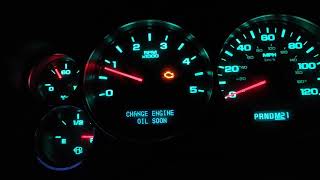
- "ENGINE POWER IS REDUCED" message on the Driver Information Center (DIC)
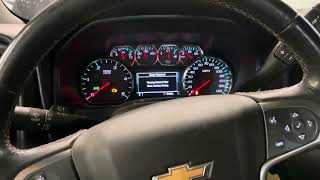
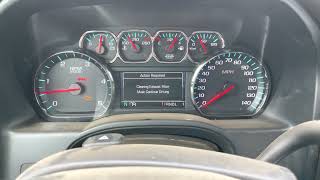
- "CLEAN EXHAUST FILTER SEE OWNERS MANUAL NOW" or "CLEANING EXHAUST FILTER KEEP DRIVING UNTIL MESSAGE IS CLEARED" message on DIC [⭐]
- Vehicle enters "limp mode" with significantly reduced power and acceleration
- Increased fuel consumption
- Excessive black smoke from the exhaust
- Inability to maintain higher RPMs
- Abnormally high engine or exhaust temperatures
- Replacing the entire DPF when only a pressure sensor or its hoses are faulty.
- Replacing exhaust temperature sensors without first verifying their readings with a scan tool.
- Performing a forced regeneration without first checking for underlying causes like air leaks or faulty sensors, leading to the code returning quickly.
Most Likely Causes
- Insufficient DPF Regeneration Due to Driving Habits 🔴 High Probability Commercial vans like the Savana often experience extended idling or short, low-speed trips, which prevent the DPF from reaching the temperature needed for automatic 'passive' or 'active' regeneration. GM TSB #10-06-05-002M directly addresses this scenario. [⭐]
How to confirm: Review the vehicle's typical usage and compare engine hours to mileage; a high hour-to-mile ratio indicates excessive idling. A scan tool will show a high soot accumulation level, often displayed in grams or as a percentage. GM considers over 70 grams to be a fault condition.
Typical fix: Drive the vehicle at highway speeds (over 30 mph or 50 km/h) for 20-30 minutes until the warning message clears. If this doesn't work, a forced 'Service Regeneration' using a professional scan tool is required.
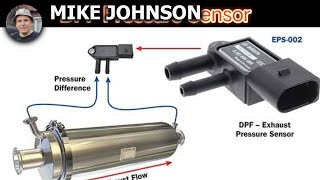
Est. part cost: $0 - Faulty DPF Differential Pressure Sensor 🟡 Medium Probability These sensors are exposed to harsh conditions and can fail, becoming contaminated with soot or moisture, leading to incorrect high-pressure readings even if the filter is clear.
How to confirm: Use a scan tool to monitor the DPF pressure sensor readings with the key on and engine off. The reading should be 0 kPa or 0 PSI. If it shows significant pressure at rest, or the readings are erratic while driving, it's likely faulty.
Typical fix: Replacement of the DPF pressure sensor. After replacement, the new sensor may need to be calibrated or 'relearned' using a scan tool.
Est. part cost: $50-$150 - Clogged or Leaking DPF Pressure Sensor Hoses 🟡 Medium Probability The rubber or metal hoses connecting the DPF to the pressure sensor can become clogged with soot, or crack and melt due to heat, causing inaccurate sensor readings. This is a very common point of failure.
How to confirm: Visually inspect the hoses for cracks, melting, or loose connections. Remove them and check for blockages by blowing low-pressure air through them. They connect to ports on the DPF housing.
Typical fix: Clean or replace the affected hoses. Ensure connections are secure.
Est. part cost: $20-$60 - DPF Reached End of Life (Ash Loaded) ⚪ Low Probability While regeneration burns off soot, it leaves behind a small amount of incombustible ash. Over many miles (typically 100,000-150,000), this ash builds up and permanently clogs the filter, a state which regeneration cannot fix. Vehicles with high idle time may experience this at lower mileage.
How to confirm: If a forced regeneration completes but the P2463 code returns quickly and pressure readings remain high (e.g., soot load only drops to 60-70% instead of near zero), the DPF is likely loaded with ash.
Typical fix: The DPF must be professionally cleaned by a specialized service (baked and blown out) or replaced entirely.
Est. part cost: $1500-$3000+
Rare But Worth Checking
- Faulty Exhaust Gas Temperature (EGT) Sensor: → Shop Exhaust Gas Temperature (EGT) Sensor The ECM relies on multiple EGT sensors to monitor temperatures for regeneration. If a sensor fails and provides an incorrect reading (e.g., reading too low), the ECM may not initiate or complete regeneration, leading to soot buildup.
- Air Intake System Leak: A leak in the air intake system after the turbocharger (e.g., a cracked charge air cooler hose) can cause an incorrect air-fuel mixture, leading to excessive soot production. GM Preliminary Information bulletin (PI0845) specifically instructs technicians to check for air leaks when P2463 is present, especially if the Air Leak Equivalence Ratio parameter on a scan tool is outside the 0.80:1 to 1.20:1 range.
- ECM Software Issue: Manufacturers sometimes release software updates to improve the logic for DPF regeneration. An outdated ECM may contribute to the problem, and PI0845 suggests verifying the vehicle has the latest calibration.
- Faulty 9th Injector (Hydrocarbon Injector): This system uses a dedicated fuel injector upstream of the DPF to spray fuel into the exhaust stream during active regeneration. If this injector is clogged or fails, the DPF cannot get hot enough to burn off soot, leading to P2463. This applies primarily to the 2011+ LGH engine, as the LMM engine used post-combustion injection events from the main injectors.
Diagnosis Steps
- Check for any Technical Service Bulletins (TSBs) related to P2463 for your vehicle, such as GM bulletin 10-06-05-002M. [⭐]
- Use a scan tool to confirm P2463 is the primary code. Address any other codes for DPF sensors, EGT sensors, or the reductant (DEF) system first.
- Observe live data for the DPF differential pressure sensor with the key on, engine off (should be 0 psi/kPa) and at idle (should be low, e.g., under 1-2 psi). High readings at rest indicate a bad sensor.
- Check the DPF Soot Accumulation parameter. On these GM vehicles, it is often measured in grams. A value over 70g is considered a fault condition.
- Visually inspect the DPF pressure sensor hoses for cracks, melting, kinks, or blockages. Remove and clean them if necessary.
- If sensors and hoses are good, attempt to clear the blockage by driving at a sustained highway speed (50+ mph) for at least 20 minutes.
- If highway driving fails, use a capable scan tool (like a Tech 2 or GDS2) to command a 'Service Regeneration'. Follow the on-screen procedure exactly. This can take over an hour and generates extreme heat.
- If the scan tool will not initiate a regeneration because soot levels are too high (e.g., >120g on some models), follow the special procedure outlined in GM PI0845, which may involve a DPF/Catalyst reset before attempting regeneration.
- After regeneration, check the soot level and pressure readings. If they remain high or the code returns quickly, the DPF is likely full of ash and requires professional cleaning or replacement.
Parts You'll Likely Need
- Diesel Particulate Filter (DPF) — If the filter is beyond cleaning through regeneration due to high mileage (ash accumulation) or internal damage, it must be replaced.
Trusted brands: ACDelco, Walker, Dorman
OEM price range: $2000-$3000+
Aftermarket price range: $800-$1800 - DPF Differential Pressure Sensor
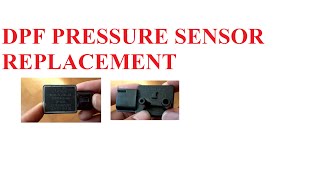
(OEM #ACDelco 12643911 (Verify by VIN))— This sensor is a common failure point, sending false signals that the DPF is clogged. It's a critical diagnostic component.
Trusted brands: ACDelco, Bosch, Standard Motor Products
OEM price range: $100-$200
Aftermarket price range: $40-$90
Related Codes That Often Appear With This One
- P2459 — This code for 'Diesel Particulate Filter Regeneration Frequency' often appears with P2463, indicating the system has been trying to regenerate too often without success.
- P0299 — This code for 'Turbocharger/Supercharger Underboost' can be a consequence of the high exhaust backpressure caused by the clogged DPF restricting the turbo's operation.
Technical Service Bulletins (TSBs) & Recalls
- 10-06-05-002M: Information on 'Clean Exhaust Filter' messages displayed on the DIC, where DTC P2463 may be set.
- 10-06-05-002L: An earlier revision of the same bulletin with similar information.
- PI0845: Preliminary information for service regeneration when DTC P2463 is set and soot accumulation is very high.
Platform-Specific Known Issues
- GM issued Technical Service Bulletin #10-06-05-002M, which directly links DTC P2463 with DIC messages like 'Clean Exhaust Filter See Owner Manual Now' and advises on the regeneration procedure. It warns that if no fault is found, a dealer-performed regeneration may not be covered by warranty.
- A separate Preliminary Information bulletin (PI0845) instructs technicians on how to handle cases where the soot level exceeds 70 grams. It details checking for air leaks and provides a complex procedure for initiating a service regeneration when the soot level is too high for the normal process to start.
Mechanic-Grade Diagnostic Values
- DPF Differential Pressure Sensor Signal Voltage (KOEO) — expected: ~0.5V. Failure: Voltage significantly higher than 0.5V with the engine off suggests a biased or faulty sensor.
- DPF Differential Pressure Sensor Supply Voltage — expected: 5.0V. Failure: No voltage or low voltage indicates a wiring issue or problem with the ECM's 5V reference circuit.
- DPF Differential Pressure Sensor Ground Circuit Resistance — expected: < 10.0 ohms. Failure: High resistance indicates a poor ground connection, which can cause inaccurate sensor readings.
- Scan Tool Parameter: Air Leak Equivalence Ratio — expected: 0.80:1 to 1.20:1. Failure: A value outside this range when the EGR is commanded closed indicates a leak in the air induction or exhaust system, which can cause excessive soot.
- Scan Tool Parameter: Soot Mass (Fault Trigger) — expected: < 70 grams. Failure: The ECM will set DTC P2463 when soot mass is calculated to be 70 grams or more.
- Scan Tool Parameter: Soot Mass (Regen Lockout) — expected: < 120 grams. Failure: On 2012 Savana models, a standard 'Service Regeneration' may be blocked by the ECM if soot mass exceeds 120 grams, requiring a special procedure.
Scan Tool Commands That Help
- Tech 2 / GDS2: DPF Service Regeneration — Used to command a stationary, high-temperature regeneration cycle when normal driving or automatic regeneration has failed to clear the filter. This is the primary professional fix for high soot accumulation.
- Tech 2 / GDS2: DPF/Catalyst 2 Reset — This function is required as part of a special procedure outlined in GM bulletin PI0845 when soot levels are too high (e.g., >120g) to allow a normal service regeneration to start. It resets the learned DPF values in the ECM.
- Tech 2 / GDS2: Reductant Fluid Quality Test (RFQT) — As part of the special procedure in PI0845 for extremely high soot levels, this test is initiated and then interrupted to 'trick' the ECM into allowing a service regeneration to begin when it would otherwise be locked out.
- Tech 2 / GDS2: Air Leak Equivalence Ratio Parameter — This data PID is monitored after commanding the EGR valve closed to diagnose hard-to-find air leaks in the intake or exhaust that can be the root cause of excessive soot production.
Wiring & Ground Locations
- G102 / G103 (Gasoline/Diesel) — On the rear of the left cylinder head (G102 for gas) or the lower front side of the engine block (G103 for diesel). There is also a key ground strap from the cab to the driver's side rear of the head.. A poor engine block ground can cause erratic behavior in various sensors that ground through the block, including potentially the DPF pressure sensor or EGT sensors, leading to incorrect readings and false codes.
- G303 — Located behind the left kick panel inside the cab.. This is a major data ground location for multiple modules, including the BCM and data link connector. While not a direct cause, a fault here can disrupt communication and diagnostics.
- DPF Pressure Sensor Connector — On the DPF pressure sensor itself. The sensor is typically mounted on a bracket on the transmission or frame rail, connected by hoses to the DPF.. This connector provides the 5V supply, ground, and signal return for the sensor. Corrosion or damage here will directly cause sensor-related faults. The signal wire is designated K355 and the 5V supply is K354 in some schematics.
Real Owner Repair Stories
- YouTube channel 'DadsGarage Diagnostic Specialist' (2019 Duramax (L5P, but same principle applies)) — Reduced engine power message, 'cleaning exhaust filter' message, and DTC P2463.
❌ Tried (didn't work) A direct service regeneration was initially considered.
✅ What actually fixed it The technician discovered a completely collapsed and dirt-clogged engine air filter. The restriction from the dirty air filter was contributing to the excessive soot. The fix was to replace the air filter and then perform a successful service regeneration.
OEM Part Supersession History
12598445→12643911 (and others)— Part has been updated multiple times by GM/ACDelco. Cross-reference numbers include 213-3854.
Heads up: While multiple part numbers may exist, it is critical to verify the correct part for the specific engine (LMM vs LGH) and vehicle year using the VIN, as sensor calibrations can differ.
Model Year Variations Within This Range
- 2007.5-2010 (LMM Engine): The LMM engine achieves active DPF regeneration by injecting extra fuel during the exhaust stroke using the main engine fuel injectors. This method can lead to fuel dilution of the engine oil, requiring more diligent oil change intervals.
- 2011-2014 (LGH Engine): The LGH engine (and its pickup-truck sibling, the LML) introduced a '9th injector' or hydrocarbon injector. This dedicated injector sprays fuel directly into the exhaust stream upstream of the DPF for regeneration. This design is more efficient and avoids the oil dilution issues of the LMM system.
Helpful Videos

We Have This Part in Stock


The information in this article is provided for general reference and educational purposes only. Vehicle specifications, procedures, and part compatibility can vary by production date, trim level, and region. Always consult your vehicle's factory service manual and verify part numbers before purchasing or performing repairs. Safety-critical components such as airbags, seat belts, and braking systems should be installed by a qualified professional.
- Gmc SAVANA 3500:
- 🧭 Diagnostic Flowchart
- 🎬 Helpful Videos
- 🛍️ Shop This Part
- What's Unique About the 2007-2014 Gmc SAVANA 3500
- Symptoms You May Notice
- Most Likely Causes
- Rare But Worth Checking
- Diagnosis Steps
- Parts You'll Likely Need
- Related Codes That Often Appear With This One
- Technical Service Bulletins (TSBs) & Recalls
- Platform-Specific Known Issues
- Mechanic-Grade Diagnostic Values
- Scan Tool Commands That Help
- Wiring & Ground Locations
- Real Owner Repair Stories
- OEM Part Supersession History
- Model Year Variations Within This Range
- 🎟️ Get 5% Off