

P2463 on 2007-2010 GMC Sierra 3500: DPF Restriction Causes & Fixes
P2463 means the Diesel Particulate Filter (DPF) is clogged with soot. This is often caused by short-trip driving that prevents the filter from self-cleaning. The first step is to drive at highway speeds for 20-30 minutes. If that fails, a forced regeneration is needed, or the DPF pressure sensor (a ~$50-$150 part) may be faulty.
- P2463 means your truck's DPF is clogged and needs a cleaning cycle (regeneration) that can no longer happen automatically.
- Pay attention to DIC messages like "Clean Exhaust Filter" and respond by driving at highway speeds for 20-30 minutes to prevent the code from setting.
- Before assuming the expensive DPF is bad, always inspect the DPF pressure sensor and its hoses, as they are common, inexpensive failure points.
- If the truck is already in 'Reduced Engine Power' mode, a forced 'Service Regeneration' at a repair shop using a professional scan tool is required.
What's Unique About the 2007-2010 Gmc SIERRA 3500
The 2007.5-2010 Sierra HD models were the first to feature the LMM Duramax engine, which included a DPF to meet stricter emissions regulations. This system is notoriously sensitive to driving habits. As outlined in GM Technical Service Bulletins, the truck is designed to prominently display messages like "Clean Exhaust Filter See Owners Manual Now" on the Driver Information Center (DIC) to prompt the driver to take action before the P2463 code sets 🎬 Watch: Understanding P2463 and how to clear a clogged DPF. and engine power is reduced. Failures are frequently related to driving style or issues with the DPF pressure sensor and its connecting hoses, rather than the expensive DPF itself. Unlike the later 2011+ LML engine, the LMM does not use a separate '9th injector'; instead, it uses a post-combustion injection strategy with the main fuel injectors to generate heat for regeneration.
Diagnostic Flowchart
Tap your situation to follow the diagnostic path that matches what you're seeing on this vehicle.
Generation note: The 2007 model year is a split year. This code applies to the 'new body style' 2007.5 models and all 2008-2010 models equipped with the 6.6L LMM Duramax diesel engine, which was the first to feature a Diesel Particulate Filter (DPF).
Symptoms You May Notice
- Check Engine Light illuminated.
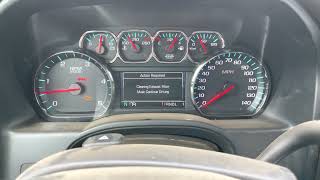
- Driver Information Center (DIC) message such as "Clean Exhaust Filter See Owners Manual Now" or "Cleaning Exhaust Filter Keep Driving Until Message is Cleared".
- Engine power is reduced (limp mode), with the DIC displaying "Engine Power Is Reduced".
- Decreased fuel economy.
- Excessive black smoke from the exhaust in severe cases.
- Inability to maintain RPM levels.
- Replacing the entire Diesel Particulate Filter (DPF) assembly without first diagnosing the DPF pressure sensor and its hoses. The sensor system is a much more common and less expensive failure point.
- Clearing the code without performing a service regeneration. Once P2463 is set, the ECM often prohibits automatic regeneration, and simply clearing the code will not solve the underlying soot accumulation.
Most Likely Causes
- Insufficient DPF Regeneration Due to Driving Habits 🔴 High Probability The LMM Duramax DPF system requires sustained highway speeds (above 30 mph) to generate enough heat to burn off soot (a process called regeneration). Frequent short trips, stop-and-go traffic, or extended idling prevent this, causing soot to build up. This is a common issue for work trucks that spend many hours idling.
How to confirm: Review driving habits. A high ratio of engine hours to miles driven indicates excessive idling. Use a scan tool to view the 'DPF Soot Level' PID; a value over 100% or a gram reading above 70g confirms excessive accumulation.
Typical fix: First, attempt to drive the vehicle at speeds over 30 mph for 20-30 minutes. If this fails or the truck is in limp mode, a 'Service Regeneration' must be performed using a compatible diagnostic scan tool. This can take 20-60 minutes.
Est. part cost: $0 - Faulty DPF Pressure Sensor 🟡 Medium Probability The DPF pressure sensor measures exhaust backpressure to calculate soot load. These sensors can fail, become contaminated with soot or moisture, and send incorrect high-pressure readings to the ECM, falsely triggering the P2463 code.
How to confirm: With the Key On, Engine Off (KOEO), the DPF pressure sensor reading on a scan tool should be at or near zero (0 PSI / 0 kPa). A reading of 0.5V - 0.77V is also expected. If it shows significant pressure or voltage outside the range, it's faulty. You can also compare readings at idle vs. 2500 RPM; a sensor that doesn't respond is likely bad.
Typical fix: Replace the DPF pressure sensor. After replacement, the sensor's learned values must be reset in the ECM using a scan tool function like 'DPF Pressure Sensor Reset'. A Reddit user reported having to replace the sensor after it fell apart during removal of the pipes.
Est. part cost: $50-$150 - Clogged or Damaged DPF Pressure Sensor Hoses 🟡 Medium Probability The rubber hoses or metal pipes connecting the DPF to the pressure sensor are exposed to intense heat and can become clogged with soot, cracked, or melted. This traps pressure or creates a leak, leading to inaccurate sensor readings. A user on a Reddit forum noted their pipes kinked and broke during removal.
How to confirm: Visually inspect the two hoses/pipes for cracks, melting, kinks, or soot stains. Remove them and check for blockages by blowing compressed air through them.
Typical fix: Replace the damaged or clogged hoses. This is an inexpensive and common repair.
Est. part cost: $20-$60
Rare But Worth Checking
- Exhaust System Leaks: A leak in the exhaust system before or near the DPF can alter pressure readings, potentially confusing the ECM and contributing to regeneration problems. A Reddit user found their issue started after exhaust studs on the DPF rotted out, creating a leak.
- Restricted Engine Air Filter: → Shop Air Cleaner Assembly A severely clogged or collapsed engine air filter can restrict airflow, leading to a rich air-fuel mixture and excessive soot production, which overloads the DPF. A technician on YouTube diagnosed a P2463 and found a completely collapsed air filter was a major contributing factor, with soot load at 231%.
- DPF End of Life (Ash Loaded): Regeneration burns soot into ash, which does not burn off and slowly accumulates in the DPF over its lifespan. After high mileage (typically over 150,000 miles), the filter can become so full of ash that it is permanently restricted and must be professionally cleaned or replaced.
- Faulty Main Fuel Injectors: → Shop Fuel Injector The LMM engine uses a post-combustion injection cycle to spray fuel into the exhaust stream during active regeneration. If one or more of the main injectors are faulty, they may not deliver the correct amount of fuel, preventing the DPF from reaching the necessary temperature to burn off soot, leading to accumulation and the P2463 code.
Diagnosis Steps
- Check the Driver Information Center (DIC) for any messages related to the exhaust filter.
- Use a professional-grade scan tool to confirm P2463 and check for other codes. Note the freeze frame data.
- View live data for 'DPF Soot Level' or 'DPF Soot Mass'. A reading above 70 grams or 100% confirms the clog. A Reddit user reported their soot level started at 81 grams before a successful service regen.
- With the Key On, Engine Off (KOEO), check the DPF pressure sensor reading. It should be 0 psi/0 kPa and between 0.5-0.77 volts. If not, the sensor is likely faulty.
- Start the engine and monitor the DPF pressure sensor reading at idle and while raising RPM to 2,500. The pressure should increase smoothly. If it's erratic or doesn't change, suspect the sensor or its hoses.
- Visually inspect the DPF pressure sensor hoses for any signs of cracking, melting, or blockages.
- Inspect the entire air intake system for leaks or restrictions, including the engine air filter. A collapsed filter can cause this code.
- Inspect the exhaust system for leaks, especially around the DPF flanges and gaskets.
- If no physical faults are found and the soot level is high, attempt a 'Service Regeneration' using the scan tool. This requires the vehicle to be outdoors in a safe location as it will generate extreme heat and noise for up to an hour.
- If the regeneration fails or the code returns immediately, the DPF may be permanently clogged with ash or damaged, requiring professional off-vehicle cleaning or replacement.
Parts You'll Likely Need
- DPF Pressure Sensor
(OEM #12643911)— This sensor is a common failure point, sending false signals that the DPF is clogged. It is a critical input for the regeneration system. Note: Part number 12644237 is often cited but may be superseded or incorrect; 12643911 is specific to the LMM. Always verify by VIN.
Trusted brands: ACDelco, Bosch, Dorman
OEM price range: $80-$150
Aftermarket price range: $40-$90 - DPF Pressure Sensor Hoses — The hoses connecting the sensor to the DPF can easily get clogged with soot or crack from heat, causing incorrect pressure readings. They are known to be fragile and can break during removal.
Trusted brands: Dorman, ACDelco
OEM price range: $40-$80
Aftermarket price range: $20-$60 - Diesel Particulate Filter (DPF) — If regeneration is ignored for too long, the filter can become irreversibly clogged with soot and ash, or damaged by excessive heat, requiring complete replacement. This is the most expensive fix.
Trusted brands: Walker, AP Exhaust Technologies, Redline
OEM price range: $2000+
Aftermarket price range: $800-$1500
Related Codes That Often Appear With This One
- P2459 — This code for 'DPF Regeneration Frequency' often appears because the ECM is trying to run regeneration cycles too often to combat the clog that is causing P2463.
- P0101 — This code for 'Mass Air Flow (MAF) Sensor Performance' can be triggered by abnormal airflow dynamics caused by a severely restricted exhaust or a collapsed air filter. One owner reported this code appeared alongside P2463.
Technical Service Bulletins (TSBs) & Recalls
- 10-06-05-002K: Information on DIC messages like 'Clean Exhaust Filter' and their relation to DTC P2463, instructing customers on driving conditions needed for self-cleaning.
- PI0845: Details diagnostic procedures for P2463, noting the 70-gram soot threshold and emphasizing inspection of the air induction system for leaks.
Platform-Specific Known Issues
- GM issued multiple Technical Service Bulletins (TSBs) regarding this code, primarily to inform technicians and customers about the function of the DIC messages.
- Bulletin #10-06-05-002K and its earlier versions explicitly state that P2463 may be set when the driver does not follow the DIC prompts to drive the vehicle to allow a regeneration to occur.
- The bulletins clarify that if a dealer performs a forced regeneration to clear a P2463 code caused by driving habits (and no component fault is found), the service may not be covered under warranty.
- TSB PI0845 notes that the P2463 code may set when the ECM detects 70 grams or more of soot in the DPF.
Mechanic-Grade Diagnostic Values
- DPF Pressure Sensor Signal Voltage (KOEO) — expected: ~0.5 V. Failure: Significant deviation from 0.5V, or a high reading when the engine is off, indicates a faulty sensor or circuit issue.
- DPF Pressure Sensor 5V Reference Voltage — expected: 4.5 V - 5.0 V. Failure: No voltage or low voltage indicates a wiring or ECM problem, not a sensor failure.
- DPF Soot Mass (Scan Tool PID) — expected: Varies, but should be low after a successful regeneration (e.g., < 5 grams).. Failure: A reading over ~70-80 grams will typically set code P2463. Extreme cases can show over 200%.
Scan Tool Commands That Help
- GDS2 / Tech2: DPF Service Regeneration — This is the primary command to manually force a cleaning of the DPF when soot levels are too high for automatic regeneration and code P2463 is set.
- GDS2 / Tech2: DPF Pressure Sensor Reset — This function must be used after replacing the DPF pressure sensor to reset its learned values within the Engine Control Module (ECM).
- GDS2 / Tech2: Regeneration Enable — According to GM technical information, this command followed by a highway drive can be more effective at cleaning the DPF than a stationary service regeneration.
Wiring & Ground Locations
- G105 / G106 — Located on the lower left front of the engine and/or the front center of the frame cross rail.. These are primary engine and frame grounds. A poor connection here can cause erratic behavior from various engine sensors, including the DPF pressure sensor, leading to incorrect readings.
- G104 — Located on the back of the left (driver's side) cylinder head.. This is a critical cylinder head ground. Since the ECM and its sensors rely on solid ground paths, corrosion or a loose connection here can interfere with sensor signals.
- DPF Pressure Sensor Connector — The sensor is typically mounted on the frame rail or a bracket near the transmission, with hoses running to the DPF.. The connector itself is a failure point. Check for a 5V reference, a good ground, and a signal wire. On the LMM ECM X1 connector, the 5V reference may be on Pin 14.
Real Owner Repair Stories
- Reddit user post in r/Duramax (2007.5 LMM, 122,000 miles) — Initial 'Clean Exhaust Filter' message that highway driving wouldn't clear, followed by P0101 (MAF) and then P2463 (DPF Restriction) with reduced engine power.
❌ Tried (didn't work) Driving at highway speeds for 30+ miles., Attempting a standard manual regeneration, which immediately triggered limp mode., Initially replacing the DPF pressure sensor and its pipes did not prevent the issue from recurring shortly after.
✅ What actually fixed it A forced 'DPF Service Regen' using a capable scan tool successfully cleared the heavy soot load (dropping from a calculated 81 grams to near zero) and cleared the codes. However, the 'Clean Exhaust Filter' message returned on the next short trip, indicating the DPF was likely near the end of its life due to ash accumulation or another underlying issue was still present. The story highlights the fragility of the sensor and its pipes, which broke during the initial repair.
"I Checked Everything" — The Actual Cause
- A severely collapsed engine air filter was found to be the root cause of a P2463 code. Standard diagnosis focuses on the exhaust side (DPF, sensor, hoses), but in this case, the intake restriction caused the engine to produce an extreme amount of soot (231% load), overwhelming the DPF system. Replacing the air filter was the necessary first step before a service regeneration could be effective.
Model Year Variations Within This Range
- 2007.5-2010 (LMM Engine): Uses post-combustion injection (injecting fuel on the exhaust stroke via the main 8 injectors) to create heat for DPF regeneration. This is different from the 2011+ LML engine, which uses a dedicated 9th injector in the exhaust system for this purpose.
Helpful Videos


The information in this article is provided for general reference and educational purposes only. Vehicle specifications, procedures, and part compatibility can vary by production date, trim level, and region. Always consult your vehicle's factory service manual and verify part numbers before purchasing or performing repairs. Safety-critical components such as airbags, seat belts, and braking systems should be installed by a qualified professional.
- Gmc SIERRA 3500:
- 🧭 Diagnostic Flowchart
- 🎬 Helpful Videos
- What's Unique About the 2007-2010 Gmc SIERRA 3500
- Symptoms You May Notice
- Most Likely Causes
- Rare But Worth Checking
- Diagnosis Steps
- Parts You'll Likely Need
- Related Codes That Often Appear With This One
- Technical Service Bulletins (TSBs) & Recalls
- Platform-Specific Known Issues
- Mechanic-Grade Diagnostic Values
- Scan Tool Commands That Help
- Wiring & Ground Locations
- Real Owner Repair Stories
- "I Checked Everything" — The Actual Cause
- Model Year Variations Within This Range
- 🎟️ Get 5% Off