

P2463 on 2012-2016 GMC Sierra Denali: DPF Soot Accumulation Causes & Fixes
P2463 means the Diesel Particulate Filter (DPF) is clogged with soot. This is often due to frequent short trips or extended idling preventing the DPF from self-cleaning (regenerating). Common fixes include performing a forced "service regeneration" with a scan tool, or, if components have failed, replacing the DPF pressure sensor or the LML-specific 9th injector (hydrocarbon injector).
- P2463 means your truck's DPF is full of soot and needs a cleaning cycle (regeneration).
- Before replacing any parts, try driving at a steady highway speed for 30 minutes to allow a passive regeneration.
- If highway driving doesn't work, the next step is a forced 'service regeneration' at a repair shop.
- The most common failed parts causing this code are the DPF pressure sensor or its hoses.
- Ignoring the warning lights can lead to the truck entering 'limp mode' and may cause permanent damage to the DPF, a very expensive part.
What's Unique About the 2012-2016 Gmc SIERRA DENALI
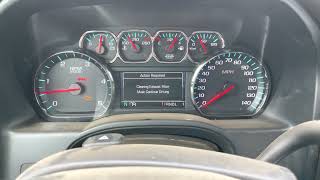
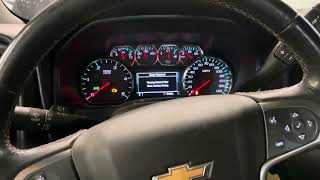
The 2012-2016 Sierra Denali uses the 6.6L LML Duramax engine, which has a sensitive and complex emissions system. This code is particularly common on these trucks, often triggered by driving habits like extended idling or short trips that don't allow the exhaust to get hot enough for a complete DPF regeneration. A key failure point on the LML engine is the "9th injector," or hydrocarbon doser, which sprays fuel into the exhaust to initiate regeneration. If this injector fails, regeneration cannot occur, leading directly to P2463. 🎬 Watch: Understanding P2463 and how to fix DPF restrictions. General Motors has issued multiple Technical Service Bulletins (TSBs) acknowledging that this code will appear along with specific messages on the Driver Information Center (DIC), such as "Clean Exhaust Filter" or "Diesel Partic Filter is Full," indicating the DPF is heavily loaded.
Diagnostic Flowchart
Tap your situation to follow the diagnostic path that matches what you're seeing on this vehicle.
Generation note: This range covers two Sierra generations: the GMT900 (2012-2013) and the K2XX (2014-2016). However, both generations in this period used the same 6.6L LML Duramax engine, so the causes, symptoms, and fixes for code P2463 are consistent across these years.
Symptoms You May Notice
- Check Engine Light is on
- Driver Information Center (DIC) message like "Clean Exhaust Filter See Owners Manual Now" or "Diesel Partic Filter is Full Continue Driving".
- "Engine Power is Reduced" message on the DIC (limp mode).
- Increased fuel consumption.
- Abnormally frequent DPF regeneration cycles, or regeneration failing to start.
- Black smoke from the exhaust in severe cases.
- Inability to accelerate past a certain speed.
- Replacing the DPF immediately. The DPF itself is often just the victim of another failed component (like a sensor or the 9th injector) or improper driving cycles. A forced regeneration or sensor replacement is a much more common and cheaper fix. A DPF should only be replaced after all other causes are ruled out or if a service regen fails to lower soot levels sufficiently.
Most Likely Causes
- Failed DPF Regeneration Cycles 🔴 High Probability Driving habits that include frequent short trips, stop-and-go traffic, or excessive idling prevent the exhaust from reaching the high temperatures (around 1000-1200°F) needed for passive or active regeneration. Many of these trucks are used as work vehicles and accumulate high engine hours from idling, which is a primary contributor.
How to confirm: Review driving habits and check engine hours vs. mileage on the DIC. A high hour-to-mileage ratio indicates excessive idling. A scan tool can show the 'DPF Soot Accumulation' PID, which may read over 100% or exceed 42 grams.
Typical fix: Drive the vehicle at highway speeds (over 30 mph) for at least 30 minutes. If that fails, a forced "service regeneration" must be performed by a technician with a capable scan tool. This may cost $150-$300 at a dealership.
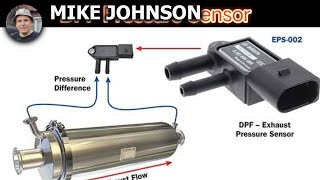
Est. part cost: $0 - Faulty DPF Pressure Sensor 🟡 Medium Probability The sensor or its connecting hoses can become clogged with soot, contaminated with moisture, or fail internally, sending incorrect pressure readings to the ECM. This can trick the ECM into thinking the filter is clogged when it's not, or prevent it from recognizing a successful regeneration.
How to confirm: Use a scan tool to monitor the DPF pressure sensor readings at idle and under load. The voltage should change with RPM. Inspect the sensor's hoses for cracks, melting, or blockages. With the ignition on and engine off, the sensor should read close to 0.5V. A scan tool may show a very high calculated soot load (e.g., 203%) based on the faulty sensor data.
Typical fix: Replace the DPF pressure sensor and/or its hoses. The sensor often requires a reset procedure with a scan tool after installation.
Est. part cost: $50-$150 - Clogged or Faulty 9th Injector (Downstream Fuel Injector) 🟡 Medium Probability The LML engine uses a dedicated "9th injector" (also called a hydrocarbon injector or HCI) to spray fuel directly into the exhaust stream to raise temperatures for active regeneration. This component is a known failure point. If it is clogged or fails, the DPF cannot get hot enough to burn off soot.
How to confirm: A technician can command the injector on with a scan tool and monitor the EGT1 and EGT2 sensor readings. During a forced regen, EGT1 should exceed 600°F and EGT2 should exceed 1000°F. If these temperatures aren't reached, the injector is suspect. It can also be physically removed and inspected for deposits.
Typical fix: Clean or replace the 9th injector and its associated fuel lines.
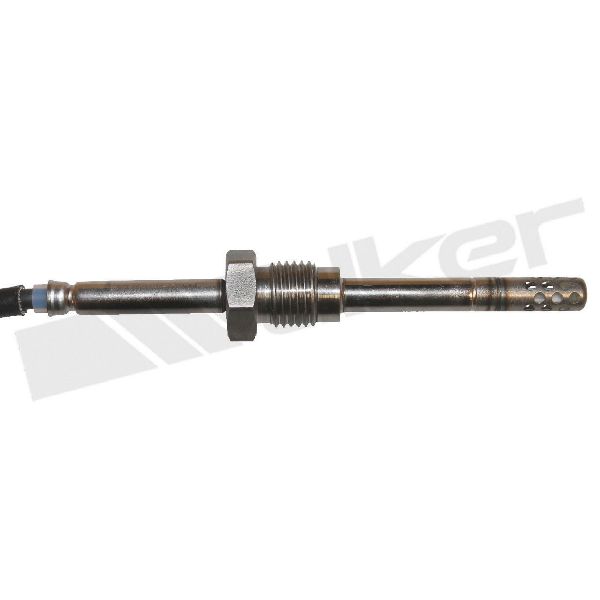
Est. part cost: $200-$400 - Faulty Exhaust Gas Temperature (EGT) Sensor(s) ⚪ Low Probability → Shop Exhaust Gas Temperature (EGT) Sensor The LML Duramax uses multiple EGT sensors to monitor the DPF system. A failed sensor can provide incorrect temperature data, preventing the ECM from initiating or completing a regeneration cycle. If a sensor is slow to respond or gets stuck, the ECM may not be able to confirm that the DPF has reached the required temperature for regeneration.
How to confirm: Use a scan tool to monitor live data from all EGT sensors. Readings should be plausible and rise with engine temperature. A sensor that is stuck on one reading (e.g., 1832°F on a cold start) or reads ambient temperature when the engine is hot is faulty.
Typical fix: Replace the faulty EGT sensor.
Est. part cost: $80-$200
Rare But Worth Checking
- DPF Reached End of Life (Ash Loading): Regeneration burns soot into a fine ash. Over many miles (typically 150,000+), this incombustible ash builds up until the filter is permanently clogged and must be professionally cleaned or replaced. A service regen that only lowers the soot percentage to a high value (e.g., 66%) can indicate significant ash loading.
- Charge Air Cooler (CAC) and Induction System Leaks: → Shop Intercooler GM issued TSB PI0845 which mentions that air leaks in the induction system after the turbo can affect the air-fuel mixture and lead to excessive soot, contributing to P2463. This includes leaks in the charge air cooler hoses or a leaking EGR valve. LML engines are known to be very sensitive to intake leaks.
- Collapsed or Extremely Dirty Air Filter: → Shop Air Cleaner Assembly A severely restricted engine air filter can cause a rich air-fuel mixture, leading to excessive soot production and contributing to the DPF clogging. In one documented case, a dirty air filter was suspected of causing a no-regen condition.
- Thermostat Failure: If the engine thermostats fail in the open position, the engine may not reach the minimum operating temperature (around 180-195°F) required for the ECM to initiate a regeneration cycle. This is a known issue on LML engines and can set a P0128 code.
Diagnosis Steps
- Check for other DTCs. Address any codes for EGT sensors, DPF pressure sensors, the 9th injector, thermostats (P0128), or the EGR system first, as they are likely the root cause.
- Use a professional scan tool to view live data. Check the 'DPF Soot Accumulation' or 'Soot Mass' parameter. A value over 100% or over 42 grams confirms a severe clog.
- Check the DPF pressure sensor readings. Compare readings at idle versus 2500 RPM. A sensor that doesn't show a significant increase in pressure is suspect. Check Key-On, Engine-Off (KOEO) voltage; it should be around 0.5V.
- Inspect the DPF pressure sensor hoses for blockages, cracks, or heat damage. These can get clogged with soot and give false readings.
- Inspect the air intake system for leaks, especially the charge air cooler hoses, and check the engine air filter for severe restrictions.
- Verify the engine is reaching proper operating temperature (coolant ~195°F+). If not, suspect a failed thermostat.
- If sensor readings are plausible, attempt to initiate a 'Service Regeneration' with the scan tool. This will run the engine at high RPM for 20-40 minutes to burn out the soot. Monitor EGT sensors to ensure the system reaches temperature (~1000°F+).
- If the service regeneration fails or the code returns quickly, test the 9th injector for proper function.
- If all else fails, the DPF may be permanently clogged with ash and require professional cleaning or replacement.
Parts You'll Likely Need
- Diesel Particulate Filter (DPF) Pressure Sensor
(OEM #12630257)— This sensor is a common failure point. It can get clogged or fail electronically, leading to false P2463 codes or preventing regeneration.
Trusted brands: ACDelco, Bosch, Standard Motor Products
OEM price range: $100-$180
Aftermarket price range: $50-$120 - Hydrocarbon Injector (9th Injector) — This LML-specific injector is crucial for active regeneration and is a known weak point. If it clogs or fails, the DPF will not regenerate.
Trusted brands: ACDelco, GM Genuine
OEM price range: $250-$400
Aftermarket price range: $150-$250 - Diesel Particulate Filter (DPF) — If the filter cannot be cleared via regeneration due to extreme soot load or internal ash accumulation from high mileage, it must be replaced. Professional off-car cleaning is a cheaper alternative, costing around $300-$650.
Trusted brands: ACDelco, Walker, Dorman
OEM price range: $2000-$3000
Aftermarket price range: $800-$1800 - Exhaust Gas Temperature (EGT) Sensor — A failed EGT sensor will prevent the ECM from initiating or sustaining a regeneration cycle, causing soot to build up.
Trusted brands: ACDelco, Denso, Bosch
OEM price range: $120-$200
Aftermarket price range: $60-$130
Related Codes That Often Appear With This One
- P0420 — This code for 'Catalyst System Efficiency Below Threshold' can appear with P2463, as DPF issues can affect the entire exhaust aftertreatment system. TSB #PIP5085C notes these codes can appear together. A failing 9th injector can also cause this code.
- P24A0 — This code relates to 'DPF Restriction - Soot Accumulation Bank 1 (Closed Loop Control)' and is also mentioned alongside P2463 in TSB #PIP5085C, indicating a persistent regeneration issue.
- P0299 — A 'Turbocharger Underboost' code can be set alongside P2463. This may not be a fault with the turbo itself, but rather the ECM limiting boost and power due to the severe DPF restriction.
Technical Service Bulletins (TSBs) & Recalls
- 10-06-05-002K: Information on DIC messages related to DPF cleaning and DTC P2463.
- 100605002E: Earlier version of the above TSB with similar information.
- PIP5085C: Notes that P2463 can set along with P0420 and P24A0.
- PI0845: Provides diagnostic information for when a service regeneration will not run and P2463 is set.
Platform-Specific Known Issues
- TSB #10-06-05-002K: This is a comprehensive bulletin covering numerous GM diesel vehicles, including the 2012-2016 Sierra. It details the specific DIC messages associated with P2463 and explains that the root cause is often driving conditions that prevent self-cleaning.
- TSB #PI0845: This bulletin specifically addresses P2463 on 2011-2013 Duramax LML engines. It highlights the importance of checking for air leaks in the induction system (charge air cooler, etc.) as a potential cause of excessive soot before attempting a service regeneration.
- TSB #PIP5085C: Notes that P2463 can appear with codes P0420 and P24A0 and instructs technicians to follow standard diagnostics, implying a related system fault.
Mechanic-Grade Diagnostic Values
- DPF Differential Pressure Sensor Voltage (KOEO) — expected: ~0.5V. Failure: Voltage significantly different from 0.5V with key on, engine off.
- DPF Differential Pressure Sensor 5V Reference — expected: 4.5V to 5.0V. Failure: Voltage outside this range indicates a wiring or ECM issue.
- DPF Soot Load to Trigger Active Regen — expected: 42 grams. Failure: N/A - this is the trigger point.
- Injector Balance Rates (at idle in Park/Neutral) — expected: +/- 4.0 mm³. Failure: Rates outside of +4.0 to -6.9 mm³ can indicate a faulty injector or cylinder issue, leading to excess soot.
- Main Fuel Injector Coil Resistance — expected: 150k - 210k Ohms. Failure: A reading outside this range indicates a failed injector coil.
Scan Tool Commands That Help
- GDS2 / Autel / Professional Scan Tool: DPF Service Regeneration — Used to command a stationary, high-temperature cleaning of the DPF when the soot load is too high for a normal driving regen and P2463 is set.
- GDS2 / Autel / Professional Scan Tool: DPF Pressure Sensor Reset / DPF Replacement Reset — This function must be performed after replacing the DPF pressure sensor or the DPF itself. It tells the ECM to relearn the new component's baseline values. Failure to do so can cause the P2463 code to return.
Real Owner Repair Stories
- Dragtimes.com forum user (2015 Duramax) — Check Engine Light, P2463 (Soot Accumulation), P2471 (EGT Sensor Voltage High), P113A (EGT Sensor Plausibility), and initially P01F0 (Coolant Temp Sensor). Truck would enter 'Reduced Engine Power' mode shortly after starting.
❌ Tried (didn't work) Clearing codes would only provide temporary relief before limp mode re-engaged. Driving at highway speeds did not initiate a regen.
✅ What actually fixed it The root cause was a sequence of failures. First, the thermostats were stuck open, preventing the engine from reaching operating temperature required for regen. After replacing the thermostats, a failed EGT #4 sensor was discovered (reading 1832°F on a cold start). After replacing the faulty EGT sensor, the P2463 code remained. The final fix was performing a forced "Service Regeneration" with a capable scan tool (BlueDriver), which successfully cleaned the filter and resolved the P2463 code. - YouTube video by 'Duramax DPF Service Regeneration' (GMC Sierra 6.6L Duramax with 78,992 miles and 4840 engine hours (indicating high idle time).) — Reduced engine power message, P2463 code stored. After a service regen, the truck had no power and set a P0299 (Turbo Underboost) code.
❌ Tried (didn't work) A service regeneration was performed, which lowered the calculated soot load from 203% down to 66%. However, the truck still had no power.
✅ What actually fixed it The technician's scan tool software crashed during the initial regen reset procedure. The final fix was simply disconnecting the vehicle's battery for 15 minutes. This appeared to force a full reset of the ECM's aftertreatment learned values, clearing the reduced power message and restoring normal operation.
OEM Part Supersession History
ACDelco 12639259→ACDelco 12677718— Updated part design for the DPF Pressure Sensor.
Heads up: The replacement part may require programming or a special setup procedure via a scan tool to ensure proper operation.
Model Year Variations Within This Range
- 2011-2016: The LML engine used across this range featured significant updates from the prior LMM, including a new block casting, stronger pistons, and a different oil pump. The emissions system was also new, introducing the 9th injector for regeneration, which eliminated the fuel-in-oil dilution issues of the LMM. These changes are consistent across the 2012-2016 model years.
Helpful Videos
![[EN] How to replace a DPF sensor | Masters of Motion](https://img.youtube.com/vi/rX9WGUP7p7c/mqdefault.jpg)
We Have This Part in Stock


The information in this article is provided for general reference and educational purposes only. Vehicle specifications, procedures, and part compatibility can vary by production date, trim level, and region. Always consult your vehicle's factory service manual and verify part numbers before purchasing or performing repairs. Safety-critical components such as airbags, seat belts, and braking systems should be installed by a qualified professional.
- Gmc SIERRA DENALI:
- 🧭 Diagnostic Flowchart
- 🎬 Helpful Videos
- 🛍️ Shop This Part
- What's Unique About the 2012-2016 Gmc SIERRA DENALI
- Symptoms You May Notice
- Most Likely Causes
- Rare But Worth Checking
- Diagnosis Steps
- Parts You'll Likely Need
- Related Codes That Often Appear With This One
- Technical Service Bulletins (TSBs) & Recalls
- Platform-Specific Known Issues
- Mechanic-Grade Diagnostic Values
- Scan Tool Commands That Help
- Real Owner Repair Stories
- OEM Part Supersession History
- Model Year Variations Within This Range
- 🎟️ Get 5% Off