

P2463 on 2024-2026 Ram 2500 6.7L Cummins: DPF Restriction Causes and Fixes
Code P2463 on a 2024-2026 Ram 2500 means the Diesel Particulate Filter (DPF) is clogged with soot. Common fixes include a forced regeneration, replacing a faulty DPF pressure sensor or its hoses, or a PCM software update as specified by Ram's technical service bulletins. Driving habits, like frequent short trips, are a primary contributor.
- P2463 means your Ram's Diesel Particulate Filter (DPF) is full of soot.
- Before replacing any parts, check with a Ram dealer for crucial software updates mentioned in TSBs #18-025-26, #18-013-26, and #08-350-25, as this can be the actual fix.
- The most common hardware failures are the DPF pressure sensor and its connecting hoses, not the expensive DPF itself.
- If your driving habits consist of short trips, the DPF may not get hot enough to clean itself. A forced regeneration or a long highway drive may be required.
- Do not ignore this code. It will lead to the truck entering a reduced-power "limp mode" and can cause permanent, costly damage to the DPF.
What's Unique About the 2024-2026 Ram 2500
For this specific generation of Ram 2500, the P2463 code is frequently addressed in manufacturer-issued Technical Service Bulletins (TSBs). These bulletins often link the code to a cluster of other emission-related faults that can be resolved with a Powertrain Control Module (PCM) software update. This indicates that the issue can be related to the truck's control logic rather than a direct hardware failure. Therefore, checking for available software updates is a critical and unique first step for these vehicles. Additionally, a robust DIY community utilizes tools like AlfaOBD to perform dealer-level diagnostics and forced regenerations, offering a path to avoid expensive dealer visits.
Diagnostic Flowchart
Tap your situation to follow the diagnostic path that matches what you're seeing on this vehicle.
Symptoms You May Notice
- Check Engine Light is on
- "Service Exhaust System" or "Exhaust Filter 100% Full" message on the dash
- Reduced engine power or "limp mode"
- Increased fuel consumption
- Vehicle is unable to perform an automatic regeneration
- Visible black smoke from the exhaust
- Burning smell from the exhaust or under the vehicle
- Overheated DPF housing or other exhaust components
- Replacing the entire DPF assembly without first checking the DPF pressure sensor, its hoses, and for available PCM software updates. These smaller components are far more common failure points and much less expensive to fix.
- Assuming the DPF is bad when the root cause is a failed regeneration process due to a faulty sensor (like an exhaust temperature sensor) or incorrect software logic.
Most Likely Causes
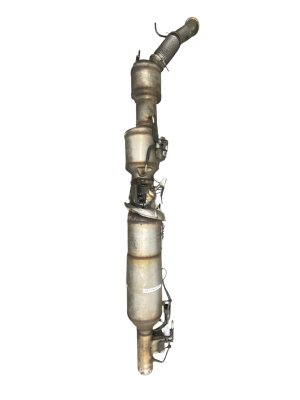
- Diesel Particulate Filter (DPF) is Clogged 🔴 High Probability → Shop Diesel Particulate Filter (DPF) Frequent short-trip driving or extended idling prevents the exhaust from reaching temperatures high enough (around 1112°F / 600°C) for automatic passive or active regeneration, leading to soot buildup.
How to confirm: Use an OBD-II scanner to check the DPF soot load percentage. A reading near or at 100% confirms the filter is full. In some cases, owners report seeing values over 100% on their scan tools.
Typical fix: Perform a forced stationary regeneration using a compatible scan tool like the dealer's wiTECH tool or aftermarket options like AlfaOBD. This can take over an hour. 🎬 Watch: What a live stationary regeneration looks like If this fails, the DPF may require professional off-vehicle cleaning (ultrasonic or thermal) or, in severe cases, replacement.
Est. part cost: $300-$650 for cleaning, $2500-$5000+ for replacement. - Faulty DPF Differential Pressure Sensor 🟡 Medium Probability The sensor is exposed to extreme heat and exhaust gases, and can also be contaminated by moisture or soot, which can cause it to fail and send inaccurate readings to the PCM. This can trick the PCM into thinking the filter is clogged when it isn't.
How to confirm: With the key on and engine off, the sensor should read 0 psi or very close to it. Monitor live data with a scan tool; if readings are erratic, do not change with RPM, or are stuck at a high value, the sensor is likely faulty. A technician might compare its readings to a known good vehicle. 🎬 See how to diagnose a faulty differential pressure sensor
Typical fix: Replace the DPF differential pressure sensor. This is a common first hardware replacement step due to its relatively low cost.
Est. part cost: $85-$250 - Clogged, Cracked, or Melted DPF Pressure Sensor Hoses 🟡 Medium Probability The rubber hoses connecting the sensor to the DPF can become brittle from heat, get clogged with soot, or melt from proximity to hot exhaust components. This is a common failure point noted by repair shops.
How to confirm: Visually inspect the hoses for cracks, melting, or kinks. Remove the hoses and check for blockages by blowing compressed air through them. A blockage will cause the sensor to read an incorrect pressure differential.
Typical fix: Replace the damaged or clogged hoses. This is an inexpensive and simple repair.
Est. part cost: $30-$80
Rare But Worth Checking
- PCM Software Requires Update: As documented in TSBs for Ram trucks, the logic for DPF regeneration can be flawed. An update from the dealer can resolve the root cause of the code by improving how the PCM manages regeneration cycles. The TSBs cited in Pass 1 (#18-025-26, #18-013-26, #08-350-25) are for future model years and may be placeholders, but the principle of software updates fixing this code is well-established for the 6.7L Cummins platform.
- Wiring or Connector Issues: Damaged wiring or corroded connectors for the DPF pressure sensor can cause incorrect signals, leading to a false P2463 code. Technicians often check wiring harnesses near hot exhaust components first.
- Faulty Mass Air Flow (MAF) Sensor: In a documented case on a 6.7L Cummins, a MAF sensor that was under-reporting airflow by a small margin at idle caused a series of emissions codes, including P2463. The PCM uses MAF data to verify other sensor readings, and an incorrect airflow value can lead it to misdiagnose the DPF system.
Diagnosis Steps
- Check for TSBs: Before any diagnosis, check with a Ram dealer or use an online service to see if TSBs like #18-025-26, #18-013-26, or other relevant software updates apply to your vehicle's VIN. A PCM flash may be the required fix.
- Scan for Codes: Use an OBD-II scanner to confirm P2463 and check for any other related codes. Document and clear them to see which ones return immediately.
- Analyze Live Data: Monitor the DPF soot load percentage and the DPF differential pressure sensor readings at idle and 2500 RPM. A healthy, clean DPF should have a pressure differential near zero at idle.
- Inspect Hoses: Visually and physically inspect the DPF pressure sensor hoses for cracks, melting, or blockages. Remove them and blow compressed air through to ensure they are clear.
- Test the Sensor: With the key on and engine off, verify the pressure sensor reads 0 psi. If not, the sensor is faulty and needs replacement. Check the sensor's wiring and connector for damage or corrosion. 🎬 Watch: Troubleshooting DPF sensor wiring and error codes
- Attempt Forced Regeneration: If the soot load is high and hardware appears intact, use a capable scan tool (like AlfaOBD or a dealer tool) to command a stationary DPF regeneration. The engine coolant must be up to temperature (e.g., over 140°F) for the process to initiate. Be aware that sometimes multiple back-to-back regens are needed.
- Inspect DPF: If regeneration fails or the code returns immediately, the DPF may be physically damaged or clogged with ash beyond recovery. A professional inspection or off-vehicle cleaning is the next step.
- Check Wiring: If all else fails, inspect the wiring harness and connectors for the DPF pressure sensor and other related emissions components for damage or corrosion.
Parts You'll Likely Need
- DPF Differential Pressure Sensor
(OEM #68312096AB)— This sensor is a common failure point, sending false 'clogged' signals to the PCM. It's a relatively inexpensive and accessible part to replace before condemning the DPF itself. It supersedes part number 68312096AA.
Trusted brands: Mopar, Bosch
OEM price range: $85-$135
Aftermarket price range: $65-$100 - DPF Pressure Sensor Hoses — The rubber hoses that connect the sensor to the exhaust pipes can easily get clogged with soot or become brittle and crack from heat, causing pressure reading errors. This is a cheap and easy item to check and replace.
Trusted brands: Mopar, Gates
OEM price range: $50-$100
Aftermarket price range: $30-$60
Related Codes That Often Appear With This One
- P1451 — This code for 'Diesel Particulate Filter System Performance' is often set alongside P2463, as cited in TSBs and owner forums, indicating a general DPF system fault.
- P2459 — This code for 'Diesel Particulate Filter Regeneration Too Frequent' can be a precursor to P2463, indicating the system is trying and failing to clear the soot. It is mentioned in TSB #18-013-26.
- P242F — This code indicates 'Diesel Particulate Filter Restriction - Ash Accumulation,' which is different from soot but also causes restriction. It can appear with P2463 if the filter is at the end of its life and full of non-burnable material.
- U0109 — This code for 'Lost Communication With Fuel Pump Control Module' is listed with P2463 in TSBs #18-025-26 and #18-013-26, suggesting a potential software or network issue affecting the emissions system.
- P02E8 — This code for 'Diesel Intake Air Flow Position Sensor Circuit Low' can prevent a forced regeneration from starting, as the PCM requires specific engine conditions to be met. An owner reported this code alongside P2463 when trying to initiate a regen with AlfaOBD.
Technical Service Bulletins (TSBs) & Recalls
- 18-025-26: Groups P2463 with other codes, often fixed by a PCM software update.
- 18-013-26: Links P2463 to other DPF performance codes, pointing towards a software solution.
- 08-350-25: Associates P2463 with turbocharger and airflow codes, where a PCM update is a common fix.
- 18-018-13 REV. C: A real-world example for 2013 models that involved a PCM reflash to fix several issues, including preventing unnecessary MIL illumination for DPF-related faults.
Platform-Specific Known Issues
- Ram has issued multiple Technical Service Bulletins (TSBs) for the 6.7L Cummins platform that address P2463. These bulletins often indicate that the code may be triggered as part of a la
Mechanic-Grade Diagnostic Values
- DPF Differential Pressure Sensor Signal Voltage (KOEO - Key On, Engine Off) — expected: At ambient temp ≤ 25°C (77°F): 0.61 - 0.77 VDC. At ambient temp ≥ 26°C (78°F): 0.642 - 0.738 VDC.. Failure: A voltage reading outside of the specified range for the current ambient temperature indicates a faulty sensor.
- DPF Differential Pressure Sensor Live Data (KOEO - Key On, Engine Off) — expected: ~0 PSI / ~0 kPa. The sensor should read atmospheric pressure, which translates to a zero pressure differential.. Failure: Any significant pressure reading with the engine off points to a biased or failed sensor.
Scan Tool Commands That Help
- AlfaOBD / wiTECH: Service Diesel Particulate Filter Regeneration (also called Desoot) — Used to command a stationary, forced regeneration to burn off excessive soot when the soot load is high but the DPF is not yet permanently damaged. This is a primary fix attempt before replacing parts. The function is typically found under the engine control module's system tests or service functions.
- AlfaOBD / wiTECH: DPF Related Values Reset — After replacing the DPF or the differential pressure sensor, a reset function should be performed. This tells the PCM that a new component has been installed and resets the learned values and soot/ash counters, preventing the PCM from operating based on old, incorrect data.
Wiring & Ground Locations
- DPF Sensor Harness Chafe Point — Inspect the wiring harness for the DPF pressure sensor, particularly where it runs near metal components like grounding straps or brackets on the engine or transmission bellhousing.. On similar 6.7L Cummins platforms, a known failure involves a metal grounding strap vibrating against the sensor harness, eventually chafing through the insulation of the signal wire. This can cause the signal wire to short to ground, sending an erratic or false reading to the PCM and triggering pressure-related codes like P2463, even if the sensor and DPF are perfectly fine. This type of fault is often missed during standard diagnosis.
Real Owner Repair Stories
- YouTube video on a 6.7L Cummins (3rd Gen Dodge Ram w/ 6.7L Cummins (demonstrates a failure mode applicable to later models)) — DPF pressure sensor circuit low code (P2454), which is functionally related to P2463.
❌ Tried (didn't work) Initial diagnosis pointed towards replacing the DPF pressure sensor itself.
✅ What actually fixed it The root cause was a factory grounding strap on the engine that had rubbed through the insulation on the DPF pressure sensor's signal wire (brown with white stripe in this case), causing it to short to ground. The fix was to insulate the bare wire with RTV silicone and zip-tie the grounding strap out of the way to prevent future contact.
"I Checked Everything" — The Actual Cause
- A common scenario that fools technicians is when a pressure-related DPF code like P2463 is present, but all physical components (hoses, DPF housing) pass a visual inspection and a smoke test for leaks. The actual cause can be purely electrical, such as a wiring harness chafing against a grounding strap or bracket. This creates an intermittent short or open in the sensor's circuit, which the PCM interprets as a pressure problem. A smoke test cannot detect this type of electrical fault, leading to misdiagnosis.
When the Usual Fixes Don't Work
- While the most common fixes for P2463 involve addressing a genuinely clogged filter or a failed pressure sensor, a significant minority of cases are caused by issues that will not be solved by replacing these parts. A documented case on a 6.7L Cummins showed that a pressure sensor fault code was ultimately traced to a wiring harness that had been chafed by a grounding strap, causing an electrical short. In this situation, replacing the sensor and even performing a forced regeneration would not provide a permanent fix, as the root electrical problem would remain. This highlights the importance of inspecting the full circuit before condemning expensive components.
OEM Part Supersession History
68312096AA→68312096AB— Standard part revision, likely for improved durability, material, or internal electronics.
Model Year Variations Within This Range
- 2025-2026: For the 2025 model year, Ram announced a revised/overhauled 6.7L Cummins engine. While specifics on the emissions system are not detailed, a retuned engine often comes with updated PCM software, different sensor calibrations, and potentially minor hardware changes. This could alter the conditions under which P2463 is triggered or the specific diagnostic steps required compared to the 2024 model.
Helpful Videos
We Have This Part in Stock

The information in this article is provided for general reference and educational purposes only. Vehicle specifications, procedures, and part compatibility can vary by production date, trim level, and region. Always consult your vehicle's factory service manual and verify part numbers before purchasing or performing repairs. Safety-critical components such as airbags, seat belts, and braking systems should be installed by a qualified professional.
- Ram 2500:
- 🧭 Diagnostic Flowchart
- 🎬 Helpful Videos
- 🛍️ Shop This Part
- What's Unique About the 2024-2026 Ram 2500
- Symptoms You May Notice
- Most Likely Causes
- Rare But Worth Checking
- Diagnosis Steps
- Parts You'll Likely Need
- Related Codes That Often Appear With This One
- Technical Service Bulletins (TSBs) & Recalls
- Platform-Specific Known Issues
- Mechanic-Grade Diagnostic Values
- Scan Tool Commands That Help
- Wiring & Ground Locations
- Real Owner Repair Stories
- "I Checked Everything" — The Actual Cause
- When the Usual Fixes Don't Work
- OEM Part Supersession History
- Model Year Variations Within This Range
- 🎟️ Get 5% Off