

OBD-II Code P2470: Exhaust Gas Temperature Sensor Circuit Low (Bank 1, Sensor 4)
What P2470 means, why it triggers, and how to fix it
- A P2470 code means the Bank 1, Sensor 4 Exhaust Gas Temperature (EGT) sensor is sending a voltage signal below 0.2V, indicating a circuit low fault.
- Replacing the EGT sensor resolves this code in 80% of cases, costing between $175 and $400 for parts and labor.
- Driving with an active P2470 code prevents Diesel Particulate Filter (DPF) regeneration, causing $1,500 to $4,000 in permanent DPF damage within 1 to 3 months.
- Before replacing the sensor, test the wiring harness for a short to ground and verify a 5V reference signal from the PCM to avoid wasting money on unneeded parts.
- Owners of 2009-2015 VW/Audi TDI and 2013-2018 Ram diesel vehicles should check their VIN for extended emissions warranty coverage, which often covers this exact repair for free.
What Does P2470 Mean?
The Powertrain Control Module (PCM) triggered a P2470 code because it detected a voltage signal below 0.2V from the number 4 Exhaust Gas Temperature (EGT) sensor on bank 1. This sensor measures exhaust gas temperatures to manage the Selective Catalytic Reduction (SCR) system and Diesel Particulate Filter (DPF). A 'low circuit' reading means the signal is shorted to ground or the sensor has failed internally.
Technical definition: SAE/OBD-II defines P2470 as "Exhaust Gas Temperature Sensor Circuit Low (Bank 1 Sensor 4)". The PCM registers a voltage from the bank 1, sensor 4 EGT sensor below the specified range (typically under 0.2V) for more than 3 to 15 seconds after the engine reaches operating temperature.
Can I Drive With P2470?
Yes, But With Caution. You can drive with a P2470 code, but you must address it within a week. Ignoring it prevents Diesel Particulate Filter (DPF) regeneration. A clogged DPF requires a $1,500 to $4,000 replacement. It also causes undetected overheating, destroying the catalytic converter for an additional $800 to $2,500.
Common Causes
- Faulty Exhaust Gas Temperature (EGT) Sensor (Very Common) — The EGT sensor is the most frequent culprit. 🎬 See why these sensors fail on Ford Powerstroke engines. The internal thermistor fails or shorts to ground, causing a constant low voltage signal.
- Damaged Wiring or Short to Ground (Common) — The EGT sensor wiring routes near the hot exhaust system. Heat melts the wire insulation, causing the bare signal wire to touch the chassis. This pulls the voltage directly to zero, triggering the code.
- Exhaust Leaks (Less Common) — An upstream exhaust leak draws in cooler ambient air. This causes the sensor to report a lower-than-expected temperature, which the PCM misinterprets as a circuit fault.
- Blown Fuse or Fault in Sensor Heater Supply (Less Common) — Some EGT sensors use an integrated heater circuit to reach operating temperature faster. A blown fuse in this circuit triggers a low circuit code for the sensor.
- Carbon Buildup on the Sensor (Rare) — Excessive soot accumulates on the sensor's tip, insulating it from the hot exhaust gas. This prevents accurate temperature readings.
- Faulty Powertrain Control Module (PCM) (Very Rare) — An internal fault in the PCM's analog-to-digital converter misreads the sensor's signal. Consider this only after exhausting all other diagnostic steps.
- Aftermarket Exhaust Modifications (Rare) — Installing an aftermarket exhaust system changes the position and flow characteristics around the EGT sensor, causing incorrect readings.
Symptoms
- Check Engine Light is On — The Malfunction Indicator Lamp (MIL) illuminates immediately after the fault is detected.
- Reduced Engine Power — The vehicle enters 'limp mode', limiting acceleration and capping RPMs at 2,000-2,500 to prevent engine damage.
- Decreased Fuel Economy — The engine defaults to a rich fuel mixture as a protective measure, dropping fuel efficiency by 5-15%.
- Failed Emissions Test — The vehicle automatically fails state emissions testing due to the active code and incomplete readiness monitors.
- Engine Stalling or Hesitation — The engine hesitates or stalls during acceleration, particularly when climbing hills or under heavy load.
- Inhibited DPF Regeneration (also visible on scanner) — On diesel vehicles, a faulty EGT sensor halts DPF regeneration. This clogs the DPF, severely impacting performance and requiring expensive replacement.
Common Fixes & Costs
- Replace the Exhaust Gas Temperature (EGT) Sensor — Parts: $75-$200, Labor: $100-$200, ~1.2 hr book time (Intermediate)
- Repair Damaged Wiring or Connectors 🎬 Watch: How to properly repair and solder damaged automotive wiring. — Parts: $20-$50, Labor: $150-$300, ~2.0 hr book time (Intermediate)
- Clean Carbon Buildup from the Sensor — Parts: $10-$20, Labor: $75-$150, ~1.0 hr book time (DIY)
- Update or Reprogram the Powertrain Control Module (PCM) — Parts: $0, Labor: $150-$250, ~1.0 hr book time (Professional)
- Replace the Powertrain Control Module (PCM) — Parts: $600-$1200, Labor: $200-$400, ~2.0 hr book time (Professional)
Used vs. New Parts: Buying Guide
When a used part is worth it: Never buy a used EGT sensor. It is a high-heat wear item. The labor cost to install it exceeds the part cost, making a used part a terrible financial gamble.
Donor-vehicle mileage cap: roughly under 20000 miles for the part to have meaningful remaining life.
Donor quality checklist:
- Only consider used if pulled from a low-mileage, rear-ended wreck.
- Never buy a sensor from a vehicle scrapped for engine or emissions problems.
- Match the part number exactly; sensors are calibrated for specific exhaust positions.
Decision logic:
- If A new OEM or reputable aftermarket EGT sensor costs less than $200 → Always buy new. A failed used part causes thousands in DPF damage.
- If You are on an extreme budget and doing the labor yourself → A used sensor is a massive gamble. Expect to replace it again within a year.
Warranty tradeoff: Salvage yard parts carry a 30-day warranty. New aftermarket sensors offer 1-year to lifetime warranties. Buy new.
Worst-case if a used part fails: $400 if a used sensor fails quickly, requiring you to pay for a new part and repeat labor.
Cost of Not Fixing It
- 0-1 month: Fuel economy drops 5-15% as the PCM defaults to a rich fuel mixture. The vehicle enters 'limp mode' with reduced power. (Added cost: $50-$150 in wasted fuel)
- 1-3 months: The DPF clogs with soot because regeneration is disabled. A forced regeneration at a shop becomes mandatory. (Added cost: $150-$400 for a forced regeneration)
- 3+ months: Permanent damage to the DPF and Catalytic Converter. The DPF saturates with ash and the catalyst substrate melts. Replacement is the only option. (Added cost: $1,500-$5,000+)
Diagnosis Steps
- Scan for Codes and Review Freeze Frame Data
Use an OBD-II scanner to confirm P2470. Review the freeze-frame data to identify the engine temperature, RPM, and speed when the fault occurred.
Tools: OBD-II Scanner (Beginner) - Analyze Live Sensor Data
View the live data stream for Bank 1, Sensor 4. With the key on and engine off (KOEO), a P2470 fault shows a voltage stuck near zero (<0.2V). A healthy sensor reads close to ambient temperature and rises steadily (0.5V to 5.0V) as the engine warms up.
Tools: Advanced OBD-II Scanner with Live Data (Intermediate) - Visually Inspect the Sensor and Wiring Harness
Locate the EGT sensor (typically after the SCR catalyst). Inspect the sensor, connector, and wiring harness for burns, chafing, melting, or corrosion. Check where the harness contacts hot exhaust components.
Tools: Flashlight, Inspection Mirror, Safety Glasses (Beginner) - Test for Reference Voltage
Disconnect the EGT sensor. With the ignition on (engine off), use a multimeter to check for a 5-volt reference signal from the PCM at the harness connector. No voltage indicates an upstream wiring or PCM issue.
Tools: Digital Multimeter (Intermediate) - Test for a Short to Ground
With the ignition OFF and sensor disconnected, check for continuity between the signal wire terminal on the harness and a chassis ground. A reading near zero ohms confirms a short circuit in the wiring. A healthy circuit shows infinite resistance (>10 kΩ).
Tools: Digital Multimeter (Advanced) - Test the EGT Sensor's Internal Resistance 🎬 Watch: A step-by-step guide on how to test EGT sensors.
Measure the resistance across the disconnected sensor's two pins. A typical sensor reads a few hundred ohms cold and several thousand ohms hot. Infinite resistance (OL) means an open circuit; zero ohms means an internal short. Both require replacement.
Tools: Digital Multimeter (Intermediate) - Perform a "Wiggle Test"
While monitoring live EGT voltage on your scanner, wiggle the wiring harness between the sensor and the PCM. If the voltage jumps, you have located an intermittent connection or broken wire.
Tools: Advanced OBD-II Scanner (Advanced) - Use a Heat Gun for Sensor Response Test
Remove the sensor and connect a multimeter to its pins. Gently heat the tip with a heat gun. The resistance must change smoothly as temperature increases. Erratic jumps or no change confirms a dead sensor.
Tools: Digital Multimeter, Heat Gun, Wrench (Advanced) - Advanced Harness Continuity Test
Disconnect the EGT sensor and the PCM. Check continuity of the signal wire from the sensor connector to the PCM connector; resistance must be less than 1 Ω. Then, check resistance from that wire to ground; it must read infinite (open circuit).
Tools: Digital Multimeter, Wiring Diagram (Advanced)
When This Code Triggers (Freeze-Frame Conditions)
- Engine Coolant Temp: 170-230°F (77-110°C) (The fault logs only after the engine reaches full operating temperature.)
- RPM: 1200-2500 (Occurs during steady-state driving rather than sharp acceleration.)
- Engine Load: 20-50% (Sets under light to moderate engine load while maintaining speed on a flat road.)
- Vehicle Speed: 45-65 mph (72-105 kph) (Highway driving triggers the PCM's EGT sensor rationality checks.)
Related Codes
- P2471 — The direct opposite code: 'Circuit High'. P2470 means a short to ground (0V), while P2471 means an open circuit or short to power (5V). Seeing both intermittently guarantees a wiring harness issue.
- P246F — 'Circuit Range/Performance'. Appears alongside P2470 if the sensor sends erratic, illogical temperatures before failing completely to zero volts.
- P0544 — 'Circuit Bank 1 Sensor 1'. Indicates a problem with the first EGT sensor. Having both codes points to a shared wiring harness melt or a failing PCM, not two simultaneous sensor failures.
- P2463 — 'DPF Restriction - Soot Accumulation'. A P2470 fault stops DPF regeneration, directly causing the P2463 code. You must fix P2470 before addressing the clogged DPF.
Climate & Environmental Factors
- Cold Climates / Salt Belt: Road salt accelerates corrosion inside the sensor's electrical connector, compromising the seal and causing shorts to ground.
- Hot Climates: Prolonged high ambient temperatures combined with exhaust heat cause wiring insulation to become brittle, crack, and short against the chassis.
- High Humidity: Moisture intrusion into unsealed connectors causes pin corrosion, leading to intermittent low voltage readings.
How to Clear the Code After You Fix It
- Use an OBD-II scan tool to clear the P2470 code from the PCM.
- Ensure the fuel tank is between 25% and 75% full, as readiness monitors will not run on a full or empty tank.
- Perform a complete drive cycle to run the readiness monitors and confirm the fix.
Drive cycle (~20 minutes): Cold start the engine and idle for 3 minutes. Drive in stop-and-go city traffic for 7 minutes. Accelerate to 55 mph and maintain a steady speed for 5 minutes. Coast to a lower speed without braking. Repeat a short city loop, then let the engine cool completely.
Readiness monitors affected: Catalyst Monitor, Exhaust Gas Sensor Monitor, EGR System Monitor
Before emissions retest: drive at least 50 miles to fully set monitors.
Watch out for:
- Disconnecting the battery clears the light but resets all monitors to 'incomplete', guaranteeing an emissions test failure.
- The code returns immediately if you replaced the sensor but ignored a melted wire shorting to the chassis.
- Failing to drive at a steady 55 mph prevents the Catalyst monitor from setting to 'ready'.
Will This Fail Emissions / State Inspection?
Yes — this code typically fails an OBD-II emissions inspection.
- California: An active P2470 code is an automatic smog check failure. It also blocks the Catalyst and EGR monitors from running, causing a secondary failure.
- New York: The NYS DMV inspection includes an OBD-II scan. You cannot renew your registration until the sensor is fixed and the code is cleared.
- Texas: In the 17 counties requiring emissions testing, an active P2470 code causes an automatic failure of the annual inspection.
Most Commonly Affected Vehicles
- Volkswagen Jetta TDI, Golf TDI, Touareg TDI (2009-2015) — Extremely common failure. Often covered by the 'Dieselgate' Extended Emissions Warranty.
- Audi A3 TDI (2010-2015) — Shares the CJAA engine with VW and suffers identical EGT sensor failure rates.
- Ford F-250/F-350 Super Duty (6.7L Power Stroke) (2011-2022) — A P2470 code on these trucks traps the PCM in a continuous DPF regeneration cycle, causing extreme exhaust heat and terrible fuel economy.
- Dodge / Ram 2500/3500 (6.7L Cummins) (2011-2018) — Frequently triggered by wiring harness damage after off-road use or front-end collisions.
- Chevrolet / GMC Silverado/Sierra 2500/3500 HD (Duramax) (2011-2016) — The wiring harness routes too close to heat sources, making it highly susceptible to melting and shorting.
- BMW 335d, X5 xDrive35d (2009-2013) — Common on M57 diesel engines, often accompanied by EGR-related codes.
- Mercedes-Benz Sprinter, E320/E350 BlueTEC (2010-2016) — Wires frequently break inside the sensor's pigtail right at the crimp. Test the pigtail for continuity before replacing the sensor.
- Subaru Outback, Forester (Diesel) (2008-2014) — Experiences EGT sensor failures similar to domestic diesel trucks, though less common in North America.
Manufacturer-Specific Notes
- Volkswagen/Audi: TDI models from 2009-2015 are covered by the 'Dieselgate' Extended Emissions Warranty (typically 10 years/120,000 miles). This covers the entire exhaust after-treatment system. Check your VIN at vwdiesellookup.com before paying for this repair.
- Ford: On 6.7L Super Duty trucks, the PCM may continuously attempt to burn off soot if it loses the Sensor 4 signal, leading to dangerously high exhaust temperatures.
- Dodge / Ram: 2013-2018 Ram 2500/3500 trucks may be covered under Emissions Recall 67A, which pays for the OBD scan and the sensor replacement. Contact a dealer with your VIN.
- Toyota: The ECM requires the engine to run for over a minute and coolant to exceed 158°F (70°C) before it will log a P2470 code. The voltage must stay below 0.11V for 3 full seconds.
- Mercedes-Benz: Sprinter models frequently suffer wire breaks right where the wire enters the EGT sensor body. Always perform a continuity test on the sensor's pigtail before assuming the internal thermistor failed.
Frequently Asked Questions
What is Bank 1, Sensor 4?
Bank 1 is the side of the engine containing cylinder #1. Sensor 4 is the fourth sensor down the exhaust pipe, typically located after the SCR catalyst to monitor final exhaust temperatures.
What's a common misdiagnosis for P2470?
Replacing the EGT sensor without testing the wiring circuit first. A melted wire shorting to the chassis causes the exact same 'circuit low' code as a dead sensor. Always test for a 5V reference signal before buying parts.
Can I replace the EGT sensor myself?
Yes, it screws into the exhaust pipe like a spark plug. However, exhaust heat rusts them in place. You must soak the threads in penetrating oil overnight to avoid snapping the sensor off in the pipe.
Will a P2470 code clear itself?
No. The PCM logs this as a hard electrical fault. You must repair the underlying issue and manually clear the code with an OBD-II scanner.
Could an incorrect part cause this code?
Yes. EGT sensors are calibrated for specific exhaust locations. Installing a Sensor 1 in the Sensor 4 location sends an implausible voltage to the PCM, triggering the code.
How much does it cost to fix a P2470 code?
Replacing the EGT sensor costs between $175 and $400 at a shop. If the wiring harness is melted, expect to pay $170 to $350 for a splice repair.
What does 'circuit low' actually mean?
It means the engine computer is receiving a voltage signal near zero (under 0.2V). This happens when the signal wire touches bare metal (short to ground) or the sensor fails internally.
Key Takeaways
- A P2470 code means the Bank 1, Sensor 4 Exhaust Gas Temperature (EGT) sensor is sending a voltage signal below 0.2V, indicating a circuit low fault.
- Replacing the EGT sensor resolves this code in 80% of cases, costing between $175 and $400 for parts and labor.
- Driving with an active P2470 code prevents Diesel Particulate Filter (DPF) regeneration, causing $1,500 to $4,000 in permanent DPF damage within 1 to 3 months.
- Before replacing the sensor, test the wiring harness for a short to ground and verify a 5V reference signal from the PCM to avoid wasting money on unneeded parts.
- Owners of 2009-2015 VW/Audi TDI and 2013-2018 Ram diesel vehicles should check their VIN for extended emissions warranty coverage, which often covers this exact repair for free.
Helpful Videos

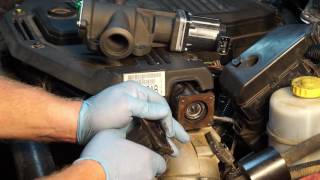
Shop the Parts Behind P2470
Below are the parts most often responsible for code P2470, ranked by how frequently each one is the actual culprit (per the diagnosis above). Tap any to see what we have for your vehicle.


The information in this article is provided for general reference and educational purposes only. Vehicle specifications, procedures, and part compatibility can vary by production date, trim level, and region. Always consult your vehicle's factory service manual and verify part numbers before purchasing or performing repairs. Safety-critical components such as airbags, seat belts, and braking systems should be installed by a qualified professional.
- 🎬 Helpful Videos
- 🛍️ Shop This Part
- What Does P2470 Mean?
- Can I Drive With P2470?
- Common Causes
- Symptoms
- Common Fixes & Costs
- Used vs. New Parts: Buying Guide
- Cost of Not Fixing It
- Diagnosis Steps
- When This Code Triggers (Freeze-Frame Conditions)
- Related Codes
- Climate & Environmental Factors
- How to Clear the Code After You Fix It
- Will This Fail Emissions / State Inspection?
- Most Commonly Affected Vehicles
- Manufacturer-Specific Notes
- Frequently Asked Questions
- What is Bank 1, Sensor 4?
- What's a common misdiagnosis for P2470?
- Can I replace the EGT sensor myself?
- Will a P2470 code clear itself?
- Could an incorrect part cause this code?
- How much does it cost to fix a P2470 code?
- What does 'circuit low' actually mean?
- Key Takeaways
- 🎟️ Get 5% Off