

OBD-II Code P2471: Exhaust Gas Temperature Sensor Circuit High (Bank 1, Sensor 4)
The Ultimate Guide to Meaning, Diagnosis, and Repair for P2471
- A failed Exhaust Gas Temperature (EGT) sensor causes 80% of P2471 codes, with melted or shorted wiring harnesses making up the rest.
- The PCM immediately disables DPF regeneration and triggers a reduced-power 'limp mode' to protect the turbocharger from excessive heat.
- Ignoring P2471 for more than 50 miles guarantees a clogged Diesel Particulate Filter (DPF), turning a $200 sensor replacement into a $3,000+ repair.
- Verify you are replacing the correct sensor—Bank 1, Sensor 4 is typically the fourth sensor in the exhaust stream, located after the SCR catalyst.
What Does P2471 Mean?

P2471 means the Powertrain Control Module (PCM) receives a maximum voltage signal from exhaust gas temperature (EGT) sensor #4 on engine bank 1. The PCM recognizes this 4.5V+ signal as an electrical open circuit or short, not a legitimate temperature reading. This sensor measures heat to control the Diesel Particulate Filter (DPF) regeneration cycle and Selective Catalytic Reduction (SCR) system.
Technical definition: The official SAE/OBD-II definition is 'Exhaust Gas Temperature Sensor Circuit High Bank 1 Sensor 4'. This indicates the PCM detects a continuous high voltage signal (typically 4.5V to 4.9V) from the fourth EGT sensor on bank 1 for more than a few seconds. This high voltage reading indicates an open circuit or a short to power.
Can I Drive With P2471?
Yes, but not recommended Yes, but only to a repair shop. The vehicle immediately enters a reduced-power 'limp mode' to prevent component damage. Ignoring the code for more than 50 miles causes irreversible Diesel Particulate Filter (DPF) clogging. This turns a $200 sensor fix into a $2,500–$6,000 DPF replacement, and excessive backpressure often destroys the turbocharger, adding another $2,000 to the bill.
Common Causes

- Failed Exhaust Gas Temperature (EGT) Sensor (Very Common) — The sensor's internal thermistor fails from extreme heat cycles, creating an open circuit. The PCM reads this lack of continuity as maximum resistance, which translates to a maximum voltage signal.
- Damaged Wiring or Connectors (Common) — The wiring harness melts against the hot exhaust or chafes on the frame. A signal wire shorting to a power source (B+) sends a constant 5V or 12V to the PCM, triggering the code. Connector pins also corrode from road salt.
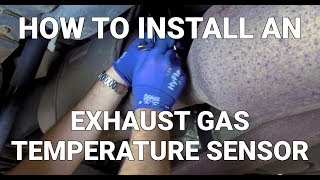
- Incorrect Aftermarket Parts (Less Common) — Installing a non-OEM specification EGT sensor sends incorrect voltage readings to the PCM. Different sensors have different resistance-to-temperature curves, making exact part number matching critical. 🎬 Watch: How to properly install a new EGT sensor.
- Exhaust System Leaks (Less Common) — A cracked pipe or blown gasket near the sensor introduces oxygen and turbulence. This alters gas composition and damages the sensor element, resulting in a high circuit fault.
- Internal Engine Fluid Leaks (Less Common) — Internal engine leaks contaminate the exhaust with oil or coolant. This fluid bakes onto the sensor tip, fouling it and causing a permanent electrical failure.
- Weak Battery or Charging System (Rare) — Low system voltage during startup causes unpredictable behavior in the PCM. This sets erroneous 'phantom' codes like P2471, even if the sensor and circuit are perfectly fine.
- PCM Software Glitch (Rare) — Manufacturers frequently release software updates to adjust sensor operating parameters and prevent false codes. A missing update causes the PCM to flag a healthy sensor.
- Failed Powertrain Control Module (PCM) (Very Rare) — The PCM suffers an internal fault, such as a failed analog-to-digital converter or a shorted reference voltage circuit. This is the absolute last diagnosis after ruling out all wiring and sensor issues.
Symptoms

- Reduced Engine Power (Limp Mode) — The PCM limits engine power and RPM to protect the DPF and turbocharger from heat damage.
- Decreased Fuel Economy — The engine defaults to a safe, richer fuel map to compensate for the missing sensor data.
- Check Engine Light On (also visible on scanner) — The PCM illuminates the MIL immediately upon detecting the circuit high condition.
- DPF Regeneration Disabled (scan-tool only — no driver-felt sign) — The PCM halts all DPF cleaning cycles because it cannot trust the exhaust temperature readings, leading to rapid soot accumulation.
Diagnostic Flowchart
Tap your situation to follow the diagnostic path that matches what you're seeing on this code.
Common Fixes & Costs
- Replace EGT Sensor (Bank 1, Sensor 4)
— Parts: $50-$250, Labor: $100-$200, ~1.0 hr book time
(Intermediate)
Ford F-250/F-350 (6.7L Power Stroke): OEM AC3Z5J213C, BC3Z-12B591-C (Alt: Bosch, Denso, Zibbix (ZBX-4120))
Chevy/GMC Silverado/Sierra (6.6L Duramax): OEM 12622555, 12643246 (Alt: ACDelco, Bostech (BTS010004))
Dodge/Ram 2500/3500 (6.7L Cummins): OEM 68085774AB (13-18), 68306261AB (19-24) (Alt: Bosch, Standard Motor Products (SMP)) - Repair Damaged Wiring/Connector — Parts: $10-$50, Labor: $150-$400, ~2.5 hr book time (Intermediate)
- Update PCM Software — Parts: $0, Labor: $150-$250, ~1.5 hr book time (Professional)
- Repair Exhaust Leak — Parts: $20-$100, Labor: $150-$400, ~2.0 hr book time (Professional)
- Replace Powertrain Control Module (PCM) — Parts: $800-$1500, Labor: $150-$250, ~1.5 hr book time (Professional)
DIY vs Professional
- Replace EGT Sensor — Beginner: Yes, with caution.
Tools: Socket set, six-point flare nut wrenches, penetrating oil, torch. - Repair Damaged Wiring/Connector — Beginner: No.
Tools: Multimeter, wire strippers, crimpers, heat shrink tubing, soldering iron, replacement pigtail. - Update PCM Software — Beginner: No.
Tools: Professional-grade scan tool with J2534 pass-thru programming capability.
Used vs. New Parts: Buying Guide
When a used part is worth it: Buying a used EGT sensor is never recommended. These are high-wear components where the labor for replacement exceeds the part cost. The risk of a used sensor failing immediately is too high.
Donor-vehicle mileage cap: roughly under 20000 miles for the part to have meaningful remaining life.
Donor quality checklist:
- Only source from a very low-mileage vehicle wrecked for non-engine reasons.
- Avoid parts from rust-belt states due to severe thread corrosion.
- Match the OEM part number exactly.
Decision logic:
- If The part is an EGT sensor. → Buy a new OEM or high-quality aftermarket (e.g., Bosch, Denso) part. The cost savings of a used sensor are erased by repeat labor costs.
- If Budget is extremely tight and the vehicle is high-mileage. → A used sensor is a last resort, but expect a very short lifespan.
Warranty tradeoff: Used parts carry a 30-day warranty. Quality aftermarket new parts offer a 1-year to limited lifetime warranty. OEM parts carry a 1-2 year warranty.
Worst-case if a used part fails: $200-$400 if a used sensor fails after installation, requiring repeat labor and a new part.
What Happens If You Wait — Timeline
- 0-1 week: Code P2471 sets. Vehicle enters 'limp mode' with reduced power. The PCM disables DPF regeneration. (MPG impact: 0-5%% · Added cost: $0)
- 1 week - 1 month: Soot accumulates rapidly in the DPF. Acceleration becomes sluggish. Fuel economy drops as the engine runs on default rich fuel maps. (MPG impact: 5-10%% · Added cost: $50-$150 in wasted fuel)
- 1-3 months: DPF becomes severely clogged. Dashboard displays 'Exhaust Filter Full'. The DPF requires professional off-car cleaning or forced regeneration to survive. (MPG impact: 10-15%% · Added cost: $300-$800 for professional DPF cleaning services.)
- 3+ months: The DPF irreversibly clogs with hardened soot and ash, requiring full replacement. Extreme exhaust backpressure destroys turbocharger seals. (MPG impact: 15-25%% · Added cost: $2,500-$8,500+ (DPF replacement: $2,500-$6,000; Turbocharger replacement: $1,000-$2,500).)
Cost of Not Fixing It
- 0-1 Month: Vehicle operates in 'limp mode' with reduced power. DPF regeneration is disabled, causing initial soot buildup. Fuel economy drops 5-10%. (Added cost: Negligible, other than increased fuel consumption.)
- 1-3 Months: The DPF becomes significantly clogged with soot. The vehicle exhibits severe performance issues. The DPF requires a forced regeneration or professional off-car cleaning. (Added cost: $300-$800 for forced regeneration or cleaning.)
- 3+ Months: The DPF irreversibly clogs, requiring complete replacement. Extreme exhaust backpressure destroys the turbocharger seals and bearings. (Added cost: $2,500-$8,500+ (DPF replacement: $2,500-$6,000; Turbocharger replacement: $1,000-$2,500).)
Diagnosis Steps

- Scan Tool Live Data Analysis
Connect an OBD-II scanner and view live data for 'EGT Bank 1 Sensor 4'. A reading stuck at a maximum value (e.g., 2000°F or 1100°C) on a cold engine confirms a circuit fault. Normal operating voltage is between 0.5V (cold) and 4.5V (hot).
Tools: OBD-II Scan Tool (Beginner) - Visual Inspection
Locate EGT Bank 1 Sensor 4 using a service manual. Examine its wiring harness for melting, chafing, or corrosion. Ensure the connector is secure and the pins are clean and straight.
Tools: Flashlight, safety glasses, repair manual (Beginner) - Perform a 'Wiggle Test'
With the engine running and live data displayed, wiggle the sensor's connector and the wiring harness along its length. If the temperature reading fluctuates, you have found an intermittent short or break in the wiring.
Tools: OBD-II Scan Tool, heat-resistant gloves (Intermediate) - Test the Sensor's Resistance
Disconnect the sensor. Use a multimeter set to Ohms (Ω) to measure resistance between its two pins. Compare this to the repair manual specifications. An 'OL' (Over Limit) reading indicates an internal open circuit, confirming the sensor is dead. For a definitive test, apply heat with a heat gun; the resistance must change smoothly without erratic jumps.
Tools: Multimeter, Heat Gun, vehicle repair manual (Intermediate) - Test the Circuit for a Short to Power
With the sensor disconnected and the key 'On' (engine off), use a multimeter to measure voltage on the signal wire in the harness connector. Probe between the signal wire pin and a known good ground. A reading of 5V or 12V indicates the wire is shorted to a power source. A reading below 4.9V is normal (PCM open circuit detection).
Tools: Multimeter, vehicle repair manual (Advanced) - Perform a Ground Circuit Voltage Drop Test
Reconnect the sensor. With the key on, set the multimeter to a low DC voltage scale. Place the positive lead on the negative battery terminal and back-probe the negative lead into the ground wire pin at the sensor connector. A reading above 100 millivolts (0.1V) indicates excessive resistance in the ground circuit.
Tools: Multimeter with back-probe pins (Advanced) - Check Battery and Charging System Health
Verify the vehicle's electrical foundation. A healthy battery reads ~12.6V engine off, and doesn't drop below 10.5V while cranking. The alternator must produce 13.5V to 14.5V running. Unstable voltage causes modules to set false codes.
Tools: Multimeter (Intermediate) - Verify PCM Functionality
If the sensor, wiring, and grounds test good, check with a dealership for software updates or TSBs related to P2471. If no updates exist, the PCM has an internal failure and requires replacement.
Tools: Professional scan tool, access to TSB database (Professional)
When This Code Triggers (Freeze-Frame Conditions)
- Engine Coolant Temp: 180-210°F (82-99°C) (The fault typically sets only after the engine reaches full operating temperature.)
- RPM: 1500-2500 RPM (Occurs during steady-state driving when the PCM actively monitors emissions components.)
- Engine Load: 30-70% (Triggers under moderate, consistent engine load, rarely during hard acceleration or idling.)
- Vehicle Speed: 45-65 mph (72-105 km/h) (Correlates with steady highway cruising when the exhaust system is hot and stable.)
Related Codes
- P2470 — This is the direct opposite code, 'Exhaust Gas Temperature Sensor Circuit Low'. P2471 points to an open circuit or short to power, while P2470 indicates a short to ground.
- P246F — This code is 'Exhaust Gas Temperature Sensor Circuit Range/Performance'. It indicates the PCM sees an erratic signal that isn't heating up as expected, caused by the same wiring or sensor faults.
- P2033 — This code is 'Exhaust Gas Temperature Sensor Circuit High Bank 1 Sensor 2'. It indicates the exact same electrical fault for a different sensor located closer to the engine.
- P0546 — This code is 'Exhaust Gas Temperature Sensor Circuit High Bank 1 Sensor 1'. Seeing multiple EGT codes simultaneously points to a widespread wiring harness issue or a bad PCM ground.
Climate & Environmental Factors
- Cold Climates / Road Salt: Road salt spray causes severe corrosion on the sensor body, threads, and electrical connector. This creates electrical faults and seizes the sensor into the exhaust bung.
- Extreme Thermal Cycling: Constant cycling from ambient temperature to over 1000°F causes material fatigue. This destroys the sensor's internal thermistor and contributes to thread galling.
- High Humidity: Moisture penetrates non-sealed electrical connectors, leading to pin corrosion and high-resistance faults that trigger P2471.
How to Talk to a Mechanic About This Code
Say this: "I have a P2471 code for the Exhaust Gas Temperature sensor on Bank 1, Sensor 4. I'd like to schedule a diagnosis to determine if the fault is the sensor itself or a wiring issue. Please test the sensor's resistance and check the harness for a short-to-power before replacing parts."
This directs the technician to perform a proper electrical diagnosis instead of just firing the parts cannon, saving you money if the wiring is the actual problem.
Avoid saying:
- 'Just fix whatever's wrong'
- 'My check engine light is on, can you look at it?'
- 'Whatever you recommend'
Questions to ask before authorizing the repair:
- What was the resistance reading of the sensor? Did it show an open circuit?
- Did you test the harness connector for voltage? Was there a short to power?
- Can you show me the damaged part if the sensor needs replacement?
- What is the warranty on the new sensor and the labor?
Where to Take It: Dealer vs Independent vs Chain
- Dealer:
Best for warranty claims. If out of warranty, use an independent specialist unless a PCM update is required.
Best for: Vehicles under warranty or covered by a manufacturer's special program (e.g., Ford's CSP 15M02)., Complex electrical diagnostics requiring PCM software updates.
Downsides: Highest labor rates., More likely to suggest replacing the entire wiring harness instead of repairing a single wire. (Typical cost: +50% vs. baseline) - Independent Shop:
Best overall fit for out-of-warranty vehicles. A diesel-focused independent shop offers the best balance of expertise and value.
Best for: Out-of-warranty diesel trucks., Shops specializing in diesel repair with extensive experience diagnosing EGT codes.
Downsides: Quality varies, so vet the shop through reviews and ASE certifications., May lack access to the latest manufacturer software updates. (Typical cost: +0% vs. baseline) - Chain Shop:
Use with caution. Acceptable if you've already diagnosed a failed sensor yourself, but avoid for initial electrical diagnosis.
Best for: Simple part replacements when you are certain the sensor is the only issue.
Downsides: Technician skill varies dramatically., Lacks the expertise for proper wiring diagnosis if the new sensor doesn't fix the code. (Typical cost: -10% vs. baseline)
When to Walk Away From the Repair
If the total estimated repair cost exceeds 40-50% of the car's private-party value, seriously consider selling or trading in the vehicle.
- Car worth $15000, fix is $450: Fix it. A standard EGT sensor replacement is a minor repair well below the threshold.
- Car worth $8000, fix is $4000: Borderline. This cost indicates the DPF failed from ignoring the P2471 code. Get a second opinion before authorizing the repair.
- Car worth $5000, fix is $6500: Walk away. If the DPF and turbo are both damaged, the repair cost exceeds the vehicle's value.
What Scan Tool You Need for This Code

Minimum: An OBD-II reader that displays live sensor data.
A basic $20 code reader only gives you the P2471 code. It cannot show the live EGT sensor voltage, which is essential to confirm the 'circuit high' fault (e.g., seeing 2000°F on a cold engine). Without live data, you are guessing.
Budget: BlueDriver Pro Scan Tool (~$100) — Connects to your smartphone via Bluetooth and graphs live data for the EGT sensor. This confirms a stuck-high reading and allows you to perform a 'wiggle test'.
Mid-range: Foxwell NT510 Elite (~$180) — Provides manufacturer-specific live data PIDs for accurate readings and offers bi-directional controls to test other emissions components.
Professional: Autel MaxiCOM MK808S (~$450) — Offers full-system diagnostics, advanced live data graphing, and access to all vehicle modules necessary for complex electrical diagnostics and system relearns.
How to Clear the Code After You Fix It
- Use an OBD-II scan tool to clear the diagnostic trouble codes.
- Start the engine and let it idle until it reaches normal operating temperature.
- Perform a complete drive cycle to allow the vehicle's readiness monitors to run.
Drive cycle (~20 minutes): A drive cycle includes a cold start, 3 minutes of idling, mixed city driving, and 10 minutes of steady highway speed (55 mph+). Shut the vehicle off and allow it to cool down to complete the cycle.
Readiness monitors affected: EGR/VVT System, Catalyst, Oxygen Sensor
Before emissions retest: drive at least 100 miles to fully set monitors.
Watch out for:
- Disconnecting the battery clears the code but resets all readiness monitors, causing an automatic emissions test failure.
- The code returns immediately if the wiring short was not repaired.
- Failing to drive at steady highway speeds prevents the catalyst monitor from setting.
Will This Fail Emissions / State Inspection?
Yes — this code typically fails an OBD-II emissions inspection.
- California: An illuminated Check Engine Light is an automatic failure. All required OBD-II readiness monitors must be set to 'Ready' after repairs.
- New York: An active P2471 code causes an automatic failure of the annual OBD-II emissions test.
- Texas: In emissions-testing counties, an illuminated Check Engine Light results in an automatic failure. A 50-100 mile drive cycle is required to reset monitors before a re-test.
Most Commonly Affected Vehicles
- Ford F-250/F-350 Super Duty with 6.7L Power Stroke (2011-2016) — Extremely common failure. Ford issued Customer Satisfaction Program 15M02 extending the warranty on EGT sensors for 2011-2015 models. TSB 14-0108 addresses improperly crimped harness connectors on 2013-2014 models.
- Chevrolet / GMC Silverado/Sierra 2500HD/3500HD with Duramax Diesel (LML, L5P) (2011-2024) — A frequent cause of limp mode. GM issued Special Coverage N192291640 for 2016 models covering failed EGT sensors for 10 years/120,000 miles. A May 2024 TSB updates ECM software for false emission codes on 2024 LZ0 engines.
- Dodge / Ram 2500/3500 with 6.7L Cummins Diesel (2007.5-2019) — These trucks use four EGT sensors that fail frequently and seize in the exhaust. TSB XQ1 provides a warranty extension for EGR Temperature Sensors on 2013-2019 models.
- Volkswagen Jetta/Golf/Passat with TDI Diesel (2009-2015) — EGT sensor failures are prevalent, often occurring after emissions software updates. Replacing the correct sensor is critical as there are up to four in the system.
- Mercedes-Benz Sprinter / BlueTEC Diesel Models (2010-2016) — BlueTEC engines are highly sensitive to EGT readings. A failure interrupts the complex emissions system and disables regeneration. Aftermarket sensors fail prematurely on this platform.
- Nissan Titan XD with 5.0L Cummins (2016-2019) — The 5.0L Cummins platform suffers from frequent EGT sensor, DEF system, and EGR failures, contributing to the engine's discontinuation.
Manufacturer-Specific Notes
- Ford: Ford has an extended warranty program (CSP 15M02) covering EGT sensor replacement for 2011-2015 6.7L Power Strokes. TSB 14-0108 addresses P2471 on 2013-2014 models due to improperly crimped harness connectors.
- Ram / Cummins: TSB XQ1 provides an emissions warranty extension for 2013-2019 Ram 6.7L trucks covering 'EGR Temperature Sensors'. Owners should inquire with a dealership about this coverage.
- General Motors: GM issued Special Coverage N192291640 for EGT sensors on 2016 HD trucks, demonstrating a precedent for warranty action on these components.
- Toyota: On D-4D engines, the code sets only if the sensor voltage exceeds 4.89V for 3 seconds, the engine has run for 60 seconds, and coolant temperature is above 158°F (70°C).
- Land Rover: On the Discovery 4 and Range Rover 4.4L, Bank 1 Sensor 4 is the pre-catalytic EGT sensor. Access is extremely difficult, often requiring removal of the fuel filter.
Real Owner Stories
2017 Ram 2500 6.7L Cummins at 92K miles
Check engine light appeared with code P2471 two weeks after a professional DPF cleaning service. The code reappeared days after being cleared.
What they tried:
- Cleared the code multiple times.
- Replaced the sensor with a new OEM unit, which cleared the code for a week.
- Performed a detailed inspection of the wiring harness.
Outcome: The owner found a damaged section of the wiring harness that had been brushed against during the DPF cleaning, causing an intermittent connection. Securing and repairing the wiring permanently resolved the code.
Lesson: If a new sensor doesn't fix a circuit code, the problem is in the wiring or connector. A 'wiggle test' on the harness while watching live data pinpoints intermittent faults.
2012 Ford F-250 with 6.7L Power Stroke
Vehicle triggered P2471, accompanied by loud engine noise and sluggish acceleration from a stop.
What they tried:
- Replaced EGT Bank 1, Sensor 4.
Outcome: Replacing the sensor resolved the code and quieted the engine. Performance at higher RPMs remained slightly off for 50 miles until the PCM's adaptive learning recalibrated to the new sensor input.
Lesson: A failed EGT sensor directly causes noticeable performance drops. After repair, the PCM requires a short drive cycle to fully restore optimal performance.
2011 Ford F-350 with 6.7L Power Stroke at 120K miles
P2471 appeared during a road trip. The truck repeatedly requested 'Drive to Clean Exhaust' but failed to complete the regeneration cycles.
What they tried:
- Continued driving for 1,100 miles with the CEL on.
- Monitored gauges showing failed regeneration attempts.
Outcome: The owner learned that driving with a faulty EGT sensor prevents DPF regeneration, risking permanent DPF destruction. A dealer replaced the sensor for free under Ford's extended warranty program (CSP 15M02).
Lesson: Never ignore P2471, even if the truck drives normally. Check for manufacturer warranty extensions, as EGT sensors are a known, covered failure item on many diesel platforms.
How to Prevent This Code From Triggering
- Drive at highway speeds to enable passive regeneration (At least 30 minutes weekly) — Sustains the high exhaust temperatures needed for passive DPF regeneration. This reduces soot buildup and minimizes the need for intense active regeneration cycles, lowering the thermal stress on EGT sensors.
- Use high-quality diesel fuel and correct specification oil (Every fill-up and oil change) — Low-quality fuel creates excess soot, and incorrect oil creates ash buildup. This increases DPF load, forcing more frequent active regenerations that degrade EGT sensors.
- Perform visual inspections of the exhaust wiring harness (During every oil change) — EGT sensor wiring routes near 1000°F+ exhaust components. Catching melting, chafing, or corrosion early prevents short circuits that trigger P2471.
- Fix engine fluid leaks immediately (As needed) — Oil or coolant leaking into the exhaust stream coats and insulates the EGT sensor tip, causing permanent electrical failure.
Frequently Asked Questions
What is the most common mistake when diagnosing P2471?
The most common mistake is replacing the wrong sensor. Diesel exhaust systems have four or more EGT sensors, so you must use a service manual to locate 'Bank 1, Sensor 4'. The second biggest error is ignoring melted wiring harnesses, which causes the code to return immediately.
I replaced the sensor but the code came back. What now?
If a new OEM sensor doesn't fix the code, the problem is in the wiring harness. Test the harness for a short to power and perform a voltage drop test on the ground circuit. Also, verify your battery is healthy, as low voltage sets false codes.
Can a weak battery cause a P2471 code?
Yes. A failing battery causes voltage drops during cranking, leading to unpredictable glitches in the PCM that trigger 'phantom' trouble codes like P2471.
Can I just clean the EGT sensor?
No. While cleaning soot resolves performance codes, P2471 indicates a 'Circuit High' electrical failure, usually an internal open circuit. Cleaning cannot repair a broken internal thermistor; replacement is required.
What is 'Bank 1, Sensor 4'?
'Bank 1' refers to the side of the engine with cylinder #1. 'Sensor 4' is the fourth sensor in the exhaust stream, typically located after the Selective Catalytic Reduction (SCR) catalyst. A vehicle-specific repair manual is essential for exact identification.
Will ignoring P2471 cause more damage?
Absolutely. A faulty EGT sensor disables DPF regeneration, clogging the filter with soot and causing a $2,500-$6,000 repair. The resulting backpressure also destroys the turbocharger.
How do I get a seized EGT sensor out of the exhaust?
EGT sensors seize due to extreme heat cycles. Soak the threads in penetrating oil overnight and use a six-point flare nut wrench to avoid rounding the hex. Apply heat to the exhaust bung—not the sensor—with a torch to break it free.
Key Takeaways
- A failed Exhaust Gas Temperature (EGT) sensor causes 80% of P2471 codes, with melted or shorted wiring harnesses making up the rest.
- The PCM immediately disables DPF regeneration and triggers a reduced-power 'limp mode' to protect the turbocharger from excessive heat.
- Ignoring P2471 for more than 50 miles guarantees a clogged Diesel Particulate Filter (DPF), turning a $200 sensor replacement into a $3,000+ repair.
- Verify you are replacing the correct sensor—Bank 1, Sensor 4 is typically the fourth sensor in the exhaust stream, located after the SCR catalyst.
Helpful Videos
Shop the Parts Behind P2471
Below are the parts most often responsible for code P2471, ranked by how frequently each one is the actual culprit (per the diagnosis above). Tap any to see what we have for your vehicle.

The information in this article is provided for general reference and educational purposes only. Vehicle specifications, procedures, and part compatibility can vary by production date, trim level, and region. Always consult your vehicle's factory service manual and verify part numbers before purchasing or performing repairs. Safety-critical components such as airbags, seat belts, and braking systems should be installed by a qualified professional.
- 🧭 Diagnostic Flowchart
- 🎬 Helpful Videos
- 🛍️ Shop This Part
- What Does P2471 Mean?
- Can I Drive With P2471?
- Common Causes
- Symptoms
- Common Fixes & Costs
- DIY vs Professional
- Used vs. New Parts: Buying Guide
- What Happens If You Wait — Timeline
- Cost of Not Fixing It
- Diagnosis Steps
- When This Code Triggers (Freeze-Frame Conditions)
- Related Codes
- Climate & Environmental Factors
- How to Talk to a Mechanic About This Code
- Where to Take It: Dealer vs Independent vs Chain
- When to Walk Away From the Repair
- What Scan Tool You Need for This Code
- How to Clear the Code After You Fix It
- Will This Fail Emissions / State Inspection?
- Most Commonly Affected Vehicles
- Manufacturer-Specific Notes
- Real Owner Stories
- 2017 Ram 2500 6.7L Cummins at 92K miles
- 2012 Ford F-250 with 6.7L Power Stroke
- 2011 Ford F-350 with 6.7L Power Stroke at 120K miles
- How to Prevent This Code From Triggering
- Frequently Asked Questions
- What is the most common mistake when diagnosing P2471?
- I replaced the sensor but the code came back. What now?
- Can a weak battery cause a P2471 code?
- Can I just clean the EGT sensor?
- What is 'Bank 1, Sensor 4'?
- Will ignoring P2471 cause more damage?
- How do I get a seized EGT sensor out of the exhaust?
- Key Takeaways
- 🎟️ Get 5% Off