

P2507 on 2008-2017 Honda CR-V: ECM/PCM Low Voltage Causes and Fixes
On a 2008-2017 Honda CR-V, code P2507 almost always points to a weak battery, a failing alternator, or corroded battery terminals. Start by testing the battery and charging system before suspecting more complex issues.
- P2507 means the engine computer has low voltage, which is a serious issue that can cause stalling.
- The most likely culprits are a weak battery, a failing alternator, or dirty/loose battery connections.
- Always perform basic charging system tests before assuming a more complex wiring or PCM issue.
What's Unique About the 2008-2017 Honda CR-V
For this generation of Honda CR-V, the P2507 code is not typically linked to a complex, model-specific defect. Instead, it's most often a straightforward issue related to the aging of the primary electrical components. As these vehicles accumulate mileage and years, the original battery and alternator are simply reaching the end of their service life. The solution is usually found in basic electrical system diagnosis rather than a unique Honda-specific problem. Low battery voltage is a known trigger for multiple simultaneous warning lights on this platform. Later models (2012+) use a dual-mode charging system with an Electronic Load Detector (ELD) that can drop charging voltage to the 12.4V-12.9V range under light load to save fuel; this is normal and should not be mistaken for a faulty alternator.
Generation note: The 2008-2017 year range covers three generations of the Honda CR-V: the 3rd Gen (2007-2011), 4th Gen (2012-2016), and the first year of the 5th Gen (2017). While the causes for P2507 are fundamentally the same across these generations (battery, alternator, wiring), specific part numbers for components like the alternator will differ. For example, the 4th generation (2012-2014) often uses alternator part number 31100-RX0-A01. The 4th generation also introduced the dual-mode charging system managed by the Electronic Load Detector (ELD), adding a component to the diagnostic process that is not present on earlier years.
Symptoms You May Notice
- Check Engine Light is on
- Engine may stall while driving, especially when electrical load increases (e.g., turning on headlights or A/C)
- Engine may not start or is slow to crank
- Intermittent loss of power or hesitation during acceleration
- Other warning lights (like battery or ABS) may illuminate
- Electrical glitches, such as flickering dashboard lights
- Replacing the PCM when the actual fault is a weak battery or poor connection. Always diagnose the charging system first.
- Replacing sensors when the root cause is unstable power affecting the entire system.
- On 2012+ models, misinterpreting the normal 'low output mode' (~12.5V) of the dual-mode charging system as a failing alternator.
Most Likely Causes
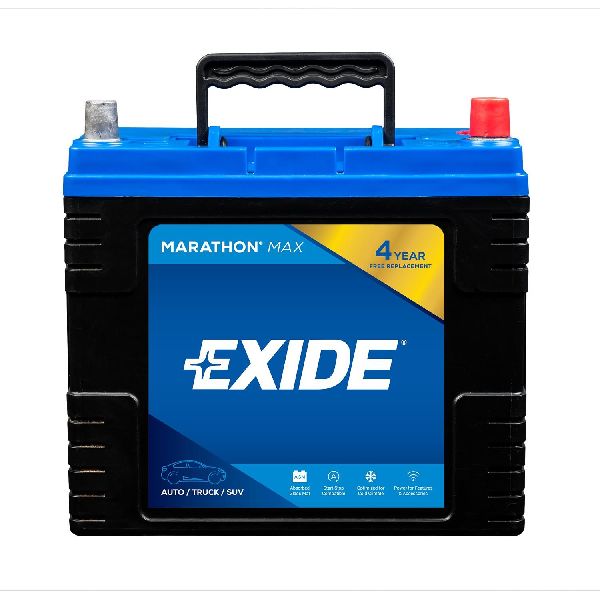
- Weak or Failing Battery 🔴 High Probability → Shop Vehicle Battery Batteries have a finite lifespan of 3-5 years. Vehicles in this age range are often on their second or third battery, making failure a common occurrence. A battery may hold enough charge to start the car but drop below the PCM's required voltage under load, triggering the code.
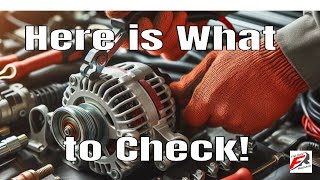
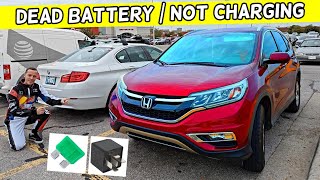
How to confirm: Test the battery voltage with a multimeter. A healthy battery should read at least 12.4 volts with the engine off. Many auto parts stores offer free battery testing 🎬 Watch: How to diagnose your battery and alternator that can determine its overall health and ability to hold a charge under load.
Typical fix: Replace the vehicle's 12V battery.
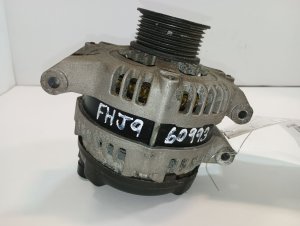
Est. part cost: $120-$250 - Failing Alternator 🔴 High Probability → Shop Alternator The alternator recharges the battery and powers the vehicle's electronics when the engine is running. Like the battery, the alternator is a wear item that can fail on higher-mileage vehicles, leading to an undercharged battery and low system voltage.
How to confirm: With the engine running, test the voltage at the battery terminals. A healthy alternator should produce a voltage between 13.5 and 14.5 volts. A reading below 13.5V indicates the alternator is not charging properly. Be aware of the dual-mode charging system on 2012+ models which can show ~12.5V at idle with low load; turn on headlights and A/C to force high-output mode for testing.
Typical fix: Replace the alternator.
Est. part cost: $200-$450 - Corroded or Loose Battery Terminals/Cables 🟡 Medium Probability → Shop Vehicle Battery Corrosion (a white or greenish powder) on the battery terminals is common over time and creates resistance, preventing the proper flow of electricity. This voltage drop can be enough to trigger P2507 even with a healthy battery and alternator.
How to confirm: Visually inspect the battery terminals, clamps, and the main ground wire connection to the chassis. Look for corrosion, looseness, or fraying. Ensure connections are clean and tight.
Typical fix: Disconnect the battery (negative first) and clean the terminals and clamps with a wire brush and a baking soda/water solution. Ensure all connections are tight.
Est. part cost: $5-$20 for cleaning tools - Faulty PCM Power Relay ⚪ Low Probability The main relay (often labeled PGM-FI) supplies power to the PCM. While generally reliable, this relay can fail, causing an intermittent or complete loss of power to the engine computer. Heat can cause solder joints inside the relay to crack over time.
How to confirm: Locate the main PCM relay in the under-hood fuse box. You can test it by swapping it with an identical relay from a non-critical system (like the horn) to see if the problem resolves. On some 4th Gen models, the PCM power is integrated into a larger multi-purpose relay block. A continuity test can also be performed on the relay's pins.
Typical fix: Replace the PCM power relay.
Est. part cost: $15-$40
Rare But Worth Checking
- Damaged Wiring Harness: The wiring that supplies power to the PCM could be damaged due to heat, vibration, or previous repairs, causing an intermittent short or open circuit. This is less common but should be considered if the battery and alternator are confirmed to be good.
- Faulty Powertrain Control Module (PCM): → Shop Engine Control Module (ECM) Internal failure of the PCM is the least likely cause. This should only be considered after all other possibilities—battery, alternator, relays, fuses, and wiring—have been exhaustively tested and ruled out.
- Failing Electronic Load Detector (ELD): On 2012 and newer models, the ELD, located in the under-hood fuse box, can fail. A faulty ELD can misinterpret the vehicle's electrical demand and command the alternator to charge improperly, potentially leading to a low voltage condition and triggering codes like P1297 or P1298, which can sometimes accompany P2507.
Diagnosis Steps
- Read the Code: Use an OBD-II scanner to confirm P2507 is the active code. Note any other codes present.
- Inspect Battery Terminals: Visually inspect the battery terminals and cables for corrosion or looseness. Clean and tighten as necessary.
- Test Battery Voltage (Engine Off): Use a multimeter to check the battery's static voltage. It should be 12.4V or higher. If it's low, charge the battery and re-test. If it doesn't hold a charge, it likely needs replacement.
- Test Alternator Output (Engine On): Start the engine and measure the voltage at the battery terminals. The reading should be between 13.5V and 14.5V. If it's outside this range, the alternator is likely faulty. For 2012+ models, ensure a high electrical load (headlights, A/C on) is active to force the high-output charging mode.
- Check Fuses and Relays: Inspect the main fuses and the PCM power relay (often labeled PGM-FI Main Relay in the under-hood fuse box). A blown fuse or a faulty relay can interrupt power to the computer.
- Perform a Voltage Drop Test: If the battery and alternator test good, perform a voltage drop test on the main power and ground cables to check for hidden resistance from internal corrosion.
- Inspect Wiring: If all else fails, carefully inspect the wiring harness leading to the PCM for any signs of damage, chafing, or corrosion at the connector.
Parts You'll Likely Need
- 12V Battery — This is the most common failure point for a P2507 code, as batteries have a limited service life.
Trusted brands: Interstate, DieHard, Duralast, ACDelco
OEM price range: $180-$300
Aftermarket price range: $120-$250 - Alternator
(OEM #31100-RX0-A01 (2012-2014 CR-V 2.4L), 31100-RTA-023 (2007-2009 CR-V))— The second most likely cause, a failing alternator cannot properly charge the battery and power the vehicle, leading to low voltage.
Trusted brands: Denso, Bosch, Valeo
OEM price range: $400-$600
Aftermarket price range: $200-$450
Related Codes That Often Appear With This One
- P0562 — P0562 indicates 'System Voltage Low.' While P2507 is specific to the PCM's power input, P0562 indicates a low voltage condition across the entire vehicle's electrical system. Seeing them together strongly points to a failing battery or alternator.
- P1298 — This code points specifically to a fault in the Electronic Load Detector (ELD) circuit, indicating high voltage. A failing ELD can cause erratic charging behavior, which may lead to the low voltage condition that triggers P2507. This is primarily applicable to 2012 and newer models.
Mechanic-Grade Diagnostic Values
- Charging Voltage (High-Output Mode, 2012+ models) — expected: 13.5V - 14.9V. Failure: Voltage below 13.5V with high electrical load (A/C, headlights ON) points to a weak alternator.
- Charging Voltage (Low-Output Mode, 2012+ models) — expected: 12.4V - 12.9V. Failure: This is a normal reading under light load and should not be mistaken for a fault. The system is reducing alternator load to save fuel.
- Electronic Load Detector (ELD) Signal Voltage (2012+ models) — expected: 2V - 4V (low load), 1V - 2V (high load). Failure: Incorrect voltage readings from the ELD can cause the ECM to command the wrong charging rate. The ECM sends a 5V reference, and the ELD pulls it down based on load.
- Parasitic Draw (Battery Drain with Vehicle Off) — expected: Under 50 milliamps (0.05A) after all modules go to sleep (approx. 5-10 minutes).. Failure: A sustained reading above 50mA indicates a component is not shutting off, draining the battery. A 2016 CR-V should be around 26mA or less.
Wiring & Ground Locations
- G101 — On the engine block, typically on the left rear side, near the thermostat housing.. This is a primary ground termination point for the PCM. A loose or corroded G101 ground can cause erratic PCM behavior, including low voltage detection and stalling, even if the battery and alternator are healthy.
- PGM-FI Main Relay — For many CR-V models in this range, it is located behind the passenger glovebox. On other Honda models, it can be near the driver's side footwell fuse box.. This relay directly supplies power to the PCM. A failure here cuts off the computer's power source, directly causing a P2507.
- Electronic Load Detector (ELD) — Integrated into the under-hood fuse box. Access often requires removing the fuse box and accessing it from the underside.. On 2012+ models, this component is critical for telling the PCM how to command the alternator. A fault here can lead to an undercharged battery.
Real Owner Repair Stories
- Honda-Tech forum user (2003 Honda CR-V (similar charging system principles)) — Battery light remained on after a new battery and new alternator were installed. The new alternator was putting out 14.4V.
❌ Tried (didn't work) Replacing the battery, Replacing the alternator with a new aftermarket unit, Checking the 'charge circuit fuse'
✅ What actually fixed it The aftermarket alternator was incompatible with the Honda's charging system. Replacing it with a genuine Honda OEM alternator resolved the issue and turned off the battery light. - CarKiller forum user (2012 Honda CR-V with 159,350 miles) — Intermittent loss of power steering, flashing radio and dash lights, followed by a no-start condition as if the battery was dead. After sitting for 15 minutes, it would start and run fine.
❌ Tried (didn't work) The issue started after an alternator replacement 5,000 miles prior.
✅ What actually fixed it The accepted answer pointed to an intermittent short or bad connection, likely related to the recent alternator replacement. The advice was to re-check all connections at the alternator and battery, and inspect fuses and relays for corrosion or burn marks, suggesting the rebuilt alternator itself could be intermittently failing.
OEM Part Supersession History
31100-5PA-A01RM→06311-5PA-505RM, 31100-5PA-A02RM— Standard part updates and revisions by the manufacturer.31100-5X6-J01→31100-5X6-J01RM (Remanufactured)— Applies to 2015-2017 CR-V 2.4L models.
Model Year Variations Within This Range
- 2012-2017: These models feature a dual-mode charging system controlled by the PCM via an Electronic Load Detector (ELD). This system can intentionally lower charging voltage to ~12.5V under light loads to improve fuel economy. This is normal operation and differs from the simpler, constant-high-output charging systems on the 2008-2011 models. Diagnosis must account for this behavior.
Diagnostic Flowchart
Other Known Issues on This Vehicle
Issues unrelated to this code that are worth knowing about as an owner of this generation:
- VTC Actuator Rattle on Cold Start 🟠 Medium — Common on 2012-2014 models. A brief rattle or grinding noise for 1-3 seconds upon cold startup. (Ref: TSB 09-010)
- Excessive Oil Consumption 🟠 Medium — Primarily affects 2010-2011 models with the 2.4L engine due to piston ring issues. Owners may report needing to add oil between changes. (Ref: TSB 12-087)
- A/C Compressor Failure 🟠 Medium — Premature failure of the A/C compressor is noted across multiple generations, particularly 2012-2016 and 2017-2019 models. (Ref: Warranty Extension (TSB 23-040 for 2017-2022 models))
- CVT Juddering/Hesitation 🟠 Medium — Affects 2015-2017 models with the Continuously Variable Transmission (CVT), causing shuddering during light acceleration. (Ref: Software updates and fluid flush procedures outlined in service bulletins.)
- Fuel Dilution in Engine Oil (1.5L Turbo) 🔴 High — A well-documented issue in 2017 models with the 1.5L turbo engine, where unburned fuel mixes with engine oil, particularly during short trips in cold weather. (Ref: TSB 19-032 and a powertrain warranty extension were issued by Honda.)
- Rear Frame Corrosion 🔴 High — Affects older models (primarily 3rd Gen) in regions that use road salt, leading to corrosion that can cause the rear trailing arm to detach. (Ref: Recall issued for inspection and repair.)
Used vs. New Parts: Buying Guide for This Vehicle
When a used part is the smart pick: For a component like an alternator, a used OEM part from a reputable salvage yard can be a cost-effective alternative to a new aftermarket part, especially given the potential compatibility issues with non-OEM units on Hondas. Relays and fuse boxes are also excellent candidates for used parts.
Donor-vehicle mileage cap: roughly under 80000 miles for the part to have meaningful remaining life.
What to inspect on the donor part:
- For an alternator, check for smooth, quiet bearing rotation by spinning the pulley by hand.
- Inspect the electrical connector for any signs of melting, corrosion, or broken plastic.
- Look for a vehicle that was in a rear-end collision, suggesting the engine components were not damaged.
- Verify the part number on the used component matches the original part from your vehicle.
OEM-only on this vehicle (don't cheap out):
- Alternator — Due to frequent communication issues between the PCM and aftermarket alternators on this platform, an OEM or a high-quality OEM-supplier (like Denso) part is strongly recommended to avoid repeat repairs.
Aftermarket brands forum-validated for this vehicle:
- Denso (often the original OEM supplier)
- Bosch
Brands owners have reported issues with on this vehicle:
- Unbranded, 'white box' alternators from online marketplaces have a high failure and incompatibility rate on this platform.
Real Owner Stories
Aggregated from forums and TSBs cited above. Mileages and costs reflect what owners reported in those sources.
2012-2016 Honda CR-V
Symptoms: Multiple simultaneous error codes appearing on the dash.
What fixed it: Replacement of the low voltage battery.
Source hint: Reddit r/crv
2008-2017 Honda CR-V
Symptoms: Electrical issues including stalling and multiple warning lights; engine may still crank okay but the vehicle stalls under load.
What fixed it: Replacing the weak battery or failing alternator.
Source hint: CR-V Forum (crvownersclub.com)
Related OBD-II Codes
Frequently Asked Questions
My 2012 CR-V shows 12.5V at idle; does this mean my alternator is failing?
I have a 2014 CR-V with a cold start rattle; is this related to the P2507 code?
Could the PGM-FI Main Relay be the cause of my intermittent stalling?
Is there a specific alternator part number I should look for if I need a replacement for my 2013 CR-V?
My 2017 CR-V has the 1.5L Turbo engine and is acting up; could this be the fuel dilution issue?
Can I use a used alternator to fix this code on my Honda?
Helpful Videos
Used OEM Parts in Stock
New Aftermarket Parts Available

The information in this article is provided for general reference and educational purposes only. Vehicle specifications, procedures, and part compatibility can vary by production date, trim level, and region. Always consult your vehicle's factory service manual and verify part numbers before purchasing or performing repairs. Safety-critical components such as airbags, seat belts, and braking systems should be installed by a qualified professional.
- Honda CR-V:
- 🧭 Diagnostic Flowchart
- 🎬 Helpful Videos
- 🛍️ Shop This Part
- What's Unique About the 2008-2017 Honda CR-V
- Symptoms You May Notice
- Most Likely Causes
- Rare But Worth Checking
- Diagnosis Steps
- Parts You'll Likely Need
- Related Codes That Often Appear With This One
- Mechanic-Grade Diagnostic Values
- Wiring & Ground Locations
- Real Owner Repair Stories
- OEM Part Supersession History
- Model Year Variations Within This Range
- Other Known Issues on This Vehicle
- Used vs. New Parts: Buying Guide for This Vehicle
- Real Owner Stories
- 2012-2016 Honda CR-V
- 2008-2017 Honda CR-V
- Related OBD-II Codes
- Frequently Asked Questions
- 🎟️ Get 5% Off