

P2507 on 2016-2020 Mazda CX-9: PCM Power Input Signal Low Causes and Fixes
On a 2016-2020 Mazda CX-9, code P2507 most often points to a weak battery, corroded battery terminals, or a blown/removed 15A 'ROOM' fuse. Always check these simple items before suspecting more complex issues. A battery replacement costs around $150-$300, and many owners report needing one after 3-5 years.
- P2507 on a 2016-2020 CX-9 means the engine computer (PCM) is not getting enough voltage.
- Before buying any parts, check the battery terminals for corrosion and tightness. Then, have the battery's health tested.
- Be aware of the specific TSB for this vehicle: if the 15A 'ROOM' fuse was recently pulled, that is the likely cause. Simply replace the fuse and clear the codes.
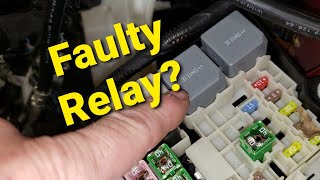
- If the battery and fuses are good, the next most likely culprit is the main power relay (EGI relay).
- Do not assume the PCM is bad; it is the least likely cause of this code.
What's Unique About the 2016-2020 Mazda CX-9
For this generation of Mazda CX-9, P2507 has a very specific and well-documented cause that can be a red herring. Mazda issued several Technical Service Bulletins (TSBs) explaining that this code, along with P2610, can be triggered simply by starting the engine after the 15A 'ROOM' fuse has been removed, a common practice for vehicles in transport or storage. This can happen if the engine is started 3 or more times with the fuse removed. If the vehicle was recently serviced or purchased, this non-issue should be the first suspicion before diagnosing any actual part failures.
Diagnostic Flowchart
Tap your situation to follow the diagnostic path that matches what you're seeing on this vehicle.
Symptoms You May Notice
- Check Engine Light is on
- Engine may not start or is sluggish to start
- Engine may stall while driving or at idle
- i-Stop (start-stop system) is disabled
- Flickering dashboard lights, especially during startup
- Other electrical glitches, such as the power liftgate failing to operate
- "Keyless system malfunction" message on the dash
- Replacing the PCM when the actual problem is a weak battery, a bad ground, or a corroded terminal.
- Replacing the alternator when the battery is simply old and can no longer hold a proper charge.
- Performing extensive electrical diagnosis without first checking for the simple 'ROOM' fuse issue described in Mazda TSBs.
Most Likely Causes
- Weak or Failing Battery 🔴 High Probability → Shop Vehicle Battery Modern vehicles like the CX-9 have a high electrical demand which can expose an aging battery. Owners on forums like Mazdas247 report needing battery replacements as early as 3-4 years into the vehicle's life, often preceded by electrical gremlins.
How to confirm: Test the battery voltage with a multimeter. It should be ~12.4-12.6V with the engine off and ~13.5-14.5V with the engine running. A load test at an auto parts store is the most definitive way to confirm a weak battery. A voltage reading below 12.4V, or even as low as 7.4V as one owner experienced, is a clear sign of failure.
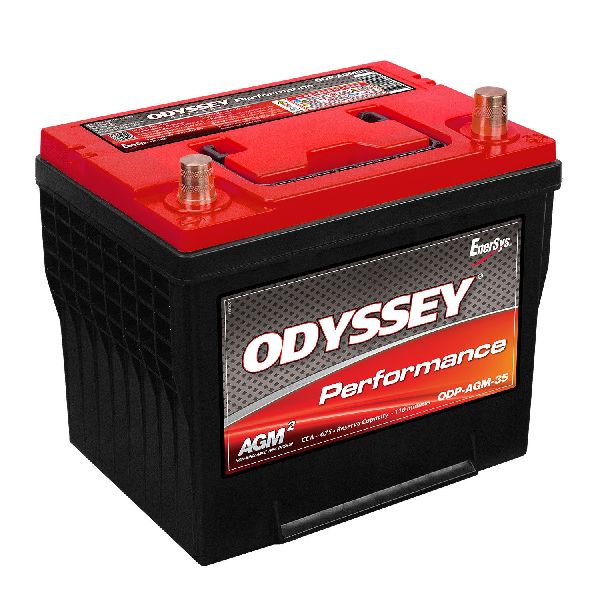
Typical fix: Replace the battery. The common size for this vehicle is a Group 35 or Q85/T110 for models with i-Stop.
Est. part cost: $150-$300 - Corroded or Loose Battery Terminals/Cables 🔴 High Probability → Shop Vehicle Battery Corrosion is a common issue on all vehicles and creates resistance, which causes a voltage drop. Even minor corrosion on the negative terminal has been noted by CX-9 owners.
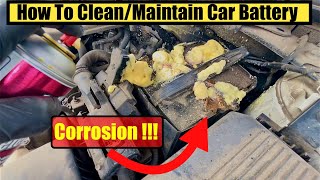
How to confirm: Visually inspect the battery terminals for white, blue, or green crusty buildup. Wiggle the terminal clamps to ensure they are tight and cannot be moved by hand.
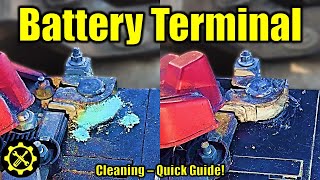
Typical fix: Disconnect the terminals (negative first), clean them and the battery posts thoroughly with a wire brush and baking soda solution, and reconnect securely 🎬 Watch: The best way to clean and protect corroded battery terminals. (positive first).
Est. part cost: $1-$10 for a cleaning kit - Blown or Removed 'ROOM' Fuse 🟡 Medium Probability The TSBs specifically call out the 15A ROOM fuse being removed or blown as a primary cause for P2507, often when accompanied by P2610. This fuse is located in the engine compartment fuse box. Other related fuses like the 'ENG+B 7.5A' can also be the culprit.
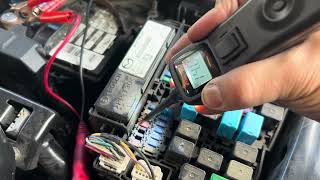
How to confirm: Locate and visually inspect the 15A ROOM fuse in the engine bay fuse panel. A blown fuse will have a broken internal wire. A YouTube video on a similar Mazda CX-5 showed this exact failure mode. Use a multimeter or test light for an accurate check.
Typical fix: Reinstall or replace the blown fuse with a new one of the *exact same amperage*. If the fuse blows again, there is an underlying short circuit that needs to be diagnosed.
Est. part cost: $1-$5 - Faulty PCM / EGI Main Relay ⚪ Low Probability → Shop Wiring Relay Relays are mechanical switches that can wear out over time, causing intermittent power delivery to the PCM. This relay is often a multi-purpose part used for other functions like the fuel pump.
How to confirm: Locate the EGI Main Relay in the engine compartment fuse box. You can often swap it with an identical relay (e.g., for the horn or fog lights) to see if the problem resolves. If it does, the relay is bad.
Typical fix: Replace the faulty relay. The OEM part number is often shared across many Mazda models.
Est. part cost: $15-$40
Rare But Worth Checking
- Damaged Wiring or Poor Ground: A break, corrosion, or short in the wiring harness between the battery and the PCM, or a corroded/loose PCM ground connection, can cause this code. Notably, Mazda recalled some 2018 CX-9s for wiring harnesses with weak connector terminals that could cause electrical disruptions and multiple warning lights, similar to the symptoms of P2507. A Reddit user with a 2018 CX-9 was quoted over $7,000 for a wiring harness replacement after a PCM swap didn't fix their electrical issues.
- Failing Alternator: → Shop Alternator If the alternator isn't properly recharging the battery, the overall system voltage will drop while driving, eventually triggering this code. This is usually confirmed by checking the battery voltage while the engine is running; it should be between 13.5-14.5V.
- Faulty Powertrain Control Module (PCM): → Shop Engine Control Module (ECM) This is extremely rare. The PCM itself can fail internally, but all other possibilities like power, grounds, and relays must be exhaustively ruled out first. Forum users consistently advise against suspecting the PCM until all other steps have failed.
Diagnosis Steps
- Check for Technical Service Bulletins (TSBs) related to P2507 for your vehicle. Specifically, check if the 15A ROOM fuse may have been recently removed or replaced. If so, reinstall the fuse, clear the codes, run the engine for 10 seconds, and see if the code returns.
- Visually inspect the battery terminals for any signs of corrosion or looseness. Clean and tighten as necessary.
- With the engine off, use a multimeter to test the battery voltage. A healthy battery should read at least 12.4V.
- Start the engine and measure the battery voltage again. It should be between 13.5V and 14.5V, indicating the alternator is working.
- If voltage checks are good, inspect the fuses mentioned in the 'Common Causes' section (15A ROOM, 7.5A ENG+B). Replace if blown.
- Locate the EGI (Main) Relay in the engine bay fuse box and test it by swapping it with a known good, identical relay.
- If the problem persists, perform a voltage drop test on the battery positive and negative cables to check for hidden corrosion or resistance.
- As an advanced step, check for B+ voltage at the specified PCM power input pins and verify continuity on the PCM ground pins. A forum post for a similar Mazda platform identified power pins 1BA, 1BE, 2BE, 2BF and ground pins 1AZ, 2H, 1BH, 1BD, 1BG, 1BB. This should be verified with a service manual for the CX-9.
Parts You'll Likely Need
- Vehicle Battery — An aging battery is the most frequent cause of low voltage codes. Common size is Group 35.
Trusted brands: Clarios, East Penn, Interstate
OEM price range: $200-$350
Aftermarket price range: $150-$250 - Fuse — A blown fuse, especially the 15A ROOM fuse, is a specific documented cause for this code on this vehicle.
Trusted brands: Bussmann, Littlefuse
OEM price range: $2-$5
Aftermarket price range: $1-$3 - Main Relay (EGI Relay)
(OEM #AJ51-18-821)— A faulty relay can cause an intermittent loss of power to the PCM. This is a multi-purpose relay also used for fuel pump, horn, etc.
Trusted brands: Standard Motor Products, Denso, Duralast
OEM price range: $12-$25
Aftermarket price range: $15-$40
Related Codes That Often Appear With This One
- P2610 — Mazda TSBs explicitly state that P2610 (Instrument cluster internal engine off timer performance problem) is often stored with P2507, particularly when the issue is related to the 15A ROOM fuse being removed or blown. 🎬 Watch: How to check for these specific Mazda codes and fuses.
Technical Service Bulletins (TSBs) & Recalls
- 01-003-21-3776: CHECK ENGINE LIGHT ON with DTC P2610 and P2507 stored in memory after engine start and room fuse 15A (A) removed.
- 01-001-17: CHECK ENGINE LIGHT ON with DTC P2610 and P2507 stored in memory after engine start and room fuse 15A removed.
- 01-003-19-3557: CHECK ENGINE LIGHT ON with DTC P2610 and P2507 stored in memory after engine start and room fuse 15A (A) removed.
Platform-Specific Known Issues
- TSB #01-003-21-3776, #01-003-19-3557, and #01-001-17 document that P2507 and P2610 can be set after starting the engine with the 15A ROOM fuse removed. The fix is to reinstall the fuse and clear the codes.
- A recall for some 2018 CX-9 models (NHTSA Campaign Number: 19V453000) addressed faulty wiring harness connectors that could cause various electrical failures, including no-start conditions and multiple warning lights, which could present similarly to a P2507 fault.
Mechanic-Grade Diagnostic Values
- PCM Backup Power Voltage Drop — expected: Voltage drop must not be less than 50% of battery voltage for more than 10 seconds.. Failure: Code P2507:00 is set if the voltage drop exceeds this threshold.
- PCM Ground Continuity — expected: < 0.1 Ω. Failure: A reading higher than 0.1 Ω indicates excessive resistance in the ground circuit.
- PCM Power Input (Scan Tool PID) — expected: Should show B+ (Battery Voltage).. Failure: A reading significantly lower than battery voltage indicates a voltage drop before the PCM.
- Battery Voltage (Engine Off) — expected: ≥12.4 V. Failure: A reading below 12.4V indicates a discharged or failing battery.
- Charging System Voltage (Engine Running) — expected: 13.5V - 14.5V. Failure: Voltage below 13.5V may indicate a failing alternator; voltage above 14.5V may indicate a faulty voltage regulator.
Hidden / Shadow Codes Worth Checking
- P2507:00: This is the specific variant of the code cited in Mazda's Technical Service Bulletins. The ':00' is a failure type byte indicating 'No Subtype Information' or the base fault. It confirms the issue is a low voltage input to the PCM as the primary trigger. (see via Most professional scan tools will display this two-byte code. It is referenced in official Mazda TSBs and service literature.)
Scan Tool Commands That Help
- Mazda M-MDS or similar (e.g., FORScan): Access VPWR PID — Use this to monitor the voltage the PCM is actually seeing in real-time. This helps differentiate between a bad power feed and an internal PCM fault.
- FORScan: PATS (Passive Anti-Theft System) Programming — If the PCM is replaced, the vehicle's keys must be reprogrammed to the new module for the engine to start. FORScan provides functions to erase old keys and learn new ones.
- No Tool Required: KAM (Keep Alive Memory) Reset — To reset the PCM's adaptive memory after a repair without disconnecting the battery. With the key on, rapidly depress the brake pedal 20 times; the oil pressure gauge should sweep to halfway and back to confirm the reset.
Wiring & Ground Locations
- PCM Location — Typically found in the left rear corner of the engine compartment on the CX-9 platform.. Knowing the physical location is the first step to visually inspecting the module and its connectors for corrosion or damage, and for performing pinout tests.
- G3 (Ground Point) — Located on the left side of the engine compartment. (Based on 2007 CX-9 diagrams).. This is a primary engine compartment ground. A loose or corroded G3 can cause a variety of issues, including unstable voltage for the PCM.
- PCM Power Input Pin (e.g., 1BA) — A specific pin on the PCM main connector, often supplied power via the ROOM fuse. On other Mazda models, this is a Blue/Red wire.. This is the specific circuit that must be tested for voltage. A voltage drop test between the fuse and this pin can pinpoint a wiring issue.
- Main Fuse & Relay Box — In the engine compartment, typically near the battery and fender. The larger relays and main fuses are housed here.. This box contains the EGI Main Relay and the ROOM fuse, both of which are critical to check for this code.
Real Owner Repair Stories
- YouTube user fixing a Mazda 3 (Mazda 3 with over 200,000 miles) — Check Engine Light with code P2507.
❌ Tried (didn't work) Initial scan pointed to low input voltage.
✅ What actually fixed it The wire terminal inside the fuse box where a fuse plugs in was corroded and broken. The user bypassed the bad spot by soldering in a new inline fuse holder to complete the circuit. - MX-5 Owners Club Forum user (Mazda MX-5 (NC)) — Persistent P2507 code that would return after clearing.
❌ Tried (didn't work) Replacing the battery., Cleaning battery terminals.
✅ What actually fixed it The user found there was no continuity between the 15A ROOM fuse and PCM terminal 1BA. The ultimate fix was finding and repairing a broken wire in that circuit.
Model Year Variations Within This Range
- 2018: Some 2018 CX-9 models were subject to NHTSA Campaign Number 19V453000 for a faulty wiring harness. The connector terminals could be weak, leading to a wide range of electrical issues, including symptoms identical to a P2507 fault. This makes a harness inspection particularly important for this model year.
Helpful Videos

We Have This Part in Stock


The information in this article is provided for general reference and educational purposes only. Vehicle specifications, procedures, and part compatibility can vary by production date, trim level, and region. Always consult your vehicle's factory service manual and verify part numbers before purchasing or performing repairs. Safety-critical components such as airbags, seat belts, and braking systems should be installed by a qualified professional.
- Mazda CX-9:
- 🧭 Diagnostic Flowchart
- 🎬 Helpful Videos
- 🛍️ Shop This Part
- What's Unique About the 2016-2020 Mazda CX-9
- Symptoms You May Notice
- Most Likely Causes
- Rare But Worth Checking
- Diagnosis Steps
- Parts You'll Likely Need
- Related Codes That Often Appear With This One
- Technical Service Bulletins (TSBs) & Recalls
- Platform-Specific Known Issues
- Mechanic-Grade Diagnostic Values
- Hidden / Shadow Codes Worth Checking
- Scan Tool Commands That Help
- Wiring & Ground Locations
- Real Owner Repair Stories
- Model Year Variations Within This Range
- 🎟️ Get 5% Off