

P2507 on 2016-2020 Mazda MX-5: ECM/PCM Low Voltage Causes and Fixes
On a 2016-2020 Mazda MX-5, code P2507 most often indicates a weak or failing battery, or loose/corroded battery terminals. It can also be triggered by a known TSB-documented quirk where removing the 15A ROOM fuse for storage and then starting the car will set the code. Start by testing the battery and cleaning the terminals before suspecting more complex issues. A battery replacement is typically under $250.
- P2507 means the engine computer (PCM) lost its constant power supply.
- Before buying any parts, fully charge and test your battery, and thoroughly clean the battery terminals.
- Check the 15A ROOM fuse in the engine bay fuse box, as it being removed is a known cause for this code on an MX-5.
- This code is almost always caused by a simple power supply issue (battery, terminals, fuse) and rarely indicates a problem with the expensive PCM itself.
What's Unique About the 2016-2020 Mazda MX-5
For the ND generation MX-5, this code has a very specific, documented cause unrelated to a part failure. Mazda issued multiple Technical Service Bulletins (TSBs) noting that P2507, often paired with P2610, will be stored if the vehicle is started after the 15A ROOM fuse has been removed. This is sometimes done to prevent battery drain during vehicle transport or storage. The TSBs note this is caused by starting the engine 3 or more times with the ROOM fuse removed after a short engine-off duration (less than 15 seconds). While the code can still point to common issues like a failing battery, this fuse-related scenario is a well-known quirk of this platform and its Skyactiv siblings.
Diagnostic Flowchart
Tap your situation to follow the diagnostic path that matches what you're seeing on this vehicle.
Symptoms You May Notice
- Check Engine Light is on
- Engine may stall intermittently or at idle
- Slow or weak engine crank
- Hesitation or loss of power during acceleration
- Vehicle may not start or experiences intermittent no-start conditions
- Other electrical glitches or warning lights, like dimming headlights or interior lights
- A clicking sound when trying to start the engine
- Replacing the PCM when the actual fault is a weak battery or a simple corroded ground wire.
- Replacing the battery when the issue is a blown 15A ROOM fuse or a faulty alternator not recharging the battery.
Most Likely Causes
- Weak or Failing Battery 🔴 High Probability → Shop Vehicle Battery Batteries are wear items and their performance degrades over time, especially in sports cars like the MX-5 that may not be daily driven, leading to insufficient charging cycles. A failing battery can sometimes read a correct voltage but fail under load.
How to confirm: Use a multimeter to check the battery voltage. A healthy battery should read ~12.6V with the engine off and ~14.0-14.7V with the engine running. A load test, often performed for free at auto parts stores, is the most definitive test.
Typical fix: Replace the vehicle's 12V battery.
Est. part cost: $180-$300 - Loose or Corroded Battery Terminals/Cables 🔴 High Probability → Shop Vehicle Battery Corrosion is a common issue on battery terminals, creating resistance and preventing a solid electrical connection, which can cause intermittent power loss.
How to confirm: Visually inspect the battery terminals for white or blue-green crust (corrosion). Wiggle the cable clamps to ensure they are tight and do not move.
Typical fix: Disconnect the battery cables (negative first), clean the terminals and cable clamps with a wire brush and baking soda solution, and reconnect securely (positive first). 🎬 Watch: How to properly clean corroded battery terminals.
Est. part cost: $1-$10 for a terminal cleaning kit. - ROOM Fuse Removed or Blown 🟡 Medium Probability As documented in Mazda TSBs, removing the 15A ROOM fuse for storage or transport and then starting the car will trigger this code. The fuse could also simply be blown, which can happen if an incorrect amperage fuse was previously installed.
How to confirm: Locate the fuse box in the engine bay and inspect the 15A ROOM fuse. Ensure it is present, not blown, and making good contact. The TSB repair procedure is to reinstall the fuse, start the engine for 10+ seconds, stop, restart to confirm no CEL, then clear codes.
Typical fix: Reinstall or replace the 15A ROOM fuse. Clear the codes.
Est. part cost: $1-$5 - Failing Alternator ⚪ Low Probability → Shop Alternator The alternator recharges the battery; if it fails, the battery will drain and cause low voltage conditions.
How to confirm: With the engine running, check the battery voltage. If it's below 13.5V or not increasing from its static voltage (~12.6V), the alternator is likely not charging properly. Most auto parts stores can test your alternator.
Typical fix: Replace the alternator.
Est. part cost: $250-$500
Rare But Worth Checking
- Poor Main Ground Connection: A corroded or loose chassis ground strap can cause widespread electrical issues that mimic a bad battery. Always worth checking the main ground from the battery to the chassis.
- Faulty Powertrain Control Module (PCM): → Shop Engine Control Module (ECM) This is very rare. The PCM itself can fail, but all other possibilities like battery, alternator, fuses, and wiring should be exhaustively ruled out before considering PCM replacement.
- Parasitic Drain: An electrical component that does not shut off when the car is off can slowly drain the battery, leading to low voltage on startup. This is a common cause of battery drain.
Diagnosis Steps
- Read the codes: Confirm P2507 and note any other codes, especially P2610.
- Check for TSBs: Be aware of the TSBs regarding the 15A ROOM fuse (01-003-19-3557, 01-003-21-3776). If the car was recently serviced, stored, or transported, this is a highly likely cause.
- Inspect the Battery Terminals: Visually inspect for corrosion and ensure the cable clamps are tight. Clean and tighten as needed.
- Test the Battery: With the engine off, use a multimeter to check battery voltage. It should be ~12.6V. Start the engine and check again; it should rise to ~14.0-14.7V. A load test is recommended for a definitive result.
- Test the Alternator: If the voltage does not rise to ~13.8-14.2V when the engine is running, the alternator is suspect.
- Inspect Fuses: Check the 15A ROOM fuse and other related power fuses (e.g., ENG+B 7.5A) mentioned in service manuals. Ensure they are not blown and are seated correctly.
- Inspect Wiring: If the issue persists, perform a visual inspection of the wiring harness to the PCM for any obvious damage, and check the main chassis ground strap for corrosion or looseness.
- Professional Diagnosis: If all the above steps fail to identify the issue, the problem may be a more complex wiring fault, a parasitic drain, or a rare PCM failure, which requires professional diagnosis.
Parts You'll Likely Need
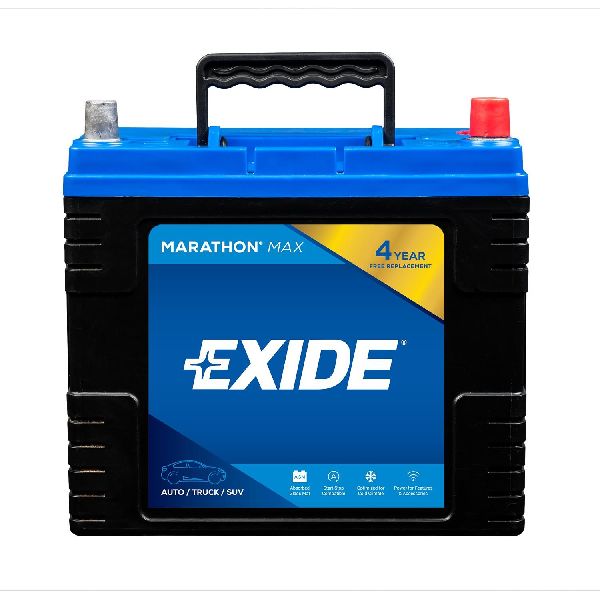
- 12V Battery
(OEM #0000-80-051R-WB)— This is the most common cause of low voltage codes as batteries are a consumable part with a finite lifespan.
Trusted brands: Panasonic (OEM), Interstate, DieHard, Duralast
OEM price range: $200-$300
Aftermarket price range: $180-$250 - Battery Terminal Cleaner — Often, the problem is not the battery itself but a poor connection due to corrosion, which this simple tool can fix.
Trusted brands: CRC, NOCO, Generic wire brush
OEM price range: N/A
Aftermarket price range: $5-$15
Related Codes That Often Appear With This One
- P2610 — P2610 ('ECM/PCM Internal Engine Off Timer Performance') is often stored with P2507 because the timer relies on the same constant power supply from the battery. When that power is lost, both codes are triggered. Mazda TSBs confirm this pairing is expected when the ROOM fuse is pulled.
Technical Service Bulletins (TSBs) & Recalls
- 01-003-19-3557: Notes that P2507 and P2610 may be stored after starting the engine with the 15A room fuse removed.
- 01-003-21-3776: Repeats the information about P2507 and P2610 being stored after the 15A room fuse is removed.
- 01-001-17: Also documents the P2507/P2610 code combination appearing after the 15A room fuse is removed.
Platform-Specific Known Issues
- Mazda has issued multiple Technical Service Bulletins (e.g., 01-003-19-3557, 01-003-21-3776) indicating that P2507 and P2610 can be stored in memory if the engine is started after the 15A ROOM fuse has been removed. This is not a component failure but a result of a specific action, often related to vehicle transport or storage.
Mechanic-Grade Diagnostic Values
- PCM Backup Power Voltage — expected: Above 6V. Failure: Voltage drops below 6V for 5 seconds.
- Battery Voltage (Engine Off) — expected: ~12.6V. Failure: Significantly below 12.4V indicates a discharged or failing battery.
- Battery Voltage (Engine Running) — expected: ~14.0-14.7V. Failure: Below 13.5V indicates a charging system (alternator) problem.
- PCM Live Data PID 'VPWR' — expected: Matches battery voltage measured at the terminals.. Failure: A significant difference between the VPWR PID and actual battery voltage can indicate a wiring or connection issue between the battery and PCM.
- Fuse Integrity (MAIN 200A, ROOM 15A, ENG+B 7.5A) — expected: Continuity (0 Ω resistance). Failure: Fuse is visually blown or has high resistance when measured with a multimeter.
Scan Tool Commands That Help
- Mazda IDS (or equivalent): Clear DTCs — Required to clear P2507 and P2610 from PCM memory after performing the TSB repair procedure for the removed ROOM fuse.
- FORScan: Read PID Data (Live Data) — To monitor live data PIDs like 'VPWR' (Vehicle Power) to see the voltage the PCM is reporting in real-time. This helps diagnose voltage drops that may not be apparent with a simple multimeter test at the battery.
- Mazda IDS (or equivalent): Module Reprogramming / PCM Recovery — In the rare event of a PCM failure or after replacing the PCM, the new module must be programmed to the vehicle. A recovery function may also be needed if a programming session fails.
Wiring & Ground Locations
- PCM Terminal 2O — At the Powertrain Control Module connector.. This is the specific pin for the backup battery positive terminal voltage that the PCM monitors. An open circuit or short to ground in the wiring harness to this pin will cause P2507.
- Engine Bay Fuse Box — Located in the engine compartment.. Houses the critical fuses for the PCM power supply, including the MAIN 200A, ROOM 15A, and ENG+B 7.5A fuses.
- Left Front Strut Tower Ground — In the engine bay, on the driver's side (LHD) strut tower.. This is a primary chassis ground point. Poor contact here can cause a variety of electrical issues, including low voltage symptoms. A service update for Global MX-5 Cup cars specifically calls for cleaning this ground.
- Main Grounding Stud on Power Distribution Panel — In the trunk, on the power distribution panel.. This is the main grounding point for the battery and electrical system in the rear of the vehicle. Corrosion or looseness here directly impacts the PCM's power supply and can cause P2507.
Real Owner Repair Stories
- Reddit user on r/mazda (2016.5 Mazda CX-5 (shares Skyactiv architecture and similar electrical systems)) — Vehicle would not start after replacing the battery.
❌ Tried (didn't work) Installing the new battery., Searching for a computer reset procedure.
✅ What actually fixed it The 'new' battery was faulty out of the box. Testing it with a multimeter revealed it only had 8.4 volts. Returning the defective battery and installing a second new one resolved the no-start condition immediately.
Model Year Variations Within This Range
- 2019-2020 (ND2): The updated 'ND2' models feature significant engine changes, including a higher redline, but also a different ECU that was, at least initially, more difficult for the aftermarket to tune for forced induction. They also switched from a single-mass to a dual-mass flywheel, which changes the clutch and flywheel components. While these changes don't directly alter the cause of P2507, a technician should be aware of the different ECU and engine components when diagnosing.
- 2018+: Starting in 2018, Mazda switched from an ABS-based indirect TPMS to a direct TPMS with sensors in the wheels. This is unrelated to P2507 but is a key electrical system difference within the generation.
Helpful Videos
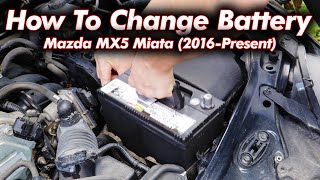
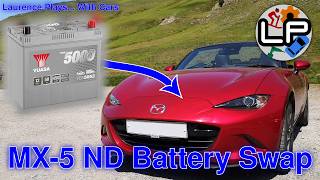

We Have This Part in Stock


The information in this article is provided for general reference and educational purposes only. Vehicle specifications, procedures, and part compatibility can vary by production date, trim level, and region. Always consult your vehicle's factory service manual and verify part numbers before purchasing or performing repairs. Safety-critical components such as airbags, seat belts, and braking systems should be installed by a qualified professional.
- Mazda MX-5:
- 🧭 Diagnostic Flowchart
- 🎬 Helpful Videos
- 🛍️ Shop This Part
- What's Unique About the 2016-2020 Mazda MX-5
- Symptoms You May Notice
- Most Likely Causes
- Rare But Worth Checking
- Diagnosis Steps
- Parts You'll Likely Need
- Related Codes That Often Appear With This One
- Technical Service Bulletins (TSBs) & Recalls
- Platform-Specific Known Issues
- Mechanic-Grade Diagnostic Values
- Scan Tool Commands That Help
- Wiring & Ground Locations
- Real Owner Repair Stories
- Model Year Variations Within This Range
- 🎟️ Get 5% Off