

P2509 on 2018-2020 Ram 3500: Causes and Fixes for Intermittent PCM Power
On a 2018-2020 Ram 3500 with the 6.7L Cummins, code P2509 almost always points to a problem with the dual-battery system. The most likely fix is cleaning all battery terminals and cable ends, replacing one or both batteries, or tightening loose ground connections. This is a 2/5 DIY difficulty.
- P2509 means the engine computer is losing power.
- On a Ram 3500 Cummins, the first and most important place to look is the dual-battery system.
- Thoroughly clean all battery terminals and cable ends before replacing any parts.
- Always load test batteries; a simple voltage check is not enough.
- If the electrical system is confirmed to be healthy, the issue may require a software update from a Ram dealer, as indicated by multiple TSBs.
What's Unique About the 2018-2020 Ram 3500
Ram 3500 trucks with the 6.7L Cummins engine use a dual-battery setup, which doubles the potential for connection problems. An issue with one battery, or the cables connecting them, can create voltage instability that confuses the PCM. This platform is known for issues related to battery terminal corrosion and internal cable failures, making it particularly susceptible to the P2509 code compared to single-battery vehicles. The complex wiring harness, including crossover cables and multiple ground points, provides numerous failure points. The 2019-2020 models also feature an amperage sensor integrated into the negative battery terminal, which can complicate wiring modifications.
Diagnostic Flowchart
Tap your situation to follow the diagnostic path that matches what you're seeing on this vehicle.
Generation note: The 2018 model year is the end of the fourth generation Ram, while 2019-2020 models are the beginning of the fifth generation. While both generations use the 6.7L Cummins with a dual-battery system, wiring harness routing and TIPM/Fuse Box designs differ. The battery cables themselves have different part numbers for 2018 and 2019+ models. However, the root causes for P2509 (batteries, cables, grounds) are common to both. TSBs exist for both generations addressing this code via software updates.
Symptoms You May Notice
- Engine intermittently stalls while driving.
- Engine will not start or is difficult to crank.
- Check Engine Light is on.
- "Check Gauges" light may illumi 🎬 Watch: A step-by-step guide to diagnosing the P2509 code.nate.
- Voltage gauge on the dashboard may drop or fluctuate, sometimes to as low as 8-9 volts.
- No-start is just a 'click' sound, but may start with a jump.
- Tachometer needle jumps erratically at idle.
- In some cases, the code is present in the system without a Check Engine Light, but can cause a failed emissions/smog test.
- Replacing the PCM when the actual problem is a bad battery cable or ground.
- Replacing the alternator when the batteries are old and can no longer hold a proper charge.
- Trusting a simple parts-store battery test, which may not detect the specific failure mode causing the intermittent voltage drop.
Most Likely Causes
- Weak or Failing Batteries 🔴 High Probability The dual-battery system requires both batteries to be in good health. If one fails or has a bad cell, it can draw down the other, causing overall system voltage to become unstable. Owners report that even if batteries pass a simple parts store test, one may still be faulty enough to cause the P2509 code. It's recommended to replace batteries in pairs, as mismatched brands or ages can cause issues.
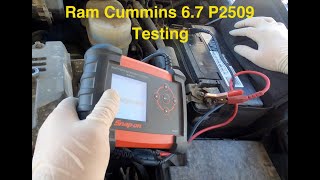
How to confirm: Disconnect the batteries from each other and the vehicle to isolate them. Test each battery individually with a digital multimeter (a healthy battery should be 12.6-12.8 volts at rest) and, more importantly, with a quality carbon pile load tester to check its health under a simulated cranking load. A battery dropping below 10.5 volts under load is considered bad.
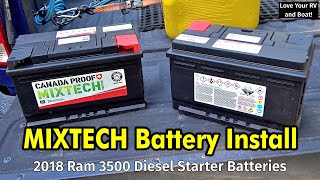
Typical fix: Replace both batteries at the same time. It is not recommended to replace only one, as the older battery can shorten the life of the new one. 🎬 See this walkthrough for installing new batteries in your Ram. Many owners have resolved the code by replacing both batteries even when they tested as 'good' with a simple tester.
Est. part cost: $300-$600 for two high-quality AGM batteries - Loose or Corroded Battery Terminals and Cables 🔴 High Probability → Shop Vehicle Battery The large cables and multiple connection points in the dual-battery system provide many opportunities for corrosion to build up or for connections to vibrate loose. Corrosion can hide inside the cable insulation where it meets the terminal end, causing high resistance that isn't visually apparent. Aftermarket batteries may have slightly smaller posts, requiring terminals to be tightened significantly to ensure a solid connection.
How to confirm: Visually inspect all battery terminals and main power/ground cables. Look for white, green, or blue buildup. Wiggle all connections vigorously. Feel cable ends for heat after cranking, indicating resistance. Check for corrosion under the rubber jacket where the cable enters the terminal.
Typical fix: Disconnect the batteries and thoroughly clean the terminals and cable ends with a wire brush and a baking soda/water solution. If corrosion is severe or internal to the cable, replacing the terminal ends or the entire cable assembly is necessary.
Est. part cost: $5-$25 for cleaning tools and terminal protectors - Poor Ground Connections 🟡 Medium Probability The main chassis and engine block grounds are critical for a stable electrical system. These can corrode or become loose over time due to vibration and exposure to the elements.
How to confirm: Locate and inspect the main ground straps on the fender, engine block, and frame. Perform a voltage drop test from the negative battery post to the chassis and engine block; the reading should be minimal. A resistance test from the PCM ground pin to the negative battery terminal should be less than 0.05 Ω.
Typical fix: Remove the ground bolt, clean the contact surfaces of the cable lug and the chassis/engine block down to bare metal, and re-secure the connection tightly. Torque ground bolts to manufacturer specification (often 20-25 ft-lb). Applying dielectric grease can help prevent future corrosion.
Est. part cost: $0-$10 for cleaning supplies and dielectric grease - Failing Alternator ⚪ Low Probability → Shop Alternator
How to confirm: With the engine running, use a multimeter to check the voltage at the battery terminals. A healthy alternator should output between approximately 13.8 and 14.4 volts. If the voltage is too low (under 13.2V) or too high (over 15V), the alternator or its voltage regulator is likely faulty.
Typical fix: Replace the alternator.
Est. part cost: $250-$600
Rare But Worth Checking
- Damaged Wiring Harness: The main wiring harness, particularly the section running behind the engine near the firewall, can be susceptible to chafing, which can cause an intermittent short in the PCM power supply wire. Check for any areas where the harness may be rubbing against metal components.
- Faulty TIPM (Totally Integrated Power Module) / Fuse Box: The TIPM on Ram trucks is a known point of failure. Internal corrosion or a failing relay within the module can interrupt power to the PCM. In some cases, the pins on the TIPM connectors can become loose or corroded, requiring cleaning or tightening.
- Faulty Powertrain Control Module (PCM): → Shop Engine Control Module (ECM) While possible, the PCM itself is rarely the cause. All other power supply and ground issues should be exhaustively ruled out before considering PCM replacement.
- Failing Grid Heater Relay: On older models, a failing grid heater relay has been known to draw excessive current, causing a voltage drop significant enough to trigger P2509. One owner reported the relay was melting the fusible link from the passenger side battery.
Diagnosis Steps
- Read the code with an OBD-II scanner to confirm P2509 is present. Note any other codes.
- Perform a thorough visual inspection of both batteries, all four terminals, and the main power and ground cables, including the crossover cable.
- Disconnect the batteries from the truck and each other. Clean all terminals and cable ends with a wire brush and baking soda solution, even if they look clean.
- Load test each battery individually. A simple voltage check is not sufficient. A healthy battery should read ~12.6V at rest, but must be tested under load to confirm its health.
- If batteries are good, reinstall and ensure all connections are tight. Locate and check main ground connections to the chassis (driver's side fender area) and engine block for tightness and corrosion.
- Start the engine and measure the alternator's output voltage at the battery posts. It should be stable and within the 13.8V-14.4V range.
- If the code persists, inspect the PCM-related fuses and relays in the TIPM/fuse box for looseness or corrosion. Some owners report that simply re-seating all fuses can help.
- Carefully inspect the engine wiring harness for any signs of chafing, melting, or damage, especially where it runs close to the engine, firewall, or behind the A/C compressor.
- If the code will not clear after a repair, it may be a "Permanent DTC." This requires a specific drive cycle to be completed before the code will clear itself. For example, California requires about 200 miles and 15 warm-up cycles. Some TSBs also mention a PCM reflash can add the ability for a dealer tool to clear it.
- If all else fails, a voltage drop test on the PCM power and ground circuits may be necessary to find a fault in the wiring or TIPM. This is an advanced step and may require a professional.
Parts You'll Likely Need
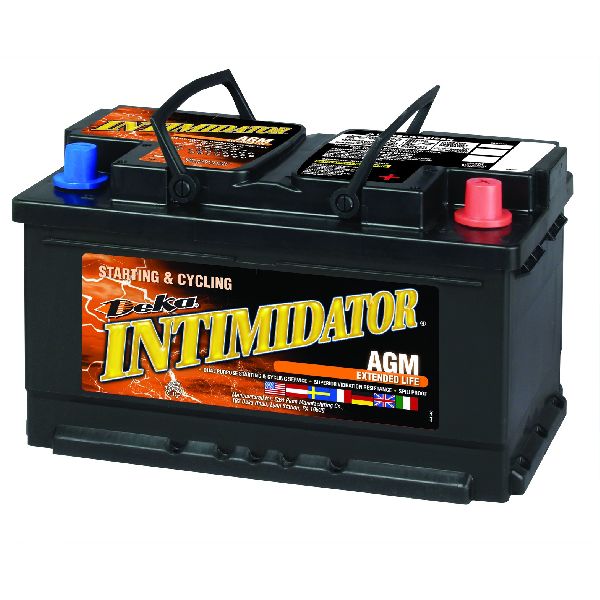
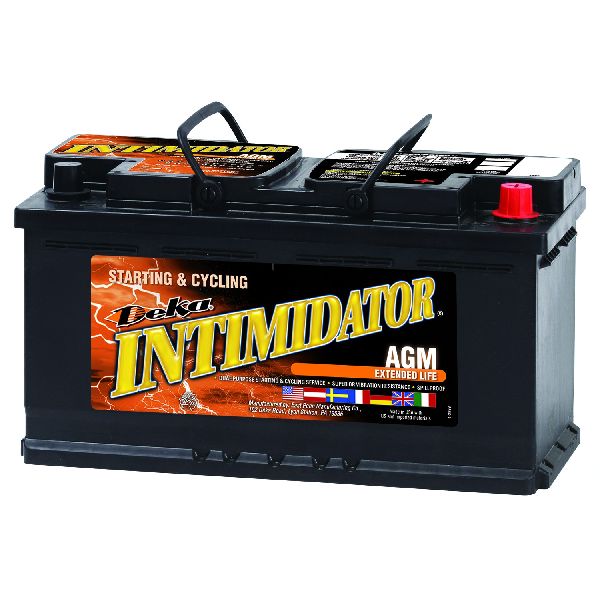
- AGM Batteries — One or both batteries failing is the most common cause of P2509. They should always be replaced in pairs.
- Battery Cable Set (Positive and Negative) — Corrosion can build up inside the cables where it is not visible, necessitating complete replacement. Part numbers differ between 2018 and 2019+ models.
Related Codes That Often Appear With This One
- P229F — Aftertreatment NOx Sensor Circuit Performance - Bank 1 Sensor 2. This and other emissions-related codes are listed alongside P2509 in TSB #18-061-20 REV. A, suggesting they can be triggered by voltage instability or are part of a related software update to improve fault logic.
- P207F — Reductant Quality Performance. Also listed in TSB #18-061-20 REV. A, indicating a potential link to PCM power issues or related software logic.
- P0401 — EGR System Performance. This code appears in TSB #18-061-20 REV. A with P2509, suggesting a connection through either electrical instability or a PCM software update.
- P2271 — O2 Sensor Signal Stuck Rich Bank 1 Sensor 2. This code can appear with P2509, likely due to the PCM receiving erratic power, which affects its ability to correctly interpret sensor data.
Technical Service Bulletins (TSBs) & Recalls
- Involves reprogramming the PCM with updated software to address a list of DTCs, including P2509. The update aims to improve diagnostic logic and prevent false codes from being set. It applies to 2018 Ram 2500/3500 trucks with the 6.7L Cummins engine.
- Though for a newer model year (2025), this TSB is relevant as it shows continued manufacturer effort to address P2509 via software. It specifically mentions 'Improvements to allow DTC P2509 faults to be cleared with wiTECH,' acknowledging the permanent code issue.
Platform-Specific Known Issues
- The provided NHTSA Technical Service Bulletins (#18-061-20 REV. A) lists P2509 as one of several codes that may be addressed by a PCM software update. The TSB's primary purpose is to reprogram the PCM with the latest software to fix a variety of issues, including false fault codes. If the electrical system checks out, a trip to the dealer for a reflash may be required.
- In some cases, the code may become a "permanent code" that cannot be cleared with a standard scanner after the repair is made. The vehicle's computer must complete a specific drive cycle and verify the fault is gone before it will clear the code. This has been a source of frustration for owners trying to pass smog inspections. TSB 18-020-25 REV. A for 2025 models specifically mentions software improvements to allow P2509 to be cleared with the dealer's wiTECH tool.
- A Reddit user with a 2021 Ram 3500 experienced a no-start and P2509. After parts-store testing showed the batteries were 'fine,' he replaced them anyway, which solved the problem, highlighting that standard tests can be misleading.
- A forum member on RamForum.com with an '18 model also had batteries test 'good' but found one was weak with a more thorough load test. Replacing both with AGM batteries solved his P2509 and no-start issue. He also noted that many fuses in the panel were not fully seated from the factory.
Mechanic-Grade Diagnostic Values
- PCM Minimum Operating Voltage — expected: > 6.2 Volts. Failure: Voltage dropping below 6.2V, even momentarily, will set the code.
- Battery Voltage (Key On, Engine Off) — expected: 12.4V - 12.8V. Failure: Voltage below 12.4V indicates a weak or discharged battery.
- Charging System Voltage (Engine Running) — expected: 13.8V - 14.4V. Failure: Voltage below 13.5V or above 15V indicates a faulty alternator or regulator.
- Resistance of PCM Fused B+ Circuit — expected: < 10.0 Ohms. Failure: Resistance greater than 10.0 Ohms indicates an open or high-resistance in the power feed wire to the ECM.
- Resistance of PCM Ground Circuit — expected: < 0.05 Ohms. Failure: Resistance greater than 0.05 Ohms from the PCM ground point to the negative battery terminal indicates a compromised ground strap or corrosion.
Hidden / Shadow Codes Worth Checking
- Permanent DTC (P-code): After a repair, the P2509 code may remain stored as a "Permanent DTC" even if the fault is gone. This code cannot be cleared with a standard scanner or by disconnecting the battery. (see via Visible on most standard OBD-II scanners, but it will not clear upon command. The only way to clear it is for the vehicle's computer to run and pass its internal self-tests over a series of specific drive cycles (e.g., 15 warm-up cycles and 200 miles driven for California smog purposes).)
Scan Tool Commands That Help
- Professional Scan Tool (e.g., wiTECH): Live Data Monitoring (PCM Voltage) — To monitor the PCM's power feed in real-time while wiggling harnesses and connections to try and induce the fault. This helps pinpoint intermittent opens or shorts.
- Professional Scan Tool (e.g., wiTECH): Powertrain Verification Test — This is a guided procedure run after a repair to confirm that the fault has been rectified and to allow the system to verify the fix, which is a necessary step before the Permanent DTC can begin its clearing process.
Wiring & Ground Locations
- Battery Crossover Cable — Connects the positive terminal of the driver-side battery to the positive terminal of the passenger-side battery.. This cable is a common failure point due to internal corrosion, which can cause voltage drops between the two batteries and destabilize the entire electrical system. The starter is typically powered by the driver's side battery while the alternator charges the passenger side, making this connection critical.
- Main Engine Ground — A large braided strap or cable connecting the engine block directly to the chassis or negative battery terminal.. A loose or corroded engine ground can cause intermittent electrical issues, including the P2509 code, as the PCM and other modules rely on it for a stable reference.
- Chassis/Fender Ground — Typically located on the driver's side inner fender, near the battery.. This is a primary ground point for the body and various modules. Corrosion here is common and can cause a host of electrical problems.
- Negative Terminal Amperage Sensor — Integrated into the negative battery terminal clamp on the driver's side battery.. On 2019+ models, this sensor monitors current flow. Modifying or incorrectly installing accessories can interfere with its reading, potentially causing charging system issues that could lead to voltage instability.
Real Owner Repair Stories
- Dodge Diesel Forum User (3rd Gen Ram (contextually relevant)) — Truck dies and restarts itself while driving in the cold. Eventually died and would crank but not start. Code P2509.
❌ Tried (didn't work) Cleaned and tightened all grounds. Replaced two 7-year-old batteries with new Optima Red Tops.
✅ What actually fixed it The issue persisted after replacing batteries that had previously load-tested as good. The strong implication from other users was that the problem was corrosion hidden inside the battery cables themselves, which was not visually apparent from the outside. - Reddit user r/ram_trucks (2019 Ram 3500) — No check engine light or drivability issues, but P2509 code present on scanner, causing a failed smog test in California.
❌ Tried (didn't work) Driving the truck 'a lot'. Replacing both batteries.
✅ What actually fixed it The issue was identified as a "Permanent DTC." The fix was not a part replacement, but performing the required drive cycle to clear the code from the computer's memory: driving over 200 miles and completing 15 warm-up cycles. This allowed the truck to pass the smog test even with the code historically present. - Turbo Diesel Register User (2003 Ram 5.9L) — P2509 after a low battery event. Extended crank time (3 seconds vs. instant). Dashboard voltmeter reads 11V at idle, while a multimeter at the battery posts reads 14.6V.
❌ Tried (didn't work) Replacing both batteries, redoing all battery grounds.
✅ What actually fixed it The user was advised that the crossover cable is a common point of failure due to internal corrosion. The discrepancy between the dash gauge and the actual battery voltage points to a communication or module-level problem that was likely initiated by the original voltage drop, even after the root cause (batteries/cables) was fixed.
When the Usual Fixes Don't Work
- In several documented cases, owners replaced both batteries with new, high-quality units, yet the P2509 code and its symptoms (stalling, no-start) persisted. This strongly refutes the idea that new batteries are a guaranteed fix. The subsequent successful repair often involved replacing the main battery cables (positive, negative, and crossover), which had developed high internal resistance from hidden corrosion that was not visible externally. This highlights that the cables themselves are as much of a primary failure point as the batteries.
OEM Part Supersession History
Varies by year→Aftermarket Cable Kits (e.g., Custom Battery Cables, Big 7 Kits)— Factory cables are prone to internal corrosion. Aftermarket kits often use heavier gauge (e.g., 2/0) pure copper wire and have better-sealed connections to prevent corrosion.
Heads up: Cable kits are specific to generation. A kit for a 2010-2018 (4th Gen) will not fit a 2019+ (5th Gen) truck correctly.Unknown starter nut P/N→06512544AA— The original nut used on the starter's B+ stud on some 2022 models provided a poor connection, leading to no-start or long crank conditions. The updated nut is more conductive.
Heads up: This applies specifically to a range of 2022 models as per TSB 08-006-23.
Model Year Variations Within This Range
- 2018 (4th Gen) vs 2019-2020 (5th Gen): The battery cable harnesses are different parts between these generations. Furthermore, the 2019+ trucks incorporate an amperage sensor into the negative battery terminal, which is not present on the 2018 models and affects how accessories should be wired.
Helpful Videos

We Have This Part in Stock


The information in this article is provided for general reference and educational purposes only. Vehicle specifications, procedures, and part compatibility can vary by production date, trim level, and region. Always consult your vehicle's factory service manual and verify part numbers before purchasing or performing repairs. Safety-critical components such as airbags, seat belts, and braking systems should be installed by a qualified professional.
- Ram 3500:
- 🧭 Diagnostic Flowchart
- 🎬 Helpful Videos
- 🛍️ Shop This Part
- What's Unique About the 2018-2020 Ram 3500
- Symptoms You May Notice
- Most Likely Causes
- Rare But Worth Checking
- Diagnosis Steps
- Parts You'll Likely Need
- Related Codes That Often Appear With This One
- Technical Service Bulletins (TSBs) & Recalls
- Platform-Specific Known Issues
- Mechanic-Grade Diagnostic Values
- Hidden / Shadow Codes Worth Checking
- Scan Tool Commands That Help
- Wiring & Ground Locations
- Real Owner Repair Stories
- When the Usual Fixes Don't Work
- OEM Part Supersession History
- Model Year Variations Within This Range
- 🎟️ Get 5% Off