

OBD-II Code P2538: Ignition Switch Accessory Position Circuit High
The Ultimate Guide to Meaning, Diagnosis, and Repair for P2538
- Code P2538 indicates your vehicle's accessory circuit is stuck in the 'ON' position, creating a parasitic draw that will drain a healthy battery in under 24 hours.
- A faulty ignition switch is the most frequent cause, accounting for the majority of P2538 codes, followed closely by improperly installed aftermarket stereos or alarms.
- On 2007-2014 Chrysler, Jeep, and Dodge vehicles, immediately test the Totally Integrated Power Module (TIPM), as stuck internal relays are a notorious cause of this exact failure.
- Never replace a dead battery associated with this code without first performing a parasitic draw test to confirm the drain is below the normal 85 milliamp threshold.
What Does P2538 Mean?
The Powertrain Control Module (PCM) or Body Control Module (BCM) detected an electrical fault in the ignition system. Specifically, the accessory circuit is showing high voltage when it should be off. This means the circuit receives power even with the ignition key removed. Consequently, components like the radio, power outlets, and interior lights remain active, rapidly draining the battery and causing a no-start condition.
Technical definition: The official SAE/OBD-II definition is "Ignition Switch Accessory Position Circuit High". This diagnostic trouble code (DTC) sets when the PCM or BCM detects a voltage signal from the ignition switch's accessory circuit above the manufacturer's specified threshold for the current key position (e.g., detecting 12V when the key is in the 'OFF' position and 0V is expected).
Can I Drive With P2538?
Yes, But With Caution. Yes, but it is a significant gamble. The immediate risk is a dead battery that leaves you stranded without warning. Code P2538 indicates a 'parasitic draw' where accessories stay powered when the car is off. Ignoring this destroys batteries, strains the alternator, and on Chrysler/Jeep models with a faulty TIPM, escalates to engine stalling while driving. Continuing to drive risks adding a $1,200 TIPM or $800 alternator replacement to your repair bill.
Common Causes
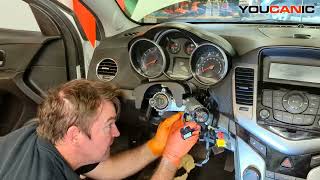
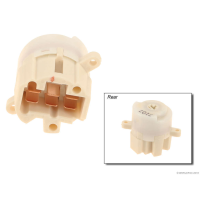
- Faulty Ignition Switch (Very Common) — The ignition switch is a mechanical component with electrical contacts. Over time, internal contacts wear out or corrode, fusing together and keeping the accessory circuit energized even when the key is removed.
- Improperly Installed Aftermarket Accessories (Common) — Remote starters, alarms, or stereos tapped into the accessory circuit backfeed voltage if wired incorrectly. This tricks the BCM into thinking the key is in the accessory position.
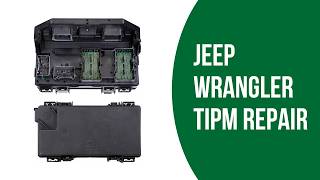
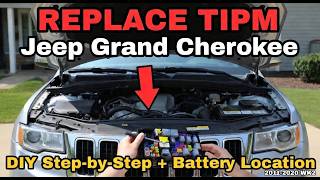
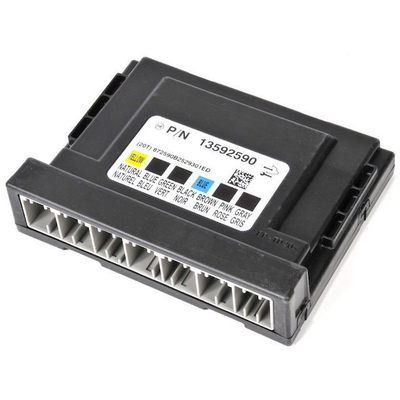
- Faulty Totally Integrated Power Module (TIPM) (Common) — On Chrysler, Jeep, and Dodge vehicles, the TIPM serves as a combination fuse box and control module. Internal relays stick in the 'on' position, creating a massive parasitic draw and logging P2538. 🎬 Watch: How to repair or replace a faulty Jeep TIPM
- Shorted or Damaged Wiring (Common) — Wiring harnesses within the steering column rub against moving parts. This friction wears away insulation, shorting the accessory signal wire directly to a constant 12V power source.
- Faulty Body Control Module (BCM) (Less Common) — An internal BCM failure, such as a burnt driver or shorted circuit board, prevents the module from shutting down accessory power or causes it to falsely report high voltage.
- Poor Ground Connections (Less Common) — A corroded or loose ground connection for the BCM creates a voltage differential. The BCM interprets this electrical instability as high voltage on the accessory circuit.
- Internal PCM/TCM Short Circuit (Rare) — The main Powertrain Control Module (PCM) or Transmission Control Module (TCM) develops an internal short, feeding voltage back onto a shared data or power bus.
Symptoms
- Dead Battery — The battery drains overnight or after short parking periods due to a continuous parasitic draw from active accessories.
- Accessories Stay On — The radio, 12V power outlets, or interior lights remain active after turning off the car and removing the key.
- Car Won't Start or Key is Hard to Turn — The ignition switch becomes mechanically stiff or loses intermittent electrical contact, making it difficult to turn the key or start the engine.
- Check Engine Light is On (also visible on scanner) — The Malfunction Indicator Lamp (MIL) illuminates to indicate the stored P2538 fault.
- Multiple Erratic Warning Lights (also visible on scanner) — A failing BCM or TIPM causes a cascade of unrelated errors, illuminating ABS, airbag, or traction control lights alongside the check engine light.
Diagnostic Flowchart
Tap your situation to follow the diagnostic path that matches what you're seeing on this code.
Common Fixes & Costs
- Replace Ignition Switch — Parts: $50-$250, Labor: $100-$200, ~1.5 hr book time (Intermediate)
- Remove or Re-wire Aftermarket Accessories — Parts: $0, Labor: $80-$200, ~1 hr book time (DIY)
- Replace Totally Integrated Power Module (TIPM) — Parts: $700-$1200, Labor: $150-$250, ~1 hr book time (Professional)
- Repair Wiring Harness — Parts: $10-$50, Labor: $150-$300, ~3 hr book time (Intermediate)
- Replace Body Control Module (BCM) — Parts: $500-$900, Labor: $200-$350 (includes programming), ~2.5 hr book time (Professional)
DIY vs Professional
- Replace Ignition Switch 🟢 Beginner
Tools: Screwdriver set, socket set, trim removal tools, multimeter. - Remove or Re-wire Aftermarket Accessories 🟢 Beginner
Tools: Wire cutters, electrical tape, flashlight. - Replace Totally Integrated Power Module (TIPM) 🟢 Beginner
Tools: Socket set (10mm, 13mm), flathead screwdriver. - Repair Wiring Harness 🟢 Beginner
Tools: Soldering iron, heat shrink tubing, wire strippers, multimeter, vehicle wiring diagram. - Replace Body Control Module (BCM) 🟢 Beginner
Tools: Socket set, trim removal tools, advanced bi-directional scan tool for programming.
Used vs. New Parts: Buying Guide
When a used part is worth it: Never buy a used ignition switch. For a BCM or TIPM, buy a professionally rebuilt and pre-programmed unit. Avoid junkyard modules, as they are VIN-locked and non-functional in a different vehicle.
Donor-vehicle mileage cap: roughly under 50000 miles for the part to have meaningful remaining life.
Donor quality checklist:
- For BCM/TIPM, always prefer a 'rebuilt' or 'remanufactured' unit over a 'used' one.
- Ensure the supplier pre-programs the module to your vehicle's VIN before shipping.
- Verify the part number matches exactly.
Decision logic:
- If The failed part is an ignition switch → Always buy a new OEM or high-quality aftermarket part.
- If The failed part is a BCM/TIPM on a vehicle >10 years old → A rebuilt, pre-programmed module offers the best balance of cost and reliability.
- If The failed part is a BCM/TIPM on a vehicle <5 years old → Buy a new OEM part to ensure compatibility and warranty.
Warranty tradeoff: Used junkyard parts typically have a 30-day warranty. Rebuilt modules often come with a 1-year to lifetime warranty. New OEM parts carry a 1-2 year warranty.
Worst-case if a used part fails: $500-$1000 if a used or improperly programmed module is installed, requiring repeat labor and a second part.
What Happens If You Wait — Timeline
- 0-2 weeks: Check Engine Light comes on with code P2538. The radio stays on after leaving the car. The battery dies if the car sits for more than 24-48 hours. (MPG impact: 0%% · Added cost: $0)
- 2 weeks - 3 months: Battery dies repeatedly, requiring frequent jump-starts. Constant deep cycling permanently damages the battery's internal plates through sulfation. (MPG impact: 0%% · Added cost: $150-$350 for a new battery.)
- 3-6 months: The alternator is under constant, heavy strain from recharging a deeply depleted battery. Excessive workload overheats internal components, leading to premature failure. (MPG impact: 0-2%% · Added cost: $600-$1000 for an alternator replacement.)
- 6+ months: Ongoing unstable voltage and jump-start spikes damage sensitive electronics. The BCM or TIPM fails from stress. The constant short-to-power poses a low-grade fire risk. (MPG impact: 0-2%% · Added cost: $850-$1500+ to replace a damaged BCM or TIPM.)
Cost of Not Fixing It
- 0-1 month: Repeatedly dead battery, requiring frequent jump-starts. (Added cost: $150-$350 for a replacement battery destroyed by deep cycling.)
- 1-6 months: Premature alternator failure due to excessive strain from recharging a deeply discharged battery. (Added cost: $600-$1000 for an alternator replacement, plus another new battery.)
- 6+ months: Progressive damage to sensitive control modules (BCM, TIPM) from unstable voltage and jump-start spikes. (Added cost: $850-$1500+ for BCM or TIPM replacement.)
Diagnosis Steps
- Verify the Fault and Check Freeze Frame Data
Use an OBD-II scanner to confirm P2538 is the active code. Review the freeze frame data to note the vehicle state (e.g., key position, battery voltage) at the exact moment the fault occurred.
Tools: OBD-II Scanner (Beginner) - Confirm the Parasitic Draw
Disconnect the negative battery terminal and connect a multimeter (set to 10A scale) in series. Wait up to 45 minutes for the vehicle to enter 'sleep mode'. A reading above 85 milliamps (0.085A) confirms a parasitic draw is actively killing the battery.
Tools: Digital Multimeter (Intermediate) - Perform a Visual Inspection for Aftermarket Devices
Inspect the steering column and under-dash area for aftermarket remote starters, alarms, or stereos. Look for T-taps or non-factory splices. Disconnect any aftermarket parts completely, clear the codes, and retest for the draw.
Tools: Flashlight, Basic hand tools (Beginner) - Test the Ignition Switch Accessory Circuit
Locate the accessory power wire at the ignition switch connector using a wiring diagram. Back-probe the wire with a multimeter set to DC volts. With the key OFF, voltage must be 0V. A reading of 12V confirms the circuit is stuck on.
Tools: Digital Multimeter, Vehicle-specific wiring diagram (Intermediate) - Isolate the Ignition Switch vs. the Wiring
Disconnect the ignition switch's main electrical connector. Probe the accessory circuit wire on the harness side. If 12V is still present, the fault is a short-to-power in the wiring harness. If the voltage drops to 0V, the ignition switch is internally shorted and requires replacement.
Tools: Digital Multimeter, Trim removal tools (Intermediate) - Analyze Live Data PIDs
Navigate to the BCM live data on an advanced scan tool. Monitor the 'Ignition Switch Position' PID. With the key removed, it must read 'Off'. If it reads 'Accessory', the BCM is actively seeing the fault, differentiating a wiring issue from an internal BCM failure.
Tools: Advanced Bi-directional Scan Tool (Advanced) - Inspect the BCM / TIPM
If the switch and wiring test good, inspect the BCM or TIPM connectors for water intrusion or corrosion. On Chrysler/Jeep models, a failing TIPM is the most likely culprit at this stage.
Tools: Advanced scan tool, Digital Multimeter (Professional) - Perform a Voltage Drop Test on the Ground Circuit
Set your multimeter to a low DC voltage scale. Connect the black lead to the negative battery post and the red lead to the BCM's main ground pin. With the key ON, a reading above 100mV (0.1V) indicates excessive ground resistance causing module confusion.
Tools: Digital Multimeter, Vehicle-specific wiring diagram (Advanced) - Use an Oscilloscope for Intermittent Faults
Connect a lab scope to the accessory signal wire and ground. Start the car, turn it off, and wiggle the wiring harness in the steering column. Voltage spikes appearing on the scope after the key is off pinpoint an intermittent short.
Tools: Automotive Oscilloscope (Lab Scope) (Advanced)
When This Code Triggers (Freeze-Frame Conditions)
- Ignition Status: OFF (The fault is logged when voltage is detected with the key off.)
- Accessory Circuit Voltage: > 5 Volts (Detecting significant voltage when 0V is expected.)
- Engine RPM: 0 (The engine is not running when the fault state is present.)
- Battery Voltage: 11.8V - 12.5V (Reflects a battery at rest, not actively being charged by the alternator.)
Related Codes
- P2537 — Ignition Switch Accessory Position Circuit Low. P2538 is a short to power; P2537 is an open circuit or short to ground.
- P2530 — Ignition Switch Run Position Circuit. Seeing P2530 with P2538 confirms the ignition switch has an internal multi-circuit failure.
- U0140 — Lost Communication With Body Control Module. If present with P2538, the BCM is failing to communicate and is the likely root cause.
- P0562 — System Voltage Low. This is a symptom of P2538. The parasitic draw drains the battery, triggering P0562.
Climate & Environmental Factors
- High Humidity: Moisture penetrates connectors and modules, accelerating corrosion on pins and circuit boards. This corrosion bridges circuits, causing shorts-to-power and incorrect voltage readings.
- Cold Weather: Cold weather dramatically exposes the dead battery symptom. A parasitic draw that only weakens a battery in summer will completely drain it and prevent a start in winter.
How to Talk to a Mechanic About This Code
Say this: "I have a P2538 code and my battery keeps dying. I need a diagnostic for a parasitic draw. I'd like you to measure the draw in milliamps and then isolate the specific circuit causing it."
This signals you understand the problem isn't just a bad battery. It directs the technician to perform a specific, correct diagnostic procedure rather than guessing or replacing parts.
Avoid saying:
- 'My battery keeps dying, I think I need a new one.'
- 'My check engine light is on, can you just fix it?'
- 'The car is acting weird, just do whatever it takes.'
Questions to ask before authorizing the repair:
- What was the parasitic draw reading in milliamps after the modules went to sleep?
- How did you trace the draw to that specific component?
- If you're recommending a module replacement, have you ruled out the ignition switch and wiring first?
- Does the estimate for a module replacement include the cost of programming it to my vehicle?
- Can you provide me with the old part when the repair is complete?
Where to Take It: Dealer vs Independent vs Chain
- Dealer:
A necessary choice if a module replacement requiring proprietary software is confirmed. Otherwise, a more expensive option.
Best for: Vehicles under warranty., Complex module (BCM, TIPM) replacements requiring manufacturer-specific programming tools., Well-documented manufacturer-specific issues.
Downsides: Highest labor rates., May default to expensive module replacement without testing cheaper components like the ignition switch. (Typical cost: +50% vs. baseline) - Independent Shop:
Best overall fit. A good independent auto electric specialist diagnoses and fixes most causes of P2538 more affordably than a dealer.
Best for: Out-of-warranty vehicles where cost is a factor., Diagnosing faulty ignition switches, wiring shorts, or aftermarket accessory issues., Shops specializing in auto electrics.
Downsides: Shop quality and diagnostic skill vary greatly; look for ASE certification., May lack specific tools to program a new BCM/TIPM. (Typical cost: +0% vs. baseline) - Chain Shop:
Avoid for P2538 diagnosis. They treat the symptom (dead battery) but not the underlying electrical fault.
Best for: Battery testing and replacement (only after the draw is fixed).
Downsides: Technicians often lack advanced electrical diagnostic training., High risk of misdiagnosis, leading to unnecessary replacement of the battery or alternator. (Typical cost: -10% vs. baseline)
When to Walk Away From the Repair
If the estimated repair cost exceeds 50% of the car's private-party value, seriously consider selling or trading in the vehicle instead of repairing it.
- Car worth $3000, fix is $1500: Walk away. The repair cost is 50% of the car's value, and for an electrical issue, other problems may be lurking.
- Car worth $10000, fix is $450: Fix it. A $450 ignition switch replacement is well below the threshold and a common repair.
- Car worth $5000, fix is $1300: Borderline. A BCM/TIPM replacement is a significant investment. Get a second opinion and explore costs for a rebuilt module before proceeding.
What Scan Tool You Need for This Code
Minimum: A scanner that reads live data from the Body Control Module (BCM). A basic code reader is not enough.
To diagnose P2538, you must see what the BCM sees. A scanner with live data shows the 'Ignition Switch Position' PID. If it reads 'Accessory' when the key is out, you confirm the electrical fault. This is impossible with a basic reader.
Budget: BlueDriver Pro (~$99) — Reads and clears P2538. Accesses and displays live data from the BCM on many GM, Ford, and Chrysler vehicles.
Mid-range: Foxwell NT510 Elite (~$180) — Provides manufacturer-specific diagnostics. Reads live data from the BCM reliably and offers limited bidirectional controls to test components.
Professional: Autel MaxiCOM MK808 (~$500) — Offers extensive bidirectional controls. Commands relays and modules on and off directly from the scanner, isolating the source of a parasitic draw without pulling fuses.
Rent vs buy: Buy. Diagnosing a parasitic draw is time-consuming, making a free tool loan impractical. Owning a budget-friendly scanner is a smart investment for electrical issues.
How to Clear the Code After You Fix It
- Reconnect battery if disconnected
- Use an OBD-II scan tool to clear diagnostic trouble codes
- Perform a complete OBD-II drive cycle to run all readiness monitors
Drive cycle (~30 minutes): Start the vehicle from a cold start (after sitting 8+ hours). Idle for 2-3 minutes. Drive at a steady highway speed (around 55 mph) for 10-15 minutes. Then, perform 15 minutes of mixed city/suburban driving with stop-and-go traffic. Allow the vehicle to cool down.
Readiness monitors affected: All monitors are reset to 'Not Ready' when codes are cleared., Catalyst and Evaporative (EVAP) monitors are often the last to complete.
Before emissions retest: drive at least 100 miles to fully set monitors.
Watch out for:
- Clearing the code with a scanner resets all readiness monitors, causing an immediate emissions test failure if a drive cycle is not completed.
- The code returns instantly if the underlying electrical short has not been properly repaired.
Will This Fail Emissions / State Inspection?
Yes — this code typically fails an OBD-II emissions inspection.
- California: An active Check Engine Light from code P2538 is an automatic failure. After repair, all OBD readiness monitors must be set to 'Ready' before a retest, requiring 100+ miles of driving.
- New York: The NYS DMV emissions inspection includes an OBD-II scan. An illuminated MIL for any P-code results in an automatic test failure.
- Texas: In the 17 counties requiring emissions testing, an active P2538 code and illuminated Check Engine Light causes an automatic failure.
Most Commonly Affected Vehicles
- Chevrolet Cruze, Malibu, Equinox, HHR (2008-2016) — Commonly linked to ignition switch or BCM failures. For 2011-2015 Cruze models, inspect the negative battery cable for a poor connection per GM bulletin 14311B.
- Jeep Grand Cherokee, Wrangler (2007-2014) — Frequently caused by a faulty Totally Integrated Power Module (TIPM). The 2011-2013 Grand Cherokee is particularly affected by stuck fuel pump relays causing parasitic drains.
- Ford F-150, Escape, Focus (2004-2014) — The electrical switch portion of the ignition switch fails independently of the mechanical lock cylinder. Replace only the electronic switch on the back of the housing.
- Dodge Grand Caravan, Ram 1500, Durango (2008-2016) — Highly susceptible to TIPM failure, manifesting as P2538 due to stuck internal relays causing a constant power draw.
- GMC Acadia, Sierra, Terrain (2007-2014) — Shares platforms with Chevrolet vehicles and suffers from similar BCM failures and serial data network problems.
- Volkswagen Jetta, Golf, Passat (2005-2015) — The Comfort Control Module (CCM) sits under the driver's carpet. Clogged drains flood the module, causing corrosion and battery drain misdiagnosed as a bad ignition switch.
- Subaru Forester, Outback, Impreza (2008-2017) — Typically caused by a faulty ignition switch or a wiring short introduced during the installation of aftermarket audio systems.
- Renault Clio, Megane, Scenic (2002-2012) — The ignition switch assembly is a common point of failure due to mechanical wear and tear.
Manufacturer-Specific Notes
- Chrysler/Jeep/Dodge: The TIPM is the primary suspect. Internal relays stick, creating a constant power draw. Rebuilt units are the most cost-effective fix.
- General Motors (GM): On 2011-2015 Chevy Cruze models, inspect the negative battery cable connection. GM bulletin 14311B notes an insufficient crimp causes erratic electrical codes mimicking module failure.
- Ford: The electrical portion of the ignition switch fails independently of the mechanical lock cylinder. Replace only the electronic switch on the back of the housing.
- Volkswagen/Audi: The Comfort Control Module (CCM) sits under the driver's carpet. Clogged drains flood the module, causing corrosion and battery drain misdiagnosed as a bad ignition switch.
Real Owner Stories
2012 Chevy Cruze with 110K miles
Owner found the battery dead every morning. Radio would sometimes stay on after removing the key.
What they tried:
- Replaced the battery, but the new one also died overnight.
- Performed a parasitic draw test and found a draw of over 1 amp.
- Pulled fuses one by one and discovered the draw disappeared when the radio/infotainment fuse was pulled.
Outcome: The owner traced the issue to a faulty ignition switch keeping the accessory circuit powered. Replacing the ignition switch resolved the parasitic draw and the P2538 code.
Lesson: Don't assume a dead battery is just a bad battery. A parasitic draw test is essential. Isolating the circuit by pulling fuses is a classic, effective technique.
2011 Jeep Grand Cherokee at 85K miles
Car wouldn't start intermittently. Experienced strange electrical issues like wipers activating on their own. Code P2538 was present.
What they tried:
- A mechanic tested the ignition switch and wiring harness, finding both in good condition.
- Attention turned to the Totally Integrated Power Module (TIPM).
Outcome: The owner sent the original TIPM to a repair service specializing in rebuilding them. The service replaced the faulty internal relays for $250. Reinstalling the rebuilt TIPM eliminated all electrical problems and the code.
Lesson: On Chrysler/Jeep/Dodge vehicles, the TIPM is a primary suspect for P2538. Specialized repair services fix the root cause (bad relays) for a fraction of the cost of a new module.
2009 MINI Cooper with 70K miles
Immediately after installing an aftermarket radio, the owner experienced a dead battery and a cascade of warning lights on startup.
What they tried:
- Boosted the car, which cleared lights temporarily, but they returned after sitting.
- Double-checked all wiring connections for the new stereo.
- Discovered the aftermarket wiring harness was not correctly communicating with the CAN bus system.
Outcome: Installing a higher-quality wiring harness adapter with a proper CAN bus interface allowed the car's modules to go to sleep correctly, eliminating the parasitic draw.
Lesson: Installing aftermarket electronics requires proper CAN bus adapters. Splicing directly into ignition wires disrupts the vehicle network and causes widespread electrical codes.
How to Prevent This Code From Triggering
- Keep cabin dry and address water leaks immediately (Seasonally) — Clean sunroof drains and cowl vents to prevent water from pooling under carpets. Moisture corrodes module connectors and circuit boards, leading to shorts.
- Use dielectric grease on important electrical connectors (When servicing related components) — Applying dielectric grease to connector pins seals out moisture and prevents corrosion that causes high resistance or shorts.
- Ensure professional installation of aftermarket electronics (During any modification) — Insist installers use vehicle-specific wiring harnesses and CAN bus adapters to prevent back-feeding voltage onto the data network.
- Periodically clean battery terminals and check ground connections (Every oil change) — Corroded terminals or loose chassis grounds create unstable voltages. A clean, tight connection ensures stable system voltage and prevents module confusion.
- Avoid leaving devices plugged into 'always on' power outlets (Daily habit) — Leaving chargers plugged in contributes to parasitic draw, masking or worsening the battery drain caused by the underlying fault.
Frequently Asked Questions
What is a 'parasitic draw' and how does it relate to P2538?
A parasitic draw is an electrical drain on the battery that persists after the vehicle is turned off. Code P2538 signifies an abnormal draw where the accessory circuit is stuck on. This causes a massive drain that depletes a healthy battery overnight.
What are the most common misdiagnosis mistakes for P2538?
The most common mistake is replacing the dead battery without diagnosing the underlying draw. Mechanics also frequently overlook poorly installed aftermarket accessories or replace the ignition switch when the actual fault is a wiring short.
Can a bad battery cause code P2538?
No, a bad battery does not cause P2538. The relationship is reversed: the constant power drain indicated by P2538 destroys the battery.
Is it expensive to fix code P2538?
Costs range from $80 to remove a faulty aftermarket accessory to $450 for a new ignition switch. If the Body Control Module (BCM) or TIPM failed, repairs often exceed $1,200 due to part costs and programming fees.
Can I just clear the code and keep driving?
You can clear it, but the code returns immediately because the electrical short is a hard fault. Continuing to drive guarantees you will be stranded with a dead battery.
Can a bad ground wire really cause this code?
Yes. A poor ground connection for the Body Control Module causes floating voltages and erratic behavior. The module misinterprets this electrical noise as high voltage on the accessory circuit, logging P2538.
Do I need a new key if I replace the ignition switch?
Usually, no. The electronic ignition switch is typically a separate component from the mechanical lock cylinder. Replacing just the electronic switch allows you to keep your original keys.
Key Takeaways
- Code P2538 indicates your vehicle's accessory circuit is stuck in the 'ON' position, creating a parasitic draw that will drain a healthy battery in under 24 hours.
- A faulty ignition switch is the most frequent cause, accounting for the majority of P2538 codes, followed closely by improperly installed aftermarket stereos or alarms.
- On 2007-2014 Chrysler, Jeep, and Dodge vehicles, immediately test the Totally Integrated Power Module (TIPM), as stuck internal relays are a notorious cause of this exact failure.
- Never replace a dead battery associated with this code without first performing a parasitic draw test to confirm the drain is below the normal 85 milliamp threshold.
Helpful Videos
Shop the Parts Behind P2538
Below are the parts most often responsible for code P2538, ranked by how frequently each one is the actual culprit (per the diagnosis above). Tap any to see what we have for your vehicle.


The information in this article is provided for general reference and educational purposes only. Vehicle specifications, procedures, and part compatibility can vary by production date, trim level, and region. Always consult your vehicle's factory service manual and verify part numbers before purchasing or performing repairs. Safety-critical components such as airbags, seat belts, and braking systems should be installed by a qualified professional.
- 🧭 Diagnostic Flowchart
- 🎬 Helpful Videos
- 🛍️ Shop This Part
- What Does P2538 Mean?
- Can I Drive With P2538?
- Common Causes
- Symptoms
- Common Fixes & Costs
- DIY vs Professional
- Used vs. New Parts: Buying Guide
- What Happens If You Wait — Timeline
- Cost of Not Fixing It
- Diagnosis Steps
- When This Code Triggers (Freeze-Frame Conditions)
- Related Codes
- Climate & Environmental Factors
- How to Talk to a Mechanic About This Code
- Where to Take It: Dealer vs Independent vs Chain
- When to Walk Away From the Repair
- What Scan Tool You Need for This Code
- How to Clear the Code After You Fix It
- Will This Fail Emissions / State Inspection?
- Most Commonly Affected Vehicles
- Manufacturer-Specific Notes
- Real Owner Stories
- 2012 Chevy Cruze with 110K miles
- 2011 Jeep Grand Cherokee at 85K miles
- 2009 MINI Cooper with 70K miles
- How to Prevent This Code From Triggering
- Frequently Asked Questions
- What is a 'parasitic draw' and how does it relate to P2538?
- What are the most common misdiagnosis mistakes for P2538?
- Can a bad battery cause code P2538?
- Is it expensive to fix code P2538?
- Can I just clear the code and keep driving?
- Can a bad ground wire really cause this code?
- Do I need a new key if I replace the ignition switch?
- Key Takeaways
- 🎟️ Get 5% Off