

OBD-II Code P2546: Torque Management Request Signal 'A' Low
What P2546 means, why it triggers, and how to fix it
- Code P2546 indicates the electrical signal from the transmission computer to the engine computer is too weak, forcing the vehicle into a protective limp mode.
- Always inspect the main engine-to-chassis ground strap first; a corroded $15 ground wire is the most frequent cause of this code.
- Do not replace the Transmission Control Module (TCM) until a specialized shop verifies you do not simply need a $150 software update.
- Driving with P2546 for more than a few weeks causes cumulative mechanical damage from harsh shifting, risking a $3,000+ transmission rebuild.
What Does P2546 Mean?
The engine computer (ECM) and transmission computer (TCM) are failing to communicate. The TCM asks the engine to briefly reduce power for a smooth gear shift, but the ECM receives a weak (low voltage) signal. The computer limits engine power to protect the transmission from unsynchronized shifting damage.
Technical definition: Torque Management Request Input Signal 'A' Low. The Engine Control Module (ECM) detects the voltage signal from the Transmission Control Module (TCM) on circuit 'A' is below the manufacturer's specified range.
Can I Drive With P2546?
Yes, But With Caution. You can drive, but limit it to a few days. The vehicle enters a reduced power state (limp mode) and shifts harshly. This harsh shifting puts severe stress on internal transmission components like clutch packs and gear sets. Ignoring the issue turns a $50 wiring repair into a $3,000 transmission rebuild.
Common Causes
- Damaged Wiring or Corroded Connectors (Very Common) — Wires connecting the ECM and TCM suffer damage from vibration, heat, or abrasion. Connectors corrode from moisture, increasing resistance and causing the voltage to drop below the acceptable threshold. This is the most frequent cause.
- Poor Ground Connection (Very Common) — A corroded, loose, or broken ground strap for the engine, transmission, or a control module is a primary culprit. Modules rely on a clean ground reference to interpret voltage. A bad ground causes the ECM to misread a healthy signal as low.
- Outdated Control Module Software (Common) — Manufacturers release software updates to adjust operating parameters. Outdated software on the ECM or TCM is often too sensitive, incorrectly flagging a normal voltage fluctuation as a fault and triggering the code.
- Internal Transmission Mechanical Failure (Less Common) — On vehicles with known transmission issues (like Nissan CVTs), an internal mechanical problem such as a failing valve body causes the TCM to constantly request torque reduction. P2546 sets alongside codes for the primary mechanical fault.
- Failing Control Module (TCM or ECM) (Less Common) — The TCM or ECM fails internally due to heat, vibration, or electronic faults. A failing TCM sends a persistently weak signal, while a failing ECM cannot correctly read an otherwise valid signal.
- Low Battery Voltage (Rare) — A weak battery causes system-wide low voltage, leading to communication errors between modules and setting this code as a secondary fault.
- Interference from Aftermarket Accessories (Rare) — Improperly installed aftermarket electronics (remote starters, LED lighting) introduce electrical noise onto the CAN bus data network, interfering with sensitive communication signals.
Symptoms
- Check Engine Light On — The Malfunction Indicator Lamp illuminates on the dashboard immediately after the fault is detected.
- Reduced Engine Power / Limp Mode — The vehicle feels sluggish, refuses to accelerate quickly, and may display a 'POWER LOSS' or wrench warning light. This is a pre-programmed protective mode.
- Harsh or Jerky Shifting — Without the engine properly reducing torque, gear changes feel rough, abrupt, or like the transmission is banging into gear.
- Juddering or Vibration During Acceleration — A shudder or vibration is felt under light throttle, often described as driving over rumble strips.
Diagnostic Flowchart
Tap your situation to follow the diagnostic path that matches what you're seeing on this code.
Common Fixes & Costs
- Repairing Damaged Wiring or Connectors — Parts: $10-$50, Labor: $125-$500, ~1.5 hr book time (Intermediate)
- Cleaning or Replacing Main Ground Connections
— Parts: $5-$30, Labor: $75-$150, ~0.8 hr book time
(Beginner)
: OEM - Updating/Reprogramming Control Module Software — Parts: $0, Labor: $120-$250, ~1.2 hr book time (Professional)
- Replacing the Transmission Control Module (TCM)
— Parts: $300-$900, Labor: $150-$400, ~2.5 hr book time
(Professional)
: OEM
: OEM - Replacing the Engine Control Module (ECM)
— Parts: $500-$1500, Labor: $150-$300, ~1.5 hr book time
(Professional)
: OEM
Used vs. New Parts: Buying Guide
When a used part is worth it: For high-cost electronic modules like a TCM or ECM on an older, high-mileage vehicle, a used part from a reputable dismantler is cost-effective. It makes sense when a new OEM part is a significant fraction of the vehicle's total value.
Donor-vehicle mileage cap: roughly under 100000 miles for the part to have meaningful remaining life.
Donor quality checklist:
- Verify the donor vehicle was not scrapped due to fire, flood, or an electronic-damaging event.
- Match the part number exactly. A single digit difference means incompatibility.
- Purchase from a seller offering a 30-90 day warranty to protect against dead-on-arrival parts.
Decision logic:
- If The part is known to have a high failure rate (e.g., Ford DPS6 TCM) AND an extended warranty or updated new part is available → Buy new; a used part is likely to have the same inherent defect.
- If Vehicle is over 10 years old or 150,000 miles AND the new part costs over $800 → A used part is a reasonable gamble, provided it can be programmed.
- If The part requires complex VIN programming and security relearning → Factor in $150-$300 for dealer/specialist programming costs, which applies to both new and used modules.
Warranty tradeoff: Used parts typically come with a 30-90 day warranty covering only the part. New aftermarket parts offer 1-year to limited lifetime warranties. New OEM parts carry a 1-2 year warranty when installed by a dealer.
Worst-case if a used part fails: $400-$800 if a used module is faulty or cannot be programmed, covering repeat labor and diagnostic fees.
What Happens If You Wait — Timeline
- 0-1 month: Check Engine Light is on. Vehicle enters limp mode with reduced power. Shifting becomes harsh or jerky. (MPG impact: 5-10%% · Added cost: $20-$60 in wasted fuel.)
- 1-4 months: Constant harsh shifting causes accelerated wear on transmission clutch packs and internal solenoids. Engine and transmission mounts absorb extra shock, leading to premature wear. (MPG impact: 10-15%% · Added cost: $500-$1,200 for potential damage to the valve body or solenoids.)
- 4-8 months: Clutch surfaces are significantly worn from high-pressure shifts. The transmission begins to slip, shudder, or make grinding noises. Transmission mounts fail. (MPG impact: 15-20%% · Added cost: $1,200-$2,500 as clutch pack replacement becomes necessary.)
- 8+ months: Catastrophic internal transmission failure. Cumulative stress breaks hard parts like gears or bands. The transmission fails to engage any gear. (MPG impact: N/A (vehicle likely undrivable)% · Added cost: $3,000-$7,000+ for a complete transmission rebuild or replacement.)
Cost of Not Fixing It
- 0-1 month: Annoyance from limp mode and harsh shifting. Expect a 5-10% decrease in fuel economy due to inefficient engine operation and lack of overdrive. (Added cost: $20-$50 in extra fuel costs.)
- 1-6 months: Increased wear on transmission clutches, bands, and gearset surfaces from repeated harsh shifts. Engine and transmission mounts wear out from the shock. (Added cost: $500-$1,500 for potential solenoid or valve body damage.)
- 6+ months: Catastrophic internal transmission failure. Cumulative stress breaks hard parts or burns out clutch packs, requiring a full rebuild or replacement. (Added cost: $3,000-$7,000+)
Diagnosis Steps
- Check for Other Codes
Use an OBD-II scanner to read codes from all modules. Codes like P0700 (TCM Malfunction), 'U' codes (Network Communication), or manufacturer-specific transmission codes are critical clues to the root cause.
Tools: OBD-II Scanner (Beginner) - Inspect the Wiring Harness and Grounds
Visually inspect all wiring between the TCM and ECM for chafing, melting, or broken wires. Locate and inspect the main engine-to-chassis and battery-to-chassis ground straps for corrosion or looseness.
Tools: Flashlight, Socket Set (Beginner) - Check for Software Updates
Contact a dealership or a well-equipped independent shop to check for Technical Service Bulletins (TSBs) and available software updates for the ECM or TCM. This is a highly common fix if no physical faults are found.
Tools: Dealer-level Scan Tool or J2534 Pass-Thru Device (Professional) - Check Live Data
Monitor the live data parameter for 'Torque Request Signal A'. A healthy signal is a steady voltage between 4.0-5.0 volts when not shifting. A reading consistently under 2.0V confirms the low signal condition.
Tools: Advanced OBD-II Scanner (Intermediate) - Ground Circuit Voltage Drop Test
Set a multimeter to DC millivolts (mV). Connect the black lead to the negative battery terminal. With the engine running, touch the red lead to the transmission case, then to the engine block. A reading above 100mV indicates excessive resistance requiring repair.
Tools: Multimeter (Advanced) - Test the Signal Circuit Voltage
Identify the Torque Request Signal 'A' wire at the ECM connector using a wiring diagram. Back-probe the connector with a multimeter set to DC volts. A significant discrepancy between this reading and the scanner's live data points to a wiring issue.
Tools: Multimeter, Vehicle-Specific Wiring Diagram (Advanced) - CAN Bus Network Integrity Test
Disconnect the battery. Set a multimeter to Ohms (Ω). At the OBD-II port, measure resistance between Pin 6 and Pin 14. A healthy network reads 60 Ω. A reading of 120 Ω indicates an open circuit or missing terminating resistor.
Tools: Multimeter (Professional) - Oscilloscope Signal Analysis
Use an oscilloscope to view the Torque Request Signal. A healthy PWM signal shows a 5V square wave with a 90% duty cycle at idle. Low amplitude (peaking at 2V) or a distorted waveform confirms a fault in the wiring or TCM.
Tools: Automotive Oscilloscope, Wiring Diagram, Back-probe Pins (Professional) - Test Control Modules
If all wiring, grounds, and software are good, suspect a faulty module. This requires substituting a known-good module, a task requiring professional programming and security procedures.
Tools: Advanced Diagnostic Equipment (Professional)
When This Code Triggers (Freeze-Frame Conditions)
- Engine Coolant Temp: 180-205°F (The fault sets when the engine is fully warmed up and has been running for some time.)
- RPM: 1200-2500 RPM (Triggers under light to moderate acceleration or when maintaining a steady speed.)
- Engine Load: 25-60% (Occurs during normal driving conditions when the transmission prepares to shift or completes a shift.)
- Vehicle Speed: 30-60 mph (Logged during city or highway cruise conditions where the system actively manages torque.)
Related Codes
- P0700 — General Transmission Control System Malfunction. The TCM requests the ECM to turn on the Check Engine Light. P2546 is the specific problem the TCM is reporting. Scan the TCM for more specific codes.
- U0100 — Lost Communication With ECM/PCM. P2546 indicates a weak signal, while U0100 indicates a completely dead signal. U0100 points to a cut wire or a completely failed module.
- P0746 — Pressure Control Solenoid 'A' Performance. Common on Nissan CVTs alongside P2546. P0746 indicates a mechanical fault inside the transmission, causing the TCM to request torque reduction. P0746 is the root cause.
- P2544 — Torque Management Request Input Signal 'A'. The counterpart to P2546. P2544 indicates the signal voltage is too high (short to power), whereas P2546 means it is too low.
Climate & Environmental Factors
- High Humidity / Rain: Moisture seeps into connectors, wiring harness looms, and unsealed control modules, causing corrosion on copper pins. This corrosion creates high resistance, dropping the signal voltage and triggering P2546.
- Cold Climates / Road Salt ('Rust Belt'): Road salt dramatically accelerates corrosion on wiring, connectors, and ground straps. Cold temperatures make old wire insulation brittle and prone to cracking, allowing moisture to enter.
How to Talk to a Mechanic About This Code
Say this: "I have a check engine light on with a P2546 code, and the car is in limp mode with harsh shifting. I'd like to schedule a diagnostic appointment. Based on my research, this is often a wiring, ground, or software issue. Please start by checking for TSBs, software updates, and performing a voltage drop test on the main ground circuits before quoting a control module replacement."
This signals to the shop that you are an informed customer. It directs them to follow a logical, cost-effective diagnostic path and prevents them from immediately jumping to the most expensive conclusion, like a failed TCM.
Avoid saying:
- 'My check engine light is on, can you look at it?'
- 'The transmission is acting weird, just fix it.'
- 'Do whatever you think is best.'
Questions to ask before authorizing the repair:
- Did you check for any manufacturer warranty extensions or TSBs related to this code for my VIN?
- If you are recommending a module replacement, can you confirm that you've ruled out wiring and grounds? Specifically, what was the result of the ground circuit voltage drop test?
- If the cause was a wiring issue, can you show me the damaged section?
- What is the warranty on both the parts and labor for this specific repair?
Where to Take It: Dealer vs Independent vs Chain
- Dealer:
Recommended, especially for Ford, Nissan, and VW owners where this code is linked to known, often warrantied, issues. They are the best-equipped for required software updates.
Best for: Vehicles under warranty or with a known manufacturer-specific TSB or warranty extension., Complex software updates that independent shops cannot perform., When you want a guaranteed OEM part and brand-specific expertise.
Downsides: Highest labor rates, often 1.5-2x an independent shop., May be quicker to replace a whole module assembly rather than diagnose a simpler component fault. (Typical cost: +50% vs. baseline) - Independent Shop:
Good fit, but you must choose a shop that specializes in automotive electronics or has a technician known for strong electrical diagnostic skills.
Best for: Out-of-warranty vehicles where the cause is likely a common wiring or ground fault., Building a long-term relationship with a trusted mechanic., Cost-sensitive repairs.
Downsides: Quality and diagnostic capabilities vary widely; must find a shop with strong electrical skills., May not have access to the latest manufacturer software or be aware of all TSBs. (Typical cost: +0% vs. baseline) - Chain Shop:
AVOID. This code requires advanced diagnostic procedures that are well outside the scope of a typical chain repair shop.
Best for: Simple, routine maintenance like oil changes, tires, and brake pads.
Downsides: Technicians typically lack the specialized training and equipment for complex electrical diagnosis., High potential for misdiagnosis, leading to unnecessary and expensive part replacements., Business model often encourages upselling. (Typical cost: -10% vs. baseline)
When to Walk Away From the Repair
If the total estimated repair cost exceeds 40-50% of your car's current private-party value, consider selling it. For cars over 150,000 miles, lower this threshold to 30-40%.
- Car worth $5000, fix is $2500: Borderline. The repair is 50% of the car's value. Get a second opinion and evaluate the car's overall health before proceeding.
- Car worth $15000, fix is $1200: Fix it. The repair cost is well below the threshold and is a reasonable investment to keep a more valuable car on the road.
- Car worth $3000, fix is $2200: Walk away. The repair cost is over 70% of the vehicle's value. It is not a sound financial decision.
What Scan Tool You Need for This Code
Minimum: A scanner that reads and clears codes from the Transmission Control Module (TCM), not just the engine, and displays live data streams for specific transmission PIDs.
A basic $20 reader only shows the P2546 code from the engine computer. It cannot access the TCM to see crucial codes (like P0700) or view the live voltage signal causing the fault.
Budget: Ancel AD310 / TOPDON Artidiag 600S (~$60) — Basic scanners read engine codes but cannot access the TCM to see crucial transmission data required for a full diagnosis.
Mid-range: Foxwell NT510 Elite / Innova 5610 (~$180) — Accesses all modules including the TCM, graphs live data to see the torque request signal voltage, and offers limited bidirectional tests.
Professional: Autel MaxiCOM MK808 / Launch X431 Series (~$500) — Provides full OE-level diagnostics, bidirectional control, and programming capabilities required if replacing a TCM or ECM.
Rent vs buy: For P2546, a free rental scanner from a parts store is often too basic. Buying a mid-range scanner is a wise investment for DIYers. Otherwise, pay the diagnostic fee at a professional shop.
How to Clear the Code After You Fix It
- Reconnect battery if it was disconnected for the repair.
- Use an OBD-II scan tool to perform the 'Clear Codes' or 'Reset DTCs' function.
- Perform a complete OBD-II drive cycle to allow readiness monitors to run.
Drive cycle (~30 minutes): Start the vehicle from a cold start (sitting over 8 hours). Let it idle for 2-3 minutes. Drive in stop-and-go city traffic for 10-15 minutes, including several accelerations and decelerations. Drive for 10 minutes at a steady highway speed between 55-65 mph. Allow the vehicle to cool down completely.
Readiness monitors affected: Comprehensive Component Monitor, Catalyst Monitor, Evaporative System Monitor
Before emissions retest: drive at least 100 miles to fully set monitors.
Watch out for:
- Disconnecting the battery clears the code but resets all readiness monitors to 'Not Ready', causing an automatic emissions test failure.
- The code returns immediately if the underlying electrical or software fault is not repaired.
Will This Fail Emissions / State Inspection?
Yes — this code typically fails an OBD-II emissions inspection.
- California: An illuminated Check Engine Light is an automatic failure. After clearing the code, all readiness monitors must be set to 'Ready', requiring a specific 100-200 mile drive cycle before a retest.
- New York: The NYS DMV vehicle inspection includes an OBD-II scan. An active P2546 code causes an automatic failure for the emissions portion.
- Texas: In the 17 counties requiring emissions testing, an illuminated Check Engine Light is an automatic failure. Clearing the code is insufficient; readiness monitors must also be complete.
Most Commonly Affected Vehicles
- Nissan Rogue, Altima, Sentra (2013-2021) — Extremely common on CVT models. Often appears with P0746 and indicates internal valve body or transmission wear.
- Ford Focus, Fusion, Fiesta (2012-2018) — Frequently appears on DPS6 PowerShift transmissions. The issue is often a failing TCM, addressed by Ford's extended warranty program (14M02) for up to 10 years/150,000 miles.
- Chevrolet Cruze, Malibu, Colorado, Camaro (2011-2019) — Often caused by wiring harnesses rubbing against the chassis or engine. TSB 18-NA-355 addresses a related torque converter shudder fixed with a specific fluid flush.
- Hyundai Elantra, Sonata (2011-2020) — Caused by internal TCM logic faults. A software update is the first recommended step if no wiring issues are found.
- Volkswagen Jetta, Passat, Golf (2010-2018) — Common on DSG transmissions. The code points to a failing Mechatronics unit. Symptoms include a flashing 'PRNDS' light and loss of gears.
- Subaru Legacy, Outback, Forester (2014-2019) — On CVT models, this code appears with P0700. Triggered by failing speed sensors or wiring issues causing the TCM to request torque reduction.
- Kia Optima, Sorento (2011-2015) — Seen with other transmission DTCs. TSB TRA 051 provides a diagnostic procedure suggesting individual solenoid replacement rather than the entire transaxle.
- Honda Accord, CR-V, Element (2003-2012) — P2546 is rare here. Technicians frequently misdiagnose the common P2646 (VTEC oil pressure issue) as a transmission fault due to similar limp mode symptoms.
Manufacturer-Specific Notes
- Nissan: Nissan extended the CVT warranty to 84 months/84,000 miles on many models. This covers the CVT assembly, valve body, and TCM. Check with a dealer before paying for repairs.
- Ford: Customer Satisfaction Program 14M02 extends the DPS6 TCM warranty to 10 years or 150,000 miles. A one-time replacement is offered through June 30, 2025. Check this first.
- GM: TSBs 18-NA-355 and 19-NA-018 address a transmission shudder fixed with a fluid exchange. This mechanical fix will NOT resolve an electrical P2546 code.
- Honda: P2546 is rare. The very common P2646 (VTEC system performance) is often misdiagnosed as a transmission issue due to similar limp mode symptoms.
- Volkswagen/Audi: On DSG transmissions, symptoms identical to P2546 are almost always due to a failing Mechatronics unit, which houses the TCM and solenoids.
- Land Rover: TSB SSM72946 strongly advises against replacing the TCM or transmission for P2546 until a software update is performed and fluid levels are verified.
Real Owner Stories
2014 Ford Focus at 110,000 miles
Check engine light came on with P2546 and U0100. Car experienced harsh shifting and intermittent loss of power.
What they tried:
- Checked battery and ground connections, which were clean and tight.
- Took the car to a dealer after finding information about Ford's extended warranty for the TCM.
Outcome: The dealer diagnosed a failed TCM. The part and labor were completely covered under Ford's Customer Satisfaction Program 14M02. The total cost to the owner was $0.
Lesson: For Ford Focus/Fiesta owners, the first step is checking eligibility for warranty program 14M02. It saves over $1,000 in repair costs.
2015 Nissan Rogue at 85,000 miles
Vehicle suddenly went into limp mode with harsh shifting. Scanner showed P2546 and P0700.
What they tried:
- A local shop recommended replacing the transmission for $4,500.
- Owner sought a second opinion from a transmission specialist who performed a full electrical diagnosis.
Outcome: The specialist found a corroded main ground strap. The voltage drop test read over 300mV. Replacing the ground strap for $15 and paying $120 in labor fixed the issue completely.
Lesson: Never approve a transmission replacement for an electrical code without a complete electrical diagnosis first. A simple ground strap is a common cause.
2012 Chevy Cruze at 130,000 miles
P2546 code appeared intermittently. The owner cleared the code multiple times, but it eventually stayed on permanently.
What they tried:
- Replaced the TCM for $700, which did not solve the problem.
- Replaced the ECM for $900, which also failed to fix it.
- Took it to an automotive electronics specialist.
Outcome: The specialist traced the wiring harness and found a section rubbing against a metal bracket, causing a short to ground. Repairing the single wire cost $250 and resolved the issue.
Lesson: Shotgunning expensive electronic modules is a costly mistake. A logical process of elimination, starting with a visual inspection of the wiring harness, is critical.
How to Prevent This Code From Triggering
- Clean Battery Terminals and Main Ground Points (Every 12 months or every oil change) — Corrosion on battery terminals and chassis grounds causes low voltage and high resistance, directly triggering P2546. Cleaning ensures a solid electrical path.
- Apply Dielectric Grease to Critical Connectors (Anytime a connector is disconnected) — Applying dielectric grease to the connector's weather seal prevents moisture and salt from entering, stopping corrosion before it starts.
- Perform Regular Battery Health Checks (Every 6 months) — A weak battery causes low system voltage, leading to communication errors between modules. Maintaining a healthy battery prevents secondary electrical faults.
- Periodic Transmission Fluid Exchange (Every 30,000 to 60,000 miles) — Clean fluid reduces mechanical stress and heat, preventing internal mechanical failures that cause the TCM to make excessive torque reduction requests.
Frequently Asked Questions
Can I fix P2546 myself?
A DIYer can perform initial checks like reading codes, visually inspecting wiring, and cleaning ground connections. Fixes like software updates and module replacement require expensive, specialized tools. Advanced electrical testing should only be done if you are experienced with a multimeter.
What is the most common misdiagnosis for P2546?
The most common mistake is replacing the TCM or ECM without performing a thorough wiring and ground circuit inspection. A simple $15 ground strap or a software flash fixes the same symptoms as a $1,000 module.
Can a transmission fluid change fix P2546?
No. P2546 is an electrical communication code, not a hydraulic one. A fluid change will not fix a wiring problem or a software bug.
Is P2546 a serious problem?
Yes, it is moderately serious. The car protects itself by entering limp mode, but continuing to drive with harsh shifts causes cumulative mechanical damage. Fix it within a few days to prevent a far more expensive transmission failure.
Will clearing the code fix the problem?
No. Clearing the code only erases the fault record temporarily. The ECM detects the low signal again within minutes of driving, and the Check Engine Light returns.
What does the 'A' in 'Torque Management Request Signal A' refer to?
The letter 'A' refers to the primary communication circuit or wire used for this specific function. A 'Signal B' on a different wire for redundancy triggers a different code.
Why is a software update a possible fix?
Original software parameters are sometimes too strict, flagging minor voltage drops as faults. An update widens the acceptable voltage range, preventing false codes.
Key Takeaways
- Code P2546 indicates the electrical signal from the transmission computer to the engine computer is too weak, forcing the vehicle into a protective limp mode.
- Always inspect the main engine-to-chassis ground strap first; a corroded $15 ground wire is the most frequent cause of this code.
- Do not replace the Transmission Control Module (TCM) until a specialized shop verifies you do not simply need a $150 software update.
- Driving with P2546 for more than a few weeks causes cumulative mechanical damage from harsh shifting, risking a $3,000+ transmission rebuild.
Shop the Parts Behind P2546
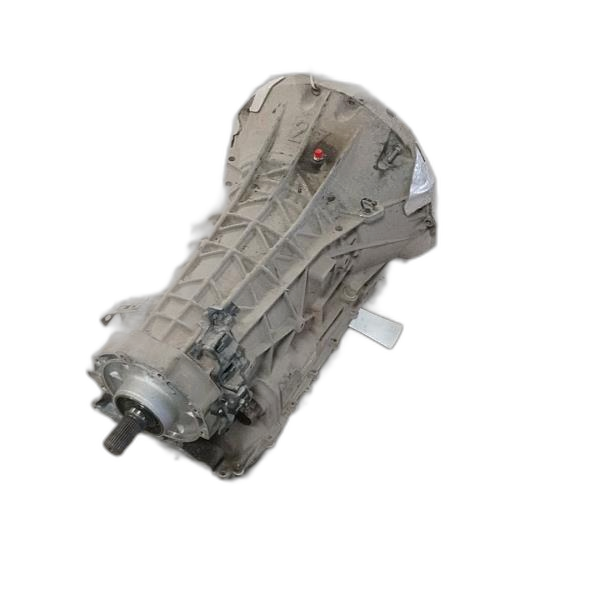
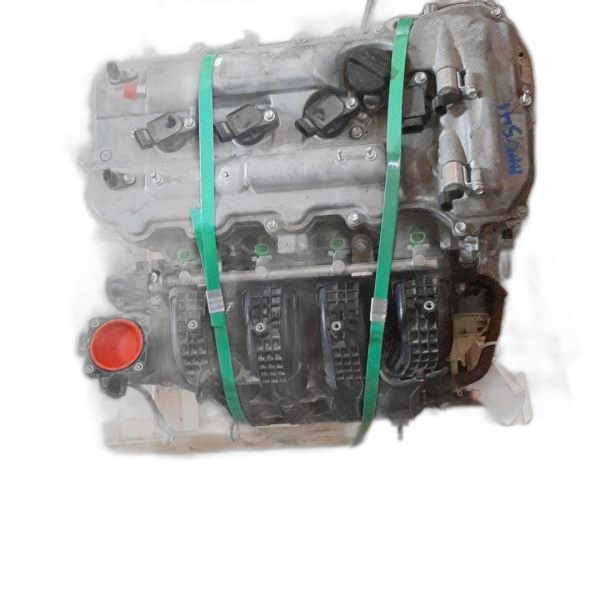
Below are the parts most often responsible for code P2546, ranked by how frequently each one is the actual culprit (per the diagnosis above). Tap any to see what we have for your vehicle.


The information in this article is provided for general reference and educational purposes only. Vehicle specifications, procedures, and part compatibility can vary by production date, trim level, and region. Always consult your vehicle's factory service manual and verify part numbers before purchasing or performing repairs. Safety-critical components such as airbags, seat belts, and braking systems should be installed by a qualified professional.
- 🧭 Diagnostic Flowchart
- 🛍️ Shop This Part
- What Does P2546 Mean?
- Can I Drive With P2546?
- Common Causes
- Symptoms
- Common Fixes & Costs
- Used vs. New Parts: Buying Guide
- What Happens If You Wait — Timeline
- Cost of Not Fixing It
- Diagnosis Steps
- When This Code Triggers (Freeze-Frame Conditions)
- Related Codes
- Climate & Environmental Factors
- How to Talk to a Mechanic About This Code
- Where to Take It: Dealer vs Independent vs Chain
- When to Walk Away From the Repair
- What Scan Tool You Need for This Code
- How to Clear the Code After You Fix It
- Will This Fail Emissions / State Inspection?
- Most Commonly Affected Vehicles
- Manufacturer-Specific Notes
- Real Owner Stories
- 2014 Ford Focus at 110,000 miles
- 2015 Nissan Rogue at 85,000 miles
- 2012 Chevy Cruze at 130,000 miles
- How to Prevent This Code From Triggering
- Frequently Asked Questions
- Can I fix P2546 myself?
- What is the most common misdiagnosis for P2546?
- Can a transmission fluid change fix P2546?
- Is P2546 a serious problem?
- Will clearing the code fix the problem?
- What does the 'A' in 'Torque Management Request Signal A' refer to?
- Why is a software update a possible fix?
- Key Takeaways
- 🎟️ Get 5% Off