

P2564 on 2014 Ram 1500 EcoDiesel: Turbo Actuator Sensor Causes & Fixes
On a 2014 Ram 1500 EcoDiesel, code P2564 usually points to a faulty turbocharger electronic actuator, which contains the position sensor. Before replacing parts, check for PCM software updates, as multiple service bulletins indicate this can fix the code. If the actuator is replaced, a calibration procedure using a compatible scan tool is required.
- For code P2564 on a 2014 Ram 1500 EcoDiesel, your first step should always be to check if a PCM software update is available.
- The most common failed part is the turbocharger's electronic actuator, which contains the position sensor.
- Before replacing the actuator, thoroughly inspect the wiring harness for any damage, as this is a frequent and cheaper-to-fix cause.
- Symptoms typically include a check engine light and the truck entering a low-power 'limp mode'.
What's Unique About the 2014-2014 Ram 1500
The 2014 Ram 1500 with the 3.0L EcoDiesel uses a sophisticated Garrett Variable Geometry Turbocharger (VGT) managed by an electronic actuator. This actuator, which houses the position sensor, is a known failure point due to its mounting location in a high-heat, high-vibration environment. Uniquely for this platform, Chrysler (now Stellantis) has issued multiple software updates for the Powertrain Control Module (PCM) that specifically address erroneously set P2564 codes. This means the first step in diagnosis should always be checking for available PCM flashes before condemning any hardware. The actuator is serviceable separately from the turbocharger, but requires a specific calibration procedure with a high-level scan tool like wiTECH after replacement.
Diagnostic Flowchart
Tap your situation to follow the diagnostic path that matches what you're seeing on this vehicle.
Symptoms You May Notice
- Check Engine Light (Malfunction Indicator Lamp) is on
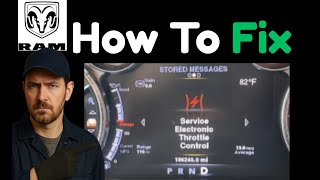
- "Service Electronic Throttle Control" message disp 🎬 Watch this video to understand why this specific message appears.layed on the EVIC
- Vehicle enters 'limp mode' with drastically reduced power and limited RPM
- Sluggish or hesitant acceleration
- Noticeable loss of turbo boost
- Hissing or whining noises from the turbo area
- Excessive black smoke from exhaust under acceleration
- Flashing glow plug light on the dashboard
- Replacing the entire turbocharger assembly when only the electronic actuator has failed. The actuator can be purchased and replaced separately, saving significant cost and labor.
- Replacing the actuator without first checking for PCM software updates, which could have fixed the issue without replacing any parts.
- Replacing the actuator but failing to perform the post-installation calibration procedure, leading to the code returning or continued poor performance.
Most Likely Causes
- Outdated Powertrain Control Module (PCM) Software 🔴 High Probability Manufacturer TSBs #18-028-14, #18-017-16, and #18-021-15 REV. E specifically call out that this code can be set erroneously and require a software update to change the sensitivity and logic for the sensor.
How to confirm: A Ram dealership or a properly equipped independent shop can check for and apply PCM software updates using a wiTECH scan tool. This should always be the first step before any hardware is replaced.
Typical fix: Reprogramming the PCM with the latest software version. The process takes approximately 10-15 minutes but requires a stable power supply to the vehicle.
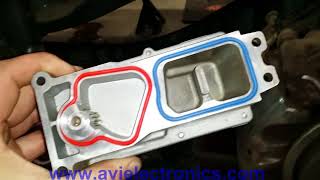
Est. part cost: $0-$250 - Failed Turbocharger Electronic Actuator/Position Sensor 🔴 High Probability → Shop Turbocharger The electronic actuator is mounted directly to the hot turbocharger, and extreme heat cycles can lead to internal electronic failure, specifically breaking the delicate wires connecting to the sensor board. The position sensor is integrated into this actuator and is not sold separately by Mopar.
How to confirm: After confirming PCM software is current, use a scan tool to monitor sensor voltage. If the voltage is stuck low (typically near 0V) regardless of commanded position, the actuator/sensor has failed. A bidirectional scan tool can also run an actuator test to command it through its range of motion; no movement or response confirms failure.
Typical fix: Replace the turbocharger electronic actuator. A relearn/calibration procedure is required after installation using a scan tool like wiTECH or AlfaOBD to ensure the PCM knows the new actuator's start and end points.
Est. part cost: $250-$550 - Wiring Harness or Connector Issue 🟡 Medium Probability The wiring harness runs in a high-heat, high-vibration area near the turbo and exhaust, making it susceptible to chafing, melting, or corrosion at the connector. Water intrusion from off-roading or deep puddles has also been reported to cause this issue.
How to confirm: Visually inspect the wiring harness between the PCM and the turbo actuator for any signs of damage, especially where it might rub against the engine or other components. Check the connector for corrosion, pushed-out pins, or moisture. Perform a 'wiggle test' on the harness while monitoring sensor voltage on a scan tool.
Typical fix: Repair the damaged section of the wiring harness or replace the connector pigtail. In some cases of widespread corrosion, a partial or full engine harness replacement may be needed.
Est. part cost: $20-$500
Rare But Worth Checking
- Mechanically Stuck Turbocharger Vanes: → Shop Turbocharger While this typically sets overboost (P0234) or underboost (P0299) codes, if the VGT vanes are stuck in a position that corresponds to a low voltage reading, it could trigger P2564. This is usually caused by heavy soot and carbon buildup from short-trip driving or EGR issues.
- Failed Powertrain Control Module (PCM): This is extremely rare. The PCM should only be considered after all other possibilities, including software updates, actuator replacement, and wiring repairs, have been exhausted.
Diagnosis Steps
- Connect a compatible scan tool (like wiTECH or AlfaOBD) and check for any available software updates for the Powertrain Control Module (PCM). This is a known issue per TSBs #18-028-14, #18-017-16, and #18-021-15. If an update is available, perform it first.
- If the software is up to date, use the scan tool to monitor the live data for the 'Turbocharger Boost Control Position Sensor' voltage. With the key on, engine off, the reading should be stable and not zero. A reading below 0.2V points to a circuit low fault.
- Visually inspect the wiring harness and connector going to the turbo actuator. Look for any signs of melting, chafing, corrosion, or loose pins. Pay close attention to where the harness may contact other engine components.
- Perform a 'wiggle test' by moving the harness around while watching the live data to see if the voltage reading fluctuates wildly, indicating a bad connection or a short in the wiring.
- Use a scan tool with bidirectional controls to command the actuator through its full range of motion (e.g., 'VGT Actuator Test'). Observe if the position sensor voltage changes accordingly and if you can hear/see the actuator arm move. If it doesn't move or the voltage stays low, the actuator is likely faulty.
- If the actuator does not move, use a multimeter to confirm it is receiving power (typically 5V reference) and has a good ground at its connector before condemning the part.
- If the actuator is replaced, perform the 'Turbocharger Actuator Calibration' or 'VGT Actuator Learn' procedure using the scan tool to finalize the repair.
Parts You'll Likely Need
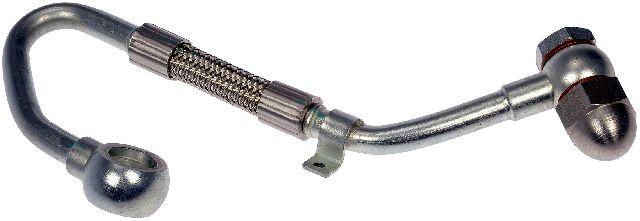
- Turbocharger Electronic Actuator
(OEM #68212738AA (Note: This part number is for the 6.7L Cummins and often confused. The correct 3.0L EcoDiesel actuator is typically sold under Garrett or Mopar numbers tied to the turbo assembly, like 823024-5005S, but can be found separately from specialty vendors). A more specific OEM part number is 35242171G or 35242171F.)— This is the most common hardware failure for P2564, as it contains the position sensor that fails due to heat and vibration. It is serviceable separately from the turbocharger itself.
Trusted brands: Garrett (OEM), Mopar, Dorman
OEM price range: $400-$600
Aftermarket price range: $250-$450
Related Codes That Often Appear With This One
- P2565 — This code is for 'Turbocharger Boost Control Position Sensor 'A' Circuit High'. It can appear with P2564 if there is an intermittent wiring issue causing the signal to fluctuate between being too low and too high.
- P0299 — This code indicates a 'Turbocharger Underboost Condition'. If the position sensor is failing and providing an incorrect low reading, the PCM may command the vanes to a position that results in a lack of boost, triggering P0299.
- P0234 — This code indicates a 'Turbocharger Overboost Condition'. Similar to underboost, an incorrect position sensor reading can cause the PCM to mismanage the turbo vanes, leading to excessive boost. This code is also mentioned in TSBs alongside software updates.
Technical Service Bulletins (TSBs) & Recalls
- 18-028-14 REV. A: Mentions P2564 as a code that may be set erroneously and can be fixed by reprogramming the PCM.
- 18-017-16: Also lists P2564 as part of a larger software update for powertrain diagnostic and system enhancements.
- 18-021-15 REV. E: Includes P2564 in a list of codes addressed by a PCM software update for diagnostic and system enhancements.
Platform-Specific Known Issues
- Multiple Technical Service Bulletins (TSBs) have been released by Chrysler/Ram indicating that a PCM software update can resolve an erroneously set P2564 code. TSBs #18-028-14 REV. A, #18-017-16, and #18-021-15 REV. E all list P2564 as a code that can be fixed with a reflash.
- Owners frequently report this code appearing along with the 'Service Electronic Throttle Control' message, which immediately puts the truck into a low-power limp mode.
- The actuator calibration after replacement is a critical, often-missed step. Failure to do so will almost certainly cause the code to return. This requires a capable scan tool like the dealer's wiTECH or aftermarket tools like AlfaOBD.
Mechanic-Grade Diagnostic Values
- Turbo Actuator Connector - 5V Reference Voltage — expected: 4.9V - 5.1V. Failure: Voltage below 4.9V or absent indicates a wiring or PCM issue.
- Turbo Actuator Connector - Signal Voltage (Key On, Engine Off) — expected: Approximately 0.8V (varies slightly). Failure: A reading below 0.2V for more than 2 seconds will trigger the P2564 code.
- Turbo Actuator Connector - Ground Circuit — expected: Less than 1.0 Ω resistance to chassis ground.. Failure: High resistance indicates a poor ground connection, which can cause erratic sensor readings.
- Scan Tool Live Data - Commanded vs. Actual VGT Position — expected: Actual position should closely track commanded position (e.g., both at 75%).. Failure: If commanded position changes but actual position is stuck or has a limited range (e.g., 5-45%), it indicates a stuck VGT mechanism or a failing actuator.
Scan Tool Commands That Help
- wiTECH (Dealer Tool): VGT Actuator Learn / Turbocharger Actuator Calibration — This procedure is mandatory after replacing the electronic turbo actuator. It teaches the PCM the new actuator's full range of motion (stop-to-stop). Failure to perform this step will result in the code returning and improper turbo control.
- AlfaOBD (Aftermarket): VGT Actuator Learn / Calibrate VGT Actuator — Used for the same purpose as the wiTECH command. It allows independent shops and DIYers to properly complete the actuator replacement without a trip to the dealer.
Wiring & Ground Locations
- Turbo Actuator Connector — On the electronic actuator itself, mounted to the passenger side of the turbocharger.. This is the primary connection point. Testing here can determine if the fault is in the actuator, the harness, or the PCM. Pin 1 should have 5V reference, Pin 2 is sensor ground, and Pin 3 is the position signal wire where the 'Circuit Low' voltage is detected.
- Engine Harness Chafe Point — The section of the engine wiring harness that runs near the EGR crossover pipe.. This area is subject to extreme heat. The harness can melt or chafe against the pipe or other components, causing a short to ground on the position sensor signal wire, directly leading to a P2564 code.
- G101 / G102 (Engine Block Grounds) — Bolted to the engine block, typically near the front of one of the cylinder heads.. These are the main ground points for the engine sensor harness. A loose or corroded connection here can cause a floating ground, leading to unstable and incorrect voltage readings from multiple sensors, including the turbo position sensor.
Real Owner Repair Stories
- EcoDieselRam.com forum user (2016 Ram 1500 EcoDiesel) — Check engine light, turbo fault code.
❌ Tried (didn't work) The dealership service department diagnosed a bad turbo and recommended a full replacement.
✅ What actually fixed it The technician, at the owner's request, first exercised the turbo controller with a scan tool and found the vanes would not move. However, the root cause was determined to be a seized VGT mechanism due to soot, not a primary actuator failure. The final fix was a new turbo, but it confirmed the actuator itself can be misdiagnosed when the mechanical linkage is the problem. - RamForum.com user 'sirdumpsalot' (2017 Ram 1500 EcoDiesel, 95k miles) — "Service electronic throttle control" message, CEL, severe power loss (limp mode to 30-45 mph), especially when towing.
❌ Tried (didn't work) Cleaning and replacing the MAP sensor.
✅ What actually fixed it Using an OBDII reader, the owner compared 'Commanded VGT Position' to 'Actual VGT Position' and found the actual position was stuck in a limited range (5-45%). This confirmed the turbo/actuator assembly was faulty. Replacing the entire OEM Garrett turbocharger assembly resolved all issues.
When the Usual Fixes Don't Work
- While TSBs strongly suggest a PCM software update as the first and most likely fix, numerous owner accounts confirm that even with the latest software, the electronic actuator remains a primary point of hardware failure. In these cases, the software update does not resolve the code, and the actuator itself must be replaced. Furthermore, a subset of these hardware failures are not caused by the actuator's electronics, but by the mechanical VGT lever on the turbocharger seizing from soot, which in turn causes the actuator to fail or report an incorrect position.
OEM Part Supersession History
35242171F (Garrett)→35242171G (Garrett)— Revision and potential improvement of internal components to increase durability against heat and vibration.
Heads up: The Mopar part number 68212738AA is frequently confused with this part but is for the 6.7L Cummins engine and is NOT compatible with the 3.0L EcoDiesel. Always verify the Garrett part number (35242171F/G) or a cross-reference to the turbo assembly number (e.g., 823024-5005S) for the EcoDiesel.
Helpful Videos
We Have This Part in Stock


The information in this article is provided for general reference and educational purposes only. Vehicle specifications, procedures, and part compatibility can vary by production date, trim level, and region. Always consult your vehicle's factory service manual and verify part numbers before purchasing or performing repairs. Safety-critical components such as airbags, seat belts, and braking systems should be installed by a qualified professional.
- Ram 1500:
- 🧭 Diagnostic Flowchart
- 🎬 Helpful Videos
- 🛍️ Shop This Part
- What's Unique About the 2014-2014 Ram 1500
- Symptoms You May Notice
- Most Likely Causes
- Rare But Worth Checking
- Diagnosis Steps
- Parts You'll Likely Need
- Related Codes That Often Appear With This One
- Technical Service Bulletins (TSBs) & Recalls
- Platform-Specific Known Issues
- Mechanic-Grade Diagnostic Values
- Scan Tool Commands That Help
- Wiring & Ground Locations
- Real Owner Repair Stories
- When the Usual Fixes Don't Work
- OEM Part Supersession History
- 🎟️ Get 5% Off