

P2568 on 2009-2015 Volkswagen EOS: Radiator Identification Sensor Fault Guide
This code points to a problem with the Radiator Identification Sensor (G611) on 2.0L TSI engines, specifically the PZEV-rated CBFA version. This sensor confirms the correct emissions-reducing catalytic radiator is installed. The fix is often replacing the entire radiator with an OEM unit, as the sensor was not traditionally sold separately, although some workarounds now exist.
- P2568 on a VW EOS 2.0T is not a generic catalyst code; it specifically points to the Radiator Identification Sensor (G611) on CBFA (PZEV) engines.
- The most common cause is either a failed sensor or the installation of an incorrect aftermarket radiator that lacks this specific sensor.
- The standard repair is to replace the entire radiator, but a more cost-effective and increasingly common fix is to replace only the sensor, potentially using a compatible part from Mercedes-Benz (P/N 2219055600).
- Be aware of a potential link to a failing water pump/thermostat, which can also trigger this code by causing an abnormal engine warm-up time.
What's Unique About the 2009-2015 Volkswagen EOS

Volkswagen, along with a few other manufacturers, uses a special radiator coated with a catalyst (a technology called PremAir® by BASF) to help reduce ozone emissions as ambient air passes through it. This system was implemented on certain vehicles with the CBFA engine code to meet stricter PZEV (Partial Zero-Emissions Vehicle) standards in states like California, Pennsylvania, and most of New England. The CCTA engine variant, sold in other states, does not have this system. The P2568 code is unique to this system, as the G611 sensor exists specifically to ensure this special, and more expensive, radiator is being used to get EPA emissions 'credits'.
Diagnostic Flowchart

Tap your situation to follow the diagnostic path that matches what you're seeing on this vehicle.
Symptoms You May Notice
- Check Engine Light is on.
- Inability to pass an emissions inspection.
- No other drivability symptoms are commonly reported.
- In rare cases, owners on forums have noted slightly reduced turbo boost pressure when the code is active.
- Replacing the wrong temperature sensor. Mechanics not familiar with this specific VW PZEV system may confuse the G611 with a standard coolant temperature sensor located elsewhere on the engine.
- Replacing the catalytic converter. The code's generic definition mentions 'catalyst,' leading some to mistakenly diagnose the main exhaust catalytic converter, which is an expensive and incorrect repair for this code.
- Unnecessarily replacing the radiator. If a technician replaces the radiator but the true fault was a failing water pump causing an incorrect warm-up time, the code will return.
Most Likely Causes

- Failed Radiator Identification Sensor (G611) 🔴 High Probability → Shop Radiator The sensor is an electronic component mounted on the front of the radiator, exposed to heat, vibration, and potential damage from road debris. It can also be damaged by physical contact if an aftermarket intercooler is installed without proper spacing. The internal electronics can simply fail over time.
How to confirm: Diagnosis requires a VW-specific scan tool (like VCDS) to confirm P2568 is the active code. Physical inspection may reveal damage to the sensor or its wiring harness. The sensor itself is a small black box clipped or glued to the driver's side of the radiator.
Typical fix: Historically, the sensor (G611) was not sold separately, requiring a full radiator replacement. More recently, the sensor has become available separately (VW P/N: 8P4965873A). A popular and proven owner fix is to purchase a compatible sensor made by Mercedes-Benz (P/N: 2219055600) and splice the original VW connector onto it, as the wire colors match.
Est. part cost: $180-$200 for the sensor alone, or $250-$500 for an OEM radiator assembly. - Incorrect (Aftermarket) Radiator Installed 🟡 Medium Probability → Shop Radiator To save money, a previous owner or repair shop may have installed a standard aftermarket radiator for a CCTA engine, which does not have the catalytic coating or the required G611 sensor. This will immediately trigger the code on a CBFA engine.
How to confirm: Visually inspect the driver's side of the radiator for the presence of the G611 sensor and its wiring. If it is missing entirely, an incorrect radiator has been installed.
Typical fix: Replace the incorrect aftermarket radiator with a correct OEM or certified PZEV-equivalent radiator that includes the G611 sensor. The correct OEM radiator kit part number is often cited as 1K0198251.
Est. part cost: $250-$500 - Damaged Wiring or Connector ⚪ Low Probability The sensor's wiring is located at the front of the car and can be damaged by road debris, during front-end service, or from contact with aftermarket parts like a larger intercooler.
How to confirm: Visually inspect the wiring harness leading to the G611 sensor for any signs of cuts, corrosion, or breaks. Check for a secure connection at the sensor.
Typical fix: Repair the damaged section of the wiring harness or replace the connector pigtail.
Est. part cost: $15-$50
Rare But Worth Checking
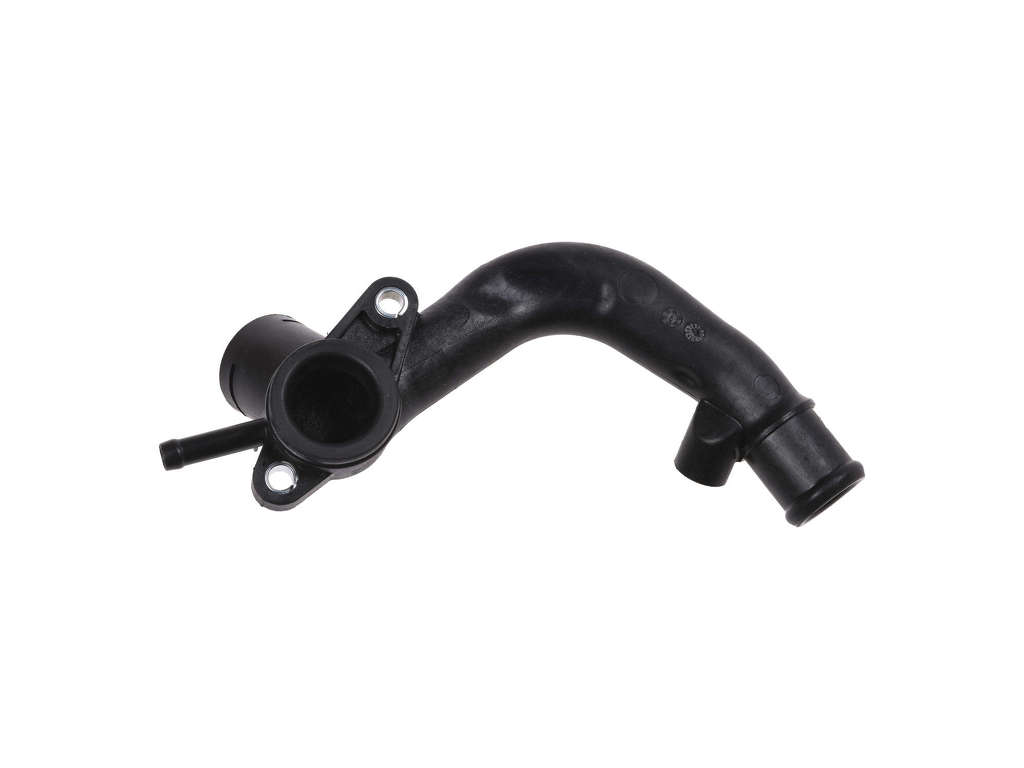
- Failing Water Pump / Thermostat: → Shop Integrated Thermostat Housing Assembly A significant number of owners, particularly on the related CBFA engine in the GTI, have reported a complex interaction where a failing water pump or thermostat triggers the P2568 code. The theory is that the ECU monitors the warm-up time by comparing readings between the G611 radiator sensor and another temperature sensor on the water pump assembly. A slow warm-up time due to a faulty, stuck-open thermostat can cause the ECU to flag an implausible signal, triggering P2568. In some cases, replacing the water pump/thermostat assembly has resolved the code after a radiator replacement failed to do so.
Diagnosis Steps
- Use an OBD-II scanner to confirm that P2568 is the active fault code. Note the exact definition (e.g., 'implausible signal' vs. 'range/performance').
- Verify the engine code on the vehicle's sticker (often near the hood latch or on the timing cover). This issue only affects the CBFA PZEV engine.
- Inspect the radiator. Check if it is an OEM part and locate the Radiator Identification Sensor (G611) and its wiring harness on the driver's side. It is a small black box clipped or bonded to the radiator fins.
- If the sensor is missing, an incorrect (non-PZEV) aftermarket radiator is the cause.
- If the sensor is present, carefully inspect its wiring and connector for any damage, corrosion, or loose pins. Check for physical contact with an aftermarket intercooler if one is installed.
- If wiring is intact, consider the vehicle's recent history. Has the water pump or thermostat been replaced? Forum discussions suggest that a new G611 sensor may be incompatible with an old water pump temperature sensor (and vice-versa), causing the code.
- If the water pump and thermostat are known to be healthy, the G611 sensor itself has likely failed. The standard repair is to replace the sensor. This can be done by replacing the entire radiator assembly or by splicing in a new sensor (either VW P/N 8P4965873A or the Mercedes equivalent).
- When installing a new sensor, it must be properly attached to the radiator. VW's specified adhesive (AMV-195-KD1-01) has been discontinued, but Loctite 4204 or applying thermal paste to the probe are common substitutes to ensure proper heat transfer.
- After the repair, clear the fault code and perform a drive cycle to ensure the Check Engine Light does not return.
Parts You'll Likely Need

- Radiator with Identification Sensor (G611)
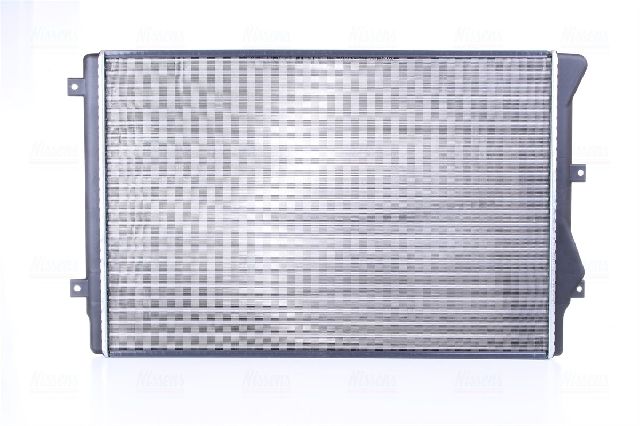
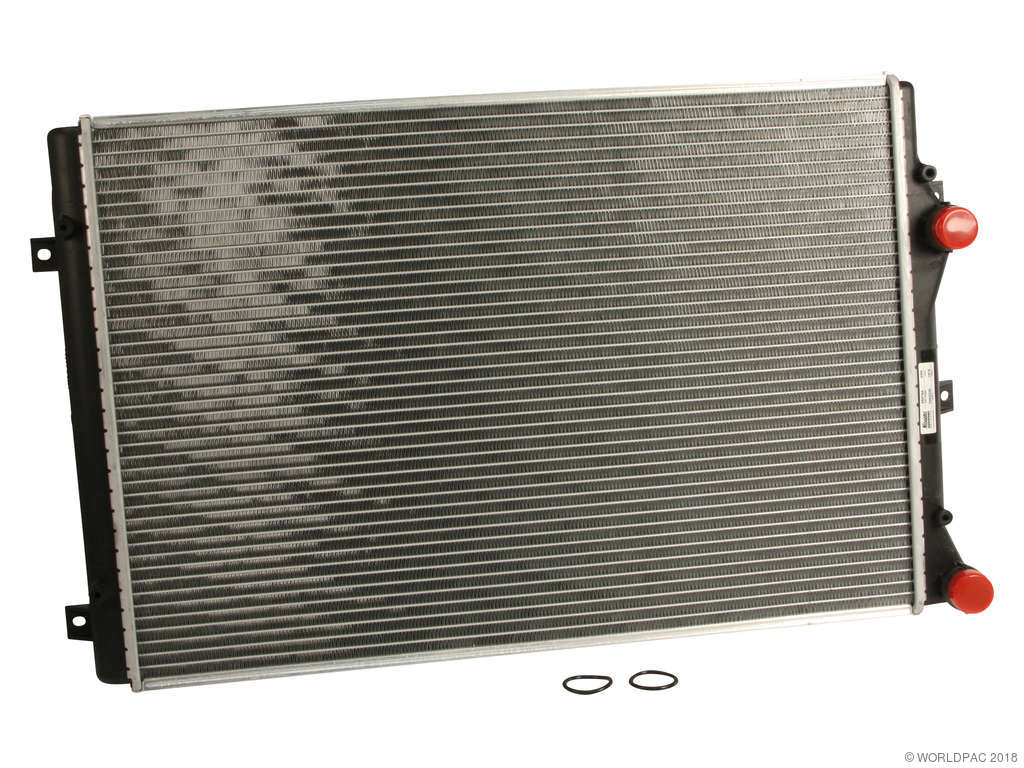
(OEM #1K0198251 (Kit), 5K0121251AA (Radiator))— This is the traditional fix because the G611 sensor was often integrated with or exclusively packaged with the OEM radiator. Installing a correct, sensor-equipped radiator resolves the 'implausible signal' from the missing or failed sensor.
Trusted brands: Volkswagen Genuine, Behr, Nissens
OEM price range: $350-$500
Aftermarket price range: $250-$400 (ensure it is for PZEV/CBFA and includes the sensor) - Radiator Identification Sensor (G611)
(OEM #8P4965873A)— If the radiator itself is fine, replacing only the failed sensor is the most cost-effective repair. This part is now more commonly available separately.
Trusted brands: Volkswagen Genuine
OEM price range: $180-$200
Aftermarket price range: N/A - Mercedes-Benz Radiator Sensor (Alternative)
(OEM #2219055600)— A widely documented alternative fix by owners is to use this compatible Mercedes sensor. It requires cutting the original VW connector and splicing it onto the Mercedes part, as the wire colors match. This is often cheaper and more available than the VW-specific part.
Trusted brands: Mercedes-Benz Genuine
OEM price range: $50-$100
Aftermarket price range: N/A
Technical Service Bulletins (TSBs) & Recalls
- TT 19-12-01: Clarifies that P2568 refers to the G611 Radiator Identification Sensor on 2.0L TSI engines and provides guidance on bonding the new sensor during radiator replacement.
Platform-Specific Known Issues
- The use of a special ozone-reducing catalytic radiator (PremAir®) and the corresponding G611 identification sensor is a key issue for PZEV-rated vehicles with the CBFA engine.
- Volkswagen's TSB TT 19-12-01 explicitly states that when replacing the radiator, the new G611 sensor comes in the package and must be bonded to the new radiator with a specific adhesive (AMV-195-KD1-01), which has since been discontinued.
- Because this is a PZEV-specific emissions part, the repair may be covered under an extended emissions warranty (typically 15 years/150,000 miles in PZEV states), but owners may need to contact VW of America directly to confirm coverage if a dealer is uncooperative.
Mechanic-Grade Diagnostic Values
- G611 Sensor Connector Pin 1 to Pin 3 Voltage — expected: Battery Voltage. Failure: No or low voltage indicates a power or ground supply issue.
- G611 Sensor Connector Pin 2 (Signal) to ECM (J623) Pin 64 Resistance — expected: < 1.0 Ω. Failure: High resistance or an open circuit (OL) indicates a break in the LIN-bus signal wire.
- G611 Sensor Connector Pin 1 (Ground) to ECM (J623) Pin 52 Resistance — expected: < 1.0 Ω. Failure: High resistance or an open circuit (OL) indicates a break in the ground wire.
- G611 Sensor Connector Pin 3 (Power) to Fuse SB15 Resistance — expected: < 1.0 Ω. Failure: High resistance or an open circuit (OL) indicates a break in the power supply wire.
- VCDS Measuring Blocks for G611 Sensor — expected: N/A. Failure: The G611 communicates via an encrypted LIN-bus signal; its unique ID and temperature are not available to view in VCDS Measuring Blocks.
Hidden / Shadow Codes Worth Checking
- U102F: Radiator Identification Sensor: No Communications. This code indicates a complete loss of signal from the G611 sensor, often seen when the sensor is unplugged, the wiring is broken, or a non-communicating aftermarket sensor is installed. (see via VW-specific scan tool like VCDS or ODIS.)
- U102E: Radiator Identification Sensor: Implausible Signal. This code suggests the ECM is receiving a signal from the sensor, but the encrypted ID is incorrect or invalid. This has been reported after installing certain aftermarket sensors that are not properly coded for the VW system. (see via VW-specific scan tool like VCDS or ODIS.)
- U1030: LIN bus inactive. This fault may be stored along with U102F and should clear once the primary communication issue with the G611 sensor is resolved. (see via VW-specific scan tool like VCDS or ODIS.)
Wiring & Ground Locations
- G611 Connector — On the driver's side of the radiator, clipped or bonded to the fins.. This is the 3-pin connector for the sensor itself. Pin 1 is Ground, Pin 2 is the LIN-bus Signal, and Pin 3 is Power.
- ECM (J623) Pin 64 — At the Engine Control Module.. This is the termination point for the G611 sensor's LIN-bus signal wire (from Pin 2 of the sensor connector).
- ECM (J623) Pin 52 — At the Engine Control Module.. This is the termination point for the G611 sensor's ground wire (from Pin 1 of the sensor connector).
- Fuse SB15 — In the engine bay fuse box.. This fuse supplies power to Pin 3 of the G611 sensor connector.
Real Owner Repair Stories
- Reddit user in r/GolfGTI (MK6 GTI (CBFA engine)) — P2568 code appeared immediately after replacing the water pump.
❌ Tried (didn't work) Initially just replacing the water pump.
✅ What actually fixed it Replacing the G611 sensor on the radiator finally cleared the code. The user theorized that the old radiator sensor and new water pump sensor were so different in their degraded states that the ECU flagged an error. - GolfMK6.com forum user (2014 GTI with 94,000 miles) — P2568 Check Engine Light.
❌ Tried (didn't work) Initial diagnosis by the dealer was inconclusive., Some users in the same thread reported that replacing the radiator/sensor did NOT fix their code.
✅ What actually fixed it The user reported that the P2568 code disappeared after the water pump was replaced. The technician's diagnosis was that the time it took for the coolant to warm up was not within spec, triggering the fault. - Reddit user in r/GolfGTI (2014 GTI with 90,000 miles) — P2568 code.
❌ Tried (didn't work) The user was unsure if replacing the water pump alone would have worked.
✅ What actually fixed it The user first replaced the radiator with the integrated sensor, which made the P2568 code go away. The very next day, the water pump failed and was replaced under warranty. This story highlights the strong link between the two components failing in close proximity. - Reddit user in r/GolfGTI (MK6 GTI (CBFA engine)) — P2568 code.
❌ Tried (didn't work) Installing an aftermarket G611 sensor.
✅ What actually fixed it After an aftermarket sensor failed to work and caused a U102F communication code, the owner installed a complete OEM VW radiator assembly with the genuine sensor, which permanently fixed the issue. This suggests aftermarket sensors lack the required encrypted communication.
"I Checked Everything" — The Actual Cause
- While not a smoke test issue, a common pattern is that all wiring and sensor checks for the G611 appear normal, but the P2568 code persists. In many of these cases, the actual root cause was a failing water pump or stuck-open thermostat. The ECU compares the temperature ramp-up between the radiator sensor (G611) and the engine coolant sensor (G62); a slow warm-up from a bad thermostat is flagged as an implausible signal from the G611, even though the G611 sensor itself is functioning correctly.
When the Usual Fixes Don't Work
- The most significant counter-evidence to the primary diagnosis (failed G611 sensor) is the high number of documented cases where the true cause was a failing water pump/thermostat. In one instance, a dealership replaced the radiator assembly to fix P2568, but the code remained. They subsequently diagnosed a 'sticky' thermostat and had to replace the water pump assembly to finally resolve the issue. This indicates that simply following the code's definition can lead to an expensive and incorrect initial repair.
OEM Part Supersession History
N/A→8P4965873A— This is the current VW part number for the standalone G611 sensor.
Heads up: Many owners report that aftermarket versions of this part number do not work and cause communication faults. The failure is believed to be due to a lack of correct LIN-bus encryption.Multiple (e.g., 204542131888)→2219055600— This is the current Mercedes-Benz part number for a sensor that has been successfully used as an alternative to the VW G611. It requires splicing the VW connector onto the Mercedes sensor.AMV-195-KD1-01→Discontinued— This was the VW-specified adhesive for bonding the sensor to the radiator.
Heads up: This adhesive is no longer available. Technicians and owners report using substitutes like Loctite 4204 or thermal paste to ensure proper heat transfer from the radiator to the sensor probe.
Helpful Videos
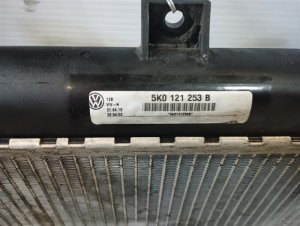
Used OEM Parts in Stock
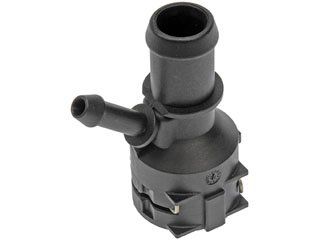
New Aftermarket Parts Available


The information in this article is provided for general reference and educational purposes only. Vehicle specifications, procedures, and part compatibility can vary by production date, trim level, and region. Always consult your vehicle's factory service manual and verify part numbers before purchasing or performing repairs. Safety-critical components such as airbags, seat belts, and braking systems should be installed by a qualified professional.
- Volkswagen EOS:
- 🧭 Diagnostic Flowchart
- 🎬 Helpful Videos
- 🛍️ Shop This Part
- What's Unique About the 2009-2015 Volkswagen EOS
- Symptoms You May Notice
- Most Likely Causes
- Rare But Worth Checking
- Diagnosis Steps
- Parts You'll Likely Need
- Technical Service Bulletins (TSBs) & Recalls
- Platform-Specific Known Issues
- Mechanic-Grade Diagnostic Values
- Hidden / Shadow Codes Worth Checking
- Wiring & Ground Locations
- Real Owner Repair Stories
- "I Checked Everything" — The Actual Cause
- When the Usual Fixes Don't Work
- OEM Part Supersession History
- 🎟️ Get 5% Off