

P2579 on 2011 Dodge RAM 3500: Turbo Speed Sensor Circuit Performance Guide
This code almost always points to a failed turbocharger speed sensor on the 6.7L Cummins engine. It's a common failure item that can be tested with a multimeter and replaced by a DIYer with basic tools. The latest Mopar part number is 68039104AC.
- P2579 on a 2011 Ram 3500 almost always means the turbo speed sensor has failed.
- Before buying parts, perform a simple resistance test on the sensor with a multimeter; it should be between 600-1600 ohms.
- Thoroughly inspect the wiring harness near the turbo for heat damage or chafing before replacing the sensor.
- If the sensor and wiring are good, a dealer software update per TSB 18-013-13 may be required.
- The correct, updated OEM part number is Mopar 68039104AC.
What's Unique About the 2011-2011 Dodge RAM 3500
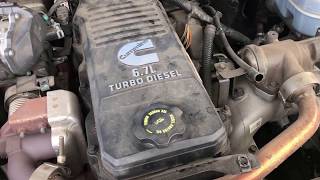
On the 6.7L Cummins engine found in the 2011 Ram 3500, the turbocharger speed sensor is a known high-failure item. The issue is rarely the complex and expensive turbocharger itself, but rather this small, accessible sensor or its wiring. Owners on forums like the Dodge Diesel - Diesel Truck Resource Forums frequently report this code appearing, with one user noting a dealer quoted over $500 for a repair they could perform themselves. The sensor often fails by developing an internal open circuit, which is easily confirmed with a multimeter. 🎬 Watch: A quick guide to diagnosing the P2579 code. A factory service bulletin also links this code to a potential software logic issue, which may require an update from a dealership.
Diagnostic Flowchart
Tap your situation to follow the diagnostic path that matches what you're seeing on this vehicle.
Symptoms You May Notice
- Check Engine Light is on
- Reduced engine power or "limp mode"
- Poor acceleration and throttle response
- Noticeable decrease in fuel economy
- The code may appear intermittently at first, with the light turning on and off over several drive cycles
- Replacing the entire turbocharger assembly when only the inexpensive speed sensor has failed.
- Replacing the sensor when the true fault is a chafed wire in the harness that was not properly inspected.
Most Likely Causes
- Faulty Turbocharger Speed Sensor 🔴 High Probability → Shop Turbocharger The sensor is a very common failure item on this engine, often failing by developing an internal open circuit. Forum and video evidence shows this is the first part to check.
How to confirm: Disconnect the sensor's electrical connector and measure the resistance between its two pins using a multimeter. A good sensor should read between 600 and 1,600 ohms. A reading of infinity (OL or open circuit) or zero indicates a failed sensor. A new sensor will typically read around 900-950 ohms.
Typical fix: Replace the turbocharger speed sensor. It is located on top of the turbocharger housing, held in by a single 8mm bolt. 🎬 See this walkthrough on how to replace the sensor. The new sensor from Cummins often comes with a new bolt with pre-applied thread locker.
Est. part cost: $150-$250 - Damaged Wiring or Connector 🟡 Medium Probability The wiring harness is routed near the hot turbocharger housing, making it susceptible to heat damage, melting, or chafing over time. The connector itself can also become brittle from heat cycles.
How to confirm: Visually inspect the entire length of the sensor's wiring harness for any signs of melting, chafing, or broken wires, especially where it runs under the turbo. Wiggle the harness with the engine running to see if it triggers the fault. Check the connector for corrosion, bent pins, or a poor connection.
Typical fix: Repair the damaged section of wire or replace the connector pigtail. The Cummins pigtail part number is 3164369.
Est. part cost: $20-$60 - Outdated ECM Software ⚪ Low Probability A Technical Service Bulletin (TSB #18-013-13) was issued for the 2011 model year, indicating that this code (among others) could be falsely triggered due to overly sensitive software logic. This should be investigated if the sensor and wiring test good.
How to confirm: A Dodge dealership or a qualified shop with access to OEM software (wiTECH) can check if the vehicle's ECM has the latest calibration by referencing TSB 18-013-13.
Typical fix: Reprogram the Engine Control Module (ECM) with the updated software. This is a dealer-only procedure.
Est. part cost: $0-$200
Rare But Worth Checking
- Faulty Engine Control Module (ECM): → Shop Engine Control Module (ECM) This is very rare. All other possibilities, especially the sensor and wiring, should be exhaustively ruled out before considering ECM replacement.
- Mechanical Turbocharger Failure: → Shop Turbocharger While a failing turbo could theoretically cause erratic speed readings (e.g., from bearing play causing the shaft to contact the sensor), it would typically be accompanied by other symptoms like loud noises, smoke, or other turbo-related codes.
Diagnosis Steps
- Read the trouble codes with an OBD-II scanner. Note any other codes present.
- Visually inspect the turbocharger speed sensor's wiring harness and connector for any signs of heat damage, melting, or chafing. Follow the harness from the sensor (top of turbo) down and under to its connector.
- Disconnect the sensor and inspect the connector pins for corrosion or damage.
- With the sensor disconnected, use a multimeter set to Ohms to measure the resistance across the two pins on the sensor itself. The reading should be between 600 and 1,600 Ohms. An open circuit (OL) or a reading outside this range confirms the sensor is bad.
- If the sensor tests good, perform a continuity test on the wiring harness. Check for continuity, shorts to ground, and shorts to power between the sensor connector and the ECM connector pins (K540 for signal, K541 for ground).
- If the sensor and wiring are confirmed to be good, the issue may be software-related. Contact a Dodge dealer and inquire if TSB #18-013-13 applies to your VIN and if a software update is available.
- If all other steps fail to identify the issue, the ECM may be at fault, but this is highly unlikely and should be the last resort.
Parts You'll Likely Need
- Turbocharger Speed Sensor
(OEM #68039104AC)— This is the most common cause of code P2579 on this vehicle due to a high rate of internal failure. The original part number 68039104AA has been superseded by 68039104AB and now 68039104AC.
Trusted brands: Mopar (OEM), Cummins / Holset (OEM Supplier)
OEM price range: $200-$250
Aftermarket price range: $150-$200
Related Codes That Often Appear With This One
- P2580 — This code indicates 'Turbocharger Speed Sensor Circuit Low,' which is a closely related fault often pointing to the same root causes 🎬 Watch: Troubleshooting the related P2580 circuit low code. like a bad sensor or wiring issue.
- P2609 — Mentioned in the same TSB (#18-013-13) as P2579, suggesting a potential software-related link where multiple codes may be set by the same underlying logic error.
- P061A — Also listed in TSB #18-013-13, indicating a possible connection through the ECM software.
- P2453 — Also listed in TSB #18-013-13, related to the DPF pressure sensor, indicating a group of codes addressed by the same software update.
Technical Service Bulletins (TSBs) & Recalls
- 18-013-13: Addresses a condition where the Malfunction Indicator Lamp (MIL) may be illuminated with P2579 and other codes (P2609, P061A, P2453), potentially fixed by a software re-flash.
Platform-Specific Known Issues
- A Technical Service Bulletin (TSB #18-013-13) exists for the 2011 model year, which includes P2579 as one of several codes that may be resolved by an ECM software update to correct over-sensitive fault logic.
- Owners report that buying the sensor directly from a Cummins dealer is often significantly cheaper than from a Mopar/Dodge dealership for the identical part.
Mechanic-Grade Diagnostic Values
- Turbocharger Speed Sensor Resistance — expected: 600 - 1,600 Ohms. A new sensor often reads in the 900-950 Ohm range.. Failure: A reading of infinity (OL - Open Loop) or near zero ohms indicates a failed sensor.
Wiring & Ground Locations
- ECM Connector C1, Pin A50 — On the main Engine Control Module (ECM).. This is the pin for the Turbo Speed Sensor Signal circuit (K540, BR/GY wire). It is the specific pin to test for continuity back to the sensor connector.
- ECM Connector C1, Pin A53 — On the main Engine Control Module (ECM).. This is the pin for the Sensor Ground circuit (K916, BR/OR wire) shared by multiple sensors. A fault on this ground circuit could affect the turbo speed sensor.
Real Owner Repair Stories
- EFILive Forum user 'Slow6.7' (2007.5 Ram 2500 6.7L Cummins with 97,600 miles) — Code P2579 (Turbocharger speed sensor performance) appeared suddenly after switching from a Smarty/Edge tuner to a new EFILive tune.
❌ Tried (didn't work) Initially suspected the new EFILive tune was the cause of the fault.
✅ What actually fixed it Replacing the turbocharger speed sensor resolved the code. Another user confirmed they had the same code appear at 85k miles when returning their truck to the stock tune from a Smarty tune, concluding the sensor failure was coincidental and a common wear item.
When the Usual Fixes Don't Work
- In one documented case, an owner experienced code P2579 immediately after installing a new EFILive engine tune, leading them to believe the software was the cause. However, the actual root cause was a coincidental failure of the turbo speed sensor itself, which is a common wear item. This demonstrates that even if the code appears after a software change, the underlying cause is still most likely the common hardware failure.
OEM Part Supersession History
68018919AA→68039104AA, then 68039104AB, finally 68039104AC— Standard part revision and improvement by the manufacturer.Turbo Speed Sensor Connector→Fleece Performance FPE-HAR-CUMM-SP-PT (aftermarket pigtail)— Provides a repair solution for a heat-damaged or corroded factory connector.
Heads up: This is an aftermarket repair part, not an OEM supersession. It includes a 6-inch pigtail with heat-sealable butt connectors.
Helpful Videos




The information in this article is provided for general reference and educational purposes only. Vehicle specifications, procedures, and part compatibility can vary by production date, trim level, and region. Always consult your vehicle's factory service manual and verify part numbers before purchasing or performing repairs. Safety-critical components such as airbags, seat belts, and braking systems should be installed by a qualified professional.
- Dodge RAM 3500:
- 🧭 Diagnostic Flowchart
- 🎬 Helpful Videos
- What's Unique About the 2011-2011 Dodge RAM 3500
- Symptoms You May Notice
- Most Likely Causes
- Rare But Worth Checking
- Diagnosis Steps
- Parts You'll Likely Need
- Related Codes That Often Appear With This One
- Technical Service Bulletins (TSBs) & Recalls
- Platform-Specific Known Issues
- Mechanic-Grade Diagnostic Values
- Wiring & Ground Locations
- Real Owner Repair Stories
- When the Usual Fixes Don't Work
- OEM Part Supersession History
- 🎟️ Get 5% Off