

P2580 on 2014-2020 Ram 2500 6.7L Cummins: Turbo Speed Sensor Causes and Fixes
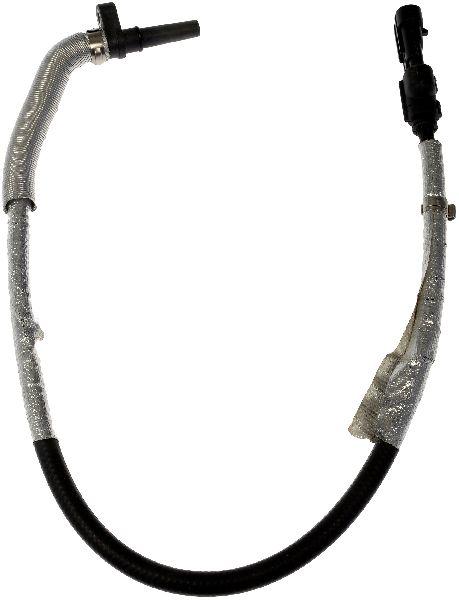
This code almost always means the turbocharger speed sensor has failed. On 2014-2020 Ram 2500s with the 6.7L Cummins, this is a known issue where the sensor can be replaced separately from the turbo, saving a significant amount of money. Expect to pay $180-$260 for a quality replacement Holset sensor (P/N: 5550060H). The repair is straightforward for a DIYer.
- P2580 on a 6.7L Cummins almost always points to a bad turbo speed sensor.
- Do NOT replace the entire turbocharger. The sensor is a separate part (Holset P/N: 5550060H), as confirmed by Ram TSB #9003319.
- Always test the sensor's resistance (spec: 600-1600 Ohms) and check the wiring harness for heat damage before replacing any parts.
- The repair is manageable for a DIYer with moderate skills and can save hundreds in labor costs.
- Use a quality OEM (Holset/Cummins) sensor for the best results; some owners and technicians report issues with cheap aftermarket parts.
What's Unique About the 2014-2020 Ram 2500

For the 6.7L Cummins engine in this era of Ram trucks, the turbo speed sensor is a common failure point. Critically, Ram issued a Technical Service Bulletin (TSB #9003319) on August 2, 2017, stating that the sensor is a serviceable part available separately from the entire turbocharger assembly. This was a significant change, as it prevents the costly and unnecessary replacement of the whole turbo for a sensor fault, which may have happened in the past. Owners should be aware that only the sensor needs to be replaced in most cases.
Diagnostic Flowchart

Tap your situation to follow the diagnostic path that matches what you're seeing on this vehicle.
Generation note: The 2014-2020 model years cover the end of the fourth-generation Ram HD (2010-2018) and the beginning of the fifth-generation (2019-present). The 6.7L Cummins engine and the associated Holset VGT turbocharger are used in both generations, and this P2580 fault is common across them. The diagnosis and repair are consistent for all trucks in this year range. The issue also affects 2500, 3500, 4500, and 5500 models equipped with the 6.7L engine.
Symptoms You May Notice
- Check Engine Light (MIL) is on
- Reduced engine power or 'limp mode'
- Sluggish or delayed acceleration
- Noticeably lower boost pressure on the gauge
- Poor fuel economy
- In some cases, no noticeable performance issue, just the CEL
- Replacing the entire turbocharger assembly. TSB #9003319 explicitly advises against this, as the sensor is available as a separate component.
- Replacing the sensor without checking the wiring. A wiring fault can mimic a sensor failure and can even cause a new replacement sensor to fail immediately.
Most Likely Causes

- Failed Turbocharger Speed Sensor 🔴 High Probability → Shop Turbocharger The sensor is located in a high-heat area on top of the turbocharger, and its internal electronics (a fine wire coil) can fail over time, causing an open or short circuit.
How to confirm: Disconnect the sensor's electrical connector and measure the resistance between its two pins using a multimeter. 🎬 Watch: How to test the sensor resistance with a multimeter. A good sensor should read between 600 and 1600 Ohms. An 'OL' (open loop) or zero reading indicates a failed sensor. One user on RamForum.com confirmed a new sensor read 890 ohms before installation.
Typical fix: Replace the turbocharger speed sensor. This involves removing the air intake tube between the airbox and turbo to access the sensor on top of the turbo housing. The sensor is typically held in by a single 8mm bolt. 🎬 See this walkthrough for replacing the sensor and air intake. The new sensor kit often includes a new bolt with thread locker and new harness clips.
Est. part cost: $180-$260 - Damaged Wiring Harness or Connector 🟡 Medium Probability The wiring harness is routed near the hot turbocharger and exhaust manifold. The protective heat shielding can degrade, allowing wires to melt or chafe, causing a short or open circuit. Connectors can also become loose or corroded.
How to confirm: Visually inspect the entire length of the sensor's wiring harness from the sensor to where it joins the main engine harness. Look for melted plastic, chafed insulation, or corroded connector pins. If visual inspection is inconclusive, perform a continuity test on the signal (K540) and ground (K541) wires from the PCM connector to the sensor connector to check for opens or shorts to ground.
Typical fix: Repair the damaged section of the wire or replace the pigtail connector. The Cummins pigtail part number is 3164369. Ensure the repaired section is protected with high-temperature heat shielding. In some cases, simply cleaning corroded connectors and applying dielectric grease can resolve the issue.
Est. part cost: $20-$60 - Outdated PCM Software ⚪ Low Probability TSB #9003319 explicitly mentions that a new software version is available to correct this issue, suggesting some logic faults could falsely trigger the code, especially on 2013-2015 models. Other TSBs for similar codes like P2579 on 2019 models also point to software updates as the fix.
How to confirm: A Ram dealership or a well-equipped independent shop can check the current software calibration of your PCM and determine if an update is available.
Typical fix: Flash the PCM with the latest software version. This is often done in conjunction with sensor replacement if the sensor is confirmed bad.
Est. part cost: $0-$200
Rare But Worth Checking
- Failed Powertrain Control Module (PCM): → Shop Engine Control Module (ECM) This is very rare. Before condemning the PCM, you must exhaustively prove the sensor and wiring are in perfect condition through resistance and continuity tests. A PCM replacement is expensive and requires programming.
- Faulty MAP or EGT Sensor: In rare instances, a fault in another related sensor can cause the PCM to incorrectly flag the turbo speed sensor. One owner on a forum reported that a corroded connector on an EGT sensor (throwing code P2033) was the root cause of their P2580 code. Another reported a bad MAP sensor was the ultimate culprit after replacing the speed sensor did not fix the issue.
Diagnosis Steps
- Read the trouble codes with an OBD-II scanner.
- Visually inspect the turbo speed sensor's wiring harness and connector for any signs of melting, chafing, or corrosion. The connector is a black, two-wire connector located near the turbo.
- Disconnect the sensor and measure its internal resistance. It should be between 600 and 1600 Ohms. If it's out of spec (Open or 0 Ohms), the sensor is bad and needs replacement.
- If the sensor tests good, inspect the wiring harness for continuity. Disconnect the C1 connector at the PCM and the sensor connector. Check for continuity on the signal wire (K540) and ground wire (K541) between the two connectors.
- Check for shorts to ground on both wires. Resistance to ground should be greater than 100k Ohms.
- If the sensor and wiring are confirmed to be good, check with a dealer for any available PCM software updates as mentioned in TSB #9003319.
- If all other steps fail, the issue may be an internal fault in the Powertrain Control Module (PCM), though this is highly unlikely.
Parts You'll Likely Need
- Turbocharger Speed Sensor
(OEM #Holset: 5550060H / 5550060, Mopar: 68483898AA (supersedes 68210095AA/AB/AC))— This sensor is the most common failure point for code P2580. Its internal coil fails, causing the 'Circuit Low' condition detected by the PCM.
Trusted brands: Holset, Cummins
OEM price range: $180-$260
Aftermarket price range: $150-$200
Related Codes That Often Appear With This One
- P2579 — P2579 is 'Turbocharger Speed Sensor Circuit High'. Both codes relate to the same circuit, and seeing them together or intermittently could point towards a wiring issue causing fluctuating voltage readings.
- P2033 — P2033 is 'Exhaust Gas Temperature Sensor Circuit High Bank 1 Sensor 2'. A forum user reported that a corroded EGT sensor connector caused their P2580 code, suggesting a potential shared circuit issue.
Technical Service Bulletins (TSBs) & Recalls

- 9003319: Dated 08/02/2017, this TSB notes that a PCM software update is available and, crucially, that the Turbo Speed Sensor is available separately from the turbocharger kit (listing P/N 68210095A$) and should not be replaced as a full assembly for this code.
Platform-Specific Known Issues
- A key issue for this platform was the historical guidance to replace the entire turbocharger. TSB #9003319, issued in 2017, was a critical update for owners and technicians, clarifying that the sensor is separately serviceable and saving owners significant expense.
- Owners on forums frequently report success with the Holset-branded sensor (P/N 5550060H), which is the OEM supplier. Some express caution about using cheaper aftermarket sensors, with at least one detailed diagnostic video recommending sticking to OEM for electrical parts.
Mechanic-Grade Diagnostic Values
- Turbo Speed Sensor Resistance — expected: 600 - 1600 Ohms. Failure: A reading of 0 Ohms (short) or OL/infinite (open) indicates a failed sensor.
- Turbo Speed Sensor Voltage (at sensor connector) — expected: 0.5 V at idle, rising to 5.0 V at full boost.. Failure: A reading consistently below 0.2 V indicates a 'Circuit Low' condition.
- Wiring Resistance to Ground — expected: Greater than 100k Ohms. Failure: A lower resistance reading indicates a short to ground in the signal (K540) or ground (K541) wire.
Scan Tool Commands That Help
- wiTECH (Dealer Tool): Powertrain Verification Test — This is a guided diagnostic routine run after a repair, like replacing the sensor or fixing wiring, to confirm the fault is cleared and the system is operating correctly.
- wiTECH (Dealer Tool): PCM Flash/Reprogram — Used to apply software updates as specified in TSBs like #9003319 to correct faulty logic that may be triggering the P2580 code.
Wiring & Ground Locations

- K540 — This is the Turbo Speed Signal circuit wire running from the sensor connector to the ECM/PCM C1 connector.. This wire carries the speed signal from the sensor to the module. An open, short to ground, or short to another wire on this circuit will directly cause code P2580.
- K541 — This is the Turbo Speed Sensor ground circuit wire running from the sensor connector to the ECM/PCM C1 connector.. This wire provides the ground reference for the sensor. A poor connection or open on this circuit will prevent the sensor from sending a valid signal, triggering P2580.
- Engine Block Grounds — There are multiple critical grounds on the engine block. One is located near the starter, and another is on the front of the engine block.. While not specific to the K541 circuit, poor engine block grounds can cause a host of electrical issues and erratic sensor behavior. Ensuring all main grounds are clean and tight is a crucial step in diagnosing any electrical fault.
Real Owner Repair Stories
- Turbo Diesel Register forum user 'Liecha' (Ram truck with 6.7L Cummins (year not specified)) — Check Engine Light with code P2580.
❌ Tried (didn't work) Replacing the turbo speed sensor (the original tested good at 900 ohms, but was replaced anyway).
✅ What actually fixed it The root cause was a faulty Manifold Absolute Pressure (MAP) sensor. The user noted they frequently had to clean the MAP sensor to fix a MAP-related code, but this time it failed in a way that triggered the P2580 code without setting its own code. - RamForum.com user 'Kilgon' (2016 Ram 3500 6.7L) — Check Engine Light with code P2580.
❌ Tried (didn't work) Replacing the turbo speed sensor with a new Holset part (P/N 5550060).
✅ What actually fixed it The new sensor failed almost immediately after installation. The user's story highlights that a wiring harness issue can destroy a new sensor, underscoring the need to perform wiring checks even if the sensor is the primary suspect. The final resolution was not posted, but the story is a critical cautionary tale.
When the Usual Fixes Don't Work
- While the vast majority of P2580 codes are fixed by replacing the turbo speed sensor, there are documented cases where this does not solve the problem. In one instance from the Turbo Diesel Register forum, a user replaced the sensor (which tested good) only to have the code return. The ultimate cause was a faulty MAP sensor that was providing incorrect data to the PCM, causing it to misinterpret the turbo speed sensor's signal. This highlights that when a primary fix fails, related sensors that provide data for the PCM's plausibility checks should be investigated.
OEM Part Supersession History
68210095AA, 68210095AB, 68210095AC, 68444775AA→68483898AA— Part revision and consolidation by the manufacturer.
Heads up: No known incompatibilities. The latest part number (68483898AA) is specified for a wide range of model years, from 2013 through 2024.N/A→3164369 (Cummins)— This is the part number for the sensor's pigtail connector.
Heads up: This is the repair pigtail for the harness side of the connector, to be used if the original connector or wiring is damaged.
Model Year Variations Within This Range
- 2019-2020: Starting in 2019, Ram implemented a Security Gateway Module (SGW) and encrypted the PCM. This prevents direct OBD-II port access for performing certain diagnostic commands or software updates without a specific bypass cable and appropriate scan tool software. This can complicate diagnostics for independent shops or DIYers compared to pre-2019 models.
Helpful Videos

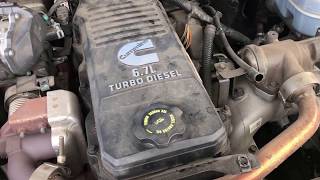
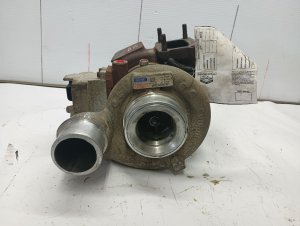
Used OEM Parts in Stock
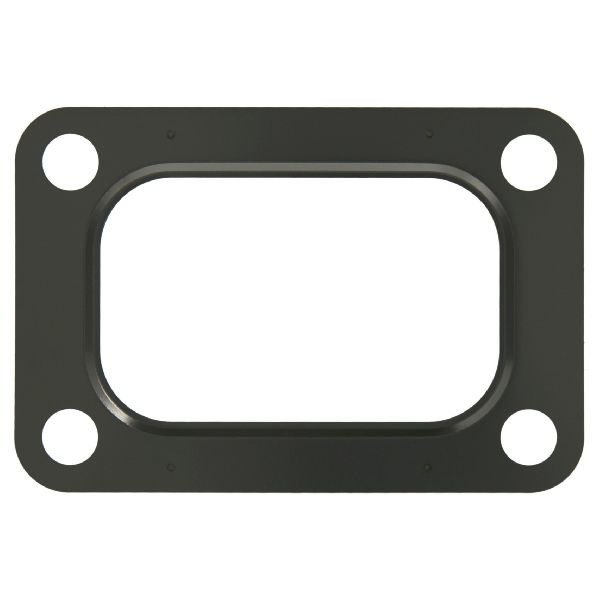
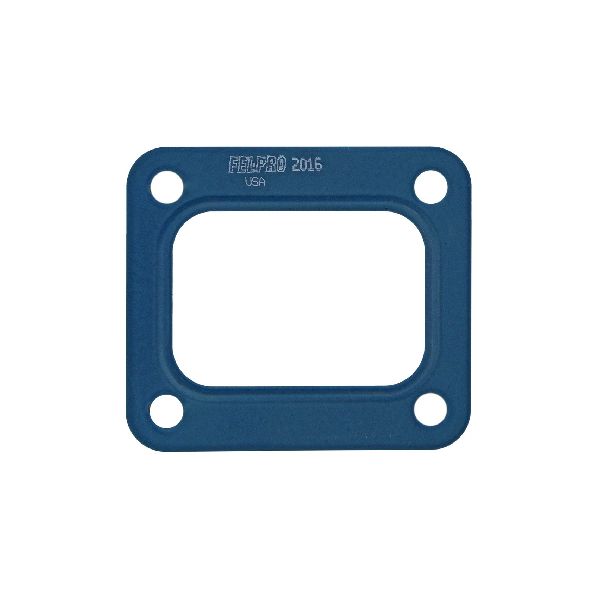
New Aftermarket Parts Available


The information in this article is provided for general reference and educational purposes only. Vehicle specifications, procedures, and part compatibility can vary by production date, trim level, and region. Always consult your vehicle's factory service manual and verify part numbers before purchasing or performing repairs. Safety-critical components such as airbags, seat belts, and braking systems should be installed by a qualified professional.
- Ram 2500:
- 🧭 Diagnostic Flowchart
- 🎬 Helpful Videos
- 🛍️ Shop This Part
- What's Unique About the 2014-2020 Ram 2500
- Symptoms You May Notice
- Most Likely Causes
- Rare But Worth Checking
- Diagnosis Steps
- Parts You'll Likely Need
- Related Codes That Often Appear With This One
- Technical Service Bulletins (TSBs) & Recalls
- Platform-Specific Known Issues
- Mechanic-Grade Diagnostic Values
- Scan Tool Commands That Help
- Wiring & Ground Locations
- Real Owner Repair Stories
- When the Usual Fixes Don't Work
- OEM Part Supersession History
- Model Year Variations Within This Range
- 🎟️ Get 5% Off