

P2583 on 2011-2024 Dodge Durango: ADAS Radar Fault OR Brake Vacuum Pump Failure
On a 2011-2024 Dodge Durango, code P2583 has two possible meanings. If you have Adaptive Cruise Control (ACC) and see warnings for 'ACC/FCW Unavailable', it's a front radar sensor issue. If you have a hard brake pedal, it likely indicates a failure of the auxiliary brake vacuum pump, common on 3.6L V6 models.
- P2583 on a Durango has two very different meanings. Your symptoms are the key to diagnosis.
- If you get an 'ACC/FCW Unavailable' warning, the problem is your ADAS front radar. Start by cleaning the sensor in the front bumper.
- If your brake pedal is hard to press, the problem is in your power brake system, most likely the auxiliary vacuum pump on 3.6L V6 models.
- Do not drive the vehicle if the brake pedal is hard. The loss of power assist is a serious safety risk.
- Any repair involving the ADAS radar, including realignment after a minor bump, requires expensive, specialized calibration equipment.
What's Unique About the 2011-2024 Dodge Durango
The confusion with code P2583 on the Durango stems from its dual use within the Stellantis (formerly FCA) family. While many modern vehicles use this code for ADAS radar issues, Dodge also appears to use it for the brake vacuum pump, a critical component on the 3.6L Pentastar V6 which doesn't produce enough natural engine vacuum for the power brakes. Owners must first determine their symptoms: electronic warnings about cruise control point to the radar, while a physical hard brake pedal points to the vacuum pump.
Symptoms You May Notice
- Check Engine Light is on
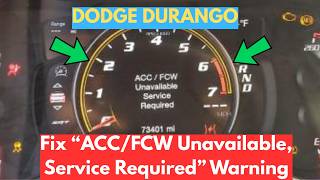
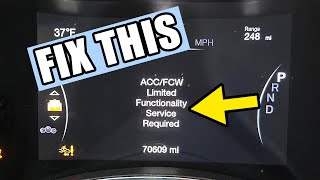
- If ADAS Radar Fault: 'ACC/FCW Unavailable, Service Required' message on the dash, Adaptive Cruise Control not working, Forward Collision Warning disabled.
- If Brake Vacuum Pump Fault: Hard brake pedal requiring extreme effort to press, Increased stopping distance, Hissing noise from the engine bay, especially when brakes are applied.
- Replacing the brake booster when the actual fault is the auxiliary vacuum pump or its pressure sensor.
- Replacing the ADAS radar sensor when it only needed cleaning or professional realignment.
Most Likely Causes
- Front Radar Sensor Obstructed or Dirty (ADAS-equipped vehicles) 🔴 High Probability → Shop Collision Avoidance Sensor The sensor is located in the lower front grille/fascia, making it vulnerable to dirt, snow, ice, and road debris. Even heavy rain can sometimes trigger the warning temporarily.
How to confirm: Visually inspect the front radar sensor, which is often behind a plastic bezel in the lower grille. Clean the area thoroughly with a soft cloth. The code may clear on its own after cleaning and an ignition cycle.
Typical fix: Clean the sensor face. If the code returns, diagnosis for misalignment or failure is needed.
Est. part cost: $0 - Brake Vacuum Pump Failure (Primarily 3.6L V6 models) 🔴 High Probability The auxiliary electric vacuum pump is a known failure point on many Stellantis products using the 3.6L Pentastar engine, including the Durango and its platform-mate, the Jeep Grand Cherokee.
How to confirm: With the engine off, pump the brakes until the pedal is hard. Start the engine while holding pressure on the pedal. If the pedal does not drop and soften, the vacuum assist is not working. A technician can test the pump's vacuum output with a gauge.
Typical fix: Replace the brake vacuum pump and associated seals.
Est. part cost: $150-$350 - Front Radar Sensor Misalignment (ADAS-equipped vehicles) 🟡 Medium Probability → Shop Collision Avoidance Sensor Minor front-end impacts, hitting a curb, or even harsh potholes can knock the sensor out of its precise alignment.
How to confirm: This requires a professional scan tool to read the specific suffix codes (like P2583-76 for misalignment). A visual inspection may reveal a damaged mounting bracket.
Typical fix: The radar sensor must be professionally re-aimed and calibrated using specialized ADAS equipment. This is not a DIY task.
Est. part cost: $0 (Labor for calibration is the main cost, typically $250-$600). - Failed Brake Booster Pressure Sensor ⚪ Low Probability → Shop Power Brake Booster While less common for this specific code, a failed pressure sensor can cause similar hard-pedal symptoms and is a known issue on this platform, often triggering code P0556.
How to confirm: Diagnose with a professional scan tool to monitor sensor data. Test the sensor's wiring and connector for continuity and voltage.
Typical fix: Replace the brake booster pressure sensor.
Est. part cost: $30-$90
Rare But Worth Checking
- Front Radar Sensor Internal Failure (ADAS-equipped vehicles): → Shop Collision Avoidance Sensor If cleaning and realignment do not resolve the issue, and the wiring is intact, the sensor itself may have failed internally. This is an expensive part to replace.
- Wiring or Connector Issue: Damage to the wiring harness or corrosion in the connector for either the ADAS radar or the vacuum pump can cause this code. A thorough visual inspection of the harness is warranted.
Diagnosis Steps
- Identify Symptoms: First, determine the primary symptom. Is it a 'Service ACC/FCW' message on the dash, or is it a physically hard brake pedal? This is the most important step to guide your diagnosis.
- Scan for Codes: Use an advanced OBD-II scanner to read the code and any manufacturer-specific suffix codes. A code like P2583-76 (Misalignment) or P2583-97 (Obstruction) definitively points to the ADAS radar.
- For ADAS Symptoms: Visually inspect and thoroughly clean the front radar sensor area in the lower grille. Check for any physical damage to the sensor or its mounting bracket.
- For Hard Pedal Symptoms: Inspect the brake vacuum pump, typically located on the engine. Check its electrical connector and listen for operation. Inspect all vacuum hoses connected to the pump and brake booster for cracks or leaks.
- Test Brake Booster: With the engine off, pump the brake pedal 4-5 times to deplete any residual vacuum. Hold the pedal down with firm pressure and start the engine. The pedal should drop slightly as vacuum builds. If it doesn't, there is a lack of vacuum from the pump or a leak in the system.
- Professional Calibration/Diagnosis: If an ADAS issue is suspected and cleaning doesn't help, the vehicle must go to a dealer or qualified shop for radar calibration. If a vacuum pump issue is suspected but not obvious, a technician can test the pump's output and check related sensors.
Parts You'll Likely Need
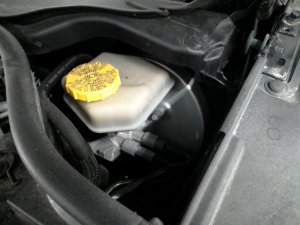
- Brake Booster Vacuum Pump
(OEM #68443859AB (replaces 68443859AA))— This is the most likely part to fail if you are experiencing a hard brake pedal with code P2583, especially on 3.6L V6 models.
Trusted brands: Mopar, Dorman, Hella
OEM price range: $330-$515.
Aftermarket price range: $150-$250 - Front Distance Range Sensor (ADAS Radar) — If cleaning and realignment fail to fix the 'ACC/FCW Unavailable' message, the sensor itself may have failed. Replacement is expensive and requires professional calibration.
Trusted brands: Mopar
OEM price range: $900-$1400
Aftermarket price range: Not generally available
Related Codes That Often Appear With This One
- P0556 — This code specifically points to a 'Brake Booster Pressure Sensor Circuit Range/Performance' issue. If you see P2583 with a hard pedal, but also have P0556, the pressure sensor is a more likely culprit.
- U0235 — This code means 'Lost Communication With Cruise Control Front Distance Range Sensor'. If seen with P2583, it points strongly to a wiring, connector, or complete failure of the ADAS radar module.
Technical Service Bulletins (TSBs) & Recalls
- 09-008-15 — Relates to oil filter housing leaks on 2014 model year vehicles with the 3.6L Pentastar engine.
- S2209000003 — A technical bulletin advising technicians on proper diagnosis of oil leaks from the Oil Filter Assembly (OFA) on 3.6L engines, noting that the assembly is often replaced unnecessarily. It provides part numbers for specific O-ring and gasket kits to repair leaks without replacing the entire housing.
Platform-Specific Known Issues
- A recall (NHTSA Campaign P14 / Chrysler P14) was issued for 2011-2014 Dodge Durango models for a brake booster that could allow water intrusion, potentially freezing and limiting braking ability. While not directly for the vacuum pump, it highlights known issues within the power brake system of this platform.
Mechanic-Grade Diagnostic Values
- Brake Booster Vacuum Level — expected: At least 15-16 inHg (inches of Mercury), with many healthy engines producing 18 inHg or more.. Failure: Vacuum level below 15 inHg indicates insufficient vacuum from the engine or auxiliary pump to operate the booster correctly.
- Brake Vacuum Pump Direct Test — expected: When 12V is applied directly to the pump's terminals, the motor should run and you should feel suction at the vacuum port.. Failure: If the pump does not run, or runs but creates no vacuum, it has failed internally. If it spits air out, the polarity is reversed.
Hidden / Shadow Codes Worth Checking
- P2583-97: Indicates the Front Distance Range Sensor (ADAS Radar) is obstructed by dust, dirt, snow, or other debris. (see via Requires an advanced scan tool (like the dealer's wiTECH) capable of reading manufacturer-specific suffix codes.)
- P2583-76: Indicates the Front Distance Range Sensor (ADAS Radar) is misaligned and requires calibration. This can be caused by minor impacts or even damaged mounting clips. (see via Requires an advanced scan tool (like the dealer's wiTECH) capable of reading manufacturer-specific suffix codes.)
Scan Tool Commands That Help
- wiTECH (or equivalent professional ADAS tool): ACCM Mode Auto Alignment / ADAS Calibration — This function is required after replacing the front radar sensor, after front-end body repairs, or to clear a P2583-76 misalignment code. The procedure often involves a dynamic calibration where the vehicle must be driven at a specific speed range (e.g., above 25 mph) for the sensor to align itself.
- wiTECH (or equivalent professional scan tool): Vacuum Pump Actuation Test — This is a bidirectional test to command the auxiliary brake vacuum pump to turn on. It's used to verify if the pump motor is functional and if the control circuit (relay, wiring) is working, separating a failed pump from a control-side issue.
Wiring & Ground Locations
- Front Distance Range Sensor Connector — Plugs into the ADAS radar sensor, located in the lower front grille/fascia area.. This is an 8-pin connector that provides power, ground, and CAN bus communication to the radar. Damage or corrosion here will cause communication codes like U0235 and performance codes like P2583.
- Brake Vacuum Pump Relay Control Wire — On a 2015 Durango with the 3.6L engine, this is a Dark Green/Yellow wire at Pin 6 of the Powertrain Control Module (PCM) C1 connector.. A technician can test this circuit for a signal from the PCM to the vacuum pump relay. A lack of signal could indicate a PCM or wiring issue, rather than a failed pump.
Real Owner Repair Stories
- YouTube - Al Intikhab Auto Maintenance Workshop (2019 Dodge Durango) — ACC/FCW Unavailable warning light on the dash after the front bumper was removed and reinstalled.
❌ Tried (didn't work) Clearing codes without performing calibration.
✅ What actually fixed it The technician used a scan tool to initiate the 'ACCM Mode Auto Alignment' function. This required a dynamic calibration, driving the vehicle between 25 and 78 mph until the scan tool showed the alignment process reached 100%, which cleared the fault. - Reddit user in r/DodgeDurango (2018 Dodge Durango Citadel, 90k miles) — Intermittent 'adaptive cruise control malfunction' warning, Check Engine Light, ABS disabled, lane assist and emergency braking not functioning.
❌ Tried (didn't work) Replacing main battery., Replacing auxiliary battery., Mechanic suggested replacing cruise control switch (owner declined).
✅ What actually fixed it The issue was not fully resolved in the thread, but another user with a 2013 Citadel reported a similar ACC issue was diagnosed by the dealer as a failed front radar sensor, with a quoted repair cost of $4500. This highlights that when cleaning/calibration fails, sensor replacement is the next step.
OEM Part Supersession History
68443859AA→68443859AB— The reason for the supersession is not officially documented in public sources, but it is common for parts with high failure rates to be updated with improved internal components or materials to increase longevity.
Model Year Variations Within This Range
- 2011-2013: Early models in this generation were less likely to have the ADAS package as standard. The P2583 code on these vehicles is more likely to be related to the brake vacuum pump. These years were also subject to NHTSA recall P14 for water intrusion into the brake booster.
- 2014-2024: Following the 2014 model year refresh, ADAS features like ACC and FCW became more common, especially on higher trims like the Citadel and RT. On these later models, P2583 has a higher probability of being related to the front radar sensor. The brake vacuum pump issue remains prevalent on 3.6L V6 models throughout the entire generation.
Diagnostic Flowchart
Other Known Issues on This Vehicle
Issues unrelated to this code that are worth knowing about as an owner of this generation:
- Cracked Oil Cooler / Filter Housing (3.6L V6) 🔴 High — Very common, especially on models over 60,000 miles. The plastic housing, located in the engine valley, cracks from heat cycles, causing significant oil and/or coolant leaks. (Ref: TSB #09-008-15, TSB #S2209000003)
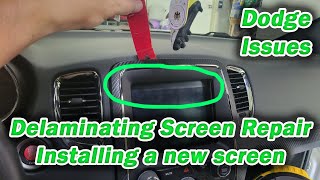
- Uconnect Screen Delamination 🟠 Medium — Extremely common on 2018 and newer models with the 8.4-inch screen. The screen's layers separate, causing bubbling and 'ghost touches' that make the radio, climate control, and navigation unusable.
- Totally Integrated Power Module (TIPM) Failure 🔴 High — Most prevalent on 2011-2013 models. A faulty fuel pump relay within the TIPM can cause the engine to stall while driving or fail to start. (Ref: Recalls #14V530000, #15V115000, #19V813000)
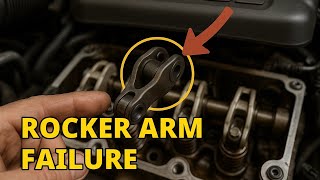
- Rocker Arm / Camshaft Failure ('Pentastar Tick') 🔴 High — Common on 3.6L V6 engines across many model years. Worn needle bearings in the rocker arms cause a ticking noise, which, if ignored, leads to camshaft damage, misfires, and costly engine repairs. (Ref: A class-action lawsuit was filed regarding this issue.)
- Water Pump Failure (3.6L V6) 🟠 Medium — A common failure point, often occurring between 60,000 and 100,000 miles, leading to coolant leaks and potential overheating.
- Rear Spoiler Loosening or Detaching 🟠 Medium — Affects 2021-2023 models. The rear spoiler may not be aligned properly, causing it to become loose or even detach from the liftgate. (Ref: Recall #23V-116)
Used vs. New Parts: Buying Guide for This Vehicle
When a used part is the smart pick: A used ADAS radar sensor from a reputable salvage yard can be a cost-effective option, as the part itself is very expensive new. However, the cost savings can be offset by the mandatory calibration.
Donor-vehicle mileage cap: roughly under 70000 miles for the part to have meaningful remaining life.
What to inspect on the donor part:
- For an ADAS Radar Sensor: Ensure the donor vehicle did not have a front-end collision. Inspect the sensor for any cracks in the housing and check that the connector pins are clean and straight. Get the VIN of the donor car to verify its equipment.
- For a Brake Vacuum Pump: Given the high failure rate, a used pump is very risky. If you must buy used, listen for it to run on the donor car if possible and check for any cracks in the housing.
OEM-only on this vehicle (don't cheap out):
- Front Distance Range Sensor (ADAS Radar) - While used is an option, aftermarket versions are not available, making OEM (new or used) the only choice.
Aftermarket brands forum-validated for this vehicle:
- For the Brake Vacuum Pump: Dorman (e.g., part #904-825) and Hella are commonly cited as reliable aftermarket alternatives to the more expensive Mopar part.
Brands owners have reported issues with on this vehicle:
- Unbranded, no-name brake vacuum pumps from online marketplaces should be avoided, as quality control is unknown and failure could compromise the braking system.
Real Owner Stories
Aggregated from forums and TSBs cited above. Mileages and costs reflect what owners reported in those sources.
2014 Dodge Durango 3.6L V6
Symptoms: The dashboard displayed an 'ACC/FCW Unavailable' message, and the Adaptive Cruise Control stopped working.
What fixed it: Thoroughly cleaning the front radar sensor located in the lower grille.
Source hint: DodgeDurango.net Forum thread titled 'ACC/FCW unavailable help'
2011 Dodge Durango R/T
Symptoms: Intermittent 'ACC/FCW Disabled, Radar sensor not available' messages appearing on the dash.
What fixed it: The discussion noted that failures in other modules can trigger these messages, requiring a professional scan tool to identify the specific fault.
Source hint: DodgeForum.com thread titled 'Adaptive Cruise/FCW Not working'
Related OBD-II Codes
Frequently Asked Questions
My 2014 Durango has a 'Service ACC/FCW' message; could this be related to the oil filter housing TSB?
Is there a recall for the brake issues on my 2012 Durango that might cause a hard pedal?
Why does my 3.6L Durango have a hard brake pedal while my friend's 5.7L Hemi does not seem to have this vacuum pump issue?
Can I fix the P2583-76 misalignment code on my Durango at home?
Will cleaning the front grille area fix the 'ACC/FCW Unavailable' message?
Helpful Videos
Used OEM Parts in Stock
New Aftermarket Parts Available


The information in this article is provided for general reference and educational purposes only. Vehicle specifications, procedures, and part compatibility can vary by production date, trim level, and region. Always consult your vehicle's factory service manual and verify part numbers before purchasing or performing repairs. Safety-critical components such as airbags, seat belts, and braking systems should be installed by a qualified professional.
- Dodge Durango:
- 🧭 Diagnostic Flowchart
- 🎬 Helpful Videos
- 🛍️ Shop This Part
- What's Unique About the 2011-2024 Dodge Durango
- Symptoms You May Notice
- Most Likely Causes
- Rare But Worth Checking
- Diagnosis Steps
- Parts You'll Likely Need
- Related Codes That Often Appear With This One
- Technical Service Bulletins (TSBs) & Recalls
- Platform-Specific Known Issues
- Mechanic-Grade Diagnostic Values
- Hidden / Shadow Codes Worth Checking
- Scan Tool Commands That Help
- Wiring & Ground Locations
- Real Owner Repair Stories
- OEM Part Supersession History
- Model Year Variations Within This Range
- Other Known Issues on This Vehicle
- Used vs. New Parts: Buying Guide for This Vehicle
- Real Owner Stories
- 2014 Dodge Durango 3.6L V6
- 2011 Dodge Durango R/T
- Related OBD-II Codes
- Frequently Asked Questions
- 🎟️ Get 5% Off