

OBD-II Code P2602: Coolant Pump 'A' Control Circuit Low
The Ultimate Guide to Diagnosing and Fixing P2602
- Code P2602 flags a low-voltage electrical fault in the auxiliary coolant pump circuit, meaning the pump is receiving less than the required 11-14 volts.
- Always test the 10A-20A pump fuse and relay before replacing the pump, as a blown fuse is the cheapest and most common fix.
- Stop driving immediately to prevent catastrophic engine overheating, which causes $1,500 to $3,000 in head gasket or cylinder head damage.
- Verify power and ground at the pump's electrical connector using a multimeter before spending $200+ on a replacement pump.
- Check for manufacturer Technical Service Bulletins (TSBs), specifically Subaru's TCV warranty extension (WMM-23) or Honda's software update (A14-021), which fix this code for free.
What Does P2602 Mean?

The Powertrain Control Module (PCM) detected a low-voltage condition in the electrical circuit for 'Coolant Pump A'. This secondary electric pump assists the main water pump by circulating coolant for turbochargers, hybrid inverters, or cabin heaters during start/stop events. The 'Low' designation means the circuit voltage dropped below the required operating threshold (typically under 11V), indicating a broken wire, corroded connection, blown fuse, or failed pump motor.
Technical definition: The SAE/OBD-II definition is "Coolant Pump 'A' Control Circuit Low". The PCM sets this DTC when it commands auxiliary coolant pump 'A' to activate but detects an open circuit, faulty ground, or insufficient voltage return, preventing pump operation.
Can I Drive With P2602?

No — Do Not Drive. Do not drive. Code P2602 indicates the auxiliary coolant pump circuit has failed, leading to rapid engine overheating. Continuing to drive forces the engine into a reduced-power 'limp mode' and risks catastrophic damage, such as a blown head gasket ($1,500-$3,000) or a warped cylinder head requiring full engine replacement. Tow the vehicle to a repair facility.
Common Causes

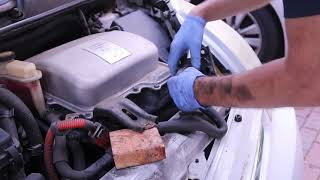
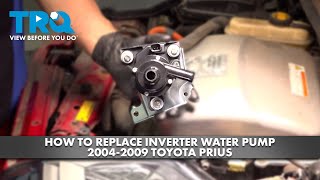
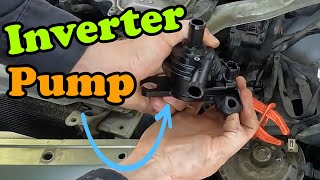
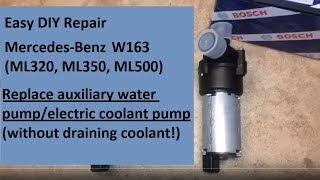
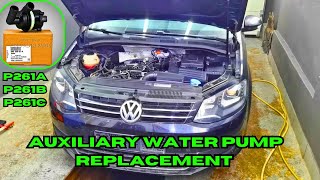
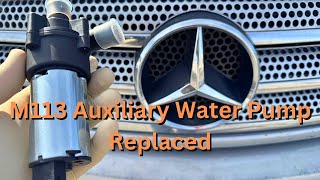
- Failed or seized electric auxiliary coolant pump (Very Common) — The internal electric motor of the auxiliary coolant pump is the most frequent point of failure. It wears out, seizes, or develops an internal short, preventing operation and causing a low voltage reading. 🎬 Watch: A step-by-step guide to replacing a failed auxiliary pump.
- Blown fuse or faulty relay (Common) — The auxiliary pump's circuit is protected by a fuse (often 10A-20A) and activated by a relay. A blown fuse creates an open circuit, and a faulty relay fails to close, preventing power from reaching the pump. 🎬 See how to locate and replace the auxiliary pump fuse.
- Damaged wiring or corroded connectors (Common) — The wiring harness leading to the pump degrades from heat and vibration. Wires fray, break, or short to ground. Electrical connector pins corrode from moisture, creating high resistance and triggering the code.
- Poor ground connection (Less Common) — A complete electrical circuit requires a solid ground. A corroded, loose, or broken ground strap increases resistance, which the PCM interprets as a low voltage condition.
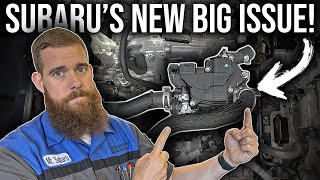
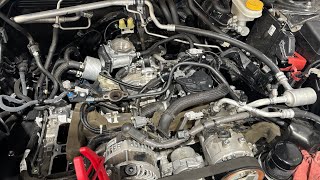
- Internal leak in a smart valve (Subaru specific) (Less Common) — On 2019-2022 Subaru models, the Thermo Control Valve (TCV) leaks coolant internally. This corrodes its integrated circuit board and triggers various cooling-related codes, including pump circuit faults. 🎬 Watch: Understanding the Subaru Thermo Control Valve failure issue.
- Faulty pump control module (Rare) — Some vehicles use a separate module to control the auxiliary pump. This module fails internally, preventing it from sending the correct voltage to the pump.
- Faulty Powertrain Control Module (PCM) (Rare) — The internal driver circuit inside the PCM that controls the pump fails in extremely rare cases. Only explore this after exhaustively testing the pump, wiring, fuses, and grounds.
Symptoms
- Check Engine Light is on — The primary and most immediate symptom is the illumination of the Malfunction Indicator Lamp (MIL) on the dashboard.
- Engine running hot or overheating — The temperature gauge rises above normal (typically >220°F/104°C) in stop-and-go traffic. The dashboard displays 'Cooling System Malfunction' or 'Engine Temperature High' warnings.
- Reduced engine performance ('Limp Mode') — The vehicle's computer activates a fail-safe 'limp mode,' significantly reducing engine power and limiting acceleration to prevent catastrophic overheating.
- Weak or no cabin heat — Vehicles using the auxiliary pump for the heater core (common in start/stop systems) blow cold air from the vents, especially at idle.
- Cooling fan runs constantly — The main radiator cooling fan runs continuously at high speed to compensate for the failed auxiliary pump.
Diagnostic Flowchart
Tap your situation to follow the diagnostic path that matches what you're seeing on this code.
Common Fixes & Costs
- Replace a blown fuse or faulty relay — Parts: $5-$30, Labor: $50-$100, ~0.5 hr book time (DIY)
- Replace the auxiliary coolant pump — Parts: $100-$450, Labor: $150-$400, ~1.5 hr book time (Intermediate)
- Repair damaged wiring or replace connector — Parts: $20-$60, Labor: $100-$250, ~2 hr book time (Intermediate)
- Clean or repair a ground connection — Parts: $5-$20, Labor: $50-$100, ~0.5 hr book time (DIY)
- Replace the pump control module — Parts: $600-$900, Labor: $200-$300, ~2.5 hr book time (Professional)
Used vs. New Parts: Buying Guide
When a used part is worth it: A used auxiliary coolant pump from a low-mileage vehicle is a cost-effective option for older cars where a new OEM part is cost-prohibitive.
Donor-vehicle mileage cap: roughly under 60000 miles for the part to have meaningful remaining life.
Donor quality checklist:
- Verify the donor vehicle was not scrapped due to engine overheating or electrical issues.
- Visually inspect the used pump for cracks, corrosion on the electrical connector, or signs of leaking.
- Match the part number exactly to ensure correct flow rate and electrical connections.
Decision logic:
- If Vehicle is under warranty or less than 5 years old → Buy a new OEM part to ensure compatibility and reliability.
- If A new aftermarket part with a good warranty is available for a similar price to a used part → Favor the new aftermarket part for its warranty coverage.
- If Vehicle is over 10 years old and budget is the primary concern → A tested, used part from a reputable salvage yard is an acceptable risk.
Warranty tradeoff: Used parts typically offer a 30-90 day warranty covering only the part. New aftermarket parts offer 1-year to limited lifetime warranties. New OEM parts carry a 12-month manufacturer's warranty.
Worst-case if a used part fails: $200-$450 if a used pump fails shortly after installation, requiring repeat labor costs.
What Happens If You Wait — Timeline
- 0-1 month: Code P2602 sets, and the Check Engine Light illuminates. The auxiliary pump circuit disables. Functions like cabin heat at idle or turbo cooling are lost. (MPG impact: 0-2%% · Added cost: $0)
- 1-3 months: Engine temperature rises in stop-and-go traffic, forcing the main cooling fan to run constantly. In hybrid vehicles, the gas engine runs more often, dropping fuel economy. (MPG impact: 2-5%% · Added cost: $20-$75 in wasted fuel.)
- 3-6 months: Chronic overheating episodes degrade seals and gaskets. For turbocharged cars, the lack of after-cooling cooks oil in the turbo bearings, leading to premature turbo failure. (MPG impact: 5-10%% · Added cost: $500-$2,000 (potential turbocharger replacement).)
- 6+ months: Catastrophic engine damage occurs. Severe overheating warps the cylinder head or blows the head gasket, allowing coolant and oil to mix. (MPG impact: 10-25% (before total failure)% · Added cost: $2,500-$10,000+)
Cost of Not Fixing It
- Immediate to 1 month: Engine overheating in traffic. Reduced or no cabin heat. Vehicle enters a reduced-power 'limp mode'. (Added cost: Negligible, but high risk of being stranded.)
- 1 to 6 months: Chronic overheating warps the cylinder head or blows the head gasket. Lack of proper cooling damages turbocharger bearings. (Added cost: $1,500-$4,000)
- 6+ months: Catastrophic engine damage. A severely warped cylinder head or damaged internal bearings requires a complete engine replacement. (Added cost: $4,000-$10,000+)
Diagnosis Steps

- Scan for All DTCs and Review Live Data
Use an OBD-II scanner to read all stored codes. Note related codes like P2601, P2603, or P2600. Access live data and monitor 'Auxiliary Coolant Pump Speed' or 'Coolant Pump Voltage'. A speed of 0 RPM or voltage near 0V when active strongly suggests a fault.
Tools: OBD-II Scanner (with Live Data) (Beginner) - Check the Fuse and Relay
Consult the owner's manual to locate the 10A-20A fuse and relay for the auxiliary coolant pump. Visually inspect the fuse; replace if blown. Swap the relay with an identical non-critical relay (like the horn) to test functionality.
Tools: Fuse puller or pliers (Beginner) - Perform a Visual Inspection
Trace the wiring harness from the auxiliary coolant pump backward. Look for chafed insulation, broken wires, or corrosion. Inspect the electrical connector at the pump for bent, loose, or corroded pins.
Tools: Flashlight, Inspection mirror (Beginner) - Test for Power and Ground at the Pump Connector
Disconnect the pump's electrical connector. With the ignition on, use a multimeter set to DC volts. Place the red lead on the power pin and black lead on the ground pin. You must read battery voltage (approx. 12.6V). A reading below 11V indicates an upstream fault. Switch to resistance (Ω) and check the ground pin's continuity to the chassis; it must read less than 0.1 ohms.
Tools: Digital Multimeter (Intermediate) - Test the Pump Motor Resistance
With the pump unplugged, set the multimeter to resistance (Ω). Measure across the power and ground terminals on the pump itself. The reading must fall within the manufacturer's specified range (typically 5 to 20 ohms). 'OL' indicates a broken internal winding; near 0 ohms signifies an internal short. Both confirm a failed pump.
Tools: Digital Multimeter (Intermediate) - Command the Pump On with a Bi-Directional Scanner
Use a bi-directional scan tool to perform an 'active test' commanding the auxiliary pump on. If you confirmed good power and ground at the connector (Step 4) but the pump fails to activate during this test, replace the pump.
Tools: Bi-directional OBD-II Scanner (Advanced) - Check for a Short to Ground
With the pump unplugged and fuse removed, set the multimeter to resistance (Ω). Place one lead on the power wire pin at the connector and the other on a chassis ground. The reading must be 'OL'. Low resistance indicates the power wire is shorted to ground in the harness.
Tools: Digital Multimeter (Advanced) - Perform a Voltage Drop Test
With the pump connected and commanded on, set the multimeter to a low DC voltage scale. Place the red lead on the positive battery terminal and black lead on the power pin at the pump connector. A reading above 0.5V indicates excessive resistance. Repeat for the ground side (red lead on ground pin, black lead on negative battery terminal). A reading over 0.1V points to a bad ground.
Tools: Digital Multimeter, Wire piercing probes (Advanced) - Check for a Signal with an Oscilloscope
For pumps controlled by a Pulse Width Modulated (PWM) signal, connect an oscilloscope to the signal wire. A healthy signal displays a clean square wave. The absence of this wave points to a wiring or PCM failure.
Tools: Oscilloscope (Professional)
When This Code Triggers (Freeze-Frame Conditions)
- Engine Coolant Temp: 185-220°F (85-104°C) (The code sets when the engine is fully warmed up and the PCM determines the auxiliary pump's assistance is needed to maintain optimal temperature.)
- Engine RPM: 0 or 650-1200 RPM (The fault is detected immediately after engine shutdown (for turbo cooling) or at idle when the auxiliary pump activates to supplement the main pump.)
- Vehicle Speed: 0-20 mph (The code triggers during idle or stop-and-go traffic, when the auxiliary pump is most needed to compensate for the low output of the mechanical pump.)
- Ambient Temperature: Any, but more common in cold weather (In vehicles where the pump supports cabin heating, it commands on more frequently in colder temperatures, increasing fault detection.)
Related Codes
- P2601 — Indicates 'Coolant Pump 'A' Control Circuit Range/Performance.' The signal is erratic or out of range, often caused by a failing pump motor creating electrical noise or a loose connection.
- P2603 — Indicates 'Coolant Pump 'A' Control Circuit High.' This is the direct opposite of P2602, caused by a short to power in the wiring harness or an internal pump failure.
- P2600 — Indicates 'Coolant Pump 'A' Control Circuit/Open.' Functionally identical to P2602. An open circuit results in a zero-voltage reading, which the PCM interprets as a 'low' condition.
- P261A — Indicates 'Coolant Pump 'B' Control Circuit/Open.' Points to a fault with a second auxiliary coolant pump, labeled 'B', on vehicles with multiple pumps.
Climate & Environmental Factors
- High Humidity / Road Salt: Moisture and road salt penetrate electrical connectors. Salt acts as an electrolyte, accelerating the corrosion of copper wires and connector pins, leading to high resistance or open circuits.
- Extreme Heat: High ambient temperatures increase thermal stress on the electric pump motor and electronics, accelerating wear and causing the pump to draw excessive current.
- Extreme Cold: Extreme cold makes plastic wire insulation brittle and prone to cracking from vibration, exposing copper wire to corrosion.
How to Talk to a Mechanic About This Code
Say this: "I have an OBD-II code P2602, which is 'Coolant Pump A Control Circuit Low'. I'd like to schedule a diagnostic to test the circuit. Please check for power and ground at the pump connector and test the pump motor before recommending a replacement."
This directs the mechanic to perform a proper electrical diagnosis rather than immediately replacing the most expensive part. It prevents unnecessary parts swapping and shows you are an informed customer.
Avoid saying:
- 'My check engine light is on, can you fix it?'
- 'My car is overheating, I think I need a new water pump.'
- 'Just do whatever it takes to fix it.'
Questions to ask before authorizing the repair:
- Did you confirm there is battery voltage at the pump's electrical connector when it's commanded on?
- What was the resistance reading across the pump motor terminals?
- Was the fuse for the pump circuit checked and is it good?
- If you are recommending a pump replacement, can you explain why the old one has failed?
Where to Take It: Dealer vs Independent vs Chain
- Dealer:
Best for: Vehicles under warranty, Newer vehicles (less than 5 years old) with complex electronics, Known manufacturer-specific issues covered by a TSB (e.g., Subaru TCV, Honda software update)
Downsides: Highest labor rates, typically 1.5-2x more than independent shops., Frequently recommends replacing an entire assembly when a smaller component has failed. (Typical cost: +50% vs. baseline) - Independent Shop:
Best fit. P2602 is a standard electrical circuit diagnosis that any competent independent shop handles effectively, often at a significant cost savings compared to a dealer.
Best for: Out-of-warranty vehicles where cost is a factor., Straightforward electrical and mechanical repairs., Vehicles with common, well-documented problems (e.g., Prius inverter pump).
Downsides: Diagnostic tool capability varies; ensure they have modern equipment., Quality varies greatly; vet shops based on reviews and ASE certifications. (Typical cost: +0% vs. baseline) - Chain Shop:
Avoid for diagnosis. A chain shop is likely to misdiagnose this code or replace parts unnecessarily. Only use if you have already diagnosed the problem yourself and it's a simple part swap.
Best for: Simple, routine maintenance like oil changes or tire rotations.
Downsides: Technician skill varies dramatically., Often lack the advanced diagnostic tools or experience for electrical circuit problems., High pressure to upsell unnecessary services. (Typical cost: -10% vs. baseline)
When to Walk Away From the Repair
If the estimated repair cost exceeds 50% of the car's current private-party market value, seriously consider selling or trading in the vehicle instead of repairing it.
- Car worth $3500, fix is $550: Fix it. The repair cost is well below the 50% threshold and restores a critical function.
- Car worth $4000, fix is $2100: Walk away. The repair cost is over 50% of the car's value. This is a bad investment.
- Car worth $15000, fix is $1200: Fix it. This is a reasonable cost relative to the vehicle's high value.
What Scan Tool You Need for This Code
Minimum: A scanner that reads live data PIDs (Parameter IDs) for coolant pump voltage and command status.
A $20 code reader only tells you the P2602 code exists. It fails to show if the computer is actually trying to turn the pump on or what voltage the circuit has, forcing you to guess at the cause.
Budget: BlueDriver Pro (~$100) — Connects to your smartphone and graphs live data, such as pump voltage and on/off status, to determine if the issue is the pump or the circuit.
Mid-range: Foxwell NT510 Elite / Autel MaxiCOM MK808S (~$160-350) — Offers bi-directional control. You use the scanner to directly command the auxiliary pump to turn on, instantly confirming if the pump motor works when it receives power.
Professional: Autel MaxiCOM MK906BT / Launch X431 Series (~$500-1200) — Provides full professional-level bi-directional control, advanced ECU coding (for module replacement), and detailed data graphing to diagnose complex intermittent wiring issues.
Rent vs buy: AutoZone and other parts stores offer a loaner tool program. However, these are often basic readers. For P2602, you need live data or bi-directional control, making a budget or midrange scanner a better investment.
How to Clear the Code After You Fix It
- Reconnect the battery if it was disconnected for the repair.
- Use an OBD-II scan tool to formally clear the P2602 code and any other related fault codes.
- Perform a complete drive cycle to allow the vehicle's readiness monitors to run their self-tests.
Drive cycle (~20 minutes): Start the engine cold and idle for 3 minutes. Drive in stop-and-go city conditions for 15 minutes. Drive for 5 minutes at a steady highway speed (55-65 mph). Allow the vehicle to cool down completely.
Readiness monitors affected: Comprehensive Component Monitor (CCM), Catalyst (CAT) monitor, Evaporative System (EVAP) monitor
Before emissions retest: drive at least 50 miles to fully set monitors.
Watch out for:
- Disconnecting the battery clears the code but resets all readiness monitors to 'Not Ready', causing an immediate emissions test failure.
- The P2602 code returns immediately if the underlying electrical fault remains.
- Failing to complete a full drive cycle leaves readiness monitors incomplete, preventing the vehicle from passing a smog check.
Will This Fail Emissions / State Inspection?
Yes — this code typically fails an OBD-II emissions inspection.
- California: An active P2602 code causes an automatic Smog Check failure. After repair, all readiness monitors (except EVAP for 2000+ models) must be 'Ready' before a re-test.
- New York: An illuminated Check Engine Light automatically fails the emissions portion of the annual state inspection. A full drive cycle must be completed post-repair.
- Texas: In the 17 counties requiring emissions testing, an active P2602 code or illuminated MIL results in an instant failure.
Most Commonly Affected Vehicles
- Toyota Prius (2004-2009) — Failure of the hybrid system's inverter coolant pump is a very common issue. The OEM part is G9020-47031.
- Honda Accord Plug-In / Hybrid (2014-2021) — TSB A14-021 resolves a sticking pump via software update on 2014 models. On newer hybrids, the electric coolant pump (19200-5K0-A01) frequently fails.
- Ford F-150, Explorer (2018-2020) — On models with auto start/stop, the auxiliary pump for cabin heating (JL3Z-18D473-A) or its electrical connector (WPT-1492) frequently fails.
- Lexus RX450h (2010-2015) — This code points to a failure of either the inverter coolant pump or the transmission oil pump (35300-48011), requiring front bumper removal to access.
- Volkswagen GTI, Jetta (2005-2012) — The auxiliary coolant pump that cools the turbocharger after engine shut-off is a common failure item.
- BMW Various (E90, E60, F10, etc.) (2006-2017) — BMWs use a primary electric water pump. Failure is critical. The pump and thermostat are replaced together as preventative maintenance.
- Hyundai Sonata Hybrid (LF HEV/PHEV) (2016-2019) — TSB 21-EM-007H addresses a failed Engine Electric Water Pump (EEWP). The diagnostic procedure applies to P2602.
- Subaru Forester, Outback, Legacy, Crosstrek (2019-2022) — A faulty Thermo Control Valve (TCV) leaks coolant internally, corroding electronics. Subaru issued TSB 09-119-24 and warranty extension WMM-23 covering this.
Manufacturer-Specific Notes
- Honda: For the 2014 Accord Plug-In, TSB A14-021 advises that a P2602 code is resolved with a Powertrain Control Module (PGM-FI) software update rather than hardware replacement.
- Toyota/Lexus (Hybrids): On 2010-2014 Prius models, inverter coolant pump failure leads to complete inverter failure. The inverter has an extended warranty (ZE3), making pump health critical.
- Ford: On F-150s with auto start/stop, the auxiliary pump maintains cabin heat when the engine is off. P2602 is frequently traced to this specific pump (JL3Z-18D473-A) or its connector (WPT-1492).
- Subaru: For 2019-2022 models with the 2.5L engine, cooling codes are frequently misdiagnosed as pump failures. The root cause is a leaking Thermo Control Valve (TCV), covered under extended warranty WMM-23.
- BMW: A P2602-equivalent BMW fault code indicates impending failure of the primary electric water pump. It is standard practice to replace the thermostat simultaneously.
Real Owner Stories
2018 Ford F-150 5.0L with Intermittent P2602
Check engine light illuminated with code P2602. The owner noticed the auto start/stop feature stopped providing heat when the engine was off. The code cleared on its own and returned randomly.
What they tried:
- Ignored the code initially due to lack of overheating.
- Consulted a forum and inspected the wiring harness near the auxiliary pump.
- Found the connector was loose with a broken locking tab.
Outcome: The owner secured the connector with a zip tie as a temporary fix, resolving the code. The permanent fix was replacing the connector pigtail (Motorcraft WPT-1492) for $40. The code did not return.
Lesson: Intermittent electrical codes frequently stem from poor connections rather than failed components. Always physically inspect and wiggle connectors before ordering expensive parts.
2007 Toyota Prius at 150K miles with P2602
The 'red triangle of death' and check engine light appeared. The gasoline engine ran constantly, and the temperature gauge climbed in traffic, risking inverter overheating.
What they tried:
- A mechanic scanned the codes, found P2602, and identified the inverter coolant pump as the culprit.
- The mechanic recommended immediate pump replacement based on the vehicle's history.
Outcome: The owner authorized the replacement. The new OEM pump (G9020-47031) and labor cost $450. After a coolant bleed, the code cleared, and the engine returned to normal operating temperature.
Lesson: On Gen 2 Prius models, inverter coolant pump failure is a well-documented certainty. While electrical testing is best practice, the pump itself is the overwhelming cause of this failure on this specific vehicle.
2020 Subaru Outback 2.5L with multiple cooling codes
Check engine light on with code P2602 and other cooling system codes. The vehicle drove normally, but failed an emissions test.
What they tried:
- A dealership initially suspected a faulty auxiliary water pump.
- The technician consulted Subaru's Technical Service Bulletins (TSBs).
- Found TSB 09-119-24, describing an internal leak in the Thermo Control Valve (TCV) causing corrosion and pump circuit codes.
Outcome: Subaru covered the repair under the extended TCV warranty (15 years / 150,000 miles). The dealership replaced the TCV assembly, clearing the codes at no cost to the owner.
Lesson: Always check for manufacturer TSBs and warranty extensions. Known design flaws, like the Subaru TCV, are frequently misdiagnosed as simple pump failures.
How to Prevent This Code From Triggering
- Perform cooling system flushes at recommended intervals (Every 30,000 to 60,000 miles, or as per owner's manual.) — Old coolant contains abrasive particles and becomes corrosive, damaging the delicate seals and internal bearings of the electric pump.
- Use the correct type of coolant and distilled water (Whenever topping off or flushing the system.) — Mixing coolant types creates sludge that clogs the pump. Using tap water introduces minerals that cause scale buildup and corrosion.
- Periodically inspect wiring harnesses and connectors in the engine bay (Annually, or during other routine maintenance.) — Visually checking for chafing or cracking catches potential open circuits or shorts before they trigger a fault.
- Apply dielectric grease to critical electrical connectors (Whenever a connector in a vulnerable area is disconnected.) — Dielectric grease blocks moisture and road salt from entering the connector and corroding the metal pins.
- Address coolant leaks promptly (As soon as they are noticed.) — Small leaks drop the coolant level, forcing the auxiliary pump to run dry and overheat. Leaking coolant also damages wiring insulation.
Frequently Asked Questions
What does 'Coolant Pump A' mean? Do I have more than one water pump?
Yes, many modern vehicles have a primary, engine-driven water pump and at least one secondary, electric pump. 'Coolant Pump A' is the generic OBD-II designation for one of these auxiliary pumps. They cool turbochargers, hybrid inverters, or provide cabin heat.
Where is the auxiliary coolant pump located?
The location varies greatly by vehicle make and model. It mounts to the front of the engine, near the radiator, inside a wheel well, or against the firewall. Consult your vehicle's specific service manual for the exact location.
Can I fix a P2602 code myself?
Simple fixes like replacing a blown fuse are DIY-friendly. However, most P2602 repairs require intermediate skills, including multimeter diagnostics and bleeding the cooling system. If you cannot safely test live circuits or bleed coolant, take the vehicle to a shop.
How much does it cost to fix P2602?
Repair costs range from $5 for a DIY fuse replacement to over $800 for a shop to replace the pump and control module. A typical auxiliary pump replacement costs between $250 and $800 for parts and labor. Replacing a damaged wiring pigtail averages $150 to $300.
What is the most common misdiagnosis for P2602?
The most common mistake is replacing the auxiliary coolant pump without testing the electrical circuit. Code P2602 specifically points to a 'Circuit Low' fault, which is frequently a broken wire, bad ground, or blown fuse. Always confirm power and ground at the connector before buying parts.
Can a weak or old battery cause a P2602 code?
Yes. A weak battery or failing alternator drops system voltage below the 12.4V threshold, triggering P2602 when the PCM activates the pump. Always verify battery health before diagnosing complex electrical faults.
Will clearing the P2602 code fix the problem?
No. Clearing the code only turns off the check engine light temporarily. The PCM continuously monitors the circuit and triggers the light again on the next startup if the low voltage condition persists.
Key Takeaways
- Code P2602 flags a low-voltage electrical fault in the auxiliary coolant pump circuit, meaning the pump is receiving less than the required 11-14 volts.
- Always test the 10A-20A pump fuse and relay before replacing the pump, as a blown fuse is the cheapest and most common fix.
- Stop driving immediately to prevent catastrophic engine overheating, which causes $1,500 to $3,000 in head gasket or cylinder head damage.
- Verify power and ground at the pump's electrical connector using a multimeter before spending $200+ on a replacement pump.
- Check for manufacturer Technical Service Bulletins (TSBs), specifically Subaru's TCV warranty extension (WMM-23) or Honda's software update (A14-021), which fix this code for free.
Helpful Videos

Shop the Parts Behind P2602
Below are the parts most often responsible for code P2602, ranked by how frequently each one is the actual culprit (per the diagnosis above). Tap any to see what we have for your vehicle.



The information in this article is provided for general reference and educational purposes only. Vehicle specifications, procedures, and part compatibility can vary by production date, trim level, and region. Always consult your vehicle's factory service manual and verify part numbers before purchasing or performing repairs. Safety-critical components such as airbags, seat belts, and braking systems should be installed by a qualified professional.
- 🧭 Diagnostic Flowchart
- 🎬 Helpful Videos
- 🛍️ Shop This Part
- What Does P2602 Mean?
- Can I Drive With P2602?
- Common Causes
- Symptoms
- Common Fixes & Costs
- Used vs. New Parts: Buying Guide
- What Happens If You Wait — Timeline
- Cost of Not Fixing It
- Diagnosis Steps
- When This Code Triggers (Freeze-Frame Conditions)
- Related Codes
- Climate & Environmental Factors
- How to Talk to a Mechanic About This Code
- Where to Take It: Dealer vs Independent vs Chain
- When to Walk Away From the Repair
- What Scan Tool You Need for This Code
- How to Clear the Code After You Fix It
- Will This Fail Emissions / State Inspection?
- Most Commonly Affected Vehicles
- Manufacturer-Specific Notes
- Real Owner Stories
- 2018 Ford F-150 5.0L with Intermittent P2602
- 2007 Toyota Prius at 150K miles with P2602
- 2020 Subaru Outback 2.5L with multiple cooling codes
- How to Prevent This Code From Triggering
- Frequently Asked Questions
- What does 'Coolant Pump A' mean? Do I have more than one water pump?
- Where is the auxiliary coolant pump located?
- Can I fix a P2602 code myself?
- How much does it cost to fix P2602?
- What is the most common misdiagnosis for P2602?
- Can a weak or old battery cause a P2602 code?
- Will clearing the P2602 code fix the problem?
- Key Takeaways
- 🎟️ Get 5% Off