

OBD-II Code P2606: Intake Air Heater 'B' Circuit Performance
The Ultimate Guide to Meaning, Diagnosis, and Repair
- P2606 points to an electrical performance failure, with a burned-out 150-amp heater relay being the most common culprit, rather than a dead heater element.
- Expect severe cold-weather symptoms below 50°F (10°C), including extended cranking times, rough idling, and excessive white or black exhaust smoke.
- Driving with P2606 risks a cold-weather no-start and adds $400–$1,000 in secondary damage to your starter, batteries, or Diesel Particulate Filter (DPF) if ignored.
- Never replace the heater element without first performing a voltage drop test; a reading above 0.5V on the power wire confirms a wiring or relay fault.
- The 'B' designation isolates the fault to a specific secondary circuit, requiring a wiring diagram to locate the exact relay and wiring harness affected.
What Does P2606 Mean?
P2606 means your vehicle's Powertrain Control Module (PCM) detected a performance issue with the intake air heater's 'B' circuit. This heater (often a grid heater in diesel engines) warms the incoming air to help the engine start and run smoothly in cold weather. The code triggers when the circuit's voltage, resistance, or current draw falls outside the PCM's expected operating range.
Technical definition: The SAE/OBD-II definition for P2606 is "Intake Air Heater 'B' Circuit Range/Performance". The PCM continuously monitors the control circuit for the 'B' designated intake air heater. If the PCM commands the heater ON and detects electrical values (voltage or resistance) that do not match the expected parameters for the current operating state (e.g., key on, engine cold, ambient temp below 50°F/10°C), it sets this code.
Can I Drive With P2606?
Yes, But With Caution. Yes, but ignoring it risks a no-start condition in cold weather. For diesel engines, prolonged operation with a faulty heater causes incomplete combustion, leading to rapid carbon buildup in the EGR valve and Diesel Particulate Filter (DPF). This strains the starter and battery from extended cranking, easily adding $500-$2,000+ to the final repair bill if left unaddressed.
Common Causes
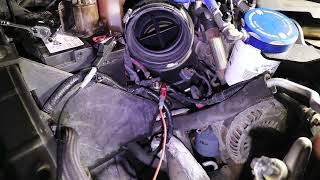
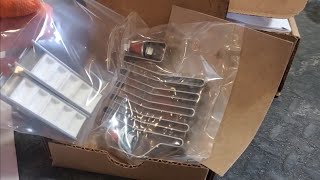
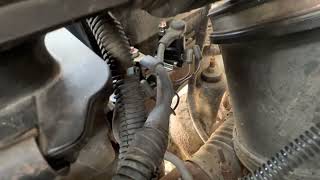
- Failed Intake Air Heater Relay (Very Common) — The relay acts as a heavy-duty switch handling the massive amperage (often 150+ amps) the heater requires. The internal contacts frequently burn out, corrode, or fail mechanically, preventing power from reaching the heater element. 🎬 Watch: Step-by-step Cummins grid heater and relay replacement guide.
- Wiring or Connector Issues (Very Common) — High-current wires and connectors are highly susceptible to heat and vibration damage. Corrosion at the connector pins, melted insulation, or chafed wires create high resistance or short circuits.
- Faulty Intake Air Heater Element (Common) — The internal coil of the heater element breaks or degrades over time due to thermal cycling and vibration. A healthy grid heater has extremely low resistance (0.5 to 2.0 Ohms); anything higher triggers a performance code.
- High Resistance in Ground Circuit (Common) — The heater circuit requires a flawless ground connection to the chassis or engine block. A loose, corroded, or broken ground strap creates high resistance, choking current flow.
- Blown Fuse or Fusible Link (Less Common) — A short circuit in the element or wiring blows the large protective fuse or fusible link, instantly cutting all power to the heater circuit.
- PCM Software/Calibration Issue (Less Common) — Factory PCM software is sometimes too sensitive, triggering P2606 when no hardware fault exists. Manufacturers release Technical Service Bulletins (TSBs) with software updates to correct these monitoring thresholds.
- Faulty Engine Coolant Temperature (ECT) or Intake Air Temperature (IAT) Sensor (Rare) — The PCM relies on temperature sensors to activate the heater. A skewed sensor incorrectly reporting a warm engine prevents heater activation, leading the PCM to flag a performance issue.
- Faulty Powertrain Control Module (PCM) (Very Rare) — The internal driver circuit within the PCM that controls the heater relay fails. This is the absolute last component to replace after exhaustively ruling out all wiring and relay faults.
Symptoms
- Check Engine Light is On — The Malfunction Indicator Lamp (MIL) illuminates on the dashboard.
- Difficulty Starting in Cold Weather — The engine cranks significantly longer than usual or fails to start entirely in temperatures below 50°F (10°C).
- Rough Idle and Hesitation When Cold — Immediately after a cold start, the engine idles erratically, stumbles, and exhibits sluggish throttle response until reaching normal operating temperature. 🎬 See how to diagnose hard starting issues in cold weather.
- Excessive Exhaust Smoke on Startup (Diesels) — Incomplete combustion from cold air causes the engine to produce heavy white or black smoke from the exhaust for the first few minutes of operation.
- Reduced Fuel Economy — Fuel efficiency drops by 5-10% as the engine runs in a richer, less optimal state during an extended warm-up phase.
Diagnostic Flowchart
Tap your situation to follow the diagnostic path that matches what you're seeing on this code.
Common Fixes & Costs
- Replace Intake Air Heater Relay — Parts: $35-$90, Labor: $30-$70, ~0.5 hr book time (DIY)
- Repair Wiring or Connector — Parts: $15-$60, Labor: $150-$400, ~2.0 hr book time (Intermediate)
- Replace Intake Air Heater Element — Parts: $50-$200, Labor: $75-$150, ~1.5 hr book time (DIY)
- Replace Blown Fuse or Fusible Link — Parts: $5-$30, Labor: $20-$50, ~0.2 hr book time (DIY)
- Replace Powertrain Control Module (PCM) — Parts: $700-$1500, Labor: $150-$300, ~1.5 hr book time (Professional)
DIY vs Professional
- Replace Blown Fuse or Fusible Link — Beginner:
- Replace Intake Air Heater Relay — Beginner:
- Replace Intake Air Heater Element — Beginner:
- Repair Wiring or Connector — Beginner:
- Replace Powertrain Control Module (PCM) — Beginner:
Used vs. New Parts: Buying Guide
When a used part is worth it: Buying used electrical components like relays and heater elements never makes sense. The savings are minimal, and the risk of receiving a degraded part is high.
Donor-vehicle mileage cap: roughly under 20000 miles for the part to have meaningful remaining life.
Donor quality checklist:
- Match the part number exactly.
- Avoid parts showing any signs of corrosion, heat damage (discoloration), or physical stress.
- For heater elements, verify resistance with a multimeter before installation.
Decision logic:
- If The part is an electrical relay or heater element → Always buy new. The cost difference is negligible compared to the labor cost of a repeat repair.
- If The part is a complex assembly (e.g., intake manifold with integrated heater) → Consider a low-mileage used part if the new OEM price is prohibitive, but prefer a new aftermarket unit with a warranty.
Warranty tradeoff: Used parts typically have a 30-90 day warranty. New aftermarket parts carry a 1-year to limited lifetime warranty. New OEM parts offer a 1-2 year warranty.
Worst-case if a used part fails: $200-$500 if a used part fails shortly after installation, primarily due to repeated labor charges.
What Happens If You Wait — Timeline
- 0-1 month: Check Engine Light illuminates. In cold weather (<50°F/10°C), engine cranks for a few extra seconds before starting. No other noticeable symptoms. (MPG impact: 0-5%% · Added cost: $0)
- 1-6 months: Hard starting in the cold becomes consistent. Increased cranking time puts significant strain on the starter motor and batteries. Excessive white/black smoke is visible from the exhaust. (MPG impact: 5-10%% · Added cost: $500-$1200 (Risk of premature starter and/or battery failure).)
- 6-12 months: Inefficient cold combustion accelerates soot production. The EGR valve becomes sticky, and the Diesel Particulate Filter (DPF) clogs quickly, leading to frequent regeneration cycles. (MPG impact: 7-12%% · Added cost: $500-$1000 (Cost for professional off-car DPF or EGR cleaning).)
- 12+ months: Catastrophic secondary failure occurs. The DPF clogs beyond cleaning, requiring full replacement. On 6.7L Cummins engines, the grid heater bolt breaks off and destroys the engine. (MPG impact: 10-20%% · Added cost: $2,500-$20,000+ (Cost for DPF replacement or complete engine replacement).)
Cost of Not Fixing It
- 0-3 months: Hard starting in cold weather, increased cranking time, and a 5-10% drop in fuel economy due to inefficient cold-engine operation. (Added cost: Negligible)
- 3-12 months: Premature wear on the starter and battery from extended cranking cycles. On diesel engines, increased soot production clogs the EGR valve and Diesel Particulate Filter (DPF). (Added cost: $400-$1000 (Starter/Battery Replacement).)
- 12+ months: Severe clogging of the DPF requiring professional cleaning or complete replacement. On 6.7L Cummins engines, a failing grid heater bolt breaks off and destroys the engine internals. (Added cost: $800-$6000+ (DPF Replacement), $10,000+ (Engine Repair/Replacement).)
Diagnosis Steps
- Scan for Codes and Review Freeze Frame Data
Use an OBD-II scanner to retrieve all stored codes. Note related codes like P2605 (Open), P2607 (Low), or temperature sensor codes. Analyze the freeze-frame data to identify the exact engine and ambient temperatures when P2606 triggered.
Tools: OBD-II Scanner (Beginner) - Inspect Fuses and Relays
Locate the fuse and relay for the intake air heater circuit. Verify the fuse is intact. Check the relay for heat damage or corroded terminals. Swap the heater relay with an identical non-critical relay (like the horn) to see if the circuit functions.
Tools: Owner's Manual, Fuse Puller (Beginner) - Visually Inspect the Entire Circuit
Inspect the heavy-gauge wires routing to the heater element and relay. Look for melted insulation, chafing, or brittle wires. Check the connector at the heater element for corrosion, discoloration from overheating, and loose pins.
Tools: Flashlight, Inspection Mirror (Beginner) - Test the Heater Element Resistance
Disconnect the heater element and use a multimeter set to Ohms (Ω) to measure resistance across its terminals to ground. A healthy heater reads 0.5-2.0 Ohms. A reading of 'OL' (Over Limit) indicates a burned-out element requiring replacement.
Tools: Multimeter, Repair Manual (Intermediate) - [PRO TIP] Perform a Voltage Drop Test
Connect the red multimeter lead to the positive battery terminal and the black lead to the heater element's power-in terminal. Command the circuit ON with a scan tool. A reading above 0.5V confirms excessive resistance in the wiring or relay. Repeat on the ground side (heater housing to negative battery terminal); a reading above 0.2V confirms a poor ground.
Tools: Multimeter, Bi-Directional Scan Tool (Advanced) - [PRO TIP] Analyze Live Data & Command Heater On/Off
Navigate to the live data screen for the intake air heater circuit. With the engine cold (below 50°F/10°C), command the heater 'ON' and 'OFF'. Voltage should drop near battery voltage (11.5-12.5V) and current draw should spike (150+ amps). If values don't change, the relay or wiring has failed.
Tools: Advanced Bi-Directional Scan Tool (Advanced) - Check for Technical Service Bulletins (TSBs)
Search manufacturer TSBs related to P2606. Dealerships frequently release software updates to fix overly sensitive diagnostic parameters that cause false codes on specific model years.
Tools: Online Repair Database (Beginner) - [ADVANCED] Test IAT/ECT Sensor Accuracy
Disconnect the IAT or ECT sensor and measure its resistance with a multimeter. Compare the reading to a temperature-vs-resistance chart (e.g., 18 kΩ at 50°F). A significant deviation means the sensor is skewing data and preventing heater activation.
Tools: Multimeter, Temperature/Resistance Chart (Advanced) - Test the PCM Output Driver
If the element, wiring, relay, and grounds test perfectly, back-probe the specific PCM pin controlling the heater relay. With the circuit activated, verify the PCM sends the correct ground signal to energize the relay. An absent signal confirms a faulty PCM.
Tools: Multimeter, Wiring Diagram, Back-Probing Tools (Professional)
When This Code Triggers (Freeze-Frame Conditions)
- Engine State: Key-On, Engine-Off (Pre-start check (pre-heat cycle))
- Intake Air Temperature: < 50°F (10°C) (Cold ambient temperature enabling heater operation.)
- Engine Coolant Temperature: < 66°F (19°C) (Engine is cold, requiring heating assist.)
- Battery Voltage: 11.5V - 12.5V (During heater activation; voltage drop is expected.)
Related Codes
- P2605 — Indicates an Intake Air Heater 'B' Circuit/Open condition. Points to a complete break in the circuit, such as a burned-out heater element (infinite resistance), a blown fuse, or a severed wire.
- P2607 — Indicates Intake Air Heater 'B' Circuit Low. The PCM detects lower-than-expected voltage, typically caused by a short to ground in the control circuit or a failed PCM driver.
- P2608 — Indicates Intake Air Heater 'B' Circuit High. The PCM sees higher-than-expected voltage, pointing to a short to power where the control wire touches a live voltage source.
- P0542 — Indicates Intake Air Heater 'A' Circuit Low. Functionally similar but refers to the primary 'A' heater circuit. Presence alongside P2606 indicates a systemic issue like a shared faulty power source.
Climate & Environmental Factors
- Cold Temperatures: The intake air heater system only operates when ambient temperatures fall below 50°F (10°C). A fault goes unnoticed in summer but causes an immediate hard-start condition during the first cold snap.
- Humidity and Road Salt: Moisture and salt penetrate connectors, ground points, and relay terminals, creating high resistance that chokes current flow and triggers the P2606 performance code.
- High Altitude: Thinner air at high altitudes makes compression ignition in a cold diesel engine significantly harder. A functional intake air heater is mandatory to prevent a complete no-start situation.
How to Talk to a Mechanic About This Code
Say this: "I have a P2606 code and need a diagnostic. I suspect a high-resistance issue in the wiring, a bad relay, or a poor ground, not just the heater element. Can you perform a voltage drop test on the power and ground circuits to pinpoint the failure before replacing parts?"
This signals you understand P2606 is an electrical performance code, preventing the shop from blindly replacing the expensive heater element. It directs them toward professional voltage drop testing.
Avoid saying:
- 'My check engine light is on, can you look at it?'
- 'The internet says to replace the grid heater.'
- 'Just fix whatever you think is wrong.'
Questions to ask before authorizing the repair:
- What were the results of the voltage drop test on the power and ground sides?
- What was the resistance reading of the heater element itself?
- Did you test the relay, and if so, how?
- Can you show me the corroded connector or damaged wire you found?
- What is the warranty on the parts and labor for this repair?
Where to Take It: Dealer vs Independent vs Chain
- Dealer:
Recommended only if the vehicle is under warranty or a known TSB applies.
Best for: Vehicles still under powertrain or emissions warranty., When a specific Technical Service Bulletin (TSB) for a PCM reflash is the known fix., Complex electrical issues on newer, high-tech vehicles (e.g., BMW, VW).
Downsides: Highest labor rates, often 1.5-2x more than independent shops., Defaults to replacing entire assemblies instead of smaller components. (Typical cost: +50% vs. baseline) - Independent Shop:
Best overall fit. An independent shop with strong electrical diagnostic skills handles P2606 correctly and affordably.
Best for: Out-of-warranty diesel trucks (Cummins, Power Stroke, Duramax)., Vehicles where cost is a primary concern., Finding a technician who specializes in electrical or diesel systems.
Downsides: Quality and expertise vary widely. Vet shops based on reviews and ASE certifications., Lacks access to the very latest manufacturer software updates. (Typical cost: +0% vs. baseline) - Chain Shop:
AVOID for diagnosis. P2606 requires specific electrical tests beyond the scope of a typical chain shop.
Best for: Simple, clear-cut repairs like a battery or fuse replacement.
Downsides: Technician skill is highly variable., Lacks advanced diagnostic tools for complex electrical troubleshooting., High pressure to upsell leads to unnecessary part replacements. (Typical cost: -10% vs. baseline)
When to Walk Away From the Repair
If the estimated repair cost exceeds 40-50% of the car's private-party value, pause and consider your options.
- Car worth $15000, fix is $600: Fix it. This repair is well below the threshold and restores critical cold-weather functionality.
- Car worth $8000, fix is $3500: Borderline. The repair cost approaches 50% of the vehicle's value. Get a second opinion and consider the vehicle's overall condition.
- Car worth $12000, fix is $10000: Walk away. This represents a catastrophic failure (like an engine destroyed by the 'killer bolt'). The repair is not economically viable.
What Scan Tool You Need for This Code
Minimum: A scanner that reads live data streams for Intake Air Temperature (IAT), Engine Coolant Temperature (ECT), and system voltage.
A basic $20 code reader cannot show the live temperature and voltage data the PCM uses, nor can it command the heater circuit ON for testing. Effective diagnosis requires seeing what the computer sees.
Budget: BlueDriver Pro (~$99) — Reads and clears codes, displays freeze-frame data, and graphs live data for temperature and voltage sensors to check inputs.
Mid-range: Foxwell NT530 / KINGBOLEN Ediag Elite (~$150) — Adds bi-directional control. This allows you to command the intake heater relay 'ON' and 'OFF' from the scan tool, making voltage drop testing incredibly easy.
Professional: Autel MaxiCOM MK808S / XTool D7 (~$400-600) — Provides full professional-level bi-directional control, access to manufacturer-specific codes, and includes guided diagnostics and wiring diagrams directly on the tool.
Rent vs buy: Rent a basic scanner to confirm the code. However, to properly diagnose P2606, the bi-directional control of a mid-range tool is highly recommended for DIYers.
How to Clear the Code After You Fix It
- Use an OBD-II scan tool to clear the diagnostic trouble code (DTC).
- Perform a complete drive cycle to allow the vehicle's readiness monitors to run.
- Rescan the vehicle to ensure the code does not return.
Drive cycle (~20 minutes): From a cold start (engine coolant below 122°F/50°C), idle for 2-3 minutes. Drive in mixed city/highway conditions for 15-20 minutes, including steady-speed cruising and periods of deceleration without braking. Let the vehicle sit with the ignition off for 10 minutes.
Readiness monitors affected: Comprehensive Component Monitor, Catalyst Monitor
Before emissions retest: drive at least 50 miles to fully set monitors.
Watch out for:
- Disconnecting the battery clears the code but resets all readiness monitors, causing an immediate emissions test failure.
- The code returns on the next cold start if the underlying electrical fault is not properly repaired.
Will This Fail Emissions / State Inspection?
Yes — this code typically fails an OBD-II emissions inspection.
- California: An active Check Engine Light for code P2606 results in an automatic smog check failure. All readiness monitors must be 'Ready' to pass.
- New York: Any vehicle with an illuminated Check Engine Light automatically fails the emissions portion of the NYS inspection.
- Texas: In the 17 counties requiring emissions testing, an active P2606 code causes the vehicle to fail the On-Board Diagnostics (OBD-II) test.
Most Commonly Affected Vehicles
- Dodge Ram 2500/3500 (5.9L Cummins) (2003-2007) — The grid heater system draws immense amperage, heavily stressing the relays, wiring, and battery connections during cold starts. Failures are almost exclusively electrical.
- Ford F-Series Super Duty (6.4L/6.7L Power Stroke) (2008-2016) — Wiring harnesses on the 6.4L are highly susceptible to heat damage. On 2011-2016 6.7L models, always check for TSBs related to PCM software updates before replacing hardware.
- Chevrolet Silverado 2500/3500HD (Duramax) (2007-2016) — The cause is almost always the heater relay or the wiring to the heater element. On 2006-2008 models, failing Transmission Control Modules (TCMs) cause phantom electrical codes.
- GMC Sierra 2500/3500HD (Duramax) (2007-2016) — Mechanically identical to the Silverado, prone to the exact same intake air heater relay and wiring faults.
- Volkswagen Jetta, Golf, Passat (TDI) (2009-2015) — The issue is often the heater element itself or corrosion in the engine harness connectors. Related codes for intake flap motors (P2015) are common.
- BMW 335d, X5d (2009-2013) — These models use a complex pre-heating system involving glow plugs and an electric intake heater. P2606 points to a failure in the intake heater assembly or its power supply.
- Jeep Grand Cherokee (3.0L EcoDiesel) (2011-2018) — Failures trace back to the power relay or the wiring harness leading to the heater, which is critical for cold climate performance.
Manufacturer-Specific Notes
- Dodge/Ram (Cummins): The grid heater draws over 150 amps, frequently destroying solenoid-style relays. FCA issued a recall for 2021-2023 Ram HD trucks (NHTSA Campaign #23V-060) for a faulty intake heater relay that shorts and poses a fire risk.
- General Motors (Chevy/GMC): The intake air heater is located under the turbo intake mouthpiece, requiring significant disassembly. Confirm the element is faulty via resistance testing before committing to this labor-intensive replacement.
- Ford (Power Stroke): The wiring harness for the intake air heater routes near hot exhaust components. The protective loom degrades over time, leading to chafed or melted wires that short out the circuit.
- Volkswagen/Audi (TDI): The intake air heater is integrated into the anti-shudder valve assembly. Extreme carbon buildup from the EGR system causes faults; thoroughly cleaning the intake manifold often resolves the code.
Real Owner Stories
2006 Dodge Ram 2500 (5.9L Cummins) at 256K miles - Misdiagnosis
Check Engine Light and 'Check Gauges' light came on, with the voltage gauge dropping low. The positive terminal on the passenger-side battery melted.
Outcome: The issue was a classic dual-battery failure. The driver-side battery failed, causing the alternator to overcharge the passenger-side battery, melting the terminal. The fix was replacing both batteries and the damaged terminal connector.
Lesson: On dual-battery systems, a P2606 code is often caused by a battery imbalance, not the heater circuit. Test both batteries individually and check for overcharging before replacing heater components.
2016 Ram 3500 (6.7L Cummins) - Catastrophic Failure
The Check Engine Light came on with code P2609 (functionally identical to P2606). The owner continued driving the truck.
Outcome: The grid heater bolt broke off, fell into the intake, and entered cylinder #6. This destroyed the piston and damaged the cylinder head, requiring a $10,000+ engine teardown.
Lesson: For 2007.5+ 6.7L Cummins engines, treat P2606/P2609 with extreme caution. Immediately check the heater stud for looseness to prevent catastrophic engine damage.
2005 Ram 2500 (5.9L Cummins) - Simple Electrical Fix
A P2609 code appeared shortly after replacing both batteries. The truck ran fine, but the Check Engine Light would not clear with a basic scanner.
Outcome: A dealership technician verified the grid heater system operated correctly and cleared the persistent code with a professional scan tool. The code did not return.
Lesson: After a battery replacement, a persistent code stores that basic scanners cannot clear. If the underlying loose connection is fixed, a professional code clear resolves the issue.
How to Prevent This Code From Triggering
- Clean Battery Terminals and All Power/Ground Connections (Every 15,000 miles or annually) — The intake heater draws over 150 amps. Corrosion on battery terminals or ground points causes massive voltage drops, triggering P2606 and stressing the electrical system.
- For 6.7L Cummins Owners: Perform the 'Jiggle Test' (Every oil change) — Checking the grid heater's main power stud for looseness provides an early warning of the 'killer bolt' failure, preventing five-figure engine damage.
- Use an Engine Block Heater in Cold Climates (Whenever ambient temperature is below 32°F (0°C)) — Pre-warming the engine reduces the duration of intake air heater activation, lessening high-amperage cycles and extending the life of the relay and element.
- Replace Batteries in Pairs on Dual-Battery Systems (When one battery fails) — Mismatched batteries cause an imbalanced charging system. The alternator overcharges one battery, melting terminals and triggering false electrical codes like P2606.
Frequently Asked Questions
What is the most common misdiagnosis for P2606?
The most frequent mistake is replacing the intake air heater element without performing a complete circuit diagnosis. Code P2606 points to an electrical issue like high resistance in a wire, a poor ground, or a failing relay. A voltage drop test is essential to rule out these issues before buying parts.
Can a weak or bad battery cause a P2606 code?
Yes. The intake air heater draws over 150 amps, causing a significant voltage drop when activated. If the battery is weak or connections are poor, this drop triggers a false P2606 code. Always verify battery health (12.4V+ static) before replacing heater components.
What does the 'B' in P2606 actually mean?
The letter 'B' identifies a specific circuit in engines with multiple or complex heating systems. It distinguishes the circuit from a primary 'A' system, helping technicians pinpoint the exact location of the fault using a wiring diagram.
Can I fix a P2606 code myself?
Moderately skilled DIYers can handle replacing a fuse, swapping a relay, or replacing the heater element. However, if the issue requires advanced electrical diagnosis like voltage drop testing, take the vehicle to a professional shop to avoid causing further damage.
Will P2606 clear itself?
The code disappears temporarily if the fault is intermittent, but it will not resolve on its own. The underlying electrical problem persists and the Check Engine Light returns during the next cold start. You must repair the fault and clear the code with a scanner.
How much does it cost to diagnose a P2606 code?
Most auto repair shops charge a standard diagnostic fee covering one hour of labor, typically costing between $125 and $180. This fee is usually applied toward the total cost of the repair if you proceed with the work at that shop.
Is an intake air heater the same as a glow plug?
No, though they serve a similar purpose. An intake air heater warms the air in the intake manifold before it enters the cylinders, while glow plugs heat the air/fuel mixture directly inside each cylinder's pre-combustion chamber. Diesel engines use one or both systems to ensure reliable cold starts.
Can I just bypass or delete the intake air heater?
While aftermarket 'delete kits' exist, deleting the heater causes hard starting, rough running, and excessive smoke in temperatures below 50°F (10°C). It also causes the P2606 code to remain permanently and violates local emissions regulations.
Key Takeaways
- P2606 points to an electrical performance failure, with a burned-out 150-amp heater relay being the most common culprit, rather than a dead heater element.
- Expect severe cold-weather symptoms below 50°F (10°C), including extended cranking times, rough idling, and excessive white or black exhaust smoke.
- Driving with P2606 risks a cold-weather no-start and adds $400–$1,000 in secondary damage to your starter, batteries, or Diesel Particulate Filter (DPF) if ignored.
- Never replace the heater element without first performing a voltage drop test; a reading above 0.5V on the power wire confirms a wiring or relay fault.
- The 'B' designation isolates the fault to a specific secondary circuit, requiring a wiring diagram to locate the exact relay and wiring harness affected.
Helpful Videos


Shop the Parts Behind P2606
Below are the parts most often responsible for code P2606, ranked by how frequently each one is the actual culprit (per the diagnosis above). Tap any to see what we have for your vehicle.



The information in this article is provided for general reference and educational purposes only. Vehicle specifications, procedures, and part compatibility can vary by production date, trim level, and region. Always consult your vehicle's factory service manual and verify part numbers before purchasing or performing repairs. Safety-critical components such as airbags, seat belts, and braking systems should be installed by a qualified professional.
- 🧭 Diagnostic Flowchart
- 🎬 Helpful Videos
- 🛍️ Shop This Part
- What Does P2606 Mean?
- Can I Drive With P2606?
- Common Causes
- Symptoms
- Common Fixes & Costs
- DIY vs Professional
- Used vs. New Parts: Buying Guide
- What Happens If You Wait — Timeline
- Cost of Not Fixing It
- Diagnosis Steps
- When This Code Triggers (Freeze-Frame Conditions)
- Related Codes
- Climate & Environmental Factors
- How to Talk to a Mechanic About This Code
- Where to Take It: Dealer vs Independent vs Chain
- When to Walk Away From the Repair
- What Scan Tool You Need for This Code
- How to Clear the Code After You Fix It
- Will This Fail Emissions / State Inspection?
- Most Commonly Affected Vehicles
- Manufacturer-Specific Notes
- Real Owner Stories
- 2006 Dodge Ram 2500 (5.9L Cummins) at 256K miles - Misdiagnosis
- 2016 Ram 3500 (6.7L Cummins) - Catastrophic Failure
- 2005 Ram 2500 (5.9L Cummins) - Simple Electrical Fix
- How to Prevent This Code From Triggering
- Frequently Asked Questions
- What is the most common misdiagnosis for P2606?
- Can a weak or bad battery cause a P2606 code?
- What does the 'B' in P2606 actually mean?
- Can I fix a P2606 code myself?
- Will P2606 clear itself?
- How much does it cost to diagnose a P2606 code?
- Is an intake air heater the same as a glow plug?
- Can I just bypass or delete the intake air heater?
- Key Takeaways
- 🎟️ Get 5% Off